REVIEW · PARIS
Sports, fun and educational discovery of Paris
Book on Viator →Operated by Paris Running Tours · Bookable on Viator
A run through Paris beats a bus. This private running tour turns major landmarks into a hands-on story while you keep moving. I love how it stays personal and not jammed with strangers, and I also like that the guide makes the route feel connected, not like random stops.
Two things I particularly liked: hotel pickup anywhere inside Paris (lobby or building bottom) and the guide’s mix of photos and materials after the tour. One possible drawback: you will be running, so even if the pace is adjustable, you should have a moderate fitness level and expect a workout, not a full sit-down history lesson.
You also won’t do most museum interiors. The plan is mainly look, learn, and move on, with only a possible short interior moment at le Petit Palais when it is open.
In This Review
- Key Highlights You’ll Feel on the Run
- Why This Paris Running Tour Makes Sightseeing Feel Faster
- Pickup, Pace, and What Private Really Changes
- Louvre, Tuileries, and Place de la Concorde: Culture First, Then Legs
- Palais Garnier and the View Stop That Feels Like a Movie Scene
- Running Along the River: Where Paris Actually Breathes
- Île de la Cité: A Concentrated Dose of Paris History While Moving
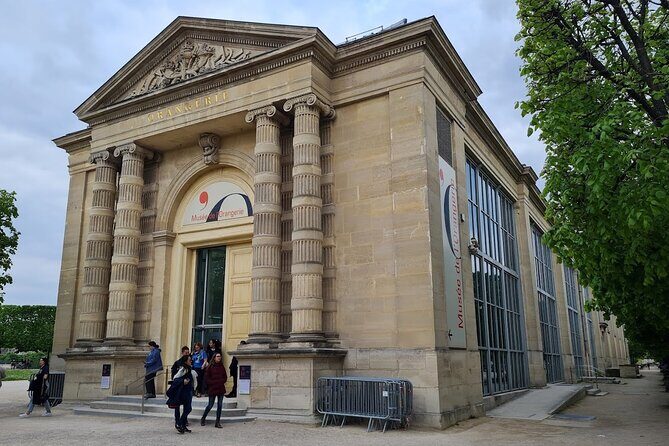
- Musée d’Orsay and the Eiffel Tower: Views Without the Ticket Stress
- Palais-Royal, Pont Neuf, and Petit Palais: The Softer Side of Central Paris
- What’s Included That Actually Helps You Enjoy the Tour
- Price and Value: What $104.52 Buys in Real Terms
- Who This Tour Is Best For (And Who Should Skip It)
- Quick Decision Guide: Should You Book This Paris Running Tour?
- FAQ
- How long is the Paris running tour?
- Is this a private tour?
- Do we go inside the Louvre or other museums?
- Do you pick me up from my hotel or apartment?
- Do I need to be a trained runner?
- What happens if the weather is bad?
Key Highlights You’ll Feel on the Run
- Private by default: exclusively your group, so the guide can match your pace and interests.
- Hotel pickup in Paris: meet the guide at your place, not across town.
- A single flowing route: Louvre, Tuileries, Concorde, Palais Garnier, Île de la Cité, Musée d’Orsay, and more.
- Run + real stories: historical facts and photo moments built into the jogging rhythm.
- Photos and documents after: pictures shared via Dropbox, plus maps and historical images at the end.
Why This Paris Running Tour Makes Sightseeing Feel Faster
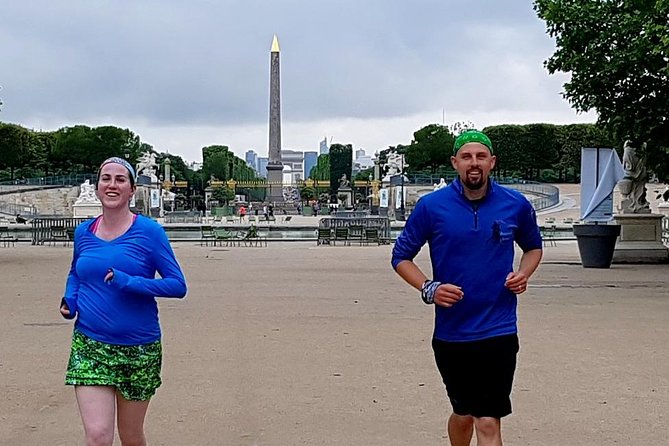
Paris has a way of slowing you down on purpose. Big boulevards, long queues, and the “wait, we should stop here” effect. This tour flips that. You still see a lot, but you’re doing it with momentum.
The best part is how the running format helps you remember. When you’re moving between the Louvre area and the Seine, then across to Île de la Cité, the landmarks stop feeling like separate postcards. They feel like connected chapters. It’s also a fun way to get your legs moving early in the day, when streets and viewpoints often feel calmer.
And yes, it’s practical. You’re on a set route, with a guide who plans the order and timing, so you’re not guessing how to link the sites yourself.
You can also read our reviews of more tours and experiences in Paris.


Pickup, Pace, and What Private Really Changes
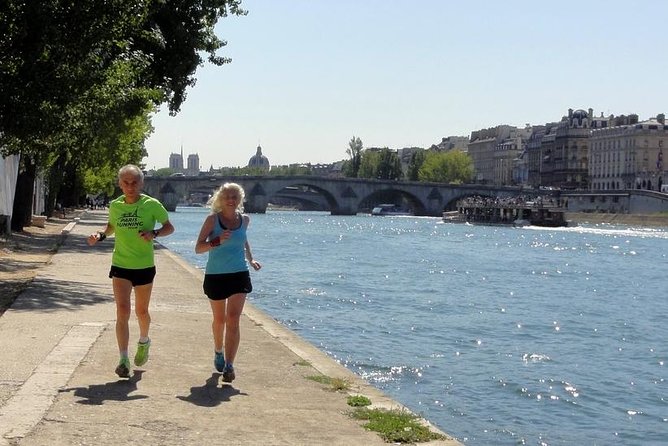
This is a private tour for your party. That matters more than you might think. If someone in your group isn’t a runner, you don’t all have to pretend you’re marathon people. In one review, the guide (JC) ran at an easy pace so a non-runner could still enjoy the stories. That’s the point: you’re not sacrificing enjoyment for effort.
Pickup is also a big deal. You meet the guide at your hotel lobby or at the bottom of your building if you’re in an apartment. Any place inside Paris works, and it’s designed to be low-stress. Instead of planning a meet point near a metro station and hoping you recognize each other, you start where you already are.
The tour is listed for moderate physical fitness. That’s a friendly way of saying: come prepared to jog. If you normally skip workouts, you can still do it, but don’t treat it like a leisurely stroll.
Louvre, Tuileries, and Place de la Concorde: Culture First, Then Legs
The tour begins near the Louvre Museum. You get a short, focused introduction to what the Louvre is, how it developed, and which historical threads matter. It’s not an hours-long museum day. You’re getting oriented fast—what to notice, why certain areas are famous, and how to read the place while you’re walking past.
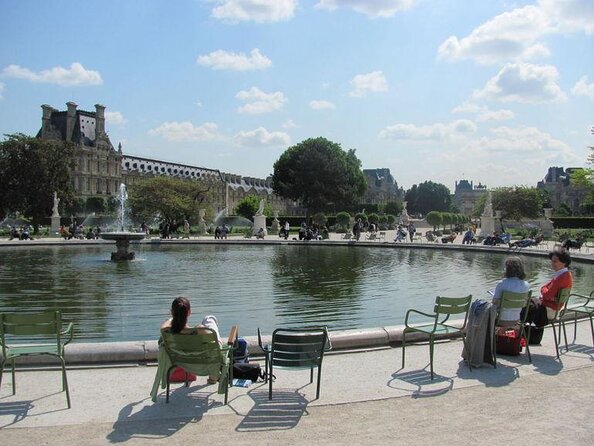
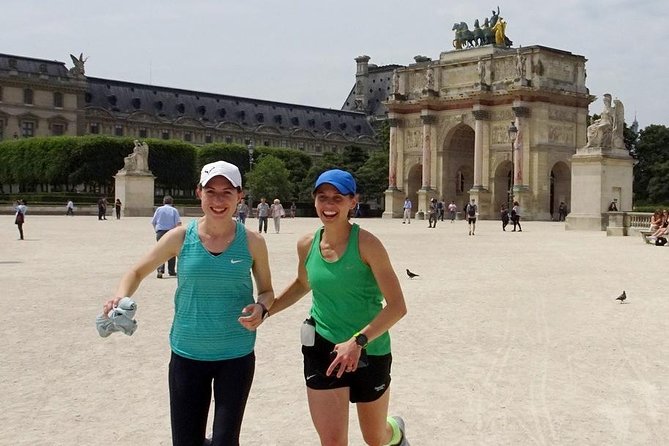
Next comes the Jardin des Tuileries. This is your “breathe and move” segment. You’ll learn about the Tuileries gardens and the story around them, while running through the park. The mix helps: it’s exercise without the pressure of traffic, and it gives your brain a break from the loudest parts of central Paris.
Then you hit Place de la Concorde. This square can feel like just another major junction on a map, but the guide’s approach makes it feel like a timeline. You’ll get the stories attached to the location and you’ll have time for pictures. That matters because Concorde is all about scale and perspective—things are hard to capture if you’re rushing.
Potential drawback here: these are short stops. If you’re the type who wants to go deep for an hour at each landmark, you’ll want a different style of tour. But if you want the big ideas plus movement, this works.
Palais Garnier and the View Stop That Feels Like a Movie Scene
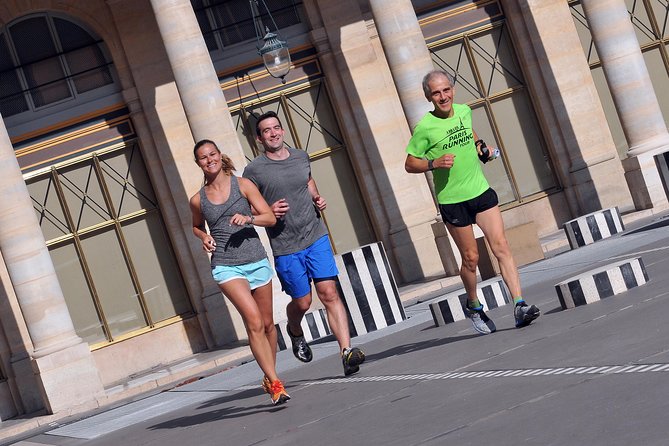
From the Concorde area, the route shifts toward Palais Garnier, the famous Opera house. You’ll admire the view and get a clear explanation of the major 19th-century changes that shaped what you see today.
Even if you’ve seen photos before, there’s something about standing near an iconic building when the light hits the façade. The guide helps you notice details you might otherwise miss.
This segment is short (about 5 minutes), but it functions like a hinge in the tour. It bridges the formal grand spaces of central Paris and the more flowing, street-level feel of the next part: the river run.
Running Along the River: Where Paris Actually Breathes
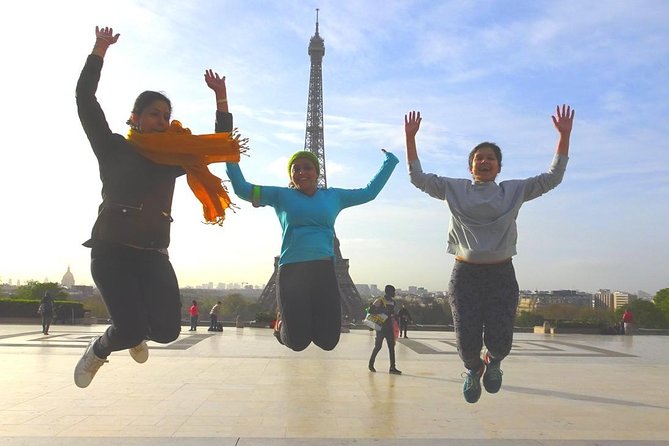
This is the most “sports meets sightseeing” moment. After the Opera area, you’ll run along the river and get lots of information as you go. The value here is the pacing. You get guided context while you’re traveling between sights, instead of pausing in the middle of a sightseeing maze.
For first-time visitors, the river stretch helps you understand the layout of Paris. You start seeing how different districts face each other. You also get multiple chances for viewpoint moments—without the “we only have five minutes, go go go” vibe.
One practical note: river paths can be busy depending on the time of day. The tour is set up to move as a group, so you’re not left figuring out where to jog or how to avoid crowds.


Île de la Cité: A Concentrated Dose of Paris History While Moving
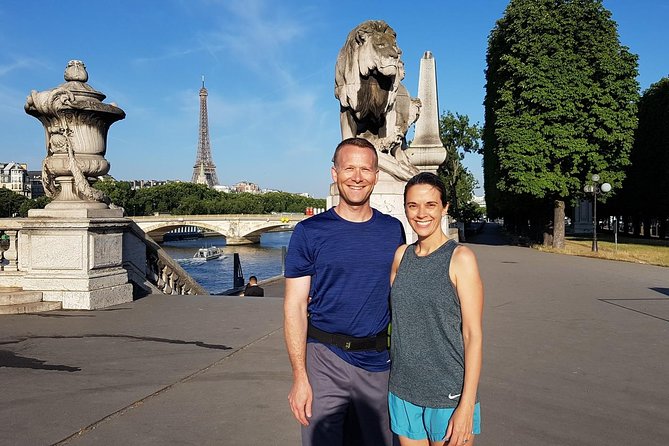
Then comes the star of the route: Île de la Cité. This is where the tour slows just enough to make the stories land, while still keeping you moving.
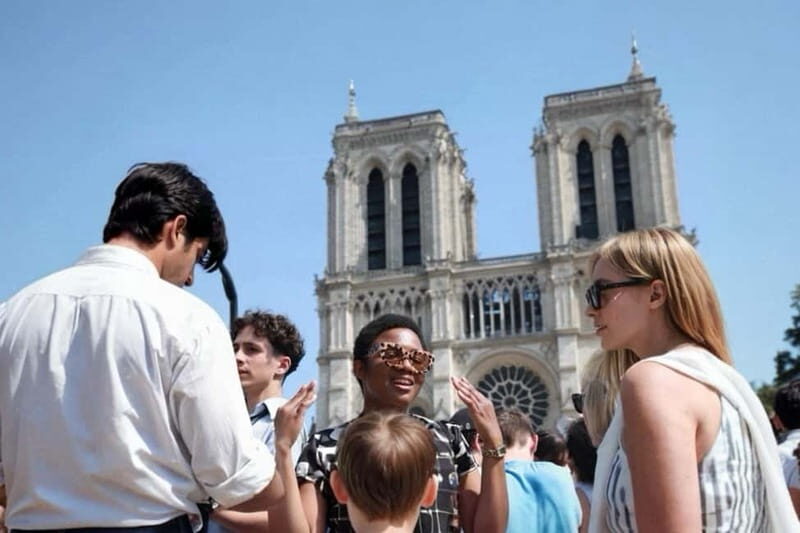
You’ll run along the central island and hit many key sights, including references to places like the Conciergerie and Sainte-Chapelle, plus the Palais de Justice area and Notre-Dame surroundings. The schedule also includes stops connected to the Marché aux fleurs, Hôtel-Dieu, Préfecture de Police, and more, depending on how the guide tailors the flow.
Why this section is so valuable: Île de la Cité is where Paris became Paris in a very literal way. Buildings here don’t just look impressive; they mark eras of power, religion, law, and public life. Getting that context while you’re physically crossing the same ground helps the information stick.
Stop duration is longer here (around 15 minutes). That’s enough time to form mental connections. It also gives you chances to take photos without feeling like you’re sprinting every ten seconds.
Musée d’Orsay and the Eiffel Tower: Views Without the Ticket Stress
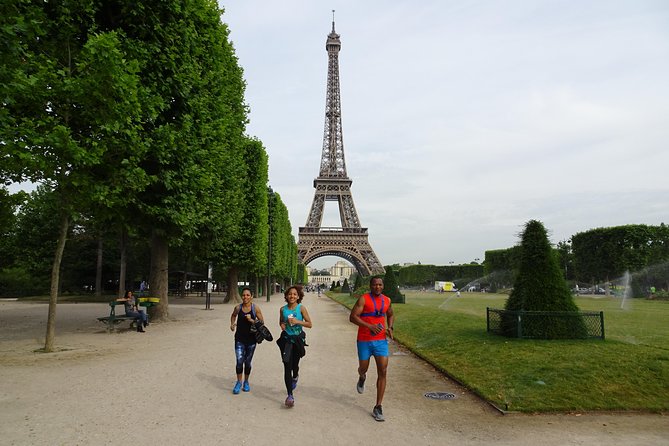
Next you’ll head toward Musée d’Orsay. You’ll admire the building and learn about its history, with a short stop designed for noticing the structure and understanding why it matters. Again, it’s mostly exterior and orientation based, not a full museum visit.
There’s also time in the route to get the Eiffel Tower into your sightline. Depending on where you are during your tailored route, you may see it very closely or from farther away. Either way, it’s visible from lots of spots, and the guide can help you choose the best angles to match what you’re seeing.
Then the plan includes the Champs-Élysées. You’ll run there and learn along the way, so you’re not just looking at a shopping corridor. The tour also includes the historical Hôtel des Invalides, giving you context around the complex and what makes it significant.
This set of stops works well for two types of visitors:
- First-timers who want the “greatest hits” with storytelling.
- Returning visitors who want a faster, more human explanation of landmarks they’ve seen from a distance.
Palais-Royal, Pont Neuf, and Petit Palais: The Softer Side of Central Paris
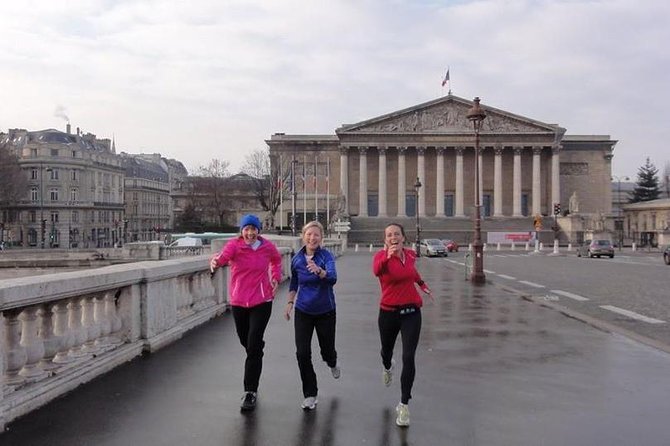
After the bigger, flashier zones, the tour shifts to Domaine National du Palais-Royal. You’ll admire the courtyard, garden, and galleries, plus the associated sites that help explain why this place has had such staying power in Paris life.
Then you’ll pass Pont Neuf, which gets a quick lesson as the oldest bridge of Paris. That’s the kind of fact that makes you look at a bridge like it’s part of the city’s living record, not just a crossing.
The route can also include Petit Palais. If it is open at your time of day, you may do a short visit inside. If not, you’ll still likely get a viewing moment as part of the path. This is one of the few chances for an interior look on the tour.
Why I like this ending section: it breaks the pattern. After you’ve hit the huge names, you get a more elegant, calmer-feeling part of central Paris. It makes the whole run feel balanced instead of one long highlight reel.
What’s Included That Actually Helps You Enjoy the Tour
The tour isn’t just “watch the guide run.” It’s built with small comforts that make the experience smoother.
You’ll get:
- Bottled water if it’s hot, or water offered along the way.
- A guide with a camera to take photos you want during the tour.
- Tour photos after the run via the Dropbox system.
- Maps and historical pictures the guide carries, given at the end.
That last item matters more than it sounds. The guide’s visuals and maps help you keep the story going after you’re back in your room. You can reread what you learned while you plan where to go next.
Price and Value: What $104.52 Buys in Real Terms
At about $104.52 per person, you’re paying for a guided run with hotel pickup, private pacing, and a route built around major Paris landmarks.
Here’s the value math I’d use:
- You’re not paying for most museum entry as part of the plan, since stops are mostly learning and exterior viewing.
- You’re getting a guide for 2 to 3 hours, not a self-guided route you piece together after you’re already tired.
- You’re saving time on logistics. Pickup from your own hotel or building is a real convenience tax you don’t have to pay.
- You’re leaving with photos and follow-up materials, which can be genuinely helpful for remembering details.
If your goal is only to see the inside of famous museums, this may not be the best match. But if your goal is to get the city’s key places into your head fast, with exercise and a guide’s storytelling, the price feels fair.
Who This Tour Is Best For (And Who Should Skip It)
This tour is ideal if you want:
- A private Paris experience with less waiting and less crowd pressure.
- A fun way to get exercise while still seeing major landmarks.
- A guide who can slow down or speed up for the group’s comfort level.
- Photos and simple take-home materials so you don’t lose the details.
It may not be the best fit if:
- You hate running or have no moderate fitness at all.
- You’re expecting long, in-depth museum time. The tour is designed to see and learn while moving, not to replace a full museum day.
- Your schedule demands very short, inflexible walking routes. This one follows a jogging flow.
Quick Decision Guide: Should You Book This Paris Running Tour?
Yes, if you’re the type who enjoys being outside, learning in motion, and seeing multiple Paris icons in one clean plan. It’s especially worth it if you value the private format and want someone like JC to set an easy pace when the group needs it.
If you want quiet, slow contemplation in museums, you may get more from a traditional walking tour or a museum-focused day. But if you want Paris with your sneakers on—and a guide who makes the route feel like a story—this is a strong choice.
FAQ
How long is the Paris running tour?
It runs for about 2 to 3 hours.
Is this a private tour?
Yes. It’s private, and only your group participates.
Do we go inside the Louvre or other museums?
Most stops focus on seeing and learning from the outside. There may be a short visit at le Petit Palais depending on whether it’s open.
Do you pick me up from my hotel or apartment?
Yes. Pickup is offered from anywhere inside Paris, meeting you in the hotel lobby or at the bottom of your building if you’re in an apartment.
Do I need to be a trained runner?
The tour is for people with moderate physical fitness. It’s a running tour, but the experience is designed to work for groups with different comfort levels.
What happens if the weather is bad?
The tour requires good weather. If it’s canceled due to poor weather, you’ll be offered a different date or a full refund.