REVIEW · PARIS
The Paris of the Parisians
Book on Viator →Operated by Paris by Tuktuk · Bookable on Viator
Paris changes when you’re not stuck on foot all day. This private tuktuk-style tour strings together high viewpoints and story-heavy neighborhoods—La Butte Bergeyre, Montmartre, Roman Paris at Arenes de Lutece, and the Marais—so you get the feel of the city without the usual time sink.
What I like most is that it’s built for quick looks and great angles, not a slow museum crawl. One of the nicest touches: the tour includes a stroller, so families don’t have to wrestle logistics.
In This Review
- You get locals’ routines, not just postcards
- Timing matters if you want maximum daylight
- Key highlights at a glance
- Why this Paris route feels like the local side
- Tuktuk logistics: comfort, timing, and how you actually see the city
- La Butte Bergeyre: the small hill with a Sacré-Cœur view
- Cite Florale: the flower district that feels like a pause button
- Marché Couvert des Enfants Rouges: cheese, baguette, and real daily life
- Montmartre the efficient way: old streets and famous artistic names
- Arenes de Lutece and the Roman layers you can spot
- Hidden Roman monuments, plus a literary-philosophical pause
- The Marais as a medieval storybook: barber, pastry chef, and francs
- Rue de Lévis and Monceau: everyday Paris without the big-tourist feel
- Guides and the value of a small-group vibe
- Price and who it fits best
- Should you book this Paris tuktuk tour?
- FAQ
- How long is the tour?
- What is the price?
- Is this tour private?
- Do you offer pickup?
- What language is the tour in?
- Is there a mobile ticket?
- Are admission fees included?
- Is a stroller included?
- Are alcoholic drinks included?
- Where does the tour start?
You get locals’ routines, not just postcards
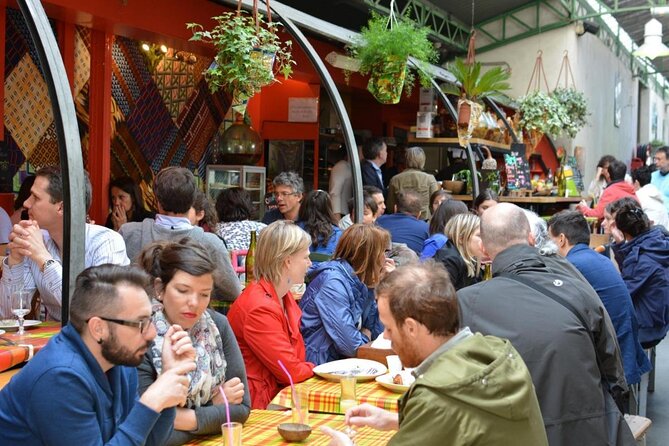
I also love the stop choices, especially the Marché Couvert des Enfants Rouges area where you’re close to everyday Paris shopping—think real local favorites like cheese and baguettes. Then you layer in Montmartre’s creative backstreets with artists you’ve heard of (Picasso, Verlaine, Renoir, van Gogh), and you start to see how Paris earned its reputation.
The mix of markets, viewpoints, and old streets is what makes it feel like Paris beyond the big sights.
Timing matters if you want maximum daylight
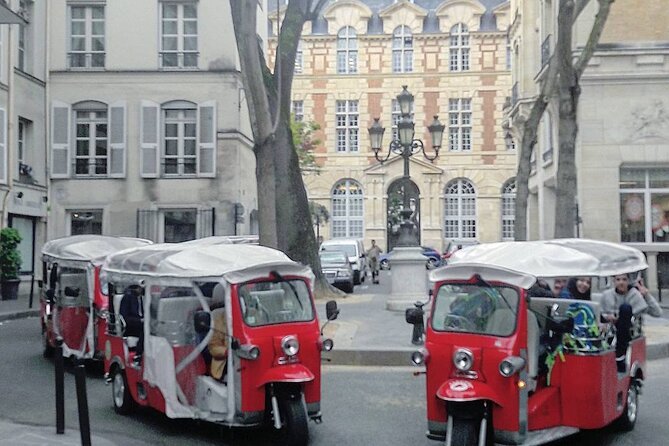
One possible drawback: the tour is around 3.5 hours, and in winter Paris darkens early. If you start late in the day, you may miss some of the lighter, earlier-day magic for walking and photos.
You can also read our reviews of more tours and experiences in Paris.

Key highlights at a glance
- A private ride for up to 6 people, so your route and pacing can match your group
- Photo-friendly viewpoints like La Butte Bergeyre with a famous Sacré-Cœur view area
- Market energy at Marché Couvert des Enfants Rouges, where everyday Paris food culture is the point
- Roman Paris basics at Arenes de Lutece and nearby hidden Roman remnants near Saint-Michel
- Marais storytelling with medieval anecdotes tied to the village-of-the-marsh feel of the district
- A quieter end of the route around Rue de Lévis and Monceau for daily-life Paris
Why this Paris route feels like the local side
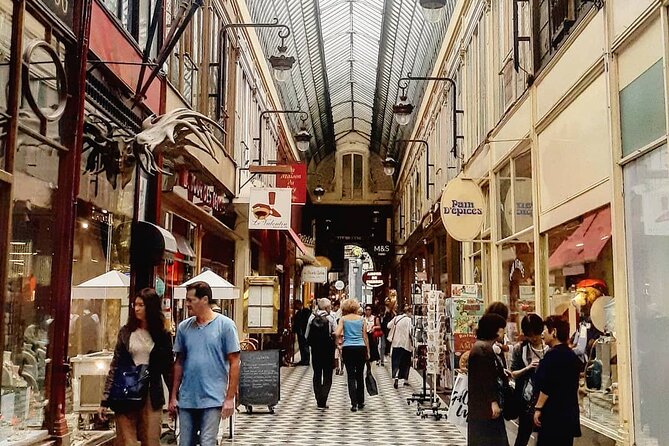
If your goal is to understand Paris as people live it—not just as a checklist—this tour makes a smart trade. You get fewer stops than a full-day “greatest hits” plan, but each stop is placed so you can connect dots: height to neighborhood, street life to food culture, and modern Paris to its Roman and medieval layers.
The ride format matters here. In a car, you’d just pass through. On a walking-only tour, you’d spend time getting from place to place and arrive already tired. This strikes a middle ground: you move efficiently, but you still stop enough to feel the streets.
And yes, you can get those classic view moments—people love the photo angles—while still spending time in places that don’t feel like a theme park.
Tuktuk logistics: comfort, timing, and how you actually see the city
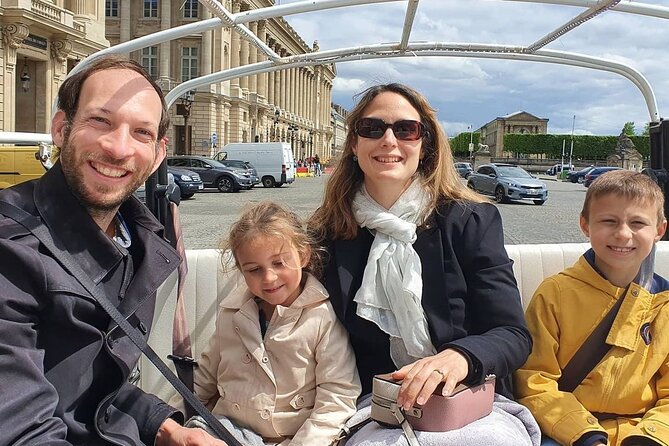
This is a private tour in a motorized oversized cart (the kind locals call a tuktuk). That’s more than a gimmick. It changes what you can do in 3 hours 30 minutes.
Here’s what that practical format means for you:
- You save energy. You’re not spending the whole day climbing stairs or battling long transfers on the metro.
- You can grab photos quickly. Short stops are easier when your transportation doesn’t require parking a car and walking from a far-off point.
- You can keep momentum. The guide can shift the order slightly based on the day’s flow while still covering the main neighborhoods.
Two notes to plan around:
- Daylight is your friend. One review shared that in winter, night falls around 5 p.m., and that some spots weren’t as satisfying after dark. If you can, aim for the early afternoon when the streets are easier to enjoy.
- You’ll still walk a bit. The itinerary includes short strolls at each area, so comfortable shoes help—especially in Montmartre and the older-street sections.
Also, this tour starts at Hôtel de Crillon, near Place de la Concorde. It’s a central meeting point, and pickup is offered if you share your preferences ahead of time.
La Butte Bergeyre: the small hill with a Sacré-Cœur view
Stop 1 is La Butte Bergeyre, described as a kind of small village on a small inhabitable hill in central Paris. The big payoff here is the view—one of the highest heights in Paris, with a particularly beautiful angle toward Sacré-Cœur.
At about 10 minutes, this isn’t a long hike. It’s more like a viewpoint pause, the kind that helps you re-orient yourself. You see how Paris “levels” work—where heights change the feel of the city streets below.
What to keep in mind:
- It’s a quick hit. If you love long viewpoint sessions, you might wish this stop ran longer.
- Wind can be a factor. Elevated viewpoints tend to feel cooler, so a layer is smart.


Cite Florale: the flower district that feels like a pause button
Next comes Cite Florale, an old district filled with flowers and plants on several streets. The description is accurate in spirit: this area is designed to feel like a haven of peace inside the city.
At around 10 minutes, you’re not arriving to spend an hour exploring every lane. You’re getting the vibe: calm streets, greenery, and a different texture of Paris than the “busy boulevard” version.
Why it’s worth the stop:
- It’s a reset from bigger-picture sights.
- It gives you a sense of Paris as a place where micro-neighborhoods have their own feel.
The main limitation is time. If you’re the type who always wants to linger, you may want to come back later on your own for a longer wander.
Marché Couvert des Enfants Rouges: cheese, baguette, and real daily life
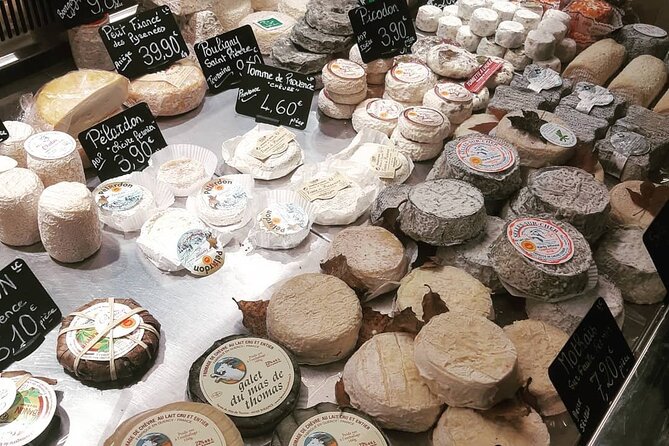
Stop 3 is Marché Couvert des Enfants Rouges, often called the Red Children’s Market. This stop is short—about 10 minutes—but it’s one of the most “Paris by daily habit” moments on the route.
The idea is simple: look at what locals actually buy. The market vibe is tied to things like cheese and a truly excellent baguette, plus local products tested every day by people from the district.
In practical terms, this stop does two useful things for you:
- It shows a Paris rhythm that’s not tied to famous monuments.
- It gives you easy ideas for a quick snack or picnic upgrade later.
From a review perspective, people loved the market stop for the ability to pick up things like Brie, olives, and fruit for later. Even if you don’t buy much, standing in that food-energy space makes the city feel more human.
Time note: since the stop is brief, go in with a mindset of quick sampling and noticing, not shopping marathon.
Montmartre the efficient way: old streets and famous artistic names
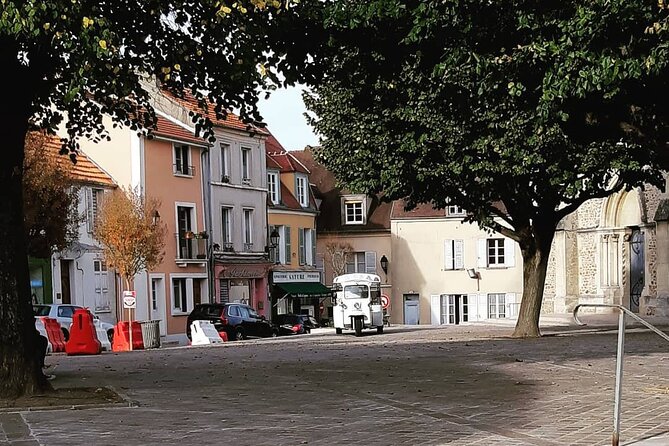
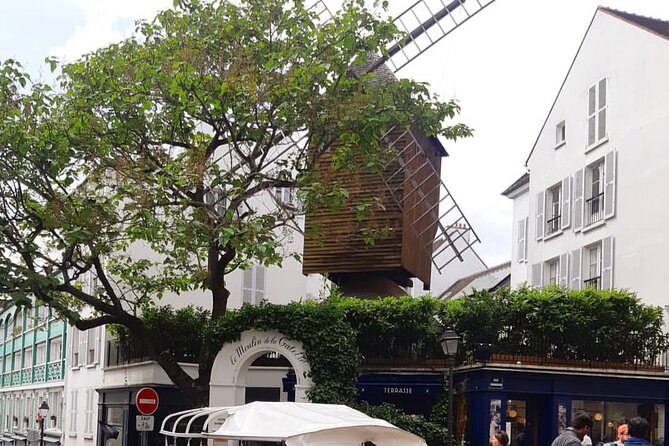
Montmartre is the next big chunk—about 20 minutes. The tour frames it as the old village of the commune period, with hidden little streets and a strongly artistic identity. It also name-drops the kind of artists you’ve heard of: Picasso, Verlaine, Renoir, van Gogh.
This is the stop where you’ll likely feel the “Paris movie set” pull—but it’s handled in a practical way. You’re not doing a full Montmartre day. You’re getting the feel of the neighborhood’s lanes and character, then moving on before the experience turns into an overlong crowd shuffle.
What you’ll enjoy most:
- Short, guided navigation through backstreets
- A sense of why Montmartre keeps attracting artists and writers
What to consider:
- If you’re hoping for major landmark visits here (like a long church interior moment), this tour stop is too short. Think “neighborhood flavor,” not “complete Montmartre program.”
Arenes de Lutece and the Roman layers you can spot
Then you hit Arenes de Lutece, the Roman and Gallic remains in Paris—formerly Lutèce. This is where the tour leans into big story geography.
You’re looking at Roman and Gallic traces, plus the arena area. The route also connects you to rue Saint Jacques, described as the old main road of the Romans. Along that connection, you can spot Roman wall pieces that are well hidden and preserved, including a slab from the time of the Roman forum dating from the 1st century, still present in a corner near Saint Michel.
Two things I find useful about this stop design:
- It teaches you what to look for. You stop, you learn what the feature is, and you don’t just walk past it.
- It turns history into something visual and specific instead of abstract dates.
Downside: it’s still a shorter stop. If you want a long, deep Roman site immersion, you’d add another visit later.
Hidden Roman monuments, plus a literary-philosophical pause
After Arenes de Lutece, you get about 30 minutes in the same general district for mysteries and hidden Roman monuments. This part also includes mention of the oldest café in the world, tied to literary and philosophical life.
That mix is the point. Paris didn’t just “get ancient.” It kept layering culture on top of it—roads, stones, cafés, and conversation.
Practical advice:
- If you like walking while you talk, this segment works well. The time allocation suggests you’ll get explanation plus enough time to look.
- If you’re not a café person, you can still enjoy it as a cultural touchpoint rather than a full meal break.
The Marais as a medieval storybook: barber, pastry chef, and francs
Next comes a longer 45-minute segment in the Marais, framed as the village of the marsh with anecdotes that feel terrifying and real. You’ll hear stories tied to the time of the francs and Parisian Middle Ages, including tales of a terrifying barber and a pastry chef connected with the Chanoiness.
This is the most narrative-heavy portion of the route. Instead of focusing on “what happened here” in a textbook way, it’s more like learning a local legend-style thread that gives the streets extra flavor.
Why this helps your trip:
- It makes the Marais feel less like a shopping district and more like a place with memory.
- It gives your brain a story hook, so even short street views stick.
What to consider: it’s storytelling plus walking. If you prefer strictly architectural highlights, you may want to keep your expectations flexible.
Rue de Lévis and Monceau: everyday Paris without the big-tourist feel
Finally, the tour shifts to Rue de Lévis and the surroundings of Monceau for about 30 to 40 minutes. The idea is daily life of Parisians—bakeries, shopping streets, and a district described as without tourists but full of wealth.
This is a great way to end. By this point, you’ve covered heights, flowers, markets, Roman traces, and medieval stories. Rue de Lévis gives you a calmer last look at the city as routine.
What you’ll likely enjoy:
- Less “sightseeing pressure,” more strolling
- An easy chance to spot how locals shop and eat
If you’re a shopper: this is the segment that feels most practical, even if you don’t buy much.
Guides and the value of a small-group vibe
This is a private tour for up to 6 people. That matters more than it sounds. You’re not squeezed into a crowd, and the guide can shape pacing around your group.
The experience also runs with local driver guides. One named guide you might encounter is Eric Pierre, and another guide name shared in the experience chatter is Sofiane. Either way, the tone is similar: local know-how, practical tips, and off-the-beaten-path choices that make you feel like you’re getting Paris from inside the city rather than from a brochure.
Price and who it fits best
At $408.54 per group (up to 6), the value depends on how you travel.
This tour is a good deal if:
- You’re traveling as a small group (family, friends) and can split the cost
- You want a smart first-day orientation that also includes distinct neighborhoods
- You care about markets and daily life, not just monument photos
It might not be the best fit if:
- You prefer long stops at major landmarks and museums
- You want a totally walk-based experience with no vehicle segments
A detail that helps families: a stroller is included. If you’re managing kids, that can cut down on stress in places like Montmartre’s backstreet turns.
Booking timing: it’s often booked about 64 days in advance. If your dates are fixed, don’t wait too long.
Should you book this Paris tuktuk tour?
Book it if you want a short, efficient Paris overview that still feels personal: viewpoint moments, market energy, Roman remnants, and Marais storytelling—all in about 3.5 hours. It’s especially strong for first-time visitors who want more than the main landmarks and for families who need comfort and pacing.
Skip it or add extra time if:
- Your priority is a deep-dive into one site (you’ll want longer visits elsewhere)
- You’re booking for a late-afternoon slot in winter and daylight matters a lot to you
If you want Paris that feels lived-in, not staged, this is the kind of tour that helps you start seeing the city’s logic quickly.
FAQ
How long is the tour?
The tour runs about 3 hours 30 minutes.
What is the price?
The price is $408.54 per group, for up to 6 people.
Is this tour private?
Yes. It’s a private tour/activity, and only your group participates.
Do you offer pickup?
Pickup is offered. You’ll need to write or call to share your preferences.
What language is the tour in?
The tour is offered in English.
Is there a mobile ticket?
Yes, the tour uses a mobile ticket.
Are admission fees included?
For the listed stops, admission tickets are noted as free.
Is a stroller included?
Yes, a stroller is included.
Are alcoholic drinks included?
No. Alcoholic beverages aren’t included, though a bottle of champagne is available.
Where does the tour start?
The meeting point is Hôtel de Crillon, 6 Pl. de la Concorde, 75008 Paris.