REVIEW · VERSAILLES
Versailles Palace & Marie-Antoinette’s Estate Private Guided Tour with Lunch
Book on Viator →Operated by Parismatic Tour · Bookable on Viator
Versailles is a lot to take in.
This private, English-guided day trip packs the big set pieces—the Palace, the Hall of Mirrors, and Marie-Antoinette’s private world—into one smooth route, starting with hotel pickup from inside Paris. You also get breathing room: after the main palace tour, you’re given time to roam the gardens on your own before the guided sights continue.
I especially like the way the day mixes structured highlights with personal pace. The tour builds in both guided interpretation and free time in the gardens, which helps when Versailles feels overwhelming (because it is). I also love that lunch is scheduled right in the middle of the action, at a sit-down restaurant by the Grand Canal, so you’re not hunting for food after a long palace run.
One thing to consider: this is a high-priced private tour, and details can vary in the real world. For example, a past guest noted the restaurant name and vehicle setup did not match the exact promise, so I recommend you double-check the lunch spot and vehicle expectations when you book.
In This Review
- Key highlights worth getting excited about
- Price and time: why this Versailles day costs what it costs
- First steps: the 8:30 start, pickup, and getting in without chaos
- Entering the Palace: State Apartments of Louis XIV
- Hall of Mirrors: art, politics, and why you keep looking up
- Gardens of Versailles: free roam time plus 55 fountains energy
- Another garden-oriented guided loop: groves and small highlights
- Lunch by the Grand Canal: a real break in the middle of the day
- Grand Trianon: Louis XIV’s pastel-pink escape
- Petit Trianon: Marie-Antoinette’s smaller palace and bigger escape
- Le Hameau de la Reine: the Queen’s Hamlet and the fantasy of simplicity
- Final synthesis: looping back to Marie Antoinette’s world
- Comfort, pacing, and what to expect when the day runs long
- Who this Versailles tour is best for
- Should you book this Versailles Palace & Marie-Antoinette with lunch?
- FAQ
- What time does the Versailles tour start?
- How long is the tour?
- Do I get hotel pickup in Paris?
- Is lunch included, and what is it?
- Which sites are included in the tour?
- Are admission tickets included?
- Is this a private tour?
- What language is the guide in?
- What if fountain operations are limited?
- Are gratuities included?
Key highlights worth getting excited about
- Hotel pickup and door-to-door return from Paris hotels and private residences, so you’re not stressed by trains and transfers
- State Apartments + Hall of Mirrors with tickets included, timed so you’re not just wandering for hours
- Garden time on your own plus guided stops, so you can take photos without feeling rushed
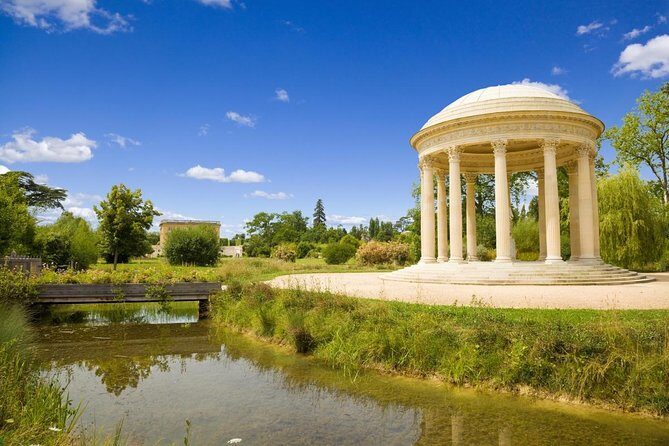
- Marie-Antoinette’s stops in the Trianons and her Hamlet (Grand Trianon, Petit Trianon, and Le Hameau de la Reine)
- A planned lunch break by the Grand Canal, built into the flow instead of tacked on at the end
Price and time: why this Versailles day costs what it costs
At $855.36 per person for about 8 hours, this tour is clearly a splurge. The value isn’t just the guide—it’s the combination of hotel pickup, private vehicle, included entrance fees, and a route that tries to keep you moving smartly across far-flung areas of Versailles.
Versailles can eat your day with queues, long walks, and decision fatigue (where do I start, what’s worth it, and when should I eat?). A private guide helps you avoid that “busy but lost” feeling. And with this tour’s built-in pacing—palace first, then gardens, then the Trianons—it’s designed to keep you from spending half your time figuring things out.
That said, you’ll want to judge this as a comfort and time-saver purchase. If you already know the palace well, or you enjoy DIY pacing, you may feel the price more than the benefits. If you want a guided, organized day with fewer headaches, the cost starts to look more reasonable.
You can also read our reviews of more guided tours in Versailles



First steps: the 8:30 start, pickup, and getting in without chaos
The day starts at 8:30 am. The tour provider picks you up from hotels and private residences inside Paris, and you return to the same general meeting point at the end. You’ll ride in an air-conditioned private vehicle, which matters in the heat of summer (Versailles gardens can feel like a sauna with stone walls).
There’s also a mobile ticket, which is the kind of small modern detail that can save time and keep you from holding up the group. Near public transportation, the meeting point can be convenient if your pickup plans change—though you’re mainly covered by the door-to-door service.
Most important: Versailles opens a lot of doors, literally and figuratively, but it also creates bottlenecks. One recurring theme in the experience of guides named in the past—like Zara, Rozann/Rozenn, Lucille, Bertrand, Herve, Chris, Ricardo, Bartron, and Hugues—is that the day runs smoother because the guide is steering you through the palace in the right order.
Entering the Palace: State Apartments of Louis XIV
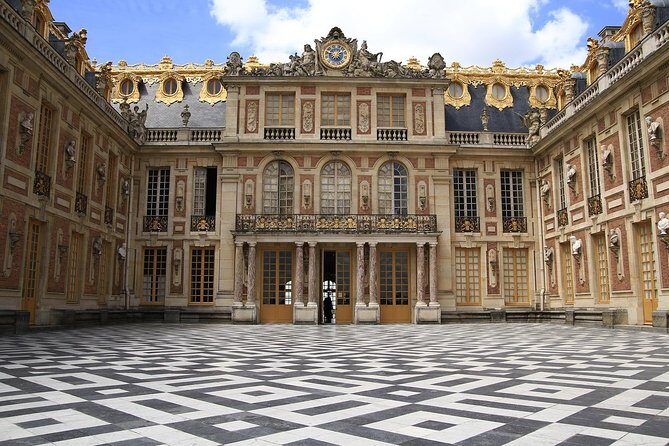
The first big stop is the Palace of Versailles, with admission included and about 2 hours guided time focused on the Sun King. This is your “main set,” where you’re meant to understand not just what you’re seeing, but why it was built the way it was.
The State Apartments of Louis XIV are impressive, but they’re also easy to view like decoration. The guide’s job is to connect the rooms to the politics and power game of the era—how the court functioned, how Versailles was used to control status, and why the palace layout matters. If you’ve ever seen a room and thought, so what?, this is where you get context.
A practical win: with a private format, you can ask questions. And because the palace can be loud and crowded, the structure of the tour helps you focus on the key scenes rather than trying to memorize everything.
Potential drawback here: the palace is indoor stone, and you’ll be walking in a packed environment. If your group hates crowds, plan for that reality. A guide can’t delete the number of visitors, but they can help you avoid the worst pressure moments.
Hall of Mirrors: art, politics, and why you keep looking up
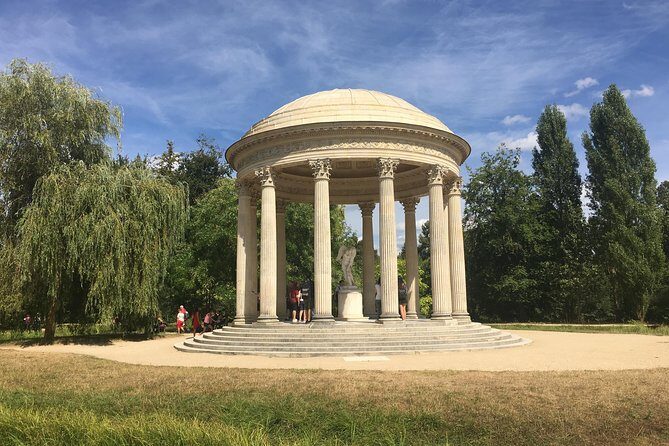
Next comes the Hall of Mirrors (La Galerie des Glaces), again with admission included. This is the signature room—the one with the reflections, the symmetry, and the feeling that Versailles is flexing on you.
But the tour doesn’t just treat it like a photo spot. The commentary ties it to political and economic success and the artistic ambition of France. That context changes how you see it. Instead of staring at gold and glass, you start noticing the design choices as a statement.
Also, this is a room where timing and flow matter. It’s easy to get stuck or lose your bearings. With a guide, you’re more likely to see the room in a way that feels intentional, not chaotic.
Gardens of Versailles: free roam time plus 55 fountains energy
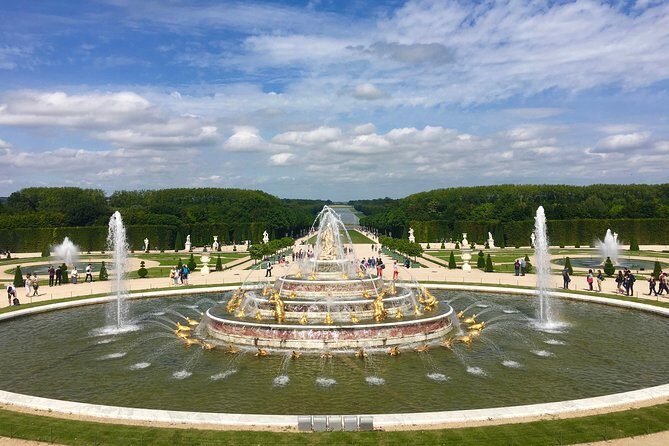
Then the day shifts outdoors to the Gardens of Versailles, with time to explore and 55 fountains as a focal theme. You get about 1 hour of gardens time, and you’re specifically given free time to roam on your own.
I like that approach because Versailles gardens reward curiosity. Walk a path, stop when something catches your eye, and don’t feel obligated to keep up with a strict script every second. If your group has different interests—history buffs, photographers, kids who want to run—this freedom prevents everyone from melting down.
Here’s the consideration: fountain schedules can change. One past experience included a situation where fountains weren’t running on a weekday, and the company clarified that fountain operations depend on the Château’s decisions. So if fountains are your must-see, don’t assume they’ll be fully running the day you go. Still, even when fountains pause, the gardens are wide, open, and spectacular for walking.
You can also read our reviews of more private tours in Versailles




Another garden-oriented guided loop: groves and small highlights
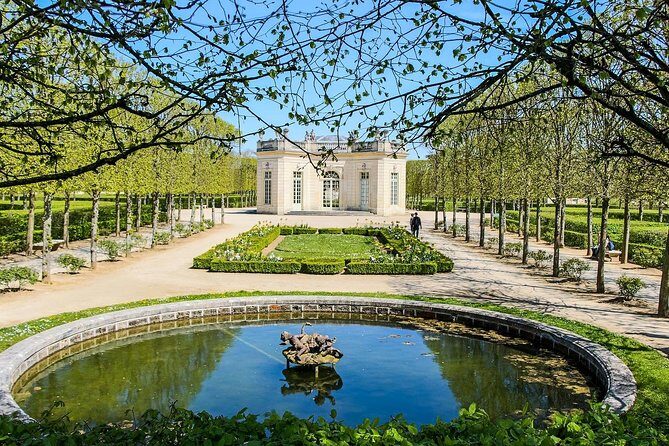
After that self-guided garden time, the tour continues with another short guided segment (about 30 minutes) focused on exploring groves and the garden layout again with your guide.
This is a smart pacing move. Free time gives you space to roam, but the guide’s follow-up helps you connect the dots: which paths lead where, what you’re meant to notice, and how the garden design supports the palace’s power story. If you’ve ever felt lost in a huge garden, this second guided nudge is exactly what you want.
Lunch by the Grand Canal: a real break in the middle of the day
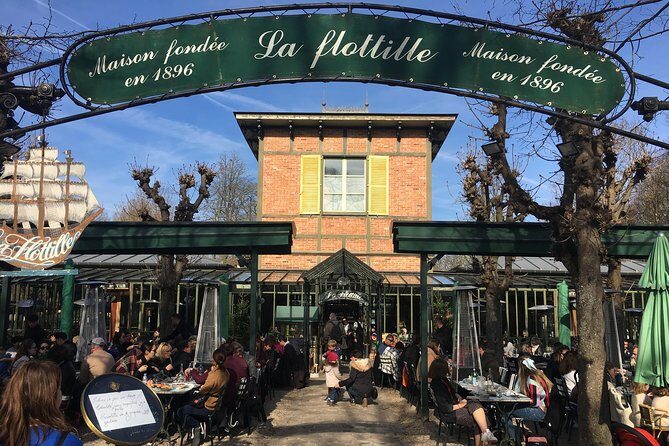
At the foot of the Grand Canal, you’ll take a 3-course lunch break at the restaurant called La Flotille. The lunch is listed as starter, main course, vine (wine), dessert, and coffee, with about 1 hour.
This timing is a big deal. Versailles is a long day. If you eat too early or too late, you either lose energy for the Trianons or you end up rushing during the most delicate part of the itinerary. By putting lunch here, the tour keeps the day moving while still giving you a sit-down reset.
Now the balance point: one past guest reported that the included lunch did not match the named restaurant in the description and that the food quality wasn’t great. That doesn’t mean it will happen to you—but it’s a reminder to check what’s confirmed for your booking and to treat included lunch as “planned,” not guaranteed to be identical in every circumstance.
If you’re picky about meals or dietary needs, it’s worth asking what options are available before you go. A good lunch won’t magically fix a bad day, but a bad lunch can drain your momentum faster than you expect.
Grand Trianon: Louis XIV’s pastel-pink escape
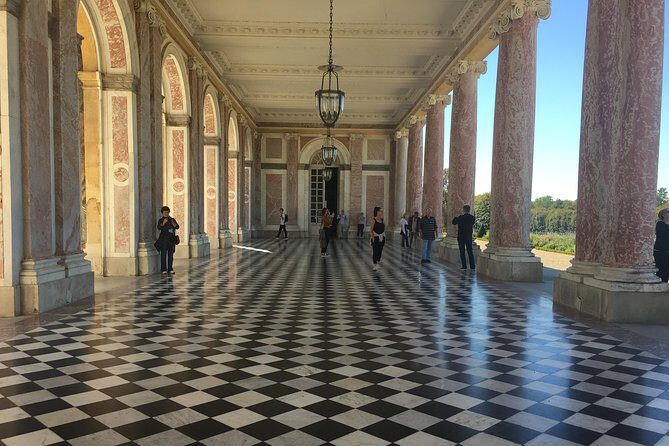
After lunch, you go to the Grand Trianon for about 1 hour. This is described as Louis XIV’s private getaway palace, created because the main palace became too busy. The building is noted for its pastel-pink marble, which makes it feel lighter than the grand baroque buildings you just saw.
Grand Trianon works well after lunch because it’s a shift in tone. The main palace is formal and loud in its scale; the Trianon feels like the court trying to breathe. The guide helps you understand how “private” in Versailles still meant controlled theater, but it was a different kind of theater.
This stop is where you start to appreciate how the people at Versailles could move between public power and personal retreat—without ever really leaving the palace world.
Petit Trianon: Marie-Antoinette’s smaller palace and bigger escape
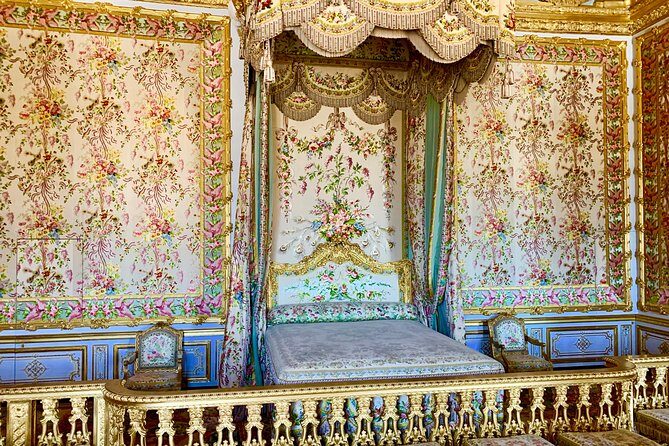
Next is the Petit Trianon for about 45 minutes. This is the small palace in the grounds where Marie Antoinette used the space for festivities and to escape the overwhelming etiquette of court life.
A lot of people think they already “get” Marie-Antoinette from pop culture. Versailles makes that harder and more interesting. The Petit Trianon is smaller than the main palace, but it carries an emotional weight: it’s where the story bends away from ceremonial duty and toward personal life.
With a guide, you’re less likely to treat it like a postcard. You’ll understand it as part of a whole strategy of living inside the palace complex while still trying to feel free.
Le Hameau de la Reine: the Queen’s Hamlet and the fantasy of simplicity
The last major thematic stop is Le Hameau de la Reine—the Queen’s Hamlet—for about 45 minutes. This is described as a stylised Norman village and farm Marie Antoinette built for retreats with her closest friends.
This is where Versailles stops being only marble and becomes a performance of “rustic life.” It’s intentionally not real countryside. It’s a version of countryside designed to soothe and entertain. That idea lands best when someone explains the context rather than leaving you to guess why a fancy queen would build a pretend farm.
The overall feel is calm compared with the palace proper. You can walk at an easier pace and let your brain switch gears. If you’re traveling with teens or family members who get bored by rooms, this stop often earns smiles because it’s visual and more varied.
Final synthesis: looping back to Marie Antoinette’s world
The tour wraps up with a short guided segment (about 30 minutes) again described as discovering the Hamlet area in relation to Marie Antoinette.
This final piece matters because it ties the different parts together: the palace as power, the gardens as political design, and the Trianons/Hamlet as the softer side of the same machine. Without that connection, you can leave with impressive photos but still feel like you didn’t fully understand what made the place tick.
Comfort, pacing, and what to expect when the day runs long
Even with a private guide, this is still Versailles. Expect walking. Expect sun and shade patterns that change by the minute. Expect your feet to feel it.
What helps is that the tour structure is designed for stamina: palace time first, then gardens, then lunch, then the Trianons and Hamlet. Reviews tied to guide styles also point to guides taking breaks in hot conditions and finding practical routes, which is exactly what you want on a long day.
Bring practical stuff: comfortable shoes, sunscreen, a hat, and water. The tour includes a guided day and a vehicle ride, but you’re still moving through a huge estate.
Who this Versailles tour is best for
This is best for you if:
- you want a single-day plan that covers both Versailles Palace and Marie-Antoinette’s estate without guesswork
- you care about meaning and context, not just seeing the big rooms
- you’d rather pay for comfort (pickup, private transport, structured flow) than spend energy solving logistics
It may be less ideal if:
- you travel on a tight budget and want the cheapest possible entry
- you’re perfectly happy doing Versailles DIY, already knowing the key rooms and garden highlights
- your group hates any indoor crowding, even with a guide handling the flow
Should you book this Versailles Palace & Marie-Antoinette with lunch?
Yes—if you want a well-run private day that stitches together Versailles Palace, the Hall of Mirrors, the gardens, and Marie-Antoinette’s world in one coherent route. The biggest practical benefit is the reduction in stress: pickup in Paris, a guide doing the interpretation, included admission fees, and a real lunch break by the Grand Canal.
But book with your eyes open. This is expensive, and details like the exact lunch location and vehicle specifics have shown up as issues for at least one past guest. Before you go, confirm the lunch restaurant name you’ll actually use and ask what vehicle class you should expect.
If you’re celebrating something special or you want the day to feel smooth and planned, this tour is the kind of splurge that can feel like money well spent.
FAQ
What time does the Versailles tour start?
The start time is 8:30 am.
How long is the tour?
The duration is about 8 hours.
Do I get hotel pickup in Paris?
Yes. The tour includes hotel pick-up and drop-off, picking up from all hotels and private residences inside Paris.
Is lunch included, and what is it?
Lunch is included. It’s listed as a 3-course meal at the restaurant La Flotille with starter, main course, wine, dessert, and coffee.
Which sites are included in the tour?
You’ll visit the Palace of Versailles, the Hall of Mirrors, the Gardens of Versailles, Grand Trianon, Petit Trianon, and Le Hameau de la Reine (Marie-Antoinette’s Hamlet).
Are admission tickets included?
Yes. Admission tickets are included for the listed stops, and the tour also includes all fees and taxes.
Is this a private tour?
Yes. It’s described as private, meaning only your group participates.
What language is the guide in?
The tour is offered in English.
What if fountain operations are limited?
The gardens are listed with fountains, but fountain operation depends on the Château de Versailles schedule, so some days may have limited fountains.
Are gratuities included?
No. Gratuities are optional and are not included.