REVIEW · PARIS
WW1 Somme Battlefields – Private tour from Paris aboard a Van (2 pax)
Book on Viator →Operated by ADRIAN ROADS · Bookable on Viator
WWI hits hard when you see it up close. This private Somme tour is built for one thing: making the history make sense fast, with a guide who ties the big picture to what you’re standing beside. You leave Paris early and ride in an air-conditioned van with hotel pickup so the day stays on track.
I love the way the route balances iconic sites with context-giving museums. And I especially like the private pacing: you can ask questions, slow down at the places that hit you hardest, and you’re not boxed into a big-group rhythm.
One thing to think about: it’s a long, packed day. You’ll be moving between sites for 12 to 13 hours, and lunch isn’t included, so plan your own food break.
In This Review
- Key things that make this Somme tour worth your time
- How the private van day from Paris really works
- Stop 1: Lochnagar Crater at La Boisselle, where the ground shook
- Stop 2: Ulster Memorial Tower and Thiepval Wood on the German front line
- Stop 3: Historial de la Grande Guerre at Thiepval (Joe Sacco mural + artifacts)
- Stop 4: Beaumont-Hamel Newfoundland Memorial and the preserved trenches
- Stop 5: Delville Wood South African Memorial in Longueval
- Stop 6: Peronne Historial in a medieval castle (trenches, uniforms, trench artists)
- Food, pacing, and what to pack for a 12–13 hour WWI marathon
- Price and value: is $976.96 per group fair?
- Who should book this Somme tour (and who might prefer something else)
- Should you book this Somme battlefields private tour from Paris?
- FAQ
- What time does the tour start?
- How long is the Somme private tour from Paris?
- What’s the group size?
- Is pickup from my Paris hotel included?
- Is the tour offered in English?
- Do I get tickets for entry?
- What’s included in the price, and what isn’t?
- Is lunch provided?
- Can I cancel for a full refund?
Key things that make this Somme tour worth your time
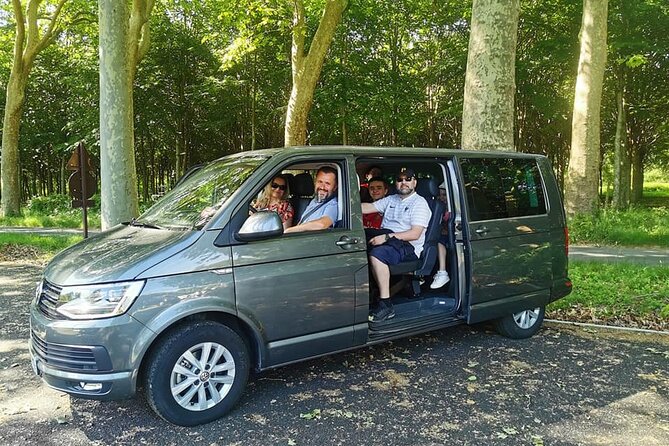
- Private van + pickup keeps logistics easy from Paris
- Lochnagar Crater gives you a rare sense of scale from July 1, 1916
- Thiepval area museums use maps, film, and a panoramic Joe Sacco mural to explain the battlefield
- Beaumont-Hamel trenches are preserved, so you can actually walk through the geography of the attack
- Delville Wood memorial marks South African losses with a powerful, specific backstory
- Peronne Historial museum adds trench-art and personal-life context after the field stops
How the private van day from Paris really works
Start time is 6:30 am, and yes, that’s early enough to make your alarm feel personal. But it’s also what makes this tour work. You’re not spending half your day crossing France with no plan. The early departure gives you time to see multiple battlefield zones and still get museum entry that you’ll actually have energy for.
The tour is private for up to 2 people, so you’re not negotiating space with strangers. That matters on the Somme, because the emotional tone changes from stop to stop. A private setup lets you move from a crater to a memorial to a museum without feeling rushed or stuck. You can also spend a little more time at the places that land with you.
Pickup and drop-off are limited to certain Paris districts (75008, 75007, 75016). If you’re outside those areas, you’ll want to confirm what the operator can do for your exact location. Once you’re in the van, though, it’s straightforward: air-conditioned transport, an English-speaking guide, and a mobile ticket.
Practical tip: because this is a one-day loop, wear comfortable shoes you can walk in for an hour or more total, including uneven ground at preserved trench sites.
You can also read our reviews of more tours and experiences in Paris.


Stop 1: Lochnagar Crater at La Boisselle, where the ground shook
Lochnagar Crater is one of those Somme stops that’s hard to picture until you’re there. This isn’t a small memorial detail. It’s a massive mine crater created on the first day of the Battle of the Somme (July 1, 1916). The British tunneling companies detonated mines beneath the German lines to help infantry advance at the start of the offensive.
What I find compelling here is the engineering detail. The British named the mine after a British trench called Lochnagar Street. From there, tunneling teams dug down about 90 feet into the chalk, then worked roughly 300 yards toward the German lines. They placed about 60,000 lbs (27 tons) of ammonal explosive in two large underground chambers, spaced 60 feet apart. The target was a fortified German position known as Schwaben Höhe, south of La Boisselle.
On paper, those numbers can blur together. On site, they don’t. Even with only about 10 minutes scheduled, the crater gives you an instant reference point for why so much of the Somme is about terrain: the hills, the ridges, and the lines that held up assaults.
Consideration: the crater stop is short by design. If you’re the type who wants long, quiet time with a single site, you may want to use your time-efficient moments wisely and ask the guide to point out specific features you can’t easily see yourself.
Stop 2: Ulster Memorial Tower and Thiepval Wood on the German front line
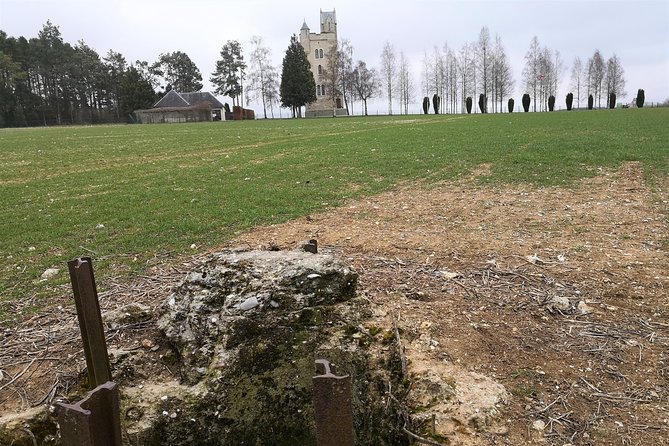
From the crater, the tour moves you toward Thiepval and the Ulster Memorial Tower. This area is powerful because it sits on what was the German front line during the Somme fighting from July to November 1916.
The Ulster Memorial Tower was erected on the site of the Schwaben Redoubt, a strongly fortified position that the Ulster Division eventually captured. It’s opposite Thiepval Wood, from where the 36th (Ulster) Division made a historic charge on July 1, 1916.
If you want to understand the Somme beyond slogans, this is a key shift. You’re not just seeing Allied objectives. You’re seeing a place that held and shaped the fighting from the other side. The guide commentary helps connect what you see to the timing of the battle: the ridge at Thiepval was a major Allied target, but it wasn’t taken until the end of September. That gap between first-day plans and later realities is a big part of the Somme story.
Scheduled time here is about 30 minutes, so it’s not a long stroll. It’s more like a guided “get your bearings fast” moment—ideal if you want context without turning the day into a slow crawl.
Stop 3: Historial de la Grande Guerre at Thiepval (Joe Sacco mural + artifacts)
After the outdoor sites, you get inside the Historial de la Grande Guerre at Thiepval. This stop is where the tour earns its time. The exhibits are designed to help your brain connect the names, lines, and dates to actual ground.
At the entrance, you’ll see a large animated map with period photographs and film. Then the main gallery features a huge panoramic mural by illustrator Joe Sacco. It depicts the day of July 1, hour after hour, and it’s displayed across about 60 meters of back-lit glass. That format matters. You’re not looking at one scene. You’re seeing how the battlefield played out as a long, grinding sequence.
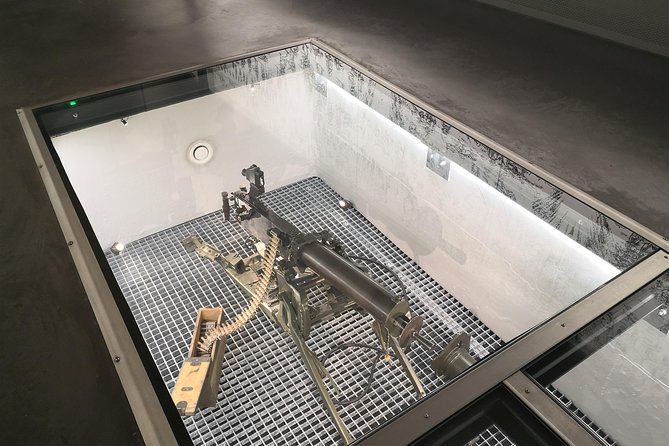
There’s also a display pit with archaeological remains and collection pieces, covered by glass. Short videos add layers—commentary on scenes, historical info, archive footage, and educational animations. And if you like a more tangible “how it worked” moment, there’s a Maxim machine gun captured by a British regiment at Thiepval, a reminder of how heavy the German defense was.
One more room adds an unsettling theme: the exhibition looks at the creation of heroic figures in the face of the Somme’s overwhelming loss. You even see a life-size replica of the airplane associated with Georges Guynemer, tying aviation to the era’s hunger for heroes.
Scheduled time is about 30 minutes, which is brisk but workable if you focus on the mural and the key object displays.
Consideration: this museum stop is emotionally intense in a quiet way. If you prefer lighter pacing, sit for a minute before moving on, and let the guide’s commentary frame what you’re seeing.
Stop 4: Beaumont-Hamel Newfoundland Memorial and the preserved trenches
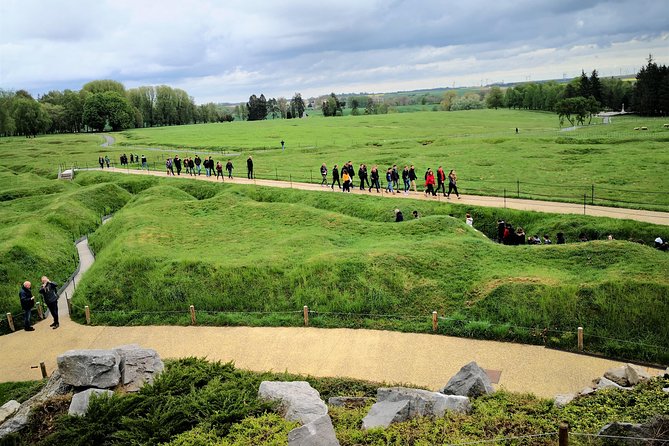
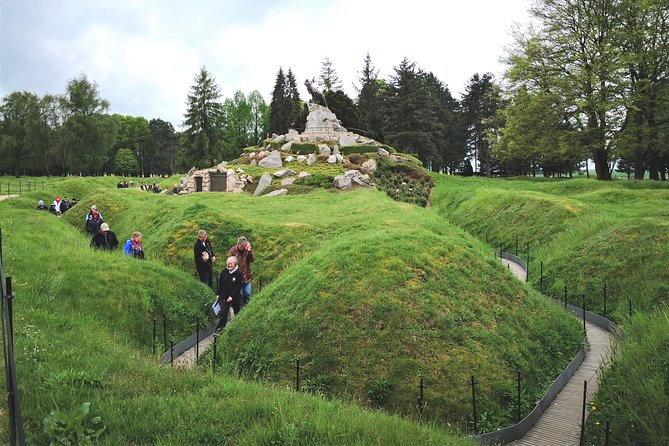
This is the stop that often turns a history lesson into something personal. The Newfoundland Memorial at Beaumont-Hamel is a preserved battlefield park—about 74 acres—where you can walk through a network of trenches that remain from the fighting.
The geography is part of the point. The ground is serene now, but you can still see the scars of the battle. That contrast is exactly why preserved sites matter. They keep the Somme from becoming only names on paper.
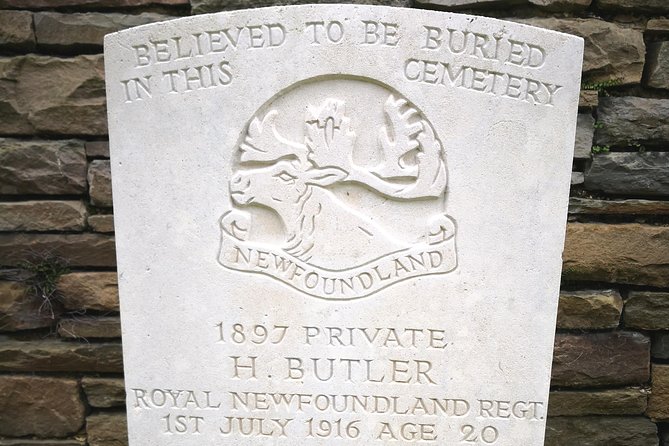
The Newfoundland Regiment’s attack on July 1, 1916 is at the center of the story. At 8:45 a.m., they received orders to move forward, along with the 1st Battalion of the Essex Regiment. Of the 780 men who went forward, only about 110 survived unscathed, and only 68 were available for roll call the next day. Those numbers aren’t just tragic. They show what the Somme meant in terms of survival odds.
Scheduled time here is about 1 hour, and that’s important. You need time to walk at least a bit and look around long enough to understand how trench lines fit the terrain. This is also a good place to ask the guide how the area was defended and why the attacks unfolded the way they did.
Consideration: preserved trench routes can mean uneven ground. Bring grippy shoes, and take it slow if you need to.



Stop 5: Delville Wood South African Memorial in Longueval
Delville Wood is where the Somme becomes more global. This memorial marks the role of South African forces in the Battle of Delville Wood, a part of the larger Somme offensive. It also commemorates other South African involvement, including Arras and Passchendaele.
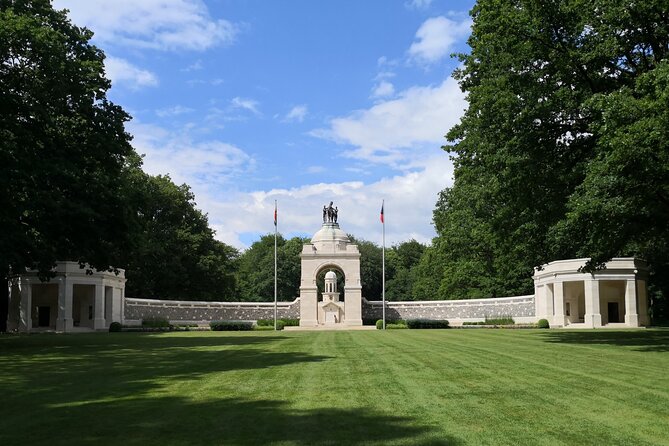
What you’ll see is very specific in design: it was designed by Sir Herbert Baker, with assistant architect Arthur James Scott Hutton and sculpture by Alfred Turner. The monument includes a flint and stone screen on either side of an archway, with shelters at each end. On top of the arch is Turner’s bronze statue of two men and a war horse.
The symbolism is explained through the figures: the two male forms represent Castor and Pollux, representing the two white races of South Africa. It’s a historical choice of imagery, and it gives you something to think about beyond names and dates.
Scheduled time is about 40 minutes. That’s a good pace for reading the memorial context and then walking away with a clearer sense of what this part of the front represented to South Africans.
Stop 6: Peronne Historial in a medieval castle (trenches, uniforms, trench artists)
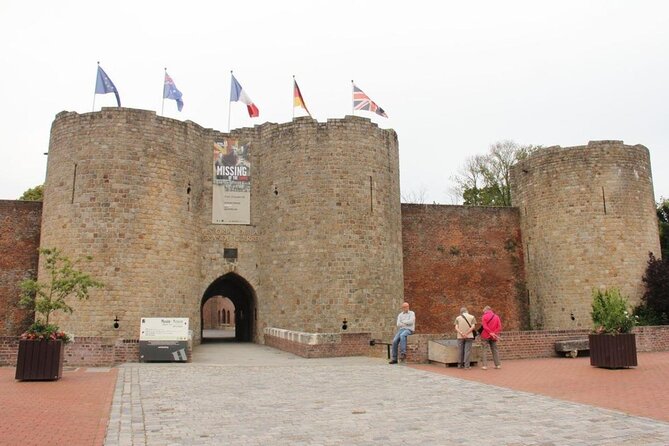
After lunch time (not included), you finish at the Historial in Péronne inside a 13th-century medieval castle. This is where the tour widens the lens from front-line moments to the broader human experience of the war.
This museum’s approach focuses on daily life at the front—military and civilian life affected across the whole society pulled into conflict. The exhibits include uniforms and weapons used by soldiers, and there’s a permanent collection of trench artists, including work by Otto Dix. That’s where you start seeing how people tried to record what they were living through, even when it was impossible to make sense of.
You’ll also see a layout built around movement through “front life.” Soldiers of different nationalities appear through mannequins in uniform with personal effects. Weapons and military equipment sit in the center of galleries, placed in pits on the floor to echo the trench-riddled terrain of the Somme. The museum even uses white marble pits in the floor to symbolize the territory shaped by trenches and suffering.
If you’re trying to make sense of the war as a system—not just battlefield moments—this museum helps. It frames what happened as something that involved entire populations, not just the men who advanced.
Scheduled time is about 1 hour, which is workable because the museum is designed to guide your attention quickly. If you feel yourself rushing, prioritize the trench-artist works and the gallery sections that connect weapons to daily survival.
Food, pacing, and what to pack for a 12–13 hour WWI marathon
This tour is a day run with multiple time-boxed stops: roughly 10 minutes for Lochnagar Crater, then 30 minutes at Ulster Memorial Tower and the Thiepval museum, 1 hour at Beaumont-Hamel, 40 minutes at Delville Wood, and 1 hour at the Péronne museum. Add travel time and you’re out of Paris for a long stretch.
Lunch is not included, so you’ll want to plan either a quick sandwich-style meal you can grab near a stop, or set expectations to buy food yourself during the day. The guide can usually help with practical suggestions, but the cost and timing decisions are yours.
Pack basics:
- Comfortable walking shoes (even where paths look calm)
- A layer for early morning and museum interiors
- A small water bottle if you like to sip between stops
The other pacing reality is emotional. Some sites hit fast, like the crater and machine-gun displays. Others sink in slowly, like preserved trenches. If you need breathing room, build it into your questions to the guide: ask for one extra historical point you care about, then take a short pause.
Price and value: is $976.96 per group fair?
The price is $976.96 per group (up to 2 people). That might sound steep until you look at what’s being bundled: private transportation from Paris, hotel pickup and drop-off in listed districts, an air-conditioned vehicle, a driver-guide, and at least one museum admission clearly included.
Here’s the value logic I see. If you split a private van cost across two people, you’re buying back time and control. You avoid rail schedules and transfers. You also avoid the “stand there and wait” feeling that can happen on busier group tours—especially when you’re trying to read memorial plaques or sit with a museum display for a moment longer.
Is it cheaper per person than public transit and self-guided driving? Probably. But the Somme day has a high logistics tax if you try to do it alone in one trip. This tour pays that tax for you. You get a guided “why this place matters” story while you’re traveling, so the hours feel purposeful instead of exhausting.
Who should book this Somme tour (and who might prefer something else)
This is a strong match for you if:
- You want a guided day with a clear, structured plan
- You like seeing the battlefield and then understanding it in museums
- You prefer private pacing over group schedules
- You’re traveling as a couple or small pair and can use the van capacity
It may be less ideal if:
- You hate early mornings
- You need a slow, low-pressure pace with long stops and lots of downtime
- You strongly dislike museums or long drives (because this day has both)
Should you book this Somme battlefields private tour from Paris?
If you’re aiming for one meaningful day that gives you context, geography, and museum perspective, I think this is a smart way to do it. The strongest part is the pairing of field sites—craters, memorials, preserved trenches—with museum stops that explain how and why. It turns the Somme into something you can actually track in your head.
Book it if you want a guided, private rhythm and you don’t mind a full day. Skip it if you want a lighter schedule, flexible pacing, or a longer multi-day visit where you can linger longer per location.
FAQ
What time does the tour start?
The tour starts at 6:30 am.
How long is the Somme private tour from Paris?
It runs about 12 to 13 hours.
What’s the group size?
It’s private, and only your group participates. The price is for up to 2 people.
Is pickup from my Paris hotel included?
Hotel pickup and drop-off are offered in these districts only: 75008, 75007, and 75016.
Is the tour offered in English?
Yes, the tour is offered in English.
Do I get tickets for entry?
You’ll have a mobile ticket. The schedule includes museum admissions, including the Historial de la Grande Guerre museum in Péronne.
What’s included in the price, and what isn’t?
Included: private transportation, air-conditioned vehicle, driver-guide, and admission to the Historial museum in Péronne. Not included: lunch and gratuities.
Is lunch provided?
No, lunch is not included.
Can I cancel for a full refund?
Yes. Free cancellation is available if you cancel up to 24 hours in advance of the start time.