REVIEW · PARIS
A Day of Exploring Black Paris
Book on Viator →Operated by AfroNomadik Tours & Experiences · Bookable on Viator
Black Paris changes how you see the city. This Black-centered day pairs a tight route with stories from Knight, so the landmarks feel linked to real people and real choices. I love the breakfast start at Les Deux Magots, and I love how the day mixes well-known names with places like Présence Africaine that shaped African and diasporic thought.
The pacing also works. It runs about 6 hours, stays in a small group (up to 10), and includes an all-day Metro pass, which makes the logistics easy once you’re on the move.
One thing to plan for: it’s a walk-heavy day with stairs at times. If you have limits with walking or getting on and off public transit, you’ll want to think it through before booking.
In This Review
- Key things to know before you go
- Why this Black Paris route feels different from a standard day
- Starting at Les Deux Magots: breakfast plus literary connections
- Présence Africaine bookstore: ideas you can still follow today
- La Rhumerie and French Caribbean ties
- Pigalle: the nightlife quarter through a Black lens
- Goutte-d’Or walk: markets, migration, everyday Paris
- Finishing at BMK Paris-Bamako: time to reflect (and what to budget)
- Getting around: Metro pass, walking pace, and where stairs show up
- Value for $216.48: what you get for the 6-hour block
- What Knight adds beyond the stops
- Who should book this tour, and who should skip
- Should you book this Black Paris tour?
- FAQ
- How long is the Black Paris day tour?
- What’s included in the breakfast?
- Is lunch included at the end?
- How big is the group?
- Is the tour offered in English?
- What does the tour include for getting around?
- Can I get a full refund if I cancel?
- What happens if the weather is bad?
Key things to know before you go
- Breakfast at Les Deux Magots sets the tone fast, with a light French start included.
- Présence Africaine (since 1949) is a major intellectual stop, not just a storefront photo op.
- La Rhumerie (founded 1932) connects Paris to the French Caribbean through a rum-house story.
- Pigalle and Goutte-d’Or show Black Paris through neighborhoods, performance, and everyday commerce.
- BMK Paris-Bamako gives you a relaxed ending point with time to reflect (and options to buy lunch on your own).
Why this Black Paris route feels different from a standard day
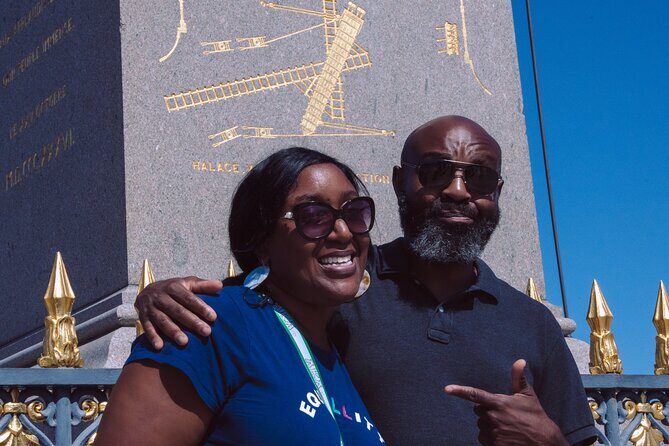
Paris has a way of making you look forward. This tour slows you down just enough to look back, and it does it with a clear theme: Black Parisian history and culture across literature, ideas, nightlife, and neighborhoods.
What I like about the setup is that you’re not just collecting sights. You’re getting context while you walk. Knight keeps the day moving, but the point is understanding how Paris ties into the African diaspora through writers, performers, publishers, and community spaces. It’s the kind of framing that can make a city feel personal instead of generic.
Also, the group size matters. With a maximum of 10 people, you get a real chance to ask questions instead of shouting at a distant guide.
You can also read our reviews of more tours and experiences in Paris.


Starting at Les Deux Magots: breakfast plus literary connections
Your day begins at 6 Pl. Saint-Germain des Prés, with a start time of 10:00 am. The first stop is Les Deux Magots, a historic literary café. You meet the group here and settle in with a light French breakfast that includes a croissant, bread with Poitou-Charentes butter, and your choice of a hot drink.
Why this start works: Les Deux Magots isn’t presented as a museum piece. It’s treated as part of the living brain of Paris—where conversations, writers, and ideas have shaped the city’s public face. Knight uses the café’s place in Parisian intellectual life to connect to the Black writers who lived and worked in the city, so you’re not just eating pastries while staring at history. You’re learning the why behind the place.
Practical note: cafés can be busy, so if you’re sensitive to noise or crowds, arrive with a calm mindset. The tour includes time for a meet and greet, so you’re not rushed.
Présence Africaine bookstore: ideas you can still follow today
Next up is Présence Africaine, a landmark bookstore and publishing house founded in 1949. This stop is one of the clearest “why it matters” moments in the whole day.
The focus isn’t only on books. You learn how Présence Africaine played a central role in African and diasporic intellectual life in Paris—helping connect writers, thinkers, and movements across Africa, the Caribbean, and Europe. It’s the kind of place that helps explain how ideas traveled and how communities built platforms for themselves.
Why I think this stop is a high-value use of time: most tours mention Paris publishing in passing. Here, it’s the topic. If you care about literature, politics, art, or activism, this is the point where the day becomes more than a walking tour of names.
La Rhumerie and French Caribbean ties
Then the tour shifts to La Rhumerie, a historic rum house founded in 1932, with roots in the French Caribbean. This is where you start to see Paris as a port city in culture, not just geography.
Knight explains the cultural and economic ties between Paris and the Caribbean through the rum-house story. It’s a simple concept, but it hits: everyday products, businesses, and family-run institutions carry history across oceans.
This stop can also be a useful breather. The rhythm of the day has you walking from neighborhood to neighborhood, so having time dedicated to a single focused place helps the information stick.
Pigalle: the nightlife quarter through a Black lens
From there, you head to Pigalle, a neighborhood shaped by Black performers, venues, and cultural exchange in the early 20th century.
You’ll learn how music, nightlife, and migration transformed Pigalle—and why it played an important role in Black Parisian history. This is a part of Paris many visitors see through the lens of nightlife and theaters, but not always through the lens of community and performance-driven culture.
What I like here is that the stop treats art and nightlife as history-making forces. It’s not only about who lived where; it’s about what the scene made possible—new audiences, new styles, and new social connections.

Goutte-d’Or walk: markets, migration, everyday Paris
Next is La Goutte d’Or, known for African communities and for being a cultural and commercial hub within Paris. You walk local streets and market areas, and the emphasis stays on everyday life.
The value of this stop is that it helps you read the city in real time. Neighborhoods like this aren’t “chapters” locked in the past. They are active spaces where people work, shop, socialize, and carry culture forward.
One consideration: market streets involve uneven sidewalks, stop-start walking, and crowds. Wear shoes you can rely on for a few solid hours.
Finishing at BMK Paris-Bamako: time to reflect (and what to budget)
The tour ends at an African restaurant: BMK Paris-Bamako at 14 Rue de la Fidélité, 75010 Paris. You get about one hour to relax, reflect, and share highlights from the day.
Here’s the practical catch: lunch isn’t included at BMK Paris-Bamako. The tour includes your breakfast earlier, and the rest of your day is about walking, Metro rides, and learning. So if you want a full meal at the end, budget for it.
I also like that the finish gives you decompression time. After hours of moving and absorbing context, having a calm landing spot is more than comfort—it helps you turn the day into memories instead of facts you’ll forget.
Getting around: Metro pass, walking pace, and where stairs show up
This is a public-transport day. You get an all-day Metro pass, and you’ll use the Metro and walking to connect neighborhoods. The tour is designed to keep the route efficient, but Paris is Paris: expect stairs at stations, and expect your calves to learn French.
The tour is about moderate physical fitness. One of the most repeated pieces of advice from the experience is simple: wear comfortable walking shoes, and plan for a lot of walking.
A small group also affects logistics. With up to 10 people, the guide can manage the pace and adjust when needed, so you don’t feel like you’re being dragged along.
Value for $216.48: what you get for the 6-hour block
At $216.48 per person, this isn’t a budget tour. But it does several things that many cheaper tours skip.
You get:
- A guided, Black-centered itinerary for about 6 hours
- A light French breakfast (croissant, bread with butter, hot drink)
- An all-day Metro pass
- A small group size (maximum of 10), which usually means more interaction time
When you factor in the Metro pass and the included breakfast, the price starts looking less like “just a guide,” and more like “a full day organized around a theme.” You’re paying for routing, context, and the fact that the stops include places with real cultural weight—especially Présence Africaine and La Rhumerie, which are not typical tourist checklists.
Booking also tends to fill in advance (it’s commonly booked about 35 days ahead on average). If your dates are fixed, don’t wait.
What Knight adds beyond the stops
The tour’s standout isn’t only the itinerary. It’s the way Knight connects points into a single day.
From the way the day is described, Knight blends:
- Storytelling tied to places
- Clear links between early 20th-century figures and later cultural and political movements
- A warm, personable style that keeps the group engaged
You’ll also get practical guidance during the day. One example that comes up in the experience: advice on good places to eat. And it’s smart that the guide emphasizes respectful behavior—like not filming people without consent in neighborhood spaces where people actually live and work.
Who should book this tour, and who should skip
This is a great fit if you want:
- A Black Paris perspective that goes beyond monuments
- A day focused on culture, ideas, and community spaces—not just photo stops
- A smaller group day where you can ask questions
- A mix of history and modern neighborhood life
You might consider skipping (or at least thinking carefully) if:
- You have strong mobility limits. This is a walking day, and stairs can come with Metro rides.
- You hate public transit or crowded stations.
- You’re looking for a fully seated experience.
Should you book this Black Paris tour?
If your goal is to see Paris with a new set of lenses, I think this is an easy yes. The day is built around meaningful stops—Les Deux Magots, Présence Africaine, La Rhumerie, Pigalle, Goutte-d’Or, and BMK Paris-Bamako—and the small group size makes it feel like a conversation, not a lecture.
Just go in prepared. Bring comfortable shoes, expect a few stair-heavy Metro segments, and budget for lunch at the end since it isn’t included. If you do those things, you’ll leave with the kind of Paris understanding that usually takes multiple trips to piece together.
FAQ
How long is the Black Paris day tour?
It runs for about 6 hours.
What’s included in the breakfast?
You get a croissant, bread with Poitou-Charentes butter, and a choice of hot drink.
Is lunch included at the end?
Lunch at BMK Paris-Bamako is not included.
How big is the group?
The tour has a maximum of 10 travelers.
Is the tour offered in English?
Yes, it’s offered in English.
What does the tour include for getting around?
You receive an all-day Metro pass.
Can I get a full refund if I cancel?
Yes. You can cancel up to 24 hours in advance for a full refund.
What happens if the weather is bad?
This tour requires good weather. If it’s canceled due to poor weather, you’ll be offered a different date or a full refund.