REVIEW · PARIS
Private Tour of Paris in a convertible citroën 2CV
Book on Viator →Operated by Paris by JB · Bookable on Viator
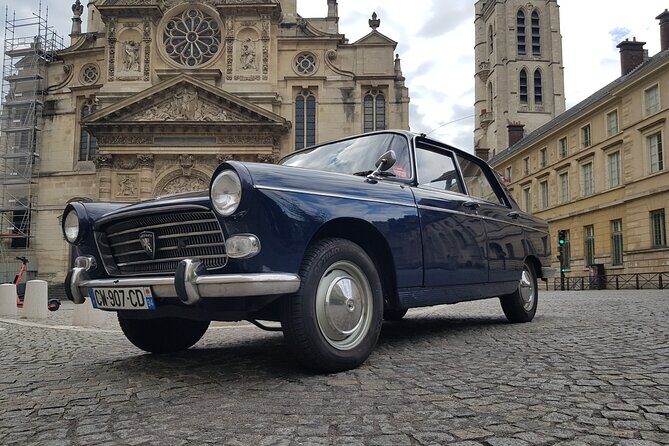
A blue 2CV is a fun way to get oriented fast. You get classic Paris sights in one tight loop, with panoramic views and frequent chances to stop for photos. It is a private tour, so you control the pace instead of being packed onto a bus.
I like two things most: the flexibility to hop out for pictures where you want, and the way Jean-Baptiste (JB) connects monuments to the stories that explain what you are seeing. One possible drawback: this is a short, highlights-only route, and entrance tickets are not included.
Also note the car is weather-dependent. If the forecast looks bad, the experience can be rescheduled or refunded, so plan your day with a little buffer.
In This Review
- Key highlights at a glance
- Paris in a blue 2CV: the vibe and what you actually get
- Pickup, private group size, and how the 1-hour route works
- From Hôtel de Crillon to Louxor Obelisk: starting with scale and story
- The most beautiful Avenue in the world: luxury, brasseries, and easy photo moments
- Place de l’Étoile circuit: Arc energy without the long slog
- Pont d’Iéna to Champ de Mars: framing the Eiffel Tower the smart way
- Alexandre III bridge to Grand and Petit Palais: cinematic Paris in motion
- Church stop for high-society weddings: Paris fiction meets real streets
- Galeries Lafayette, Café de la Paix, and Avenue de l’Opéra: shopping belt with spectacle
- Austerlitz Column to the standard meter: monuments with side quests
- Molière and the fashion-and-design street: where culture starts on a small scale
- Cardinal Richelieu’s residence, the Ministry of Culture, and the Council of State
- Louvre area and the glass pyramid since 1989
- The 1900 World’s Fair station and Jacquemart’s Rhinoceros
- Palais Bourbon: neoclassical architecture and 577 deputies
- Price and value: paying for time, photos, and comfort
- Weather, open-top comfort, and practical tips for a smooth ride
- Who should book this 2CV tour, and who should skip it
- Should you book this Private Tour of Paris in a convertible Citroën 2CV?
- FAQ
- How long is the Private Tour of Paris in a convertible citroën 2CV?
- What is the group size limit?
- Is pickup available?
- Is the tour offered in English?
- Are entrance tickets to attractions included?
- Do I get a mobile ticket?
- Is the tour private?
- Does the tour require good weather?
- Can service animals join?
- What is the cancellation policy?
Key highlights at a glance
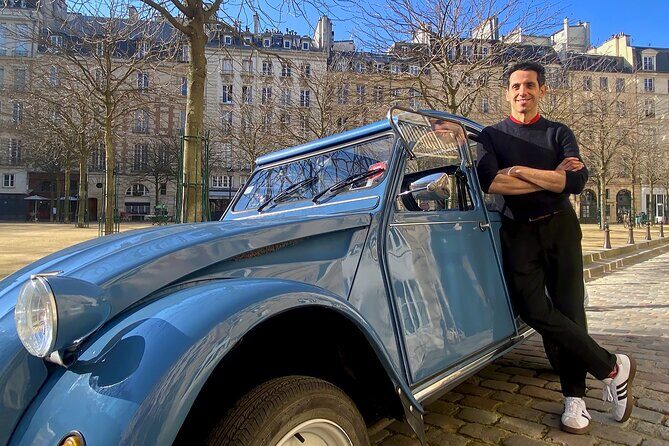
- Open-top 2CV views that make landmarks feel close, even from the street
- Private group up to 3, so you can ask questions and steer the photo stops
- Jean-Baptiste (JB) shares local, city-specific context while navigating efficiently
- Landmark-heavy route built to cover big areas fast without long walking treks
- Flexible stop-and-snap moments at major photo points like Eiffel Tower viewpoints
- Entrance tickets not included, so most value comes from views and photo stops
Paris in a blue 2CV: the vibe and what you actually get
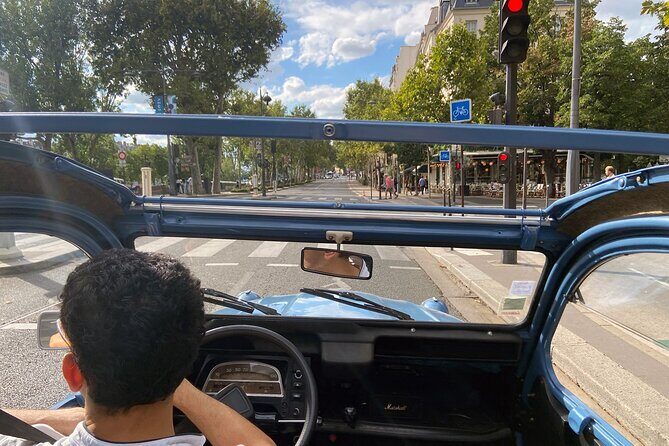
Paris has a lot of ways to tour it. This one does not try to replace museums or guided ticketed visits. Instead, it does something more practical: it helps you see the city shape and key landmarks in a very compact time window.
The open-top convertible style matters. With the top down, you get that breezy, street-level feeling of Paris instead of watching everything through glass. That helps for skyline shots too, since your camera angle is higher and the light can hit differently along the boulevard-side views.
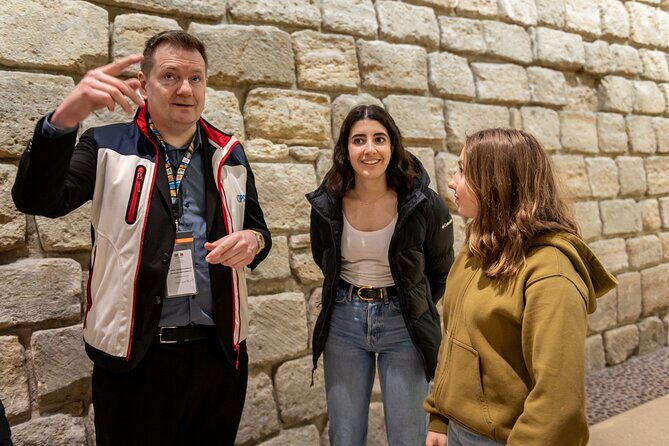
The other big ingredient is the guide. Jean-Baptiste is described as personable, professional, and warm, and he is also a native Parisian. That mix is why the tour feels less like a checklist and more like a smooth introduction to how neighborhoods and monuments connect.
You can also read our reviews of more private tours in Paris



Pickup, private group size, and how the 1-hour route works
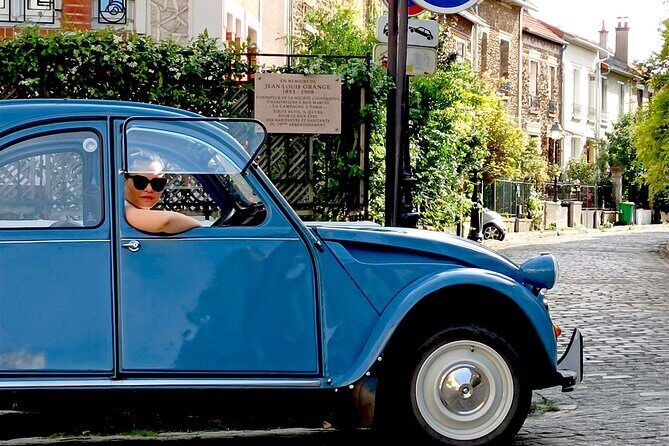
This is priced per group (up to 3 people), and it is private. That is a big deal in Paris, where time disappears quickly and public transit can mean multiple transfers just to reach the next sight.
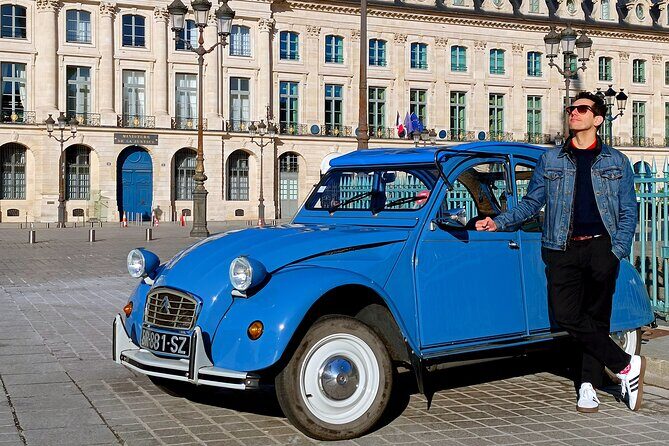
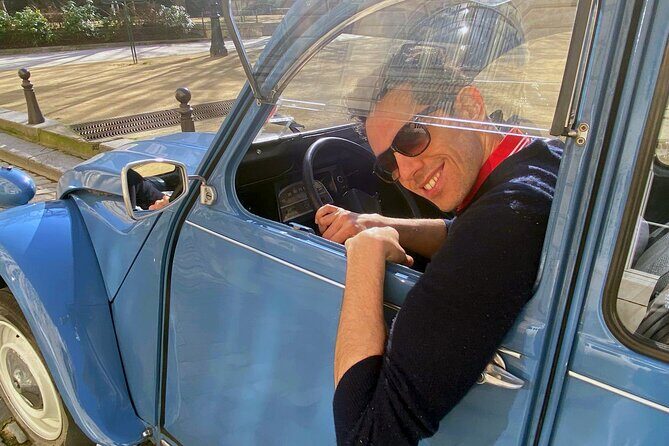
Pickup is straightforward. You meet Jean-Baptiste in front of the address you selected, next to a small blue convertible car. You are also given a mobile ticket, which keeps things simple on arrival.
Duration is listed as about one hour. In real life, the experience still feels like you are getting good value for time because the car reduces the dead time between stops. The plan is built around major sights that are either easy to view from the street or make sense for quick photo breaks.
One caution: because it is short, you will not see everything in depth. Think of it as a first-day orientation and photo tour, not a replacement for museum days.
From Hôtel de Crillon to Louxor Obelisk: starting with scale and story
The tour kicks off around Hôtel de Crillon and the Louxor obelisk. This is a great first stop because it immediately grounds you in how Paris uses monumental art to shape perspective.
Hotels and obelisks here are not just scenery. They help you understand the grand layout of central Paris: wide streets, big open spaces, and sightlines designed so you feel the scale of the city as you move.
Even if you do not know the details yet, you will likely get something out of the setting right away. The obelisk stands like a landmark you can recognize later from photos, and it sets the tone for the rest of the route: this is Paris at boulevard distance.
The most beautiful Avenue in the world: luxury, brasseries, and easy photo moments
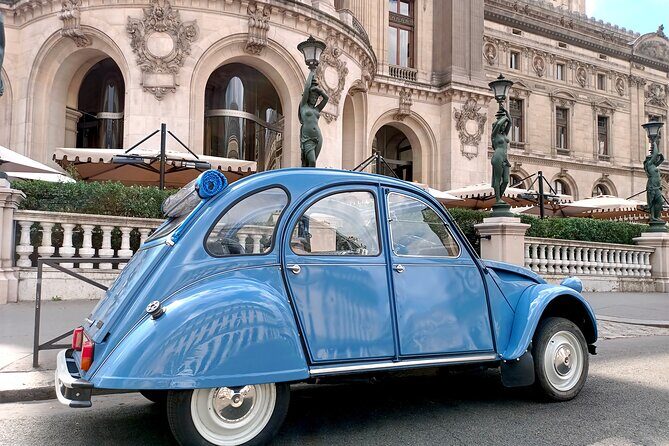
Next comes the avenue locals highlight as one of the most beautiful in the world. You will pass luxury boutiques and famous brasseries, which is exactly the kind of Paris detail that makes the city feel specific rather than generic.
This stretch is useful for two reasons. First, it shows you where high-end shopping and dining clusters in a way you can map later. Second, it gives you a relaxing buffer: you are not required to march long distances on foot, so you can enjoy the views and casually plan what you want to revisit later.
When you do this early in your trip, you can turn that shopping belt into a smart walking day later, because you already understand the geography.
Place de l’Étoile circuit: Arc energy without the long slog
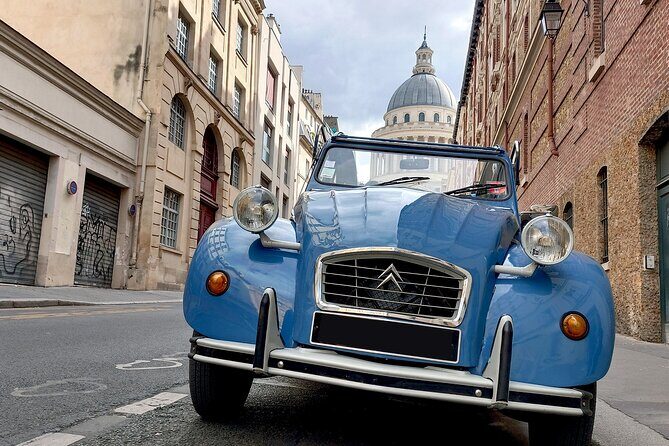
A tour of Paris by car is rarely complete without at least one look around Place de l’Étoile. Here, you get the famous settings associated with Napoleon I’s victories and the Flame of the Unknown Soldier.
What makes this worthwhile is the way it reframes the monuments. From the street, you can take in the geometry of the square, the roads that fan out like spokes, and how Paris funnels movement around major memorial sites.
It is also a prime photo opportunity. You can hop out when it makes sense for your timing and then get back in. That stop-and-go style is a major reason the 2CV format works better than some rigid guided tours.


Pont d’Iéna to Champ de Mars: framing the Eiffel Tower the smart way
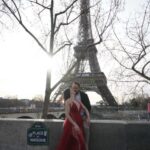
One of the most memorable sequences is the drive past Pont d’Iéna, then along Avenue de Suffren and near École Militaire, which frame the Champ de Mars and the Eiffel Tower.
This part is all about viewpoint logic. The Eiffel Tower can look different depending on where you stand, and the surrounding avenues help you understand why the city built those broad perspectives. Seeing it from the right angles matters more than ticking off a single photo spot.
From a comfort standpoint, this is where the convertible car shines. You keep moving between viewpoints without the energy drain of walking long distances. That means you arrive at the Eiffel Tower area with more enthusiasm for pictures instead of arriving tired.
Alexandre III bridge to Grand and Petit Palais: cinematic Paris in motion
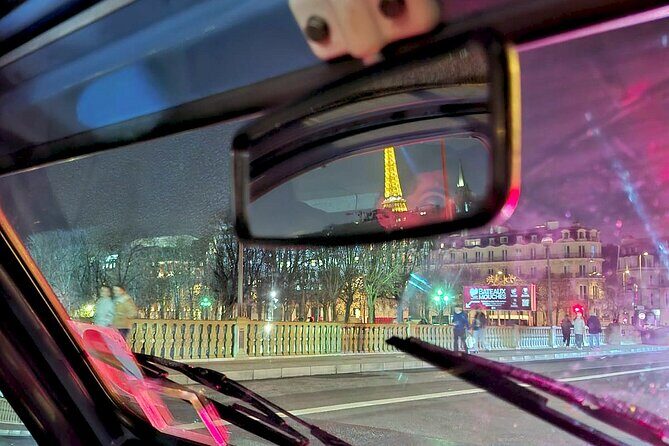
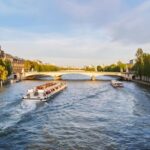
You then cross Alexandre III, one of the most famous bridges for classic photo compositions. On the other side, the route brings you toward the Grand and Petit Palais, where many films are shot.
Even if you never plan to do a film-locations crawl, this area helps you recognize how Paris has both style and structure. The bridges, rooftops, and institutional buildings create the kind of layered backdrop that makes photos feel like they could be from a movie.
The Grand Palais glass roof gets attention for a reason. It is a striking mix of architecture and light, and the smaller Palais across the street on Avenue Winston Churchill adds visual balance to the scene.
If your goal is to learn Paris fast, this stop is useful because it shows you the city’s cultural center of gravity: big public-facing buildings, performance-adjacent spaces, and landmark-scale design.
Church stop for high-society weddings: Paris fiction meets real streets
The route includes an example of early 19th-century neoclassical architecture, a church tied to the idea of high-society weddings, referenced in Guy de Maupassant’s Bel Ami.
This is one of those stops that is quietly clever. Instead of only seeing monuments that scream tourist, you also get architecture that shows how Paris lifestyle appears in literature.
The drawback is simple: you may not recognize the connection instantly if you are not thinking about Bel Ami. But if you like tying art to place, this type of stop gives you a memorable thread for your trip.
Galeries Lafayette, Café de la Paix, and Avenue de l’Opéra: shopping belt with spectacle
Next is the crown jewel of Haussmannian Paris, surrounded by Galeries Lafayette, Café de la Paix, and Avenue de l’Opéra. This is the kind of stop that makes the city feel theatrical.
You also pass boutiques known for diamond jewelry brands like Cartier, Tiffany, and Chanel. Even if shopping is not your goal, the boulevard context helps you understand where luxury sits in Paris’s urban design.
And because you are in a car, you can do something many people skip: slow down your attention. You can look up at façades, notice how streets meet, and get a feel for how crowds move around major commercial corners.
If you plan to return for a nighttime stroll, this stop gives you the map. If you do not, it still gives you a memorable snapshot of how Paris blends grandeur with everyday shopping.
Austerlitz Column to the standard meter: monuments with side quests
After that, you go past the Austerlitz Column and the Ritz Hotel, then see the standard meter. This is a fascinating mix because it includes both image-heavy landmarks and a more science/measurement-related curiosity.
The Austerlitz Column connects you to Napoleon-era symbolism, while the Ritz Hotel represents modern Paris glamour in the same general historical conversation. The standard meter adds a different angle: Paris is not only art and fashion, it has also played a role in the way the world measures and standardizes.
Even in a short tour, this is the kind of variety that makes it feel more like an education than a ride around town.
Molière and the fashion-and-design street: where culture starts on a small scale
You then pass a street of fashion and design that is also where Molière was born in 1622. This is a reminder that the most influential people in Paris history are not always tied to the biggest monuments.
I like this stop because it gives you a different Paris rhythm. It is not only “big vista, big photo.” It is also “small street, famous name,” which is often how real Paris exploration feels on foot.
If you are the type who likes to build a mental calendar of the city, this helps. You start to notice how cultural heritage lives in ordinary-looking addresses.
Cardinal Richelieu’s residence, the Ministry of Culture, and the Council of State
The tour continues to the former residence of Cardinal Richelieu, now home to the Ministry of Culture and the Council of State, with a 17th-century garden.
This is a great stop for understanding how Paris uses old power structures and repurposes them. You get a sense of continuity: buildings connected to governance and influence, but also linked to visible gardens and architectural calm.
Even if you only view from the street, the garden detail matters. It signals that this is not all stone and offices. Paris often hides small pockets of quiet inside institutions.
Louvre area and the glass pyramid since 1989
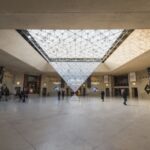
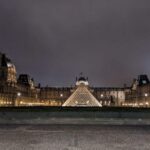
Next is a major transition: the route goes by the former residence of the Kings of France, later associated with the Mona Lisa, and the glass pyramid since 1989.
This is one of the most recognizable Paris scenes, and it is also a smart inclusion because it bridges the city’s royal past with its modern museum identity. The glass pyramid is visually bold, and seeing it from the correct viewpoint can help you connect the Louvre complex as more than one museum entrance.
If you already have a Louvre visit planned, this stop helps you decide which side of the complex you want to enter from on your ticketed day.
The 1900 World’s Fair station and Jacquemart’s Rhinoceros
Then you pass a former railway station built for the opening of the 1900 World’s Fair, and you will see Jacquemart’s Rhinoceros.
This is one of those details that tends to impress because it feels like a small story inside a big building. Paris can be like that: monumental spaces with quirky sculptural references.
The value here is not only the object. It is the idea that Paris repurposes spaces. Old rail infrastructure becomes cultural space, and once you notice that, your understanding of Paris becomes more complete.
Palais Bourbon: neoclassical architecture and 577 deputies
Finally, the route includes Palais Bourbon, another example of neoclassical architecture, where the 577 French deputies meet.
This stop gives you a direct sense of how Paris functions as a political center. It is also a reminder that not every major Paris landmark is about romance. Some are about governance and how the country organizes itself.
If you want to understand Paris beyond postcard images, this is a useful closing note. It broadens the trip from monuments alone to the institutions that shape daily life.
Price and value: paying for time, photos, and comfort
At $132.75 per group (up to 3), this is one of those prices that makes sense if you think in terms of convenience per hour, not per person.
If you split the cost with two friends or family members, the effective per-person rate drops quickly. Even if you are traveling as a couple, the private format gives you control over stops, which is where the value shows.
You are paying for:
- Private transportation that gets you from sight to sight efficiently
- A guide who adds context so the landmarks mean something
- The ability to stop for photos and get back into the car fast
One thing to keep in mind: entrance tickets are not included. So if you are expecting ticketed museum time, this is not that. But if you want major-sight views, photo breaks, and a clean orientation to the city in a short window, it is a strong match.
Weather, open-top comfort, and practical tips for a smooth ride
Because it is a convertible, the weather affects your comfort. The experience requires good weather, and if it gets canceled due to poor weather you are offered a different date or a full refund.
On a practical level, plan your outfit like you are going to be outside walking for part of the day. Bring a light layer for breezy moments and keep your phone/camera secured for quick exits.
Also, aim for a time of day when you want the light on façades and bridges. If you have flexibility, dusk can be great for the Eiffel Tower area, since the city looks especially photogenic when it shifts into evening tones.
Who should book this 2CV tour, and who should skip it
Book it if you:
- Want a quick, high-impact way to get oriented in Paris on a first or short visit
- Care about photo stops and prefer flexibility over rigid schedules
- Like learning short, location-based stories while you move through the city
- Travel with a small group (up to 3) and want privacy
Skip it if you:
- Want long museum time or entrance tickets included
- Prefer slow neighborhood wandering on foot
- Need a tour that runs regardless of weather
Should you book this Private Tour of Paris in a convertible Citroën 2CV?
If you have only one day, or you want an easy “Paris overview” before committing to museums and specific neighborhoods, I think this is an excellent way to start. The car format makes the route efficient, and the guide’s city-specific storytelling helps you remember what you saw.
Just go in knowing the goal: views, photo moments, and a fast city map. If that fits your travel style, you will likely come away feeling like Paris finally made sense.
FAQ
How long is the Private Tour of Paris in a convertible citroën 2CV?
The duration is approximately 1 hour.
What is the group size limit?
The tour is private, and it is for up to 3 people per group.
Is pickup available?
Yes. The guide waits in front of the address you selected, next to a small blue convertible car.
Is the tour offered in English?
Yes, it is offered in English.
Are entrance tickets to attractions included?
No. Entrance tickets are not included.
Do I get a mobile ticket?
Yes, a mobile ticket is included.
Is the tour private?
Yes. Only your group participates.
Does the tour require good weather?
Yes. The experience requires good weather. If it is canceled due to poor weather, you are offered a different date or a full refund.
Can service animals join?
Yes, service animals are allowed.
What is the cancellation policy?
You can cancel for free up to 24 hours in advance for a full refund. If you cancel less than 24 hours before the start time, the amount paid is not refunded.