REVIEW · PARIS
All about meringue: a pastry & culinary arts workshop in Paris
Book on Viator →Operated by iN ARTS · Bookable on Viator
Meringue lessons in Paris are oddly satisfying. In a 3-hour hands-on workshop, you’ll create desserts built on French, Swiss, and Italian meringue, plus the creams that go with them, and you’ll hear the stories behind icons like Pavlova. I especially like the small-group feel and the clear, teacher-led explanations (with real cultural anecdotes mixed in, not just recipe talk).
One thing to consider: you’re here to cook. If you only want passive sightseeing time, a pastry workshop may feel like a lot of kitchen action.
In This Review
- Key highlights before you go
- A dessert workshop with real technique, not just sweet talk
- The 3:00 pm flow and the small-group advantage (max 8)
- Your menu: Pavlova, lemon meringue pie, and meringuettes
- Pavlova: the meringue centerpiece
- Lemon meringue pie: tang meets stability
- Meringuettes: smaller portions, real technique
- French, Swiss, and Italian meringue: what changes and why it matters
- Lemon, whipped cream, and assembling like a pastry chef
- The Pavlova story and the cultural context you can repeat
- What English teaching feels like in a practical pastry class
- Where this workshop fits in your Paris plan
- Good fit for you if:
- Less ideal if:
- Value and who should book: a small-group craft lesson
- Should you book this meringue workshop?
- FAQ
- How long is the meringue workshop?
- What desserts will I make?
- Is the workshop offered in English?
- How big is the group?
- When does the workshop start?
- What is the cancellation policy?
Key highlights before you go
- Three meringue styles in one session: French, Swiss, and Italian, plus what changes when you make each one.
- A dessert set that makes sense: Pavlova, lemon meringue pie, and meringuettes.
- Creams and assembly practice, not just mixing batter. You learn how the pieces come together.
- Pavlova history and cultural context woven into technique, so it sticks.
- Maximum group size of 8, which helps the pastry chef stay close to what you’re doing.
A dessert workshop with real technique, not just sweet talk
Paris is full of food tours. This one is different because it treats dessert like a craft, not a souvenir. In English, you’ll practice the building blocks of meringue-based pastry and learn the reasoning behind the results. The goal isn’t only to say you made Pavlova. It’s to understand what gives each meringue its shape, texture, and stability.
I like that the workshop has both sides of the coin: hands-on pastry and the cultural stories around it. That combination helps you remember details. When you know the why, you can repeat the method later, even when you’re back home and working from memory.
You can also read our reviews of more tours and experiences in Paris.



The 3:00 pm flow and the small-group advantage (max 8)
You start at 3:00 pm and the experience ends back at the meeting point. The schedule is short, about 3 hours, so you’re not stuck all afternoon waiting around. This matters because meringue has timing. When eggs and sugar are involved, heat and whisking decisions affect the final texture.
The group size is capped at 8 travelers. That’s a big deal for a pastry class. It usually means you get personal attention when something is off, like meringue texture while it’s being mixed or when you’re ready to assemble a dessert. In the reviews, people kept pointing out attentive teaching and a relaxed, friendly vibe, and that fits the small-number setup.
Your menu: Pavlova, lemon meringue pie, and meringuettes
You’ll make multiple desserts based on different meringue approaches, so you’re not learning one technique in isolation. Expect a set that hits both the classic and the practical.
Pavlova: the meringue centerpiece
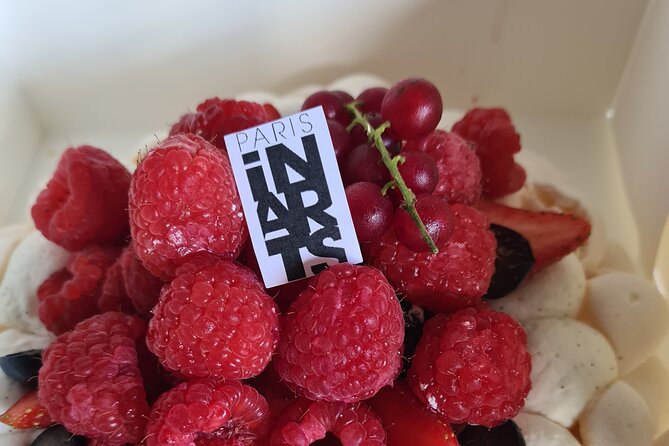
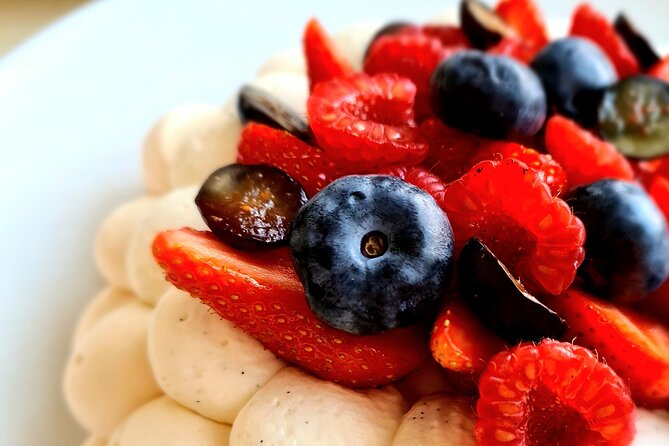
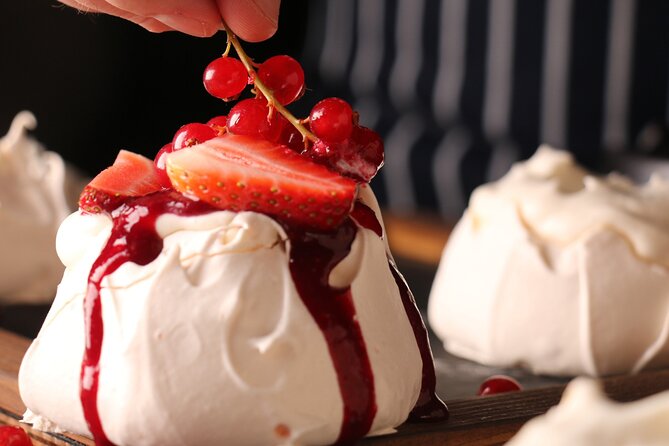
Pavlova is famous for its contrast: crisp outside, marshmallowy interior, and a topping that completes the look and flavor. In this workshop, Pavlova isn’t just a dish you assemble. You’ll learn how it connects to the broader story of meringue in French pastry culture.
Lemon meringue pie: tang meets stability
Lemon meringue pie is a balancing act. The lemon needs bite and structure, while the meringue needs to hold its form when it meets hot filling or changes in temperature. You’ll make it with lemon and learn how the meringue and the filling work as a pair.



Meringuettes: smaller portions, real technique
Meringuettes are not complicated, but they are precise. The size and shape matter. In class, that’s useful because it helps you practice the “make it right, not just make it sweet” mindset. If you want to build confidence, meringuettes are a strong stepping stone.
French, Swiss, and Italian meringue: what changes and why it matters
You’ll work with French, Swiss, and Italian meringues. Even if you’ve heard the names before, the workshop format is built to show the differences in a way you can feel in your hands.
Here’s the big idea you’ll want to carry with you: each style uses a different method of heating and mixing egg whites and sugar. That changes how stable the meringue becomes and how it behaves later.
- French meringue tends to be the familiar one: whisk whites and sugar and create volume, then bake to set. It’s great for lighter results, and it’s the kind of meringue where technique and timing show fast.
- Swiss meringue involves gentle heat while whisking. It’s often taught as a more forgiving route because the sugar dissolves more thoroughly before you whip it to full volume.
- Italian meringue uses hot sugar syrup added to egg whites. The texture often becomes glossy and firm, and it’s the kind of meringue that can hold up when used in assembled desserts.
In class, you’re not just watching the chef do it. You’ll make these versions and learn how your choices affect the outcome. That’s the practical value: you’ll know what to adjust next time.
Lemon, whipped cream, and assembling like a pastry chef
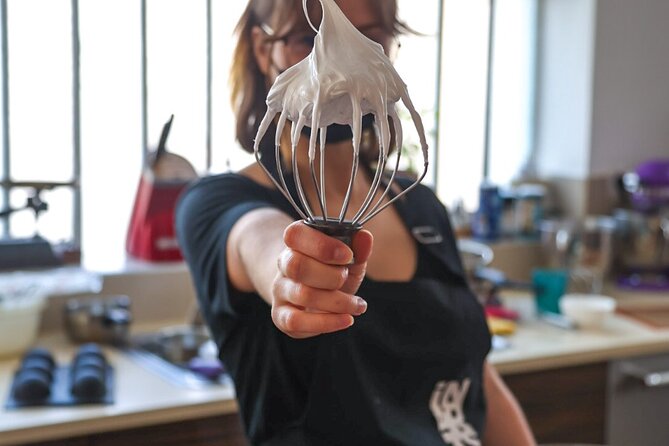
A lot of home dessert disappointment comes from assembly. It’s not the recipe you don’t know. It’s the final build step you rush.
In this workshop, you’ll work with creams and flavors that match the meringue theme: lemon and whipped cream, plus the actual assembly of the desserts. That means you practice the workflow that separates a good dessert from a photo-ready one.
What you’ll likely focus on as you assemble:
- keeping layers clean so textures don’t smear
- timing steps so the meringue stays crisp or retains the right chew
- making sure toppings go on when they won’t sabotage the structure
The best part of learning assembly in a class is that you get feedback while you’re doing it. Meringue is temperamental. The difference between correct and nearly correct can be a minute.
The Pavlova story and the cultural context you can repeat

This workshop includes history and cultural anecdotes, not as trivia dumps, but as context for why these desserts matter in French pastry traditions.
You’ll discover the history of the Pavlova, plus other cultural stories tied to these desserts. You’ll also talk about the history of French pastry and the major trends that traveled through the ages. That kind of framing is useful when you’re in Paris, because you’re surrounded by pastry shops and classic names. You start to connect the dots instead of just reading menus.
In the reviews, one standout point was that the chef’s advice and explanations were useful, and that the teacher, Evelyne, shared history in a way that made learning feel friendly rather than academic. That matters. If you enjoy food stories, you’ll probably enjoy the lesson format here because it keeps the history attached to the technique you’re making.
What English teaching feels like in a practical pastry class
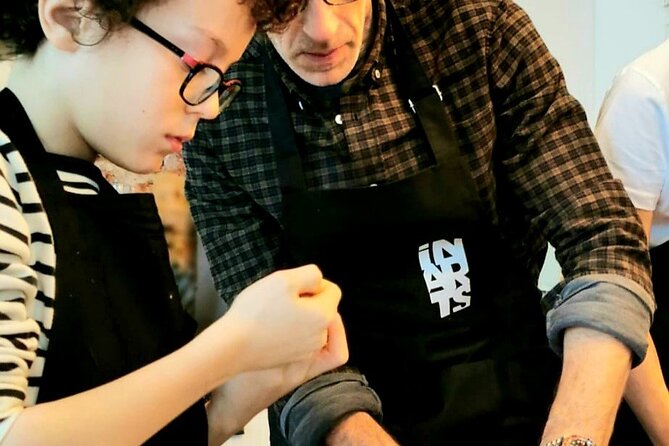
You’re told the workshop is offered in English, which is important. Pastry instruction has a lot of subtle cues. Things like the look of meringue, the stage of whipping, or the texture you should aim for don’t always translate with measurements alone.
What’s helpful is that the class is described as well framed and attentive to each participant. That usually means you’re not left to guess. You’ll get explanations that match what you’re seeing in real time, which is the fastest way to learn.
The workshop format also helps if you’re not an expert. Meringue is intimidating for many people, mostly because small errors can show up immediately. Clear, step-by-step coaching makes it manageable.
Where this workshop fits in your Paris plan
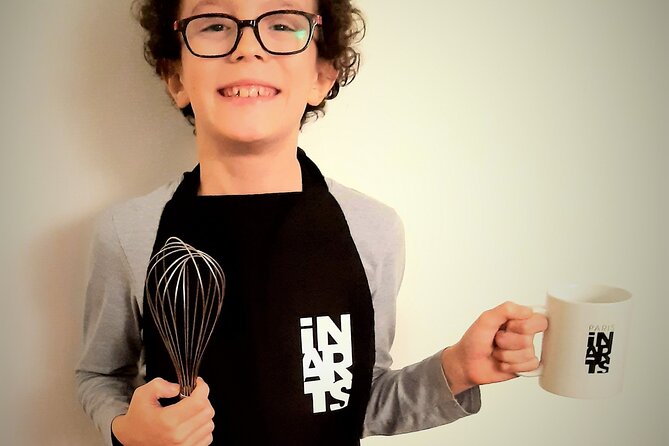
This is a great afternoon activity if you want something more personal than a museum run. It’s also a smart pick if you love desserts but don’t want to spend your time only eating them. You’ll leave with practical knowledge you can reuse.
Good fit for you if:
- you like French pastries and want the technique behind the classics
- you enjoy learning through hands-on practice
- you want a group activity that stays friendly and focused
- you’re the type who likes food stories, not just recipes
Less ideal if:
- you’re hoping for an all-walking, sightseeing-heavy tour
- you dislike hands-on cooking
- you prefer a longer session where you can fully slow down and experiment (this is about 3 hours, so it moves)
Value and who should book: a small-group craft lesson
Even without pricing details, you can judge value by what you get for your time. Here, your “payoff” is clear: multiple desserts, multiple meringue styles, and real assembly practice, all taught in a small group.
The maximum of 8 travelers supports that value because it prevents the most common problem in cooking classes: you get the gist, but you don’t get corrections. With a smaller class, your questions are more likely to land, and your technique can improve within the same session.
If you care about learning, this is the kind of class that sticks. If you care only about tasting, you may still enjoy it, but the main satisfaction comes from the process.
Should you book this meringue workshop?
If you want a hands-on Paris experience that mixes technique with storytelling, book it. The format is short enough to fit into a day, and the small-group cap of 8 supports real teaching. If you’re excited by Pavlova, lemon meringue pie, or meringuettes, you’ll leave with confidence that goes beyond eating.
If you hate cooking, or you’re looking for mostly sightseeing, this likely won’t be your style. But if you enjoy the idea of learning French pastry methods while working with meringue in a guided, friendly kitchen setting, this is a strong choice.
FAQ
How long is the meringue workshop?
It runs for about 3 hours.
What desserts will I make?
You’ll make Pavlova, lemon meringue pie, and meringuettes, using creams like lemon and whipped cream, and you’ll learn how to assemble them.
Is the workshop offered in English?
Yes, it is offered in English.
How big is the group?
The workshop has a maximum of 8 travelers.
When does the workshop start?
It starts at 3:00 pm.
What is the cancellation policy?
You can cancel for a full refund if you cancel at least 24 hours before the experience’s start time. If you cancel less than 24 hours before, the amount you paid will not be refunded.