REVIEW · PARIS
Charm and Secrets of Paris Passages: Private Tour
Book on Viator →Operated by Tours Truly · Bookable on Viator
Paris in passageways is a different Paris. This private tour is built for people who want the city’s quieter side, with a native Parisian style of storytelling and stop choices that most first-time routes skip. I like that it’s paced for real wandering, not a checklist sprint, and you get a friendly guide who can tailor answers as you go.
Two things I really appreciate: the covered arcades themselves (these lanes of iron, glass, and mosaics are a world apart from the big streets), and the fact that you still keep it practical with coffee and/or tea included. One thing to think about first: it’s priced per group and lasts about 1 to 2 hours, so it’s best value if you’re splitting the cost with up to five people.
In This Review
- Key Passage-Way Facts You’ll Care About
- Why Covered Passages Feel Like Paris’s Secret Side Streets
- Price and Group Value: When $275 Makes Sense
- Comédie-Française to Passage Verdeau: The Route That Keeps You Moving
- Palais-Royal Columns of Buren: A Photo Stop That Still Has Meaning
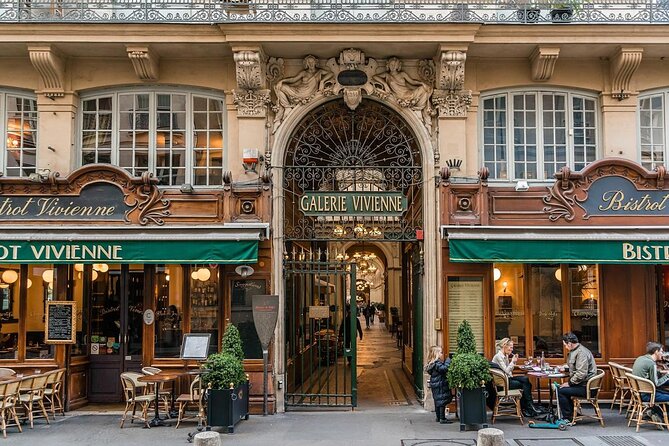
- Galerie Vivienne (Built 1823): Glass Light, Mosaic Floors, and Shops
- Passage des Panoramas (Oldest Covered Passage): Vintage Shops and Snack Energy
- Passage Jouffroy (1847): Iron-and-Glass Design Plus a Chopin Whiff of Legend
- Passage Verdeau: Antique Browsing Mood and a Clean Finish Line
- Coffee and Tea Break: Why That Included Pause Matters
- Timing, Walking, and What to Bring (So You Enjoy It, Not Just Survive It)
- Who This Tour Fits Best (And Who Might Want Something Else)
- Should You Book Charm and Secrets of Paris Passages?
- FAQ
- How long is the private Charm and Secrets of Paris Passages tour?
- How many people can be in the private tour group?
- Where does the tour start and end?
- What language is the tour offered in?
- Is there an admission fee for the stops?
- What’s included in the price?
- What should I know about umbrellas and gratuity?
Key Passage-Way Facts You’ll Care About
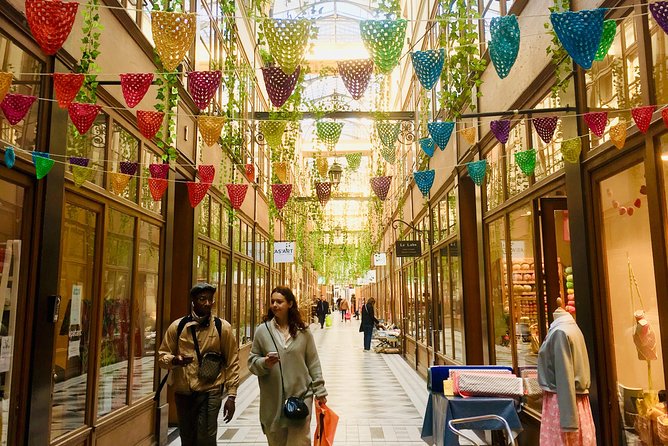
- Private guide for up to 5: one fee for your group, so the experience feels personal rather than rushed.
- Five covered passages in sequence: Palais-Royal → Galerie Vivienne → Passage des Panoramas → Passage Jouffroy → Passage Verdeau.
- Mostly free to enter: the tour stops you hit have free admission tickets listed for each main arcade.
- A coffee moment is built in: you’re not just touring cold stone and glass—you’ll get a break.
- Mobile ticket + public transport nearby: easy on the day, with a clear meeting spot by Comédie-Française.
Why Covered Passages Feel Like Paris’s Secret Side Streets
If you like Paris as more than postcard landmarks, these passages do the job. Covered passages are like time capsules: 19th-century shops and reading rooms under glass canopies, with floors that look made for slow footsteps. In just a short walk, you switch from grand boulevards to narrow corridors of commerce, craft, and people watching—exactly the kind of contrast that makes Paris feel bigger than a map.
What makes this tour especially workable is the mix of famous visuals and “you’d miss this alone” details. You get a quick, photo-ready stop at Palais-Royal’s columns, then you move into arcades where the drama is in the design: mosaic floors, neoclassical touches, old-school storefronts, and the special light that only happens under a canopy. The tour keeps the vibe relaxed, so you can actually look up, not just keep moving.
And because it’s private, you’re not stuck with a loud, schedule-driven herd. Your guide can answer questions as they pop up—where people shop, what a particular storefront is known for, and what to notice as you walk.
You can also read our reviews of more tours and experiences in Paris.

Price and Group Value: When $275 Makes Sense
The price is $275 per group up to five people. On paper, that can feel steep if you’re thinking solo. But the math changes fast once you split it:
- Up to 5 people means the per-person cost can drop dramatically compared with a solo ticket to most guided experiences.
You’re also not paying just for walking. You’re paying for:
- a private guide who points out the details,
- a structured route that saves you from guessing which arcades are worth your time,
- and coffee and/or tea included, which is an actual comfort upgrade on a 1–2 hour outing.
One more practical note: the listed duration is about 1 to 2 hours, which is short enough to fit into a busy day but long enough to learn what you’re looking at. If you want a full afternoon adventure, this won’t replace a longer neighborhood day—but it’s a great way to add depth without stealing half your trip.
Comédie-Française to Passage Verdeau: The Route That Keeps You Moving
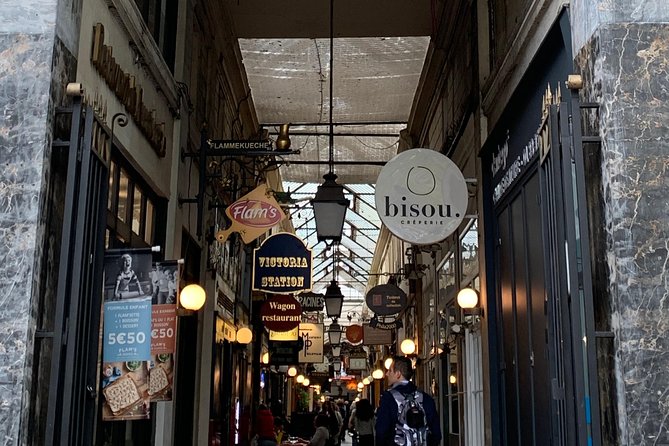
This tour starts at Comédie Française, 1 Place Colette (75001) and ends at Passage Verdeau (75009). That matters because you’re not doing the awkward thing where you loop back the same way. You start near one of Paris’s cultural icons, then you drift through central neighborhoods until you finish near another classic arcade—so you can choose what to do next without backtracking.
The tour also includes a mobile ticket. It’s a small thing, but it makes the day smoother, especially if you’re bouncing between plans. And since the stops are mostly free to enter (as listed), you avoid the stress of buying extra timed tickets just to enjoy the arcades.
You’ll be walking between stops, so wear comfy shoes. Some passages are narrow, and the interesting parts are close to the floor—mosaics, shop details, and old signage. A “quick glance while walking” won’t do these justice.
Palais-Royal Columns of Buren: A Photo Stop That Still Has Meaning
The tour’s first stop is Palais-Royal, centered on the columns of Buren—one of the most photographed spots in Paris for a reason. Even if you’ve seen the black-and-white stripes online, standing there works better than any screen screenshot. You get a sense of scale, plus the way the stripes interact with the surrounding architecture.
This stop is listed at about 20 minutes, so it’s not a long museum moment. Think of it as:
- a quick visual anchor to start your arcades mindset,
- and a chance to settle into the tour before the older passages take over.
A useful trick: don’t just shoot straight-on. The columns look different as you step around, and the palace setting gives you more angles than you’d expect. If your group enjoys photos, this is a solid place to slow down for a minute.
Galerie Vivienne (Built 1823): Glass Light, Mosaic Floors, and Shops
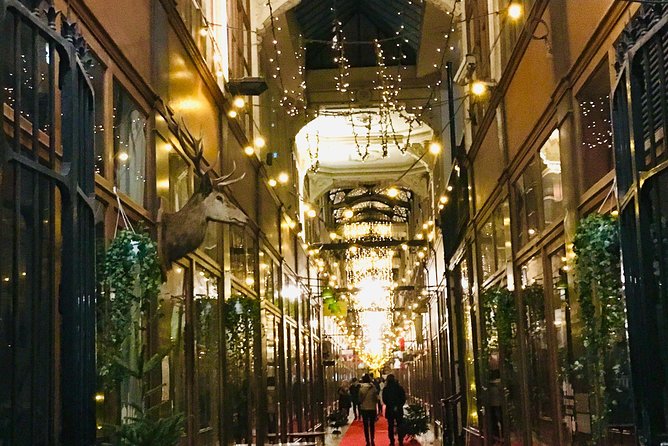
Next is Galerie Vivienne, one of Paris’s most beautiful historic arcades. It was built in 1823, and it shows in the details. The standout features are the mosaic tile floors, the neoclassical décor, and the glass canopy that changes the light as you move.
This stop is about 25 minutes, which is long enough to do more than glance. I’d treat this as your “look down, then look up” moment:
- Look down at the floor patterning.
- Look up to see how the canopy pulls daylight into the gallery.
- Then look at the shopfronts like they’re part of the architecture.
Galerie Vivienne also has a nice story-layer. It used to be a fashionable meeting spot in the 19th century, and today it blends old-world atmosphere with modern use—boutiques, bookshops, and wine bars. That mix is the key to why these arcades work: they’re not frozen in time. They’re living spaces with a historic skin.
Potential drawback here: because it’s popular and pretty, it can feel busy at times. Your private guide can help you pick the best moments to slow down and get clear sightlines.


Passage des Panoramas (Oldest Covered Passage): Vintage Shops and Snack Energy
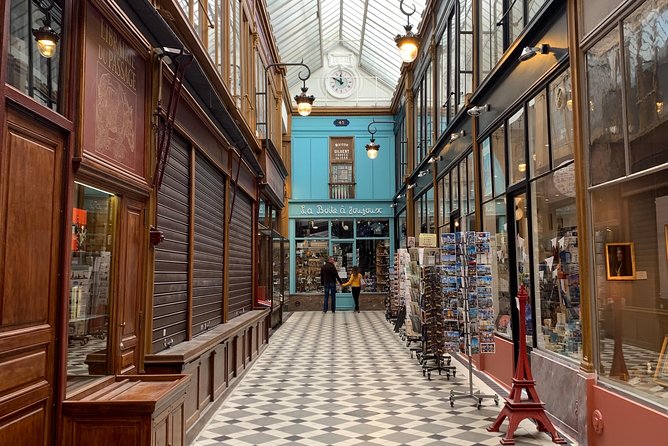
From there you head toward Passage des Panoramas, described as the oldest covered passage in Paris, dating to 1799. This stop is about 25 minutes, and it’s where the tour leans into everyday Paris—vintage shops, stamp stalls, and cozy bistros.
Before you arrive at the heart of the passage, the route also passes by Palais Brongniart, the former Paris Stock Exchange built in the early 1800s. That brief connection is more than trivia. It adds context for why this area mattered: commerce and finance weren’t happening far away. They were part of the city’s center, and the passage system grew around that kind of foot traffic.
The tour’s practical advice is clear: this is a place where you’ll want food later. Even if you don’t eat during the stop, you’ll see enough to know where you’d return for lunch. For me, that’s one of the best signs of a good guided route—you’re left with a realistic next step, not just photos.
If you’re picky about timing, note that you’re not meant to spend your whole lunch in the passage during the guided portion. The intent is to experience it, then give yourself permission to come back.
Passage Jouffroy (1847): Iron-and-Glass Design Plus a Chopin Whiff of Legend
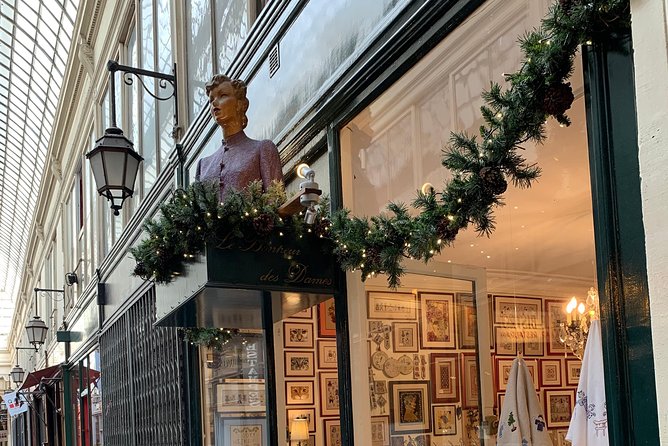
After Passage des Panoramas, you move into Passage Jouffroy, built in 1847. This is one of the early arcades in Paris constructed entirely of iron and glass, and you can feel the difference in the airy structure. It’s a nice contrast to galleries that lean more on older ornamental styles.
This stop is also around 25 minutes, and it includes a fun detail that you might not guess on your own. The passage shares its walls with Musée Grévin, Paris’s historic wax museum. Even though you’re not necessarily going inside during this guided segment, knowing that the passage connects to a museum changes how you interpret the storefront energy.
Another named detail adds personality: it houses the Hotel Chopin, a quaint 19th-century hotel where the spirit of Frédéric Chopin is said to linger. That’s the kind of story that makes a simple walk feel like you’ve stepped into a novel. Whether you take it literally or as charming Parisian theater, it gives the passage a mood.
One consideration: if you’re the type who wants museum-ticket time, this stop is more about ambiance than deep entry. The good news is that you don’t need tickets to enjoy the architecture and the lane’s character.
Passage Verdeau: Antique Browsing Mood and a Clean Finish Line
The tour’s final arcade is Passage Verdeau, opened in 1847. This one leans antique. You’ll see antique shops and old book dealers, plus that nostalgic, collector-friendly atmosphere that makes you slow down without being told.
This stop finishes the main arcades circuit, and it’s followed by a short built-in choice. You can revisit any passage that caught your eye, or you can take a short walk to Galeries Lafayette—a totally different shopping scene with its famous Art Nouveau dome, high-end fashion, and a gourmet food hall.
Passage Verdeau is listed for about 15 minutes in the itinerary, which tells you the tour’s strategy: you get the vibe without burning your whole time budget. I like that approach because it keeps you from leaving exhausted in one neighborhood. You’re also close enough that adding Galeries Lafayette feels natural instead of like a separate mission.
Coffee and Tea Break: Why That Included Pause Matters
This experience includes coffee and/or tea, and in real-world moments, that kind of inclusion is worth more than it sounds. Arcades are beautiful, but they’re still walking days. A break helps you:
- absorb what you just saw,
- ask a question you might otherwise forget,
- and reset so you enjoy the last streets instead of racing your energy level down.
In at least one guide-led experience with the name Allison, groups were surprised with a small French dessert at the beginning and ended at a coffee shop to keep talking about French culture and habits. Even if your day doesn’t match that exact timing, the pattern is clear: the guide uses the coffee moment as a conversation bridge, not just a stop to refill a cup.
Timing, Walking, and What to Bring (So You Enjoy It, Not Just Survive It)
The whole thing runs about 1 to 2 hours, with shorter segments at each passage. That means you don’t need to plan your day around it in the same way you would with a 3–4 hour walking tour. But you should still plan smart.
Bring:
- Comfortable shoes for uneven-looking stone floors and narrow corridors.
- A layer. Covered passages can feel cooler than you expect if the outdoor weather shifts.
- Something for photos. You’ll want to capture floors and ceilings, not just doorways.
Don’t count on:
- An umbrella. Umbrellas are listed as not included, so if rain is in the forecast, plan accordingly.
Also, this is a private tour/activity, so only your group participates. That usually makes the pace more comfortable, especially if you have different walking speeds.
Who This Tour Fits Best (And Who Might Want Something Else)
This private passage tour is a great fit if you:
- love architecture details and design textures,
- want a guided route that avoids guesswork,
- and enjoy the idea of wandering through Paris’s shopping-meets-history spaces.
It’s also a smart choice for friends, couples, or small families because it’s priced per group up to five. If you’re traveling with people who want different things, the guide’s explanations can keep everyone interested: some will focus on the visuals, some on the stories, and some on the food/shopping ideas that come after.
If you want a deeper museum experience—like long ticket time inside major attractions—this might feel short. It’s an arcade tour first, not a full museum day. But it’s an excellent opener or add-on if you want your Paris day to have a calmer, more design-focused pulse.
Should You Book Charm and Secrets of Paris Passages?
Book it if you want Paris that feels lived-in and specific. The route is short, the guide takes the “look closer” approach seriously, and the passages do the heavy lifting. You also get coffee and/or tea, which makes the experience feel complete instead of just outdoors-and-indoors walking.
I’d skip it (or pair it with a longer plan) if you’re traveling solo and hate group-price experiences, since $275 per group is easier to justify when you can split it. And if you’re expecting a long sit-down meal or museum tickets during the guided portion, you may want a different kind of tour.
If your goal is to understand the arcades and come away with smart places to return to—especially for shopping or lunch—this is a very solid use of time.
FAQ
How long is the private Charm and Secrets of Paris Passages tour?
It runs about 1 to 2 hours, depending on the pace of your group.
How many people can be in the private tour group?
The tour is priced per group for up to 5 people.
Where does the tour start and end?
It starts at Comédie Française, 1 Place Colette, 75001 Paris and ends at Passage Verdeau, Pass. Verdeau, 75009 Paris.
What language is the tour offered in?
The tour is offered in English.
Is there an admission fee for the stops?
The stops listed for the tour have admission tickets listed as free.
What’s included in the price?
A private guide, coffee and/or tea, and the tour experience are included.
What should I know about umbrellas and gratuity?
Umbrellas are not included, and gratuity is not included. Service animals are allowed.