REVIEW · PARIS
Jewish Marais – Yiddish world : Walking tour and pastries
Book on GetYourGuide →Operated by ParisVu · Bookable on GetYourGuide
Jewish Paris moves fast on foot. This 90-minute walk through Le Marais centers on the Jewish world of the neighborhood you hear called the Pletzl, weaving in streets like Rue du Temple and sights tied to centuries of Jewish life. Two things I especially like: the guide-led storytelling (one guide named Robin has been described as Sorbonne-level) and the stop for a real Yiddish pastry tasting at Florence Kahn.
The main tradeoff is time. At this length, you’re mostly doing guided highlights and a few photo stops, so you’ll want to plan a bit of your own free time nearby if you’re the type who likes to linger.
In This Review
- Key things to know before you go
- Meeting at 69 Rue du Temple: Start Where the Story Starts
- Le Marais on Foot: Rue du Temple and the Muraille de Philippe Auguste
- The Pletzl Experience: Rue des Rosiers and Museum Courtyard Time
- Florence Kahn Pastry Tasting: Strudel, Babka, Cheesecake
- Agoudas Hakehilos (Rav Rottenberg): A Photo Stop with Serious Context
- Mémorial de la Shoah Courtyard Finish: Ending with Weight
- Price and Value: What $41 Buys for 90 Minutes
- Who Should Book This Jewish Marais Walking Tour
- Should You Book Jewish Marais – Yiddish World?
- FAQ
- How long is the Jewish Marais – Yiddish world walking tour?
- How much does the tour cost?
- Where do I meet the guide?
- Is this a small group tour?
- What languages are available?
- What food is included?
- Which stops and landmarks are included?
- Where does the tour finish?
- What’s included besides the walking and guide talk?
- Can I cancel, and how late can I cancel?
Key things to know before you go
- Rue du Temple to the Muraille de Philippe Auguste gives you a strong medieval anchor in the middle of the modern Marais
- Rue des Rosiers is the practical, walkable heart of the Jewish neighborhood
- Courtyard access at the Museum of Jewish Art and History adds context without turning this into a long museum day
- Florence Kahn pastry tasting includes strudel, babka, and cheesecake
- Agoudas Hakehilos (Rav Rottenberg) is a meaningful photo stop, not a long detour
- Finish at the Mémorial de la Shoah courtyard, which changes the tone in a good way (and asks for a little respect in how you move)
Meeting at 69 Rue du Temple: Start Where the Story Starts
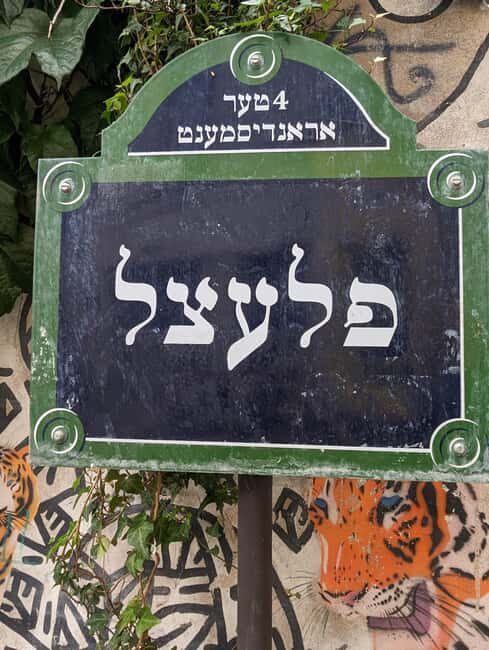
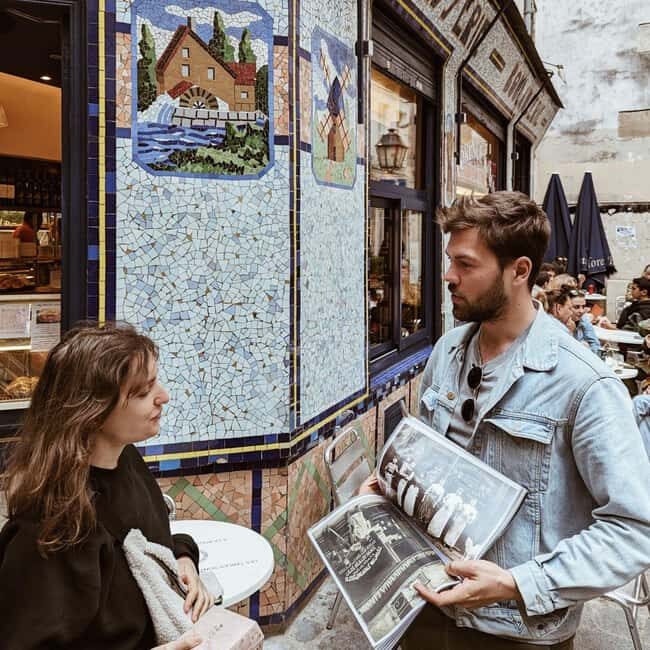
You meet at 69 Rue du Temple, in a spot that’s easy to miss if you’re daydreaming. The meeting point is between the LCL bank and a small wooden door, and you should look for the guide in a white shirt with a leather satchel.
This is a small group format, limited to 10 people. I like that because the guide can actually steer the pace, answer questions, and keep the group together on the tight streets of Le Marais.
The tour runs with a live guide in French, English, or German, so you’re not stuck with a one-size-fits-all audio style. If you’re the type who asks a lot of questions, this setup generally fits well, and the guides described in feedback are clearly used to engaging with curious minds, including younger history fans.
You can also read our reviews of more walking tours in Paris


Le Marais on Foot: Rue du Temple and the Muraille de Philippe Auguste
The first leg is all about orientation. You start with a guided walk through Le Marais, then continue into the 4th Arrondissement, keeping your eyes on how the neighborhood looks now versus how it once functioned.
A standout moment here is the Muraille de Philippe Auguste. Even without turning it into an architecture lecture, it’s a useful reality check: you’re not just walking through themed streets. You’re walking alongside a physical reminder that Paris used to have borders you could point to, and that the city’s Jewish community grew and changed within a real urban shell.
Le Marais also has that mix of cobblestone lanes and older-looking stonework, plus the modern layer of shops and cafes. The tour keeps that contrast from feeling random by tying what you see back to Jewish life in Paris, so the street scene feels purposeful instead of like a stroll with a name tag.
The Pletzl Experience: Rue des Rosiers and Museum Courtyard Time
As the walk shifts, Rue des Rosiers becomes the focal point. This is one of those streets where the neighborhood’s everyday energy shows up fast, and the tour uses that visibility to ground the stories.
The tour includes a tour of the Pletzl (Marais), which is the key idea behind why this walk works. Instead of just jumping between landmarks, you get a sense of the area as a community space: where people would gather, where culture shows up in shops and food, and how tradition lives alongside everyday life.
You’ll also get access and a tour of the Courtyard of the Museum of Jewish Art and History. A courtyard stop may sound small, but it’s practical. You get a structured pause to absorb context without losing the momentum of a walking tour. It’s a good match for people who like museums, but don’t want to spend the entire day indoors.
One more smart element: the walk passes by Rue du Marché des Blancs Manteaux. Even if you don’t know the street yet, it helps break up the day so Rue des Rosiers doesn’t become a single-note experience.
Florence Kahn Pastry Tasting: Strudel, Babka, Cheesecake
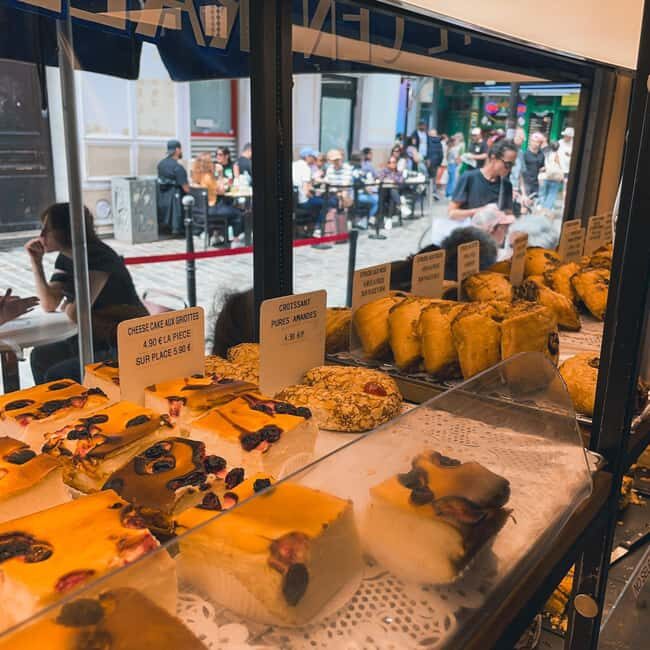
Food stops on tours can go one of two ways: either they’re random, or they actually connect to the theme. This one does the first part right because it’s tied directly to traditional Yiddish delicacies.
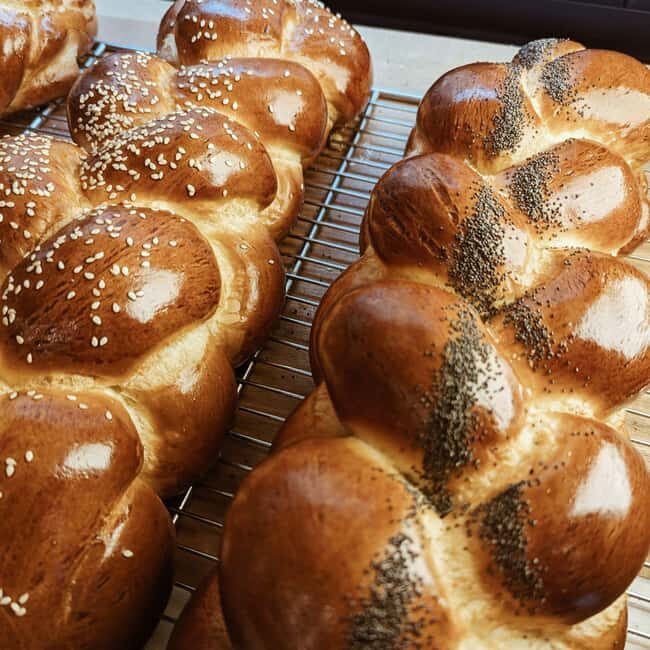
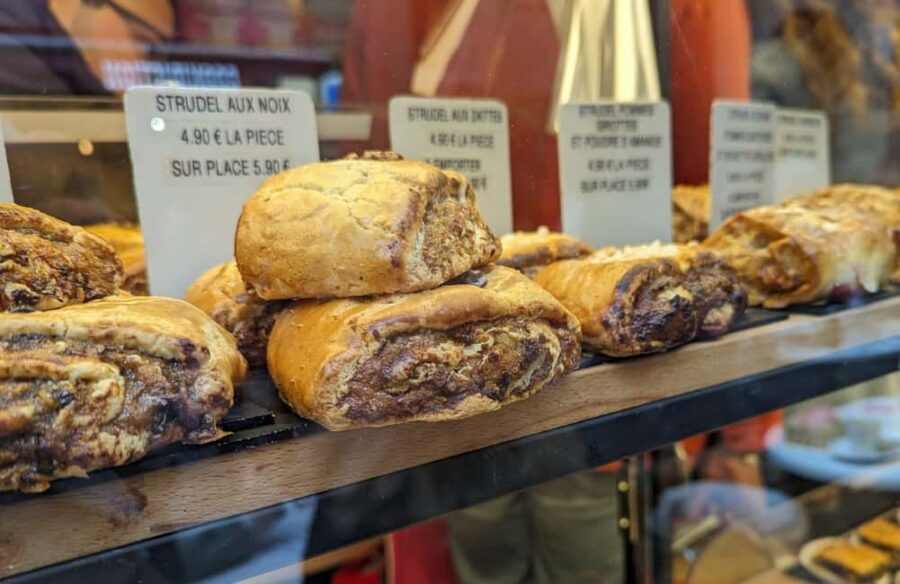
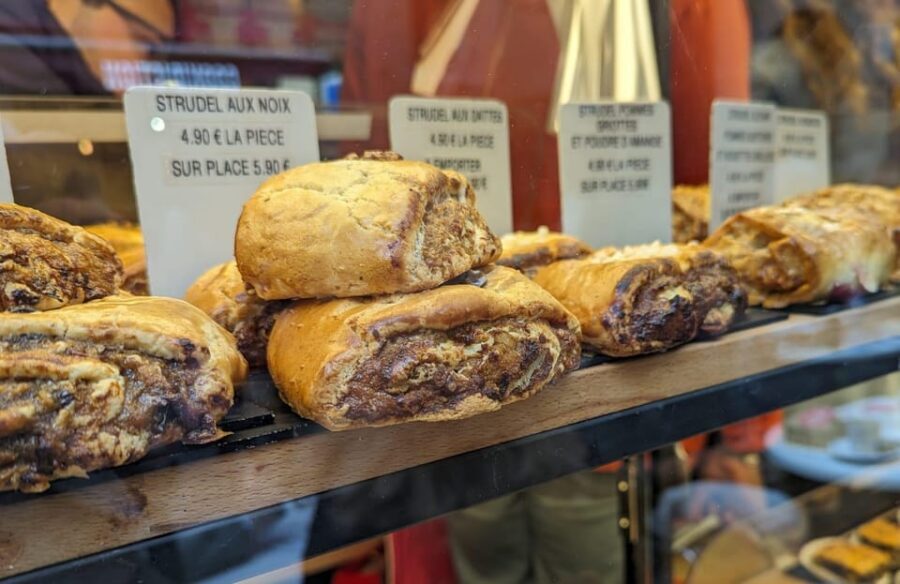
You’ll have a tasting at Florence Kahn, and the assortment is strudel, babka, and cheesecake. I like that mix because it gives you a mini sampler of styles, not just one sweet item you could have ordered anywhere.
Expect this to take about 20 minutes. That’s enough time to try, ask a question, and reset your attention before the more solemn stops later. It also helps you avoid the most common mistake with history tours: rushing straight from heavy topics into a full afternoon where your brain is still overloaded.
One practical note: since this is part of a walking route, plan for the fact that you’ll be eating while moving through the neighborhood’s streets. If you’re sensitive to crowds, this time slot can feel lively, but the pacing keeps it from turning into a long queue.
Agoudas Hakehilos (Rav Rottenberg): A Photo Stop with Serious Context
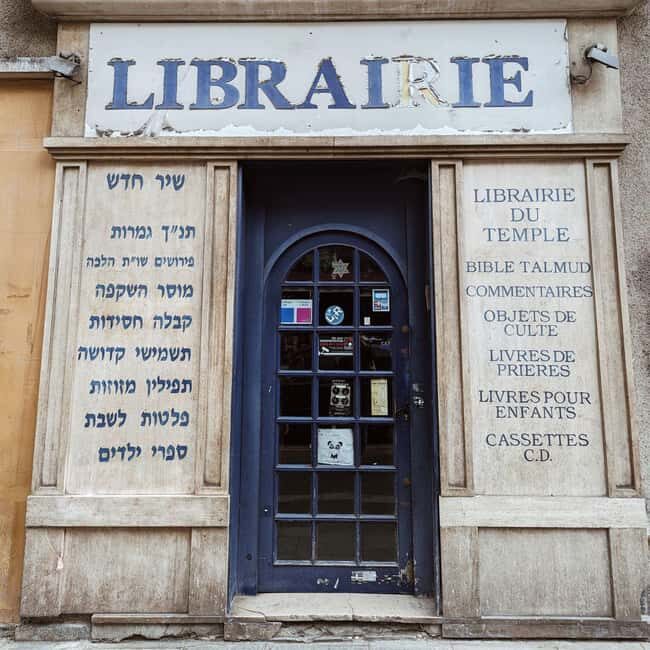
Then comes Agoudas Hakehilos Rav Rottenberg. This isn’t framed as a long visit; it’s a photo stop. But that structure matters, because it keeps the tour from turning into a logistics puzzle.
A photo stop can feel superficial if a guide treats it like a sightseeing checkbox. Here, the tour aims to place the synagogue within the broader story you’ve been building: Jewish community life in Paris didn’t exist in isolation, and religious institutions were part of daily identity, not just historical background.
Keep your tone respectful here, even if the tour is moving. Synagogues are still living spaces, and the best way to honor the visit is simple: slow down, listen, and take only what you need.
You can also read our reviews of more tours and experiences in Paris





Mémorial de la Shoah Courtyard Finish: Ending with Weight
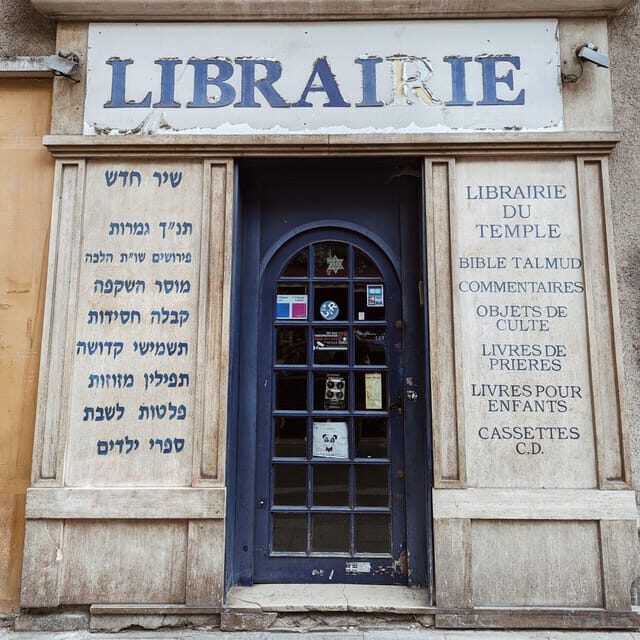
The tour ends at the Mémorial de la Shoah. You get access and a tour of the Courtyard of the Shoah Memorial, and that finish is doing real work.
By waiting until the end to take you to this space, the tour gives your brain a chance to build a timeline of Jewish Paris first: streets, community spaces, cultural life, and landmarks. Then the memorial courtyard changes the mood and makes the history impossible to treat as just a story about the past.
It’s also a practical choice. Instead of abruptly jumping into something heavy at minute 10, you walk your way into the topic. The result is that the emotional tone lands more clearly, and you leave with a final visual anchor.
Price and Value: What $41 Buys for 90 Minutes
At $41 per person for 90 minutes, you’re paying for a tight package: guided history in a small group plus two kinds of access.
First, you get the guided street part that covers real local landmarks like Rue du Temple, Muraille de Philippe Auguste, and Rue des Rosiers. Second, you get tangible added value through courtyard access: the museum courtyard and the Shoah memorial courtyard are included.
Then there’s the most fun value item: the pastry tasting at Florence Kahn with strudel, babka, and cheesecake. That’s not a token bite. It’s a structured tasting that fits the theme, and it turns the tour into something you remember with taste, not just photos.
If you’re comparing this to a generic walking tour that only points at buildings, the included courtyard access plus a themed food stop is what makes the price feel fair. If you’re the type who wants a long museum session with deeper indoor exhibits, this may feel short, but it’s designed as a focused hit that you can build on after.
Who Should Book This Jewish Marais Walking Tour
This fits best if you want a guided walk that connects Jewish Paris landmarks to neighborhood context, not a list of names. I’d especially recommend it if you’re interested in how community life shows up in streets and daily culture, not just major monuments.
It also works well for mixed-age groups. One guide experience described in feedback mentions kindness toward a 13-year-old, with answers tailored to that kind of curiosity. If you’re traveling with teens or younger kids who can handle a walking pace, this tour is the kind that keeps moving while still explaining what you’re seeing.
If you’re mainly chasing food, you’ll still learn something here because the guide ties the pastry tasting to the Jewish world of the neighborhood. And if you’re mainly chasing history, the pastries are a smart break, not a detour.
Should You Book Jewish Marais – Yiddish World?
Yes, if you want a compact, guided overview that treats food and place as part of the same story. For $41 and a small group of up to 10, you get street-based context around the Pletzl, a tasting at Florence Kahn, a synagogue photo stop at Agoudas Hakehilos Rav Rottenberg, and a serious ending at the Mémorial de la Shoah courtyard.
Book it if your travel style likes momentum and clarity: a route you can follow, landmarks that make sense, and a guide who takes questions seriously. Skip it only if you prefer long indoor time at museums or you don’t want stops that carry emotional weight.
FAQ
How long is the Jewish Marais – Yiddish world walking tour?
It lasts 90 minutes.
How much does the tour cost?
The price is $41 per person.
Where do I meet the guide?
You meet at 69 Rue du Temple, between the LCL bank and the little wooden door. The guide will be wearing a white shirt and carrying a leather satchel.
Is this a small group tour?
Yes. The group is limited to 10 participants.
What languages are available?
The live guide offers French, English, and German.
What food is included?
You’ll get an assortment of pastries from Florence Kahn, including strudel, babka, and cheesecake.
Which stops and landmarks are included?
You’ll see and/or stop at places including Rue du Temple, Muraille de Philippe Auguste, Rue des Rosiers, Agoudas Hakehilos Rav Rottenberg (photo stop), and Mémorial de la Shoah.
Where does the tour finish?
The tour finishes at the Mémorial de la Shoah.
What’s included besides the walking and guide talk?
Included are access and tours of the Courtyard of the Museum of Jewish Art and History, a tour of the Pletzl (Marais), the pastry tasting at Florence Kahn, and access and a tour of the courtyard of the Shoah Memorial.
Can I cancel, and how late can I cancel?
You can cancel up to 24 hours in advance for a full refund.