REVIEW · PARIS
Clos Montmartre ‘Paris in your Glass’ Wine Tasting
Book on Viator →Operated by Paris Wine Walks · Bookable on Viator
Montmartre has a working wine story. This walking tour weaves classic sights into the path of Clos Montmartre and the people who shaped it, then rewards you with a tasting set against Montmartre’s views from the Renoir Garden at the Musée de Montmartre.
I especially like two things. First, the way the guide turns stones and street corners into a lesson—Roman columns inside an old church, art-linked courtyards, and the local bread-and-milk story of the Moulin de la Galette. Second, the tasting is structured in a way that’s fun even if you are not a sommelier: you try the very rare Clos Montmartre wine, then do a blind tasting of two more wines, served with shared plates of cheese and rustic fermented bread.
One heads-up: this is an uphill walk. If you have limited mobility or flat-out hate stairs, you’ll feel it on the way up Montmartre. You should plan on moderate fitness and comfy shoes.
In This Review
- Key highlights you’ll remember
- Following the wine thread through Montmartre’s landmarks
- Saint-Pierre de Montmartre and La Bonne Franquette: history you can stand inside
- Commanderie du Clos-Montmartre: a wine fraternity with a quirky past
- Moulin de la Galette and the bread-and-milk connection
- Square Suzanne-Buisson: a grapevine lesson in miniature
- Dalida viewpoint and the slow reveal toward Sacré-Cœur
- Musée de Montmartre’s Renoir Garden: seeing the Clos in context
- Vigne du Clos Montmartre: where the story meets the bottle
- What you actually taste: rare Clos Montmartre plus blind comparisons
- Price and value: is $126.17 worth it?
- Getting the most out of it: practical tips for the walk
- Who this tour suits best
- Should you book this Paris in your Glass wine tasting walk?
- FAQ
- How long is the Clos Montmartre wine tasting walk?
- Is the tour offered in English?
- What is included in the wine tasting?
- Where does the tour start and end?
- Does the tour involve uphill walking?
- What group size should I expect?
Key highlights you’ll remember
- Clos Montmartre focus: you hear how this intra-muros vineyard stayed alive in the middle of Paris
- Renoir Garden viewpoint: a high, calm spot to understand where the vineyard sits
- Blind tasting of 2 wines: a fun way to sharpen your palate without pretension
- Montmartre landmarks with wine ties: from a former water-tower commandery to the Moulin de la Galette
- Cheese and rustic bread included: simple pairings that make the tasting feel like a real meal
Following the wine thread through Montmartre’s landmarks
If you think of Paris wine as something you buy in a shop and sip at a café, this tour gives you a different angle. You start with Montmartre’s layers—Roman-era traces, artists and local legends, and the village life that grew up around vineyards—and you end with something you can taste right there on Place du Tertre.
The vibe is part walking tour, part small wine lesson. The walking matters because the story changes neighborhood by neighborhood. Each stop is positioned so you learn what Montmartre looked like when vines still shaped daily life here, and then you connect that to what’s in your glass.
Also, this is offered in English and the tour uses a mobile ticket, so you do not need to fuss with paper. And with a reported maximum of 110 travelers, it’s not a tiny private chat—but the format is still designed for everyone to hear and participate.
You can also read our reviews of more food & drink experiences in Paris



Saint-Pierre de Montmartre and La Bonne Franquette: history you can stand inside
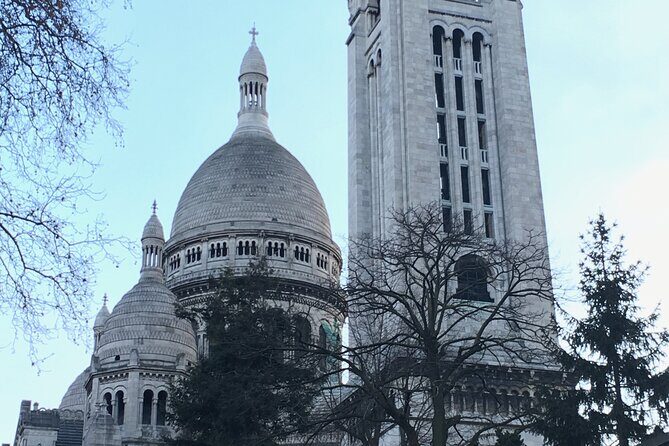
You begin at Église Saint-Pierre de Montmartre, built on the site of an older Roman temple. The key detail here is not just that it’s old—it’s that the church incorporates Roman columns recovered from the temple that once stood for Mars. You can practically see how the site keeps getting reused, which is a big theme in old Paris: layers on layers.
What I like about this start is how quickly you get perspective. You are not only touring buildings. You’re being set up to understand why vineyards fit into this hill’s long timeline—far beyond the post-card version of Montmartre.
From there, you move toward La Bonne Franquette, a café tied to the artist community of Montmartre. The stop includes a look at an inner courtyard painted by Van Gogh. Even if you don’t know the exact painting, you’ll feel the connection: this is a place where art and local life rubbed shoulders, just as wine and everyday eating always have.
Commanderie du Clos-Montmartre: a wine fraternity with a quirky past
Next comes Commanderie du Clos-Montmartre. The building’s past is unusual: it was once a water tower and has become the headquarters of one of the wine fraternities in Paris.
This is the moment where the tour stops feeling like a simple sightseeing loop and starts feeling like a social story. Wine in Paris is not only vineyards and bottles; it’s also clubs, traditions, and groups that keep certain local products from fading away. Seeing a former water tower repurposed for wine culture makes the whole topic feel more real and less abstract.
You also get a few quick picture stops along the way, which keep the pace pleasant. There’s Le Passe-Muraille, the bronze sculpture of a man walking through (or caught inside) a wall. It ties to Marcel Aymé, who lived in this square. If you like literature and street art details, you’ll enjoy how the tour fits the creative ecosystem together.
Moulin de la Galette and the bread-and-milk connection
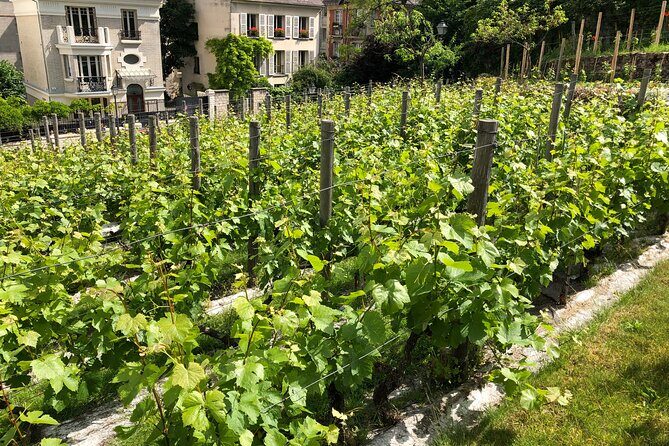
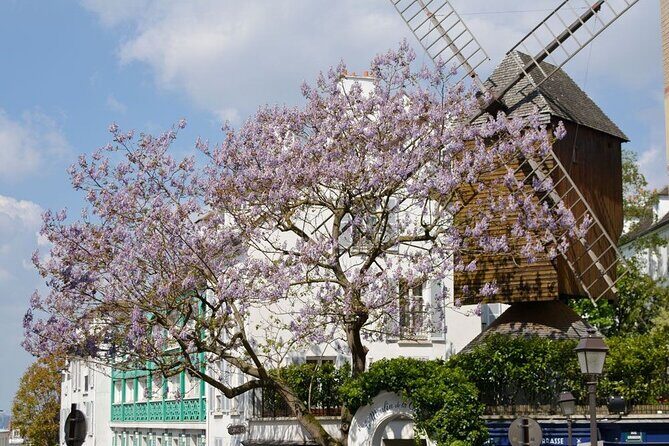
The walk then passes Le Moulin de la Galette, where Montmartre’s windmills link directly to local food lore. The key story here is how milling connected the surrounding fields to village life, and how the Moulin de la Galette became associated with a galette—a small brown bread served by the Debray family of millers with a glass of milk.
This matters because it explains something you might otherwise miss: vineyards are part of a whole rural-to-urban food chain. The tour does not treat wine as a separate planet. It treats it like one part of a living system of bread, milling, and meals that shaped Montmartre’s identity.
And since the stop is short, you’re not stuck waiting around. You get just enough context to see why the legend stuck, then you keep moving.
Square Suzanne-Buisson: a grapevine lesson in miniature
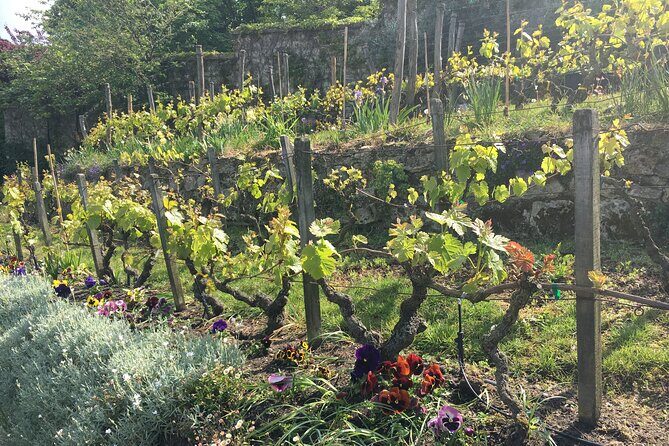
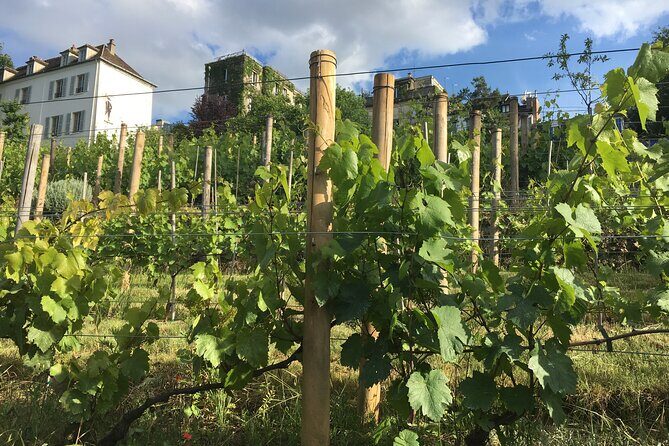
One of the most useful stops is Square Suzanne-Buisson. This little park includes a grape vine about 30 meters long at the entrance and a statue of Saint-Denis. The guide uses the setting to teach you how vines are cultivated—things like pruning and why different grape varieties matter.
This is where a lot of wine-tasting tours fall short. They give you a glass and a few general tips. Here, you get a basic framework you can use later when you look at labels or taste differences. Even without technical vocabulary, you’ll come away knowing that the vine’s work (training, pruning, managing growth) directly shapes what ends up in the bottle.
If you like learning by observing, this stop is a sweet spot: you can look at the vine structure while hearing how it’s maintained and how many varietals can be part of wine making.
You can also read our reviews of more wine tours in Paris





Dalida viewpoint and the slow reveal toward Sacré-Cœur
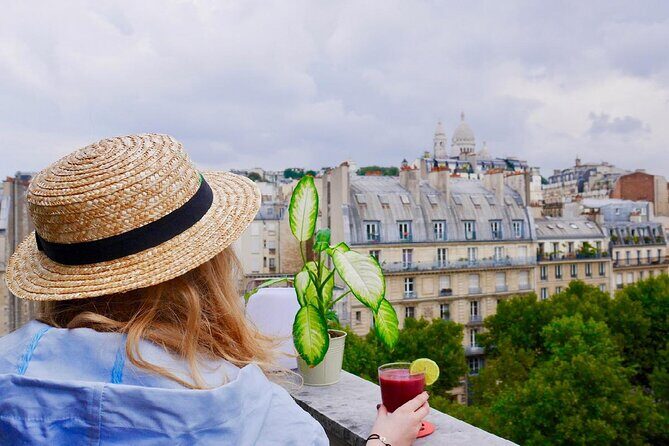
As you reach the Dalida area at Place Dalida, the tour gives you a welcome visual break. You get a view along rue de l’Abreuvoir up toward the Butte Montmartre and Sacré-Cœur. The stop also notes that this spot sits right next to the Chateau des Brouillards.
Why I think this stop is smart: it helps you orient. Montmartre can feel like a maze when you are climbing streets and alleys. Getting a long view helps you place where you are in relation to the hill’s main sights, and it makes the next part—where the vineyard story takes center stage—feel more connected.
Musée de Montmartre’s Renoir Garden: seeing the Clos in context
Then you reach the Musée de Montmartre, where the Renoir Garden becomes your vantage point. From here, you can see the vineyard area and understand where the Clos Montmartre fits into the neighborhood. The guide recounts the history of the vineyard from this overlook, which is a great teaching trick.
If you’ve ever tried to learn about a place while staring at it from one angle, you know how hard it is. This approach gives you the correct angle first, then layers in the story. That makes the later tasting feel grounded in place, not just in theory.
Also, this is included time to slow down. You’ll likely appreciate it since the walk up Montmartre can be a physical start to the afternoon.
Vigne du Clos Montmartre: where the story meets the bottle
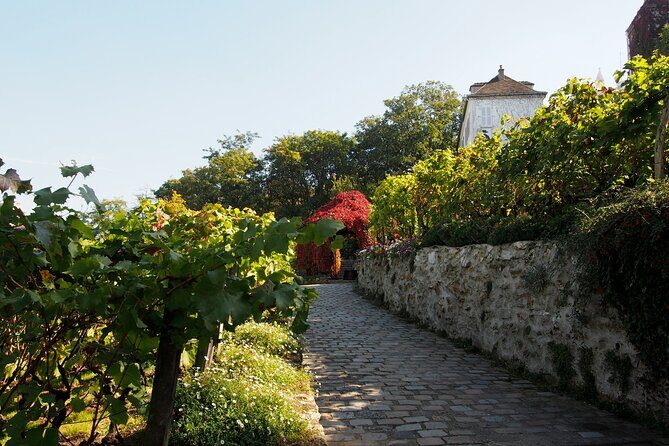
After the garden viewpoint, the tour moves into Vigne du Clos Montmartre, described as the most celebrated intra-muros vineyard in Paris. Here, you get a guided walk that connects the Clos Montmartre vineyard with Montmartre’s broader vineyard and abbey history, plus anecdotes linked to artistic, literary, and cultural life.
This section is where the tour earns its name, Paris in your Glass. Instead of just promising you wine, it shows you why the Clos exists and why people care that it remains a living vineyard within the city.
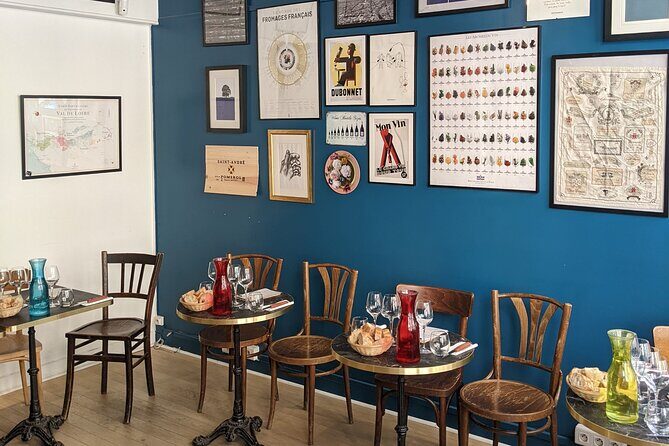
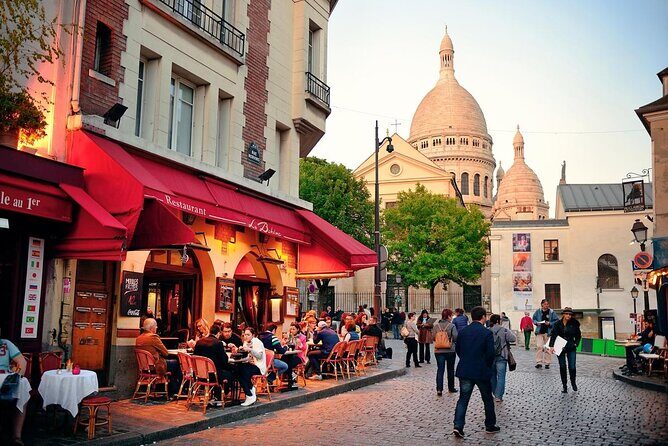
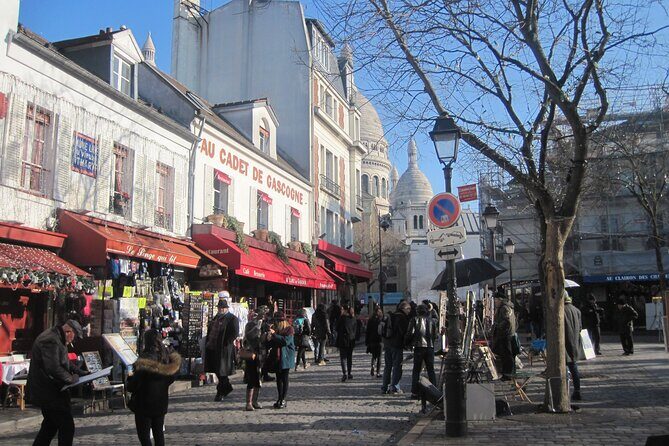
Then you walk to the tasting location on Place du Tertre, the lively heart of the village. Your wine tasting happens in a well-known square setting, and it is designed as a proper tasting moment, not a rushed stop.
What you actually taste: rare Clos Montmartre plus blind comparisons
The wine tasting includes:
- The very rare Clos Montmartre wine
- A blind tasting of two additional wines: one white and one red
- Shared plates with cheese and rustic fermented bread
I like this approach because it gives you both the local signature and the comparison game. The Clos wine anchors the experience in place. The blind tasting pushes you to notice differences without brand cues. And the cheese and rustic bread keep it from feeling like a lab session.
If you are someone who gets nervous about wine knowledge, this format helps. You do not have to know every grape. You just have to taste, then listen to the guide’s explanations and the way the flavors land in real food pairings.
Price and value: is $126.17 worth it?
At $126.17 per person for about 2 hours 20 minutes to 3 hours, you’re paying for three things at once:
1) A guided walk that covers multiple landmarks tied to Montmartre’s wine and food identity
2) Access and time at the Musée de Montmartre’s Renoir Garden for the vineyard overview
3) A structured tasting with the rare Clos wine plus two additional wines, along with cheese and bread
You are also paying for the fact that this is not just tasting. It’s tasting plus context, which is usually where the best wine experiences live. If you’ve done wine tastings that feel like generic pouring, you’ll likely appreciate that this one is built around a specific Paris product—one you can’t easily recreate on your own.
Is it a bargain? Not really. But it looks like a fair value for what you get: guided storytelling, a viewpoint that makes the vineyard understandable, and an actual tasting with food.
Getting the most out of it: practical tips for the walk
A few things will make your experience smoother.
Wear shoes you can trust on uphill cobblestones and steps. This tour requires uphill walking, and Montmartre’s grades can surprise you even if you’re in decent shape.
Bring a little water if it’s warm out. The tour is not a long all-day hike, but you are moving up a hill and you’ll work up thirst before the tasting.
One more small tip: arrive with a light appetite. You will get shared plates of cheese and rustic fermented bread, but a full dinner later is still realistic, especially since the tasting happens after the walk.
Who this tour suits best
This is a great pick if you want:
- A Montmartre experience that goes beyond postcard views
- A wine tasting tied to a specific vineyard story (not just general France wine talk)
- A format that includes a blind tasting, which makes it interactive and memorable
It’s also a good match if you enjoy learning through places—church interiors, cafés, sculptures, and gardens. And if you’re the kind of person who likes meeting a guide who can connect food, art, and wine into one walk, you’ll likely enjoy the style.
Should you book this Paris in your Glass wine tasting walk?
If you’re excited by the idea of tasting Clos Montmartre and you don’t mind uphill walking, I think this is a strong booking. The combination of vineyard-focused storytelling, a viewpoint that clarifies where the vines sit, and a tasting that includes a rare wine plus a blind comparison makes it feel like more than just another food-and-wine stop.
Skip it only if stairs and hills are a hard no for you. Otherwise, it’s one of those Montmartre outings that teaches you something and then lets you taste the payoff.
FAQ
How long is the Clos Montmartre wine tasting walk?
It runs about 2 hours 20 minutes to 3 hours.
Is the tour offered in English?
Yes. The experience is offered in English.
What is included in the wine tasting?
You’ll taste the rare Clos Montmartre wine, plus a blind tasting of 2 additional wines (one white and one red). You also get shared plates of cheeses and rustic fermented bread.
Where does the tour start and end?
The tour starts at Église Saint-Pierre de Montmartre, 2 Rue du Mont-Cenis, 75018 Paris, France and ends at 17 Pl. du Tertre, 75018 Paris, France.
Does the tour involve uphill walking?
Yes. Montmartre is on a hill, so the tour requires uphill walking, including stairs. A moderate physical fitness level is recommended.
What group size should I expect?
The tour has a maximum of 110 travelers.