REVIEW · PARIS
Paris: Big Bus Hop-on Hop-off Tour and Seine River Cruise
Book on GetYourGuide →Operated by Big Bus Tours/LES CARS ROUGES · Bookable on GetYourGuide
Paris gets easier when you can ride, stop, and breathe. This Big Bus hop-on hop-off setup turns a chaotic first day into something you can manage, with frequent buses, clear stop points, and audio you can follow from the open-top deck. The built-in Seine River cruise adds a second angle on the same landmarks, so you’re not just staring at them from the road.
I like two things most. First, the bus loop hits the big names without making you plan every turn, so you can get your bearings fast. Second, the cruise at night is a simple win for views, especially if you want Eiffel Tower lighting reflected on the river. A possible drawback: you still need to work with city traffic and crowds, so the day can feel slower at peak times and the boat line can get long.
A nice bonus: the experience can be smooth when staff are helping at stops. One review even mentioned guides Lou and Roberto making the ride more fun with their humor, which matches what you want from a long sightseeing day.
In This Review
- Key Things To Notice Before You Go
- The Big Bus and Seine combo: why it works in Paris
- How long you actually need (1 or 2 days)
- The hop-on hop-off route: your practical game plan
- Ten stops that hit the classics (and what to do at each)
- 1) Louvre-Pyramide / Big Bus Information Centre (11 avenue de l’Opéra)
- 2) Louvre – Pont des Arts (56 Quai François Mitterand)
- 3) Notre Dame (3 Rue Lagrange)
- 4) Musée d’Orsay (58 Place Henry de Montherlant)
- 5) Champs-Elysées (156 avenue des Champs-Elysées)
- 6) Grand Palais (Avenue Winston Churchill)
- 7) Iena (Avenue Iéna)
- 8) Eiffel Tower (Quai Branly, Entrée 2 Tour Eiffel) + near cruise boarding
- 9) Champ de Mars (Avenue Joseph Bouvard)
- 10) Opéra Garnier (Facing 15, rue Scribe)
- The Seine River cruise: what you’ll notice in the 1-hour sail
- Audio commentary and the onboard tech that actually helps
- Comfort, weather, and the little details that change the day
- Timing and crowds: how to avoid the day going sideways
- Price and value: is $61 worth it?
- Who this tour suits best (and who should consider alternatives)
- Should you book this Big Bus + Seine cruise?
- FAQ
- How long is the Big Bus hop-on hop-off part?
- How long is the Seine River cruise?
- What’s included with this ticket?
- Where do I board the Seine River cruise?
- When do the Seine River cruises depart?
- Do I need to choose a time slot for the cruise?
- Where is the Big Bus information centre for ticket activation?
- Can I start the hop-on hop-off bus tour at any stop?
- Are the buses wheelchair accessible?
Key Things To Notice Before You Go
- 24 or 48 hours of flexibility means you can pace your day instead of rushing between sights
- Audio in many languages (with headphones) helps you make sense of what you’re seeing from the bus deck
- 10 hop-on hop-off stops cover core central attractions so you’re not walking across the whole city
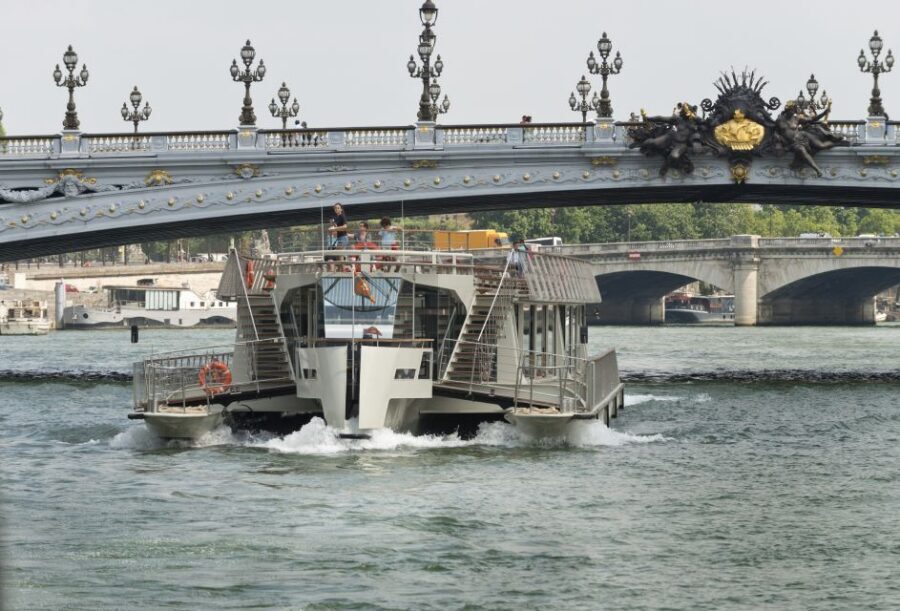
- Seine cruise departs from Pontoon No. 3 near the Eiffel Tower area, with frequent sailings
- Plan for lines at busy departures, especially for the cruise time slot you pick
The Big Bus and Seine combo: why it works in Paris
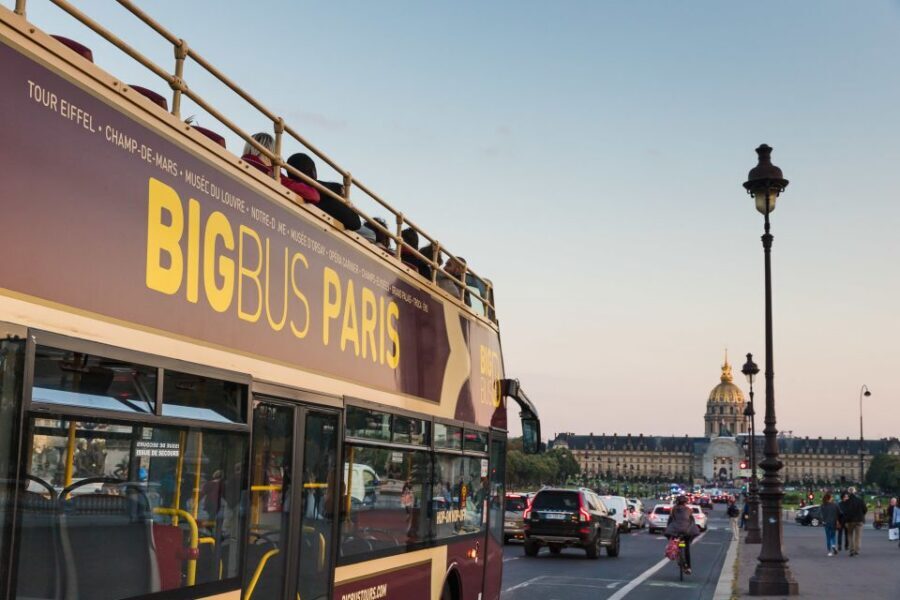
Paris is beautiful, but it can also be a timing trap. Roads get busy. Lines form. And once you’ve walked a few hours, your feet start bargaining. This ticket helps because it combines two modes of sightseeing that complement each other: a bus for quick surface views and neighborhoods, and a river cruise for a calmer, steadier look at the monuments.
The open-top bus is the right tool for orientation. You can look forward for major monuments and glance to the sides for smaller details. Then, when you see something you want to study, you step off, explore for as long or short as you want, and rejoin the route later. The audio commentary adds structure, so the ride doesn’t feel like just sitting in traffic with a view.
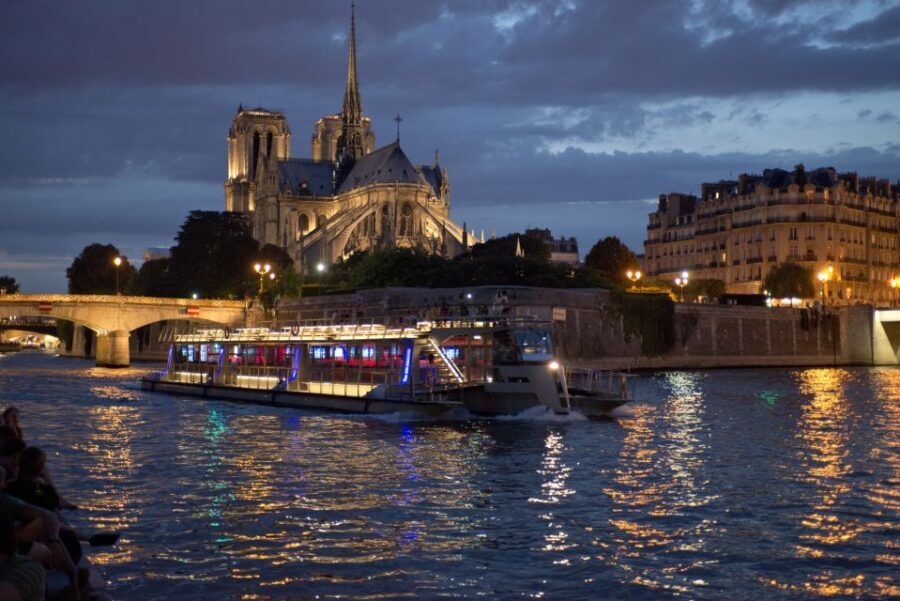
Then you switch to the water. The Seine cruise gives you that “I get it now” moment, because the city looks different from river level. You pass under bridges and along the stretches where buildings sit close to the river, which changes the scale and the mood.
You can also read our reviews of more boat tours in Paris

How long you actually need (1 or 2 days)
The pass is sold as 1 to 2 days in practice, using either a 24-hour or 48-hour bus ticket. Here’s the honest way to think about it:
- If you only have one day, you’ll want to choose your top 3 priorities and use the bus to connect them. Jump off, spend a focused block of time, then move on.
- If you have two days, you can loop twice and build in breathing room. This is where you start using the bus for repeat viewing: once in daylight for context, and once later for atmosphere.
The cruise adds another timing choice. It runs from 10:30am to 9:00pm, with departures every 45 minutes (and more often on weekends). That means you can match it to your energy level. If you’re sightseeing in the morning, plan a cruise later. If you want the “night lights” effect, schedule your boat ride after you’ve done your main daytime stops.
The hop-on hop-off route: your practical game plan
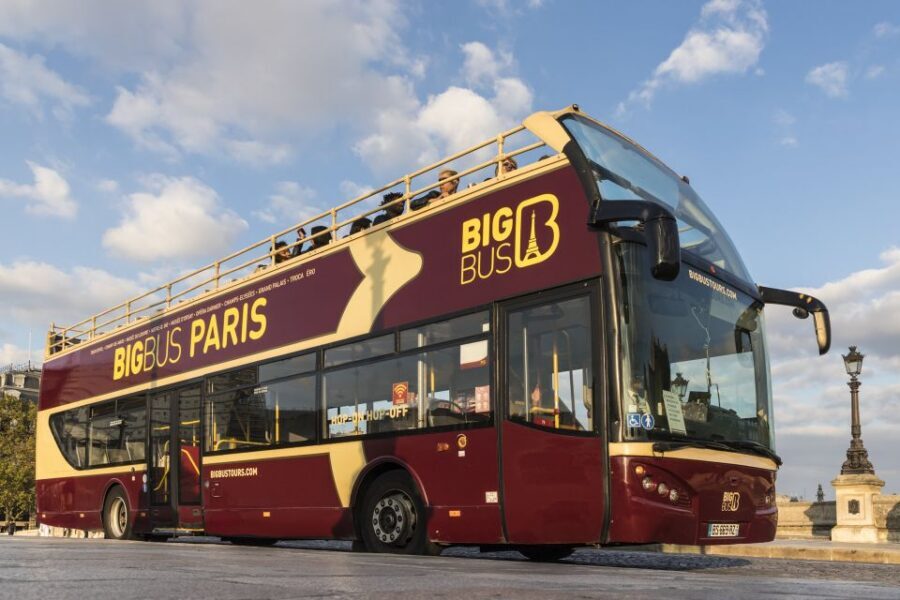
You can begin the bus ride from any of the 10 stops along the route. That’s useful because you don’t have to force your schedule to one exact starting point. The biggest mistake people make with these tickets is trying to “do everything” in one go. Instead, do this:
- Pick a neighborhood cluster for the first half of the day (for example: Louvre / Seine banks area).
- Use the bus as your connector between clusters.
- Save one bigger walking stop for when you’re least tired.
Also, use the free tools you get: the Big Bus app with live bus tracking helps you avoid long waits. And onboard WiFi can help you confirm timing, check directions for museums you plan later, or just kill time while you wait for the bus.
One more real-world tip from experience: allow extra time for moving between bus and boat. Even when everything is scheduled well, crowds can slow the line at the cruise entrance.
Ten stops that hit the classics (and what to do at each)
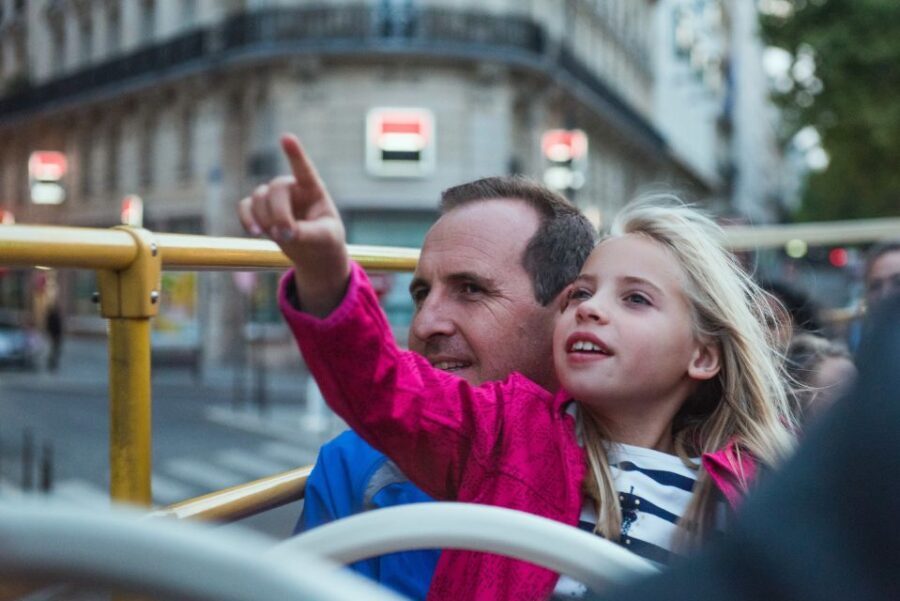
These are the main stop points that shape your route. The stops don’t just drop you near landmarks. They also help you decide which sights are worth your feet today.
1) Louvre-Pyramide / Big Bus Information Centre (11 avenue de l’Opéra)
This is a strong starting point if you want to build a “center Paris” day. You’re close to the big boulevard views and the kind of streets where you can quickly spot other sights while walking.
Best use: orientation plus an easy landing point for the Louvre area.
Consideration: depending on the time you arrive, the area can be busy.




2) Louvre – Pont des Arts (56 Quai François Mitterand)
Pont des Arts is one of those spots where the city instantly feels postcard-level. It also lines you up with the riverfront energy near the Louvre area.
Best use: short walk breaks and scenic photos of the Seine.
Consideration: you’ll likely want to move at pedestrian speed, not tourist-park speed.
3) Notre Dame (3 Rue Lagrange)
This stop helps you reach the Cathedral area without figuring out transit transfers. It also sets you up for river views and classic walking routes nearby.
Best use: if Notre Dame is a must-see for you, get off and give the area time.
Consideration: crowds gather around the landmark zone.
4) Musée d’Orsay (58 Place Henry de Montherlant)
This is an easy “culture stop” on the bus line. Even if you don’t go into the museum, the location helps you experience the Seine corridor properly.
Best use: quick museum plan today, or walk-by views if your schedule is tight.
Consideration: if you enter, you’ll need to add time for ticketing and security.
5) Champs-Elysées (156 avenue des Champs-Elysées)
This is the famous grand avenue. It’s wide, it’s iconic, and it’s one of the easiest places to feel the scale of Paris.
Best use: walking a stretch for atmosphere and architecture.
Consideration: it can be crowded, and it’s more about the boulevard experience than secret Paris corners.
6) Grand Palais (Avenue Winston Churchill)
The Grand Palais area is great for architecture lovers and anyone who likes that “big civic building” feeling.
Best use: a photo stop and short stroll to connect the boulevard sights.
Consideration: you may prefer to pair it with the adjacent sights so you don’t lose time wandering.
7) Iena (Avenue Iéna)
This stop is positioned so you can reach the Eiffel Tower zone effectively. It’s useful when you’re building your Eiffel day.
Best use: getting ready for the Eiffel Tower area without wasting time.
Consideration: you’ll still face crowds in that part of the city.
8) Eiffel Tower (Quai Branly, Entrée 2 Tour Eiffel) + near cruise boarding
This is the big one. The bus stop puts you close to Eiffel Tower entry points. And crucially, it’s also near the cruise departure area.
Best use: Eiffel Tower day, including a plan for when you go up versus when you simply enjoy the views.
Consideration: this is a high-demand zone, so lines and crowds are normal.
9) Champ de Mars (Avenue Joseph Bouvard)
This is perfect for a calmer break near the Eiffel Tower area. It’s where you can pause, take in the surroundings, and reset.
Best use: downtime between the monument and any museum or river activities.
Consideration: it’s a popular place, so choose your timing.
10) Opéra Garnier (Facing 15, rue Scribe)
This stop delivers you to one of Paris’s most dramatic interiors from the outside. Even if you only admire it from the street, it helps your Paris story feel more complete.
Best use: if you want arts-and-culture vibes beyond the main monuments.
Consideration: you’ll likely want a focused visit rather than a drive-by.
(Also on the route) Invalides (2 Avenue de Tourville)
This stop is a good “southern Paris centerline” point, especially if you’re combining grand monuments into one day.
The Seine River cruise: what you’ll notice in the 1-hour sail
Your cruise is 1 hour, operated by Les Bateaux Parisiens, and it departs from Pontoon No. 3, Port de la Bourdonnais, near the Eiffel Tower area. Departures run every 45 minutes from 10:30am to 9:00pm, and every 30 minutes on weekends.
Before you board, you must pick a time slot. You can do that in the Big Bus app under Complete Actions, online via Manage My Booking, or in person with staff at stops.
What you’ll experience on the water:
- You glide past major landmarks you’ve seen from the bus, but from a more cinematic angle.
- You pass under bridges along the route, which changes how buildings frame the view.
- You get onboard audio that helps you connect what you’re seeing to the city’s layout.
A practical note: this cruise can get packed. One departure was so busy that around 500 people were queued for the same slot. Translation: don’t treat the time slot as “arrive five minutes before.” Give yourself buffer time.
Also, headphones matter. If sound seems off, it may take switching buses or adjusting how the headphones connect. Don’t assume it will fix itself.
Audio commentary and the onboard tech that actually helps
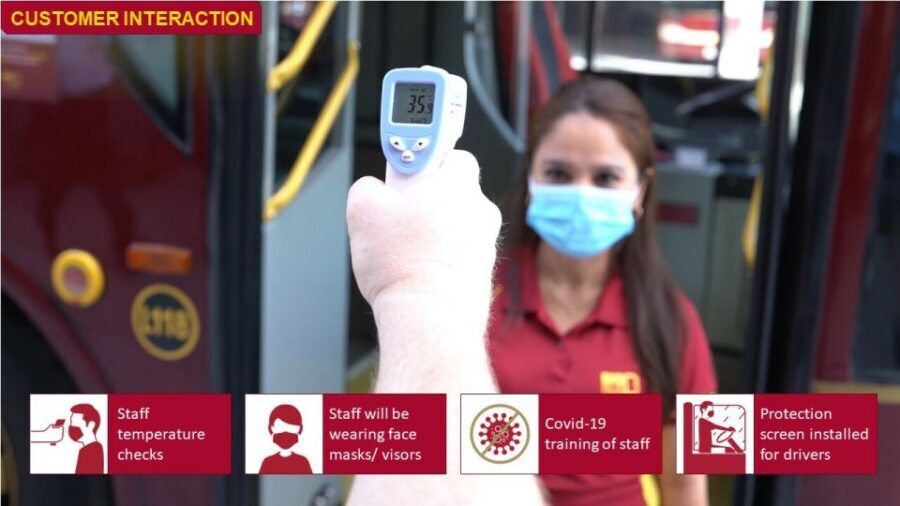
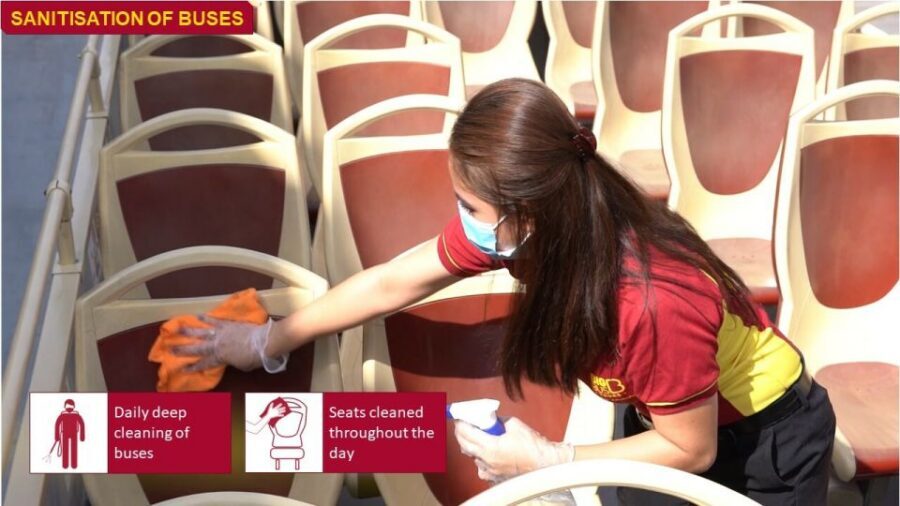
On the bus, you get digital commentary in multiple languages (Spanish, Chinese, English, French, German, Italian, Portuguese, Russian, Korean). Headphones are provided, and onboard WiFi is available.
This matters because open-top bus sightseeing is part view, part explanation. Without audio, you end up guessing what you’re looking at. With audio, you can understand what matters where, which helps you choose what to revisit later on foot.
One more real-world point: the commentary experience can shift through the day. On some rides it may be more narration up front, and later it can lean more toward music with shorter bits of commentary. So if you want the full story, consider starting earlier rather than leaving it for the final hour.
Comfort, weather, and the little details that change the day
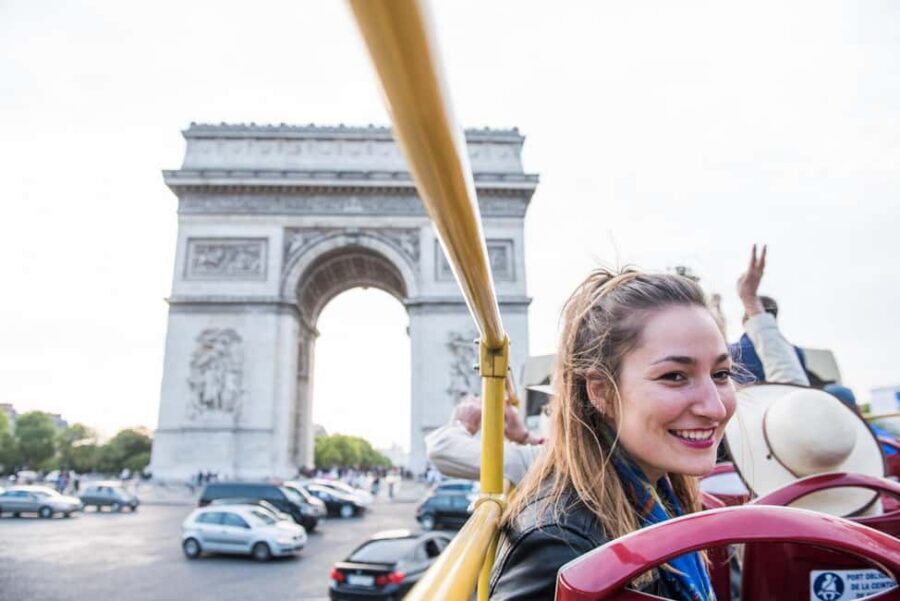
These are open-top buses, which means the weather has a say in your comfort. One review pointed out that the top of the bus should be covered when it rains or snows, then reopened when conditions improve. I’d treat that as a signal to check the onboard setup rather than assuming it’s static.
On hot days, you’ll want to manage expectations. One experience described a day with no AC feel on a slower route. That doesn’t mean every ride will be the same, but it does mean you should plan your hydration and shade needs accordingly.
Crowding is another factor. The bus and the cruise can both be full during peak times. If you hate tight packing, your best move is to time your boarding a bit earlier in the window and pick non-peak hours when possible.
Timing and crowds: how to avoid the day going sideways
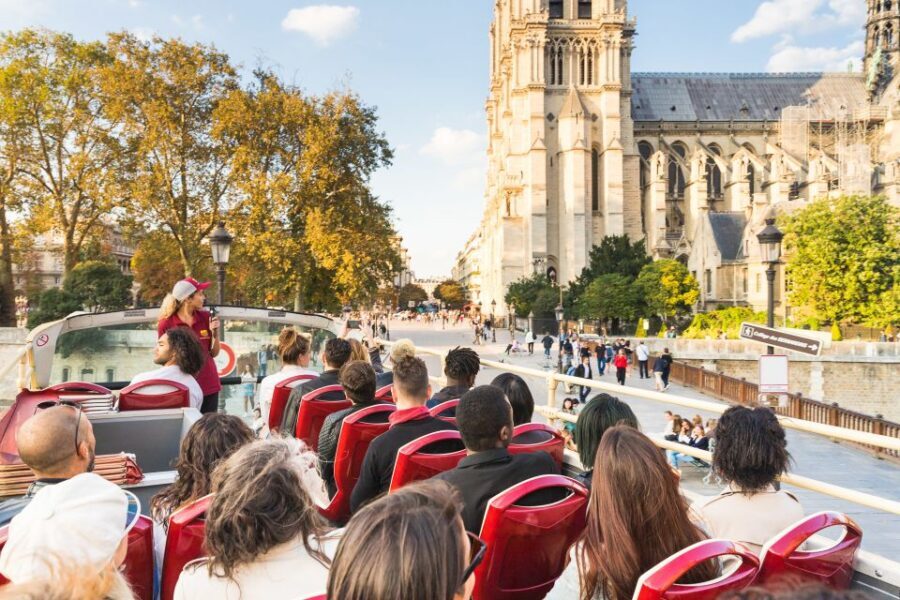
Traffic can be a real factor in Paris, and your bus ride can slow depending on the day and the route. Even when buses run frequently, moving through busy areas takes time. That can make it hard to schedule multiple “must-do” activities back-to-back.
Here’s a simple strategy:
- Do your biggest paid ticket or long walk after you’ve ridden once and confirmed where you want to linger.
- Don’t stack the cruise and a major museum immediately after. Build buffer time for lines and travel.
- If you’re choosing a night cruise for lights, show up with extra time for boarding flow.
Also, double-check the exact boarding point for the cruise. One experience mentioned missing the cruise because the pickup location was misunderstood and the wrong boat stop was used. With these tickets, accuracy beats optimism.
Price and value: is $61 worth it?
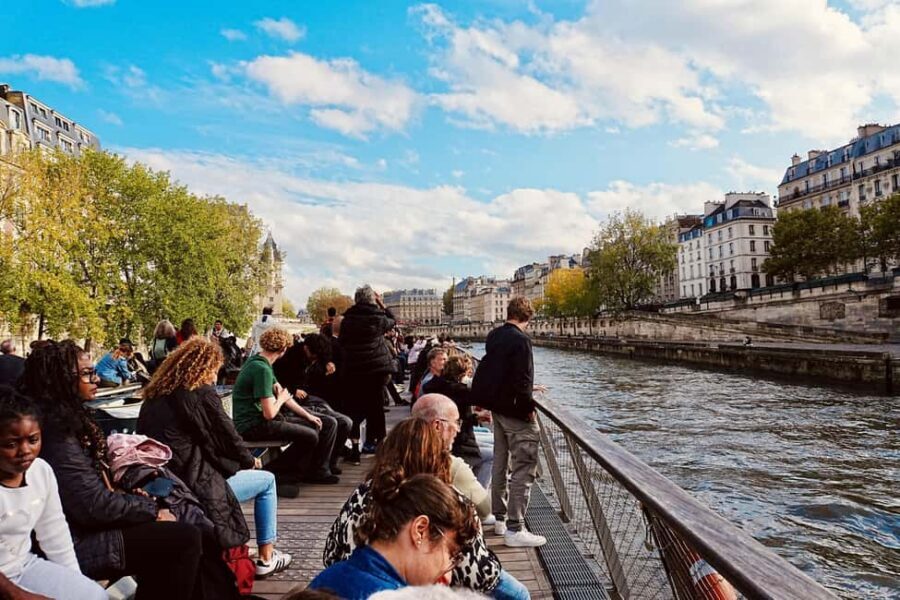
At $61 per person, this ticket is a bundle deal: a 24- or 48-hour sightseeing bus pass plus a 1-hour Seine cruise. The value depends on how you travel.
You’ll likely feel good about the price if:
- You’re visiting for the first time and want a fast overview without transit stress.
- You don’t want to build a complicated itinerary across multiple locations.
- You enjoy two formats of sightseeing: road view plus river view.
You might pause on the price if:
- You already know your route and prefer walking between sites.
- You don’t plan to use the whole 24 or 48 hours of bus access.
- You would rather spend your money on specific museum tickets and skip packaged viewing.
The good news is that the pass isn’t just “a ride.” The stop network lets you turn the bus into a flexible scheduling tool, and the cruise gives you a different vantage point that you can’t replicate from the street.
Who this tour suits best (and who should consider alternatives)
This experience fits best for:
- First-time visitors who want a simple structure.
- Families, because you can hop on when kids are tired and hop off when they’re ready to explore.
- Travelers who like to split the day into smaller segments instead of committing to one huge walking route.
- People who want both classic sights and a practical way to reach them without planning transit.
It may be less ideal if:
- You want only one or two landmarks and nothing else. You might get better value from a smaller, targeted plan.
- You hate crowds and lineups. The cruise, in particular, can draw heavy demand for the same time slots.
Should you book this Big Bus + Seine cruise?
I’d book it if your goal is to see Paris clearly without a complicated plan. The combination of hop-on hop-off access and a 1-hour Seine cruise is exactly the kind of “two angles, one day’s effort” value that works well for most visitors.
If you do book, plan smart: give yourself extra buffer time for the cruise line, pick a time slot that matches your energy, and use the app for live tracking so you don’t waste time waiting. And when you reach the Eiffel Tower area, don’t rush through it. That’s where the bus-and-boat story really clicks.
FAQ
How long is the Big Bus hop-on hop-off part?
The bus pass is valid for either 24 or 48 hours, so you can spread the hop-on hop-off sightseeing across 1 to 2 days.
How long is the Seine River cruise?
The Seine cruise is 1 hour.
What’s included with this ticket?
It includes a 24- or 48-hour Big Bus hop-on hop-off ticket, a 1-hour Seine River cruise, digital audio commentary in multiple languages (headphones provided), WiFi onboard the bus, and a downloadable app with live bus tracking.
Where do I board the Seine River cruise?
The cruise departs from Pontoon No. 3, Port de la Bourdonnais (near Stop 8: Eiffel Tower).
When do the Seine River cruises depart?
Cruises run every 45 minutes from 10:30am to 9:00pm, and every 30 minutes on weekends.
Do I need to choose a time slot for the cruise?
Yes, you must choose a time slot before boarding the cruise.
Where is the Big Bus information centre for ticket activation?
You can activate your ticket at 11 Avenue de l’Opéra, 75001 Paris.
Can I start the hop-on hop-off bus tour at any stop?
Yes, you can begin from any of the 10 available Big Bus stops along the route.
Are the buses wheelchair accessible?
Yes, the buses have ramps and the experience is wheelchair accessible.