REVIEW · PARIS
Exploring Paris with a Local: Montmartre to La Seine
Book on GetYourGuide →Operated by City Unscripted · Bookable on GetYourGuide
Paris feels personal when a local designs it. This private, personalized 4-hour tour is built around your interests, then guided in a flexible way so you spend time where you actually care. You also get the useful comfort of a guide who acts like your friend in the city, not a lecture machine.
I like two things most: the matching process that pairs you with a like-minded guide, and the fact that you connect landmarks from Montmartre to La Seine instead of seeing them as random postcards. One guide example from past guests: Silva is praised for a passionate Montmartre focus, while Lily is noted for an afternoon that tied together big names like the Eiffel Tower and Notre Dame with additional local context.
The main drawback to consider is simple: with only 4 hours, you won’t cover all of Paris, and the route is still mostly a walking experience. Also, food/drinks and many on-site costs fall outside the price, so you’ll want to plan a little for tickets if you add extras.
In This Review
- Key things I’d watch for on this Montmartre-to-La Seine tour
- How the guide-matching sets the tone in Paris
- Pickup, private group size, and what 4 hours really means
- Montmartre: the “city feels like a neighborhood” part
- From Montmartre toward the Eiffel Tower: seeing the city’s geometry
- Arc de Triomphe and the Old Jewish Quarter: context you can walk through
- Notre Dame to the Seine finish: turning big sights into a calm ending
- Tickets, transport, and the walking reality
- Price and value: is $141 per person worth it?
- Who should book this Montmartre to La Seine experience
- Should you book this tour?
- FAQ
- How long is the tour?
- What’s the price per person?
- Is this a private tour?
- How large is a typical private group?
- Will I be picked up from my accommodation?
- What languages are offered?
- Is the tour wheelchair accessible?
- Are tickets to attractions included in the price?
- Can the route change during the tour?
- Is there free cancellation?
Key things I’d watch for on this Montmartre-to-La Seine tour

- Guide-matching by your interests and personality, not a generic script
- A flexible route where you can adjust direction if something sounds better on the day
- A real sequence of major sights, from Eiffel-area views to Montmartre, then down toward the Seine
- Private guide time (typically up to 6 people), so questions don’t get rushed
- Tickets and entrances can be arranged as needed, but costs aren’t included
- Pickup from your accommodation if you’re within a reasonable distance
How the guide-matching sets the tone in Paris

This isn’t a one-size-fits-all Paris walk. After you book, your host contacts you within 24 hours to ask what you like and what kind of guide style fits you best. They use your answers to match you with a local guide who’s comfortable sharing the parts of Paris that matter to you.
That matching matters more than people think. If you love viewpoints and neighborhood energy, you’ll likely get more time where the city shows off. If you like culture and context, you can steer toward stories and connections between places. Either way, you’re not stuck with a fixed checklist where you’re politely trapped in someone else’s priorities.
Also, this model tends to avoid the worst kind of tour problem: watching your guide run through photos they think you should want to see, while you quietly wonder if you’re walking to the wrong “you should care” stop. With matching, the odds improve that the route feels like it was planned for your brain.
You can also read our reviews of more tours and experiences in Paris.



Pickup, private group size, and what 4 hours really means
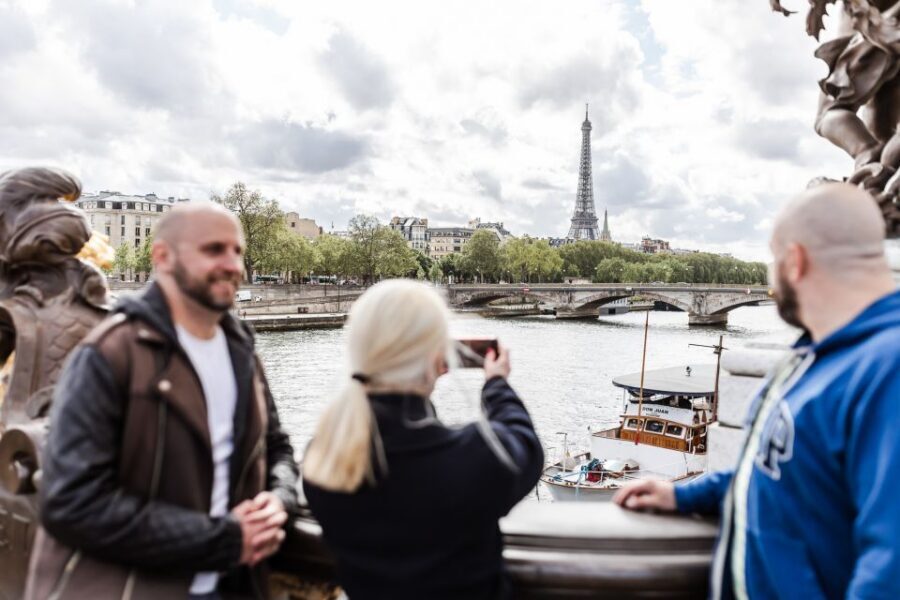
You’re paying for a focused half-day, not a long day with breaks. Expect a brisk pace where walking time matters, and the guide manages the flow so you’re not constantly stopping for logistics.
One practical point: the tour is private, normally no larger than 6 people. That’s ideal for families, couples, and small groups who want flexibility. If your group is larger, you’re expected to mention it so arrangements can be made.
Pickup from your accommodation is included if it’s within a reasonable distance. That’s a real value-add in Paris, where meeting-point stress can eat half your energy. If you’re farther out, the plan may shift, so be prepared to meet your guide at a convenient location instead.
And yes, this is wheelchair accessible. Since the tour is primarily walking, ask ahead how the guide plans to handle route and pacing based on mobility needs. The good news: because it’s personalized, there’s room to adjust.
Montmartre: the “city feels like a neighborhood” part
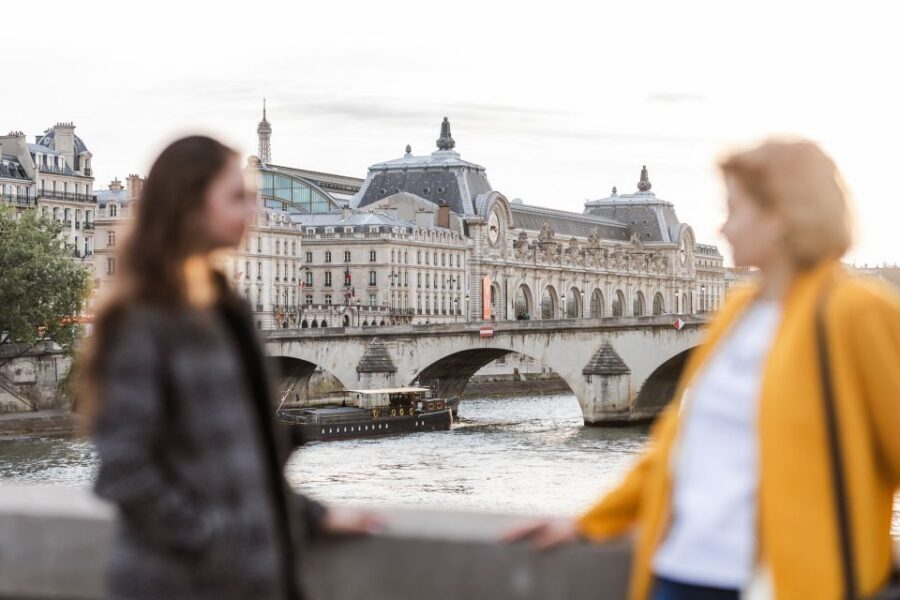
Montmartre is where Paris stops being a set of famous monuments and starts acting like a lived-in place. In a Montmartre-first mindset, your guide can frame what you’re seeing: streets, atmosphere, and why this hill area became such a draw.
Even without naming specific buildings, you’ll benefit from walking through Montmartre with someone who cares. In past departures, Silva has been specifically praised for a passionate Montmartre approach. That kind of enthusiasm isn’t just personality; it usually shows up as better explanations of what you’re looking at and why it looks the way it does.
What I like about starting here is that it gives you a baseline for the rest of the city. Once you’ve absorbed the neighborhood tone, later landmarks like the Eiffel Tower feel less like a distant target and more like part of a real urban pattern.
Potential drawback: Montmartre can feel busy and steep in parts, so if you’re planning for lots of photos or you get tired easily, you’ll want your guide to pace you early rather than late. The tour’s flexibility helps here—if the route feels too much, you can discuss changes during the walk.
From Montmartre toward the Eiffel Tower: seeing the city’s geometry

The tour’s flow is built around a big visual idea: Eiffel Tower to Montmartre and the bits in between. That direction helps you understand Paris not as separate attractions, but as connected viewpoints and corridors.
Approaching the Eiffel area with local guidance usually changes what you notice. Instead of only aiming for the tower as a photo background, you learn how the surrounding streets and sightlines shape your experience. You also start to spot the city’s rhythm—where people naturally gather, where the views open up, and where the streets narrow into something more human-scale.
This is where the “friend in the city” concept becomes practical. Your guide can point out the moments that matter to someone standing in front of you right now: what to look for next, what to ignore, and how to time your movement so you’re not constantly waiting around.
One careful note: if you want every single ticketed attraction inside the Eiffel complex, you’ll have to add that plan. The tour can include arranging tickets and entrances as required, but ticket costs themselves aren’t included in the price. Your guide can help you figure out what’s worth paying for given your time.
Arc de Triomphe and the Old Jewish Quarter: context you can walk through

A strong value of this tour is connecting major monuments to the city around them. You’re not just stopping at a landmark and moving on. You’re walking through the urban story that shaped how these places sit next to daily life.
In a past Lily-guided afternoon, the route specifically included the Arc de Triomphe and the Old Jewish Quarter, plus additional sights. That combination is smart because it shows you two different kinds of Paris identity: the grand ceremonial scale of big national monuments and the quieter texture of older neighborhoods with their own history.
Here’s the practical benefit for you: context helps your photos look better later. When you understand what you’re seeing—how a neighborhood name connects to people, or how an avenue’s layout affects sightlines—you stop taking pictures for the sake of images and start taking them because you know what the scene represents.
Drawback to keep in mind: context takes time, and time is limited to 4 hours. If you want long museum-style explanations at every stop, you might wish for a longer day. The best approach is to tell your guide how much talking you want versus how much walking and photo time you want.



Notre Dame to the Seine finish: turning big sights into a calm ending
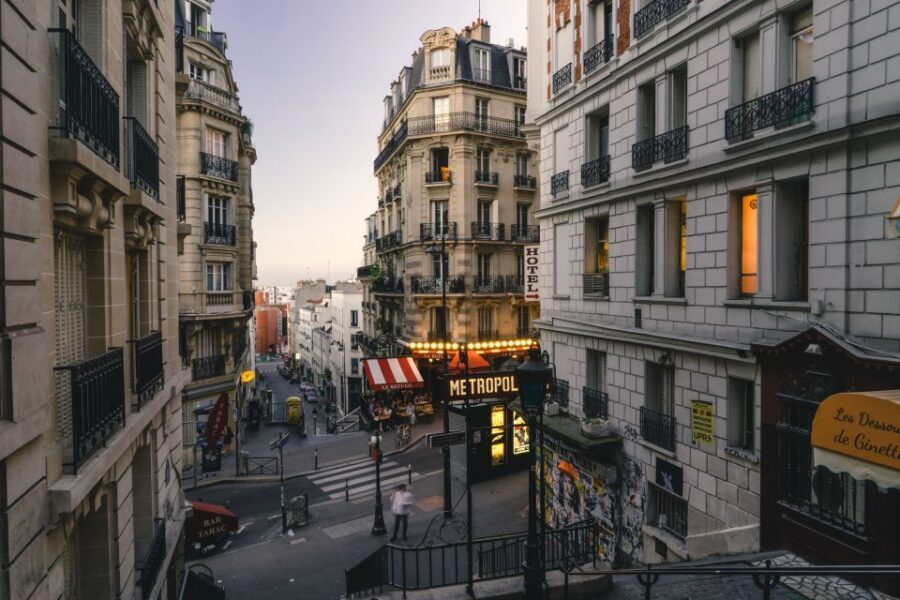
Many people treat Notre Dame as a quick photo stop. With a local guide, it becomes more of a way to understand the city’s center—why it’s where it is, how the surrounding area feels, and how the Seine pulls everything toward it.
From there, the tour moves toward La Seine, which is a great closing move. After the bigger landmark energy, the river area tends to slow things down. Even if you’re not doing a full river cruise, you’ll likely feel the difference right away: the city becomes more open, and the sights start lining up visually along the water.
I also like the psychological effect of finishing near the Seine. You end with a “Paris postcard” feeling, but you earn it by walking through the layers that got you there. That’s the point of a Montmartre-to-Seine route: it gives you continuity instead of a random grab bag.
Since the tour is flexible, your guide may adjust how you approach the final stretch based on what you enjoy most—views, street scenes, or more landmark interpretation. If you feel like changing direction mid-tour, they’re expected to discuss that with you. That’s a quality feature, not a gimmick.
Tickets, transport, and the walking reality
This tour includes private and personalized guiding plus help arranging tickets, attractions, and venues as required. But you should assume the money part for admissions isn’t included, because tickets into attractions are listed as not included.
So how should you handle this as a traveler? Don’t wait until the last minute. Tell your guide up front what you’re interested in, and ask what might require paid entry versus what you can enjoy from the street. That way you’re not stuck later deciding whether a ticket cost is worth the time left in your half-day.
Transportation during the tour is another practical detail. Public and private transport within the tour is not included. The plan is primarily walking, but other transport can be arranged to reach venues for an additional cost if you need it.
That leads to a good strategy: decide your tolerance for walking before you start. If you’re comfortable with a steady pace, walking will feel great because you absorb neighborhoods in motion. If you prefer frequent pauses, build that expectation with your guide at the start so they don’t read your silence as “I’m fine with everything.”
Price and value: is $141 per person worth it?

At $141 per person for a 4-hour private tour, you’re paying for three things you often can’t replicate on your own: time with a local, a route built around your interests, and on-the-spot flexibility.
Compare that to what you’d spend doing it yourself. If you’re relying on apps and printed maps, you spend time figuring out connections—then you still might miss what to look for. If you do a group bus tour, you lose flexibility and often get a one-size script. Here, you’re paying for “less friction” plus a guide who can steer the day.
Is it the cheapest way to see Paris? No. Is it one of the smarter ways to get meaning in a short window? Often, yes—especially if you’re the type of person who wants the city to make sense, not just look impressive.
One more value point: pickup from your accommodation can save real time. If your start location is convenient, the tour becomes closer to a true “half-day Paris in your hands.”
Who should book this Montmartre to La Seine experience
This tour fits best if you want a guided day that feels personal and practical. I’d especially recommend it for:
- First-timers who’ve heard the big names and want help connecting them
- People who like walking but want the city explained while they move
- Couples and small groups who don’t want to wait in crowds or follow a fixed script
- Visitors who value flexibility and don’t mind adjusting the plan once you’re in the streets
It may not be your best choice if you want a strict museum checklist. It’s a street-and-landmark experience with personalization, not a slow, ticket-heavy day where you spend most of your time inside venues.
And if you hate walking or want zero physical effort, ask about how your guide will pace the route. Since it’s wheelchair accessible, it’s worth discussing your mobility needs so the plan matches your comfort level.
Should you book this tour?
If you like the idea of spending 4 hours with a local who adjusts to you, I think this is a strong booking. The guide-matching process is the big advantage: it improves the odds that you’ll enjoy the day instead of just enduring it.
Book it if you want to connect Montmartre with the Eiffel Tower area, pick up key sights like the Arc de Triomphe, enjoy context around the Old Jewish Quarter, and finish near La Seine with a smoother, more Paris-feeling ending.
Skip it if your travel style is all hard admissions and long indoor time. Also, go in with clear expectations about walking and added costs for food, drinks, and any on-site tickets.
FAQ
How long is the tour?
The tour runs for 4 hours.
What’s the price per person?
The price is listed as $141 per person.
Is this a private tour?
Yes. It’s a private group experience.
How large is a typical private group?
Private groups are normally no larger than 6 persons.
Will I be picked up from my accommodation?
Pickup is included if your accommodation is within a reasonable distance.
What languages are offered?
The live guide is available in English and French.
Is the tour wheelchair accessible?
Yes, the tour is wheelchair accessible.
Are tickets to attractions included in the price?
Tickets into attractions are not included, even though the guide can help with booking tickets, attractions, and venues as required.
Can the route change during the tour?
Yes. The itinerary is outlined but flexible, and if you want to change direction—or your guide thinks you’d enjoy a different experience—they’ll discuss changes with you.
Is there free cancellation?
Free cancellation is available up to 24 hours in advance for a full refund.