REVIEW · PARIS
Guided Cruise The Old Paris on Canal Saint Martin
Book on Viator →Operated by France Tourisme · Bookable on Viator
Paris has a quieter side, and this canal cruise delivers it. You glide from the Port de l’Arsenal through one of the canal’s strangest thrills: a long underground tunnel where daylight fades, then returns from openings above. It’s a different Paris experience, not another same-same sightseeing loop.
What I like most is the live commentary in English and French while you watch the waterway change around you. I also love the hands-on feel of the cruise through the canal’s working features—locks and swing bridges make the whole trip feel real, not staged.
One possible drawback: you’ll want to pay attention to audio clarity and how your guide’s voice comes through. Several people noted the guide can be hard to understand at times, especially from certain seats or in rainy, overcast weather.
In This Review
- Key highlights worth aiming for
- Why this Canal Saint-Martin cruise feels like real Paris
- Port de l’Arsenal to Place de la Bastille: the best “wait, what is this?” moment
- Locks and swing bridges: the slow engineering show you’ll actually remember
- Tree-lined Canal Saint-Martin and the kind of Paris locals choose
- A name with a story: Bassin Louis Blanc and the canal’s softer side
- Canal de l’Ourcq and the rue de Crimée lift bridge: industrial Paris still working
- Finishing at Bassin de la Villette: what you can do next
- Price and time: is $38.55 good value for this cruise?
- Meeting point reality: how to avoid the most common hassle
- Who should book this cruise, and who should skip it
- Should you book the Old Paris on Canal Saint-Martin cruise?
- FAQ
- How long is the Old Paris cruise on Canal Saint-Martin?
- Where does the cruise start and end?
- Is there live commentary?
- How many locks and bridges are included?
- Is a bar available on board?
- Is breakfast included?
- Can I cancel for a full refund?
- What happens if the weather is poor?
Key highlights worth aiming for
- Port de l’Arsenal to the tunnel: the shift from open marina to underground canal is genuinely memorable
- Place de la Bastille reveal: emerging into lively streets after calm tunnel time feels like a movie scene
- Four double locks + two swing bridges: slow-motion engineering that you can watch up close
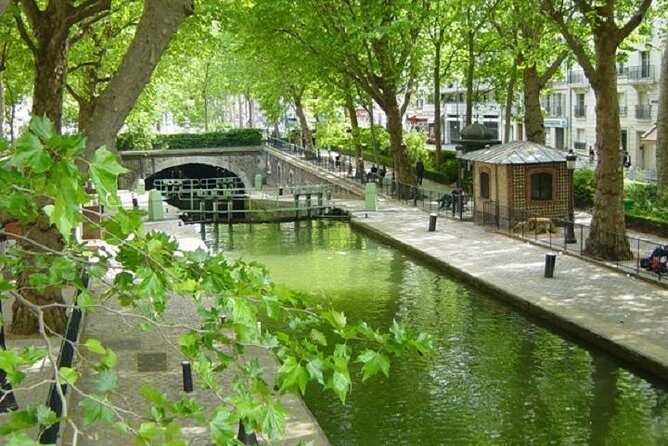
- Tree-lined Canal Saint-Martin charm: iron footbridges, canal life, and local rhythms along the banks
- Lift bridge of rue de Crimée: one of the last operational lifting bridges in Paris, raised right in front of you
- Bassin de la Villette finish: a relaxed endpoint where the city’s canal network opens back up
Why this Canal Saint-Martin cruise feels like real Paris
This is one of those Paris activities that doesn’t ask you to sprint from landmark to landmark. Instead, you settle in and let the canal do the storytelling for you. The Canal Saint-Martin sits in eastern Paris, and it shows you neighborhoods that feel more lived-in than postcard-heavy.
The guided part matters. The route isn’t just pretty water—it’s built around how the canal works. That’s why the locks and bridges aren’t boring technical stops; they’re the main event. You watch the water level change, you see gates open and close, and you feel the tempo slow down.
And then there’s the tunnel. Heading underground is rare in Paris tourism, and it changes your senses fast. You go from city air to a cool, vaulted passage and back again—daylight disappearing, then reappearing. It’s a quiet, almost meditative moment, but it’s also surprisingly dramatic when you pop out near Place de la Bastille.
You can also read our reviews of more boat tours in Paris

Port de l’Arsenal to Place de la Bastille: the best “wait, what is this?” moment
You start at Port de l’Arsenal, a marina area that connects the Canal Saint-Martin to the Seine. This matters because it sets the tone: you’re not starting in a tourist center. You’re starting at the canal’s working edge, with the water as the main stage.
Next comes the underground tunnel section of the Canal Saint-Martin. The tunnel is long, vaulted, and calm in a way open-air Paris rarely is. What makes it special is the rhythm of daylight: it fades inside, then you catch it again through openings above. Even if you’re not into architecture, you’ll notice how the light changes your whole viewpoint.
Then the cruise delivers a classic contrast. You emerge near Place de la Bastille, where the lively square sits above a canal route that felt enclosed and hushed only minutes earlier. This is one of those transitions that makes the whole tour feel worthwhile, because it’s not just travel—it’s a built-in before-and-after.
Practical tip: If you care about photos, keep your camera ready before you enter the tunnel and right as you approach the exit. Lighting inside and immediately outside can swing quickly.
Locks and swing bridges: the slow engineering show you’ll actually remember
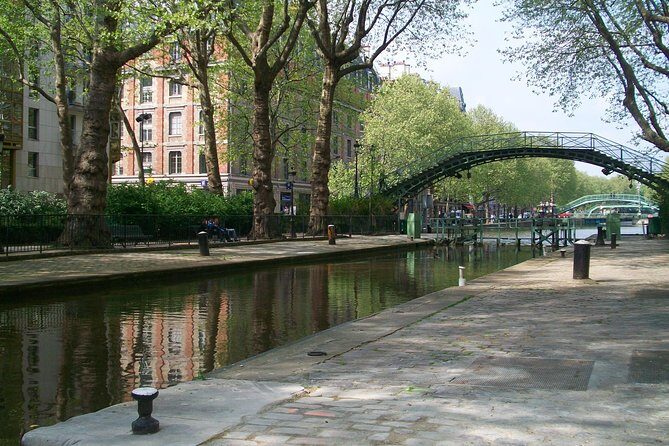
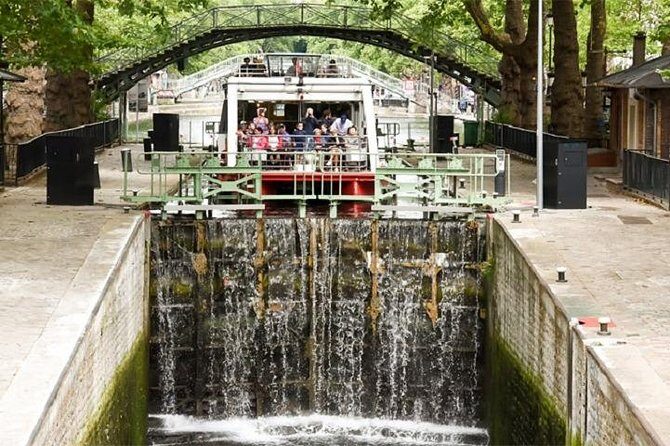
The itinerary is built around canal mechanics, and for many people that’s the highlight. You pass through 4 double locks and 2 swing bridges during the roughly 2 hours 30 minutes. That’s a lot for one guided outing, and it explains why this isn’t a fast “see-it-and-go” cruise.
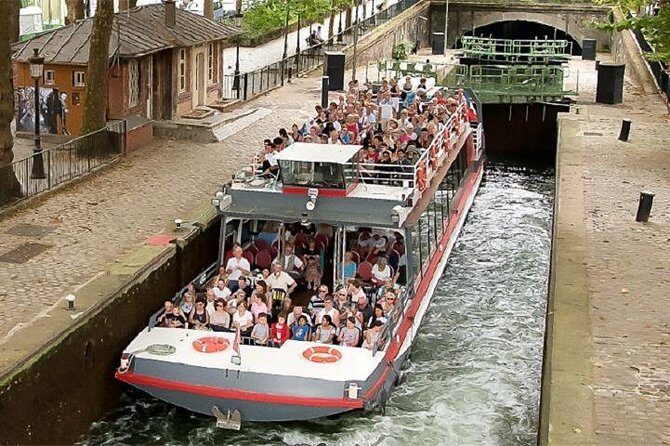
At Écluse du Temple, you get that slow rhythm in a way that’s hard to get from photos. Locks create a gentle rise and fall in water level. Watching it from the boat gives you a sense of scale: the structure, the water movement, and how the system controls flow.
Later, you pass by Écluses des Morts. The name alone adds a little mystery, and the atmosphere feels a bit more moody as you slide through this section. It’s not all “pretty scenery” here—the canal also has a past, and the locks are how that story moves through time.
Then comes Écluse de la Villette, your first lock tied to the Villette area stretch. This is where you’ll notice water level changes most clearly when the gates open and close. If you’re traveling with kids, the lock moments tend to land well. Some people specifically pointed out the fun of getting splashed during lock action, especially from seats closer to the front.
One consideration: locks take time. If you want a more energetic, constantly-moving sightseeing style, this cruise may feel slower than you expect. Still, that slowness is part of the charm—this is a tour where the canal’s pace sets the pace for you.
Tree-lined Canal Saint-Martin and the kind of Paris locals choose
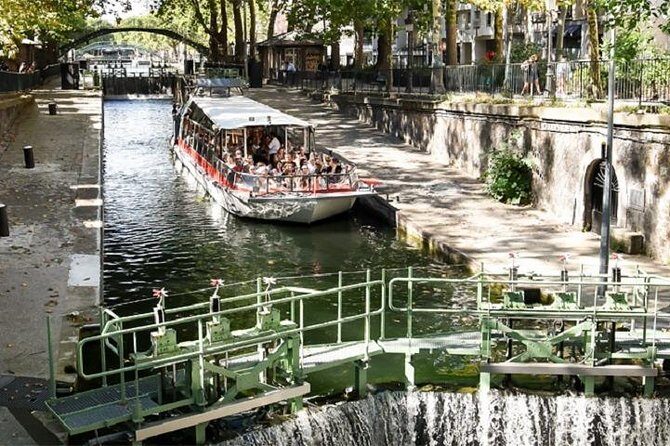
After the tunnel and lock sequence, the Canal Saint-Martin opens into its most romantic, everyday vibe. You travel through the canal’s heart: tree-lined banks, elegant iron footbridges, and waterways that look like they’ve been used the same way for a long time.
This part is why I’d call this cruise authentic. You’re not just looking at buildings from a distance—you’re passing the canal like a local might, with people living their day on the water’s edge. It also has that film-friendly feel; the scenery reads as cinematic even when nothing “big” is happening.
A seating reality check: some people found that passengers standing near the front blocked sightlines for others, and front seats can mean more water spray when the locks do their thing. If you want the cleanest views of footbridges and banks, consider choosing a seat a bit farther back rather than front-and-center.
Weather matters here too. On rainy days, the mood can still be good, but the audio can become harder to follow if the PA system isn’t carrying clearly. And on sunny summer afternoons, exterior areas can feel hot if there isn’t much shade.
A name with a story: Bassin Louis Blanc and the canal’s softer side
You glide into Bassin Louis Blanc, where the canal blends into the surrounding neighborhood instead of feeling like a separate attraction. This is one of those stretches that helps your brain relax. You’re not constantly hit with a big sight; you’re seeing how canals fit into day-to-day city life.
The cruise then continues toward more lock and bridge action, but the Bassin area gives you a breather. For me, that’s an underrated value. When a tour includes engineering moments and dramatic transitions, you need calm stretches to reset your attention.
If you’re sensitive to crowds, this section is also where the experience tends to feel most comfortable. It’s still central Paris, but it doesn’t feel like you’re inside a typical tourist machine.
You can also read our reviews of more guided tours in Paris



Canal de l’Ourcq and the rue de Crimée lift bridge: industrial Paris still working
Next you head onto the Canal de l’Ourcq. This part is useful because it shows a quieter, more “real city” view of Paris. Along the canal you’ll see former warehouses and then more modern residential buildings, so you get that layered look at what Paris repurposed and what it kept.
Then the cruise adds a spectacular working-structure moment: sailing under the lift bridge of rue de Crimée, one of the last operational lifting bridges in Paris. Seeing a living industrial feature move is rare in a city full of static monuments. This is the kind of moment that makes the cruise feel special even if you’re not a canal-history nerd.
If you care about timing for photos, watch for the bridge approach. The visual payoff is immediate: you’ll be under it, then you’ll watch it rise above the boat.
Finishing at Bassin de la Villette: what you can do next
The cruise ends at Bassin de la Villette, one of the largest open water basins in Paris. It’s a lively area, but it doesn’t feel frantic. It also acts like a gateway back to the historic canal network, so you’re not left in some random nowhere point.
Practical detail: your ending point is at 13 Quai de la Loire, near métro Jaurès. That matters because it makes the end of the cruise easy to plug into the rest of your day, whether you’re heading to dinner, a museum, or a long walk through the neighborhood.
Also, the boat’s route and stops can help you decide what you want to explore after. If you spent the cruise noticing bridges and canal corners, you’ll likely enjoy stretching your legs around the Villette waterfront after you disembark.
Price and time: is $38.55 good value for this cruise?
At $38.55 per person for about 2h30, this cruise lands in the “small money, big difference” category. You’re paying for something most other popular tours don’t include: repeated lock action and operational bridges, plus a guided interpretation in English (with French too).
Here’s how I’d think about value:
- If you want a canal experience that feels like how Paris actually runs, this is a fair deal for the time you get on the water.
- If you’re expecting a fast, landmark-hopping sightseeing cruise, you might find the locks slow and the commentary less crisp than you hoped.
One thing to watch: the tour duration is long enough that seat choice matters. You’ll feel it if you’re in the wrong spot for views, spray, or sound. At this price, I’d rather spend a few minutes getting a good position than settle and then wish you’d chosen better.
There’s also a bar on board. So if you like a drink with scenery, you’ve got an option without building a whole separate plan.
Meeting point reality: how to avoid the most common hassle
The meeting and end points are both linked to Canauxrama, but the start spot can be tricky. One common complaint was that GPS doesn’t clearly show a physical location, and the Canauxrama sign is up high, not instantly obvious.
My advice is simple:
- Arrive early, then look around for the Canauxrama area rather than trusting the pin alone.
- If people seem confused, ask staff or other passengers quickly. This is the kind of tour where being five or ten minutes late can create stress.
If you’re prone to missing signs, do yourself a favor: open the map the day before and check street-level landmarks, not just the pin.
Who should book this cruise, and who should skip it
This is a great fit if you want:
- a relaxing break from walking and crowds
- an experience focused on canal life and working infrastructure
- live commentary in English and French
- a Paris option that feels off the usual route
It may be less ideal if:
- you need crystal-clear audio from the start to the finish
- you strongly prefer faster-paced sightseeing
- you dislike slow, repeated lock sequences (especially if you’re sensitive to waiting)
One extra note from the on-board experience: some people mentioned that understanding the guide could be harder when the PA wasn’t clear or when sitting in certain spots. If you’re traveling in a group with mixed language needs, it’s smart to choose seating that helps you hear.
Should you book the Old Paris on Canal Saint-Martin cruise?
Yes, if you want a genuinely different side of Paris—one built on water, bridges, and city mechanics. The tunnel-to-Bastille contrast and the repeated lock action are the kind of moments you don’t get on standard Seine cruises.
Book it especially if you like calm, photo-friendly travel with a guided narrative. If you’re hard of hearing or very picky about sound quality, consider choosing seating carefully and arriving early.
If this is your first time in Paris and you only have one “cruise” day, you might compare this with a Seine option. But if you want something quieter and more local-feeling, the Old Paris canal route is a strong choice.
FAQ
How long is the Old Paris cruise on Canal Saint-Martin?
It runs for about 2 hours 30 minutes.
Where does the cruise start and end?
It starts at Canauxrama, 50 Bd de la Bastille, 75012 Paris, and ends at Canauxrama, 13 Quai de la Loire, 75019 Paris, near métro Jaurès.
Is there live commentary?
Yes. The cruise offers live commentary in English and French.
How many locks and bridges are included?
The cruise includes passing through 4 double locks and 2 swing bridges.
Is a bar available on board?
Yes, there is a bar on board.
Is breakfast included?
Breakfast is only included in the package called cruise + breakfast. That package includes 1 coffee and 1 croissant.
Can I cancel for a full refund?
Yes, you can cancel up to 24 hours in advance for a full refund. If you cancel less than 24 hours before, the amount is not refunded.
What happens if the weather is poor?
The experience requires good weather. If it’s canceled due to poor weather, you’ll be offered a different date or a full refund.