REVIEW · PARIS
Paris: Big Bus Hop-On Hop-Off Tour with Optional Cruise
Book on GetYourGuide →Operated by Big Bus Tours/LES CARS ROUGES · Bookable on GetYourGuide
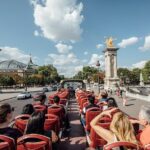
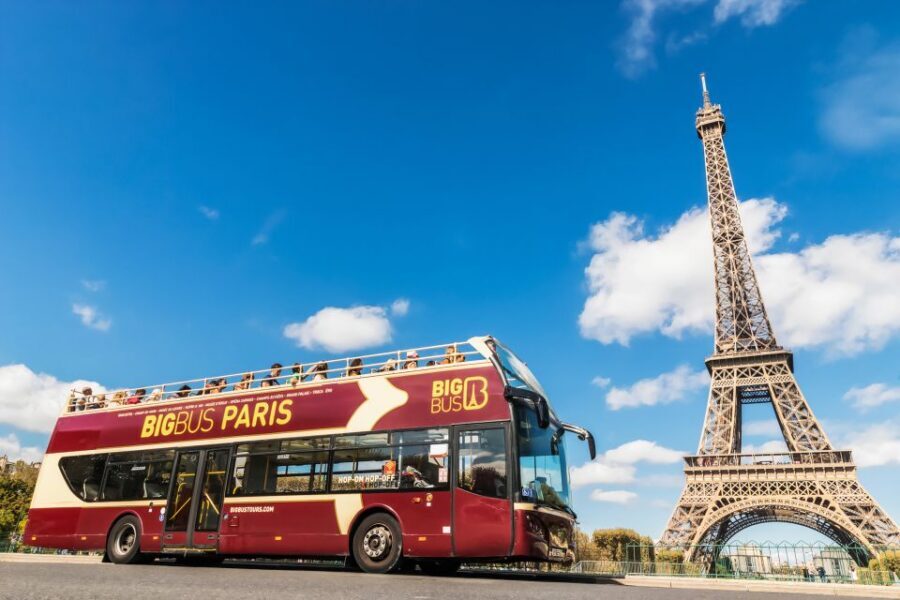
Hop buses, skip stress, see Paris fast. This Big Bus hop-on hop-off tour is an easy way to clock Paris highlights without constantly re-planning transit, and the double-decker format makes the city feel bigger (and easier to photograph). I like that you pair it with an optional 1-hour Seine cruise that adds views you just can’t get from the streets.
Two things I’d highlight. First, the hop-on hop-off setup lets you move at your pace, starting from the Louvre/Opéra area and hopping back on as you decide what deserves extra time. Second, the ride comes with multilingual digital audio commentary and a free app for real-time bus tracking, which is a big help when you’re trying to line up your next stop.
One consideration: the stops are convenient, but they’re not always door-to-door with every major attraction. Add in Paris traffic, and the time between stops can feel longer than you expect, especially if you’re trying to fit the Seine cruise into the same tight window.
In This Review
- Key things to know before you go
- Why this Big Bus Paris tour is a smart use of limited time
- Pricing and value: what you’re really paying for
- How long the bus takes and how the timing works
- Where you board: start from Stop 1 or any Big Bus stop
- Using the app and audio so you don’t feel lost
- Onboard comfort: double-decker views, seating, and electronics
- The Seine River cruise add-on: how it fits and what you’ll see from the water
- Stop-by-stop: what each landmark area gives you (and where the tradeoffs show up)
- Louvre-Pyramide / Pont des Arts: start strong around the river bridges
- Notre Dame: the classic target stop for first-timers
- Musée d’Orsay: art-and-stroll territory without the transportation juggling
- Champs-Élysées: the wide boulevard stop for photos and people-watching breaks
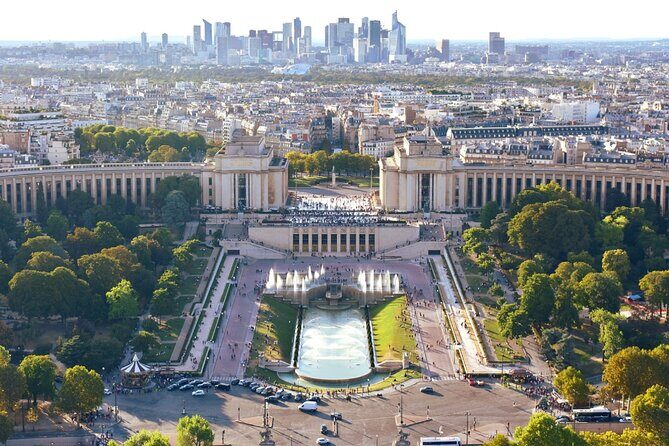
- Grand Palais to Eiffel Tower zones: monuments with huge view potential
- Opéra Garnier and Invalides: two big culture-and-landmark anchors
- The pass-by highlights: scenery you’ll see without changing plans
- What to do first: a simple game plan for day one vs day two
- Common friction points to plan around (so your day stays fun)
- Who this Big Bus Paris tour suits best
- Should you book the Big Bus Paris hop-on hop-off plus optional Seine cruise?
- FAQ
- How long is the hop-on hop-off bus tour?
- How often do the buses depart?
- What time is the last departure from the main starting stop?
- Where can I start boarding the bus?
- What landmarks are included on the route?
- Is the Seine cruise included?
- Where does the Seine cruise depart from?
- When do the Seine cruises run?
- What languages are available for the audio commentary?
- Are headphones and Wi-Fi included?
Key things to know before you go
Frequent departures. Buses run about every 10–20 minutes, with the last departure from Stop 1 at 17:30.
Audio in many languages. You get multilingual digital commentary plus souvenir headphones.
Seine cruise timing matters. Cruises depart from Pontoon No. 3 near the Eiffel Tower about every 45 minutes (30 minutes on weekends).
Pick your pace with a 24- or 48-hour ticket. A second day helps if you’re hopping off for photos and walking.
Bring a layer for the open deck. Even with covered sections on some levels, weather can change fast.
Why this Big Bus Paris tour is a smart use of limited time
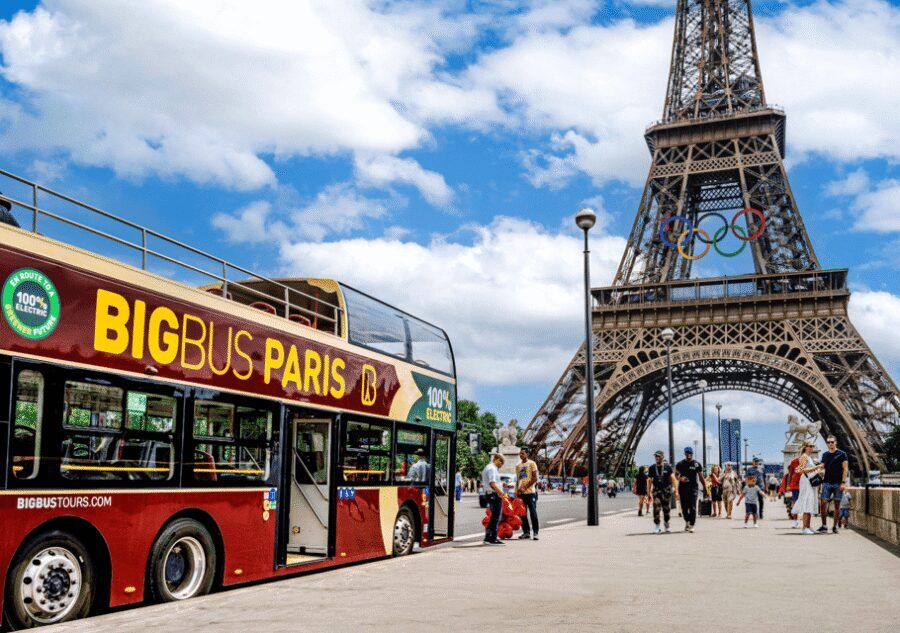
If you have only a day (or two) in Paris, this is the kind of ticket that reduces decision fatigue. Instead of spending your best hours switching between metro lines, you get a continuous loop with clear stop points and a live-feeling commentary through your headphones. It’s built for flexibility: hop off, wander, hop back on when you’re ready.
I also like that it’s not just a “drive-by.” The tour focuses on major landmarks you’re likely to plan around anyway: the Eiffel Tower area, Notre Dame, Champs-Élysées, Grand Palais, and Opéra Garnier are all part of the route, and you can stay on the bus for the views when you need a break.
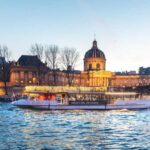
The optional Seine cruise is the extra value for people who want the classic river views without dealing with finding the right boat and schedule. The cruise runs about 1 hour with live commentary, departing at a dock near the Eiffel Tower.
You can also read our reviews of more boat tours in Paris

Pricing and value: what you’re really paying for
At about $43 per person, the ticket is priced like a convenience product: you’re paying for transportation + narration + a structured route. The value becomes strongest when you do two things:
- You actually use the hop-on hop-off freedom (meaning you hop off at more than one stop).
- You give yourself enough time to enjoy stops instead of sprinting.
A 24-hour ticket can work if you’re efficient and pick a shortlist. But if you’re traveling with someone who moves slower, wants photos, or wants to step into areas near multiple landmarks, the 48-hour option usually feels less stressful. Several riders specifically recommend a longer pass so you don’t feel rushed on your second stop.
How long the bus takes and how the timing works

The full loop time is about 2 hours 15 minutes for the main sightseeing route. Buses generally depart every 10–20 minutes, so you’re not stuck waiting long at a stop for the next bus.
The practical trick is this: don’t treat the 2h15 as a “clock.” Treat it as a planning baseline. Traffic can stretch the ride time between stops. One of the most common real-world frustrations is exactly what you’d expect in Paris: when roads slow down, the bus can take longer to reach the next landmark area than the schedule suggests.
There’s also a day cutoff to keep in mind. The last tour departs from Stop 1 at 17:30, so plan your most important hop-offs earlier in the day. If you like sunsets and nighttime city shots, still leave room to get back on the bus without feeling rushed.
Where you board: start from Stop 1 or any Big Bus stop
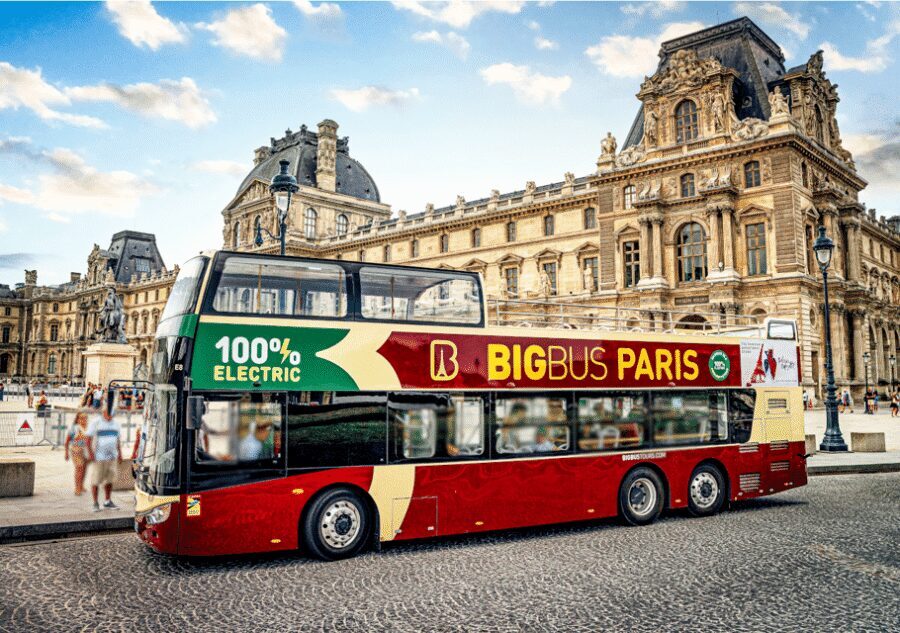
You can begin the tour from any of the Big Bus stops along the route. The starting point is listed as Stop 1: Louvre-Pyramide / Big Bus Information Centre at 11 avenue de l’Opéra.
In practice, this matters because Paris neighborhoods can be a puzzle when you first arrive. If you’re staying near the Opéra area, starting there is straightforward. If you’re already closer to a different stop (like Notre Dame or the Eiffel Tower zone), you can start there instead of backtracking.
Also note: the meeting point can vary depending on your booked option, so when you arrive, look for the stop signs and the Big Bus branding rather than trying to find one exact street corner.
Using the app and audio so you don’t feel lost
The audio system is one of the tour’s strongest points. You get multilingual digital audio commentary, and headphones are included. The languages listed include Chinese, English, French, German, Italian, Korean, Portuguese, Russian, and Spanish.
I’d also plan on using the free app for route info and real-time tracking. The payoff is simple: you can check where the next bus is instead of guessing. In a city where your legs will eventually ask for mercy, being able to time your next boarding helps you spend time seeing, not waiting.
Two small comfort notes from the experience details and rider feedback:
- Wi‑Fi is available onboard.
- If you’re traveling in cold or rain, the upper deck can be chilly, though some riders report covered areas that help when the weather turns.




Onboard comfort: double-decker views, seating, and electronics

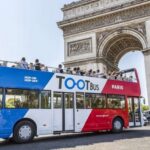
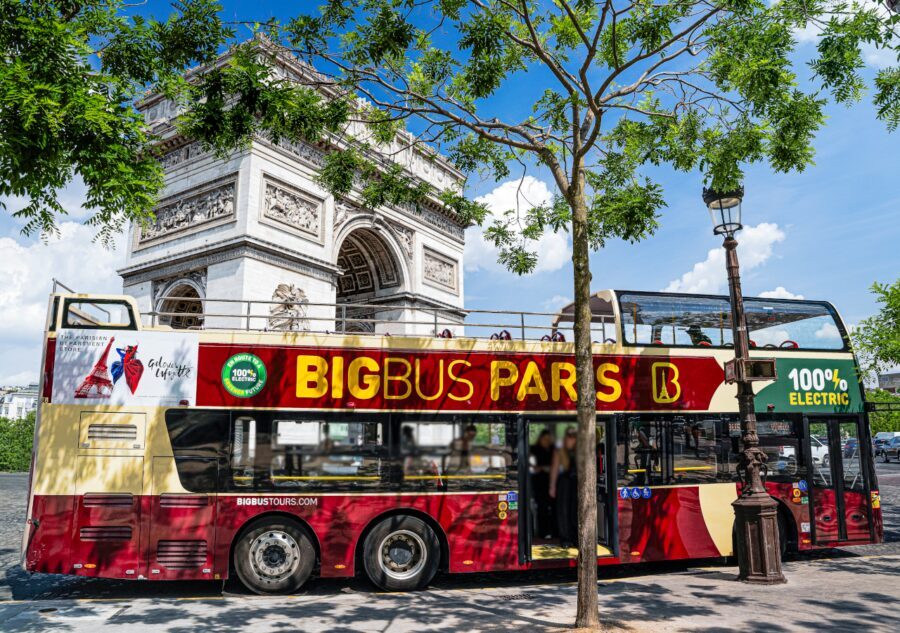
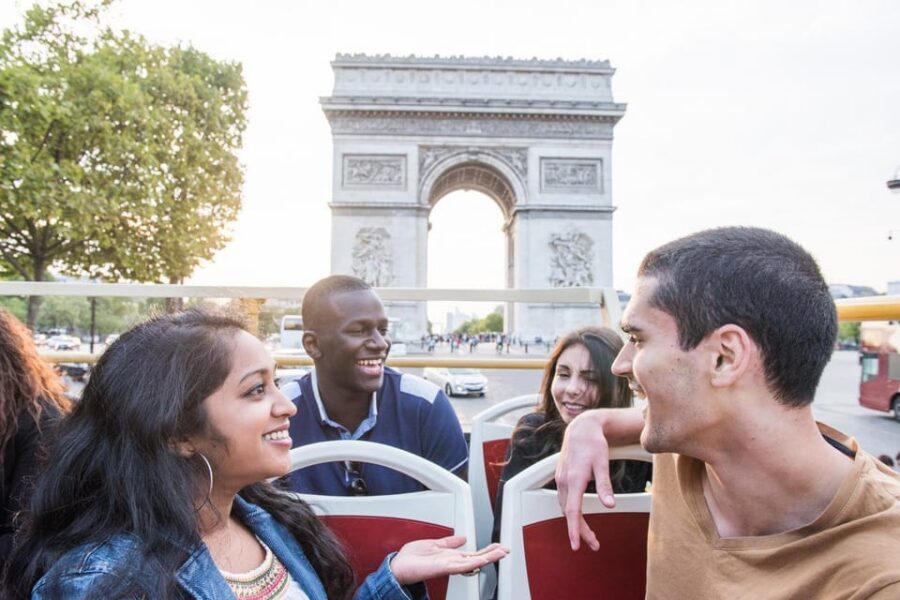
This tour is built around an open-top double-decker bus concept, which means you’re always working with two options: sit downstairs for comfort and air-conditioning, or go upstairs for the best line of sight.
Riders have called out that the buses are comfortable and that audio is clear through the headphones. One review also highlights that the buses are electric, which reduces engine noise and smell while you’re up top. It’s not a must-have feature, but it does make the experience more pleasant when you’re parked at a stop or stuck in slow traffic.
One practical downside to remember: seating fills up at peak times. If you board later in the loop, you may find the upper deck crowded, and you might need to mix “views when available” with “comfort when not.”
The Seine River cruise add-on: how it fits and what you’ll see from the water
The optional cruise is 1 hour long and departs from Pontoon No. 3, Port de la Bourdonnais, near the Eiffel Tower area (listed near Stop #8). Cruises run every 45 minutes from 10:30am to 9:00pm, and on weekends the frequency increases to every 30 minutes.
This add-on is most valuable when:
- You want the major river landmarks and bridges experience.
- You like getting a calmer viewpoint after hours of walking.
- You’re pairing sightseeing with downtime.
The cruise also includes live commentary that explains significance as you glide along. That’s a good match if you’re the type who enjoys hearing why places matter, not just seeing them.
One real-world caution: the cruise can involve waiting depending on when you arrive relative to departure times. If your day is packed, plan your hop-offs with the cruise schedule in mind so you don’t end up losing a big chunk of time.
Stop-by-stop: what each landmark area gives you (and where the tradeoffs show up)
Louvre-Pyramide / Pont des Arts: start strong around the river bridges
The tour’s main start and information hub is Louvre-Pyramide / Big Bus Information Centre at 11 avenue de l’Opéra, and the route also includes the Louvre / Pont des Arts stop near Quai François Mitterand.
Why this is a good starting zone: it puts you near central sightseeing and gives you options. If your plan includes Notre Dame and the Latin Quarter vibe, you can head that way by hopping off and then returning later. If you want river views, Pont des Arts is part of the route, and your audio commentary covers the kind of cultural context that helps you understand what you’re looking at.
Tradeoff: stop points can be a short walk from exact entrances, so build in a few minutes for moving around.
Notre Dame: the classic target stop for first-timers
The tour includes a dedicated stop at Notre Dame (3 rue Lagrange). This is the kind of place where you don’t want to arrive by accident; you want time to linger.
The advantage here is simple: hop off when you’re ready to walk, then hop back on when you’re done. If you’re doing this as your first big sightseeing day, it helps you anchor your route around a headline location instead of trying to assemble a Paris “greatest hits” map on foot.
Tradeoff: you may find it crowded around the cathedral zone, and you’ll want to keep an eye on bus departure times so you don’t miss your next ride.
Musée d’Orsay: art-and-stroll territory without the transportation juggling
A stop at Musée d’Orsay (58 place Henry de Montherlant) rounds out the mid-route cultural feel. Even if you don’t plan to go inside a museum that day, the stop is useful because you can step into the area, then get back onto the bus when you want to keep moving.
Audio narration is included along the way, and it can make this segment feel less like “just passing.” You’ll hear commentary intended to explain what you’re seeing as you go.
Tradeoff: if you’re tempted to do multiple indoor experiences, it’s easy to lose time. If your goal is overall orientation, keep Musée d’Orsay as a hop-off-and-walk block rather than a full day commitment.
Champs-Élysées: the wide boulevard stop for photos and people-watching breaks
The tour includes a stop at Champs-Élysées (156 avenue des Champs-Élysées). This is a practical stop because it’s a magnet for walking, shopping browsing, and wide-angle photos from both the bus and the sidewalks.
It’s also where audio commentary notes the glamour of the avenue, which works well if you like context while you’re strolling.
Tradeoff: shopping streets can slow your movement. If you’re trying to reach the next big area quickly, you may want to set a time limit for your Champs-Élysées hop-off.
Grand Palais to Eiffel Tower zones: monuments with huge view potential
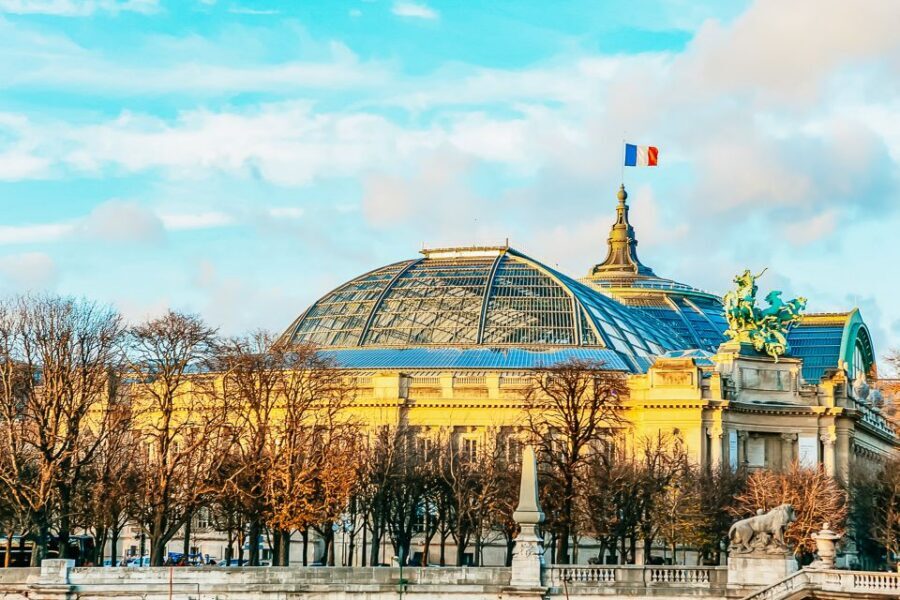
The route includes Grand Palais (avenue Winston Churchill) and Iena (avenue Iéna). From here, the bus brings you into an iconic stretch of scenery that’s a big reason people love this type of tour.
Then you hit the most famous part of the route: the Eiffel Tower area. There’s a stop at Eiffel Tower (Quai Branly, Entrée 2 Tour Eiffel). From that point, the tour also includes Champ de Mars (avenue Joseph Bouvard).
This is a high-value section because you can choose your “effort level.” You can:
- Spend time on the ground when you want close-up views.
- Or stay on the bus to keep moving and absorb the changing perspectives.
Tradeoff: this area is popular, so plan for crowd energy. Also, upper-deck seating depends on where you are on the loop.
Opéra Garnier and Invalides: two big culture-and-landmark anchors
Later on the route, you’ll find Opéra Garnier (facing 15 rue Scribe) and Invalides (2 avenue de Tourville).
Why these stops help: they give you two more strong Paris reference points so your itinerary doesn’t feel like it only revolves around one zone (like the Eiffel Tower). If you’re using the bus to build an orientation map, Opéra Garnier and Invalides are ideal “Now I get it” locations.
Tradeoff: these areas can be great for walking, but if you hop off with no plan, you can burn more time than expected. Use the bus loop as a safety net: hop off briefly, then keep moving if your schedule is tight.
The pass-by highlights: scenery you’ll see without changing plans
Even when you don’t hop off at every spot, the route passes landmarks like Arc de Triomphe, Palais-Royal, Tuileries Garden, Place de la Concorde, Petit Palais, Palais de Chaillot, École Militaire, and Place Vendôme. Seeing these from the bus is useful because it helps you connect what you’ve heard about Paris to what you’re actually looking at.
I like these pass-by segments for orientation. You can decide later whether any of those deserve a return visit.
What to do first: a simple game plan for day one vs day two

If you’re doing one day, I’d focus on building your “Paris map” first:
1) Start central (Opéra/Louvre zone)
2) Hop off at Notre Dame
3) Work your way toward Champs-Élysées and then the Eiffel Tower/Champ de Mars zone
4) Use the remaining time to do one extra hop-off you feel drawn to
If you’re doing two days, you can slow down. Day one can be big-sights and orientation. Day two can be “choose your favorites” and spend more time walking around those specific areas. This approach also helps if you’re traveling in winter or rain because you’ll have built-in breaks on the bus.
Common friction points to plan around (so your day stays fun)
Here’s what can make or break the experience, based on the pattern of feedback and the operating details:
- Traffic delays happen. The tour is not immune to congestion, so don’t book super tight connections right after a bus hop-off.
- Short walks from stops are normal. Some people find stops a distance from the attractions, so leave yourself a buffer.
- Upper-deck comfort varies by weather. In cold months, you may want to plan your photos during the clearest, brightest stretch.
- Crowded buses reduce comfort. If seating is full, expect to spend more time downstairs or wait for the next bus.
- Headphones can be finicky. One review flagged headphone jack issues, so if audio is crucial, consider bringing a backup way to listen (like your own adapter) in case the onboard setup acts up.
Who this Big Bus Paris tour suits best
This tour shines for:
- First-time visitors who want an easy “greatest hits” overview
- People on a short stay who don’t want to spend hours on public transit
- Families or mixed-age groups who need built-in breaks
- Anyone who wants flexibility to choose how long to spend at each landmark
It’s less ideal if:
- You already know Paris well and only need one or two specific areas
- You plan to spend long blocks inside multiple major attractions every stop (the bus is best for mobility and orientation, not museum-marathons)
Should you book the Big Bus Paris hop-on hop-off plus optional Seine cruise?
I’d book this if your goal is to see a lot of iconic areas with minimal planning. The combination of frequent bus service, multilingual audio, and the hop-on hop-off format makes it a solid first step in almost any Paris itinerary. Add the Seine cruise if you want a calmer, classic viewpoint to balance the walking.
Skip or rethink it if your day is already tightly scheduled around specific timed tickets and you can’t absorb delays from traffic. Also consider whether you’ll actually use multiple hop-offs; the value is strongest when you turn that loop into a flexible itinerary.
If you like the idea of getting oriented, spotting what you want to return to later, and doing it on a schedule that doesn’t require constant route-planning, this is a very practical bet.
FAQ
How long is the hop-on hop-off bus tour?
The tour duration is approximately 2 hours and 15 minutes.
How often do the buses depart?
Buses depart every 10–20 minutes.
What time is the last departure from the main starting stop?
The last tour departs from Stop 1 at 17:30.
Where can I start boarding the bus?
You can begin from any of the Big Bus stops along the route. One listed starting option is Stop 1 at 11 avenue de l’Opéra.
What landmarks are included on the route?
The route includes stops near major sites such as the Eiffel Tower, Notre Dame, Champs-Élysées, Grand Palais, Opéra Garnier, and others mentioned as key sightseeing points.
Is the Seine cruise included?
It’s included only if you select the option with the 1-hour Seine River cruise.
Where does the Seine cruise depart from?
The cruise departs from Pontoon No. 3, Port de la Bourdonnais, near the Eiffel Tower area (near Stop #8).
When do the Seine cruises run?
Cruises run every 45 minutes from 10:30am to 9:00pm, and every 30 minutes on weekends.
What languages are available for the audio commentary?
The audio guide is available in Chinese, English, French, German, Italian, Korean, Portuguese, Russian, and Spanish.
Are headphones and Wi-Fi included?
Souvenir headphones are included, and Wi-Fi is available onboard.