REVIEW · PARIS
Latin Quarter Paris Guided Walking Tour Semi-Private 12ppl Max
Book on Viator →Operated by Babylon Tours Paris · Bookable on Viator
Paris makes more sense on foot. This semi-private tour links Île de la Cité to the Latin Quarter in one smooth story: Roman beginnings on the Seine, Notre-Dame from the outside, then the Left Bank’s thinkers, churches, and bookish streets. I love that it’s max 12 people, so you’re not lost in a stampede, and I also love how the guide connects landmarks with French history in plain language. One consideration: the big monuments you see most prominently are exterior-only, so if you’re craving inside-the-building moments, you’ll want to plan a separate stop.
Pacing is a big deal on a tour like this, and the best guides (like Jay, Eden M., and Hugo) keep things moving at a relaxed speed with frequent chances to ask questions. You’ll walk enough to feel like you’re doing Paris, but you’ll also get short, useful breaks to look up details instead of just passing by them like a tourist-shaped blur.
This walk is for people with moderate fitness. If you use a wheelchair or need step-free routing, this isn’t the right fit, and you’ll also want comfortable shoes because it runs rain or shine.
Key points you’ll care about
- Max 12 guests keeps the experience personal and question-friendly.
- Starts on Île de la Cité, the oldest Paris core, then heads into the Left Bank.
- Notre-Dame and the Pantheon are exterior-only, so manage expectations for inside access.
- Literature fans get Shakespeare and Company time, plus stops tied to famous French writers.
- 2.5 hours is the sweet spot for first-time orientation without eating your whole day.
- Pro guide + mobile ticket means you spend more time looking, less time figuring out.
In This Review
- Why this Latin Quarter + Île de la Cité route works so well
- Meeting on the Seine: Île de la Cité, Lutetia, and first Notre-Dame glimpses
- Crossing to the Left Bank: Saint-Michel fountain and the Good vs Evil story
- Shakespeare and Company, plus churches that show older Paris still lives here
- Musée de Cluny, the Pantheon exterior, and getting your French timeline straight
- Luxembourg Gardens as your breather—and a practical reset mid-walk
- The old city wall on your way out: Philip II Augustus and why it matters
- Semi-private group size: what max 12 means in real life
- Price and value: is $59.69 a good deal for this walking route?
- Tips to get the most from your guide (and avoid the usual Paris timing traps)
- Should you book the Latin Quarter and Île de la Cité walking tour?
- FAQ
- How long is the Latin Quarter Paris Guided Walking Tour?
- Is this tour private?
- What language is the tour in?
- Where does the tour start and end?
- What sights are included, and are there admission tickets?
- Does the tour run in bad weather?
- Is hotel pickup or drop-off included?
- Do I need a mobile phone number for booking?
- Is the tour suitable for wheelchair users or walking disabilities?
- What if the minimum number of guests isn’t met?
Why this Latin Quarter + Île de la Cité route works so well
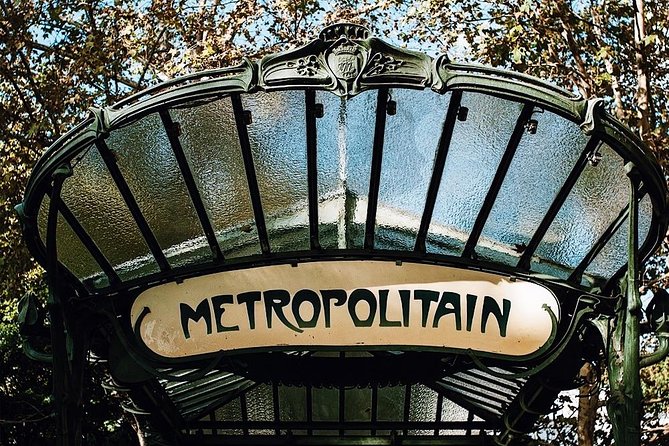
This tour is built like a timeline you can walk through. You start on Île de la Cité, the oldest settlement in Paris, where the city’s Roman roots (Lutetia) still shape the setting. Then you cross the Seine into the Latin Quarter, the intellectual heart of the Left Bank, where universities, literature, and politics have rubbed shoulders for centuries.
I like routes that make you understand why places are here, not just what they look like. Here, the guide’s job is basically translation: Gothic cathedral to civic pride, university to social change, and even fountains and street corners to real historical debates about good and evil, power, and faith.
If you’re short on time, this is also a smart way to get your bearings. You’ll leave with a mental map of where the Seine bends, where the famous landmarks sit, and how the Latin Quarter feels like a neighborhood—not a checklist.
Meeting on the Seine: Île de la Cité, Lutetia, and first Notre-Dame glimpses

You begin at Cité75004 Paris, right where the Seine does that classic Paris trick: it both separates and connects neighborhoods. The first stop is Île de la Cité itself, once known as Lutetia, the Roman predecessor of modern Paris. This is a good opener because it resets your sense of scale. You’re not just walking through a pretty district—you’re standing on layers of the city.
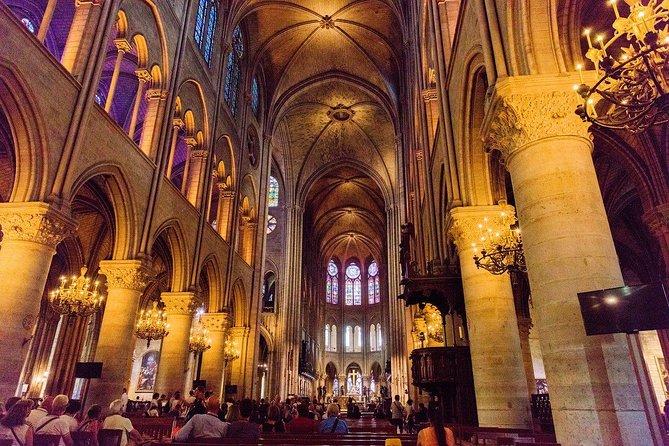
From there, the tour focuses on Notre-Dame de Paris (exterior only). Even if you’ve seen photos, seeing it from street level hits different. Gothic architecture is all about vertical confidence, and Notre-Dame’s size reads best when you can look up slowly rather than scroll past.
This is also where I’d set expectations: you’ll see Notre-Dame’s exterior, but tickets aren’t included for inside. If your dream is cathedral interiors, treat this stop as orientation and then plan a separate visit on your own.
Tip: come with a photo plan. Take one wide shot to capture the façade, then one closer frame where you can study details. You’ll understand those shapes a lot better after the guide points out what to watch for.
You can also read our reviews of more tours and experiences in Paris.



Crossing to the Left Bank: Saint-Michel fountain and the Good vs Evil story
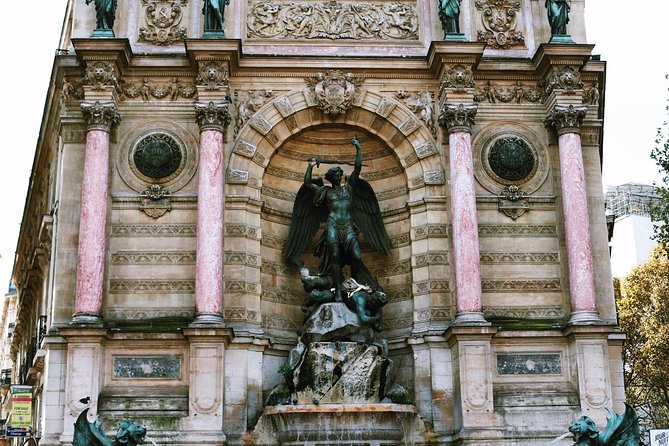
Next you pass by Fontaine Saint-Michel, commissioned by Haussmann under Napoleon III. The fountain’s message is not subtle: it depicts the archangel Michael vanquishing the Devil, using sculpture to turn religion into a public moral lesson.
This stop matters more than it seems. Paris streets often hide big political choices inside the “pretty” parts of the city. A Haussmann-era fountain isn’t just decoration—it’s city branding and a statement about order.
Right around here, you start to feel the Latin Quarter shift in personality. The pace and the sidewalk vibe change. The streets feel made for walking and thinking, not just commuting.
Shakespeare and Company, plus churches that show older Paris still lives here
One of the tour’s best rhythm moments is Shakespeare and Company. It’s right by Notre-Dame and has a reputation that’s bigger than its street corner—especially for the literary scene linked with mid-century culture.
What I like is that the stop isn’t just a photo stop. The guides often connect the bookstore to the Latin Quarter’s habit of turning books into social identity. In the tour you’ll also get time that makes the place feel less like a store you pass and more like a real part of the neighborhood.
From there, you’ll move through older religious layers that help explain how the Latin Quarter stayed important long after Rome. You can expect to see:
- Église Saint Julien le Pauvre, a Melkite Greek Catholic parish church and one of the oldest religious buildings in the area.
- Église Saint-Séverin, a Roman Catholic church that still functions as a place of worship and is among the oldest standing churches on the Left Bank.
These stops are short, but they work because the architecture tells stories quickly: Romanesque and medieval elements, how buildings evolved, and how faith communities shaped the streets around them.
Note for planning: the tour includes seeing these places, but you shouldn’t assume you’ll be able to go inside every church. Some sites can be affected by security rules and timing, and the tour is built for viewing and context rather than guaranteed entry.
Musée de Cluny, the Pantheon exterior, and getting your French timeline straight
As you continue, the tour heads toward Musée de Cluny, also called the National Museum of the Middle Ages. What’s impressive here is the building itself: part of it sits on the remnants of third-century Gallo-Roman baths, and the museum collections cover the 1st to the 15th centuries.
Since the admission is not included, you’ll likely experience this as a directional or exterior moment rather than a full museum visit. Still, even that quick connection helps. It’s one thing to know “Paris is old.” It’s another to realize parts of the city literally reuse ancient foundations.
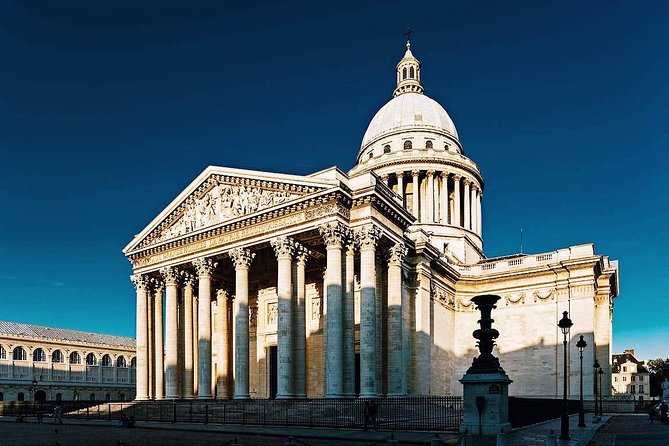
Next up is the Pantheon (exterior only). The guide frames it as a former church dedicated to St Genevieve that became a secular mausoleum. The names mentioned here matter because they show how France talks to itself through memory—think Voltaire and Rousseau among the notable figures.
The Pantheon exterior stop is also valuable because it sets up a clean contrast with Notre-Dame. Both are major symbols, but they represent different eras of belief and state power. Seeing them in the same walking sequence makes that contrast click.
Luxembourg Gardens as your breather—and a practical reset mid-walk

After a string of architecture and history, you’ll reach Luxembourg Gardens, which sit between Saint-Germain-des-Prés and the Latin Quarter. This is a good mid-tour reset. You get a chance to slow down, look around, and let your brain process what you just learned.
The gardens were inspired by the Boboli Gardens in Florence, created in 1612 on the initiative of Queen Marie de Medici, and cover 25 hectares. Even if you only spend part of that time walking the paths, it helps you understand why the area attracts students, writers, and people who like to think in public.
Also, this is where having a water bottle and a bit of shade can save your mood. The tour runs rain or shine, so the gardens can be a calm place to regroup instead of just trudging onward.
If you have time at the end of the walk, you may see:
- St. Étienne du Mont, including the shrine of St Geneviève and the tomb of Jean Racine.



The old city wall on your way out: Philip II Augustus and why it matters
You’ll also pass by the Wall of Philip II Augustus, described as the oldest city wall in Paris. The story is tied to conflict—built during struggles involving Philipp II of France and the Anglo-Norman House of Plantagenet. The king ordered a stone wall to protect the capital before leaving for the Third Crusade.
This stop is brief, but it adds something important: it reminds you that Paris didn’t always spread outward like it does now. There were boundaries, defenses, and very practical reasons people settled where they did.
And that’s why I like including this kind of detail. It turns the Latin Quarter from a pretty scene into a place shaped by strategy and survival.
Semi-private group size: what max 12 means in real life
This is a semi-private walking tour with a maximum of 12 travelers. That matters more than you might think. With smaller groups, guides can keep a better pace without leaving people behind, and they can actually answer questions instead of rushing you through the next photo.
You’ll also get a professional guide, a mobile ticket, and a rain-or-shine schedule. The tour is designed to run in all conditions, which means your best friend here is preparation: comfortable shoes, a bottle of water, and an umbrella if rain is in the forecast.
Duration is about 2.5 hours. That’s long enough to see multiple major zones and understand the theme, but short enough that you’re not spending your whole day walking in circles.
Price and value: is $59.69 a good deal for this walking route?
At $59.69 per person, this tour sits in the mid-range for Paris guided walks. What you’re paying for isn’t entry tickets—it’s the guide, the walking route, and the historical stitching that turns separate landmarks into one story.
You’ll see a lot of high-recognition spots:
- Île de la Cité
- Notre-Dame exterior views
- Fontaine Saint-Michel
- Shakespeare and Company
- Several older churches
- Musée de Cluny area context
- Pantheon exterior
- Luxembourg Gardens
At the same time, key sites are exterior-only (Notre-Dame and Pantheon), and some admissions (like Musée de Cluny) are not included. So the best value comes if you want context and orientation more than you want museum time.
If you’re also planning to do one paid attraction later, this tour can actually save you money. It helps you decide what to prioritize, so you don’t spend your limited tickets on the wrong thing.
Tips to get the most from your guide (and avoid the usual Paris timing traps)
A tour is only as good as the questions you bring. Here are a few ways to make this one pay off:
- Ask about names and eras as you go. This tour naturally touches Roman, medieval, and modern Paris, so the guide’s explanations land best when you follow the thread.
- Use stop time for street-level viewing. Notre-Dame and the churches are best understood when you’re looking up close, not when you’re trying to keep walking while taking a quick shot.
- If you have a literature streak, say so early. Some guides like Tamari and Paloma are especially tuned to the writers and cultural connections around Shakespeare and Company and the Latin Quarter’s intellectual vibe.
- If you want inside time at places like Shakespeare and Company, ask what’s possible for your specific group and timing. The tour includes the stop, but entry timing can depend on how the day runs.
Finally: keep your bag situation simple. The tour notes that no large bags or suitcases are allowed, so plan light.
Should you book the Latin Quarter and Île de la Cité walking tour?
Book it if you want a smart first-pass through Paris’s most story-rich corners, and you like learning as you walk—especially if you’re a fan of literature, universities, churches, and the way history shows up on streets.
Skip or replace it if you mainly want indoor monument visits. Since Notre-Dame and the Pantheon are exterior-only, and some other stops won’t be full museum entries, you’ll get more from this tour as orientation and context than as a ticket-to-ticket sightseeing plan.
If you’re unsure, I’d still recommend booking and then using the tour’s big-picture clues to guide your next day: what you want to return to, what you want to see inside, and what neighborhoods you want to explore on your own afterward.
FAQ
How long is the Latin Quarter Paris Guided Walking Tour?
It runs for about 2.5 hours.
Is this tour private?
It’s a semi-private walking tour with a maximum of 12 guests.
What language is the tour in?
The tour is offered in English.
Where does the tour start and end?
It starts at Cité75004 Paris, France and ends in the Latin Quarter, Paris.
What sights are included, and are there admission tickets?
You’ll see major landmarks like Notre-Dame (exterior only) and the Pantheon (exterior only). Some locations list admission as free, while others (like Musée de Cluny and certain monument interiors) are not included.
Does the tour run in bad weather?
Yes. It runs rain or shine.
Is hotel pickup or drop-off included?
No. Hotel pickup or drop-off is not included. The tour recommends using Uber or taxi.
Do I need a mobile phone number for booking?
Yes. You must provide a mobile phone number (with country code).
Is the tour suitable for wheelchair users or walking disabilities?
No. It is not recommended for those with walking disabilities or using a wheelchair.
What if the minimum number of guests isn’t met?
The tour has a minimum number of travelers. If it doesn’t meet that requirement, you’ll be offered an alternative date or a full refund.