REVIEW · PARIS
Louvre masterpieces in 2 hours
Book on Viator →Operated by ALICE, professional guide in Paris · Bookable on Viator
Two hours can feel like a sprint.
This Louvre experience is built for people who want context, not just a checklist. You stay in a small group (up to eight) while Alice, an Ecole du Louvre graduate, guides you through major sights and also points you to objects most quick itineraries skip.
I especially like the way you get ancient-to-Renaissance connections, starting from the Louvre’s own older shell and moving into Greek sculpture rules. I also love that you’re not stuck on only the biggest names—you’ll hear about the Venus de Milo and then shift into Renaissance sculpture and painting in a way that makes the rooms feel like a story.
One thing to consider: museum admission tickets aren’t included, and you’ll rely on the guide for timing. And do take seriously the existence of past no-show and unprofessional-ticket-timing complaints tied to this offering, so I strongly recommend arriving early and double-checking your ticket setup before you go.
In This Review
- Key things to know before you go
- The Louvre in 2 Hours: what this tour can (and can’t) do
- Meeting Alice: why the guide style is the whole point
- Stop 1 at the Louvre: from medieval fortress walls to Greek sculpture rules
- The Renaissance throne hall: Caryatids and Three Graces in a power-room mindset
- Napoleon, Josephine, and the painting rooms that make the Louvre click
- Pricing at $174.53: is this Louvre tour good value?
- Practical tips: how to make the meeting and ticket plan painless
- Who this tour suits best
- Should you book this Louvre highlights tour?
- FAQ
- How long is the Louvre masterpieces tour?
- What is the group size?
- Where do I meet the guide?
- Where does the tour end?
- Which languages are available?
- Is museum admission included in the price?
- Do children need tickets?
- What exactly is included?
- Do I receive a ticket on my phone?
- What happens if the tour is canceled?
- How soon will I get confirmation after booking?
Key things to know before you go
- Small group (max 8): easier questions, less waiting, and more time looking closely.
- Alice is the guide: an Ecole du Louvre graduate who connects art details to why they matter.
- Mixed highlights: you hit Venus de Milo, then pivot to Renaissance sculpture and key painting spaces.
- Multiple languages: tours are available in English, French, and Russian.
- Mobile ticket: your entry info comes to your phone, not paper in your backpack.
The Louvre in 2 Hours: what this tour can (and can’t) do

The Louvre is huge. This tour is short on purpose. In about two hours, you’ll get enough structure to understand what you’re seeing fast—and you’ll finish at the museum area with time to continue on your own afterward.
The small group size matters because the Louvre is not a place where you want to shout over other people. With up to eight in the group, Alice can keep the pace moving while still giving you time to read details and ask questions without feeling rushed.
Also, this is not an all-access “see everything” promise. If your dream is to spend a full day wandering hall by hall, you might find this tour leaves you wanting more. But if your dream is to walk in, get oriented, and start making smarter choices for the rest of your visit, this is the right format.
You can also read our reviews of more tours and experiences in Paris



Meeting Alice: why the guide style is the whole point
This is a guided tour with a professional guide named ALICE, and she’s described as a graduate of the Ecole du Louvre. That matters because the Louvre isn’t just about pretty objects. It’s about symbolism, technique, politics, and why artists and patrons cared what audiences would notice.
From the feedback connected to this tour, the strongest theme is Alice’s attention and friendliness. The experience is repeatedly described as engaging and attentive, with Alice explaining both main highlights and supporting details rather than just reading the labels.
Language is another practical plus. The tour is offered in English, French, and Russian, which is helpful if you’re traveling with someone who wants the explanations in their strongest language. A two-hour tour is most valuable when nobody is stuck translating in their head.
One caution: because you’ll only have a tight window, you’ll want to be ready at the meeting point and keep your ticket plan clear before you show up. When things go wrong, it usually goes wrong at the start.
Stop 1 at the Louvre: from medieval fortress walls to Greek sculpture rules
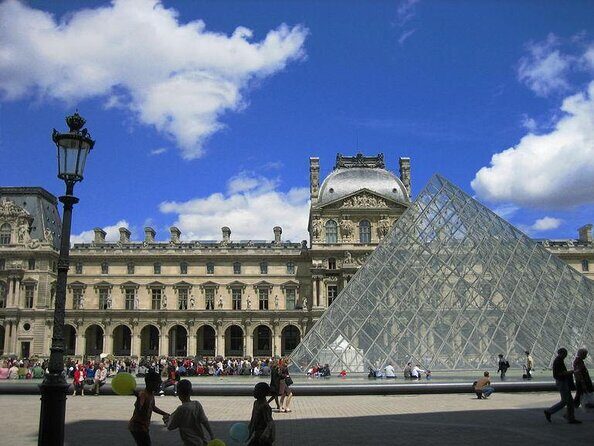
You start at the Carrousel du Louvre area at 99 Rue de Rivoli, 75001 Paris, and the tour is focused on one main session inside the museum.
You’ll begin by looking at the ancient walls of a 13th-century warrior castle that once formed part of the Louvre. This is a smart way to start because it reminds you the building isn’t neutral. It has layers—fortress to palace to museum—and each layer changes what you understand about the art inside.
Next, you move into the Greek section and spend time on the attributes of Greek sculptures. In practical terms, that means you’re not just being told what to look at—you’re being taught what makes Greek sculpture feel Greek. Faces, poses, clothing, proportions, and the idea of what the body is doing can all start to connect.
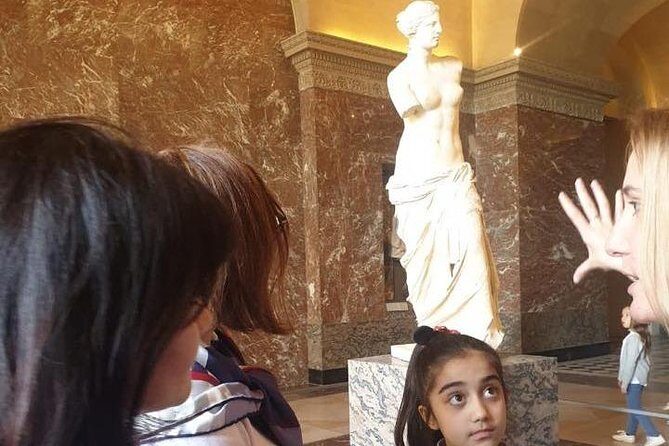
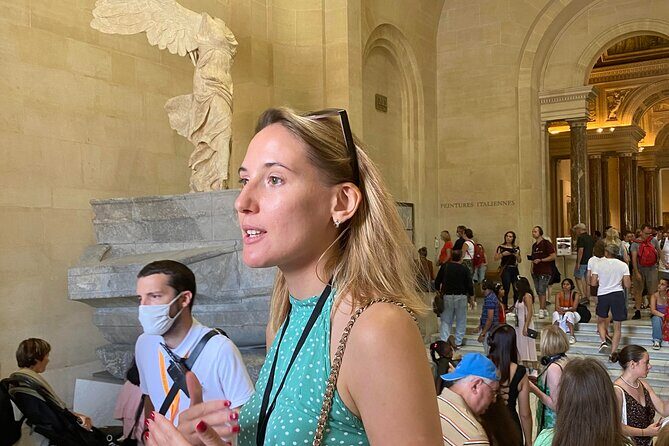
Then comes one of the headline statues: the Venus de Milo. The value here is timing and framing. Instead of treating Venus as a stand-alone icon, you’ll get a little help understanding what people expected Greek sculpture to do—honor gods, show ideals, and communicate status. When you see the statue later on your own, you’ll likely notice more than you would have on a label-only visit.
A small drawback: Greek sculpture spaces can get busy. In a short tour, you won’t linger. But if your goal is to get oriented and leave knowing what questions to ask yourself next, that trade-off can be worth it.
The Renaissance throne hall: Caryatids and Three Graces in a power-room mindset
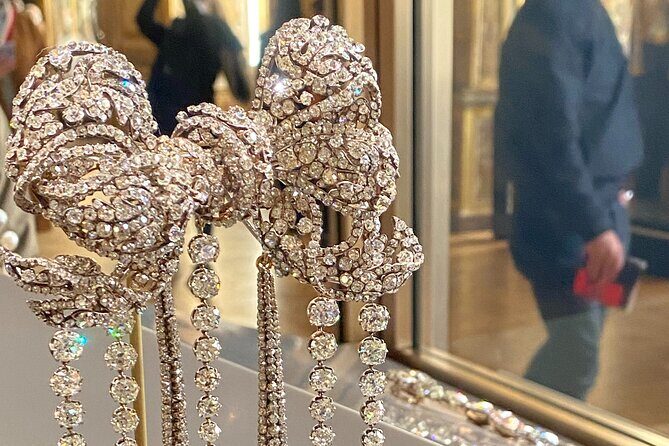
After the Greek focus, the tour shifts into a Renaissance throne hall, where you’ll look at well-known sculptural elements including Caryatids and the Three Graces, along with other sculptures described as dating back to 500 B.C. (as included in the tour’s plan).
Why this stop matters: Renaissance spaces often frame older art through a new lens. Seeing these figures in a grand, political-sounding room helps you understand that the Renaissance didn’t just copy the past. It staged it—turning classical references into messages about authority, taste, and cultural legitimacy.
The Caryatids, for example, are more than decorative columns. In this kind of room, you start to feel how architecture and sculpture collaborate. The Three Graces are also a good prompt to ask about meaning—what do you think the figures represent, and what might a viewer in that period have been expected to notice?
In a longer visit, you could study these pieces from multiple angles. In a two-hour tour, you get the “starter course.” You walk away with enough context to decide whether you want to come back and do a deeper second pass.
If you’re someone who loves architecture as much as art, this is one of the better segments of the tour because it connects the objects to the room they sit in.
Napoleon, Josephine, and the painting rooms that make the Louvre click
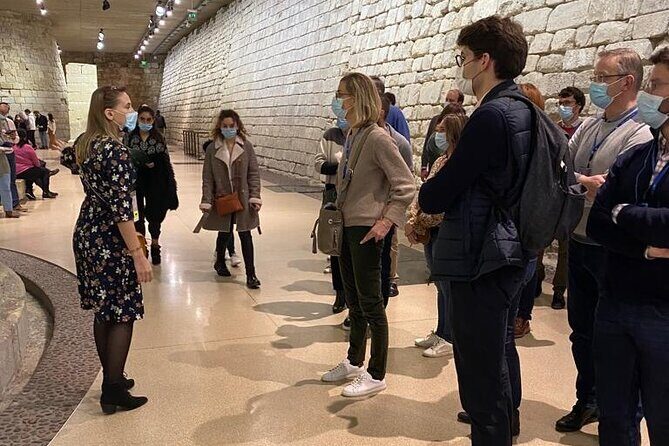
Next you head into Renaissance painting areas. One highlight is the hall where Napoleon celebrated his marriage to Josephine. Even if you’re not a history fanatic, this is a powerful context cue. It reminds you that the Louvre wasn’t always a calm gallery space. It has been a stage for major political life.
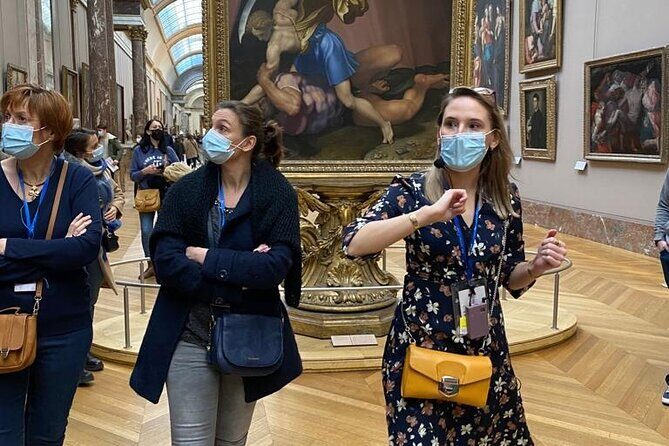
From there, the tour moves into the Grande Galerie to focus on Italian painting. This is where your two-hour plan starts paying off for future self-guided wandering. Once you understand the museum’s rhythm—sculpture to painting to grand spaces—you’ll be able to pick your next rooms without getting lost or distracted.
Here’s a practical way to use what you learn: when you reach similar painting halls later, look for what changes between styles and schools. Notice how the guide’s framing has trained your eye to ask why a painting was made, not only what it shows.
Potential drawback: if you arrive tired or you get stuck reading every label, your attention can drift. Two hours is tight. I recommend choosing a few works to focus on mentally, then letting the rest be background. That way, the tour gives you orientation rather than a blur.






Pricing at $174.53: is this Louvre tour good value?
At $174.53 per person for about two hours in a small group, the cost can feel steep—especially because museum admission tickets are not included. But pricing in Paris often reflects guide time, small-group operations, and the challenge of getting people oriented in one of the most crowded museums on earth.
So the key question isn’t whether you can see a Venus or a painting hall without a tour. You can. The question is what you gain for the money:
- You’re paying for someone trained to explain what matters and how the pieces connect across periods.
- You’re paying for time efficiency, since the Louvre can swallow your energy.
- You’re paying for a group size small enough to keep the visit from turning into a slow queue.
If your travel style is “I want the museum to do the teaching, not me,” then you might feel this is overpriced. If your travel style is “I have limited time and I want smart direction,” then the value can work.
One more detail that affects real value: the tour has been commonly booked around 70 days in advance. That suggests demand. If you wait too long, you might find fewer language options or fewer available slots when you want them.
Bottom line: for a short Louvre visit, I see this as a reasonable paid shortcut—as long as your start is smooth and your ticket plan is clear.
Practical tips: how to make the meeting and ticket plan painless
Start point is Carrousel du Louvre, 99 Rue de Rivoli. Finish is at Musée du Louvre (75001 Paris), with the tour ending at the museum area so you can continue exploring.
Because mobile ticket is included, don’t treat this like a print-it-later situation. Make sure your phone is charged and your ticket details are accessible offline or on a screen you can show quickly.
Also, build in buffer time. Two-hour tours punish late starts. You don’t want to be late and then spend the first minutes stressed, trying to locate the group.
Admission tickets are not included, but the tour information notes that children under 18 do not need entrance tickets. If you’re traveling with younger people, that could matter for your planning and budget.
Finally, a candid caution: there have been reports associated with this type of booking of guide no-shows and pressure around buying tickets for a preferred time. You can’t control everything, but you can reduce your risk. Confirm your meeting details before you go, arrive early, and keep your own museum ticket arrangement under your control so you’re not scrambling last minute.
Who this tour suits best
This fits best if you:
- Want a short, structured Louvre visit rather than a full-day self-guided marathon
- Appreciate art explanations that connect Greek sculpture, Renaissance rooms, and painting spaces
- Travel with someone who wants the experience in English, French, or Russian
- Prefer a group capped at eight for a calmer pace and better interaction
If you already know the Louvre well and you love wandering without guidance, you might not need a paid tour. And if you’re the type who needs long silent time with each artwork, two hours may feel too compressed.
“Most travelers can participate” suggests it’s broadly doable, but you’ll still want to consider your own stamina. The tour is short, but the museum itself involves walking.
Should you book this Louvre highlights tour?
I’d book it if you want a high-impact orientation in a tight time window, and you value having Alice connect objects to context. The best signal here is the repeated praise for Alice’s friendliness and strong knowledge tied to the visit flow—plus the tour’s ability to cover famous pieces while still pointing you toward material beyond the usual quick stops.
I would hesitate if you’re risk-averse about start-day reliability. Because of past complaints about guide arrival and ticket handling, I recommend treating this like any paid timed experience: confirm details in advance, show up early, and don’t build your whole day around the tour being the only path into the museum.
If the start goes smoothly, you’ll likely leave with two big wins: you’ll understand what you saw in the moment, and you’ll know what to choose when you keep exploring.
FAQ
How long is the Louvre masterpieces tour?
It runs for about 2 hours.
What is the group size?
The tour has a maximum of 8 travelers.
Where do I meet the guide?
The start is at Carrousel du Louvre, 99 Rue de Rivoli, 75001 Paris.
Where does the tour end?
It ends at the Musée du Louvre area in 75001 Paris, where you can continue visiting.
Which languages are available?
The tour is offered in English, French, and Russian.
Is museum admission included in the price?
No. Entrance tickets to the museum are not included.
Do children need tickets?
The information provided notes that children under 18 do not need entrance tickets.
What exactly is included?
You get a guided tour in the Louvre with a professional guide.
Do I receive a ticket on my phone?
Yes. The experience uses a mobile ticket.
What happens if the tour is canceled?
The experience can be canceled if the minimum number of travelers isn’t met, in which case you’ll be offered a different date/experience or a full refund.
How soon will I get confirmation after booking?
You should receive confirmation within 48 hours of booking, subject to availability.