REVIEW · PARIS
Louvre & Mona Lisa Small Group Tour with Reserved Entry
Book on GetYourGuide →Operated by City Wonders Ltd. · Bookable on GetYourGuide
The Louvre can feel like a maze. This small-group tour keeps you moving with reserved entry and a guide who helps you focus on what matters most.
Two things I really like: you get headsets so you don’t have to crane your neck, and the visit is built for a short time window. I also like that the tour hits major works people come to see, including the Winged Victory of Samothrace and Da Vinci’s Mona Lisa.
One possible drawback: the Louvre is still the Louvre. On a busy day, you may spend more time than you want near the Mona Lisa, and one review noted an extra wait.
In This Review
- Key highlights at a glance
- Where the tour starts: Arc de Triomphe du Carrousel, then into the Louvre
- Reserved access and skip-the-line: what it really buys you
- Your 3-hour Louvre plan: how you’ll actually see the highlights
- Stop 1: the Louvre’s long timeline, from ancient to 19th century
- Stop 2: Winged Victory of Samothrace
- Stop 3: Canova’s Psyche and Cupid
- Stop 4: the Mona Lisa, plus a very real crowd reality
- Stop 5: the French Wing and Delacroix’s Liberty Leading the People
- Stop 6: the Louvre’s regal rooms—Napoleon and Louis XV
- How the guide experience shapes the tour (and who you might get)
- Group size, pace, and comfort inside a huge museum
- Who this tour suits best
- Practical rules you’ll want to know before you go
- Is the $115 price tag worth it for a 3-hour Louvre visit?
- Should you book this Louvre small-group tour?
- FAQ
- How long is the Louvre tour?
- Where do I meet the tour staff?
- Where does the tour end?
- Is there reserved entry or skip-the-line access?
- How many people are in the group?
- Are headsets provided so I can hear the guide?
- What language is the tour in?
- What do I need to bring with me?
- Are strollers or large bags allowed?
- Is the tour suitable for wheelchair users?
Key highlights at a glance

- Reserved entry + line avoidance so you start the museum experience faster
- A tight 3-hour route that targets the Louvre’s biggest hits without wandering for hours
- Headsets included to stay close to the group without losing the guide’s narration
- Stop sequence that covers major periods, from ancient sculpture to 19th-century painting
- Guides with personality, with multiple guides mentioned by name in reviews, like Omar, Maxim, Addie, Caroline, and Severine
Where the tour starts: Arc de Triomphe du Carrousel, then into the Louvre
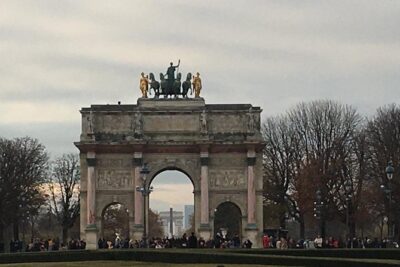
Your meeting point is the Arc de Triomphe du Carrousel. Staff wear blue, and you’ll find them beside the arch with the horse-drawn chariot on top. There’s an easy way to orient yourself: stand with your back to the entrance of the Louvre Pyramid, then look across the road for the arch, just before the entrance to the Tuileries Garden. The coordinators are along the wall railing on the left.
Why this matters: the Louvre is a huge site with multiple entrances, so a clear meet point helps you avoid that first-day confusion that can eat into your limited time. Also, meeting at a landmark outside the museum usually means less stress than trying to find a specific lobby inside.
You can also read our reviews of more tours and experiences in Paris.



Reserved access and skip-the-line: what it really buys you

This tour includes reserved access to the Louvre plus an entrance ticket and reservation fee. In practice, that means you’re not wasting your energy standing in general ticket lines while your group waits behind a bottleneck.
Two other practical details make a difference. First, you’ll have headsets, so you can keep a comfortable distance and still hear your guide clearly. Second, the Louvre still requires security, and large items must be handled before you enter the galleries—no matter how good your reservation is. You’re skipping the ticket line, not bypassing security.
Here’s the value math to think about: the tour price is $115 per person, and the included ticket info lists 22€ for the entrance and a 70€ reservation fee per group. The rest of what you’re paying for is the guide (and the planning that turns “Louvre time” into a timed route you can actually finish in 3 hours).
One note for EU visitors: entry at the Louvre is free for EU citizens aged 18 to 26. Since this tour bundles the entrance ticket and reservation fee, you’ll want to weigh whether the guided route is worth paying for when you could potentially enter for free on your own.
Your 3-hour Louvre plan: how you’ll actually see the highlights

The visit runs for about 3 hours and finishes at the Louvre Pyramid. The route is designed to be fast, but not random. Instead of trying to cover everything (a common mistake), you focus on recognizable masterpieces and the stories that connect them.
You’ll start with the building itself and its layers. The Louvre isn’t just a museum—it began as a royal palace, and the tour includes those medieval foundations and later regal power. That context helps you understand why certain rooms feel ceremonial and why the collections are arranged the way they are.
Stop 1: the Louvre’s long timeline, from ancient to 19th century
The tour is described as a guided journey across centuries, from ancient relics around 450 B.C. up through major 19th-century works. That matters because the Louvre can feel “all paintings, all the time” if you’re not guided. With a planned timeline, you get a better sense of how art styles changed—and why you’re seeing certain themes repeat across eras.
You’ll also be pointed toward big sculpture and iconic works, not just small labels on walls.
Stop 2: Winged Victory of Samothrace
One of the headline stops is the Winged Victory of Samothrace, a sculpture from the 2nd century B.C. If you’re imagining a statue with no drama, don’t. Even in a museum setting, it has movement in it. The guide’s job here is to show you what to look for—pose, proportion, and the sense of motion that makes this piece so famous.
This is also the kind of artwork that’s easier to appreciate with a guide, because the most interesting details aren’t always obvious from across the room.



Stop 3: Canova’s Psyche and Cupid
The tour includes Canova’s Psyche and Cupid. This is the kind of piece that can get overlooked if you’re rushing, because it doesn’t have the “crowd magnet” power of the Mona Lisa. A guide helps you slow down at the right moment and makes it easier to connect the sculpture to broader European art trends.
Stop 4: the Mona Lisa, plus a very real crowd reality
Of course you’re going to see the Mona Lisa. The famous smile is part of why crowds form, but the real “tour benefit” is what you do before and after it—how the guide frames what you’re seeing and how the route keeps you from feeling lost.
One consideration: a review noted that about 20 minutes were spent waiting at the Mona Lisa spot on a busy day. That’s not something a guide can fully control, but it’s a useful expectation to keep in mind. If you’re the type who gets restless with queues, plan your day so you have a little buffer.
Stop 5: the French Wing and Delacroix’s Liberty Leading the People
Another key highlight is Delacroix’s Liberty Leading the People in the French wing. This is one of those paintings that hits harder once you understand the historical moment behind it. A guided explanation helps you see beyond the surface scene and into what the symbolism is doing.
Reviews also describe a tour mix that can include Greek and Roman sculpture alongside Renaissance and later painting. That balance is part of what makes this format work when you don’t have time for multiple museum days.
Stop 6: the Louvre’s regal rooms—Napoleon and Louis XV
The tour also mentions stops connected to power and spectacle: Napoleon’s crown and treasures associated with King Louis XV. Even if you don’t know the stories already, it helps to see the Louvre as a place where rulers collected art and displayed authority. That shift—from palace to museum—makes the site feel more grounded than just “a huge building full of stuff.”
How the guide experience shapes the tour (and who you might get)
Guides are one of the biggest selling points here, and reviews support it. Multiple guide names come up, including Omar, Maxim, Addie, Caroline, Severine, and Annalise. The recurring theme is that the guides don’t just recite facts. They explain context, keep momentum, and use personality to keep a short tour from turning into a lecture marathon.
That said, one review did call out too much art history talk, with a preference for less explanation and more walking to the works. So here’s a fair expectation: if you want a story-heavy museum experience, you’ll probably love it. If you prefer a more visual, light-touch approach, you might feel there’s more talking than you expected.
Either way, the headsets help you adjust. If you zone out for a minute, you can still pick up the next explanation without losing the thread.
Group size, pace, and comfort inside a huge museum

This is promoted as a small group of 12 people or fewer, with headsets to keep the experience smooth. One review mentioned the group felt a bit larger than what they expected when booking, but the ear pieces made it manageable.
What to expect with the pace: you’ll see more in 3 hours than most people can manage alone. The trade-off is that you’ll be standing, looking, and moving often. One older review also warned there’s a lot of walking, and suggested taking seats when they’re available. That’s common sense advice at the Louvre—don’t assume you’ll get frequent “rest moments.”
Who this tour suits best
This tour fits best if you:
- Want a focused Louvre overview without committing an entire day
- Like learning context while you look, not just scrolling through artworks
- Need a plan for a short Paris stay and want to avoid decision fatigue
It’s not suitable for wheelchair users, based on the activity info. Also, strollers aren’t allowed, and luggage restrictions apply.
Practical rules you’ll want to know before you go
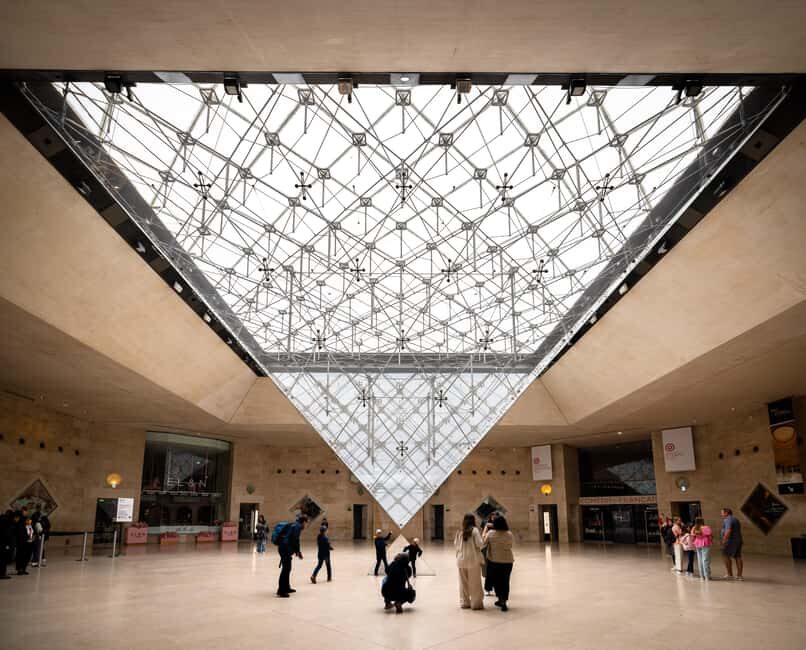
Before you head out, make sure you’re ready for Louvre entry rules:
- Bring passport or ID card
- Security screening is required
- Large bags and umbrellas must be left at the bag check (free of charge)
- Items exceeding 55x35x20 cm aren’t permitted
- No baby strollers
- No luggage or large bags in the galleries
- The tour specifically notes the activity is not suitable for wheelchair users
These points matter because a last-minute mistake—like showing up with a big bag—can turn a smooth reserved entry into a delay while you sort things out at the check area.
Is the $115 price tag worth it for a 3-hour Louvre visit?
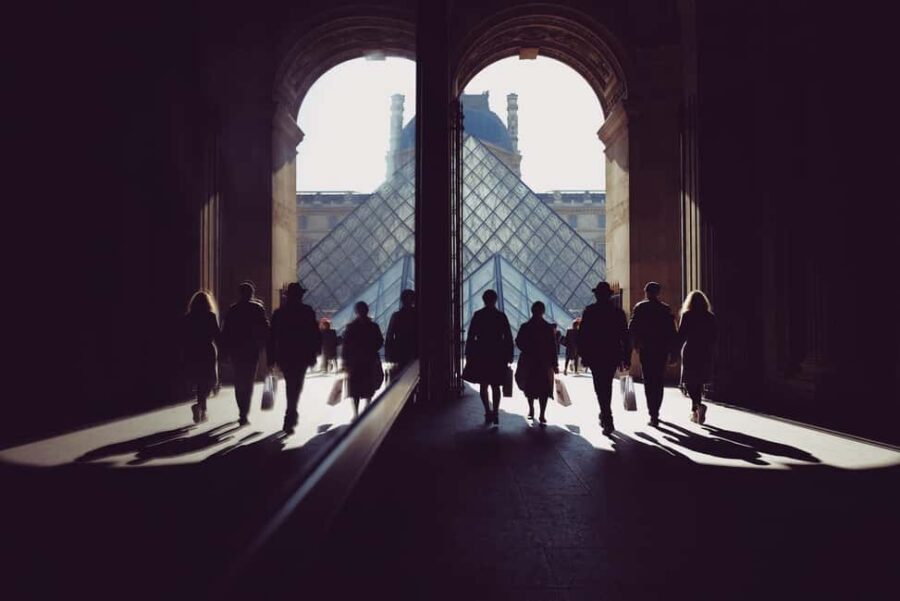
I think the price is usually worth it if you value time and guidance. The tour bundles the entrance ticket (22€) and a reservation fee (70€ per group), which means you’re paying for access + planning + expert storytelling.
If you were going to spend hours figuring out where to go, waiting at lines, and trying to choose between “top 10 highlights,” this route saves effort. And for many first-timers, that’s the difference between a Louvre visit that feels like a checklist and one that feels like an actual experience.
If you’re an EU visitor aged 18 to 26, entry can be free—so in that case, the decision becomes more about whether the guide and reserved route are worth paying for beyond your free admission.
Should you book this Louvre small-group tour?

Book it if:
- You want reserved entry and a smart plan for 3 hours
- You’ll appreciate explanations tied to major works like Winged Victory, Mona Lisa, and Liberty Leading the People
- You like guided pacing and want help not getting lost
Maybe skip it (or compare with another option) if:
- You hate any waiting near the Mona Lisa and want a route that minimizes crowd exposure as much as possible
- You prefer very short talking segments and more quiet looking
- You need wheelchair access
If your goal is to hit the big masterpieces and leave with a clearer sense of how the collection connects across time, this is a strong use of a limited Paris day.
FAQ
How long is the Louvre tour?
It lasts 3 hours.
Where do I meet the tour staff?
Meet beside the Arc de Triomphe du Carrousel, with staff dressed in blue.
Where does the tour end?
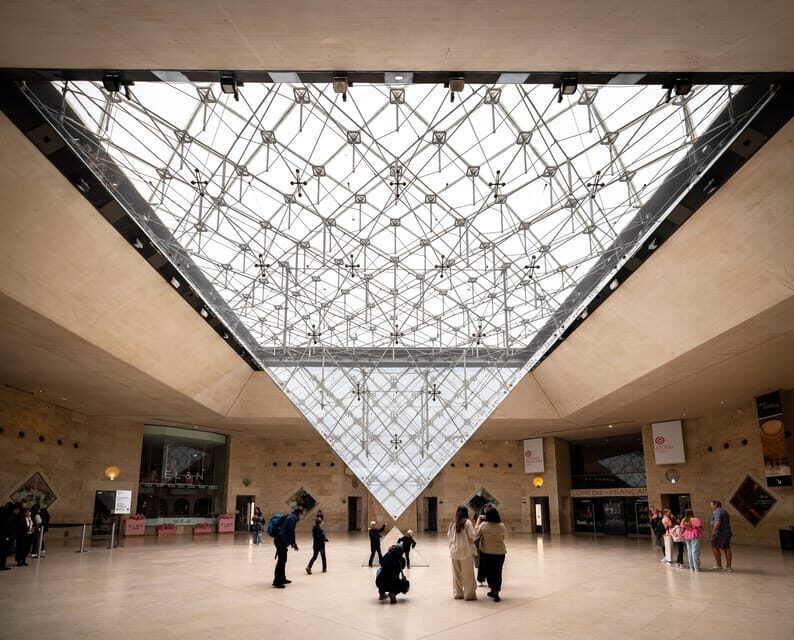
It finishes at the Louvre Pyramid.
Is there reserved entry or skip-the-line access?
Yes. The tour includes reserved access to the Louvre to help you skip the ticket line.
How many people are in the group?
The tour is for a small group of 12 people or fewer.
Are headsets provided so I can hear the guide?
Yes, headsets are included.
What language is the tour in?
The tour is English.
What do I need to bring with me?
Bring a passport or ID card.
Are strollers or large bags allowed?
No strollers are allowed, and large bags are not allowed in the galleries. Large bags and umbrellas must be left at the bag check (free of charge).
Is the tour suitable for wheelchair users?
No, it is listed as not suitable for wheelchair users.