REVIEW · PARIS
Paris Big Bus Hop-On Hop-Off Tour with Optional River Cruise
Book on Viator →Operated by Big Bus - France · Bookable on Viator
Paris from a bus stop is a whole thing.
This Big Bus hop-on hop-off loop gives you open-top panoramic views and a Red Route that hits major sights without you needing to plot every turn. I like that the audio system is built for first-timers, with 9-language commentary and free headphones right in your seat.
What makes it practical is the flexibility.
You can hop off when a stop matters to you, then hop back on when you’re done walking. And the free app with real-time bus tracking helps you avoid that classic Paris game of wait-and-guess.
One note before you add the optional parts.
If you upgrade with the Seine River cruise, be ready for possible very long lines, including reports of multi-hour waits on busy days.
In This Review
- Key things that make this tour worth your time
- How the Red Route fits into a tight Paris plan
- Louvre Museum to Pont des Arts: the “center of gravity” stop pair
- Notre Dame and Musée d’Orsay: two icons, two different walking moods
- Champs-Élysées, Grand Palais, and Place d’Iéna: a scenic corridor with big-city scale
- Eiffel Tower and Champ de Mars: panoramic payoff, plus reboarding practicality
- Opéra Garnier at Palais Garnier: end with style, not exhaustion
- Audio commentary and headphones: helpful, but not every second is a lecture
- The Big Bus app plus onboard WiFi: how to reduce wasted waiting
- Optional Seine River cruise: great idea, but peak-day lines are real
- Arc de Triomphe tickets: what’s included and how to think about it
- Price and value at about $46.85 per person
- Who this tour suits best (and who should rethink it)
- Should you book this Paris Big Bus tour?
- FAQ
- How long is the Paris Big Bus hop-on hop-off tour?
- What route does my ticket cover?
- Do I get audio commentary and headphones?
- Is WiFi included on the bus?
- Can I choose a 24- or 48-hour ticket?
- Are entrance tickets to monuments included?
- If I add the Seine River cruise, what’s included?
Key things that make this tour worth your time
- The Red Route is built for the classic first pass through Paris, with stops at the Louvre, Notre Dame area, Musée d’Orsay, Champs-Élysées, Palais Garnier, and the Eiffel Tower zone.
- Audio comes with free headphones and runs in nine languages, so you’re not stuck reading while you ride.
- WiFi onboard plus a free app with route info and real-time bus tracking makes it easier to coordinate your hop-off plans.
- Your ticket choice changes your pacing: 24 or 48 hours, valid starting the first time you use it.
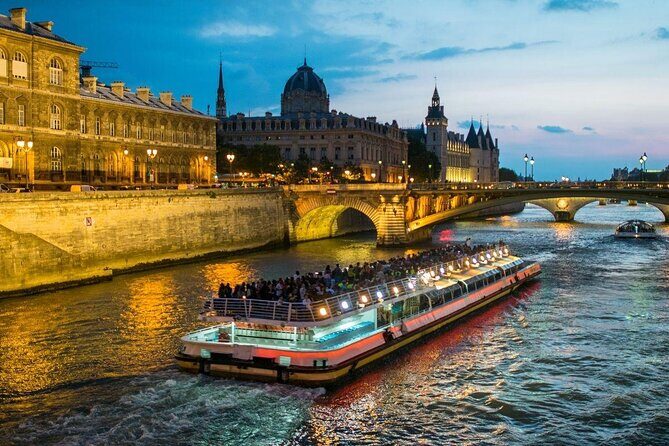
- The Seine cruise upgrade can be the bottleneck on peak days, with reports of long waits at the departure point.
How the Red Route fits into a tight Paris plan
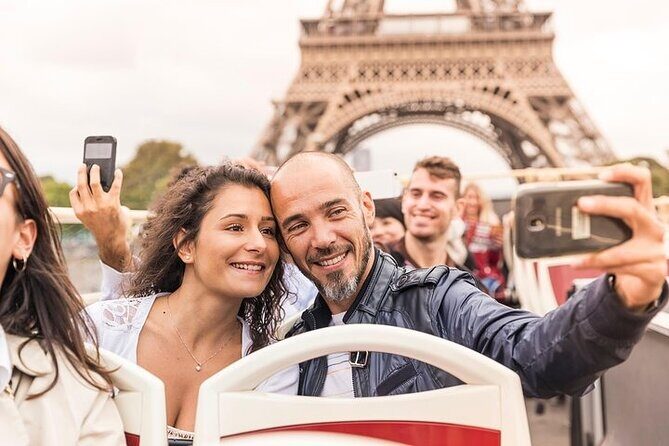
This is a hop-on hop-off bus tour, so it works best when you treat it like a moving map. The full loop is listed at about 2 hours 15 minutes, but the real value is that you’re not locked into sitting the whole time. You ride, you get your bearings, then you jump off to explore at street level.
Your ticket is valid on the Red Route, which is designed to cover Paris highlights in a sensible order. On paper, that sounds simple. In practice, it saves energy. Paris is spread out, and walking between far-apart landmarks can turn a fun day into a knee-complaint. This route keeps the “big icons” in reach while you control how much time you spend at each one.
One timing detail to plan around: the buses operate between 9:45 AM and 6:00 PM. If your mindset is evening lights and late-night views, you’ll want to know this upfront so the last-bus limit doesn’t surprise you.
You can also read our reviews of more boat tours in Paris



Louvre Museum to Pont des Arts: the “center of gravity” stop pair
Stop 1: Louvre Museum (Louvre/Big Bus Information Centre, 11 avenue de l’Opéra)
This is a strong starting point because it drops you right into the Louvre/Opéra area. If you’re doing Paris for the first time, this is the kind of location that makes everything else feel less chaotic. You can hop off and explore, then re-board later without feeling like you’ve stranded yourself.
The one practical wrinkle: some riders report that certain stops are not exactly where you expect relative to the landmark entrance. In one example, a Louvre-area stop was described as a short walk from the pyramid area. That’s not uncommon in big cities. Your best move is to use the Big Bus app to confirm which exact stop you’re aiming for before you walk away from the curb.
Stop 2: Pont des Arts (56 Quai François Mitterand)
This stop is about the bridge-and-river angle. Even if you don’t stop to “do” something here, it helps you connect the dots between the central monuments and the Seine. Pont des Arts is also a good place to take a quick break and grab photos, because the water views give you a change of pace from museum corridors and long façades.
Notre Dame and Musée d’Orsay: two icons, two different walking moods
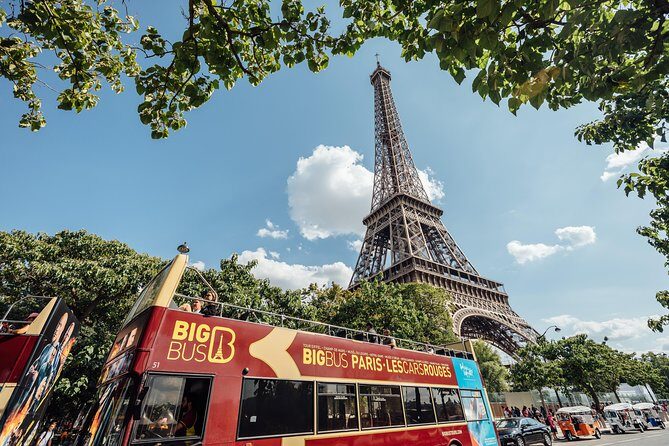
Stop 3: Notre Dame (3 Rue Lagrange)
The Notre Dame stop puts you close to the historic-core vibe—tight streets, lots of pedestrians, and that classic Paris feeling of turning a corner and seeing another postcard. If you want to soak in atmosphere more than museum time, getting off here works well because you can linger and meander.
The downside is crowd energy. This is one of the most “obvious” places to visit, so it can be busy around the main walking routes. A simple strategy helps: if you want smoother movement, don’t wait until the middle of the day to hop off.
Stop 4: Musée d’Orsay (58 Place Henry de Montherlant)
Orsay is a different kind of stop from Notre Dame. It’s an easy jump from the river area and it’s a logical place to pair with the “art stop” mindset—especially if you like the idea of breaking your day into a few focused blocks: ride, hop off, explore, then re-board.
If you’re the type who wants information while you ride, the audio is designed to give context as you pass sights. Some riders, though, report that the commentary can feel sparse in certain stretches and that it leans more on music than facts at times. So if you’re expecting a detailed guided lecture on every block, keep your expectations realistic: it’s audio help, not a live lecturer.
Champs-Élysées, Grand Palais, and Place d’Iéna: a scenic corridor with big-city scale
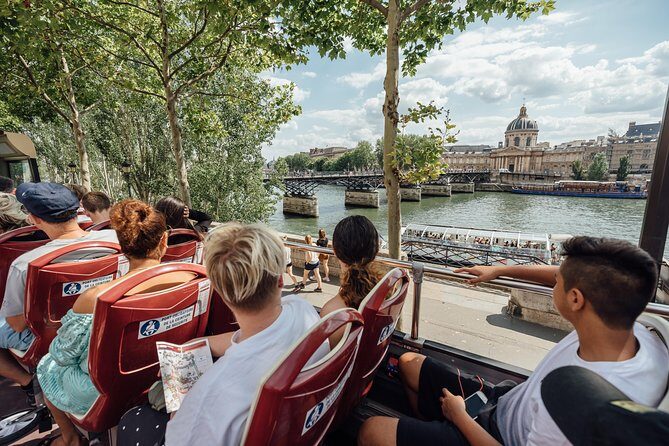
Stop 5: Champs-Élysées (156 avenue des Champs-Élysées)
This is the street that feels like “Paris the brand,” with broad sidewalks and the big boulevard rhythm. I like having a bus stop here because it lets you check it out without committing to walking the entire stretch. If you want to pop out for a quick stroll, it’s a clean, high-visibility place to do it.
One thing to remember: Champs-Élysées is also easy to overdo. If you spend too much time here, you can eat up the hours you meant to spend at the quieter, more interesting corners nearby. Use this stop as a “taste,” then move on.
Stop 6: Grand Palais (Avenue Winston Churchill)
Grand Palais is tied to the parade-ground feel of the surrounding area. Even if you don’t go inside, the exterior view gives you that sense of Paris’ big institutional scale. It’s a good re-board checkpoint too, because people tend to recognize it when they’re trying to get back to the right bus.
Stop 7: Place d’Iéna (Facing Hôtel Shangri-La Paris, Avenue d’Iéna)
This stop is a bridge into the Eiffel Tower zone without making you do a long “how do I get there” walk. Place d’Iéna is also a handy place for a quick orientation moment before you commit to the Eiffel-area sightseeing.
Eiffel Tower and Champ de Mars: panoramic payoff, plus reboarding practicality
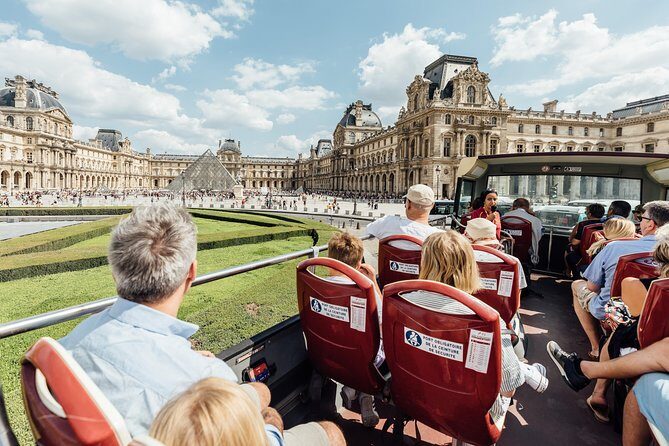
Stop 8: Eiffel Tower (Tour Eiffel, Quai Branly, Entrée 2 Tour Eiffel)
This is the obvious Eiffel stop, and having it on the same route as the Louvre and Orsay is the smart part. You can decide how much time you want at the Eiffel Tower zone, then keep your day moving.
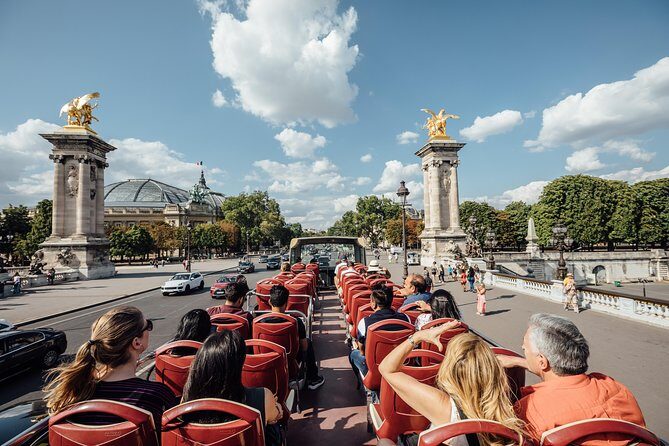
Also, the bus itself is where you’ll get a lot of the “best views” benefit. The open-top double-decker setup gives you angles that are hard to recreate from ground level. If your legs are tired, staying on the upper deck for a segment can feel like cheating in a good way.
Stop 9: Champ de Mars (Champs de Mars, Avenue Joseph Bouvard)
Champ de Mars is the “big space” counterpart to the Eiffel. It’s a great place for a breather and wide-open photos. It’s also a reminder that the Eiffel area isn’t just one point on a map—it’s a zone. Hopping off at both stops lets you distribute your time instead of trying to cram everything into one spot.
As for timing: some reviews mention that the hop-on hop-off experience is often smooth with short waits between buses. But if you hit a moment when a bus is out of service or crowds build, you may need to wait for the next one. The bus frequency is described as every 7–11 minutes in a response, which is usually enough to keep your day from feeling stuck.





Opéra Garnier at Palais Garnier: end with style, not exhaustion
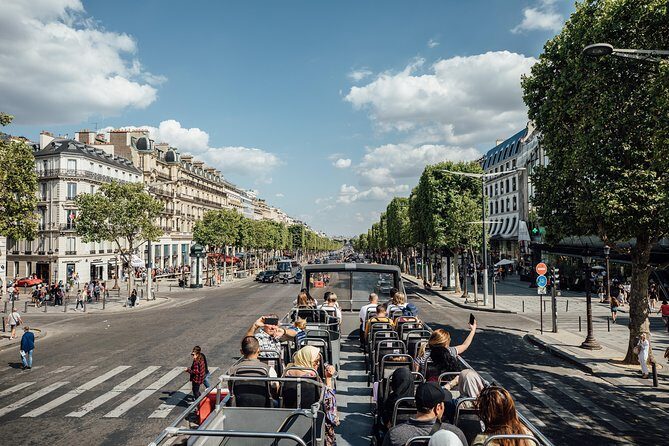
Stop 10: Palais Garnier (Opéra Garnier, 15 bis Rue Scribe)
Palais Garnier gives you an elegant “capstone” stop. It’s a great last hop-off if your legs can handle a bit of walking, because you get a payoff that feels very Paris. If you’re spending a short time in the city, having a strong final stop makes the whole loop feel complete.
One practical consideration: this tour can end relatively early due to operating hours. So if Palais Garnier is a must-see for you, try to place it earlier in your day rather than banking on late afternoon.
Audio commentary and headphones: helpful, but not every second is a lecture
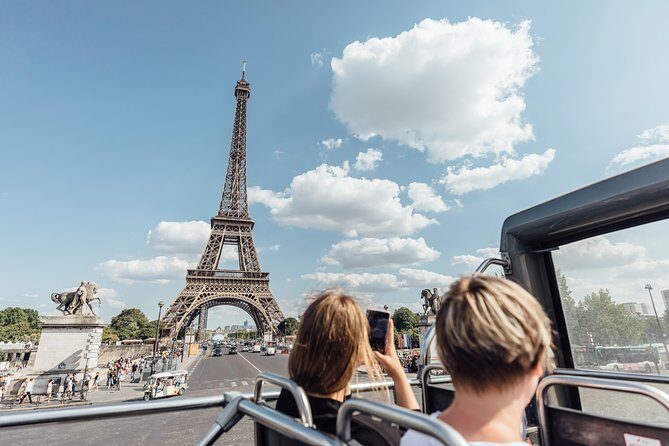
The tour includes audio commentary in nine languages and the headphones are free. That alone is a win for value, especially if you’re traveling with kids or you just don’t want to keep staring at a map.
The key is how you use it. Listen while you ride, then jump off for the parts that look most interesting. If you only hop off at “everything important,” you’ll still end up overwhelmed. If you hop off with intention, the audio becomes a quick primer that helps you choose.
That said, some riders reported issues like repetitive music or commentary that feels less informative in certain sections. Others reported periods where volume and clarity were affected. If your ideal is a deep, stop-by-stop historical script, you might still want to pair the bus with a paid walking experience later.
The Big Bus app plus onboard WiFi: how to reduce wasted waiting
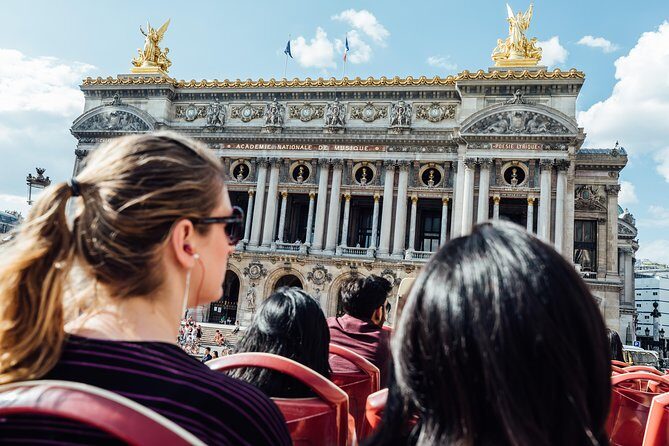
A lot of the positive reviews come back to logistics. People like that the bus has WiFi onboard and that there’s a free app with route info and real-time tracking. That matters because Paris stops can look similar, and street-level navigation can slow you down.
Use the app as your “where’s the bus now?” tool. Then match it to what you’re actually doing on foot. If you plan to hop off near a landmark, don’t walk away from the stop until you know the next bus arrival window. It’s the easiest way to avoid standing around with a full itinerary but no ride in sight.
Also, don’t assume the stop is a one-step hop from the most famous entrance. One review described a stop being a short walk from what people expected. So treat each stop as a nearby launching point, not a perfect front door.
Optional Seine River cruise: great idea, but peak-day lines are real
The Seine River cruise option is listed as a 1-hour cruise. When it works, it’s a satisfying “second viewpoint” of Paris: you see the city from the water, and it’s a calmer rhythm than constant walking.
But read the warning signs in the feedback. There are reports of extremely long lines, including wait times of 2–3 hours at the departure point. Another issue mentioned is that booking may show only one time slot for the day, apparently tied to when the first boat leaves, which can funnel thousands of people into the same arrival window.
My practical advice: if you add the cruise, treat it like an event with a buffer. Don’t schedule it as a tight, last-hour plan. If you’re the type who hates queues, you might be better off skipping the cruise upgrade and spending that time on more on-foot exploration around the stops you care about.
Arc de Triomphe tickets: what’s included and how to think about it
If you choose the optional upgrade, your package includes an Arc de Triomphe entrance ticket. That means you’re not paying separately for that specific attraction within the upgrade.
What’s not guaranteed by the tour data is the exact timing or how it pairs with your bus ride plan. So think of it this way: the bus helps you get around and see the approach areas, while the Arc ticket gives you a dedicated “go inside” experience when you’re ready.
Price and value at about $46.85 per person
At around $46.85 per person, you’re paying for a bundle: bus transport along the Red Route plus audio commentary, free headphones, WiFi, and an app for real-time tracking. That’s more than just a bus ride. If you’re doing a short visit and you want a low-effort way to see the main sights, it can be good value.
Here’s the part to stay honest about: the tour explicitly does not include entrance tickets to monuments (unless you pick add-ons like the Arc de Triomphe ticket and the Seine cruise). So if your plan is to go inside several attractions, expect extra costs on top of the bus ticket.
Where it pays off is when you use it for orientation and pacing. A common “best use” is: take the loop to get your bearings, then hop off at the 2–3 places you want more time at. That way, you’re not paying for an expensive series of entrances you end up skipping.
Who this tour suits best (and who should rethink it)
This Big Bus setup is a great match if you:
- Want a quick overview of Paris major landmarks without heavy planning
- Like flexibility and don’t want to commit to a fixed itinerary
- Appreciate practical help like the app and real-time tracking
- Value audio in multiple languages with free headphones
It’s less ideal if you:
- Want a deep, stop-by-stop guide with constant narration (some sections can feel more music than facts)
- Dislike walking from stops to entrances (stops may require short walks)
- Are especially sensitive to lines if you plan to add the Seine cruise upgrade
Should you book this Paris Big Bus tour?
I’d book it if you’re visiting for the first time and want easy coverage of the classics, especially with the audio and app doing the “figuring it out” for you. The Red Route is a solid framework, and the hop-on hop-off format helps you pace yourself.
I’d think twice about the optional Seine cruise if you hate waiting in lines. If you do add it, build in time, because the biggest risk here isn’t scenery—it’s queue time.
If your goal is only one or two specific sights, you may get better value using public transit and targeted timed tickets. But if you want a low-stress way to see a lot in limited hours, this is one of the simpler ways to do it.
FAQ
How long is the Paris Big Bus hop-on hop-off tour?
The duration is listed as approximately 2 hours 15 minutes.
What route does my ticket cover?
Your ticket is valid on the Red Route, which includes stops such as the Eiffel Tower, Louvre Museum, Champs-Élysées, Palais Garnier, and Musée d’Orsay.
Do I get audio commentary and headphones?
Yes. The tour includes audio commentary in a choice of nine languages, plus free headphones.
Is WiFi included on the bus?
Yes. WiFi is included onboard.
Can I choose a 24- or 48-hour ticket?
Yes. You can choose a 24- or 48-hour ticket, and it’s valid starting the first time you use it.
Are entrance tickets to monuments included?
No. Entrance tickets to monuments are not included, though an Arc de Triomphe entrance ticket is included if you select that option.
If I add the Seine River cruise, what’s included?
The upgrade includes a 1-hour Seine River Cruise. One review also notes that booking may show only one time slot for the day, which can affect how you plan your arrival.