REVIEW · PARIS
Montmartre Marvels Small Group Guided Stroll in Bohemian Paris
Book on Viator →Operated by Paris TRIP · Bookable on Viator
Two hours in Montmartre still feels too short. This guided walk takes you through the bohemian heart of Paris with a small-group pace that leaves room for questions, plus a Sacré-Cœur panorama that makes the whole hill climb feel worth it. When I hear stories from guides like Olivia and Julie, it’s not just facts. It’s how the neighborhood got its personality.
One heads-up: Montmartre is hilly, and the cobblestones plus stairs mean you should plan for real walking, not a gentle stroll in flat shoes.
In This Review
- Key Things I’d Plan for
- Montmartre in Two Hours: Why This Stroll Works
- Price and Value: What $107.76 Buys You
- Meeting at Anvers and Finishing near Blanche
- What to Wear for Cobblestones and Stairs
- Montmartre Village: Place du Tertre, the Vineyard, and Local Artistic Traditions
- Sacré-Cœur and the Views Over Paris
- Au Lapin Agile, Place Dalida, and the Stories Behind the Streets
- Moulin de la Galette and the Look of Impressionist Paris
- Le Bateau-Lavoir and Café des Deux Moulins: Art Workshops and Pop Culture
- Moulin Rouge (Nearby) and the Bohemian Past
- Who This Tour Suits Best (and Who Should Rethink It)
- Should You Book Montmartre Marvels?
- FAQ
- What’s the duration of the Montmartre Marvels Small Group Guided Stroll?
- How much does it cost?
- What language is the tour offered in?
- Is the tour a small group?
- Where does the tour start and end?
- Are tickets included for all attractions?
- What’s included in the tour price?
- What should I bring or plan for since food isn’t included?
- Can I cancel for a full refund?
Key Things I’d Plan for
- Max 15 people keeps the vibe friendly and question-friendly.
- Sacré-Cœur views are the big payoff, with time built in at the top of the hill.
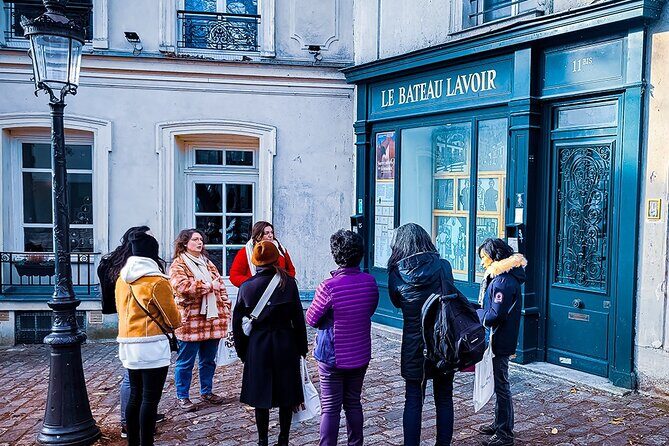
- Art-focused stops go beyond postcard scenes, from Bateau-Lavoir to Place du Tertre.
- Cabaret and film connections add fun context, including Au Lapin Agile and Café des Deux Moulins.
- A morning start (9:30 am) means you’ll still have most of the day free after the tour.
Montmartre in Two Hours: Why This Stroll Works
Montmartre can eat an entire day if you let it. The smart move here is choosing a timed, guided walk that covers the essentials while keeping the pace comfortable enough to actually enjoy the views and not just power-walk from one landmark to the next.
What I like is that the tour is built around contrasts. You get classic “Paris from above” moments at Sacré-Cœur, then you switch gears into creative corners like Place du Tertre and Le Bateau-Lavoir, where art history feels close enough to touch. It’s the kind of route that helps you understand why this hill has been a magnet for artists for so long.
Also, the small-group size matters. With a max of 15, it’s easier to keep track of the guide, follow along on narrow streets, and ask practical questions about what you’re seeing.
You can also read our reviews of more guided tours in Paris



Price and Value: What $107.76 Buys You
At $107.76 per person for about 2 to 2.5 hours, this isn’t a “cheap and cheerful” walking tour. It’s priced like an experience where guide time and a tight route are doing the heavy lifting.
Here’s the value logic I see: you’re paying for (1) a certified local guide, (2) a hilltop-focused itinerary that hits key art and culture points without wasting time, and (3) the benefit of someone helping you understand context as you walk. If you’ve ever wandered Montmartre on your own and felt stuck in a loop of stairs and selfies, a guide saves energy and helps you notice details.
One cost reality: some sites have admission not included, so you may still need to budget for entrance where required. The tour covers the route and perspective; it doesn’t automatically cover every ticket.
Meeting at Anvers and Finishing near Blanche
Your morning starts at Anvers75018 Paris and ends near Blanche75018 Paris. That “different start and end” layout is handy because it lets you treat the tour like the first chapter of your day rather than a round-trip shuffle.
Because the meeting point is listed as near public transportation, you should be able to get there without turning your morning into an extended logistics puzzle. And since the walk ends at Blanche, you can often keep rolling into other areas of your itinerary with less backtracking.
What to Wear for Cobblestones and Stairs
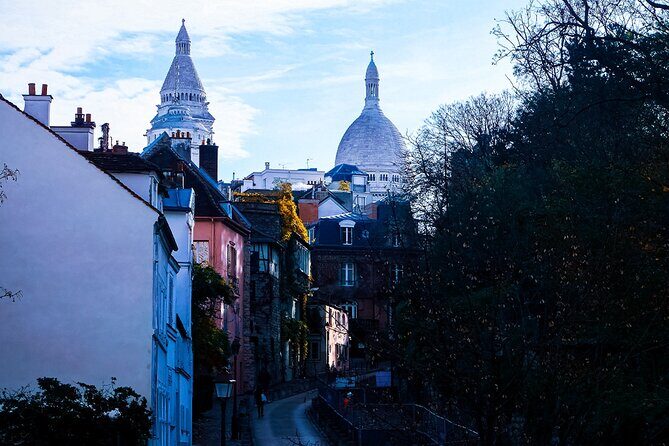
Montmartre doesn’t do “flat and easy.” Even if you’re reasonably fit, you’ll be dealing with uneven streets and steps as you work your way around the hill.
I strongly suggest comfortable shoes with good grip. If you’re bringing dressy footwear, consider leaving them for later in the day. A moderate physical fitness level is mentioned for the tour, so you want to feel steady on your feet—not heroic.
If you know you tire quickly with stairs, plan to pace yourself during the climb. The tour is short enough that you won’t get stuck out there for hours, but it’s still a hill, and the walking adds up.
Montmartre Village: Place du Tertre, the Vineyard, and Local Artistic Traditions
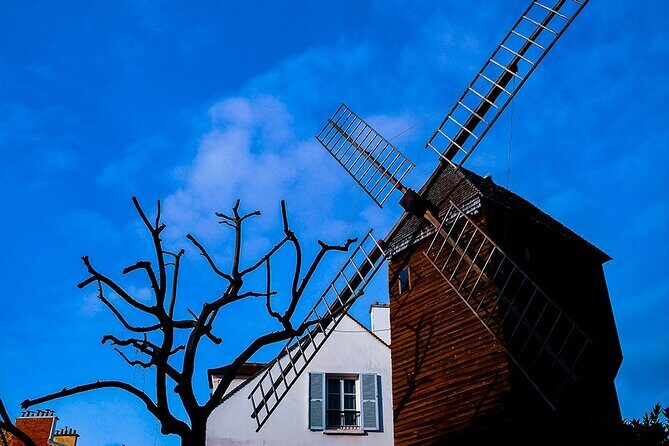
The tour begins with Montmartre village itself, giving you a base layer of understanding for everything you’ll see after. This start is more than timing—it sets the “why” behind the neighborhood’s look and feel, before you move into specific landmarks.
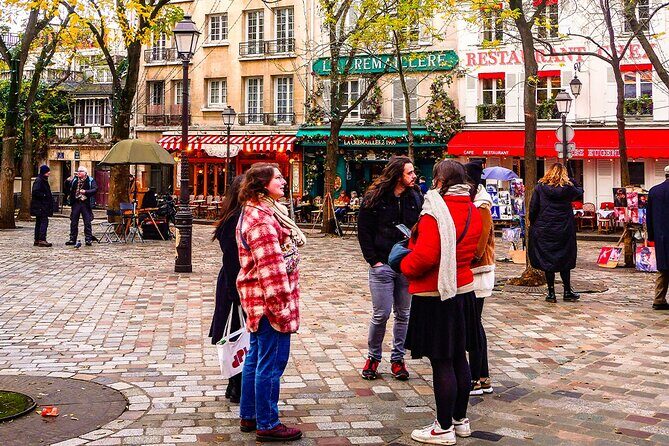
Place du Tertre is next in the rhythm of the walk. This is where Montmartre’s artistic tradition shows up in street form, including caricaturists who keep the vibe alive. You’ll also notice the blend of old-school atmosphere and tourist magnetism, so a guide helps you sort out what you’re looking at instead of letting it all blur into one busy square.
Then comes an interesting pivot: Vigne du Clos Montmartre. This small urban vineyard is a real historic oddity, established in 1933 and producing limited batches of wine each year. It also connects to the area’s seasonal celebration with the Fête des Vendanges in October. Even if you’re not a wine person, I like this stop because it reminds you Montmartre isn’t only “art and attitude.” It’s also agriculture, history, and seasonal Paris.






Sacré-Cœur and the Views Over Paris
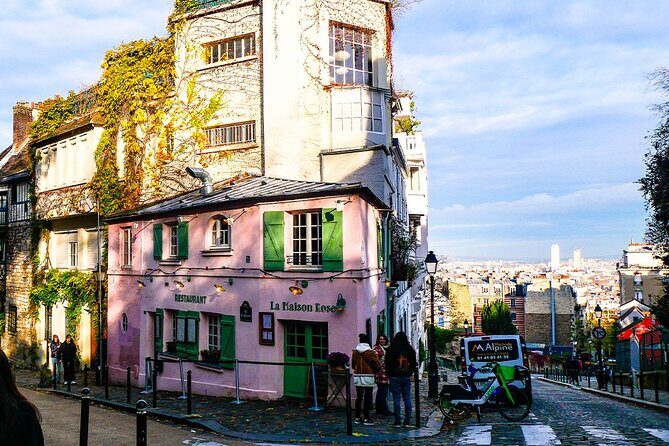
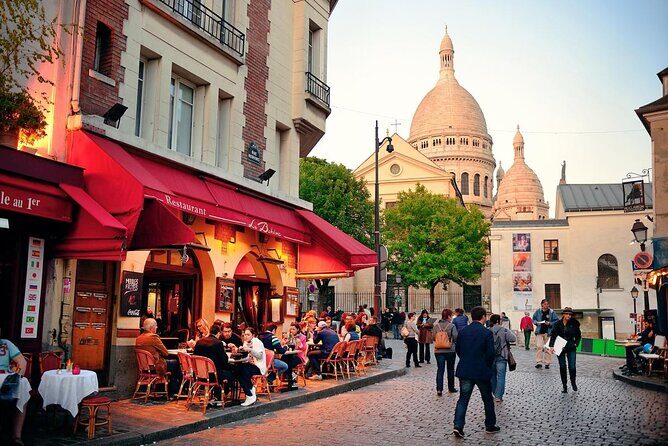
Sacré-Cœur is where the hill does its job. Your guide brings you to the basilica at the top, and the time here is short but meaningful, designed for views and orientation.
The basilica sits on the highest point of the city, and that is exactly what you should expect: a panorama that helps you make sense of where everything lies in relation to the hill. When you get your bearings from above, the rest of Montmartre feels more logical. Streets that looked random suddenly connect.
Admission to Sacré-Cœur is listed as not included, so you’ll want to plan for ticketing if you decide to go inside. If your goal is mainly the views, you can treat the outside time as the core of the stop.
Au Lapin Agile, Place Dalida, and the Stories Behind the Streets
After the big view moment, the tour shifts into character. That’s where Montmartre stops feeling like a checklist and starts feeling like a neighborhood with memory.
Au Lapin Agile is one of those places with personality baked in. It’s a famous cabaret where artists gathered to talk about art, and your guide shares the story of Lolo the donkey-artist. That kind of detail is why a guide is worth it here. Without context, it’s just a location. With context, it turns into a mini time machine.
Place Dalida is a quick stop that adds another layer: the neighborhood isn’t only about painters and windmills. It also commemorates music and the French pop legacy tied to Montmartre, through Dalida’s tribute.
These shorter stops matter because they build the “Montmartre feeling” in between the larger anchor points. You leave with a more complete sense of how the hill earned its reputation.
Moulin de la Galette and the Look of Impressionist Paris
Moulin de la Galette gives you both a visual and an art connection. You’ll see one of the last windmills of Montmartre, tied to a spot made famous by impressionist painter Renoir.
This is the kind of stop where it helps to slow down for a minute. Windmills are dramatic objects, and Montmartre’s angles make them look even more theatrical. If you’re picturing Paris in an impressionist mood, this is the moment where that image makes sense.
One practical thought: windmills and scenic spots can also be crowded. A guide’s role here is keeping you moving at a pace that doesn’t waste your time circling for the best viewpoint.
Le Bateau-Lavoir and Café des Deux Moulins: Art Workshops and Pop Culture
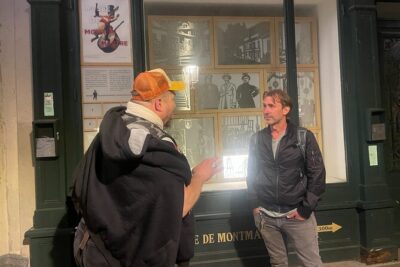
Le Bateau-Lavoir is an important artist workshop in Montmartre, where Picasso, among others, painted early cubist works. That’s a big statement, and it’s exactly why this stop is worth the time. It connects Montmartre to a shift in how modern art was made.
Admission here is listed as not included, so you’ll want to decide on the spot whether entering is worth it for you. Even if you don’t go in, the stop works as a context marker: your eye will start noticing artistic references elsewhere more naturally.
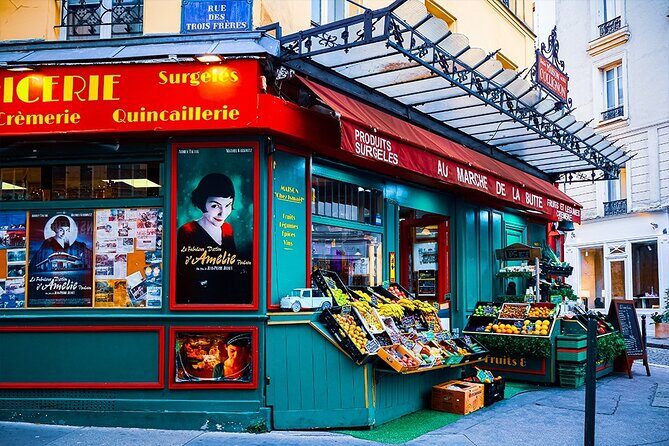
Then you get a pop-culture moment at Café des Deux Moulins, known for appearing in the film Amélie. This one is short, but fun. It’s a nice way to switch from “art movement” mode into “story Paris” mode, where fictional scenes make you pay attention to real architecture and neighborhood texture.
Moulin Rouge (Nearby) and the Bohemian Past
The walk also touches Moulin Rouge, though it’s noted as nearby rather than in the heart of Montmartre proper. You’ll see its iconic red windmill and hear how it functions as a symbol of the area’s bohemian past.
This stop helps complete the Montmartre-to-Pigalle connection. If you’ve only associated Montmartre with painters and hill views, Moulin Rouge adds a different flavor: nightlife, performance, and the way famous entertainment districts grow around artistic energy.
Admission for Moulin Rouge is listed as not included. So think of this as an exterior viewpoint and story stop rather than a full venue visit.
Who This Tour Suits Best (and Who Should Rethink It)
This is a great fit if you want a guided overview of Montmartre that’s focused on art landmarks and the neighborhood’s creative identity, not just scenic wandering. The short duration and small-group size make it especially appealing if you have limited time.
You’ll also like it if you enjoy learning through stories. Guides like Olivia and Julie are praised for making the walk clear and engaging, and you’ll feel that emphasis when you’re moving from place to place with context attached.
If you’re someone who wants to linger for long photo sessions at one single site, you might find the pacing brisk. It’s a “see a lot, learn a lot” format, not a “camp out in one square for an hour” plan.
Should You Book Montmartre Marvels?
Book it if you want an efficient Montmartre orientation with Sacré-Cœur views, art-history stops, and guide-led stories that make the streets feel less random. At $107.76, you’re paying for time saved and context delivered, plus the comfort of a max 15-person group.
Skip or reconsider if you know you struggle with hills and stairs, or if you hate the idea of possible extra tickets for places where admission isn’t included. With the right shoes and a realistic expectation of walking, though, this is a strong way to get the Montmartre experience without spending half your day figuring it out on your own.
FAQ
What’s the duration of the Montmartre Marvels Small Group Guided Stroll?
It runs about 2 hours to 2 hours 30 minutes.
How much does it cost?
The price is $107.76 per person.
What language is the tour offered in?
The tour is offered in English.
Is the tour a small group?
Yes. It has a maximum of 15 travelers.
Where does the tour start and end?
The tour starts at Anvers75018 Paris, France and ends at Blanche75018 Paris, France.
Are tickets included for all attractions?
No. Admission is listed as not included for Sacré-Cœur and Le Bateau-Lavoir. Other stops are marked as free.
What’s included in the tour price?
It includes a small-group guided walking tour of Montmartre Village, learning major landmarks (including Moulin Rouge and Sacré-Cœur), panoramic views from the top of the hill, and a certified local guide.
What should I bring or plan for since food isn’t included?
Food and drinks are not included, so plan your own snacks or skip food depending on your timing. You may also want comfortable shoes because the walk involves cobblestones and stairs.
Can I cancel for a full refund?
Yes. You can cancel up to 24 hours in advance for a full refund. If you cancel less than 24 hours before the start time, the amount paid is not refunded.