REVIEW · PARIS
Normandy Omaha, Utah Landing Beaches Small-group Trip from Paris
Book on Viator →Operated by Clewel Travel · Bookable on Viator
A D-Day day you can feel. This small-group trip strings together Omaha Beach, Utah Beach, and Pointe du Hoc, plus the Utah Beach Landing Museum with an original B26 bomber. I love the hotel pickup setup in Paris, since you start the day without wrestling trains or directions. I also love how the route builds context before you step onto the sand. One heads-up: it’s a full, packed schedule, so if you want to slow-roll every sign and marker, you may feel a little rushed.
You’ll leave Paris at 07:30 in an air-conditioned Mercedes, either a Mercedes E220/E300 for 2–3 people or a Mercedes minivan for 3–7 people. The group stays small (max 7), which usually means more human pacing and fewer “herd movement” moments.
Plan for a long day—about 13 hours total—ending back around 20:30. Meals aren’t included, so bring snacks you actually like and a light layer for the coast, even if Paris feels warm.
In This Review
- Key highlights worth planning around
- Early Start From Paris: The Pace You’re Signing Up For
- Overlord Museum and Normandy American Cemetery: Where the Day Gets Serious
- Normandy American Cemetery: The view hits, then the facts land
- Omaha Beach and Pointe du Hoc: Two Kinds of Hard
- Omaha Beach: Big stakes, less time than you think
- Pointe du Hoc: The cliff where Rangers had to win
- Utah Beach and the Landing Museum: A Different Angle on D-Day
- Utah Beach Landing Museum: Where the B26 makes the past feel real
- Small-Group Mercedes Comfort: Why the Vehicle Matters
- Price and What You Get for $419.94
- Practical Tips So You Don’t Feel Rushed
- Should You Book This Normandy Omaha Utah Landing Beaches Trip?
- FAQ
- What time does the tour start in Paris?
- How long is the drive from Paris to Normandy?
- What sites are included in the tour?
- Are admission tickets included?
- Does the tour include food?
- What transportation is used?
- How many people are in the group?
- Is the tour guided in English?
- Where does pickup and drop-off happen?
- Can I cancel for a full refund?
- FAQ
- Do I need to navigate Paris to catch the van?
- Is there free time at Utah Beach?
- What is the B26 bomber stop?
Key highlights worth planning around
- Three core D-Day sites in one day: Omaha Beach, Pointe du Hoc, and Utah Beach.
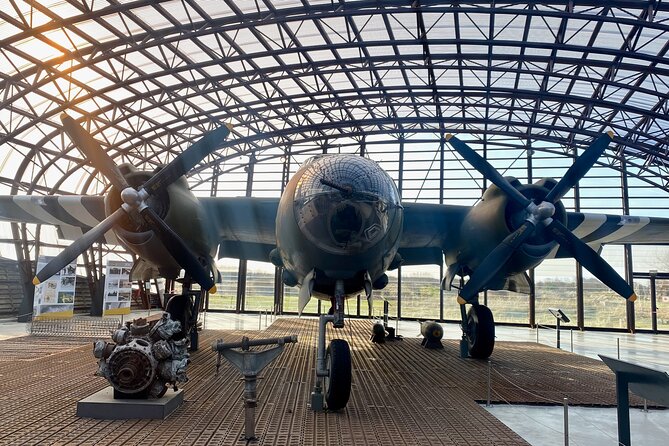
- An original B26 bomber at Utah Beach Landing Museum: one of only six still in existence.
- Overlord Museum before the cemetery: artifacts and installations set the stage right away.
- Normandy American Cemetery view over Omaha: plus the Visitor Center with maps and explanations.
- Small-group Mercedes comfort: up to 7 people, with pickup from your hotel or Airbnb.
- No meals included: you’ll want snacks for the ride and short breaks.
Early Start From Paris: The Pace You’re Signing Up For
This tour is built for one thing: getting out to Normandy early enough to hit several major sites before the day gets crowded or the light changes. Pickup happens at 07:30, from your hotel entrance door or your Airbnb address. If you’re starting from the shared meeting point area, it’s 10 Pl. de l’Opéra, and the day ends back there.
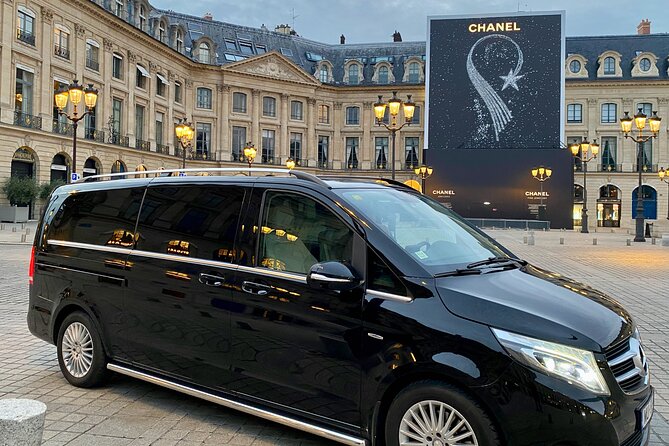
You’ll ride about 3.5 hours to Normandy (around 280 km), with one rest stop along the way. The comfort part is real: it’s an air-conditioned Mercedes, not a bus slog. Also, the smaller vehicle helps keep the timeline tighter—this company notes their Mercedes vans can move faster on highways (up to around 130 km/h versus 100 km/h for many big buses), which can mean more time at the sites.
The main “catch” is that there’s not much slack. You’ll have short visits and timed transitions, so bring your patience and your camera battery.
You can also read our reviews of more tours and experiences in Paris.



Overlord Museum and Normandy American Cemetery: Where the Day Gets Serious
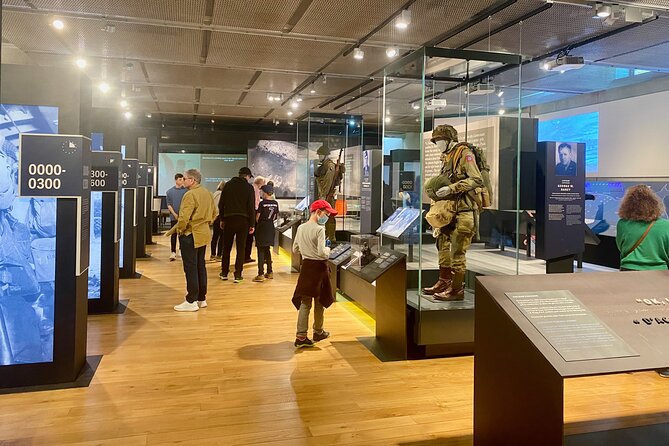
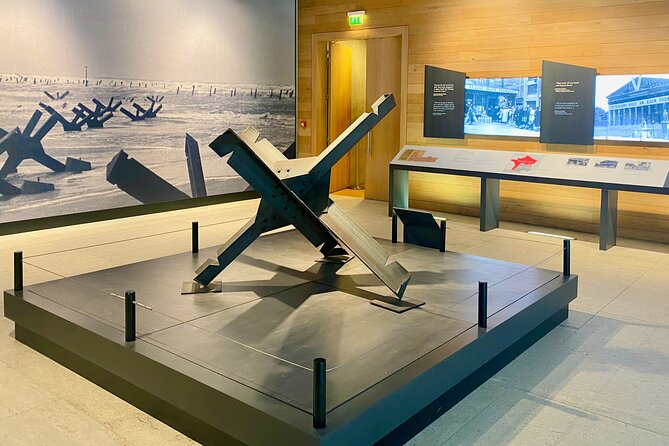
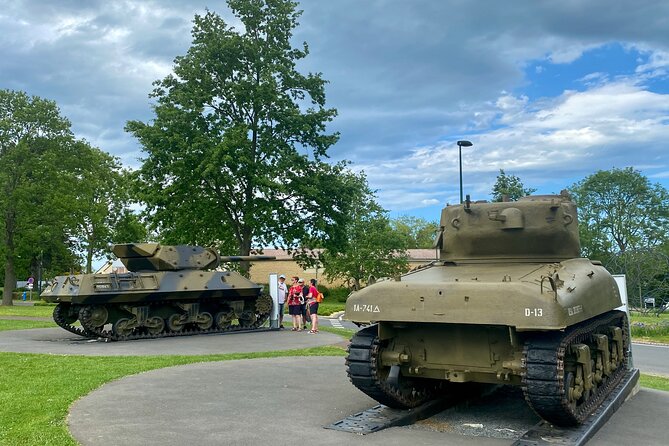
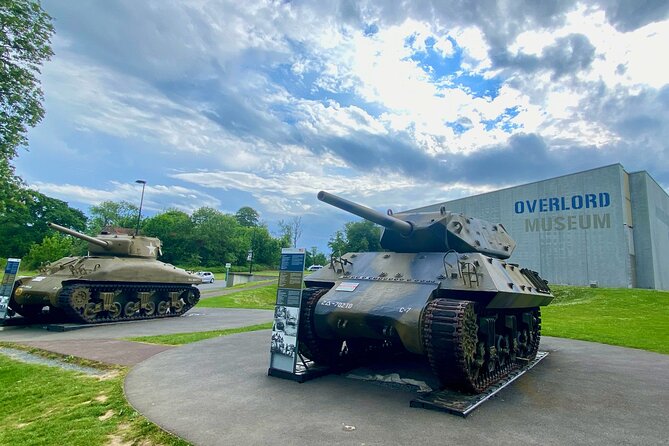
The first major stop is the Overlord Museum near Omaha Beach, scheduled for 11:00–11:30. It’s only a short hop from the Normandy American Cemetery area, so you’re not bouncing around all morning. This museum is practical in the best way: you see WWII equipment and installations up close—tanks, weapons, guns, military vehicles, a V-1 missile, personal belongings, and more.
That half hour matters because it gives you something to “hang the story on” later. Without it, you’d arrive at the cemetery and beaches with names floating in your head but no sense of how the battle was equipped and staged. With it, you get a grounded, human feel for D-Day.
Normandy American Cemetery: The view hits, then the facts land
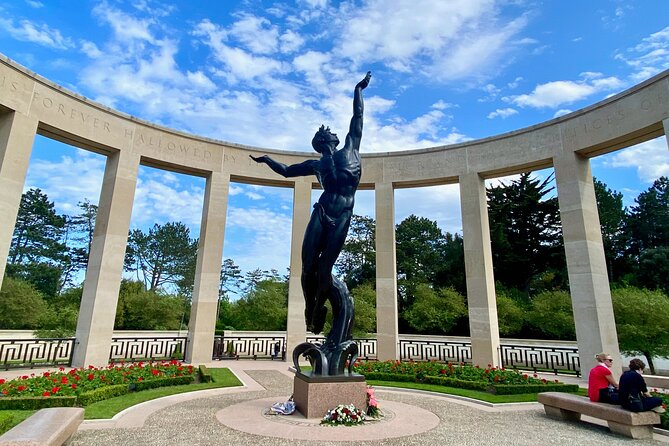
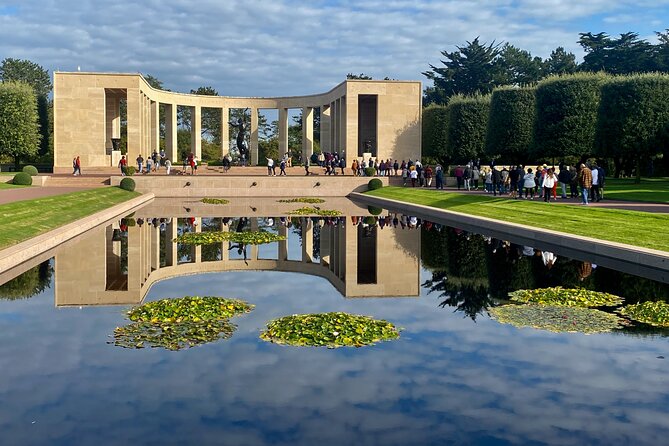
Right after, you’ll visit the Normandy American Cemetery from 11:40–12:40, with time also in the Visitor Center. The cemetery overlooks Omaha Beach, and that geography is part of what makes it so moving—you can literally see the coastline your guide is describing.
Here’s what you’ll be looking for:
- 9,387 U.S. soldiers, most killed during the Normandy landings
- The Wall of the Missing with 1,557 names
- The cemetery overlooks cliff areas where you can still spot remnants of German defensive positions, including concrete casemates
- The semicircular memorial colonnade and the sculpture Spirit of American Youth Rising from the Waves
- Large maps of military operations in the Visitor Center, plus a small museum with lots of explanations
Give yourself a minute before rushing to the “big” points. The cemetery works best if you slow down just a little, even if your schedule won’t let you go fully leisurely.
Omaha Beach and Pointe du Hoc: Two Kinds of Hard
Omaha Beach: Big stakes, less time than you think
You’ll reach Omaha Beach around 12:45–13:15, a tight 30-minute stop. This is the most well-known of the D-Day beaches, and it’s easy to see why. The coastline looks deceptively normal from a distance. Up close, it’s the kind of place where your brain refuses to treat it like a beach vacation.
The focus here is sacrifice: the landings at Omaha involved about 34,000 men. With only half an hour, you won’t read every sign in full detail, but you can still get the core idea—this was a brutal landing under pressure, right in the open.
If you want to make the most of the short visit, take two “passes”:
- First pass: stand back and get the shape of the beach and cliffs.
- Second pass: move to memorial points and pay attention to what your guide points out.



Pointe du Hoc: The cliff where Rangers had to win
Next is Pointe du Hoc Memorial, scheduled 13:30–14:20. This site sits on a cliff between Utah and Omaha beaches. It was key because it was high enough to fire on both sides, so it became part of Hitler’s Atlantic Wall defenses.
What you’ll see is physical proof: concrete casemates and gun pits, plus original fortifications and bunkers that remain open for visitors. The story centers on the 2nd Ranger Battalion—the fight to take that crucial gun battery on June 6, 1944.
Look for the fire control casemate and the monument near the top dedicated to the 2nd Ranger Battalion. The cliff helps the narrative click. From sea level, the scale looks manageable. Standing there, you get why this took courage and desperation in equal measure.
This stop is often the one people describe as deeply moving because the terrain itself tells the truth of how difficult the landing was—not just the politics or the plans.
Utah Beach and the Landing Museum: A Different Angle on D-Day
After Pointe du Hoc, you’ll drive to Utah Beach, arriving around 15:00 for 15:00–15:30. Utah is next to Omaha and is described as the westernmost of the five Normandy D-Day beaches.
The key facts here are different from Omaha:
- On June 6, 1944, about 23,000 American soldiers stormed Utah to help capture Cherbourg and its deep-water port.
- Casualties at Utah were relatively lighter: 197, including 60 missing.
Your guide may also talk through the units involved. The tour information includes the 82nd Airborne Division, 101st Airborne Division, VII Corps, 4th Infantry Division, 90th Infantry Division, the 4th Cavalry Regiment, and the 70th Tank Battalion. You don’t need to memorize all of it. The value is that it shows D-Day wasn’t one single wave—it was a coordinated effort.
Utah Beach Landing Museum: Where the B26 makes the past feel real
From 15:30–16:30, you’ll visit the Utah Beach Landing Museum, built on top of a former German bunker. This hour is one of the best ways to use the time you’re not spending at sea level.
The museum’s collection includes artifacts and military vehicles, but the star is the original B26 bomber—not a replica, not a model. It’s one of only six left in existence. Seeing a real aircraft in a museum context is powerful because it connects the story to hardware and logistics, not just heroics.
If you’re the kind of person who wants a single “wow” moment to anchor the whole day, this is likely it.
Small-Group Mercedes Comfort: Why the Vehicle Matters
This is one of those tours where the transportation choices quietly affect the experience. You’re not just riding; you’re trading off time, comfort, and attention.
- Max 7 travelers keeps the group easier to manage.
- Mercedes E220/E300 for small groups (2–3 people) and Mercedes minivans for larger groups (3–7) keep things comfortable.
- The tour includes bottled water, which sounds small until you’re hours into the day.
Also, the tour is offered in English. Live guiding is listed from 4 people, which usually means you won’t be stuck with silence if the group is small, but you should confirm how your exact booking handles guidance.
Most days like this force you to choose between “big bus savings” and “small group quality.” This one aims for the middle: small enough for a calmer rhythm, structured enough to fit everything.
Price and What You Get for $419.94
At $419.94 per person, this isn’t the cheapest way to do Normandy from Paris. But you’re not only paying for seats on a bus. You’re paying for:
- Round-trip driving timed for a full circuit across major sites
- Pickup from your Paris hotel or Airbnb
- Admission included for the main stops (Overlord Museum, Normandy American Cemetery/Visitor Center, Omaha Beach-related sites, Pointe du Hoc memorial, and the Utah Beach Landing Museum)
- A guide component in English, plus bottled water
- A Mercedes vehicle that helps reduce time lost in transit
If you tried to copy this as a DIY plan, your biggest hidden costs would be the time drain: getting out early, finding parking, ticket lines, and the “lost hour” effect that happens when plans aren’t coordinated.
So the value question comes down to your priorities. If you want a focused day with minimal logistics work and clear sequencing from museum to cemetery to beaches, it’s a reasonable buy. If you crave long, unstructured stays at only one or two locations, you may feel the schedule squeeze.
Practical Tips So You Don’t Feel Rushed
Because the timeline is tight, small choices help a lot.
- Wear shoes you can walk in on uneven ground. These are memorial sites, not smooth boardwalks.
- Bring a light layer. Coastal wind can feel colder than you expect even on a mild day.
- Pack snacks since meals aren’t included. Short breaks are fine, but hunger will steal your focus.
- Bring something to write with or a notes app. The maps and facts at the Visitor Center make more sense when you capture a few names or locations you want to revisit later.
If you’re especially moved by memorial spaces, plan a quiet moment for the American Cemetery. Even 2–3 minutes of stillness helps you absorb what you’re seeing.
Should You Book This Normandy Omaha Utah Landing Beaches Trip?
Book it if you want a single-day route that hits the big three with smart sequencing: context first, then cemetery, then beaches, then museum. The combination of Omaha Beach, Pointe du Hoc, Utah Beach, and the B26 bomber stop makes the day feel complete, not chopped into separate trips.
Skip it if your ideal tour is slow and deep. This plan is efficient, not leisurely. You’ll cover a lot of ground, but you won’t have hours at each site.
If you’re traveling with friends and want something smoother than a big group bus day, this one makes sense. The small vehicle and max-7 setup are exactly what you’re paying for—and it’s the difference between “touring” and actually following the story.
FAQ
What time does the tour start in Paris?
Pickup starts at 07:30 from your hotel entrance door or your Airbnb address.
How long is the drive from Paris to Normandy?
It takes about 3.5 hours (around 280 km) to reach the Normandy American Cemetery area, with one rest stop.
What sites are included in the tour?
You’ll visit the Overlord Museum (Omaha Beach area), Normandy American Cemetery, Omaha Beach, Pointe du Hoc, Utah Beach, and the Utah Beach Landing Museum.
Are admission tickets included?
Admission tickets are included for Overlord Museum, Normandy American Cemetery & Visitor Center, Omaha Beach-related visits, Pointe du Hoc, and the Utah Beach Landing Museum.
Does the tour include food?
No. Meals and drinks are not included.
What transportation is used?
You’ll travel by Mercedes vehicle: a Mercedes E220/E300 for 2–3 people or a Mercedes minivan for 3–7 people.
How many people are in the group?
This experience has a maximum of 7 travelers.
Is the tour guided in English?
Yes. The tour is offered in English.
Where does pickup and drop-off happen?
Pickup is from your hotel entrance or Airbnb address at 07:30. The meeting point is 10 Pl. de l’Opéra, and the tour ends back at the meeting point.
Can I cancel for a full refund?
Yes. You can cancel for a full refund if you cancel at least 24 hours before the experience’s start time.
FAQ
Do I need to navigate Paris to catch the van?
No. Pickup is offered from your hotel entrance door or your Airbnb address at 07:30.
Is there free time at Utah Beach?
Yes. You’ll have 30 minutes of free time at Utah Beach (15:00–15:30) for learning on your own.
What is the B26 bomber stop?
At the Utah Beach Landing Museum (15:30–16:30), you can see an original B26 bomber, listed as one of only six still in existence.