REVIEW · PARIS
Neoclassical Paris Architecture 2-Hour Private Walking Tour
Book on Viator →Operated by Paris in person · Bookable on Viator
Neoclassical Paris is the style that plays fair. In this 2-hour private walking tour, I love how the art historian guide connects the buildings to the ideas behind them, not just the looks. You get to see major neoclassical landmarks in a tight loop, with stops that are quick enough to keep your attention and not turn into a slog. The one thing to consider is the price: $360.48 per group means you’ll feel the cost more if you’re not splitting it with others.
What really makes it worth your time is the private format. You can shape the walk to your interests, and the guide style is friendly and question-driven, so you’re not stuck passively listening while the city swishes by. A small heads-up: it’s a moderate walking experience, so plan for standing still at viewpoints.
You’ll start at the Bourse area (near Bourse75002) and end near the Arc de Triomphe du Carrousel. Along the way you’ll move through classic Paris spaces—squares, arcades, gardens, and the Palais Royal complex—each explained through the lens of neoclassical design.
In This Review
- Key highlights to know before you go
- Neoclassical Paris: Why These Buildings Feel Like Arguments
- A Real Private Tour: Control the Pace, Keep It Personal
- Stop 1: Palais Brongniart and the “Former Stock Exchange” Story
- Stop 2: Place des Victoires and the Classic Predecessor Effect
- Stop 3: Galerie Vivienne and the Arcade That Pre-Loads the Mall
- Stop 4: Jardin des Tuileries and Neoclassical Thinking Through Space
- Stop 5: Palais-Royal and Cour Carré Views That Tie the Style Together
- The Art Historian Factor: Names You Might Hear, and Why You’ll Like the Teaching Style
- Price and Value for a Private Group Up to 6
- How to Prepare for a Smooth 2-Hour Walk
- Should You Book This Neoclassical Architecture Tour
- FAQ
- Is this tour private?
- How long does the Neoclassical Paris architecture walking tour last?
- What does it cost, and is the price per person?
- Is the tour offered in English?
- Which stops and landmarks are included?
- Do I need to buy tickets for the stops?
- Is food or drinks included?
- Where do we meet and where does the tour end?
- What about confirmation timing and cancellation?
Key highlights to know before you go
- Private, up to 6 people: one group, one pace, one guide focus
- Art historian leadership: explanations tied to style, not just names
- A clean 5-stop arc: Palais Brongniart, Place des Victoires, Galerie Vivienne, Tuileries, Palais Royal
- Free admission at the stops: you can focus on the walk instead of ticket math
- Flexible route energy: you can steer the tour toward what you care about most
Neoclassical Paris: Why These Buildings Feel Like Arguments
Neoclassical architecture in Paris has a particular vibe. It’s the style that says: order matters. Symmetry matters. Classic rules matter. And the fun part is that you can spot that logic on the street, not just in a museum.
This tour’s angle is smart: it doesn’t treat neoclassicism like a list of pretty facades. You’ll be guided to notice how each site reflects the values of its era—how architecture becomes a public message. That’s why the walk feels like a “decoder ring” for the city. Once you start seeing the ideas, other Paris buildings start making more sense too.
I also like that the emphasis stays practical. You’re not chasing far-off monuments. You’re walking through recognizable central areas and learning to read what you’re actually seeing—columns, proportions, and the way spaces guide your eye.
You can also read our reviews of more tours and experiences in Paris.

A Real Private Tour: Control the Pace, Keep It Personal

This is a private tour/activity, limited to your group only (up to 6 people). That matters more than you might think. In a small group, your guide can respond to how you’re asking questions, and the tour doesn’t have to race to satisfy a checklist of strangers.
You also get personalization baked in. The tour can be customized to match what you want more of—architecture first, or context first. If you’re traveling with a family member who thinks architecture is boring, this format gives the guide room to make it land in a way that clicks.
Logistically, it’s set up for an easy start in the center of Paris. It’s offered in English and you’ll have a mobile ticket. It’s also near public transportation, which helps if you want to arrive early to get your bearings without stress.
Stop 1: Palais Brongniart and the “Former Stock Exchange” Story
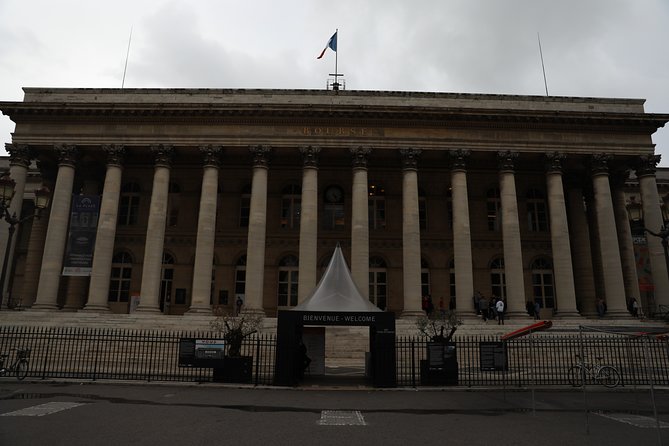
The tour begins at Palais Brongniart, the former stock exchange building. This is a strong opening because it frames neoclassicism as more than decoration. The building represents the confidence of its era—how an institution wanted to look stable, rational, and serious.
You’ll spend about 30 minutes here. The key value is that you can see how neoclassical design communicates credibility. Think formal rhythm, clean structure, and the kind of facade language that tells people: this is established, and it’s here to last.
Since the stop lists admission ticket free, you can focus on observation instead of planning for entry fees. Use this time to look slowly. I like to stand back, take in the symmetry, then walk closer to notice details—because that’s where the style stops being abstract.
Practical note: this is the part where your guide can set the “rules” for the rest of the tour. If you’re unsure what neoclassical architecture is doing, ask early. This is the place to clear up confusion fast.
Stop 2: Place des Victoires and the Classic Predecessor Effect
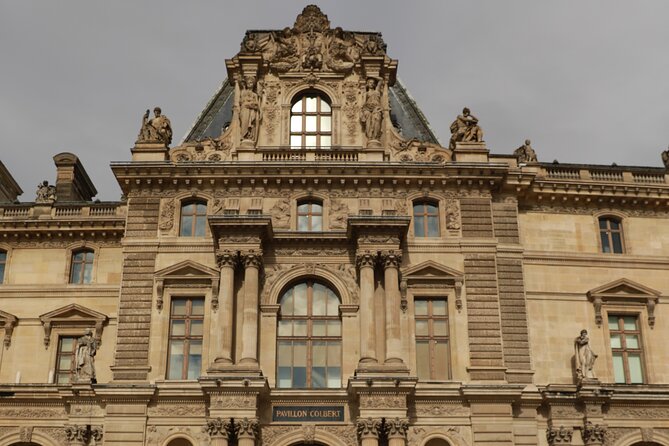
Next comes Place des Victoires, a square with serious importance in the neoclassical story. It’s one of the four royal squares of Paris, and the tour treats it as a kind of classical model—an earlier blueprint for later neoclassical thinking.
You’ll have about 15 minutes here. That short slot is perfect if you’re the type who likes to learn the concept, then move on while the idea is still fresh.
Here’s what I’d focus on: the way the square creates order. Squares are not just open space; in classical planning, they are stage sets. Your guide will likely help you connect the geometry to the design principles—how public space teaches people how to behave visually.
Also, since this stop is admission ticket free, you can treat it like an outdoor classroom. Stand where the perspective makes the buildings line up best. A guide can point out what to look for, but you’ll do the seeing.
Stop 3: Galerie Vivienne and the Arcade That Pre-Loads the Mall
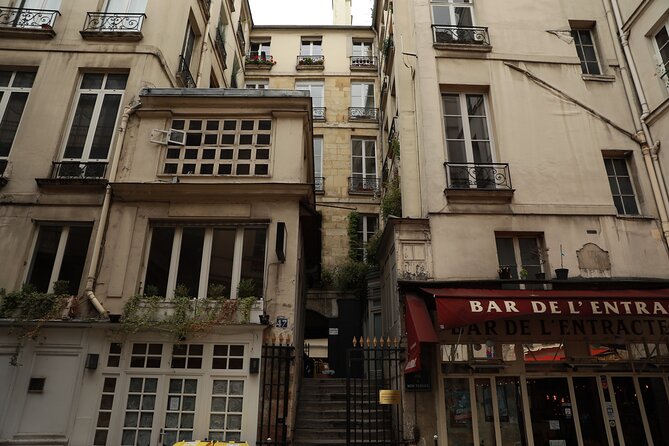
Then you step into Galerie Vivienne, a covered arcade. This stop is great because it shows neoclassical influence in everyday life, not just in grand institutional buildings.
The tour gives you about 20 minutes here, and the framing is honestly clever: the arcade is presented as an ancestor to the shopping mall. That makes it more interesting for modern travelers. You’re not just learning history; you’re seeing how today’s commercial spaces have older roots.
If you like architecture that affects how you move, this is your stop. Arcades change the rhythm of walking—roof overhead, controlled light, a corridor feel. That’s architecture doing social work: shaping comfort and attention so people linger.
As with other stops, the itinerary lists admission ticket free, so you’re not forced to turn this into a shopping mission. You can keep it architectural, even if you pass storefronts along the way.



Stop 4: Jardin des Tuileries and Neoclassical Thinking Through Space
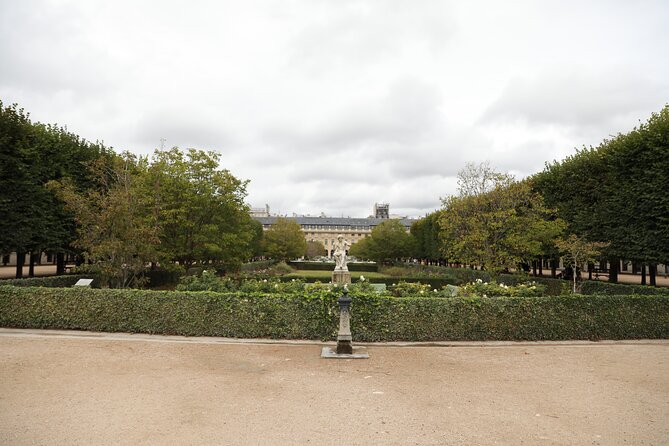
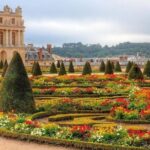
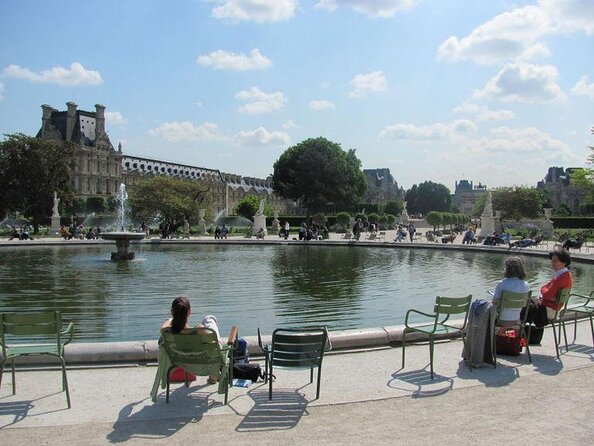
After the arcade energy, you shift to open air at Jardin des Tuileries. The tour points out that this is the former royal garden of the Tuileries, explained from a neoclassical perspective.
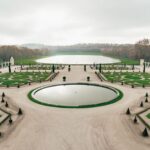
You’ll spend about 20 minutes here. Gardens might sound soft compared to buildings, but neoclassicism shows up in how space is arranged—lines, perspective, and the way the garden frames the viewer.
This is the stop I like for resetting your brain. You’ve been looking at facades and interiors. Now you look outward, and you start noticing how design guides sightlines. It’s also where the tour can tie together the idea that architecture isn’t isolated. It’s part of a designed environment: city blocks, courtyards, gardens, and squares all speak the same visual language when you know what to watch for.
Tip for your visit: slow down at the viewpoints your guide points out. Neoclassical design often reveals itself through perspective. Quick photos won’t do it justice—though yes, take photos anyway.
Stop 5: Palais-Royal and Cour Carré Views That Tie the Style Together
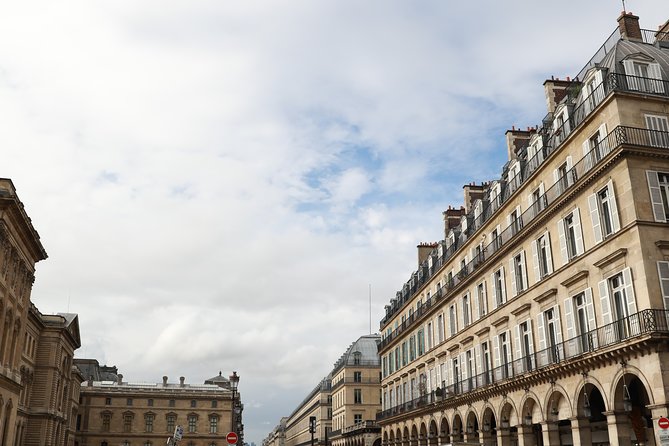
The final stop is Domaine National du Palais-Royal, the complex that includes Cour Carré and the surrounding neoclassical elements. This is a fitting ending because Palais Royal connects multiple threads: formal architecture, public space, and a commercial identity that emerged as the palace landscape shifted roles.
You’ll get about 20 minutes here. The tour frames Palais Royal as a familiar Paris site that becomes especially meaningful when you look at it through neoclassical design logic.
The standout value here is synthesis. By this point, you’ve already learned how neoclassical design can project values (Brongniart), shape public space (Place des Victoires), influence everyday circulation (Galerie Vivienne), and organize the outdoor environment (Tuileries). Now you see how that same logic works in a complex space where courtyards and architecture all talk at once.
It also helps that the itinerary lists admission ticket free. You can spend your time reading the space rather than negotiating entry. When you finish, you’ll head to the end point near Arc de Triomphe du Carrousel.
The Art Historian Factor: Names You Might Hear, and Why You’ll Like the Teaching Style
This tour includes a professional art historian guide, and the teaching style is the kind that makes a technical subject feel usable.
In the guide lineup you may encounter, I’ve seen names like Mila/Milica, Melissa, and Dunya associated with this tour style. Regardless of who leads yours, the consistent theme is explaining architecture as a story you can follow. People describe guides who are friendly and easy to understand, but also serious about detail—bringing art, architecture, history, and culture into one coherent explanation.
One particularly helpful teaching tactic: the guide asks questions that get you thinking. Instead of a one-way lecture, it turns into guided observation. That’s how you actually learn neoclassical design quickly—by making your eyes do the work, with the guide steering.
If you love museums but wish they were more connected to the street, this tour is that bridge.
Price and Value for a Private Group Up to 6
Let’s talk money, because $360.48 per group is not “impulse buy” pricing. It’s a private tour rate, so it’s best when the cost is shared.
For a group of up to 6, you can treat this like a way to buy attention and interpretation, not just walking time. You’re paying for:
- a professional art historian guide
- the private setting (no rushing to accommodate other groups)
- a focused route that hits several architectural spaces in a short window
If you’re traveling as a couple, or as a family that genuinely likes architecture (or wants to learn it), the value can be strong because you get back more than information—you get a sharper way to look at the city.
If you’re a solo traveler, you’ll want to ask yourself a simple question: do I want a personalized lesson, or would I rather self-guide? If you want the personalized lesson, this price can make sense. If not, you may feel it more.
A small planning note: this tour is often booked in advance—on average about 41 days ahead—so it’s smart to lock in timing when you have your dates.
How to Prepare for a Smooth 2-Hour Walk
This experience is listed for moderate physical fitness, so come ready for a real walk. You’ll also be stopping often enough to stand and look, which means comfort matters more than speed.
I suggest:
- Wear comfortable shoes you trust. You’ll be on your feet.
- Bring your phone with enough battery for a mobile ticket.
- If it’s a sunny day, consider sun protection. You’ll be outdoors for parts of the route.
If you want to get the most out of the guide, prepare one or two questions before you start. For example: do you want more emphasis on design details (columns, symmetry, proportions) or on historical context (why this style gained momentum)? Your guide can tailor the balance.
Should You Book This Neoclassical Architecture Tour
Book it if you want Paris through a single architectural lens and you like explanations that connect style to meaning. This is a good fit for people who enjoy walking tours, but don’t want them to become purely scenic. It’s also a great choice if you’re the type who likes learning by noticing—standing in the right places, comparing details, and building a mental map.
Skip or reconsider if you’re mainly after iconic postcard stops and fast photo ops. This tour is focused and design-driven. It rewards curiosity, not just sightseeing.
If your group fits the sweet spot—up to 6 people who genuinely want to understand architecture—this is a strong value for a private lesson in central Paris.
FAQ
Is this tour private?
Yes. It’s a private tour/activity, and only your group participates.
How long does the Neoclassical Paris architecture walking tour last?
It runs for about 2 hours.
What does it cost, and is the price per person?
The price is $360.48 per group (up to 6). The included guide service is part of that group price.
Is the tour offered in English?
Yes. The tour is offered in English. It may be operated by a multi-lingual guide depending on availability.
Which stops and landmarks are included?
The route includes Palais Brongniart, Place des Victoires, Galerie Vivienne, Jardin des Tuileries, and Domaine National du Palais-Royal (with the Palais-Royal complex).
Do I need to buy tickets for the stops?
The itinerary lists admission ticket free for each stop mentioned.
Is food or drinks included?
No. Food and drinks are not included.
Where do we meet and where does the tour end?
The tour starts in Bourse75002 Paris, France and ends at Arc de Triomphe du Carrousel, Pl. du Carrousel, 75001 Paris.
What about confirmation timing and cancellation?
You receive confirmation at booking time unless you book within 7 days of travel, in which case confirmation is received within 48 hours, subject to availability. The experience has free cancellation, and you can cancel up to 24 hours in advance for a full refund.