REVIEW · PARIS
Paris: Centre Pompidou Skip-the-Line Guided Museum Tour
Book on GetYourGuide →Operated by Babylon Tours LLC · Bookable on GetYourGuide
Modern art gets a roadmap here.
This 2.5-hour, small-group Pompidou tour (max 8 guests) helps you read both the museum and the movements inside it, starting with the Renzo Piano exterior and its inside-out design. Instead of wandering, you move with a pro guide who connects the building’s big idea to how modern art broke rules and changed over time.
Two things I really like: you get a tight, organized walk through major schools from Cubism and Fauvism to Surrealism, Dada, and Pop Art, and the small group size keeps questions from getting lost. One possible drawback: the tour notes it is not suitable for people with mobility impairments or who use a wheelchair (and wheelchair-suitable tours are only available upon request), so you’ll want to confirm fit before booking.
In This Review
- Key highlights worth your time
- Why the Pompidou works so well on a guided circuit
- Exterior first: Renzo Piano’s inside-out idea, explained
- How a max-8 group changes what you notice
- A practical itinerary through modern art movements
- 1) The museum’s modern art collection: where you start your timeline
- 2) Cubism and Fauvism: learning the visual grammar
- 3) The World Wars: how history changes the mood of art
- 4) Dada: chaos with a point
- 5) Surrealism and the Salvador Dalí stop
- 6) Pop Art: when everyday culture becomes art material
- 7) The big style schools: Bauhaus and Abstract Expressionism
- 8) Famous international names you can actually place
- Contemporary galleries: Fluxus, Minimalism, and a winter garden
- Roof time and the top-floor view of Paris
- Price and value: is $371 per person worth it?
- Where the tour starts, what to bring, and what not to carry
- Who should book this Pompidou tour?
- Should you book this skip-the-line Pompidou tour?
- FAQ
- Where does the tour meet?
- How long is the Pompidou tour?
- What’s the group size?
- Does it include skip-the-line entry?
- What do I need to bring?
- Are large bags allowed?
- What about wheelchair accessibility?
- Is cancellation free?
Key highlights worth your time
- Small group (max 8) keeps the pace human and makes it easier to ask what you are actually looking at.
- Renzo Piano’s inside-out architecture is explained first, so the Pompidou stops being just a photo spot.
- A focused survey of modern and contemporary art, from Picasso and Matisse to Dali, Duchamp, Warhol, and more.
- Top-floor experience plus roof time gives you a rare Paris viewpoint in the same session as the art.
- Silent-room awareness helps you avoid accidental missteps while the group follows museum rules.
Why the Pompidou works so well on a guided circuit
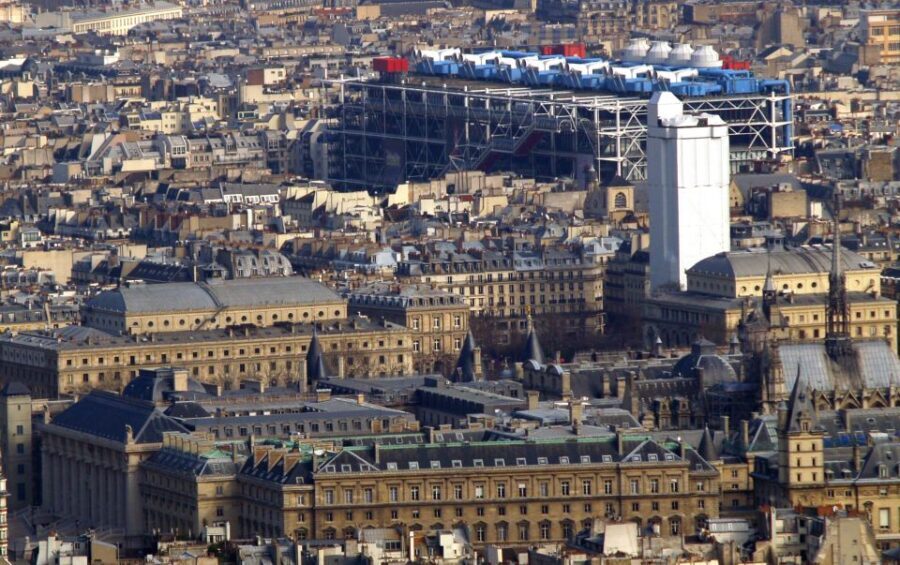
The Pompidou can feel like two places at once: a loud, unforgettable building on the outside, and a museum that covers an enormous span of art history on the inside. The payoff of this tour is that it gives you a path through that scale. In 2.5 hours, you cover what you’d struggle to stitch together alone—modern and contemporary movements, key artists, and the social context behind them.
You also avoid the most annoying part of a big museum day: waiting. This tour includes skip-the-line entrance, so you can get moving while your energy is still high.
And the guide matters here. The tour feedback names guides like Tanya and Belen for making modern art feel understandable, not like homework. Another guide name that shows up in feedback is Dunya, praised for helping people make sense of modern and contemporary art as something connected to real life and history.
You can also read our reviews of more guided tours in Paris



Exterior first: Renzo Piano’s inside-out idea, explained
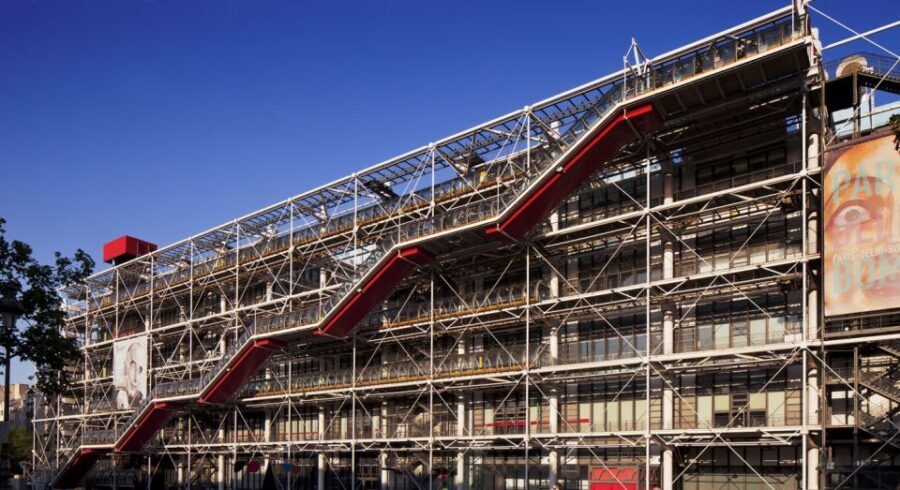
You meet your guide at the corner of Rue Beaubourg and Rue Rambuteau, by the blue parking sign. From there, the tour starts outside, with the museum’s architecture. This is not just trivia. It’s the key to understanding why the Pompidou feels different from most Paris museums.
The building is designed by Renzo Piano and conceived as an inside-out structure. That means what you see outside is tied to what’s happening inside—an exposed logic rather than a hidden one. Your guide also points out how the structure’s colored, industrial feel became part of the museum’s identity, so you can look at the Pompidou and understand what it’s trying to say before you even enter galleries.
Practical tip: take a quick minute at the start to orient yourself—where entrances are, where you’ll climb later, and which parts of the exterior match what you’ll see inside. A good guide does this fast, but you still want to give yourself a second to get your bearings.
How a max-8 group changes what you notice
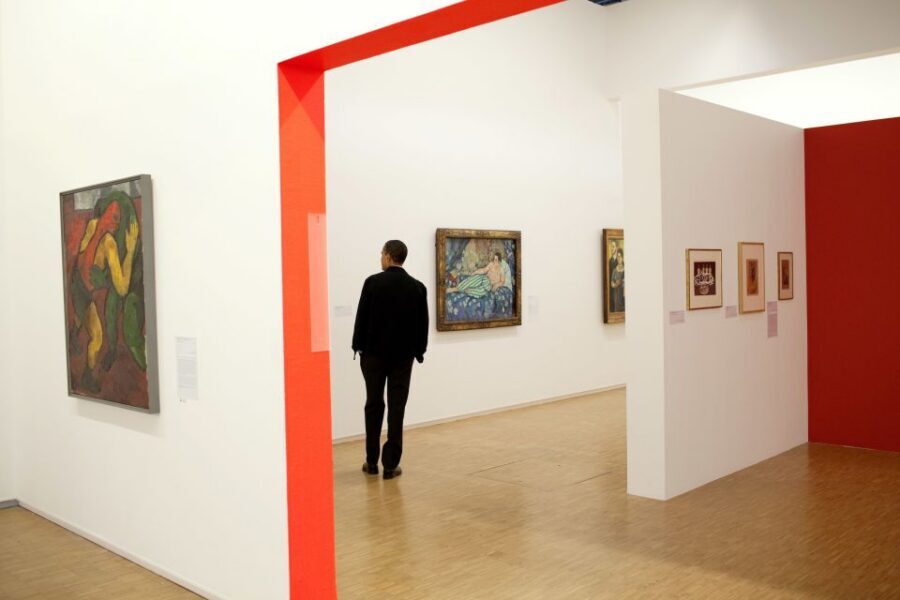
The Pompidou collection can overwhelm you if you go in with the wrong expectations. This tour keeps you from getting stuck in one room or chasing random famous paintings. Because the group is small (max 8), the guide can respond to what people are actually looking at.
That shows up in the way the tour moves through art movements like a guided timeline. You’re not just shown famous works—you’re taught how to recognize the patterns: the shift in style, what artists were reacting to, and why certain ideas took hold in particular decades.
This is also where you benefit from the guide being able to explain without talking in museum-y silence for the whole time. Feedback on guides like Tanya highlights their ability to keep people engaged through social context, not just art facts.
One more rule to know: some spaces are silent rooms, where noise and talking are not allowed. Your guide will steer you so you can follow museum etiquette without feeling awkward.
A practical itinerary through modern art movements
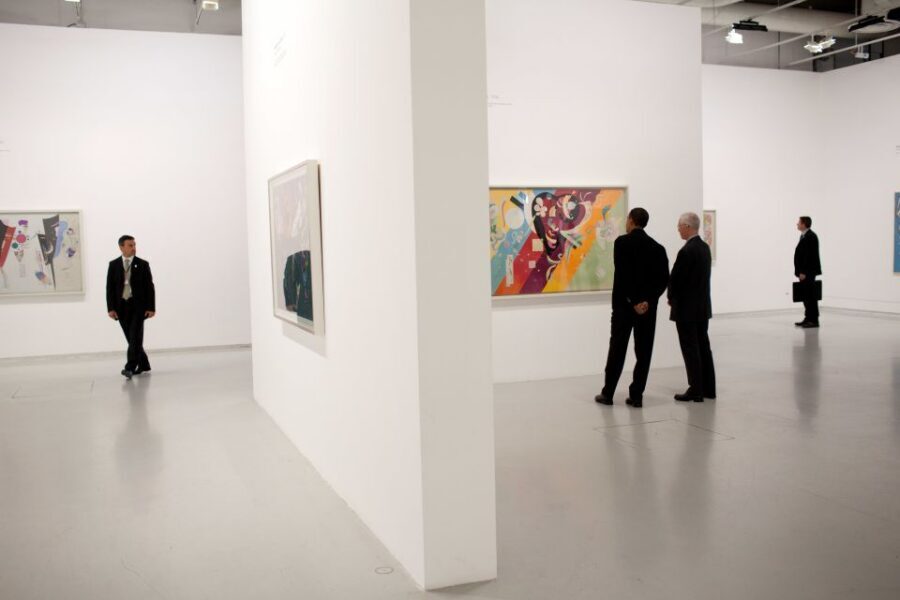
This is the kind of tour that works because it treats the art like a story. Here’s how the walk-through generally unfolds, and why each stop makes sense.
1) The museum’s modern art collection: where you start your timeline
You’ll spend your time in the Musée National d’Art Moderne collection. The tour framing is big-picture but organized: you’re looking at how modern art evolved instead of treating it as a pile of masterpieces.
The guide also sets expectations about scale. The collection is described as nearly 3,200 works, so you’re not seeing everything. You’re learning how to read the major moves. That’s a huge value for first-timers.
You can also read our reviews of more museum experiences in Paris





2) Cubism and Fauvism: learning the visual grammar
You’ll stop to discuss Cubism in front of a Picasso painting. Then you’ll connect the dots with Fauvism while admiring a Matisse work.
Why this matters: these movements are often remembered as style names, but the tour helps you see what changed. Cubism is about breaking reality into angles and viewpoints. Fauvism is about color taking over as the main language. Once you understand that, a lot of later experiments make more sense.
If you normally feel like modern art is either too obvious or too abstract, these early stops are a good reality check. Your guide gives you handles you can actually use.
3) The World Wars: how history changes the mood of art
Modern art doesn’t develop in a vacuum. The tour takes you through how the World Wars impacted the art world.
You’ll hear how the emotional pressure of the era altered artistic goals—sometimes pushing toward experimentation, sometimes toward protest, sometimes toward irony. This is one of the hardest parts of art history to understand alone because you need the context to make the style choices feel logical.
4) Dada: chaos with a point
Next comes Dada, described as chaos and dark humor—very much framed as a reaction to World War I.
That wording is important: Dada isn’t random weirdness. It’s a response. Your guide helps you see the logic behind the disruption so you can look at the works with less frustration.
5) Surrealism and the Salvador Dalí stop
You’ll then focus on Surrealists, including Salvador Dalí. Surrealism can look like fantasy at first glance, but the guide’s job is to connect it back to the human mind—dream logic, symbolism, and the push to go beyond the visible world.
If Dalí is one of the names you already associate with modern art, this stop is where you’ll likely feel the tour click.
6) Pop Art: when everyday culture becomes art material
You’ll cover Pop Art through a look at a few Andy Warhol works.
Warhol is a great pivot because Pop Art is about what art does with mass culture. The guide helps you connect the style to the theme: repetition, media, consumer life, and the question of what counts as art.
7) The big style schools: Bauhaus and Abstract Expressionism
The tour also includes Bauhaus and Abstract Expressionism. These are big umbrellas, so the value is in learning what the names mean in practice.
Bauhaus tends to point you toward design-thinking and modern form. Abstract Expressionism is more about emotional expression through gesture and paint. You don’t need to become an art historian in one afternoon—you just need a working mental map. This tour gives you that map.
8) Famous international names you can actually place
Your guide also brings in beloved French artists and international artists such as Georgia O’Keeffe, Jackson Pollock, and Piet Mondrian.
The benefit here is not just recognition. It’s placement: you start seeing which artist belongs to which movement and why their style fits their moment.
Contemporary galleries: Fluxus, Minimalism, and a winter garden

After the modern-art thread, the tour shifts to contemporary art galleries. You’ll get recent artistic directions discussed, including Fluxus and Minimalism.
What I like about this portion is that it doesn’t feel like an entirely separate museum. You still feel the throughline: how artists kept pushing against traditional rules, but now the questions become about process, perception, and what it means for art to exist.
You’ll also experience works such as Dubuffet’s winter garden installation. Installations can be tricky on your own because you don’t always know what you’re supposed to notice first. Here, the guide helps you slow down and read the piece in a way that feels intentional rather than confusing.
Roof time and the top-floor view of Paris
One of the tour’s specific promises is that you’ll climb up to the top floor and then spend time on the museum roof for a Paris panorama.
This is a smart use of the final stretch of time. You get a physical reset after focusing on visual language inside galleries, and the view is a reward that ties back to the building itself. The Pompidou isn’t only architecture; it’s also an elevated perch in the city.
If you’re pairing the Pompidou with other Paris sights the same day, planning a roof moment here can help keep your day balanced. You’ll have art, context, and a viewpoint without needing to rush to another attraction immediately.
Price and value: is $371 per person worth it?
At $371 per person for a 2.5-hour guided tour, this isn’t a budget add-on. So the real question is what you get for that price.
You are paying for four things that matter in a big museum:
- Skip-the-line entrance, which saves stress and time
- A professional, English-speaking guide who can connect movements and context
- A small group experience (max 8), which makes the guide’s explanations feel relevant
- A guided circuit that includes modern and contemporary galleries, plus top-floor and roof time
If your main goal is to quickly understand how modern and contemporary art evolved—and to see key artists like Picasso, Matisse, Duchamp, Dalí, and Warhol—this tour has a strong value case. If you already love reading art labels and you’re comfortable moving through museums independently, you might not need a guide. But most people who feel stuck staring at modern art for an hour tend to benefit from this kind of structure.
Where the tour starts, what to bring, and what not to carry
This tour keeps things simple, but you should plan for the museum rules.
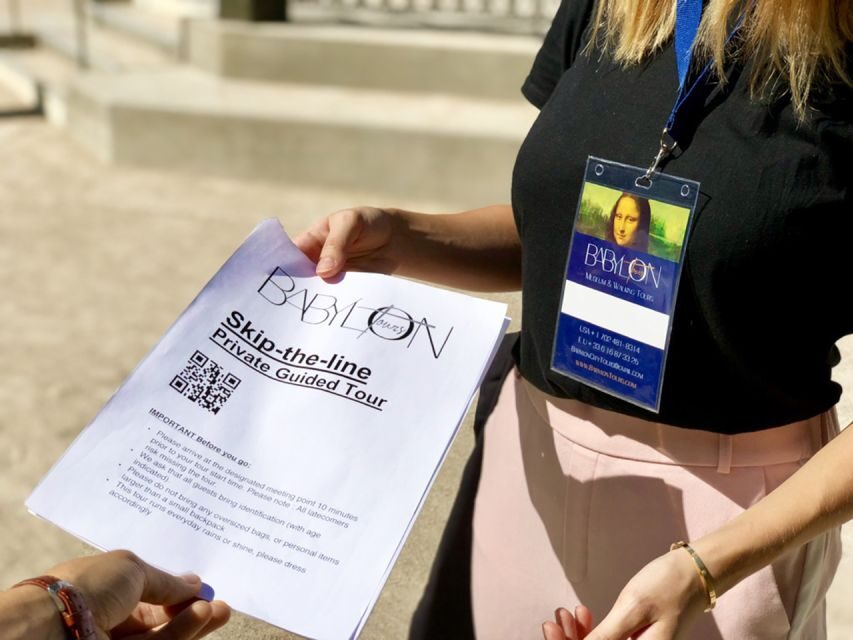
You’ll need passport or an ID card. Don’t bring luggage or large bags—that restriction matters because it affects whether you can store items and move easily.
Also, remember that the collection can vary throughout the year, and the tour includes the permanent collection focus. Temporary exhibits aren’t included, so if there’s a temporary show you care about, you’d need to plan that separately.
Logistics-wise, the tour ends back at the meeting point, so you’re not left figuring out how to get away after the climb and roof time.
Who should book this Pompidou tour?
This tour is best if you want modern art explained in a way that helps you actually look differently. It’s ideal for:
- First-time Pompidou visitors who don’t want to spend the afternoon guessing
- Art lovers who know a few names (Picasso, Matisse, Dalí, Warhol) and want the connections
- Anyone who likes a guided pace and a small group atmosphere
It may not be the right fit if mobility is a big issue. The tour information specifically says this option isn’t suitable for people with mobility impairments or wheelchair use, though wheelchair-suitable tours may be available by request.
Should you book this skip-the-line Pompidou tour?
If you’re excited by modern and contemporary art but tired of feeling lost, I’d book it. The combination of small group size, skip-the-line access, and a guided timeline from Cubism through Dada, Surrealism, Pop Art, and on into contemporary movements is exactly what makes museum time feel productive instead of random.
I’d hesitate only if you are sensitive to silent-room rules, you need to bring large bags, or wheelchair access is required under your situation. Otherwise, this tour is a strong way to turn the Pompidou from a landmark into a clear, memorable art education—plus you still get that rooftop Paris view.
FAQ
Where does the tour meet?
Meet your guide by the blue parking sign on the corner of Rue Beaubourg and Rue Rambuteau.
How long is the Pompidou tour?
The tour duration is 2.5 hours.
What’s the group size?
It’s a small-group tour with a maximum of 8 guests.
Does it include skip-the-line entry?
Yes, it includes skip-the-line entrance and the entrance fee.
What do I need to bring?
Bring a passport or ID card.
Are large bags allowed?
No. The tour does not allow luggage or large bags.
What about wheelchair accessibility?
This tour option notes it is not suitable for people with mobility impairments or who use a wheelchair. Tours suitable for wheelchair users are available upon request.
Is cancellation free?
Yes. You can cancel up to 24 hours in advance for a full refund.