REVIEW · PARIS
Occupation and Liberation of Paris
Book on Viator →Operated by Interkultur Paris · Bookable on Viator
Paris under occupation lives on in stone. This tour uses the actual streets and buildings of central Paris to make the Occupation and Liberation feel human, not textbook. I love the mix of daily-life details and place-based stories that turn each stop into a short, memorable scene. One snag: the tour runs in French only, so if you don’t read/speak French, plan ahead.
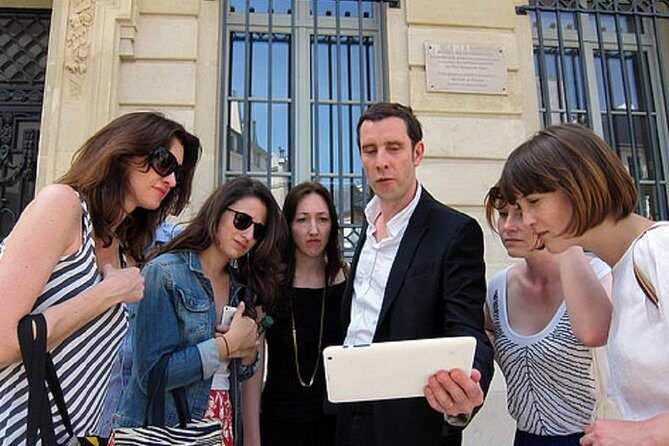
The small group format helps. On guides like Thierry Heil (a name that comes up often), you get clear facts, vivid anecdotes, and time for questions, not a rushed lecture. With a maximum of 12 people, the walk stays lively and focused.
You’ll cover a lot of ground from the 9th arrondissement down to Place de la Concorde in about 2 hours 15 minutes, and you’ll be outside for most of it. The experience depends on decent weather, so bring a layer and expect to walk.
Key things I’d plan around before you go
- Occupation and Liberation told through 11 specific Paris sites, not vague talking points
- Free admission at each stop, so you’re not hit with add-on costs mid-walk
- A small group (up to 12), which makes questions and explanations easier
- French-language format, with an English option only if you arrange it
- A satisfying end at Place de la Concorde, where memorial plaques anchor the story
In This Review
- Paris Under Occupation: Why This Walk Hits So Hard
- A Clear Route From 9th Arrondissement to Concorde
- Bouillon Chartier and Folies Bergère: Daily Life and Entertainment Under Occupation
- Passage Verdeau and Hotel Drouot: Requisitions and the Business of Stolen Art
- Resistance, Denunciation, and Everyday Choices at Mairie du 9e
- BNP Paribas to BRED: Banks, Stock Exchange Pressure, and Power at Opéra
- Pathe Opéra Premier, Anti-Semitic Propaganda, and the Place Vendôme Contrast
- Rue de Castiglione to the Concorde Memorial Plaques: Liberation on the Ground
- Price and What You Actually Get for It
- Who This Tour Fits Best
- Should You Book This Occupation and Liberation of Paris Tour?
- FAQ
- Is this tour in French or English?
- How long is the walking tour?
- Where does the tour start and end?
- What size is the group?
- Do I need to buy entry tickets for the stops?
- Is the ticket mobile?
- Is the tour affected by weather?
- Are service animals allowed?
- Can I cancel for a refund?
Paris Under Occupation: Why This Walk Hits So Hard
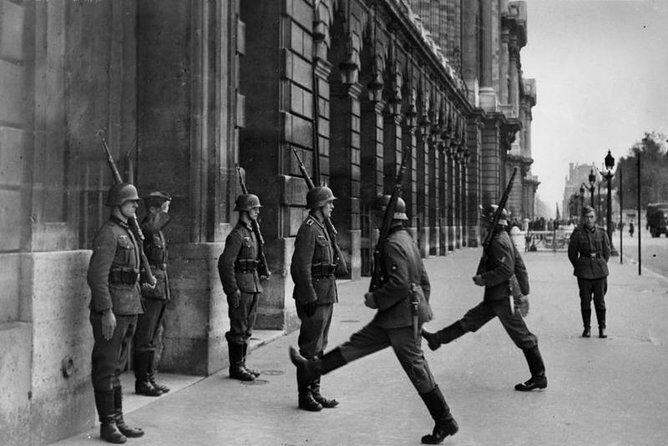
Paris didn’t just “happen” to be occupied. Daily routines changed. Choices got riskier. Public spaces became loaded with power, fear, and propaganda. This tour helps you see those shifts using the most honest guidebook there is: the city itself.
What I like most is that the story isn’t only about commanders and headlines. You move through entertainment spots, commercial streets, banks, and civic buildings—places where normal life continued, even when it didn’t feel normal. One moment you’re thinking about theater and music halls; the next, you’re standing near reminders of forced requisitions and the business side of war.
And because the guide ties anecdotes to the exact spot you’re standing on, your brain stops treating history as distant. You start noticing details you’d otherwise walk past.
A Clear Route From 9th Arrondissement to Concorde
This is a compact, smart walk: about 2 hours 15 minutes, starting at 32 Bd Poissonnière (75009) and ending at Place de la Concorde (75001). The start time is 2:00 pm. It’s a good length for first-time visitors who want meaning without committing a whole day.
The logistics are simple. You get a mobile ticket, you’ll be near public transportation, and the group stays small. Admission tickets at the stops are listed as free, so the value is built in. For a price of $25.44 per person, that matters: you’re paying for narration and perspective, not museum fees.
Good weather matters here. Since most of the stops are outdoors or in transit between landmarks, you’ll want comfortable shoes and a quick way to handle light rain. If weather cancels, you’ll be offered a different date or a full refund.
You can also read our reviews of more tours and experiences in Paris.

Bouillon Chartier and Folies Bergère: Daily Life and Entertainment Under Occupation
Your walk begins at Bouillon Chartier on the Grands Boulevards. This is a brilliant opener because it tackles something people often forget: even in dark times, meals and conversation still happened. A place like this makes the Occupation feel grounded, down to everyday rhythms. The anecdotes are meant to pull you into daily life—how people adapted, what they noticed, and how public spaces could feel both familiar and tense.
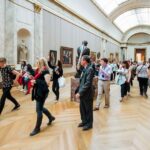
Then you shift to Folies Bergère. This stop focuses on how artistic life continued under pressure. The guide points you toward the intense world of music halls, stars, performances, and cinemas—and it’s not just trivia. It helps you understand how culture can be a kind of battlefield, where attention, audiences, and messaging all matter.
If you’re the kind of person who thinks the past is mostly about politics, these two stops correct that fast. Culture and routine aren’t side stories. They’re where propaganda can spread, where morale can be tested, and where people still find ways to live.
Passage Verdeau and Hotel Drouot: Requisitions and the Business of Stolen Art
Next comes Passage Verdeau. Paris “passages” have their own charm—glass, ironwork, and tucked-away corridors that feel like secrets. But here, the story keeps a sharper edge. The building across the way was a brothel requisitioned by the German army, and the guide uses that contrast to show how private life could be bent to occupying forces.
Then you reach Hotel Drouot, and the theme turns to commerce. During the Occupation, Drouot became a serious stage for sales—some of them linked to the spoliation of Jewish property and the wider looting system. One of the most striking points here is the story of a German art dealer working for the Reich. You’ll hear how art, objects, and status could be turned into war assets.
This is where I’d pay the most attention. Not because it’s the most dramatic stop (though it can feel heavy), but because it explains how cruelty can hide behind paperwork, auctions, and “normal” business language. Seeing that next to a real auction house location makes the mechanism harder to ignore.
Resistance, Denunciation, and Everyday Choices at Mairie du 9e
At the Mairie du 9th arrondissement, the tone changes again. Instead of only big institutions and occupying power, you get a more human angle on resistance—through an employee connected to the building.
This part matters because it doesn’t treat Resistance like a single uniform story. It highlights what it looks like in practice: the ordinary resistance in France during the war, the risks, and the social strain. The tour also addresses denunciation—how fear and opportunism could fracture communities.
Standing at a town hall, you naturally think about civic life and public decisions. The guide uses that context to show how war turned civil systems into tools of pressure, and how some people used their position—directly or indirectly—to protect others.
If you want history with moral texture, this stop delivers.
BNP Paribas to BRED: Banks, Stock Exchange Pressure, and Power at Opéra
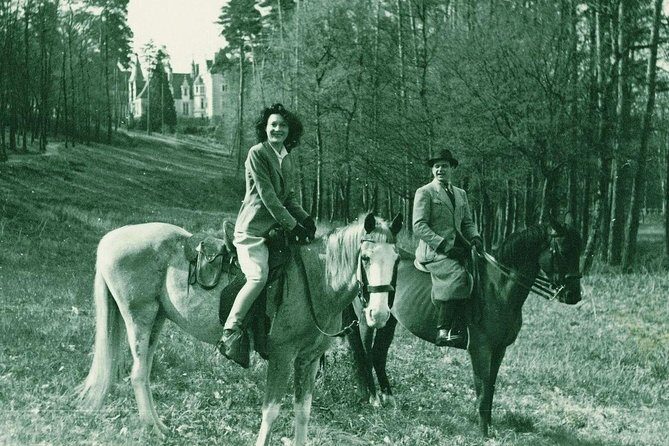
The next section revolves around money and institutions, and you’ll feel the logic of the Occupation in a new way. The tour discusses the role of banks under occupation, along with the surprising situation on the Paris stock exchange and the economic and political fallout from armistice agreements between France and Germany.
You’ll visit BNP Paribas | Maison Dorée, then later BRED-Banque Populaire – Espace patrimonial near Opéra. These sites aren’t just pretty façades. In this story, they’re nodes where finance meets control.
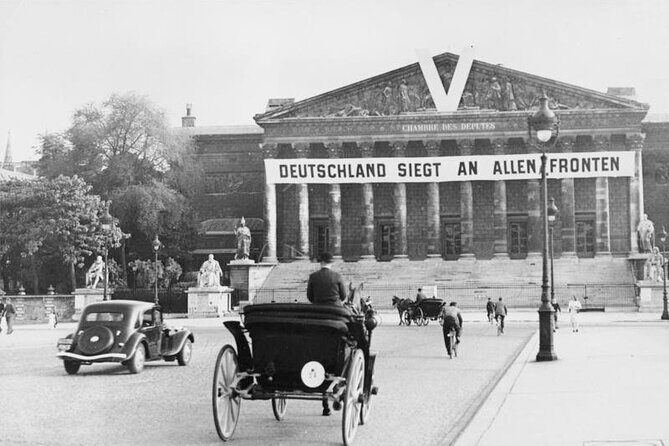
The guide also ties the area to key wartime locations. At the Place de l’Opéra area, the Kommandantur was there, and the tour connects that with the Opera and the Café de la Paix. When you hear the names of institutions paired with wartime roles, it stops sounding abstract. It becomes a map of where power sat in plain sight.
For me, this is one of the most valuable parts of the walk. It helps you recognize that occupation wasn’t only about uniforms and orders. It was also about systems—payments, deals, oversight, and the ability to shape what life looks like through economics.

Pathe Opéra Premier, Anti-Semitic Propaganda, and the Place Vendôme Contrast
From the Opéra area, the tour heads toward the cinema world with Pathe Opéra Premier. Here, the guide explains the requisition of a cinema for German soldiers. That’s a small detail, but it’s a big clue: even entertainment spaces were repurposed for control and presence.
Nearby, the story includes propaganda connected to anti-Semitism, organized to promote harmful ideology. This is not handled as an isolated fact. It’s used to show how public messaging and cultural influence worked hand-in-hand with occupation power.
Then you move to Place Vendôme, and the contrast gets sharper. You’ll hear about the fate of jewelry stores on rue de la Paix, the presence of the Ministry of Justice occupied by the German army, and an early Resistance network established opposite.
And yes, there’s also the Ritz hotel. This section doesn’t sugarcoat it: the Ritz was described as a high place of Collaboration and occupation, with celebrities who regularly went there. Placing that story next to Place Vendôme makes the tension clearer. Glamour could exist beside harm, and social life could be tangled with power.
If you like your history with clear cause-and-effect, this stretch gives you a lot to think about.
Rue de Castiglione to the Concorde Memorial Plaques: Liberation on the Ground
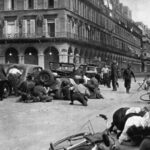
Next is Rue de Castiglione. The tour explains that many large hotels housed the headquarters of the German army. Behind the Meurice hotel, you’ll hear about main characters linked to these places and the battles of the Liberation that ended here.
This matters because Liberation is often pictured as a moment in time. Here it’s treated like a fight in real space—streets, buildings, and strategic corners. The guide connects those battles back to what you can still see, so it doesn’t feel like a distant finale.
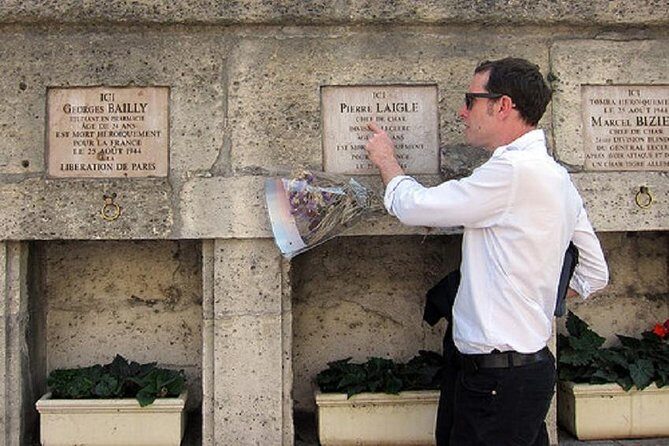
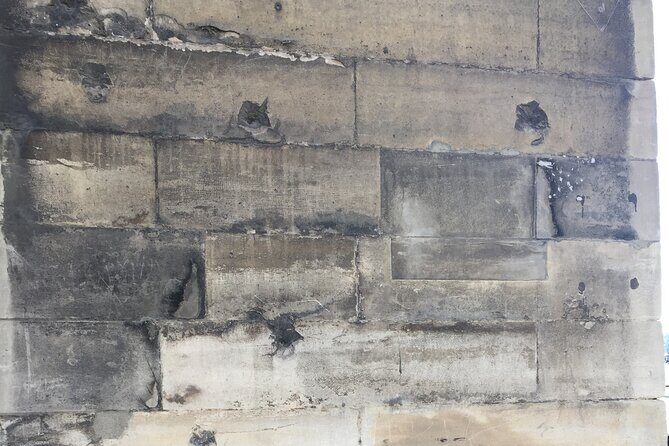
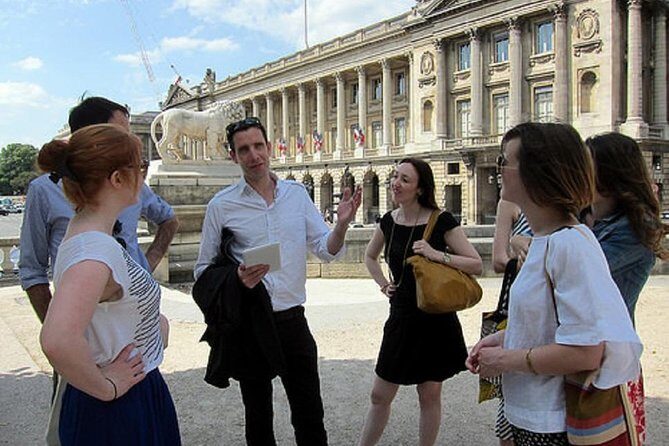
Finally, you reach Place de la Concorde. This is where the walk turns from explanation to memory. You’ll see traces of the battles of Liberation and memorial plaques dedicated to soldiers, Resistance fighters, and ordinary civilians who took part in them. On a square this well-known, those plaques do real work: they redirect your gaze from the grand architecture to the people who paid for the outcome.
For many people, this stop is the emotional landing point. It’s also the best place to pause, take photos, and let the story settle.
Price and What You Actually Get for It
At $25.44 per person, the biggest value is not the sites themselves. It’s the way they’re explained and connected. You’re getting a structured walk that covers multiple wartime themes—everyday life, art and entertainment, requisitions, stolen property, civic resistance, banking and economic pressure, propaganda, collaboration, and finally memorialization.
Two practical value points:
- All stops are listed as admission ticket free, so you’re not juggling extra fees.
- The tour lasts about 2 hours 15 minutes with a small group, which keeps it from turning into a long, generic history march.
Is it “cheap” in a tourist bargain way? Not really. But for what you’re paying for—focused, site-based storytelling across central Paris—it’s strong value.
Who This Tour Fits Best
This is ideal if you:
- Want a deeper look at Occupation and Liberation using real locations you can still reach on foot
- Enjoy guided storytelling that connects buildings to people and decisions
- Prefer a small group pace where you can ask questions
It may feel less ideal if:
- You need an English-language tour and haven’t arranged one in advance (the tour is in French unless you contact for English)
- You’re not comfortable walking for about two-plus hours, mostly outdoors
If you’re a first-time Paris visitor who wants meaning and not just photos, this tour gives you a powerful backbone for the rest of your trip.
Should You Book This Occupation and Liberation of Paris Tour?
I’d book it if you want to understand why this part of Paris feels different. You’ll come away with a mental map of power and resistance that sticks, because you learned it at the exact spots where those stories unfolded.
I’d skip or rethink if French isn’t workable for you. Since it’s listed as a French tour, language can shape your experience more than with many tours. If you can speak at least basic French, you’ll likely follow better. If not, you should contact the provider about an English option.
Overall: this is the kind of walk that makes central Paris more than scenery. It turns familiar landmarks into reminders of what people endured—and what they did next.
FAQ
Is this tour in French or English?
The tour is in French. For a tour in English, you need to contact the provider.
How long is the walking tour?
It lasts about 2 hours 15 minutes.
Where does the tour start and end?
It starts at 32 Bd Poissonnière, 75009 Paris and ends at Place de la Concorde, 75001 Paris. The start time is 2:00 pm.
What size is the group?
The group has a maximum of 12 travelers.
Do I need to buy entry tickets for the stops?
Admission tickets are listed as free at the stops included in the experience.
Is the ticket mobile?
Yes, it’s listed as a mobile ticket.
Is the tour affected by weather?
Yes. It requires good weather. If it’s canceled due to poor weather, you’ll be offered a different date or a full refund.
Are service animals allowed?
Yes, service animals are allowed.
Can I cancel for a refund?
Yes. Free cancellation is available, and you can cancel up to 24 hours in advance for a full refund.