REVIEW · PARIS
Montmatre Walking Tour: the essential highlights+
Book on GetYourGuide →Operated by Black Cat Tours Paris · Bookable on GetYourGuide
Montmartre hits you fast. You get the creative kick in just a couple hours, with a guide who keeps the story moving and the streets from feeling like a maze. I especially like the Sacré-Cœur stop for the big moment it creates, and the Place du Tertre art square where you can watch the craft happen in real time.
I also enjoy how the walk threads past little landmarks that explain why Montmartre mattered to 20th-century artists. Along the way you’ll see spots like Le Passe-Muraille and the old-vineyard area, plus the cabaret-flavored stops that give the neighborhood its anything-goes reputation. One thing to consider: the tour is timed by the day, so if it starts late you may reach the art square when people are packing up and it’s colder and darker than you planned for.
The good news is that the tour stays practical. It’s a live, English-speaking walk, rain or shine, with no paid ticket attractions inside—so you’re not wasting time hunting lines or ticket desks. Guides I’ve met through this style of tour have ranged from funny and upbeat to totally at-ease with questions, including Johnny and Ewan in recent experiences.
In This Review
- Key highlights you’ll actually notice
- Montmartre feels like Paris’s artists’ playground for a reason
- Kick off at Anvers: easy meeting, quick start, good footwork
- Sacré-Cœur and the viewpoint moment you’ll remember
- Place du Tertre: open-air artists, real atmosphere, smart timing
- Lapin Agile: the cabaret side of Montmartre that still feels alive
- The in-between landmarks: Passe-Muraille, old vineyard, and Dilada
- Moulin de la Galette: windmill views and belle époque mood
- Le Bateau-Lavoir: the creative hangout feeling (without the ticket hassle)
- Moulin Rouge finish: nightlife energy with a human pace
- Price and value: what $41 buys you (and what it doesn’t)
- Who this tour fits best (and who should choose another plan)
- Quick decision guide: should you book?
- FAQ
- FAQ
- How long is the Montmartre walking tour?
- Where do we meet?
- Is the tour in English?
- Does this tour include entrances to ticketed attractions?
- Is the tour affected by weather?
- Is there an optional coffee stop?
- Is it wheelchair accessible?
Key highlights you’ll actually notice
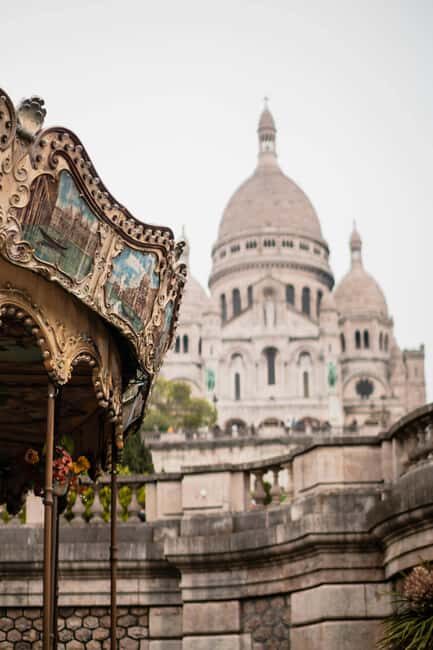
- Sacré-Cœur with guided context so it’s more than just a photo stop
- Place du Tertre open-air painting where the artists are part of the show
- Montmartre’s artist legend trail through landmarks tied to 1900s creativity
- Cabaret vibes at Lapin Agile and the neighborhood’s late-night side
- Moulin de la Galette windmill energy with belle époque atmosphere
- Le Bateau-Lavoir details that help you “see” what made it special
Montmartre feels like Paris’s artists’ playground for a reason
Montmartre is one of those neighborhoods where the setting explains the attitude. You’re surrounded by steep streets, staircases, corners that look like they were designed for stories, and viewpoints that remind you why artists and writers keep returning here. The walking tour keeps that sense of place front and center, not by rushing you through landmarks, but by connecting each stop to what the neighborhood was known for: art, performance, late nights, and a little rule-bending.
What I like is that you don’t just get monuments. You get the “why.” The route follows the creative gravity of Montmartre—where artists came from different creeds, where cafes and cabarets turned evenings into events, and where the nightlife side of Paris had its own rhythm. If you want a Montmartre that feels like a living stage rather than a checklist, this kind of guided walk fits well.
You can also read our reviews of more walking tours in Paris



Kick off at Anvers: easy meeting, quick start, good footwork
You start at the Anvers metro station, meeting by a kiosk near the station. The guide holds a sign, and once you spot it, you’ll know you’re in the right place. This matters because Montmartre can be confusing even for first-timers. Starting at Anvers gives you a clean entry point, and you spend your energy walking the right direction instead of figuring it out.
The tour is designed as a walking experience of around 2.5 hours. That’s long enough to get multiple “you have arrived” moments—Sacré-Cœur views, the art square, cabaret corners, windmill sights—without turning into an all-day hike. It’s also a good match for people who want highlights plus meaning, not just a casual stroll.
Practical note: it runs rain or shine. Bring real shoes for uneven pavement and stairs. Even if the streets look charming in photos, they’re still working streets. Your feet do the negotiating.
Sacré-Cœur and the viewpoint moment you’ll remember
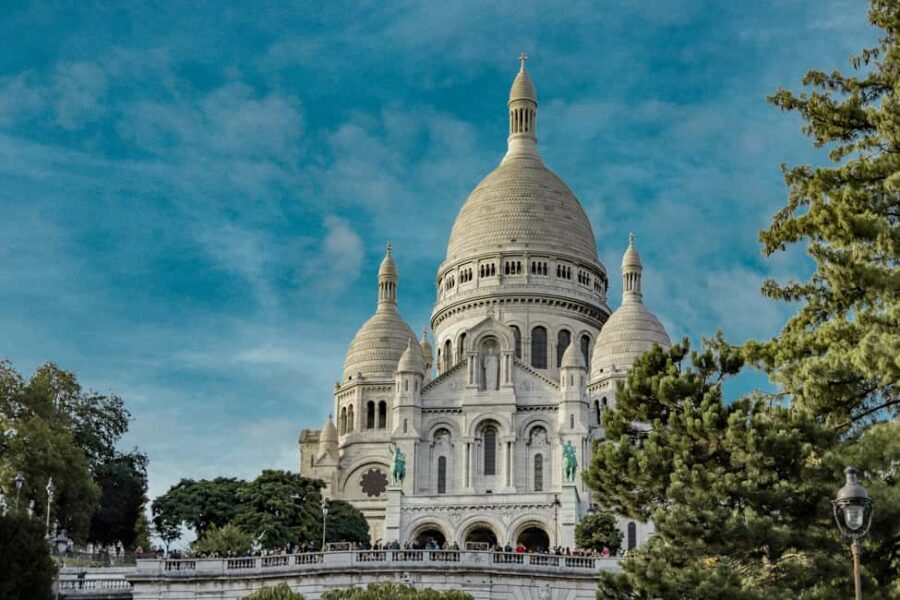
Your first big stop is Basilica of Sacré-Cœur. You get a guided look, not just a glance from the street. This is the part where the tour earns its name, because Sacré-Cœur is both a visual anchor and a spiritual one—one of those places that changes how you feel about the neighborhood the second you see it.
Sacré-Cœur also works as a natural reset. From there, you move from “big Paris landmark” into “Montmartre streets and stories.” And if there’s a service in progress, entry timing can shift. In recent experiences, Mass delayed going inside for some groups, so it’s wise to keep a flexible attitude and expect a slightly slower flow if the basilica schedule is busy.
If you care about photos, go with the mindset that the view and the atmosphere matter more than perfect timing. The guided perspective helps you know what to look for and why people linger here.
Place du Tertre: open-air artists, real atmosphere, smart timing
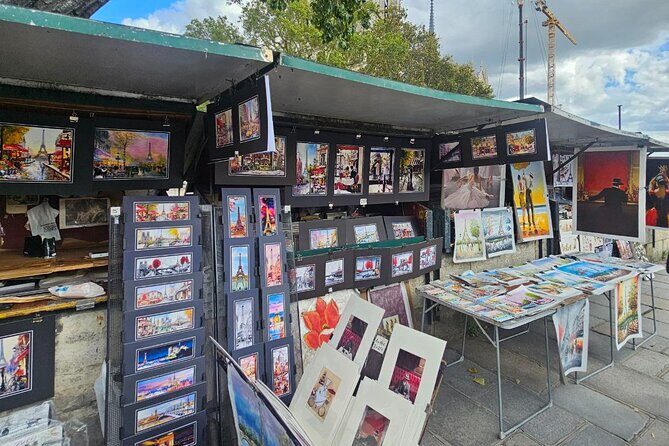
Next you’ll reach Place du Tertre, the famous artists’ square. This is where Montmartre’s creative reputation stops being a slogan. You can watch artists painting in the open air, and you’re surrounded by the kind of street scene that makes you understand why tourists come—and why locals keep talking about it.
Here’s the practical tip: timing changes the feel a lot. If your tour starts early, you get more overlap with active work. If it runs late, you may find the square in a winding-down phase—some artists are packing up, and by the end of the walk it can be dark and cold. So if you hate feeling rushed by daylight, pick a morning or early afternoon departure when you can.
Even with the crowds, the square is worth it on a guided walk because the guide can point out what you’re seeing and how the tradition developed. You’re not stuck standing there wondering what’s happening; you know why it’s happening.
Lapin Agile: the cabaret side of Montmartre that still feels alive

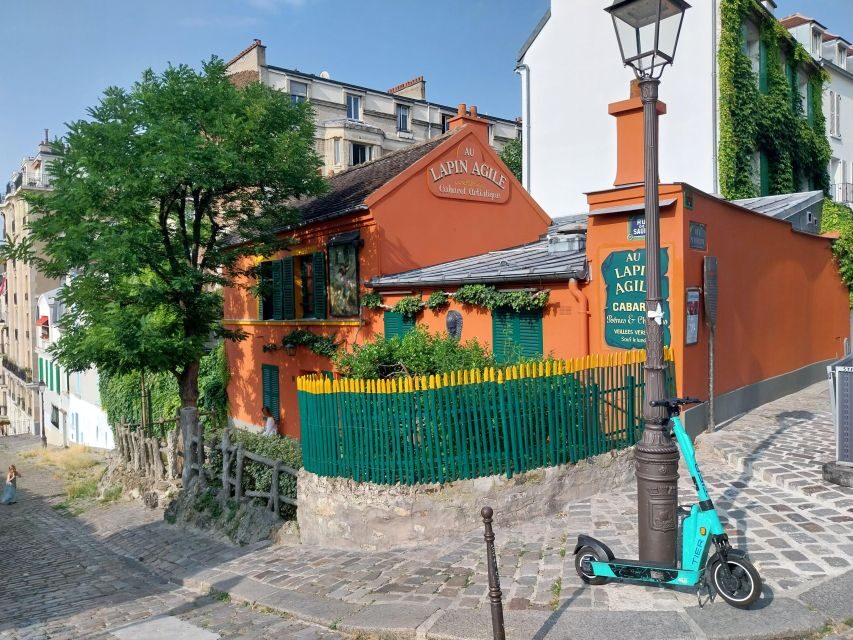
You’ll also visit Lapin Agile, one of the places that sums up Montmartre after dark. This is Montmartre’s performance personality: cabaret culture, eccentric characters, and that old Paris habit of making the evening into a show.
What’s valuable here is not just the location. It’s the way the guide connects Lapin Agile to the broader neighborhood mood—Montmartre as a place where anything goes, where cafes and cabaret halls blurred the lines between art and everyday life. In some recent walks, guides were described as funny and quick with anecdotes, and that style matters at stops like this. Lapin Agile works best when you hear the story with it, not when you just look at the building and move on.
Drawback to consider: it’s a walking tour, so you’re spending your time outside. If weather is awful, your comfort will depend on your willingness to keep moving and layer up.






The in-between landmarks: Passe-Muraille, old vineyard, and Dilada
The tour doesn’t only hit the big names. It also slips you past smaller landmarks that make Montmartre feel like a place with memory, not just souvenirs.
You’ll pass by and/or see:
- Le Passe-Muraille, a famous, charming figure that captures Montmartre’s playful streak
- A stop connected to an old vineyard
- The bust of Dilada
- Cabaret Patachou
These aren’t the kind of sights that most people find on their own. The value is how they break up the walk into a story you can actually follow. Instead of “and then we went there,” you start to feel the neighborhood’s personality shifting block by block—serious views, then street-art energy, then cabaret corners, then little symbolic monuments.
Even if you’re not a “museum person,” these details help you understand why Montmartre remains so easy to mythologize. A guide turns those micro-stops into meaningful stops.
Moulin de la Galette: windmill views and belle époque mood
Then comes Moulin de la Galette, the windmill that’s basically a symbol of how Montmartre once looked and how people still imagine it. Here the tour leans into that belle époque feeling—festive, theatrical, a little romantic, and very Paris.
This stop is a strong payoff because it’s a change in tone. Earlier you might have been inside the story of art and squares. At Moulin de la Galette, you get a more open, atmospheric moment—exactly the kind of place where you can slow down, take photos, and let the neighborhood’s silhouette do the explaining.
If you’re sensitive to crowds, remember this is a popular area. The guide helps you move efficiently, so you spend less time stuck and more time actually enjoying the scene.
Le Bateau-Lavoir: the creative hangout feeling (without the ticket hassle)
Another highlight is Le Bateau-Lavoir. It’s the kind of stop that rewards a guided approach because it’s not just “a building.” It’s a place you can look at and start to imagine the creative life that surrounded it.
This tour’s approach helps you connect the dots. You’re following in the footsteps of some of the greatest artists of the 20th century, and even without named figures on every corner, the route keeps reminding you what made Montmartre special: artists clustering, experimenting, sharing space, and feeding off the neighborhood’s energy.
One practical benefit: this is a walking tour that does not enter paid ticketed attractions, so you’re not losing time to lines or ticket offices. You get the outdoor experience and the narrative value without turning the day into logistics.
Moulin Rouge finish: nightlife energy with a human pace
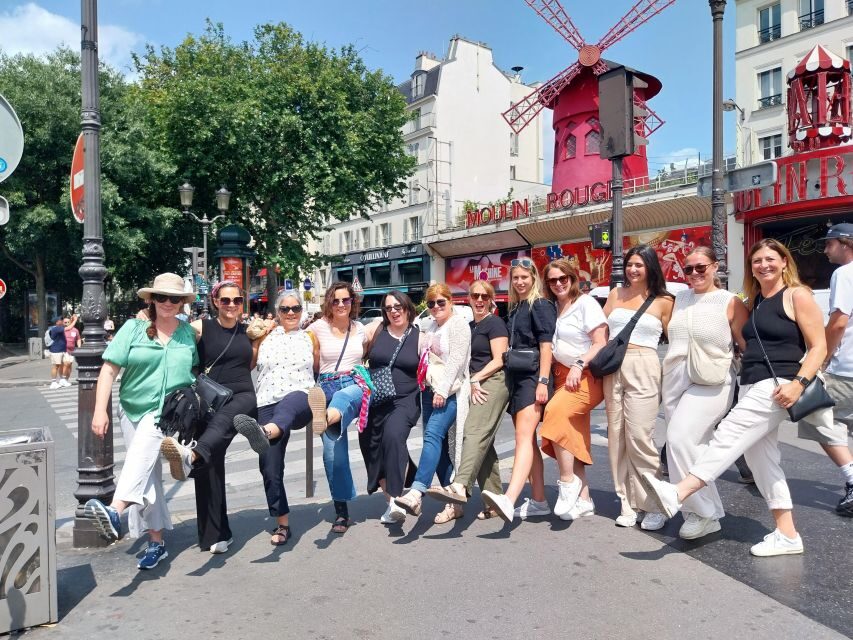
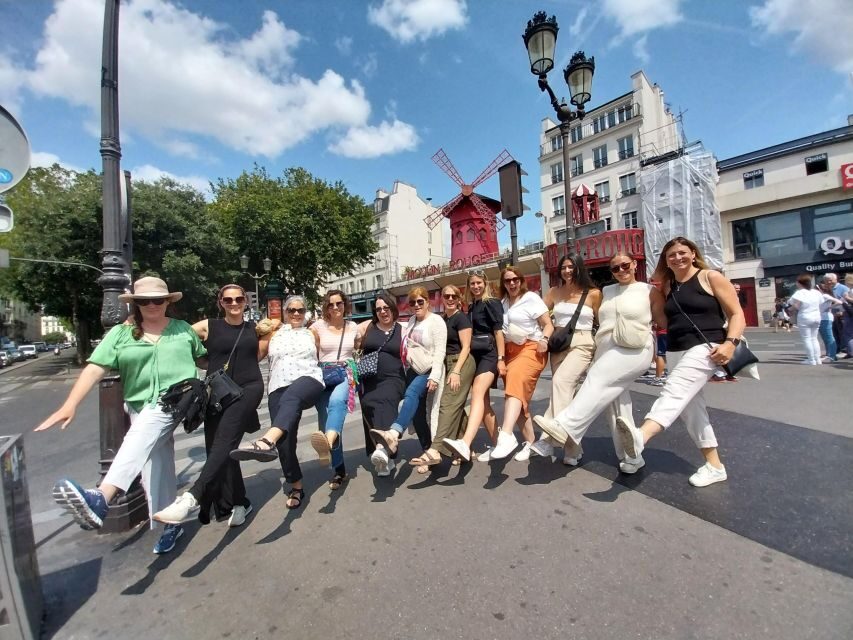
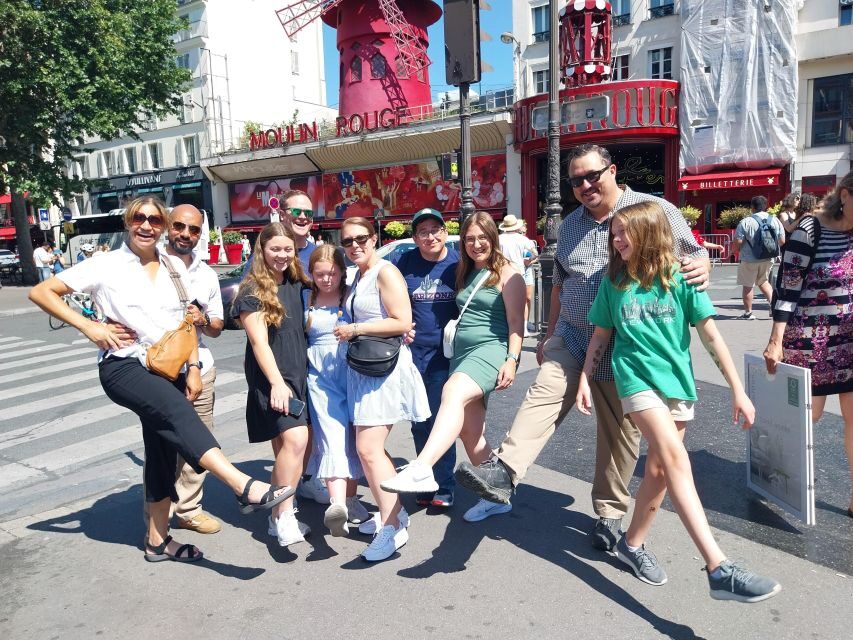
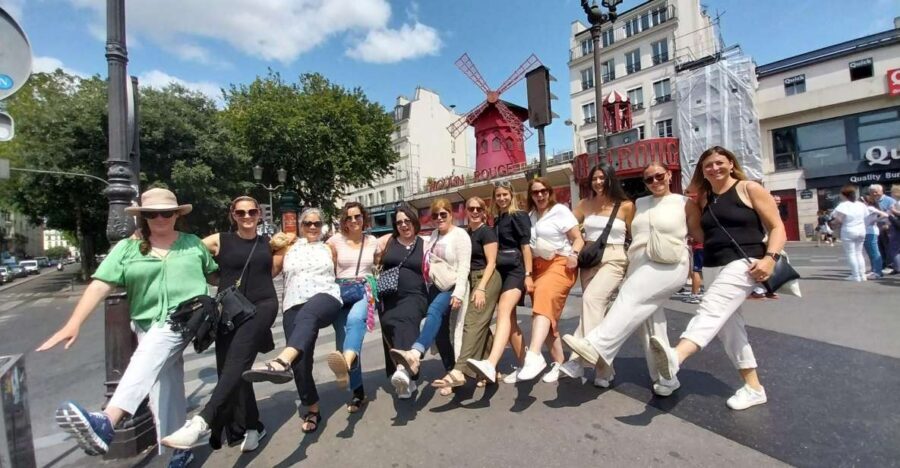
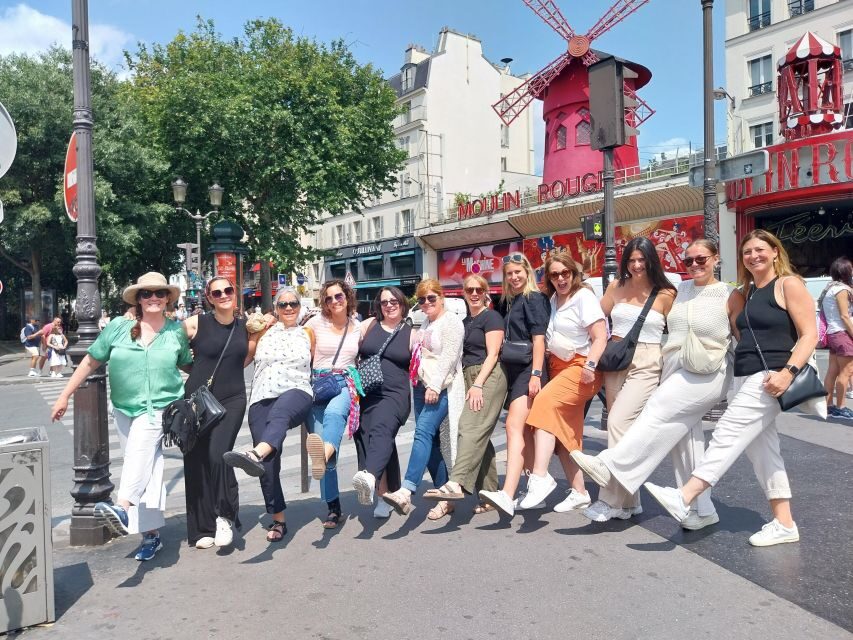
You end at Moulin Rouge. This is a perfect finish because it matches Montmartre’s reputation for nightlife and performance. You’re not ending at a random point—you’re ending at the neighborhood’s most famous stage symbol.
By the time you reach Moulin Rouge, you’ve already “decoded” Montmartre’s creative trail: basilica viewpoints, the artists’ square, cabaret corners, symbolic landmarks, and windmill imagery. That context changes how you see the final stop. It stops being just a photo op and becomes the last page of the neighborhood story.
If your tour timing pushes into evening, keep warm. One useful piece of real-world advice is that late starts can mean the art square closes into a quieter mode while the temperature drops.
Price and value: what $41 buys you (and what it doesn’t)
At about $41 per person, this tour is priced like a high-value walking experience rather than a full-day paid attraction day. That’s the main point: you pay for a guide, a focused route, and time-saving direction through Montmartre’s steep streets.
You’re also not paying extra for entrances to ticketed sites. Instead, you get guided time at major sights like Sacré-Cœur and meaningful outdoor landmarks like Place du Tertre, Lapin Agile, and Moulin de la Galette. For many first-timers, that combination is exactly where the value sits: less confusion, more context, and a route that strings together the neighborhood’s artistic identity.
Could you do it on your own? Sure. But if you want to understand Montmartre quickly—why the corners matter, why the art traditions exist, why cabaret is part of the cultural DNA—this kind of guided walk is a smart shortcut.
Who this tour fits best (and who should choose another plan)
This Montmartre walking tour is a great match if you want:
- A short, efficient Montmartre overview that still includes real storytelling
- Time with the major “must-see” scenes like Sacré-Cœur and Place du Tertre
- A guide who brings energy and humor, with anecdotes that make the neighborhood feel less abstract
It may be less ideal if:
- You hate walking. It’s a walking tour with around 2.5 hours on your feet.
- You dislike cold late evenings. If you can, choose a time earlier in the day, especially in colder months.
It’s also well-suited for people who want English guidance and appreciate a friendly, local Paris aficionado tone. Recent experiences included guides described as excellent and entertaining, and I think that matters most in a place like Montmartre where the atmosphere is the point.
Quick decision guide: should you book?
Book it if you’re visiting Montmartre for the first time and want the neighborhood’s creative story in a tight timeline. The route hits the emotional highlights—Sacré-Cœur, the open-air artist square, cabaret corners, windmill icon vibes—without dragging you into paid attraction logistics.
Skip or consider a different format if your schedule makes you miss daylight for the Place du Tertre part, or if you know you’ll struggle with stairs and uneven streets. In that case, you might prefer a more flexible plan that lets you wander longer at your own pace.
FAQ
FAQ
How long is the Montmartre walking tour?
It’s about 2.5 hours of walking, with guided time at key stops.
Where do we meet?
You meet near the kiosk by the Anvers metro station. The guide will be holding a sign.
Is the tour in English?
Yes, the tour is guided in English.
Does this tour include entrances to ticketed attractions?
No. It does not include entering paid ticketed attractions.
Is the tour affected by weather?
It runs rain or shine, so you should be ready to walk in changing conditions.
Is there an optional coffee stop?
There may be an optional coffee stop included.
Is it wheelchair accessible?
Yes, the tour is listed as wheelchair accessible.