REVIEW · PARIS
Paris Big Bus Hop-on Hop-off and Seine River Cruise
Book on Viator →Operated by Big Bus - France · Bookable on Viator
Paris can be a lot on day one. This combo helps you get oriented fast.
The Big Bus hop-on hop-off loop strings together major landmarks, then you add a 1-hour Seine River Cruise with Bateaux Parisiens for the water-level views. I like that you get a flexible 24- or 48-hour ticket instead of one rushed ride, and I also like the practical extras on board: WiFi and free headphones with audio commentary in 9 languages. One thing to think about: the bus is at the mercy of Paris traffic, and some people report timing and stop-finding can feel fiddly—especially if signage is unclear around your exact stop.
You’ll also want to plan around the service window. During the listed operating period, buses run from 9:30 AM to 6:00 PM (Tuesday through Sunday), so it’s smart to start early if you want maximum hop-on time. And if you’re booking mainly for the river cruise, keep your eyes on ticket handoffs and app/QR details on the day.
In This Review
- Key things to know before you ride
- A Two-for-One Day in Paris: bus loop + Seine cruise value
- The Louvre-to-Notre-Dame core: how the loop helps you get oriented
- Louvre area (Start) and Pont des Arts
- Notre-Dame stop
- Musée d’Orsay stop
- Champs-Élysées and Grand Palais: where the bus turns you into a skyline watcher
- Champs-Élysées stop
- Grand Palais stop
- Iéna, Eiffel Tower, and Champ de Mars: the best photo geometry on this loop
- Place d’Iéna
- Eiffel Tower stop (Quai Branly)
- Champ de Mars stop
- Opéra Garnier and Invalides: finishing with two classic monuments
- Palais Garnier (Opéra Garnier)
- Invalides
- Using the audio, WiFi, and app without getting annoyed
- The audio is your guide, not the bus
- Find your stop with the app
- Timing, weather, and traffic: plan for the real Paris day
- Open-top comfort tradeoffs
- If it rains
- Who should book this Paris Big Bus + Seine cruise?
- Should you book this tour?
- FAQ
- How long is the Paris Big Bus hop-on hop-off and Seine River Cruise?
- What’s included in the ticket?
- What language is the tour offered in?
- Where do I start the bus route?
- What are the main stops along the route?
- Do I need to print tickets?
- Are there real-time updates for the bus?
- What are the operating hours?
- Is hotel pickup or drop-off included?
Key things to know before you ride
- Big landmarks in one loop: Louvre to Notre-Dame to Orsay to Eiffel-area stops without stitching together lots of transit.
- Real flexibility with 24/48-hour time: you can hop off, explore, then get back on later.
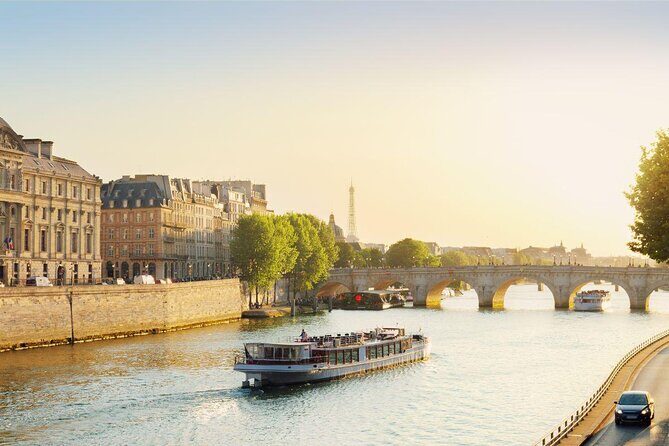
- 1-hour Seine cruise with Bateaux Parisiens: a separate perspective that’s hard to replicate from street level.
- On-board audio support: commentary in 9 languages, plus free headphones and WiFi.
- Meet at designated stop locations: the exact stop addresses matter more than you’d think in central Paris.
A Two-for-One Day in Paris: bus loop + Seine cruise value
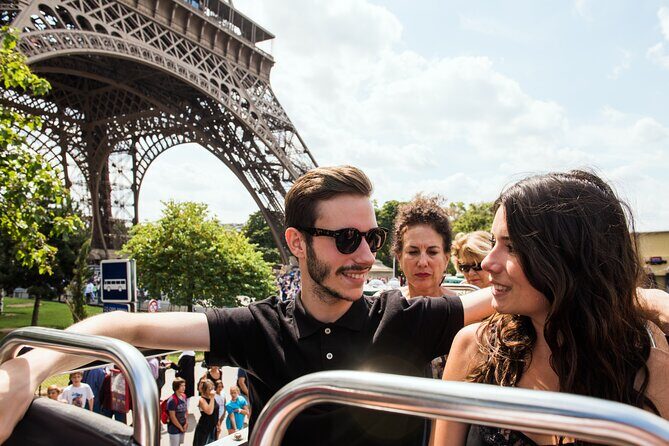
At $62.61 per person, you’re paying for two things you’d otherwise have to plan separately: a hop-on city route plus a river ride. The best value comes when you actually use the flexibility. If your plan is Louvre in the morning, a different neighborhood after lunch, and photos near the Eiffel Tower near sunset, this ticket format makes that easier than doing single-point tickets.
The bus itself is listed at about 2 hours for the full run, but your ticket time is longer (24 or 48 hours). That matters because Paris isn’t tidy. You’ll likely spend more time walking around stops than you expect, and you’ll want the ability to return to the loop later without paying again.
Then the Seine River Cruise is a helpful counterweight. From the bus top deck, you get height and distance. On the river, you get a slower, more cinematic view of the city’s banks and bridges. It’s also a great way to use time when you’re tired of walking.
One caution: this is not a guided museum tour. The audio does the explaining, but you’re still doing the exploring. If you want someone to lead you through specific interiors (not just viewpoints), you’ll likely pair this with timed-entry tickets or a walking tour.
You can also read our reviews of more boat tours in Paris


The Louvre-to-Notre-Dame core: how the loop helps you get oriented
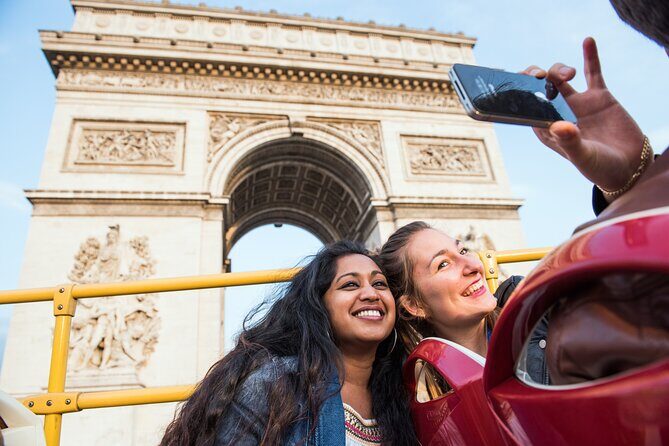
The first stretch sets you up in the densest, most classic Paris zone. Your bus starts at the Louvre/Big Bus Information Centre at 11 avenue de l’Opéra, then it feeds you nearby bridges and historic anchors.
Louvre area (Start) and Pont des Arts
This is where you’ll feel the payoff of an easy starting point. Being near the Louvre area means you can orient quickly and decide how much time you want in that specific pocket. From there, the route goes toward Pont des Arts, which is one of those bridge viewpoints that helps you understand how the city is laid out across the river.
If you’re doing photos, the bridge stop is useful because it turns the Seine from a background detail into a key part of your skyline shots. It also gives you an easy “pause moment” before you move toward heavier-hitter sites.
Notre-Dame stop
Next is Notre-Dame (3, Rue Lagrange). This stop is valuable because it puts you close to the area’s main pedestrian routes without making you cross the city with multiple transfers.
The drawback? The Notre-Dame area can be busy, and you may find yourself spending time navigating crowds on foot. A hop-on bus won’t remove that. It just reduces the planning stress getting there in the first place.
Musée d’Orsay stop
Then you hit Musée d’Orsay (58 Place Henry de Montherlant). This is a smart pairing after Notre-Dame because it shifts from cathedral mood to museum mood. Even if you don’t go inside, Orsay’s surroundings are worth the detour for the river-adjacent views and the feel of that part of town.
Practical tip: if you plan a museum visit, consider hopping off at Orsay early enough that you’re not rushing. This tour can help you arrive easily, but timed-entry and actual museum time are still on you.





Champs-Élysées and Grand Palais: where the bus turns you into a skyline watcher
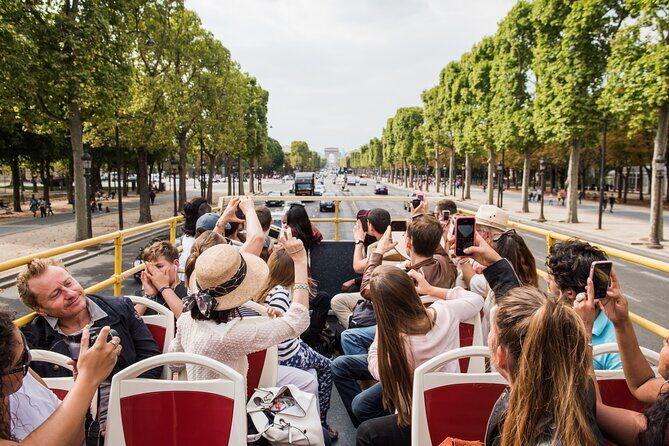
Once you move away from the central river corridor, the bus really earns its keep. Paris is wide in feel here—boulevards, grand façades, and big sightlines.
Champs-Élysées stop
You’ll stop at Champs-Élysées (156, avenue des Champs-Élysées). This is perfect if you want the iconic boulevard experience without planning a transit route minute by minute.
A consideration: this stretch can be crowded and slow, depending on your day. A bus loop doesn’t magically create speed; it mainly reduces effort. If you want calm strolling time, you may want to hop off for a quick look, then return later.
Grand Palais stop
Next is Grand Palais (Avenue Winston Churchill). Even if you don’t spend time inside (and not everyone will), the area helps you see how Paris packages grandeur along wide approaches.
The bus stop location also works well as a “photo-and-breathe” node. You can get some wide-angle shots, then hop off for shorter walks between sights nearby.
Iéna, Eiffel Tower, and Champ de Mars: the best photo geometry on this loop
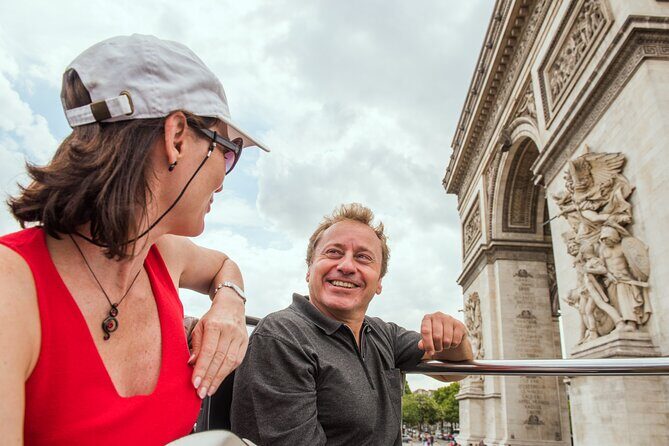
This part of the ride is the reason a lot of people buy the combo. It’s the stretch that takes you from grand boulevard energy into Eiffel Tower scale.
Place d’Iéna
You’ll stop at Place d’Iéna (6 place d’Iéna). This is useful because it’s close to major viewpoints and it helps you understand the sightlines that funnel people toward the Tower area.
Eiffel Tower stop (Quai Branly)
Then it’s Eiffel Tower (Quai Branly, Entrée 2 Tour Eiffel). Having a dedicated Eiffel-area stop means you can plan around viewpoints rather than searching for a station and walking from there with luggage, rain, or tired feet.
In hot weather or bright light, it’s also a good place to decide how long you want to stay on foot versus how long you want to continue looping. The hop-on format gives you that choice.
Champ de Mars stop
After that you reach Champ de Mars (Avenue Joseph Bouvard). This area is great for open-space strolling and for getting photos where the Tower isn’t just a vertical object—it’s part of a bigger frame.
Key advice: if you can, do at least one stop here near the late afternoon. Daylight quality changes fast, and the open spaces make it easier to take photos without feeling boxed in.
Opéra Garnier and Invalides: finishing with two classic monuments
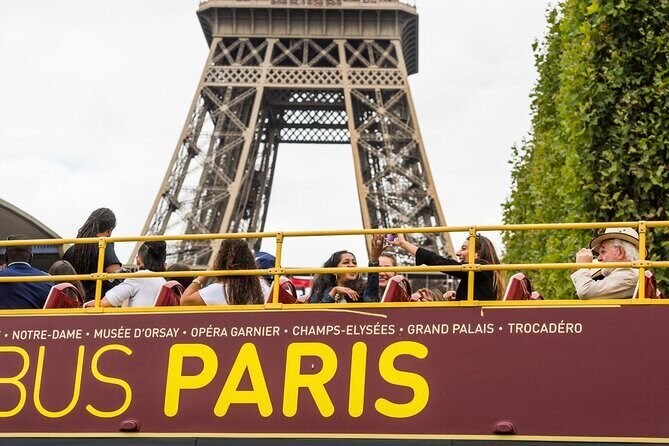
The loop doesn’t end in a dead zone. It swings you toward two Paris identities—performance arts and military history.
Palais Garnier (Opéra Garnier)
You’ll stop at Opéra Garnier (Facing 15, rue Scribe). This is valuable because it rounds out your “Paris highlights” mental map. The building sits in an area that feels less like the river corridor and more like the everyday Paris of elegant streets and theaters.
Even if you don’t go inside, it’s one of those stops where you can slow down and just look.
Invalides
Finally, you get Invalides (2 Avenue de Tourville). This helps you end with a landmark that feels substantial and grounded. It’s also a good candidate for a stop-and-go visit: hop off, take in the exterior, and decide whether you want more time on foot before heading back to the loop.
Using the audio, WiFi, and app without getting annoyed
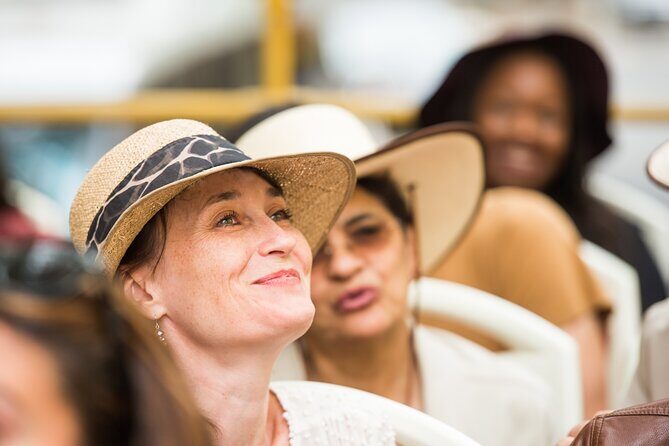
The tour’s onboard support is a real part of the experience here. You get audio commentary in English (plus multiple other languages), delivered through free headphones, with WiFi on board. That’s not just nice-to-have—this is how you make a bus tour feel like more than sightseeing wallpaper.
The audio is your guide, not the bus
Because this is audio-based, you’ll get more out of the ride if you track where you are relative to major stops. The audio makes more sense when you’re mentally ready for what’s outside the window.
Practical move: when you first board, set your language, put on the headphones, and listen during the “moving between stops” segments. Save your attention for the stops themselves when you’re about to hop off.
Find your stop with the app
You’ll want to use the Big Bus app for real-time bus tracking, and redeem your voucher at designated Big Bus stops. This matters because one of the most common frustrations with hop-on hop-off tours is just knowing exactly where the bus will pick you up.
If you arrive early or slightly late, check the app before you assume the bus has passed.
Timing, weather, and traffic: plan for the real Paris day
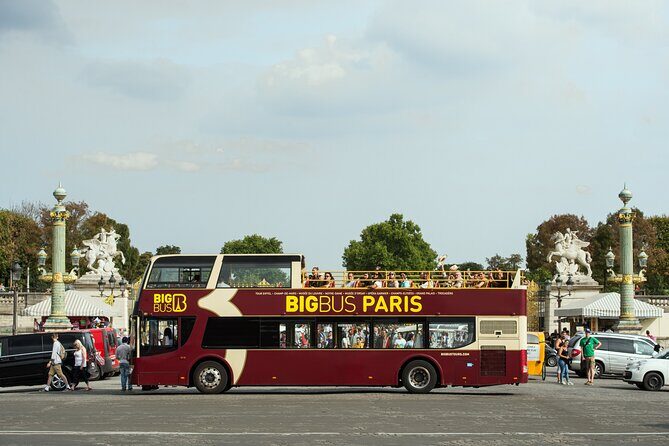
This tour runs Tuesday through Sunday, from 9:30 AM to 6:00 PM in the listed window. That’s enough time for a strong first pass, but not enough time to treat it like a full-day, all-night plan.
Traffic is another factor. Paris roads can bottleneck, and that can mean you spend time sitting while the route catches up. If your goal is to “do it all in one loop,” you’ll feel the difference between a fast-moving city day and a stop-and-go one.
Open-top comfort tradeoffs
The top deck is the classic view. The tradeoff is comfort. If it’s hot, open-air seating can feel intense. Some buses have A/C on parts of the vehicle (with the upper deck remaining open-roof experience), so consider that when you pick your seat location.
If it rains
Rain changes the whole experience. You’ll still get value from the bus route, but your photo stops and walk time might shrink. Think of this as a day that can pivot: shorter hops, faster exterior views, and more time using the cruise and indoor stops.
Who should book this Paris Big Bus + Seine cruise?
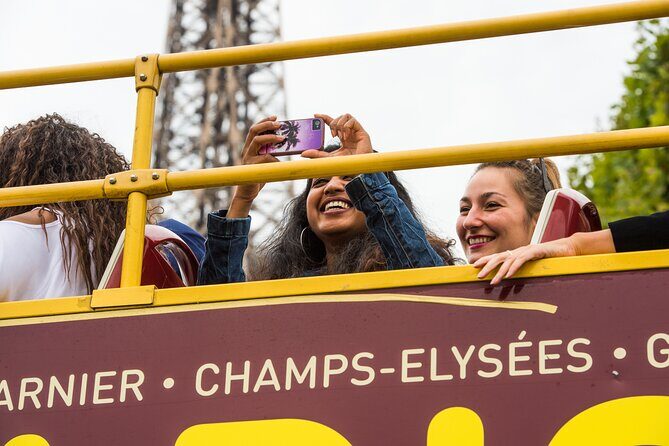
This combo fits best if you:
- want a simple way to hit major landmarks without building transit legs
- like using a plan with flexibility (hop off, explore, hop back on later)
- want a river viewpoint without booking a separate full-day cruise plan
It’s less ideal if you:
- want a deep-dive, stop-by-stop guided experience with inside access and expert leadership
- are only interested in one or two very specific sights and don’t need a loop
- hate the idea of being at the mercy of road congestion and real-world schedule variation
Should you book this tour?
I’d book it if you want easy city orientation plus a Seine highlight in a single purchase. The route is built around the big names—Louvre, Notre-Dame, Orsay, Champs-Élysées, the Eiffel Tower area, Opéra Garnier, and Invalides—and the hop-on design helps you spend your time where you actually care to linger.
I’d hesitate if you’re the kind of traveler who needs everything to be tightly coordinated down to the minute, or if you know you’ll be sensitive to heat, rain, or long stretches of slow traffic. In that case, you may prefer a smaller, more guided sightseeing option.
FAQ
How long is the Paris Big Bus hop-on hop-off and Seine River Cruise?
The tour duration is listed as about 2 hours.
What’s included in the ticket?
You get a 24- or 48-hour Big Bus hop-on hop-off ticket, plus a 1-hour Seine River Cruise with Bateaux Parisiens. It also includes audio commentary in 9 languages, WiFi on board, and free headphones.
What language is the tour offered in?
The tour is offered in English.
Where do I start the bus route?
Your first stop is at Louvre Museum / Big Bus Information Centre, 11 avenue de l’Opéra.
What are the main stops along the route?
The route includes stops at Pont des Arts, Notre-Dame, Musée d’Orsay, Champs-Élysées, Grand Palais, Place d’Iéna, Eiffel Tower, Champ de Mars, Opéra Garnier, and Invalides.
Do I need to print tickets?
No. The tour uses a mobile ticket, and you redeem your voucher at designated Big Bus stops.
Are there real-time updates for the bus?
Yes. You’re encouraged to download the Big Bus app for real-time bus tracking.
What are the operating hours?
During the listed period, the schedule is Tuesday through Sunday, 9:30 AM to 6:00 PM.
Is hotel pickup or drop-off included?
No. Hotel pick-up & drop-off is not included.