REVIEW · PARIS
Paris French Macarons Small Group Baking Class with a Chef
Book on Viator →Operated by Meeting the French · Bookable on Viator
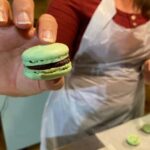
Macarons are tiny, but the skills are real. This small-group class takes place in a private apartment kitchen in central Paris, where a French pastry chef walks you through making the classic sandwich cookies you see everywhere from Ladurée to Pierre Hermé-style creations. You’ll choose two flavors to make together, then box up your own macarons to bring home.
I especially love the hands-on format in a group capped at 8, because you’re not just watching. And I like that you learn using equipment you’d actually find at home, plus you get a recipe copy so the lesson doesn’t vanish the moment you get back on the métro.
One thing to consider: the process has real waiting time (resting dough, baking, cooling) so it won’t feel like a nonstop “cook, cook, cook” experience the whole way through. If you want maximum action every minute, this might not match your vibe.
In This Review
- Key highlights at a glance
- Macarons in a Private Paris Kitchen: What You’re Really Paying For
- Your 3:00 pm Lesson Flow (and Why There’s Some Waiting Time)
- Choosing Two Flavors: From Caramel-Raspberry Energy to Classic Fillings
- Meet the Chef: How Different Teachers Change the Feel
- Hands-On vs. Watch-and-Learn: Where You’ll Participate Most
- Take-Home Box and Recipe Copy: The Best Souvenir Isn’t a Magnet
- Price and Value in Paris: Is $218.90 Worth It?
- Who This Class Fits Best (and Who Might Want Something Else)
- Quick Practical Tips for Your Class Day
- Should You Book This Macaron Baking Class?
- FAQ
- How long is the Paris French Macaron baking class?
- What is the group size for the class?
- What language is the class taught in?
- Do I get to choose flavors?
- Are ingredients and equipment included?
- Will I take macarons home?
- Are recipes included?
- Can the class be adapted for almond allergies?
- Is hotel pickup included?
- Is this class cancellable for a refund?
Key highlights at a glance
- Chef-led, small-group class capped at 8, taught in English
- Central Paris apartment setting with a local chef host (examples include Chef Myriam, Chef Marthe, and Chef Frédéric)
- Make two macaron flavors and take home a box of your own macarons
- Home-kitchen friendly tools so you can recreate the process later
- Recipes included, meant for use at home (always check your email/spam just in case)
Macarons in a Private Paris Kitchen: What You’re Really Paying For
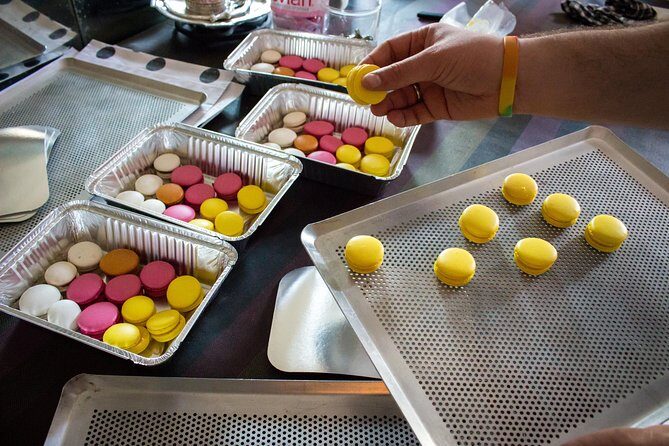
This isn’t a factory tour or a big demo. You go to a private apartment kitchen in the center of Paris and meet a local French chef who teaches you the macaron method as a real craft. That choice of location matters: in a home-style space, you can see how mise en place works, how tools are laid out, and how the chef manages timing in a normal-sized kitchen.
The price, $218.90 per person for about 3 hours, can feel steep until you look at what’s included. You’re not buying a sugary snack. You’re paying for expert coaching, all supplies, and a takeaway result: a box of homemade macarons plus a recipe copy you can actually use again.
Also, the class is very specific. You’re not learning “French desserts” in general. You’re learning the one thing Paris does so well that people make it a sport: macarons—two delicate meringue shells with a filling sandwiched inside.
You can also read our reviews of more cooking classes in Paris
Your 3:00 pm Lesson Flow (and Why There’s Some Waiting Time)
The class starts at 3:00 pm and runs about 3 hours. There’s no hotel pickup, so you’ll make your own way to the meeting point near public transportation. The experience ends back where you meet.
Here’s the rhythm you should expect, based on how macaron making works and what the class focuses on:
- First, you prepare the macaron batter step by step, with guidance on technique
- Then the shells need time to rest so you get the right surface texture before baking
- After baking, the shells must cool fully before you can assemble
- Finally, you pair shells and add filling, then package your macarons to take away
That rest and cooling time is where the “down time” comes in. One reviewer experience described how ingredients can be pre-measured to speed things up, but the process still has natural pauses. That’s normal. Macarons don’t let you cheat physics—if you rush them, the result suffers.
So plan to treat this as a thoughtful workshop, not a breakneck sprint. You’ll still be active, but some parts of the class are timing and waiting, not constant mixing.
Choosing Two Flavors: From Caramel-Raspberry Energy to Classic Fillings
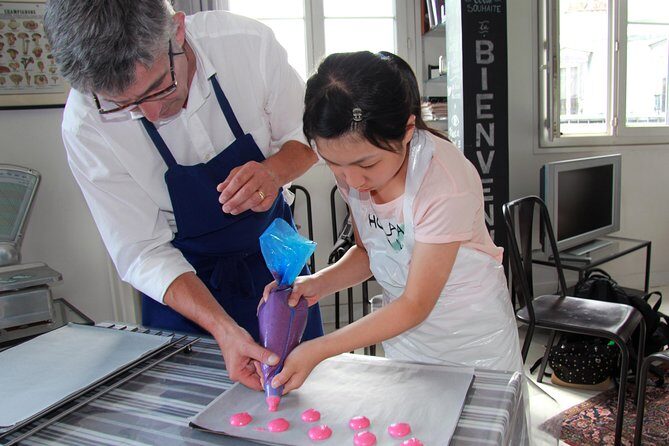
The class has one core menu item: dessert—macarons. Within that, your group chooses two macaron flavors to make together. The beauty of that setup is that you get variety without turning the session into chaos.
Depending on the batch, you might end up making combinations like caramel and raspberry, which have shown up in real class experiences. You’ll learn how to handle both the shell side (the meringue cookie) and the filling side (what turns those shells into the macaron you crave).
And you’re doing it as a small group. With a maximum of 8 people, it’s not a “everyone at once, good luck” situation. You should feel like you’re working with the chef, even if some steps are more chef-led and others are more hands-on.
Meet the Chef: How Different Teachers Change the Feel
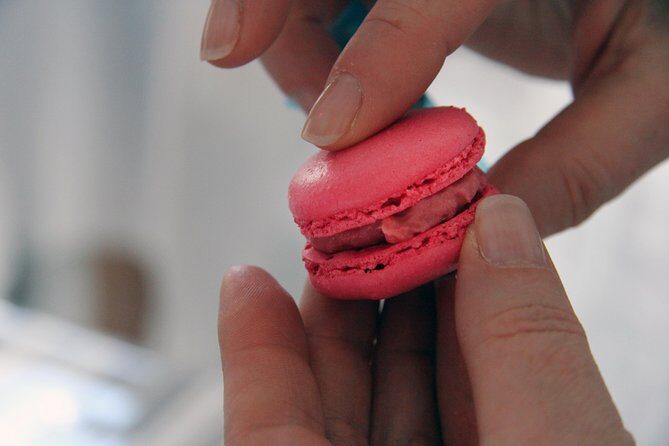
One of the fun parts of this experience is that you’re not stuck with an anonymous instructor. Your chef host can be someone like Chef Myriam, Chef Marthe, or Chef Frédéric, depending on your session.
What I’d watch for is teaching style. Reviews describe chews giving clear step-by-step explanations and also coaching the logic behind each move. That matters because macarons are about technique, not just ingredients. For example, when the chef explains the why behind each step—like how batter consistency affects the shell texture—it stops feeling like baking luck.
Also, chefs seem to adapt their pace and the way they bring people into the workflow. Some classes are lively and social in tone, and others feel more structured and methodical. Either way, the goal is the same: you leave knowing how to produce consistent shells, not just how to eat them.
Hands-On vs. Watch-and-Learn: Where You’ll Participate Most
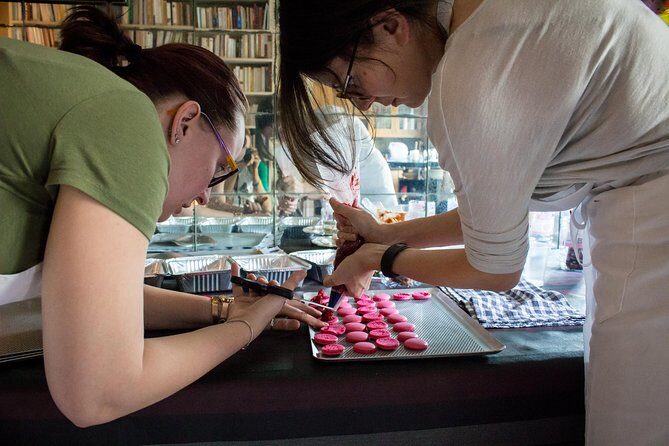
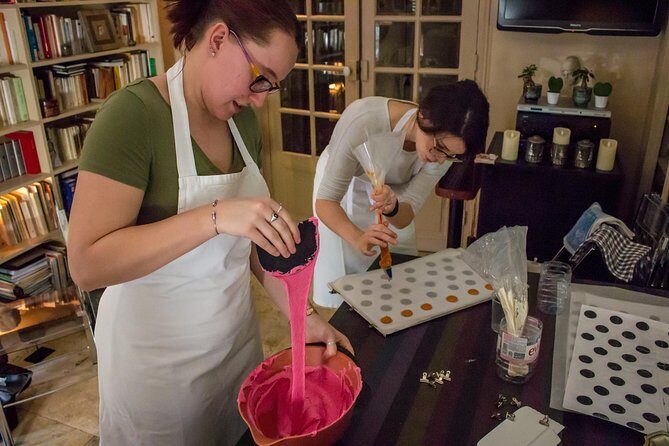
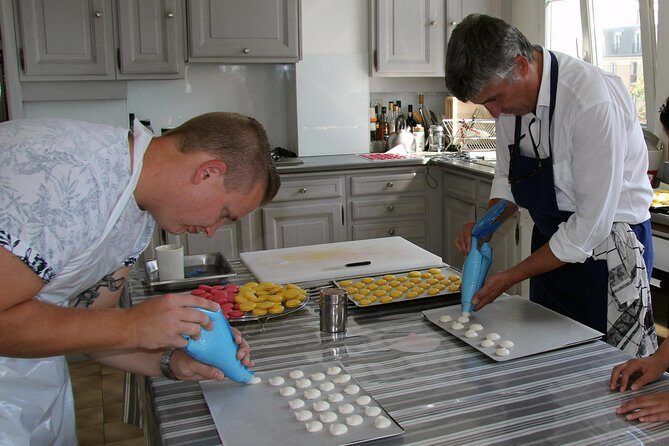
This is a hands-on baking class, but participation can vary by step. The good news: most of the time you’re not just sitting there. You’ll use cooking utensils, an apron, and the class is structured so you can work through the process with the chef.
Still, macarons have a few “sensitive” stages. Some chefs may take over the most timing-critical meringue work and then hand you the tasks that benefit from your participation—like mixing/folding parts, piping, assembling, and tasting.
You’ll likely notice this distribution:
- You participate in major hands-on actions like piping and assembling
- The chef supports or leads the most delicate steps to protect quality
- You learn the technique by doing, and by hearing what the chef watches for
If you’re the type who wants to touch every stage yourself, this may feel uneven at moments. But if you want real training from a professional, even the “chef-led” portions are still useful—because you’re learning how pros control quality.
You can also read our reviews of more tours and experiences in Paris




Take-Home Box and Recipe Copy: The Best Souvenir Isn’t a Magnet
The best souvenir here is the result: you take home a box of homemade macarons made during class. That’s not just a fun end point. It’s proof you got the method right—or at least got close enough to practice confidently later.
You also receive a copy of the recipe to share or keep. That’s a big deal for value. A lot of cooking experiences end with you leaving full and impressed, but you can’t recreate what you tasted. Here, the intention is that you can go home and try again with a usable guide.
Practical tip: when you receive the recipe copy, save it right away and check where it lands in your inbox. If something goes to spam, you might think it’s missing when it’s simply hiding.
Price and Value in Paris: Is $218.90 Worth It?
Let’s talk straight. Three hours for $218.90 is not cheap. In a city where you can eat well for far less, the question is what you’re buying beyond sugar.
You’re buying:
- A small-group format (max 8), so instruction can be tailored
- A professional French chef as your host
- All equipment and ingredients needed to make macarons
- A takeaway box of macarons
- A recipe copy so the class keeps paying off
Where it becomes good value is when you care about technique. If you’ve ever tried macarons at home and learned the hard way that they can crack, hollow out, or refuse to develop a proper shell, this class is basically “buying fewer failed batches.” You’re paying for expert guidance so you can avoid guessing.
Where it might not be worth it is if you’re primarily after entertainment or want a low-cost tasting. This is a craft lesson. Treat it like an art workshop for dessert.
Who This Class Fits Best (and Who Might Want Something Else)
This macaron class is ideal if you want a French food memory that’s not just a photo. It also fits well if you’re traveling with family members who enjoy baking—even kids, as some families have described having their children participating with chef coaching.
It’s also a good choice if you:
- Like hands-on workshops more than walking tours
- Want a structured way to learn macarons
- Want something you can recreate at home with the recipe copy
A key consideration: macarons contain almond powder. The class cannot be adapted for almond allergies. If almond is an issue, skip this one.
Quick Practical Tips for Your Class Day
A few things will make your afternoon smoother:
- Get there a bit early. The class starts at 3:00 pm, and there’s no hotel pickup.
- Plan around the schedule. Macarons require resting, baking, and cooling. You’ll still be doing things, but not every minute is active mixing.
- Come with a clear goal. If your goal is the “perfect shell” outcome, pay attention to the chef’s consistency checks and timing cues.
- Save your recipe. If you’re relying on it later, keep it handy on your phone and printed if you can.
- Check for allergies in advance. Since almond powder is part of the standard process, communicate allergies early.
Should You Book This Macaron Baking Class?
Book it if you want a focused French cooking experience with real instruction, a small group, and a takeaway you can enjoy immediately—plus a recipe guide you can use later. The apartment setting and chef coaching make it feel personal, not scripted.
Skip it if you need a fully nonstop hands-on session minute to minute, or if almond allergies make the standard macaron process a no-go. Also, if you’re expecting a gentle tasting event with minimal technique talk, you may find the craft emphasis more intense than you want.
FAQ
How long is the Paris French Macaron baking class?
It lasts about 3 hours.
What is the group size for the class?
The class is a small group with a maximum of 8 travelers.
What language is the class taught in?
The class is offered in English.
Do I get to choose flavors?
Yes. Your group will choose two macaron flavors to make together.
Are ingredients and equipment included?
Yes. All supplies and equipment are provided, and you’ll have a chef host plus utensils and an apron.
Will I take macarons home?
Yes. You take away a box of homemade macarons after the class.
Are recipes included?
Yes. You get a copy of the recipe to share with friends back home or keep for yourself.
Can the class be adapted for almond allergies?
No. Since macarons contain almond powder, the class cannot be adapted for those with almond allergies.
Is hotel pickup included?
No. Hotel pickup and drop-off are not included.
Is this class cancellable for a refund?
Yes. You can cancel up to 24 hours in advance for a full refund. Cancellations made less than 24 hours before the start time are not refundable.