REVIEW · PARIS
Paris Cooking Class: Learn How to Make Macarons
Book on Viator →Operated by Le Foodist · Bookable on Viator
Macarons can feel intimidating.
This afternoon class at Le Foodist turns that fear into something you can actually do. You’ll master meringue macaron shells from scratch, then pipe a buttercream filling in the colors you pick, and finish by tasting your batch with tea or coffee. My favorite part is the small group size (max four), so you get real hands-on feedback. The only drawback: macaron making is fiddly, so if you hate precision and patience, you may find the process a bit stressful.
It’s also a smart use of time. You’re in central Paris, the class runs about three hours, and you leave with a box of 20 to 30 macarons. Add a welcome drink and a take-home result, and it’s more “learn by doing” than “watch and hope.”
In This Review
- Key things to know before you go
- Paris macaron class: why this Le Foodist session makes sense
- Price and value: is $156 fair?
- Meeting at Le Foodist: what your afternoon actually starts with
- Group size: why it changes everything
- Welcome drink and macaron prep: the part that makes success more likely
- What you learn right away (and why it matters)
- The hands-on macaron workflow: meringue shells to filled macarons
- 1) Build the shells: meringue macarons from scratch
- 2) Pick your look: color and piping confidence
- 3) Assemble the filling: buttercream piping
- Tea or coffee tasting: why the ending is more than a finish line
- Take-home box of 20–30: how to keep them looking good
- Instructor impact: who might teach you and why that matters
- The advanced macaron upgrade: what you gain
- Who this class is best for (and who should skip it)
- Should you book this macaron class at Le Foodist?
- FAQ
- How long is the Paris macaron class?
- How many people are in the class?
- What do I take home?
- Is the class in English?
- Is it suitable for gluten allergies?
- What’s the minimum age?
Key things to know before you go
- Max four people means close guidance while you pipe and fill.
- You make the shells and filling yourself, not just assemble a kit.
- Welcome drink plus tea/coffee tasting adds a nice pause at the end.
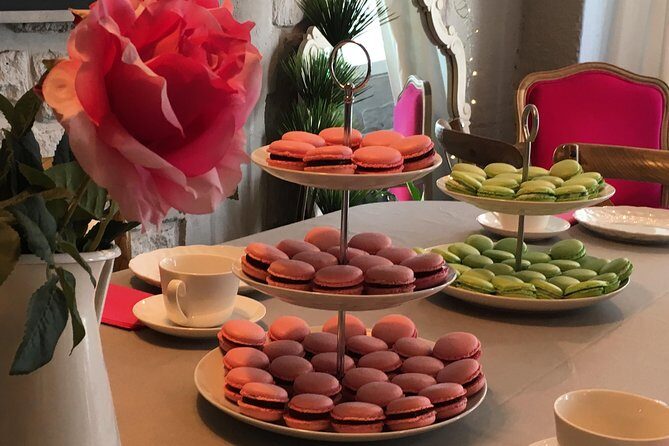
- You choose shell colors, so the box looks as good as it tastes.
- Gluten-allergy friendly is explicitly noted for this experience.
- Advanced option exists, if you want extra macaron subtleties.
Paris macaron class: why this Le Foodist session makes sense
If you’ve ever stared at a macaron and wondered why it’s so hard to replicate, this is built for that exact moment. The class is designed around one goal: you walk out with macarons you made, plus the know-how to troubleshoot the classic problems (hollow shells, cracks, uneven feet, bland filling balance).
The structure helps. You don’t just get a lecture. You do the steps, and the instructor watches what your hands are doing. That matters with macarons. Small changes in meringue, folding, piping, drying time, and oven temperature can shift the whole result.
Also, the setting is practical. Le Foodist is in Paris’s 5th arrondissement (59 Rue du Cardinal Lemoine, 75005). It’s easy to reach with public transportation, and you’re not spending your whole afternoon commuting.
You can also read our reviews of more cooking classes in Paris
Price and value: is $156 fair?
At $156 per person for about three hours, it’s not a “cheap activity.” But it also isn’t just a tasting. You’re paying for instruction, equipment/attire provided, a welcome drink, tea or coffee at the end, and ingredients and supplies that go into making a batch you take home.
If you break it down, you’re paying roughly by the hour, and you leave with a box of 20 to 30 macarons. That takes it from a hobby class into a food experience with a tangible payoff.
Booking demand is another hint. The class is commonly reserved around two months ahead (on average 57 days). If you want a specific slot, plan early.
Meeting at Le Foodist: what your afternoon actually starts with
The class starts at 3:00 pm at Le Foodist, 59 Rue du Cardinal Lemoine, 75005. The activity ends back at the meeting point. Expect a smooth flow: arrive, get oriented, then jump into macaron prep.
You’ll use a mobile ticket, which is a small thing, but it helps on busy Paris days. No paper chase. Just show up.
One more thing I like for real travel planning: the time is afternoon-focused. You can do a morning sightseeing run, eat lunch, then dedicate this block of time to something hands-on without feeling like you’re rushing the rest of your trip.
Group size: why it changes everything
This class caps at four travelers. That’s the big deal. When a macaron batch fails, it’s rarely one thing. It’s usually a chain of tiny moments. With a very small group, instructors can catch issues early—like consistency while mixing meringue, spacing on the baking sheet, or how your piping pressure affects the surface.
Even better: you’re not stuck waiting while someone else gets all the attention.
Welcome drink and macaron prep: the part that makes success more likely
Before the hands-on work starts, you’ll meet your instructor for a refreshing drink. This is the practical warm-up. You get the framing, you get your station set up, and you get your first look at how the class pacing works.
Then you begin making meringue macaron shells from scratch. The class emphasizes step-by-step guidance, and that’s crucial because macaron making isn’t “hard” in a dramatic way. It’s hard because the technique is delicate and timing matters.
You’ll also choose the shell colors. That sounds like a cosmetic detail, but it helps you feel ownership. By the time you pipe, you’re not just following instructions. You’re making your batch.
You can also read our reviews of more tours and experiences in Paris




What you learn right away (and why it matters)
This isn’t about memorizing a recipe card. It’s about understanding the sequence:
- meringue work (structure)
- folding and consistency (how smooth and thick the batter should be)
- piping technique (shape + uniformity)
- baking workflow (how the shells set and develop the classic look)
You’ll be taught to pipe the buttercream filling too, so the final sandwich is part of what you control, not just an afterthought.
The hands-on macaron workflow: meringue shells to filled macarons
Plan for a process with a few “waiting and watching” moments. Macarons move in phases. One phase can’t be rushed.
Here’s what the class experience feels like in order:
1) Build the shells: meringue macarons from scratch
You start with making the shells. You’ll learn how to create the meringue base and then use it to form the classic macaron disks. This is the part where people usually feel the most uncertainty.
Instructors go step by step. They’ll help you with the mechanics and the intent. It’s not just what to do; it’s how to tell if you’re doing it right.
2) Pick your look: color and piping confidence
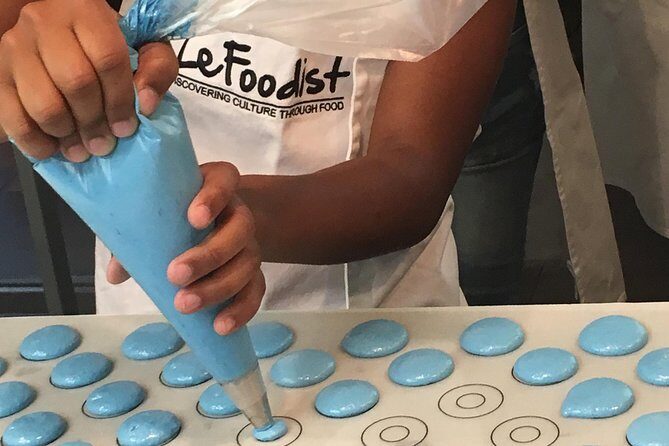
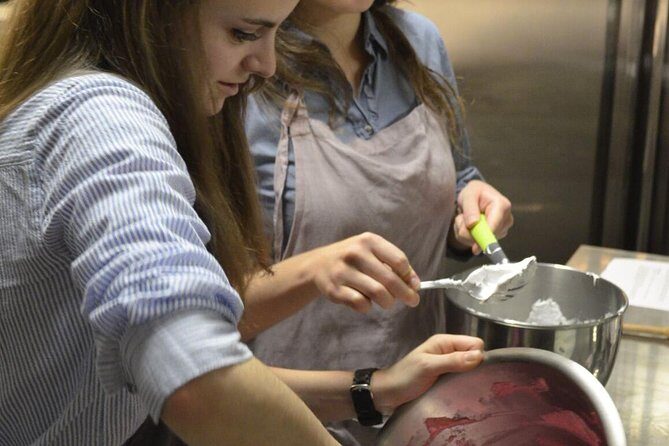
You’ll tint your shells in the colors you choose. Then it’s piping time. Piping is where macarons go from “messy batter” to “real pastries,” fast.
Because the class is small, your instructor can correct things quickly—how full your bag is, your angle, your pressure, and your consistency from one macaron to the next.
If you worry you’ll make lopsided shells, don’t. The class is set up to teach you how to improve while you’re doing it.
3) Assemble the filling: buttercream piping
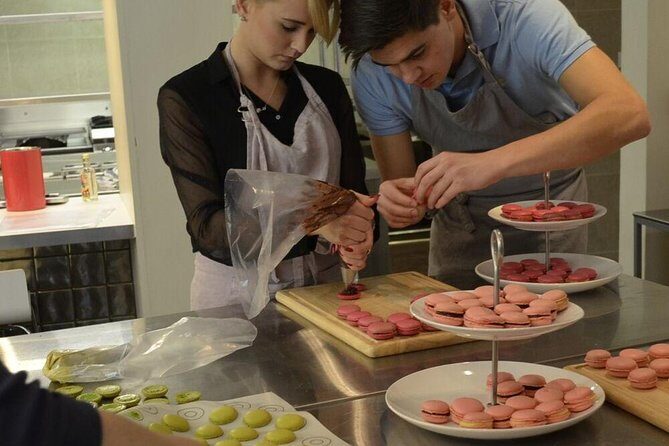
Once shells are baked and ready, you’ll add buttercream filling. Again, you’re not just spooning. You’re piping, which helps you get a clean sandwich and better texture balance.
That piping part is a huge win because it changes your final outcome. Even a shell that looks good can be disappointing if the filling is messy or uneven.
Tea or coffee tasting: why the ending is more than a finish line
When your macarons are ready, you’ll sample your creations with a cup of tea or coffee. This isn’t only about eating. It’s about learning by comparison—because now you can actually see what your technique produced.
You’ll also hear an explanation of the macaron’s place in French culture and tradition. That gives context to why people obsess over this dessert. It also helps you appreciate the care behind the method, not just the sweetness.
One practical note: macaron sweetness can be intense. Even when they taste great, they’re still rich. If you’re the type who prefers subtle desserts, start with one, then pace yourself.
Take-home box of 20–30: how to keep them looking good
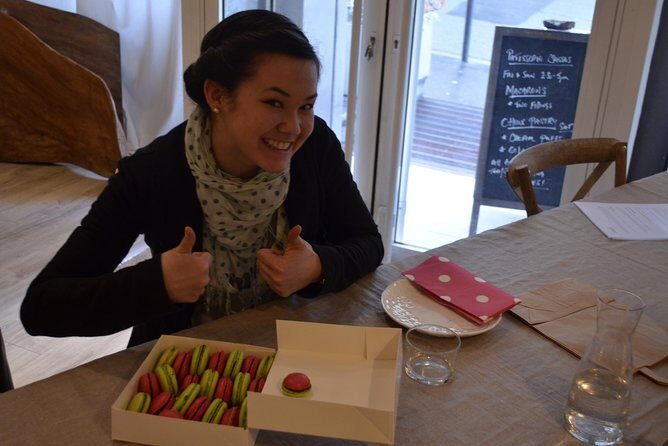
You take home a box of 20 to 30 macarons. That’s a lot. It means you’re not just tasting one triumph—you’re leaving with enough to share or snack over the next day or two.
A few practical tips if you want the best survival rate:
- Keep them in your box and handle the container gently.
- If you’re leaving for dinner after class, don’t treat your macarons like an afterthought. Heat and rough travel aren’t your friends.
- If you’re carrying them on public transport, hold the box close rather than tucking it somewhere precarious.
One participant flagged that flimsy transport can be an issue. So yes: your handling matters.
Instructor impact: who might teach you and why that matters
Le Foodist classes are led by pastry chefs with strong teaching energy. The reviews include names like Stéphane, Luc, Paulo, Fanny, Ann, Florence, and Stephan. Even when the names vary, the pattern is consistent: clear guidance, humor or warmth in teaching, and hands-on corrections so you don’t feel stuck.
That’s important because macarons reward confidence. The more you feel like your instructor is adjusting to your skill level, the more you’ll trust the process.
The advanced macaron upgrade: what you gain
There’s an option to upgrade to an advanced macarons class, described as discovering macarons subtelties. If you’re already comfortable with basic baking, or you’ve made macarons before and want sharper control, this upgrade can be worth it.
What I’d do before booking: look for what the advanced option promises in the moment. Since the details beyond “advanced” and “subtleties” aren’t listed here, you’ll want to confirm what changes—more complex techniques, more troubleshooting, or extra focus on specific steps.
If your goal is first-time success, the standard class may be enough. The advanced upgrade makes more sense if you already understand the basics and want higher precision.
Who this class is best for (and who should skip it)
This is a top fit for:
- Pastry lovers who want hands-on technique, not just a foodie walk-and-taste
- Anyone who likes learning by doing, especially when the outcome is edible
- Couples or friends who want a shared project with a clear end result
- Teens and adults who can follow instructions and handle a precision dessert process
It’s also clearly stated as suitable for those with gluten allergies. If that’s your situation, this is one of the few Paris food activities you can book with that specific note.
Not ideal for:
- People who hate careful steps and short timing windows
- Anyone expecting a quick, stress-free demo
Age wise: the minimum age is 12, and no unaccompanied children are accepted. If you’re traveling with a younger kid, you’ll need an alternative activity.
Should you book this macaron class at Le Foodist?
I’d book it if you want a real cooking class outcome—shells you piped, filling you assembled, and a box you can take home. The small group limit plus the step-by-step instruction makes it feel like a skill lesson, not a show.
Skip it if you’re already the kind of baker who wants a no-hassle, low-precision dessert. Macarons reward patience, and this class leans into that.
One last practical note: the class has a clear cancellation window. You can cancel for a full refund up to 6 days in advance. If your schedule is flexible, that reduces risk.
If you’re planning your Paris food days and you want one afternoon that feels both local and genuinely useful, this is a strong bet.
FAQ
How long is the Paris macaron class?
The class runs for about 3 hours.
How many people are in the class?
It’s a maximum of 4 travelers, so you get personal attention.
What do I take home?
You take home a box of 20 to 30 macarons.
Is the class in English?
Yes. It’s offered in English, and you’ll receive a mobile ticket.
Is it suitable for gluten allergies?
Yes. The class is listed as suitable for those with gluten allergies.
What’s the minimum age?
The minimum age is 12 years, and no unaccompanied children are accepted.