Paris tastes better when you cook. This hands-on lunch class at Le Foodist pairs a simple market run (optional) with real kitchen time, so you go from ingredients to plates in a few hours. I love the small-group attention and the way you’re taught step-by-step, not just watched.
Two other wins: the food is classic French lunch fare, and the wine pairing comes with actual reasoning so it feels useful at home. One thing to plan around is that it’s a big meal with wine, so you’ll probably want to skip a late dinner plan and save room for it.
In This Review
- Key Highlights I’d Prioritize
- Why This Latin Quarter Market-and-Cook Format Works
- Meeting at 59 Rue du Cardinal Lemoine and Getting Started
- The Market Stop: Cheese Tasting and Ingredient Labels
- Hands-On Cooking: Building Your 3-Course Lunch
- What you’ll cook (sample menu)
- Wine Pairing at Lunch and Learning the Pairing Logic
- Recipes to Recreate at Home (and the Drop-Stop Pour Tool)
- Price and value: is $240.65 per person worth it?
- Should You Book This Class with Wine in Paris?
- FAQ
- What’s included in the 6-hour option versus the 4.5-hour option?
- How long is the class, and when does it end?
- Is this class hands-on, or mostly watching?
- How much wine is included?
- What age limits apply?
- What dietary restrictions can be accommodated?
Key Highlights I’d Prioritize
- Optional Latin Quarter market visit to pick ingredients and do a cheese tasting
- Hands-on cooking at stations, with clear instructions and lots of participation
- A real 3-course lunch you plan and build with your group
- Wine included with pairing guidance, plus half a bottle per person at lunch
- Recipes sent electronically, so you can recreate the dishes later
- Maximum 12 people, which keeps questions from piling up
Why This Latin Quarter Market-and-Cook Format Works
The magic here is the order. If you pick the full 6-hour option, you start with a market visit near the Latin Quarter before you cook. That puts you in the mood and helps the food feel personal, because you’ve chosen the ingredients yourself.
This format also improves your technique learning. In a lot of classes, you only learn recipes. Here, you learn choices: what quality looks like, how cheeses differ, and how ingredients fit together in French cooking. Even the science angle people mention makes sense in practice, because cooking is chemistry plus timing.
The main trade-off is time. A market-and-cook day is a full block, not a quick activity. If your Paris schedule is tight, go with the 4.5-hour option so you still get the lunch and guidance, but without the extra market leg.
You can also read our reviews of more shopping tours in Paris



Meeting at 59 Rue du Cardinal Lemoine and Getting Started
Your class meets at 59 Rue du Cardinal Lemoine, 75005 Paris, right in central Paris. The venue is set up for cooking instruction, with the equipment and required attire handled for you, so you’re not scrambling to find gear or figure out where to stand.
If you book the 6-hour class, you also start with a croissant plus coffee or tea before heading out. That small start matters more than it sounds. You’ll be moving soon, and you’ll likely work up an appetite before the lunch you create.
I also like the team setup. The experience runs with different chef names depending on the session (Chef Fredrick, Chef Luc, Chef Luke, Chef Paolo show up in past classes), but the vibe stays consistent: clear teaching, active roles for everyone, and a comfortable pace. With a maximum of 12 travelers, you’re not swallowed by the group.
The Market Stop: Cheese Tasting and Ingredient Labels
If you choose the market option, you’ll walk to an open-air food market near the Latin Quarter. The goal isn’t shopping for the sake of shopping. You’re buying ingredients for the specific lunch you’ll cook, and you get tasting along the way.
The cheese part is especially practical. You’ll sample cheeses with your instructor and learn how to think about quality and types. Some classes also cover how to identify quality labels and the basics of French cheese categories, which can help you order confidently in wine bars later.
You’ll also get a real sense of seasonality. People love this part because the market shows what’s available now, not what a cookbook imagines. That matters for French cooking, because “good enough” ingredients don’t work the same way as fresh, properly chosen ones.
One caution: dietary needs have limits. The stated policy says vegan or dairy-free diets can’t be accommodated in the regular classes. That said, there’s at least one example where an instructor substituted with almond milk after shopping at the market when dairy was an issue. So if you have dietary restrictions, tell the organizer when booking and ask what’s possible.
Hands-On Cooking: Building Your 3-Course Lunch
Once you’re back at the cookery school, you shift from choosing to cooking. For the 4.5-hour option, you start after the instructor returns from the market and you begin by planning your 3-course lunch (appetizer, main, dessert). For the 6-hour option, you plan and cook after the market portion.
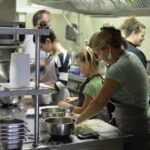
In the kitchen, the structure is friendly and organized. You work under the instructor’s watchful eye, often through focused stations where one ingredient drives part of the prep. This is where the class earns its reputation: you’re not just following one long script. You’re actively contributing, and you learn by doing.
And yes, you’ll likely produce a lot of food. That’s not a complaint—it’s just a reality. Between cooking, tasting, and then eating the finished lunch with wine, you’ll feel it. If you’re tempted to schedule dinner right after, don’t. Save it for later.
What you’ll cook (sample menu)
Your menu is a classic French lunch trio, and the listed sample gives you a strong sense of the flavors:
- Starter: Salmon tartare with yuzu, served on soy-poached turnip with a Japanese vinaigrette twist
- Main: Parisian-style coq au vin
- Dessert: Poached peach, raspberry coulis, and homemade vanilla ice cream
Even if the exact ingredients shift, the skill set is the point: making tartare with clean texture, building a coq au vin sauce that tastes layered (not flat), and assembling a dessert with both fruit sauce and ice cream.
You can also read our reviews of more tours and experiences in Paris




Wine Pairing at Lunch and Learning the Pairing Logic
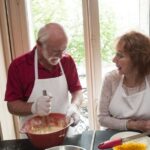
After about two hours in the kitchen, you sit down with the other cooks for lunch. This is a key moment: you eat what you made, with wine that’s included in the class.
You’ll have white or red wine, with half a bottle per person at the table. For a cooking class, that’s a lot of wine, but it fits the learning goals. The instructor doesn’t just pour. You learn how to think about pairing.
Here’s why that matters for you. Most people can taste wine. Fewer people know what to pair and why. Once you understand how acidity, richness, and flavor intensity work together, you’ll order better in Paris and cook more confidently at home.
The alcohol side also has rules. The minimum drinking age is 18 years, and the class minimum age is 12 years. If you’re booking for a mixed-age group, plan accordingly.
Recipes to Recreate at Home (and the Drop-Stop Pour Tool)
The payoff doesn’t end at the table. You receive electronic copies of the recipes, so you can recreate the dishes later. I like that because it turns the class into something you can use on a weeknight, not just a one-day memory.
There’s also a small extra that food-and-wine people tend to appreciate: a complimentary Drop-Stop for a perfect pour. It’s the kind of practical item that quietly helps you keep doing what you learned, especially if you’ve ever wrestled with drips at the bottle neck.
Also, remember you’re learning techniques, not just a menu. With the hands-on stations and guided explanations, you’ll walk away with methods you can apply to similar ingredients. That’s where the value really shows up.
Price and value: is $240.65 per person worth it?
At $240.65 per person for about 6 hours, you’re paying for four things: pro instruction, equipment and attire, the full 3-course lunch (including wine), and optional market shopping if you chose that format. When you price it against a fancy tasting lunch plus cooking instruction, the math usually tilts toward this being a solid deal—especially because the learning sticks through the recipe handoff.
Should You Book This Class with Wine in Paris?
Book it if you want a Paris activity that’s more than sightseeing. You’ll come home with skills, recipes, and a meal you made yourself. The market option is worth it if you enjoy ingredients, cheese, and understanding what’s in season.
Choose the 4.5-hour version if you’re short on time but still want a structured, hands-on lunch experience. It keeps the cooking and the pairing at the center without adding the market walk.
Skip it (or at least ask careful questions first) if you need strict vegan or dairy-free accommodations, since regular classes can’t guarantee those diets. Also skip it if you hate long meals with wine. This is a sit-down lunch, and it’s filling.
FAQ
What’s included in the 6-hour option versus the 4.5-hour option?
The 6-hour option includes a croissant plus coffee or tea at the start, plus a market visit with cheese samples. The 4.5-hour option starts after the instructor returns from the market and focuses on planning and cooking your 3-course lunch.
How long is the class, and when does it end?
The experience runs for about 6 hours on the longer option. It ends back at the meeting point.
Is this class hands-on, or mostly watching?
It’s hands-on. You plan and cook your meal with guidance from the instructor, and you’ll sit down afterward to eat the lunch you prepared.
How much wine is included?
Lunch includes white or red wine, with half a bottle per person. There’s also wine or wine tasting during the cooking portion, depending on the flow of the day.
What age limits apply?
The minimum age is 12 years. The minimum drinking age is 18 years.
What dietary restrictions can be accommodated?
You can advise dietary requirements at booking. However, the regular classes unfortunately can’t accommodate a vegan or dairy-free diet.