Montmartre feels like a movie set. This 2-hour walk trades selfie-sticks for local stories, a buttery croissant break, and photo-worthy Paris views. I especially liked the small-group vibe and the stop for an award-winning butter croissant. One watch-out: it is not for lactose-free, gluten-free, or vegan diets.
You start near Blanche metro (line 2) and end up at Sacré-Cœur from a vantage point many people miss. Guides can be names like Camila, Paloma, Max, or Benjamin, and the tour keeps things personal, including a feel of no microphones so you can actually hear the guide.
In This Review
- Key highlights worth your time
- Why this Montmartre walk changes the way you see the hill
- Meeting outside Blanche: quick start, real momentum
- From Moulin Rouge windmill to the quieter art streets
- Croissant stop: why the food moment is more than a snack
- Wall of Love and the “Je t’aime” photo moment
- Picasso, Dalida, and pop-culture stories on stone
- Vineyards, views, and Cabaret Le Lapin Agile
- Sacré-Cœur from a hidden angle: the payoff at the end
- Price, walking distance, and what you truly get for $41
- Practical tips so the day feels easy, not stressful
- Should you book this Montmartre tour?
- FAQ
- How long is the Montmartre Hidden Gems tour?
- Where do I meet the guide?
- What’s the group size?
- Is food included?
- Is this tour suitable for vegetarians or special diets?
- How much walking is involved?
- Is the tour guided in English, and do you offer private groups?
Key highlights worth your time
- Meet at Blanche (line 2) and work up Montmartre on foot with a comfy, 2 km route
- Moulin Rouge windmill start paired with pop-culture stops like Amélie and Van Gogh’s old stomping ground
- A prize-winning butter croissant stop from a top local bakery (yes, it matters)
- Wall of Love with Je t’aime in 250 languages for photos and a fun little learning moment
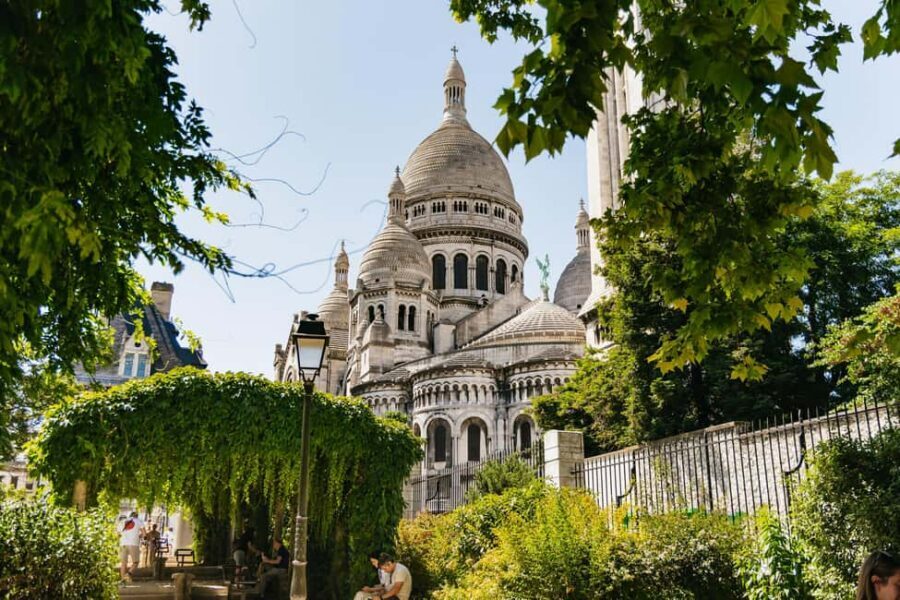
- A little-known Sacré-Cœur angle plus views from quiet side streets, not the main crush
Why this Montmartre walk changes the way you see the hill
Montmartre is famous, but it is also easy to do wrong. You can wander the big sights, take the standard photos, and still miss why this neighborhood mattered to artists and writers.
This tour pushes you onto the lanes and side streets that connect the dots. You hear the why, not just the what. That means Sacré-Cœur hits harder at the end, because you’ve already learned what shaped the views, the art scene, and the famous corners along the way.
The format helps too. It is small (max 14 people), and that keeps the walk from feeling like a human conveyor belt. The tour is also guided in English, so the stories land clearly without you playing translation roulette.
You can also read our reviews of more guided tours in Paris



Meeting outside Blanche: quick start, real momentum
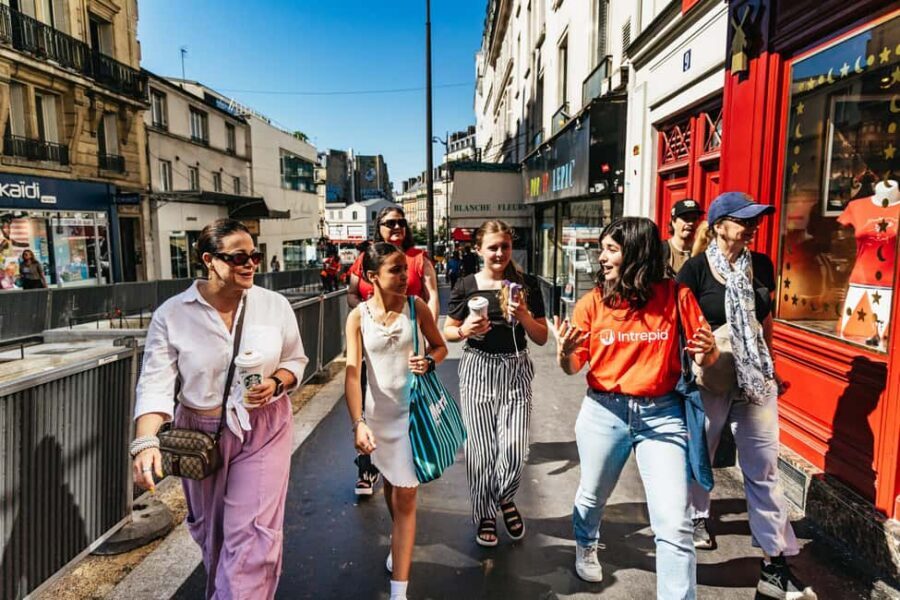
You meet outside the Blanche metro stop (line 2) at ground level. That is an easy anchor for your day because you can arrive by metro and not hunt for some hidden side street.
Expect a steady walking pace as the route climbs. It covers about 2 km (1.2 miles). That sounds short until you remember Montmartre is Montmartre. You’ll want comfortable shoes and a mindset of slow-and-sure, not sprint-and-gasp.
I like that the tour is only 2 hours. It’s long enough to get into the neighborhood rhythm, but short enough that you do not burn half your Paris day just climbing to a viewpoint.
From Moulin Rouge windmill to the quieter art streets

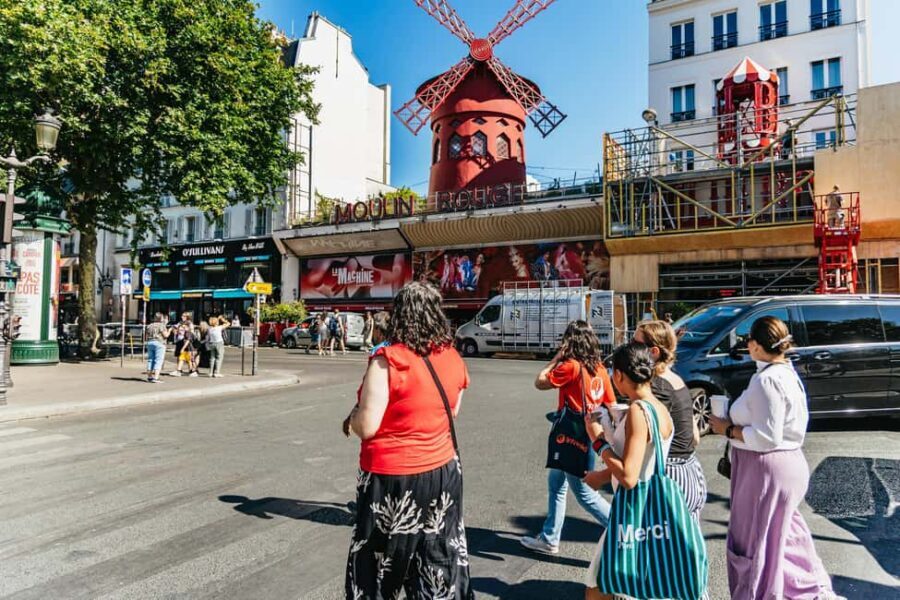
The tour kicks off at Moulin Rouge, specifically the windmill area. This is a smart choice because it gives you a landmark you can find instantly—and it starts you in the right mood.
From there, you move through Montmartre’s artistic heart. You’ll spot movie-and-art references along the way, including:
- the café linked to Amélie
- Van Gogh’s former residence
You’ll also get the kind of context that makes Montmartre feel less like a theme park. Instead of random stops, the route connects the creative energy that made this hill such a magnet in the first place.
One practical thing: the tour includes walking through winding lanes and secret passages. You’re not just looking at famous buildings. You’re getting shown how people actually move through this area—tight streets, turns, sudden sightlines.
Croissant stop: why the food moment is more than a snack
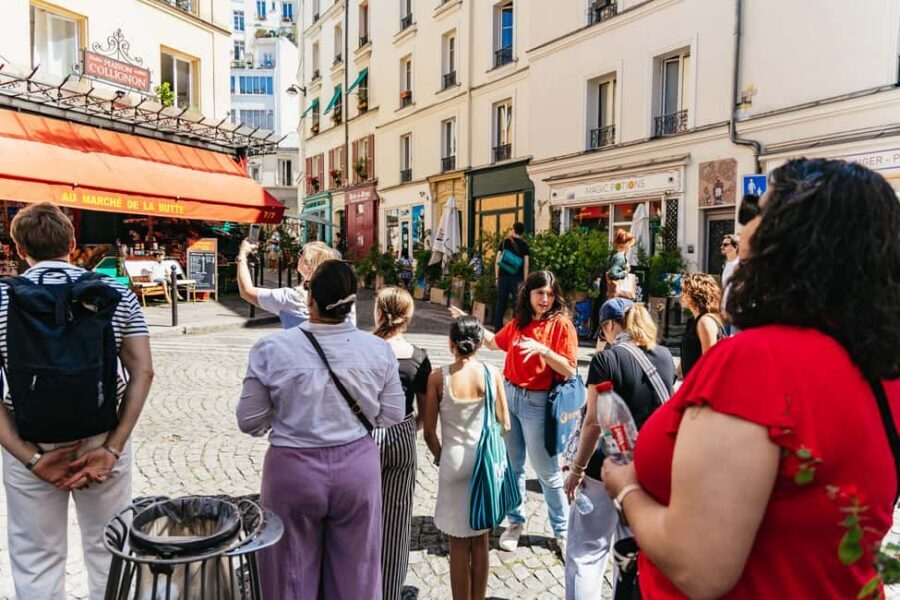
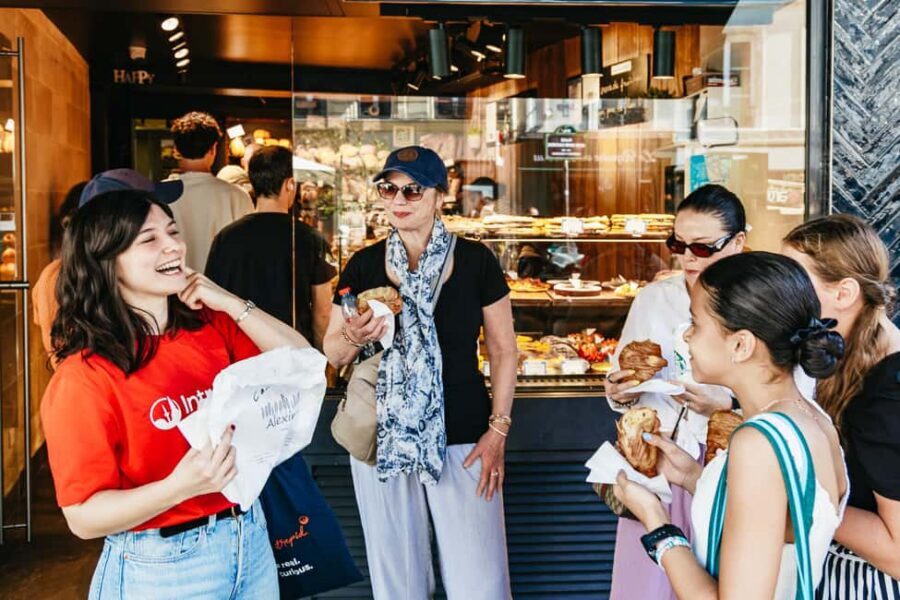
This tour includes a pastry break: a prize-winning butter croissant from one of the best local bakers. You’ll have it after the early sights near the start—morning or afternoon depending on which option you book.
Why I think this is good value: the croissant isn’t an afterthought. It’s timed right when you’ve been walking, so you get a real reset and you don’t have to decide where to eat. Also, the tour is about art and streets, not a full sit-down meal that eats up the schedule.
If you’re vegetarian, you’re covered. But if you need lactose-free, gluten-free, or vegan, the included croissant does not match those needs. Plan accordingly.
Wall of Love and the “Je t’aime” photo moment
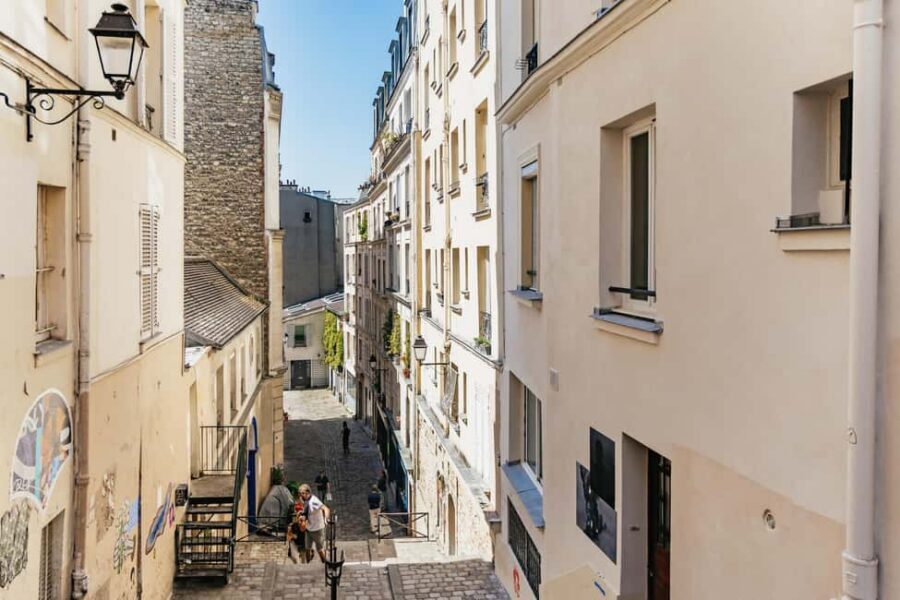
Next comes the Wall of Love. Yes, it’s playful. But it also works as a quick break from heavier history because it’s visual and interactive.
You’ll learn or at least encounter Je t’aime in 250 languages. This is exactly the kind of stop that gives you:
- an easy photo backdrop
- a lighthearted moment
- something to talk about while you keep walking
Expect about 20 minutes here. That’s enough time to get pictures without the whole group melting down while someone tries to pick the perfect angle.






Picasso, Dalida, and pop-culture stories on stone
After the Wall of Love, the tour shifts back into Montmartre storytelling.
You pass Picasso’s old home and hear stories of Dalida, a beloved French singer. This is a big part of what makes Montmartre tick: famous artists and entertainers are woven into the streets you’re walking.
These stops matter because you’re learning what people remembered, not just what was physically there. When you understand that kind of cultural layering, the neighborhood stops being just scenic and starts feeling like it has a pulse.
You also get more of the “how did I not notice this?” effect from the side-street route. It’s the difference between seeing a building and understanding why it’s there in the first place.
Vineyards, views, and Cabaret Le Lapin Agile
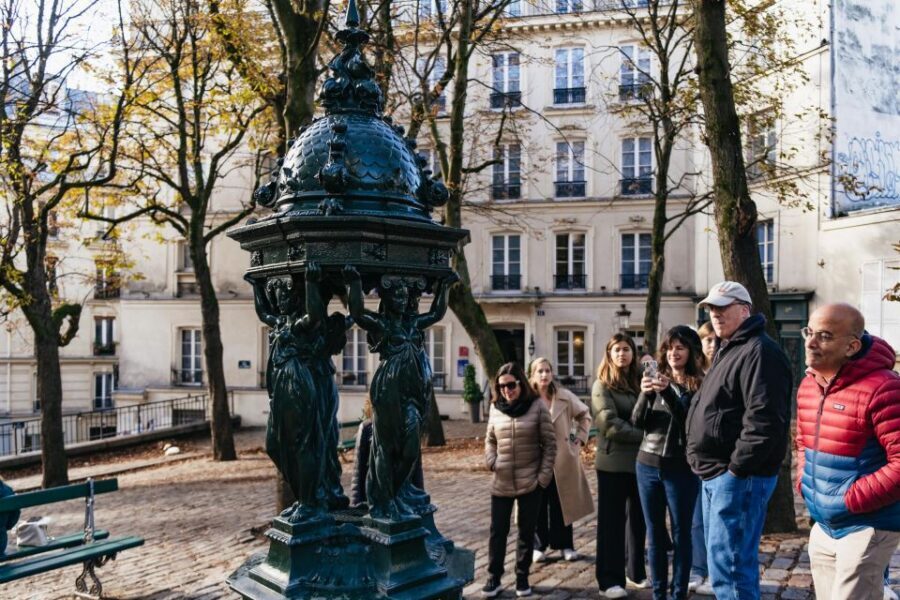
This is where Montmartre starts feeling strange—in the best way.
You’ll see Montmartre’s vineyards, including the last vineyard in Paris. That detail is small, but it changes how you think about the hill. Paris isn’t only boulevards and museums here. It has this living, stubborn pocket of green history.
Then you’ll visit Cabaret Le Lapin Agile for a quirky tale: the story of Lolo, the painting donkey. It’s the kind of stop that sounds like a gimmick until you’re standing there. Suddenly Montmartre’s reputation for art, odd characters, and creative misfits makes sense.
The pacing here is good too. You’re not stuck at one spot for too long. You’re moving, learning, and then hitting the next viewpoint while the group energy stays high.
Sacré-Cœur from a hidden angle: the payoff at the end
The tour finishes at the Basilica of the Sacred Heart of Paris, Sacré-Cœur. The key detail is how you see it.
Instead of arriving straight from the most crowded approaches, you get to admire it from a hidden vantage point few tourists ever see. That matters. If you’ve only ever viewed Sacré-Cœur from the main flow of visitors, it can feel like a postcard. From a quieter angle, it feels more monumental and more intimate—like you caught it in a private moment.
You’ll also likely understand the surroundings better by now. Earlier stops tied the neighborhood’s art reputation to the hill’s geography, and now the views make more sense.
This is a strong finish for photo lovers. It’s also a strong finish for romantics and people who just want the “I’m really here” feeling in Paris.
Price, walking distance, and what you truly get for $41
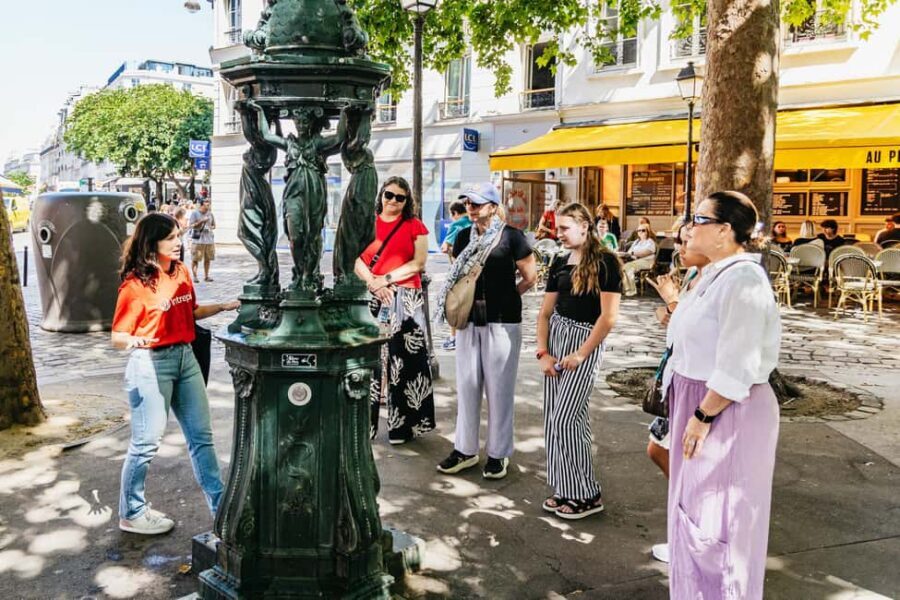
At $41 per person for 2 hours, the big question is: what are you buying?
You’re buying three things that add up fast:
- a guide leading you through Montmartre’s side streets (so you don’t waste time guessing)
- a food stop that is actually included (that butter croissant)
- access to viewpoints that work better than random wandering
You’re also getting a small-group cap of 14. That helps with both the route quality and the story quality. With a larger group, Montmartre can turn into slow, noisy logistics. Here, it stays more conversational.
On your body: it’s about 2 km of walking. That is manageable. The uphill grade is the real factor, so bring shoes that won’t punish you. If hills are your enemy, you’ll still be okay—but plan to take it slow.
On your diet: vegetarians are fine. If you need lactose-free, gluten-free, or vegan, this exact tour doesn’t fit because the included croissant is not built for those restrictions.
Practical tips so the day feels easy, not stressful
- Wear comfortable shoes. Montmartre has uneven streets and lots of small climbs.
- Bring weather-appropriate clothing. The tour is outdoors and your comfort is your job.
- If photos are your thing, bring a charged phone/camera. Some stops are designed for pictures, like the Wall of Love and the Sacré-Cœur vantage.
- If you’re traveling with kids, it’s child-friendly. If you bring a child under 6, specify at booking.
One extra note I appreciate: the tour is carbon-neutral and operated by a B Corp-certified company. That won’t change your experience week-to-week, but it is a reassuring signal that the operator is thinking about impacts, not just marketing.
Should you book this Montmartre tour?
Book it if you want Montmartre with structure. This is ideal if you’d rather walk with a guide who points out the cultural links—Amélie, Van Gogh, Wall of Love, Picasso, Dalida, and even the painting donkey story—than just chase viewpoints on your own.
Pass or reconsider if your diet needs lactose-free, gluten-free, or vegan options. The included croissant is part of the experience, and the tour data is clear it’s not aligned with those restrictions.
Also, if you’re the kind of person who likes small groups and can handle a bit of uphill walking, you’re a great match. This tour is short, story-heavy, and designed to help you come away feeling like you actually understood Montmartre—not just photographed it.
FAQ
How long is the Montmartre Hidden Gems tour?
It runs for 2 hours.
Where do I meet the guide?
Meet outside the Blanche metro stop (line 2) at ground level.
What’s the group size?
It is a small-group tour with a maximum of 14 participants.
Is food included?
Yes. You get one freshly baked butter croissant from an award-winning bakery. Drinks and additional food are not included.
Is this tour suitable for vegetarians or special diets?
It is suitable for vegetarians. It is unfortunately not for lactose-free, gluten-free, or vegan customers.
How much walking is involved?
The tour covers about 2 km (1.2 miles) on foot.
Is the tour guided in English, and do you offer private groups?
Yes, it is led in English. Private group options are available.