REVIEW · PARIS
Paris: Louvre Museum Highlights and Mona Lisa Tour
Book on GetYourGuide →Operated by Mon Petit Paris · Bookable on GetYourGuide
Crowds never stood a chance. This Louvre tour is built for first-timers who want the big masterpieces without losing time in chaos, thanks to pre-reserved entry and a planned route with a licensed English guide. I like how it starts right at the Arc du Carrousel, then gets you into the museum with fast-track access and headsets so you can actually hear the stories.
My favorite part is the mix: you get the famous names like the Mona Lisa, Venus de Milo, and the Winged Victory of Samothrace, but you also get the why behind them. A possible drawback: the Louvre’s airport-style security can still eat up some of your 1–2 hour window, so you’ll want to arrive with extra patience (and comfortable shoes).
This is a group tour (max 20), and the route is carefully paced—great for clarity, but not the best fit if you’re trying to see everything in one trip.
In This Review
- Key highlights worth planning around
- Meet at Arc du Carrousel and get into the Louvre fast
- A 1–2 hour highlights route that feels organized (not rushed)
- Venus de Milo and Winged Victory: sculpture with real storytelling
- Mona Lisa at the finish line: what to look for besides the hype
- The Louvre beyond the big names: Renaissance, Greek, prints, and medieval foundations
- Price and logistics: is $116 worth it for the time you save?
- After the tour: how to keep your Louvre day from feeling unfinished
- What to bring and how to avoid common missteps
- Who this Louvre highlights tour is best for
- Should you book this tour or go on your own?
- FAQ
- Where is the meeting point?
- How long is the tour?
- Will I be able to skip the ticket lines?
- What are the main artworks and stops included?
- Is the tour in English?
- Does the tour include headsets?
- How big is the group?
- What should I bring?
- Can I bring luggage or big bags?
- Is this tour suitable for wheelchairs or mobility impairments?
- How much time should I plan for security?
Key highlights worth planning around
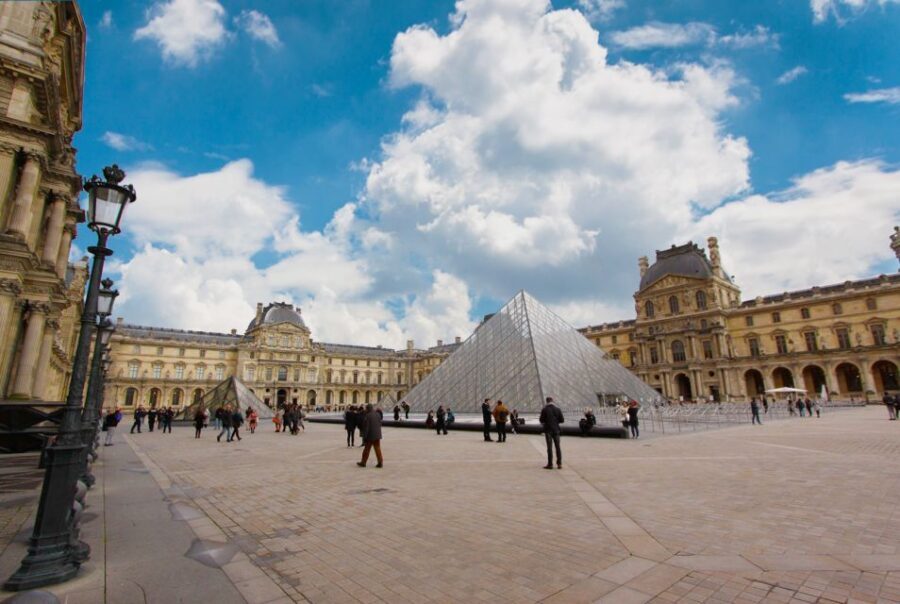
- Arc du Carrousel meeting point: start outside the museum, so you’re not hunting once you arrive.
- Pre-reserved, skip-the-line entry with a separate entrance and headsets.
- A highlights route designed for navigation, not aimless wandering.
- Mona Lisa included with guide context right at the finish.
- Ancient sculpture + Renaissance painting in one loop, with specific stops like Venus de Milo and Winged Victory.
- Underground history: you’ll also learn about the medieval fortress remains under the museum.
Meet at Arc du Carrousel and get into the Louvre fast
Plan on starting your Louvre day with a quick, clear beginning. You meet your guide at the Arc du Carrousel du Louvre, just outside the museum, and you should not go straight to the main entrance on your own. Once you’re together, you follow the group through security and into the museum.
Here’s the practical advantage: you use a pre-reserved ticket and enter through a separate entrance for fast-track access. The tour also provides headsets, which matters in a place where people talk loudly, guide voices get swallowed by crowds, and you end up missing the best parts of the explanations.
The Louvre runs on stairs and walking. You need to be comfortable with lots of walking and climbing because the tour is not suited for people with mobility impairments, and the museum’s elevator setup affects where groups can go.
You can also read our reviews of more museum experiences in Paris



A 1–2 hour highlights route that feels organized (not rushed)
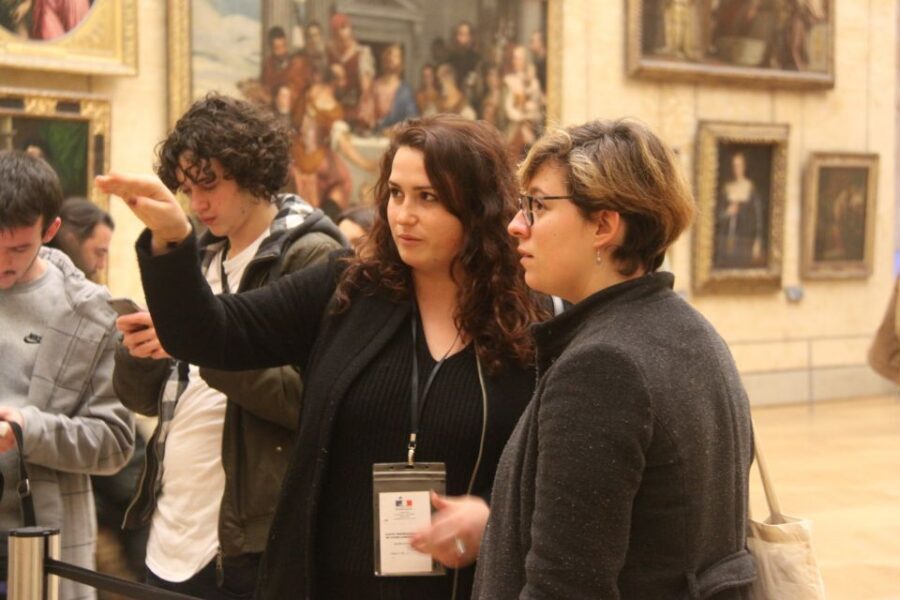
The Louvre is enormous, and trying to “wing it” usually turns into: see a famous painting from far away, get stuck in a crowd, and spend the rest of your energy fighting directions. This tour is built to avoid that problem by sticking to a curated route of the most recognizable works—plus a few smart additions that help you understand what you’re seeing.
The time frame is 1–2 hours, so think of it as a concentrated “best of” with context. One review note that the time to get inside can sometimes take a chunk of the total tour window, which makes arriving early (and staying calm at security) a good move.
The group size is capped at 20, which helps you stay together. You’ll still see busy rooms around the star attractions, but the pacing is designed so you’re not continuously stopping to figure out where to go next.
Venus de Milo and Winged Victory: sculpture with real storytelling
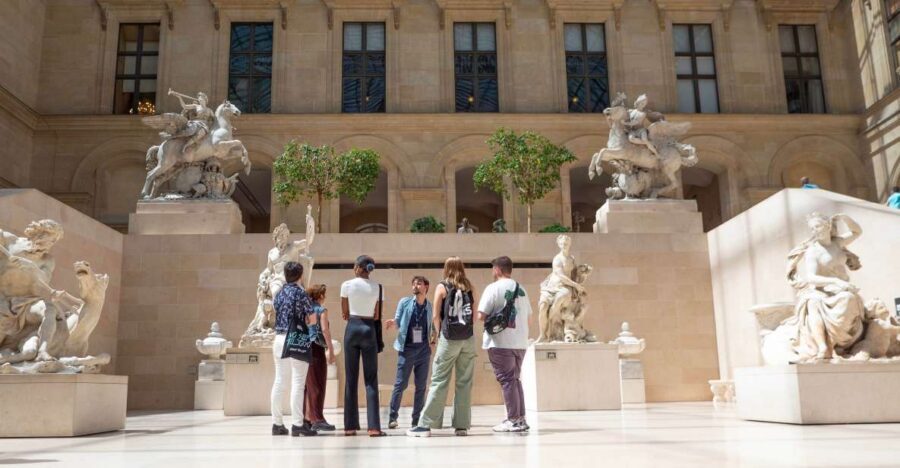
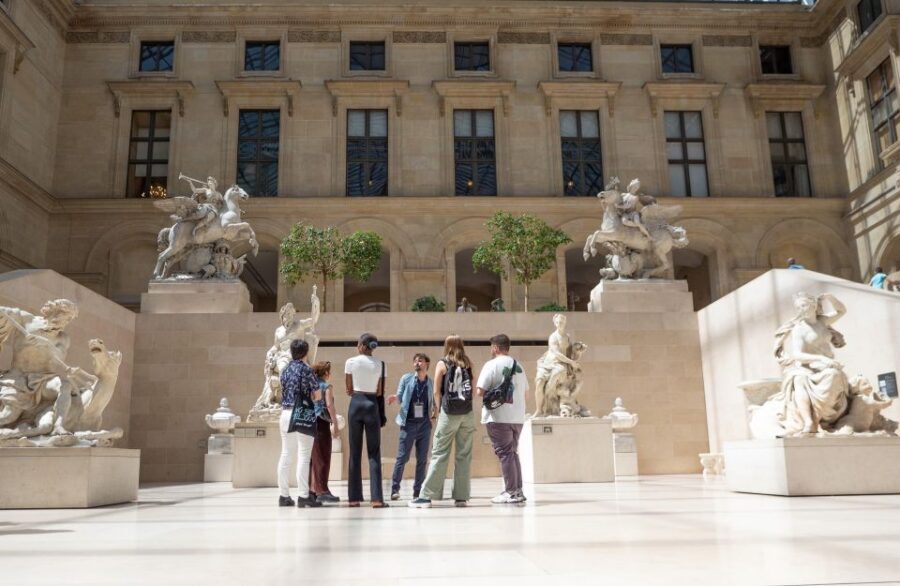
If you only think of the Louvre as paintings, this tour nudges you to notice the sculpture too. Two of the headline stops are Venus de Milo and the Winged Victory of Samothrace, and the guide’s job is to give you something practical to look for.
Venus de Milo is famous for a reason, but it can feel like a photo-shrine if you don’t have any context. With a guide, you get the background behind why this statue inspired generations of artists—so you can see it as more than just a recognizable face. You also get help reading the sculpture’s presence in the room, which is useful when the view is partially blocked by crowds.
Then comes Winged Victory of Samothrace. This Hellenistic statue representing Nike, the Greek goddess of victory, is one of those works where details matter. The commentary helps you notice what makes it dramatic—movement, scale, and the way the pose communicates triumph—so your brain stays engaged rather than watching people take selfies and move on.
Mona Lisa at the finish line: what to look for besides the hype

Yes, you’re going to see the Mona Lisa. The real value is how you see it. The tour is designed so you finish by standing before the painting with a guide explanation of its significance and the story behind its famous theft in 1911, which is part of why it became a global obsession.
One more important practical detail: after you exit the wings and go under the pyramid, you cannot re-enter the rooms. That means your tour ends in a way that’s meant for the flow of the museum, not for looping back to keep browsing. So when you reach the Mona Lisa, treat it like the closing scene of a story you’ve been hearing for the last hour or so.
Crowds around this area can be intense, and it’s easy to get separated in the busiest viewing spots. If your guide is hard to see in the crush, just keep your group logic simple: look for your guide’s position and follow the movement like a school of fish. A few reviews also mention that guidance in finding the group again at popular artworks would be helpful, so if you arrive in peak season, keep your bearings extra carefully.
The Louvre beyond the big names: Renaissance, Greek, prints, and medieval foundations
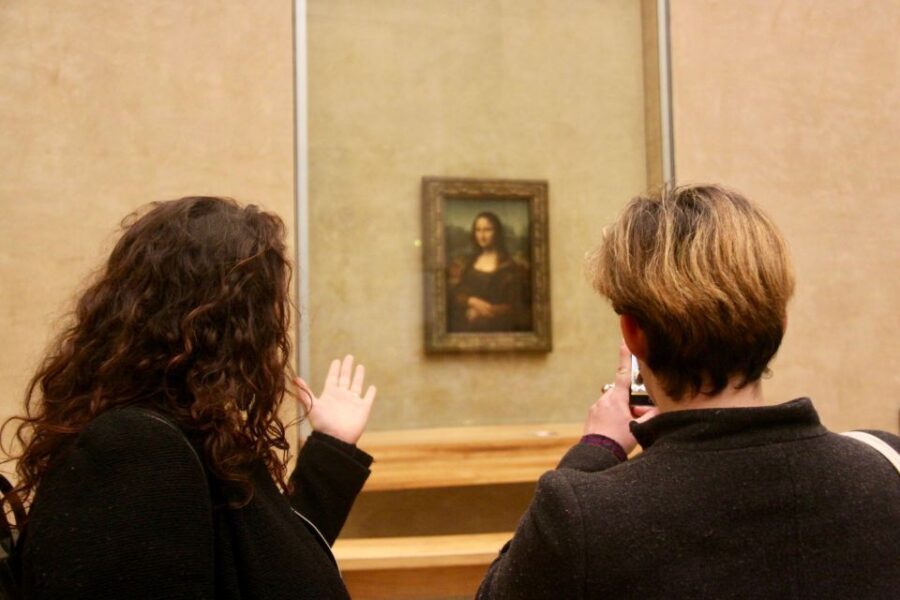
What makes this tour more than a quick hit is that the guide doesn’t treat the Louvre as a list of famous works. You’re shown a range that stretches from ancient civilizations to the mid-19th century, and the tour connects those dots with short, story-driven explanations.
You’ll encounter works connected to:
- Ancient Greek relics
- Renaissance works
- Paintings from the 13th to the 19th centuries
- Royal Collection prints
- The museum’s underground galleries
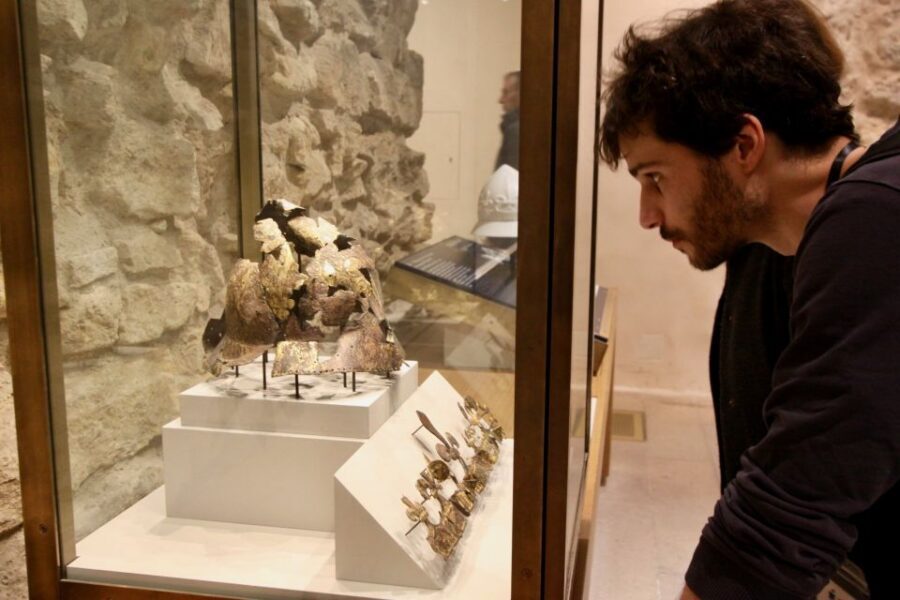
That last part is a sneaky win for your understanding of the Louvre. In the underground spaces, you can uncover the remains of the original medieval fortress and learn how those foundations shaped the palace that became a museum. If you love history that explains why a building looks the way it does, this underground stop helps you feel less lost in the design of the palace itself.
The guide’s approach matters here. Many past groups praised guides like Sally and Barbara for being fun storytellers, and others named guides such as Pierre, Camille, Guillaume, Rodrigo, Pauline, and Veronica for clarity and strong pacing. Even if your guide is someone else, the pattern is consistent: you get context, not just names.





Price and logistics: is $116 worth it for the time you save?
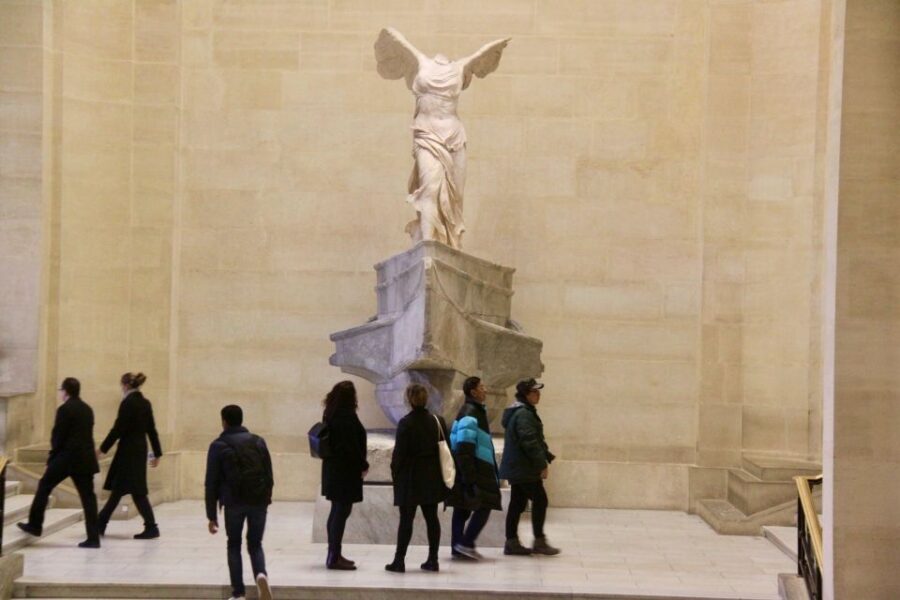
At $116 per person, this is not a budget activity—but it’s also not just paying to enter a museum. You’re paying for the combo of pre-reserved ticketing, skip-the-line entry, a licensed guide, and headsets within a small group.
Here’s how I think about the value:
- If you go on your own, you still face security, you still fight crowds, and you still need a plan to avoid wasting your limited time.
- With this tour, the guide narrows the choices and helps you see what matters most first, with explanations that make the works easier to understand.
- The small group size (max 20) plus headsets reduces the typical frustration of trying to follow a person in a crowd.
Also, 1–2 hours is a realistic use of time for a “first Louvre visit.” You won’t see everything, and that’s okay. The tour is most valuable as the thing that sets your bearings, so your later exploring feels intentional instead of random.
If your schedule is tight, the fast-track part alone is a big deal. Some reviews specifically call out that bypassing the ticket line makes the experience smoother, and that the guide helps narrow the museum so you don’t spend your energy wandering.
After the tour: how to keep your Louvre day from feeling unfinished
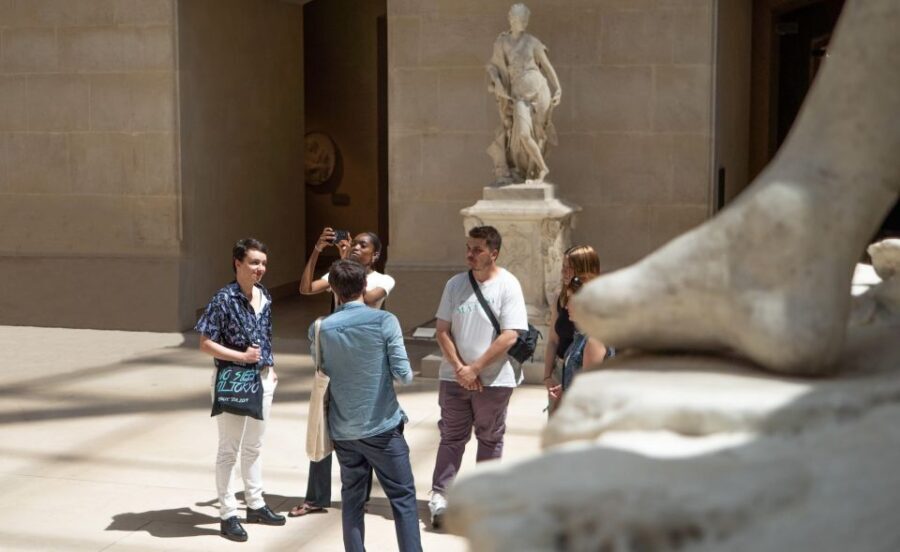
The tour ends after the Mona Lisa area, and you should assume you’re done with the guided route. Once your tour finishes, you’re free to explore as long as you’d like (within the museum flow), but remember the “no re-entering rooms” note after you pass under the pyramid.
So here’s the smart move: treat the tour like a preview, then go back to the areas you most want to revisit. The highlights route helps you identify what grabs you—Renaissance works, ancient sculpture, or painting periods you weren’t expecting to care about.
If you’re coming during summer, know that the Louvre is busier than usual, and you might see up to 20 minutes of waiting at security during peak periods. I’d rather you plan for that than be surprised.
What to bring and how to avoid common missteps
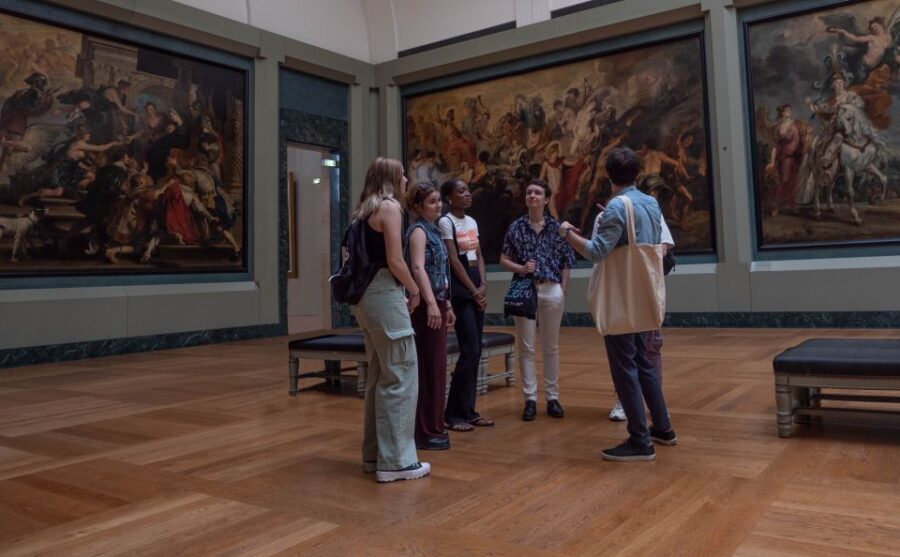
Keep it simple. Bring a passport or ID card and wear comfortable shoes. The Louvre also uses airport-style security, so don’t show up with a messy bag situation.
Avoid bringing luggage or large bags, and note that non-folding strollers aren’t allowed. If you’re traveling with kids, any children joining must be booked on the tour.
Also, don’t be late. This is a group booking, and if you arrive late, they may not be able to issue your ticket.
Finally, this tour is explicitly not set up for wheelchairs or mobility impairment due to where elevators are located in the museum.
Who this Louvre highlights tour is best for
This is a strong match if:
- It’s your first time at the Louvre and you want a plan that prevents aimless wandering.
- You want the top masterpieces—Mona Lisa, Venus de Milo, Winged Victory—but also want context that makes the art easier to “read.”
- You like expert commentary delivered in an engaging, story-focused way (lots of praise lands on guides for humor and clear explanations).
- You prefer a small group pace that helps you stay oriented.
It’s less ideal if:
- You need an accessible route for mobility impairments.
- You want maximum flexibility to roam freely without group constraints.
- You’re the type who needs more time than a focused “highlights” loop.
Should you book this tour or go on your own?
Book this tour if you want your Louvre visit to feel directed and rewarding, especially if you’re short on time. The fast-track entry, headsets, and highlight route are exactly what turn the Louvre from overwhelming to manageable.
Skip it (or consider a different approach) if your goal is to linger everywhere and you’re comfortable planning your own museum strategy. In that case, you might still enjoy the Louvre—but you’ll spend more time choosing where to go and more time waiting behind the crowd.
FAQ
Where is the meeting point?
You meet your guide at the Arc du Carrousel du Louvre, just outside the museum. The meeting point may vary depending on the option booked, so check your specific confirmation.
How long is the tour?
The tour runs 1–2 hours, depending on the starting time and availability.
Will I be able to skip the ticket lines?
Yes. You get pre-reserved entry and skip ticket lines through a separate entrance.
What are the main artworks and stops included?
The highlights route includes Mona Lisa, Venus de Milo, and the Winged Victory of Samothrace. You’ll also see a mix of other works across ancient, Renaissance, and later periods, plus underground galleries tied to the medieval fortress foundations.
Is the tour in English?
Yes. The tour is a live guided experience in English.
Does the tour include headsets?
Yes. Headsets are included so you can hear your guide better in the museum.
How big is the group?
It’s a standard group with a maximum of 20 participants.
What should I bring?
Bring a passport or ID card and comfortable shoes.
Can I bring luggage or big bags?
No. Luggage or large bags are not allowed.
Is this tour suitable for wheelchairs or mobility impairments?
No. It is not suitable for people with mobility impairments, due to the museum’s elevator location.
How much time should I plan for security?
All visitors pass through airport-style security. During peak season, there may be a wait of up to 20 minutes.