REVIEW · PARIS
Paris in a Day – Private Experience
Book on Viator →Operated by With Love From Paris Tours · Bookable on Viator
Paris starts to feel real fast.
This private Paris in a Day outing is built for context, not just photos. You move between landmarks and classic neighborhoods with a local English-speaking guide, using a mix of walking, taxi, and metro/bus when it makes sense. I especially like how it’s customized to your interests while still covering the big skyline names like the Eiffel Tower, Louvre area, Arc de Triomphe zone, and Invalides—so you leave with the lay of the land. One thing to factor in: the stops are mostly for views and orientation, not a museum-and-ticket marathon.
The best part is the guide vibe. Many days are led by Milan, and his reviews read like a master class in pacing—sharing stories with visual helps (pictures, iPad videos, diagrams), answering questions, and keeping things relaxed instead of rushed. You’ll also get practical, on-the-ground tips for what to do after this tour, plus welcome tokens that make it feel like you’re arriving somewhere special, not just checking boxes.
The only real drawback is that it’s not an “everything inside” day. The Eiffel Tower and Louvre are outside with brief time on-site, and Notre-Dame access has been affected long-term by the 2019 fire—so you may see it from a distance and around availability can vary.
In This Review
- Key highlights to look for
- Why This Private Paris Day Feels Better Than a Checklist
- Cost, Time, and the Value Behind $362.81 Per Person
- Pickup Rules and the Olympics Traffic Detour
- A Route Built for Moving: Walking, Taxi, and Metro/Buses
- Stop 1: With Love From Paris Tours and the Neighborhood Orientation
- Stop 2: Notre-Dame de Paris—Viewing What’s Possible Today
- Stop 3: Quartier Latin (Latin Quarter) for Real Street Time
- Stop 4: Eiffel Tower Basics Without the Tower Ticket
- Stop 5: The Louvre from the Outside (and Why That’s Useful)
- Food Breaks: What’s Included, What’s Not, and How to Use the Gaps
- Rain, Comfort, and How to Dress for a Day That Actually Moves
- Who This Tour Suits Best (and Who Might Want Something Different)
- Should You Book This Paris in a Day Private Tour?
- FAQ
- Is this a private tour?
- How long is the tour, and when does it start?
- Do we go inside the Eiffel Tower and Louvre Museum?
- Is hotel pickup included, and where does pickup work?
- What happens during the Paris 2024 Olympics traffic restrictions?
- Can I cancel for a full refund?
Key highlights to look for

- Private, only-your-group pace with real customization
- Multi-mode transport (walking + taxi + metro/bus) to beat long detours
- Milan-style storytelling with visuals and clear English
- Neighborhood time in the Latin Quarter instead of rushing through
- Notre-Dame viewing that fits current access realities
- Eiffel and Louvre orientation without the ticket-pressure
Why This Private Paris Day Feels Better Than a Checklist
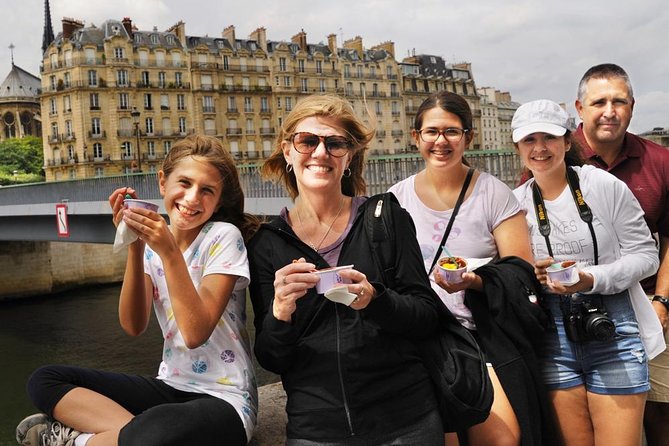
Paris “in a day” can go two ways: crowded and confusing, or clear and confident. This tour leans toward the second. The flow is designed to give you an overview first—then details through street-level stories—so you understand what you’re looking at when you return later.
You’re not just dropped at monuments and sent on your way. Your guide helps you connect the dots: why these buildings matter, what the neighborhoods were for, and how today’s Paris grew out of older streets and institutions. Even the short stops matter because the guide ties them to a bigger picture you can carry with you.
And because it’s private, you’re not stuck in a group rhythm. If your kids need a reset, your pace slows. If you want more photo time at a certain turn in the Latin Quarter, you can adjust. That flexibility is a big part of why this is consistently rated so well—people feel like the day belongs to them.
You can also read our reviews of more tours and experiences in Paris.



Cost, Time, and the Value Behind $362.81 Per Person
At $362.81 per person, this isn’t a budget “hop-on hop-off” plan. But you’re paying for three things that add up quickly in Paris:
1) A real local guide for most of the day
You get more than directions. You get suggestions for what to see next, how to navigate efficiently, and context that helps you avoid second-guessing.
2) Private format + smart transportation
Walking is part of it, but you also use taxis and metro/bus when they save time. In a city where distances feel bigger than they look on a map, that mix can be worth real money.
3) Time efficiency that reduces decision fatigue
A day like this helps you start strong. Instead of spending hours choosing between landmarks, neighborhoods, and museum options, you get a guided route that gives you a reliable “Paris orientation.”
What you should know up front: the tour includes pickup and drop-off within Paris city limits and uses transit during the day, but lunch is not included. Plan to budget for food breaks on your own—your guide can point you toward good options (think bistros or quick classics like crepes), and you’ll usually get better timing with the guide’s advice.
If you’re traveling for the first time and want to return later for deeper visits, this format often pays off. If you already know Paris well and only want specific tickets, you might prefer a tighter, ticket-focused plan.
Pickup Rules and the Olympics Traffic Detour
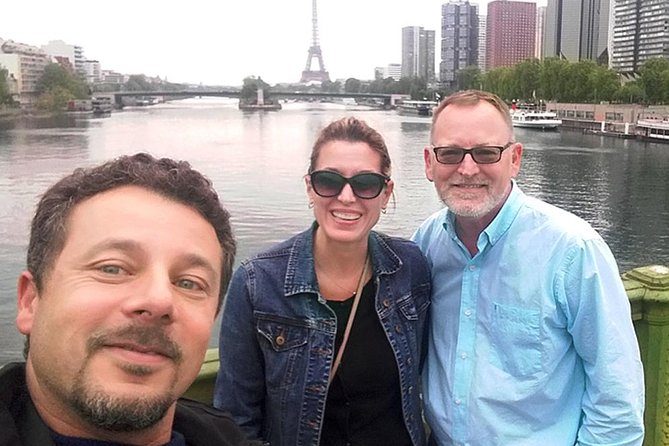
The logistics here are simple, but strict—good to know before you rely on hotel pickup.
- Pickup is offered within Paris city limits only.
- No pickup at or near airports (CDG, Orly, Beauvais).
- No pickup near Disneyland and no pickup anywhere outside Paris.
If your hotel is outside the allowed zone, the tour suggests arranging a transfer service to a Paris meeting point.
There’s also a major seasonal caveat: from June 1 to September 10, 2024, around the Paris 2024 Olympics, traffic and road restrictions can heavily affect routes near major axes (including areas around the Louvre, Eiffel Tower, Champs-Élysées, Concorde, Arc de Triomphe, and Invalides). In that window, the plan may shift toward Latin Quarter, Notre-Dame, and Montmartre. In other words: you still get a great day, but don’t assume every headline stop will be reachable in the usual way.
This is exactly the kind of situation where having a local guide who can reroute matters.
A Route Built for Moving: Walking, Taxi, and Metro/Buses
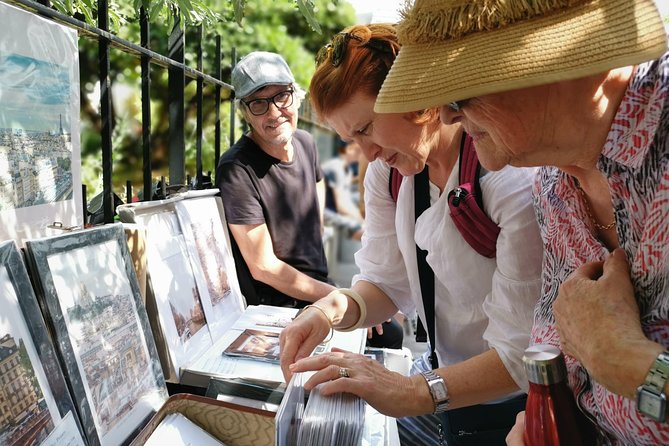
You’ll spend part of the day on foot, but the tour purposefully uses multiple transportation modes. That’s not just efficiency—it changes how you experience Paris.
Walking segments help you feel the scale of streets and neighborhoods: you notice storefronts, street layout, and the “how people actually move” pattern. When you switch to taxi or metro/bus, you avoid the trap of spending your prime energy on long crossings or dead time in traffic.
The multi-mode style also helps older travelers and families. One set of guests even mentioned that metro made the day manageable without getting exhausted. Another family praised that the guide adapted when kids started to lose focus. If you’re traveling with people who can’t do nonstop walking, this approach is a clear advantage.
Stop 1: With Love From Paris Tours and the Neighborhood Orientation
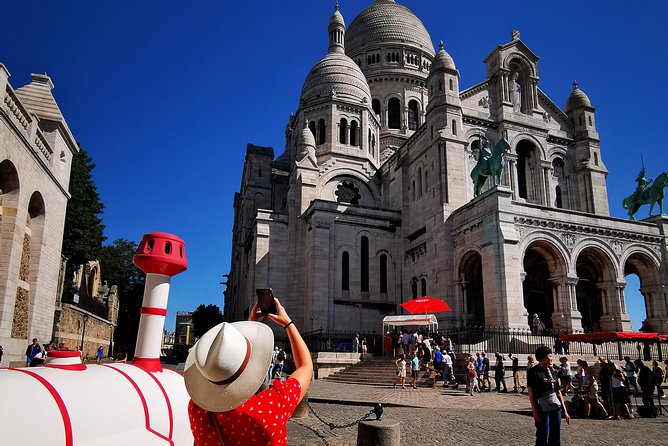
The day starts at 9:30 am, and Stop 1 is the foundation: you head out with your guide to connect several major landmarks and neighborhoods into one coherent storyline.
You’ll get major sights along the way, including the Eiffel Tower, Louvre area, Arc de Triomphe, and Invalides. Even when the time at any single spot is brief, the guide’s job is to give you enough orientation that you’ll recognize what’s in front of you later.
A major strength is neighborhood variety. One of the highlighted areas is the Latin Quarter, which is one of those districts where you can feel history in the street rhythm—students, old streets, bookish vibes, and classic Paris corners. The tour also includes lesser-known, more confidential places, depending on your interests and timing. That’s usually where the “I would never have found this” feeling comes from.
Important expectation: Stop 1 is described as leisurely, with private taxi and public metro/bus when needed. So you’re not sprinting. You’re transitioning.
You’ll also receive welcome to Paris tokens—small, but they set a friendly tone and make the guide feel like a host, not a dispatcher.



Stop 2: Notre-Dame de Paris—Viewing What’s Possible Today
Notre-Dame is the emotional heart of many Paris first-days. And because of the fire (noted as April 15, 2019), access around the cathedral has been impacted for a long time.
In this tour, you’re scheduled for a short visit that focuses on seeing Notre-Dame from a distance. Access “around it” is hoped to improve over time, but you should plan for limited closeness depending on conditions.
Here’s what I think is smart about this approach: rather than pretending the experience is the full-on inside-the-cathedral story, it sets realistic expectations while still honoring the place’s meaning. Even from afar, Notre-Dame is unmistakable, and your guide can help you connect the skyline view to the layers of Paris life tied to the cathedral.
Also, a strong review signal from the day: your guide may sometimes be able to arrange special access when available. On one occasion, a guide reportedly secured a Notre-Dame time slot that avoided waiting in line. That’s not guaranteed by the basic plan, but it’s exactly the kind of “good guide power” you’re paying for.
Stop 3: Quartier Latin (Latin Quarter) for Real Street Time
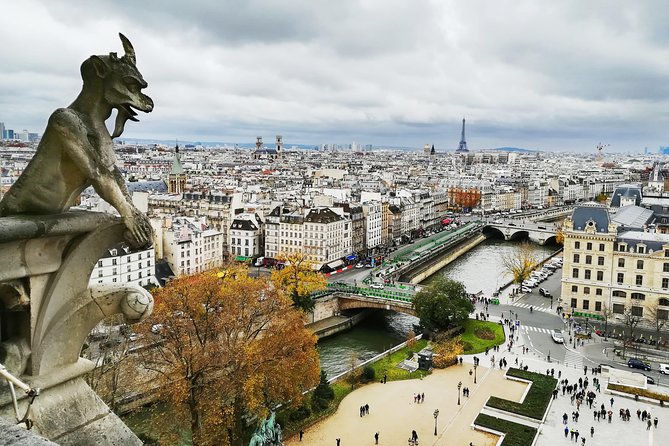
The Latin Quarter is one hour here, and that time block is a gift. Why? Because it’s the opposite of the “run by it, take a picture, move on” strategy.
You get time to walk and absorb the district’s feel. This is where Paris starts to show you how it actually works day to day: where people wander, where the atmosphere changes block by block, and how the streets connect to major institutions nearby. If you like the idea of spending time in neighborhoods instead of only monument snapshots, you’ll likely enjoy this section most.
The guide’s storytelling matters a lot here. It’s not just what you see, it’s why those streets became the center of certain eras and what you can still notice today if you know where to look.
Stop 4: Eiffel Tower Basics Without the Tower Ticket
This is one of those stops where expectations save disappointment. You’re not scheduled to go up the Eiffel Tower, and the tour explicitly notes that Eiffel Tower admission is not included.
Instead, you learn about the tower and its iconic iron structure from street level and nearby viewpoint areas. Even without a summit ticket, this can still be valuable because the guide can explain what you’re seeing—why it was built when it was, and how it became a symbol of modern Paris.
Plan for photo time, then move. A short Eiffel stop also protects your day from turning into “waiting in lines” time. If you want to go up later, you can plan that as a separate, ticketed add-on when you’re ready.
Stop 5: The Louvre from the Outside (and Why That’s Useful)
The Louvre is treated the same way: you stay outside for orientation, with Louvre admission not included.
That might sound limiting if you love museums. But there’s a logic to it. A guided outside look at the Louvre area helps you understand the layout of the complex and its relationship to the wider city center. It also gives you a starting map for your later museum day, if you decide you want to go in.
Plus, it keeps the day’s energy balanced. Museums are great, but they can dominate your schedule and leave you too tired to enjoy the neighborhoods. Here, the idea is to combine landmarks with street life while you’re still fresh.
If you want an art-heavy trip, you’ll probably do better pairing this with a second outing that includes tickets and time inside.
Food Breaks: What’s Included, What’s Not, and How to Use the Gaps
Lunch is not included. That’s normal for this style of tour, and it’s actually an opportunity. You get guidance on where to eat—either classic French bistros or quick items like crepes and street snacks—so you don’t waste time hunting with a tired brain.
The tour also keeps you moving. Use the breaks to:
- grab something quick if you’re with kids,
- refill water,
- and take a short rest so you’re still up for the later neighborhood moments.
If you like to plan less and eat well, ask your guide for suggestions based on your taste and pace. Reviews highlight that Milan gave helpful recommendations for places to eat and what to do afterward.
Rain, Comfort, and How to Dress for a Day That Actually Moves
This tour runs rain or shine. So treat it as a walking-and-transit day, not a “maybe outdoors” situation.
Your best bet:
- comfortable shoes you can walk in for multiple segments,
- a light rain layer or umbrella,
- and a small bag you can manage on metro stairs.
One extra practical tip from the way the day is described: because it’s multi-mode (taxi, metro, walking), you’ll want something flexible. If your feet hate you by mid-day, Paris will feel harder than it should.
Who This Tour Suits Best (and Who Might Want Something Different)
This one fits best if you:
- are in Paris for the first time and want a guided overview you can build on,
- enjoy neighborhood storytelling as much as monuments,
- want a private guide who can adjust pacing for your group,
- like the idea of learning how to navigate Paris without spending your first day lost.
You might choose something else if you:
- only care about inside tickets (Louvre/Eiffel summit),
- want a purely museum-centered day,
- or plan to stay close to one area and don’t need the city-spanning orientation.
Overall, the most consistently praised element is the guide quality—Milan’s English clarity, the use of visual aids, and the ability to keep the day fun and not rushed. That’s a strong sign you’re buying time, clarity, and confidence.
Should You Book This Paris in a Day Private Tour?
Yes, if you want your first day in Paris to feel organized, friendly, and full of context. This tour is a smart way to:
- get your bearings fast,
- understand what you’re seeing before you buy tickets,
- and enjoy neighborhood life like the Latin Quarter instead of only monument stops.
I’d book it especially if you value a guide who can explain and adjust. The private format, the mix of transit methods, and the realistic approach to Notre-Dame access make it feel practical rather than hype-driven.
Hold off—or at least double-check expectations—if you’re traveling during the June 1 to September 10, 2024 Olympics traffic window and you specifically need certain landmark access. In that period, the plan can shift toward Latin Quarter, Notre-Dame, and Montmartre.
If that all sounds fine, you’ll likely come away with a Paris map in your head—and a better sense of what to do next.
FAQ
Is this a private tour?
Yes. It’s a private activity, and only your group participates.
How long is the tour, and when does it start?
It runs about 6 to 7 hours and starts at 9:30 am.
Do we go inside the Eiffel Tower and Louvre Museum?
No. The Eiffel Tower stop is for learning outside (admission not included), and the Louvre stop is also outside (admission not included). The tour may involve free-entrance landmarks, but those paid museum entries aren’t included here.
Is hotel pickup included, and where does pickup work?
Hotel pickup and drop-off are included within Paris city limits only. There is no pickup at or near airports (CDG, Orly, Beauvais) and no pickup near Disneyland.
What happens during the Paris 2024 Olympics traffic restrictions?
From June 1 to September 10, 2024, road restrictions may affect access near major attractions. Some highlights may not be part of the tour, and the focus may shift to Latin Quarter, Notre-Dame, and Montmartre.
Can I cancel for a full refund?
Yes. You can cancel up to 24 hours in advance for a full refund. The tour also notes that if it’s canceled due to poor weather, you’ll be offered a different date or a full refund.