REVIEW · PARIS
Paris: Kids in the Kitchen – Macaron
Book on GetYourGuide →Operated by MUCURISA · Bookable on GetYourGuide
Learning French macarons feels refreshingly simple. In 90 minutes in a private Paris apartment, you and your kids make macaron shells and a chocolate-based ganache filling, using tools that look more like home baking gear than factory equipment. It’s also built for families, with a small group of up to 6 people so the instructor can actually help along the way.
I love the pacing that turns baking into a mini timeline, starting with basics and then moving through centuries of macaron know-how, plus the focused, patient teaching style for kids (and adults). One thing to consider: the class is on the 5th floor with no elevator, so plan your stair time before you go.
If you’re hoping for a fun, structured food activity that feels local (not like a scripted tourist stop), this one is hard to beat. The apron is borrowed, coffee or tea is included, and you get everything you need for the experience inside that small Paris apartment setting.
In This Review
- Key highlights worth knowing
- Inside a private Paris apartment, where kids actually bake
- The 90-minute plan: what you do from first step to final taste
- 1) Mise en place: the calm before the baking
- 2) A quick history thread: macarons from the 16th century
- 3) Macaron vs biscuit: a simple skill many people miss
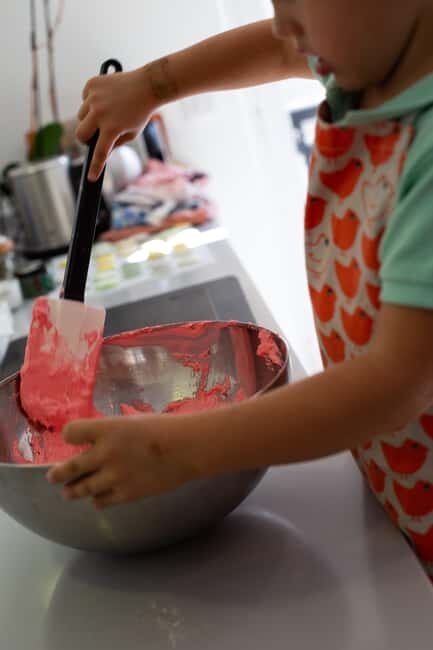
- 4) The hands-on part: shells and ganache
- 5) Coffee or tea and tasting time
- What makes it feel age-appropriate for kids 3+
- Who should bring their kids?
- The teacher’s role: patient help, not a hard sell
- Tools that match real life at home
- Price and value: is $182 per person worth it?
- Logistics you should know before you go
- What you learn that goes beyond the plate
- You’ll learn the basics of French baking prep
- You’ll learn how macarons are different from biscuits
- You’ll taste the result of doing it by hand
- Who this macaron class is best for
- Should you book Kids in the Kitchen: Macaron in Paris?
- FAQ
- FAQ
- Where does the macaron class take place?
- How long is the Paris Kids in the Kitchen macaron class?
- What do participants make during the class?
- Who can attend with children?
- What languages are available during the class?
- How large is the group?
Key highlights worth knowing
- You make both parts: macaron shells and the chocolate-based ganache filling
- Simple tools, home-style results instead of industrial equipment
- Designed for kids 3+ with family-friendly teaching
- Small group format capped at 6 participants for real help
- A mini lesson with history: from origins and basics like mise en place to macaron vs biscuit
Inside a private Paris apartment, where kids actually bake
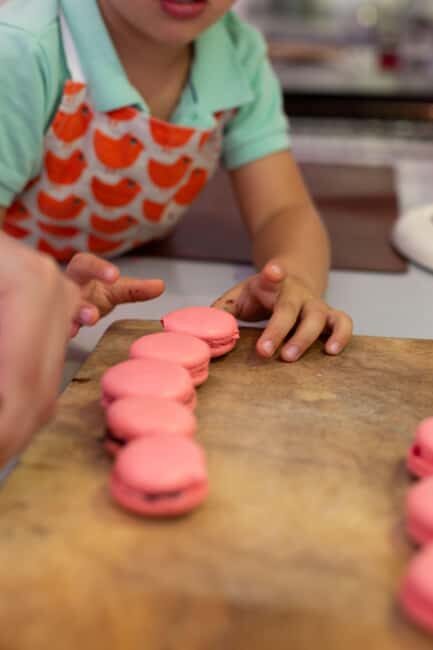
This macaron class isn’t in a big classroom. It’s in a private Parisian apartment in the Ile-de-France area, set up for a hands-on baking session with a small group (6 people max). That matters more than it sounds. When you’re squeezed into a larger space, kids often lose focus. Here, the room size and group limit help the instructor keep an eye on everyone’s hands, timing, and batter consistency.
The vibe is local in a very practical way: you’re working at a real home-style kitchen setup rather than standing in a demo line. The workshop also sticks to a kid-friendly plan, starting with the groundwork and then building up to the parts that can go wrong if you’re rushed.
And yes, it’s still French baking. You’ll learn the why behind what you’re doing, not just copy a step and hope it works.
You can also read our reviews of more tours and experiences in Paris.



The 90-minute plan: what you do from first step to final taste
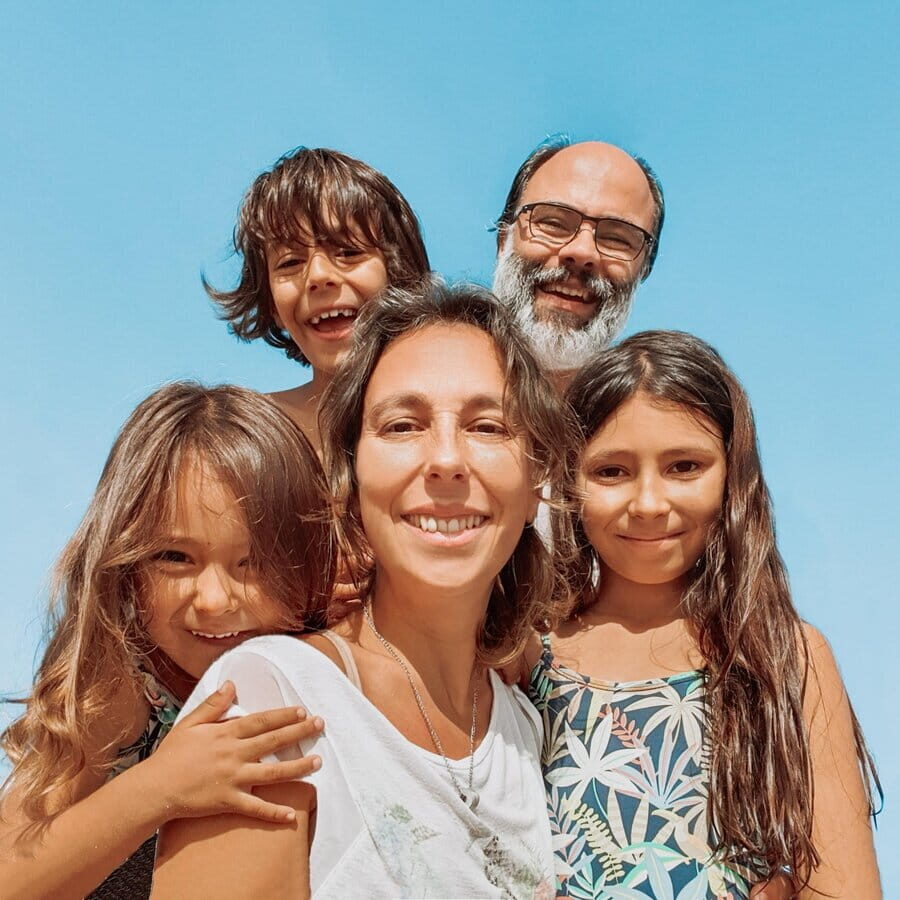
The class runs for about 90 minutes, and it’s structured like a guided recipe + lesson combo. While you’re baking, you’re also getting short, clear explanations meant for kids starting at age 3 and up, along with the adults in the group who want it to make sense.
Here’s the flow you should expect:
1) Mise en place: the calm before the baking
You begin with la mise en place, which is French for setting up everything you need before you start mixing. This isn’t just a fancy term. In a kid class, mise en place is what keeps the activity from turning into chaos.
Practical impact for you: your child (and you) get a clear sequence and fewer interruptions. You’re not hunting tools or ingredients mid-recipe. You’re learning that baking is part prep, part timing, part attention.
2) A quick history thread: macarons from the 16th century
Next, the lesson travels across time. The class includes a brief look at where macarons come from, including the fact that macaron dates back to the 16th century. It turns the session from a simple cooking activity into something more like a story you can repeat at dinner.
This kind of context is surprisingly helpful for kids. It gives meaning to the steps. You’re not just pressing buttons; you’re part of a tradition.
3) Macaron vs biscuit: a simple skill many people miss
You also cover the difference between a macaron and a biscuit. This is a great lesson for first-timers because the names get mixed up all the time, especially in tourist shopping. Knowing the difference helps you buy better, talk about what you ate, and appreciate why macarons are so particular about texture.



4) The hands-on part: shells and ganache
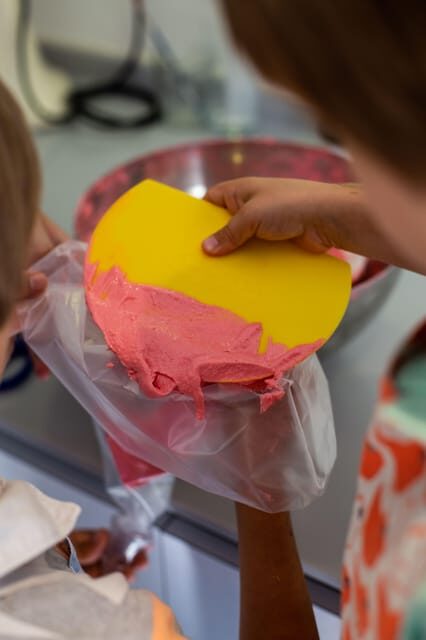
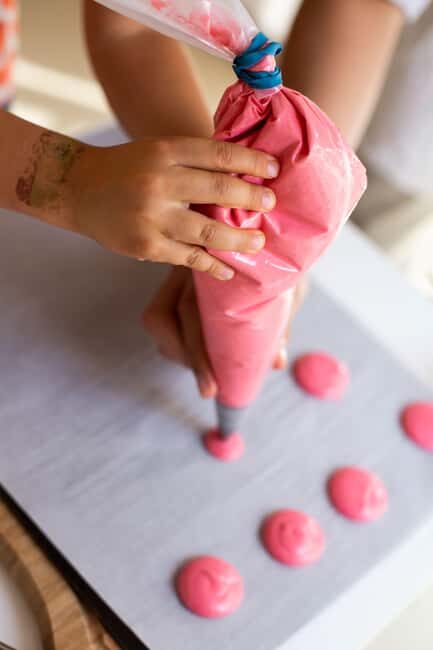
Then you get into the core activity: making macaron shells and preparing ganache as the filling. The ganache is described as chocolate-based cream, and you’ll be making it as part of the class, not just eating the finished result.
For families, this “two-part” structure is gold. Kids often do better with a clear start and stop. You’re building something you can point to, and by the end you have a finished macaron idea that feels real.
5) Coffee or tea and tasting time
Coffee or tea is included. In a small-group class, this also becomes the wrap-up moment: you can compare results (yours vs your neighbor’s) and ask questions without feeling rushed or embarrassed.
What makes it feel age-appropriate for kids 3+
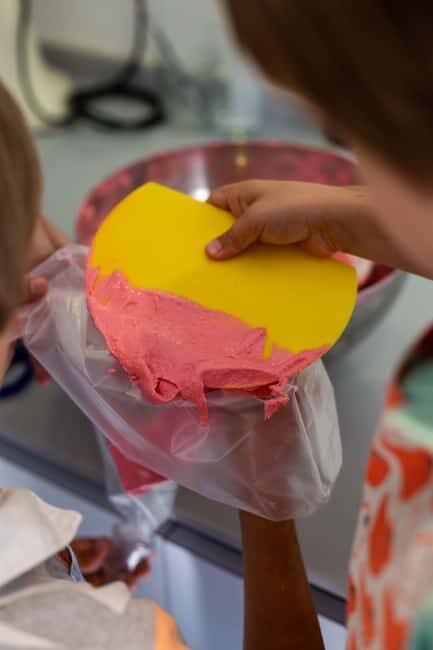
This workshop is explicitly designed for kids starting at 3 years old and for families. That doesn’t mean every 3-year-old will bake every step perfectly. But it does mean the pacing, language support (English or Spanish), and activity setup are built around small hands and short attention spans.
The best part is that the instruction aims for both kids and adults at once. The class uses tools that are simple and similar to what you might have at home. So when your child says, I want to do it again, you’re not stuck with equipment that’s only available in commercial kitchens.
From the review feedback, the instructors are consistently described as kind, talented, and patient, with a sense of humor that keeps kids engaged. That combination matters. Baking is a skill, but confidence is what keeps people trying the next batch.
Who should bring their kids?
- Families with kids ages 3 and up who like hands-on activities
- Adults who want a guided lesson without feeling talked down to
- Parents who want something structured enough to actually finish, not just start and stop
The teacher’s role: patient help, not a hard sell
In a baking class, the instructor can make or break the experience. The teaching style here seems to focus on patience and clear guidance, which is especially important with kids and with a technique like macarons that can be finicky.
Even if you’ve made cookies before, macarons require more care. In a small group, the instructor can correct issues sooner. That’s the real value of the setup: small group size plus attentive teaching means you’re less likely to waste the whole session.
One more helpful detail: the class is led by an instructor who works in English and Spanish. That’s practical if your family includes multiple languages at home. Everyone can follow along without you doing extra translation duty.
Tools that match real life at home
The class highlights that it uses simple tools, not industrial ones. That choice is meaningful for you.
If you’ve ever taken a cooking class that uses specialized gear, you know what happens next: you forget the method because recreating it becomes a hassle. Here, the goal seems to be the opposite. You’re practicing techniques and working with tools that feel familiar, so it’s easier to try again later.
That also makes it more reassuring for parents. You’re not paying for a one-time, unreachable demo. You’re learning a process with materials you can manage at home.
Price and value: is $182 per person worth it?
The price is listed at $182 per person for a 90-minute session, with a small group capped at 6. That sounds steep until you break down what you’re actually paying for.
You’re paying for:
- A private apartment setting in central Paris
- Ingredient/materials for the experience
- An apron borrowed for the class
- Coffee or tea included
- Instruction specifically built for kids (starting at 3) and families
- Hands-on making of both macaron shells and chocolate-based ganache
If you compare this to generic cooking lessons, the value improves because you’re doing more than one part of the recipe and learning a technique that usually takes practice to get right. And because it’s a small group, you’re not just watching. You’re getting help.
The one cost trade-off: you’re paying for personalized attention rather than a cheap, high-throughput class. If you prefer hands-off experiences or you only want to sample food, you may find it expensive for what it is. If you want a skill plus a fun family activity, it starts to feel like fair value.
Logistics you should know before you go
This class takes place in a private apartment on the 5th floor with no elevator. That’s the main practical catch. If you’re traveling with strollers, heavy bags, or anyone who needs easier access, plan accordingly. The meeting point instructions point you to a specific route guide linked here, and you’ll need to follow that to reach the apartment in the Marais area.
Also, the class is not suitable for children under 3. If you have younger kids, you’ll need to choose a different family activity for them.
On the upside, the small group (max 6) and the inclusion of aprons, materials, and coffee/tea make the experience feel “ready-to-go” once you arrive.
What you learn that goes beyond the plate
This isn’t only about producing a macaron. It’s about learning a few key concepts that help you understand what you’re eating and how macarons work.
You’ll learn the basics of French baking prep
Starting with mise en place teaches a real-world lesson: organization prevents stress. That skill transfers to any kitchen project, not only French desserts.
You’ll learn how macarons are different from biscuits
Knowing the difference between a macaron and a biscuit helps you shop smarter and eat more thoughtfully. It also makes your experience more than a single recipe night. You can talk about texture and structure with confidence.
You’ll taste the result of doing it by hand
Because you’re making both shells and ganache, the final product feels connected to your effort. Kids tend to take pride in that kind of result, even when it’s not perfect.
Who this macaron class is best for
This workshop is a strong fit if you want a family-friendly Paris food experience with real hands-on baking.
It’s especially good for:
- Families with kids age 3 to early school age (hands-on baking time is short enough to work)
- Parents who want an activity that feels local, not like a food show
- Anyone curious about macaron technique and origins, including the 16th-century reference
It may be less ideal if:
- Your group needs elevator access
- You’re looking for a big-ticket attraction with constant sightseeing
- You want only a taste or quick snack, not a skill-based baking session
Should you book Kids in the Kitchen: Macaron in Paris?
I think you should book it if your goal is a hands-on, family-friendly baking lesson where your child can participate from start to finish. The small group size, the kid-focused design, and the promise of using tools that feel like home all point to an experience built for repeatability, not just entertainment.
If stairs are a problem for your family, factor that in early because the apartment is on the 5th floor with no elevator. If you can manage that, this feels like a smart way to spend 90 minutes in Paris without losing your energy on logistics or crowds.
FAQ
FAQ
Where does the macaron class take place?
The experience takes place in a private Parisian apartment. You’ll follow the directions on the provided link to reach your apartment in the Marais area.
How long is the Paris Kids in the Kitchen macaron class?
It lasts 90 minutes.
What do participants make during the class?
You make macaron shells and a chocolate-based ganache filling.
Who can attend with children?
The class is designed for kids starting at 3 years old. It is not suitable for children under 3.
What languages are available during the class?
The instructor offers the class in English and Spanish.
How large is the group?
The group is small, limited to 6 participants.