REVIEW · PARIS
Paris: Montmartre. The old artist village+its unique charm.
Book on GetYourGuide →Operated by Paris through my eyes · Bookable on GetYourGuide
Montmartre is Paris in miniature, on foot. This tour threads you through the old artists village vibe—still known as the hill where painters and performers left their mark. You’ll move at a comfortable walking pace, with story-rich stops that connect the neighborhoods to the names you’ve heard since art school.
I particularly like the local-guide storytelling from a German perspective, plus the focus on hidden corners off the main flow. One thing to note: this is a walking tour, and it’s not suitable for wheelchair users, so comfortable shoes really matter.
In This Review
- Key highlights at a glance
- Montmartre Still Feels Like an Old Artists Village
- The Walk Begins at Moulin Rouge: A Convenient Starting Point
- Montmartre Streets and Photo Stops: What You’ll Actually Do
- The Artist Village Theme: Windmills, Names, and Local Meaning
- On Foot for 30 Minutes: Getting the Montmartre Feel
- The 18th Arrondissement Segment: More Than a View Stop
- Finishing at Sacré-Cœur: Highest Point, Big Reward
- Price and Value: Is $40 Worth It for 2 Hours?
- Pacing, Group Size, and What the Experience Feels Like
- Practical Stuff You’ll Be Glad You Know
- Who Should Book This Montmartre Walking Tour
- Should You Book This Tour?
- FAQ
- FAQ
- How long is the Montmartre walking tour?
- Where do I meet the guide?
- Where does the tour end?
- How big is the group?
- What language is the tour guide?
- How much does it cost?
- Is the tour suitable for wheelchair users?
- What is included in the price?
- What is not included?
- Is there free cancellation?
Key highlights at a glance
- Small group (max 8) for calmer, question-friendly pacing
- German live guide with an insider/outsider take on Parisian life
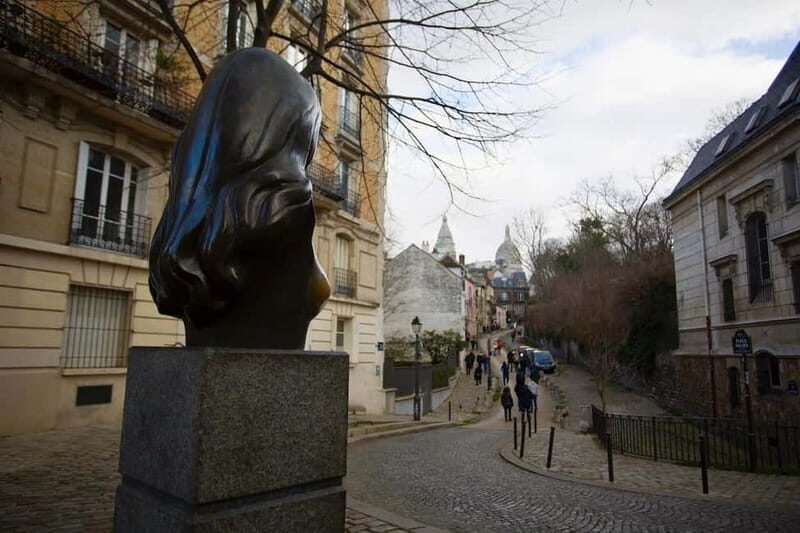
- Artist legends tied to Montmartre, from Renoir to Picasso to Dalida
- Historic hill detail: more than 30 windmills once dotted the area (pre-1900)
- Sacré-Cœur viewpoint payoff at 130 metres, the city’s highest point
Montmartre Still Feels Like an Old Artists Village
Montmartre isn’t just another Paris neighborhood. It’s the old artists village, and the tour leans into that fact hard—in a good way.
Here’s why it works: instead of treating Montmartre like a checklist of famous sights, the walk frames the area as a working creative hillside. You’ll hear the connections between place and people, with artist names like Pierre-Auguste Renoir, Edgar Degas, Henri Matisse, Pablo Picasso, Henri Toulouse-Lautrec, and even Salvador Dalí. Add in entertainers linked to the hill—Dalida is mentioned too—and the story expands from fine art to the wider cultural scene that made Montmartre famous.
That matters because it changes how you see the streets. When you’re told that the hill once held more than 30 windmills (up until 1900), the steep lanes and rooftop angles suddenly feel purposeful. You start noticing the “how” of the architecture and the “why” of the hill’s shape, not just taking photos and moving on.
The tour also aims to show you Montmartre beyond the obvious. You’ll get guided time for photo stops and sightseeing along the way, including areas described as off the beaten path. It’s exactly the kind of approach that helps you understand Paris as a real city—lived in, not staged.
You can also read our reviews of more tours and experiences in Paris.



The Walk Begins at Moulin Rouge: A Convenient Starting Point
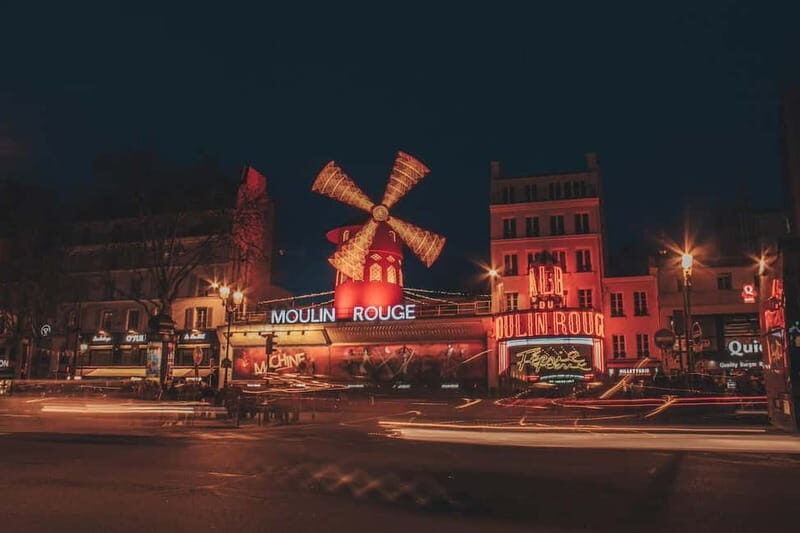
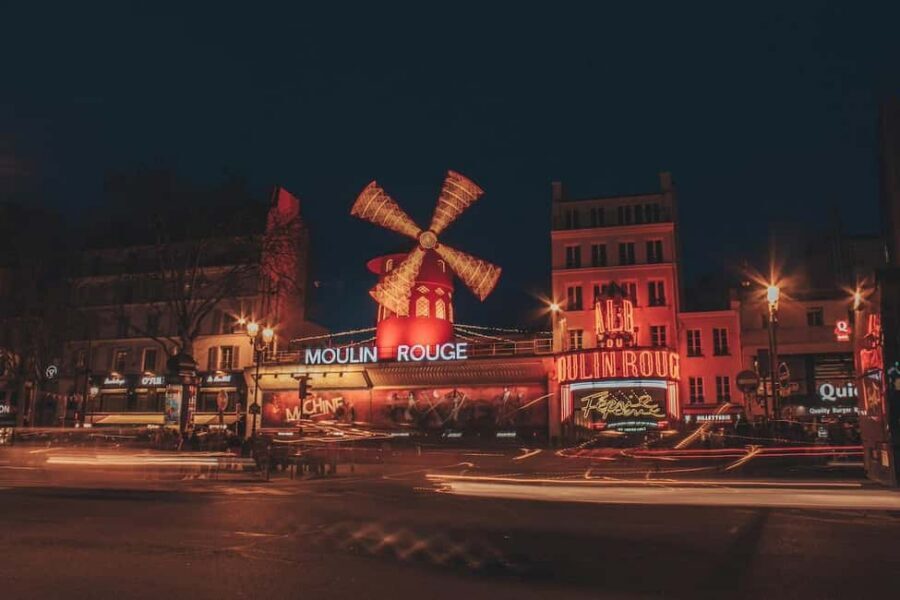
The meeting point is right by the famous Moulin Rouge theatre. You’ll meet in front of the Moulin Rouge ticket office (billetterie), and the tour is set up to start from there.
Why that matters: it’s central, easy to find compared with scattered meeting spots, and it places you close to a major landmark without making the tour feel like it’s only about the landmark.
Your guide’s base perspective also shapes the start. The tour is led by a German live guide, and the program specifically highlights the value of a German insider/outsider view. In practical terms, that usually means you get a guide who can explain what makes Paris feel “normal” to locals, while also pointing out what feels surprising or distinctive from outside. It’s a great combination for first-time visitors and repeat visitors who want a fresh angle.
The tour runs for about 2 hours, which is the sweet spot for Montmartre. Long enough to feel like you stepped into a different side of the city, not so long that you’re fighting blisters by the time you reach the big viewpoint.
Montmartre Streets and Photo Stops: What You’ll Actually Do
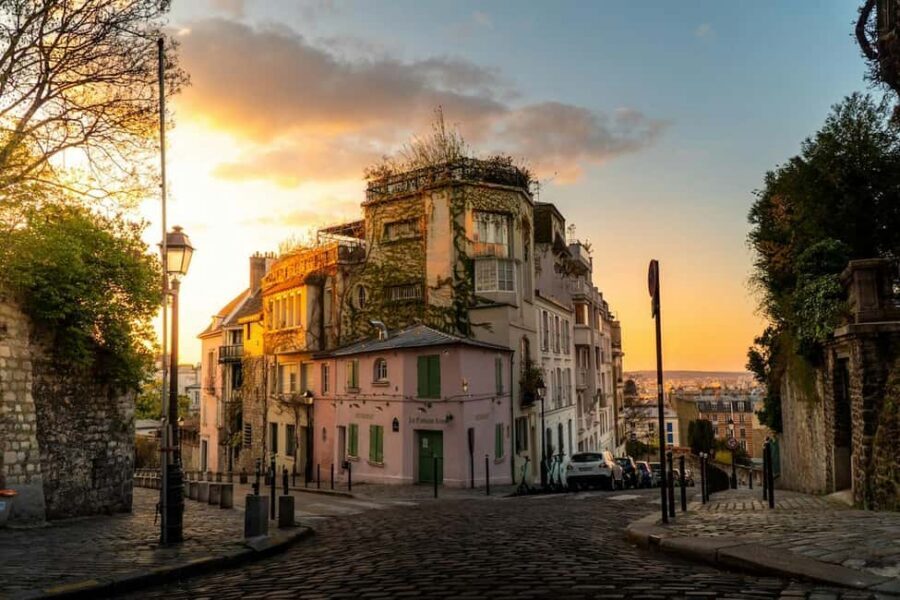
After you meet, the tour moves into Montmartre for a first block of guided sightseeing. Expect around 15 minutes at the start of the experience with a mix of photo stopping, sightseeing, and a guided walkthrough.
What to watch for in this early segment:
- You’re not just walking through busy areas. You’re guided toward streets that feel more intimate and local.
- The guide connects the artist village theme to what you’re seeing in front of you, so it feels like a story you can follow with your feet.
- Photo stops are built in, which helps if you want pictures but still want context.
The “old artists village” label can sound vague until you get on the streets. Once you’re there, it becomes very literal: charming little lanes, the visual rhythm of hillside streets, and the sense that this area has always been about creativity and climbing your way through it.
If you like city wandering but hate aimless wandering, this is a good match. The route is paced and guided, with enough structure that you won’t be constantly asking where to go next.
The Artist Village Theme: Windmills, Names, and Local Meaning
This is where the tour earns its keep. Montmartre’s big reputation can flatten it into postcard views. This walk resists that by giving you a more grounded sense of what the hill was like before it became a tourist magnet.
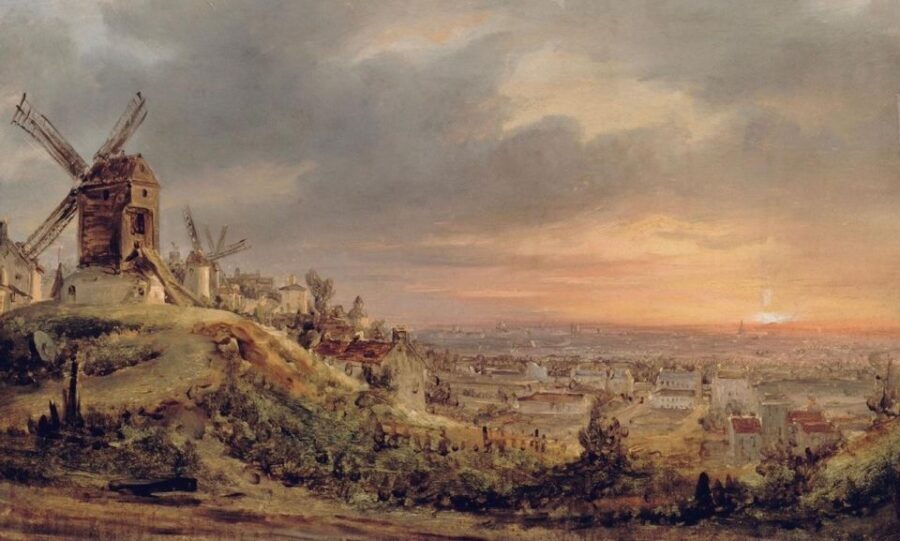
The guide frames Montmartre as it looked up until 1900, when it differed dramatically from what you see today. The key detail is the windmills: more than 30 of them once stood across the hill. That single fact is useful because it gives you a mental model. Instead of thinking of Montmartre as only “stairs and views,” you start picturing an operating landscape—something partly agricultural, industrial, or at least utilitarian, before the artistic identity took over.
Then the tour connects that setting to the people associated with Montmartre. Names like Renoir, Van Gogh, Degas, Picasso, Matisse, Toulouse-Lautrec, and others aren’t just dropped as trivia. The better part is that they help you read what you see—why artists were drawn to this place, and how a creative community can change a neighborhood’s identity over time.
And yes, there’s also a more performance-friendly side to the story, with Dalida called out among the artists/figures linked to the hill. That blend of fine art and popular culture helps the tour feel less like a museum script and more like a neighborhood narrative.
On Foot for 30 Minutes: Getting the Montmartre Feel
After the initial Montmartre segment, there’s a 30-minute walk on foot. This is the time when the tour shifts from short stops into continuous “keep moving, keep noticing” mode.
This part is especially valuable if you:
- want to see Paris at walking speed rather than bus speed,
- like discovering small street patterns and viewpoints,
- enjoy being guided through areas that aren’t the main tourist parade.
A guided on-foot stretch also helps with energy management. Montmartre is hilly. Rather than pushing you into a long, exhausting slog without guidance, the tour breaks the experience into pieces: photo stop, guided tour time, then a longer walking section where the guide can talk while you go.
Practical tip: if you usually skip the “sit down and take a break” part of sightseeing, build in your own micro-break here. The tour pace is designed for a walk, but your feet still get to decide how fast you’re comfortable going.



The 18th Arrondissement Segment: More Than a View Stop
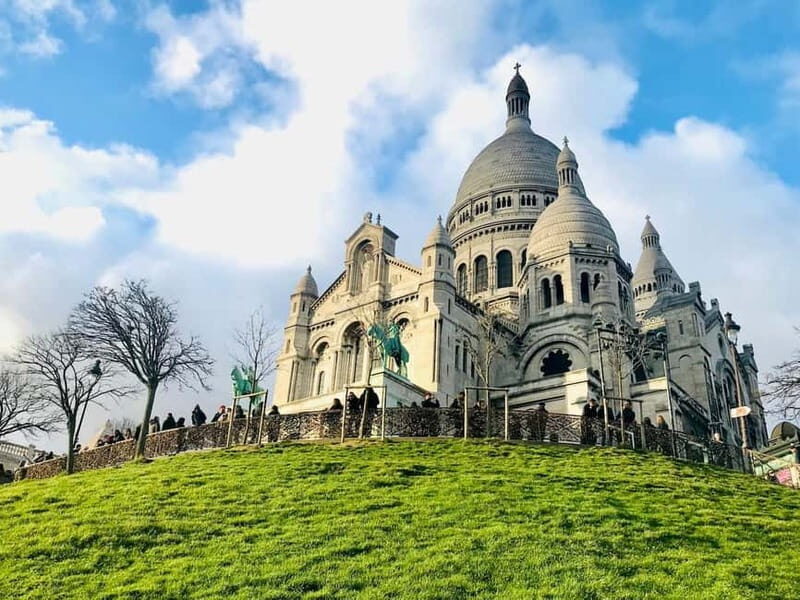
Next comes the 18th Arrondissement part, with around 20 minutes allocated for a mix of photo stop, guided tour, sightseeing, and walking.
Why this stop is worth paying attention to: Montmartre sits inside the wider 18th arrondissement identity. You’re not just climbing toward Sacré-Cœur as a separate mission—you’re experiencing the surrounding neighborhood atmosphere along the way.
In this segment, the tour keeps offering scenic viewpoints on the way. If your “Paris highlight list” is mostly museums and big boulevards, this is a different kind of value. You see how Paris looks when it’s layered—rooftops, slopes, and angles that change every few steps.
Also, the tour is described as having a focus on hidden parts of Paris, off the beaten path. In practice, that usually means you’ll spend less time stuck behind the densest crowds and more time in the kind of spots where you can hear street life and get a feel for daily rhythms.
Finishing at Sacré-Cœur: Highest Point, Big Reward
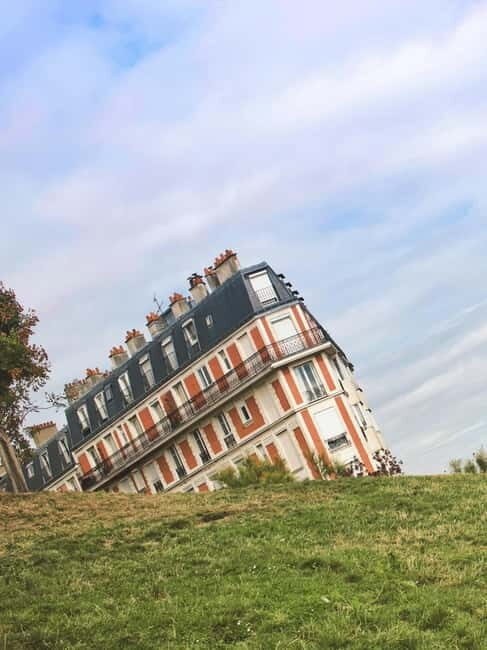
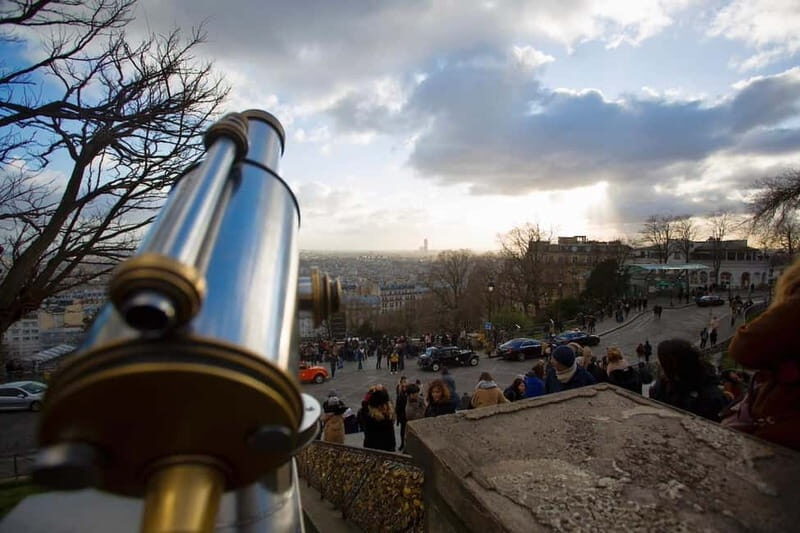
The tour ends at 1 Parv. du Sacré-Cœur, finishing near the Sacré-Cœur area. This is the payoff.
The information provided is very clear here: Sacré-Cœur sits at 130 metres, the highest point in the city. That height matters because it changes what a “view” feels like. You’re not just looking at rooftops; you’re seeing Paris spread out in layers.
Even if you’ve seen Sacré-Cœur in photos, you’ll likely notice something different from ground level and from the surrounding streets: the sense of scale. The hill gives you perspective, literally, and it’s one of the best ways to understand how neighborhoods stack and step away across Paris.
This is also where the “take a breath of fresh air above this beautiful city” feeling comes from. You’re above street level, away from traffic noise, and the air and angle make the city look more navigable—like you can actually picture where you’ll wander next.
Price and Value: Is $40 Worth It for 2 Hours?
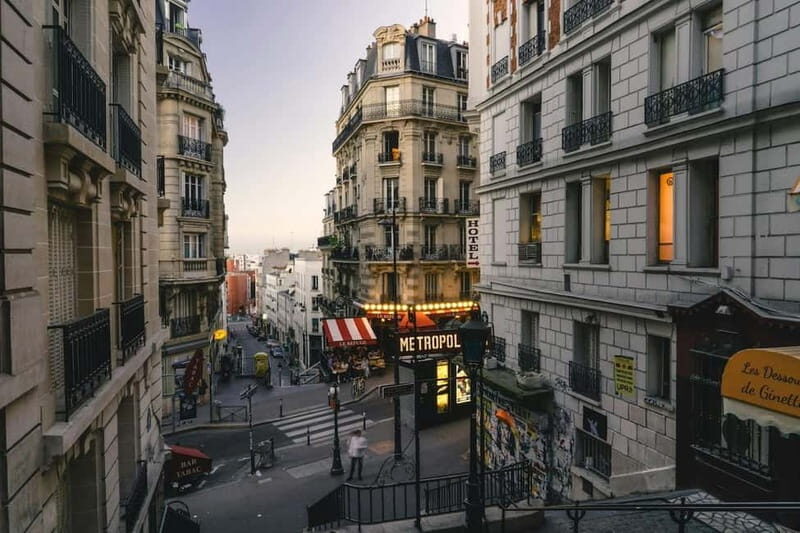
At around $40 per person for a 2-hour guided walking tour, the price lands in the “reasonable for a small-group city guide” category.
Here’s why it feels like good value:
- Small group up to 8 people means less waiting around and more guide interaction.
- The guide is live (and German), and the tour frames the perspective as an insider/outsider mix—so you’re not paying only for route knowledge.
- You get multiple built-in photo and sightseeing moments instead of one long, unstructured walk.
For me, the key value isn’t the price tag. It’s what you’re buying: context. Montmartre has a lot of famous associations, but it can turn into a blur if you don’t get a story to connect the dots. This tour spends time on how the hill looked in the windmill era and how artist legends fit into the streets you’re walking right now.
Also, the experience highlights a unique angle: the guide has lived in Paris for many years, but is German. That kind of framing often helps you appreciate what’s “Paris” about Paris, without forcing everything into a single narrative.
Pacing, Group Size, and What the Experience Feels Like

The tour is limited to 8 participants, which is a big deal on Montmartre. Crowds can turn sightseeing into elbows and constant rerouting. A smaller group helps keep the experience human-sized.
It also ties to one of the most strongly praised themes behind the tour: the guide’s storytelling and friendliness. The feedback includes thanks to Nadine for making the tour interesting and for explaining things in a way that kept attention. People also note how quickly the time passed—an honest sign that the pacing and speaking flow are working.
Expect a guided walking rhythm, with scenic views and photo stops rather than a rush to tick off every corner. You’ll be on foot, but it’s not “power walk only.” The idea is to keep you moving while letting the neighborhood sink in.
Practical Stuff You’ll Be Glad You Know
A few details can save you hassle:
- Language: German.
- Footwear: comfortable shoes are recommended (Montmartre is not a flat city).
- Mobility: not suitable for wheelchair users.
- What’s included: a guided walking tour.
- What’s not included: any purchases you choose to make along the route, plus any extra expenses.
One more point: the rules mention weapons or sharp objects aren’t allowed. This is standard safety guidance for tours, but it’s good to know if you’re traveling with any items that might fall under that category.
Who Should Book This Montmartre Walking Tour
This is a strong pick if you want:
- a guided way to experience Montmartre rather than a solo aimless wander,
- off-the-beaten-path street time and scenic viewpoints,
- an artist-village story that connects names and historical details to what you see on the ground,
- a small group setting that doesn’t feel crowded.
It’s also great if you enjoy travel experiences that give you more than a photo viewpoint. You’ll get the kind of context that makes your next stop in Paris feel smarter.
Avoid it if:
- you need wheelchair accessibility,
- you want a vehicle-based tour,
- you hate walking on hills and stairs.
Should You Book This Tour?
If you’re visiting Montmartre and you want the neighborhood explained—not just photographed—this tour is a very good bet. The combination of a small group, a German live guide, and the focus on Montmartre as an old artists village makes the experience feel purposeful.
The other reason I’d book it: the Sacré-Cœur finish is built into the route, and the guide’s stories make the climb feel less like exercise and more like understanding the place.
Book it if you want a calmer, story-forward Montmartre. Skip it if you need full accessibility or if you’d rather explore on your own with no guiding voice.
FAQ
FAQ
How long is the Montmartre walking tour?
It lasts about 2 hours.
Where do I meet the guide?
You meet right in front of the Moulin Rouge theatre at the ticket office (billetterie).
Where does the tour end?
The tour ends back at the meeting point.
How big is the group?
The group is limited to 8 participants.
What language is the tour guide?
The live tour guide speaks German.
How much does it cost?
The price is listed as $40 per person.
Is the tour suitable for wheelchair users?
No, it’s not suitable for wheelchair users.
What is included in the price?
A guided walking tour is included.
What is not included?
Any products you choose to purchase during the tour are not included, and any extra expenses are not included.
Is there free cancellation?
Yes, cancellation is free up to 24 hours in advance for a full refund.