REVIEW · PARIS
Somme Battlefields Small-Group Day Trip with John Monash Centre from Paris
Book on Viator →Operated by Paris TRIP · Bookable on Viator
Waking up early here is worth it. This full-day Somme trip turns a long drive north into a guided walk through the places where World War I still feels close. I love the way you go from the causes of the 1916 Battle of the Somme to real, named sites like Delville Wood cemetery, with its thousands of graves in Longueval.
My second favorite part is the mix of modern interpretation and raw geography. The Sir John Monash Centre is built for learning, with interactive, multimedia-style storytelling, and it sets you up to understand what you’re seeing at the cemeteries and memorials afterward.
One thing to consider before you book: it’s an 11-hour day with a very early start (6:50 am) and you’ll be on the move in outdoor settings, in all weather. Also, food and drinks aren’t included, so plan for your own lunch stop.
In This Review
- Key points at a glance
- From Paris at 6:50 am: making the drive count
- Sir John Monash Centre: modern tools for an old battlefield
- Villers-Bretonneux: the Australian memorial where Anzac Day becomes real
- Pozières and the 1st Australian Division memorial: July 1916, up close
- Longueval and Delville Wood cemetery: where respect takes over
- Lochnagar crater: one explosion, preserved forever
- Thiepval, Ulster Tower, and Newfoundland memorials: a shared map of loss
- The Historial in Peronne: turning fragments into understanding
- What you’ll need for an 11-hour day in the Somme weather
- Price and value: what you’re really paying for
- Who should book this Somme trip, and who should skip it
- Final call: should you book the Somme day trip with John Monash Centre?
- FAQ
- How long is the Somme Battlefields day trip?
- What time does the tour start, and where do I meet?
- What is the end point of the tour?
- Is food included?
- What’s included in the tour price?
- Are there any entrance fees for major sites?
- How many people are in the group?
- Does the tour run in bad weather?
- What cancellation window do I get for a full refund?
Key points at a glance
- Small-group format with English-speaking driver/guide and air-conditioned minibus comfort
- Sir John Monash Centre at Villers-Bretonneux, with modern multimedia learning
- Delville Wood cemetery at Longueval, one of the most moving stops of the day
- Lochnagar Crater preserved as a memorial, huge in scale and hard to forget
- Major memorial stops across the Somme, including Thiepval and Ulster Tower
From Paris at 6:50 am: making the drive count
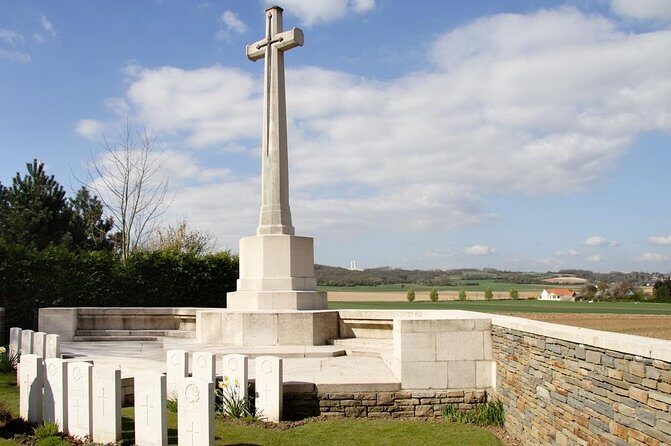
This is one of those tours where the timing matters. Pickup is early in central Paris at Le Duplex2 bis Av. Foch (75116), and you’ll leave at 6:50 am. That means less time sitting in the minivan at the end of the day, and more daylight for outdoor stops like cemeteries, trenches, and memorials.
The transport is an air-conditioned minibus, which is a big deal for a long day. You get the comfort of a smaller vehicle compared with a big coach, plus the benefit of an English-speaking guide who can explain history in the moment, while you’re traveling between sites.
The day isn’t just “see places.” It’s timed to help you connect the dots: why the battle happened, what unfolded in 1916, and how remembrance plays out today across French, British, Australian, and New Zealand memorials.
You can also read our reviews of more tours and experiences in Paris



Sir John Monash Centre: modern tools for an old battlefield
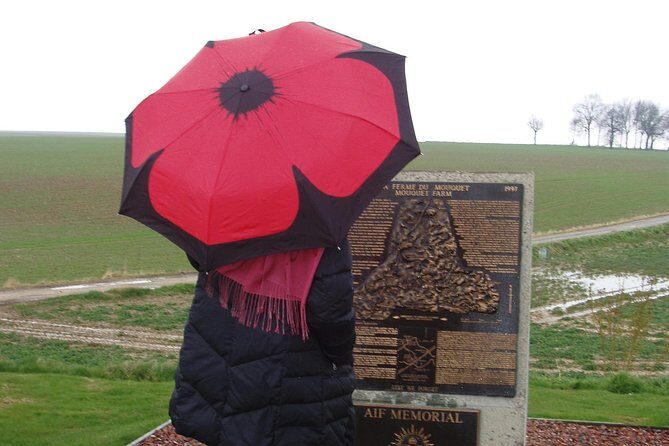
The day starts with a stop that’s easier to appreciate than it sounds. At the Sir John Monash Centre (about an hour), you’re on the grounds of the Villers-Bretonneux Military Cemetery, right beside the Australian National Memorial. This location choice matters, because it frames the whole region as a remembrance trail, not just a sightseeing route.
What I like here is the learning style. The centre uses cutting-edge multimedia and interactive installations to tell the Australian Western Front experience. Even if you’re not a WWI specialist, you’ll get a clearer sense of where the Australians fit into the broader story of the Somme—before you walk the grounds.
It’s also a confidence builder. After an interactive stop like this, the later memorials feel less like names on stone and more like places with context. And the centre’s admission is listed as free here, so you’re getting real value without spending extra.
Villers-Bretonneux: the Australian memorial where Anzac Day becomes real
From the Monash Centre, you step into the cemetery area for the Australian National Memorial (around 30 minutes). This memorial commemorates Australian soldiers who fought in France and Belgium during the First World War, with 10,729 servicemen officially commemorated there.
The most practical reason this stop is worthwhile: it helps you understand how remembrance works at a scale you don’t see at typical war cemeteries. Instead of just individual graves, you’re looking at collective commemoration—especially important for soldiers with no known resting place.
Also, this is the kind of place where anniversaries aren’t just calendar dates. The memorial hosts the Dawn Service on April 25 as part of the Anzac Day celebrations. Standing there, you’ll see why that tradition is powerful: the site itself is doing part of the remembering.
If you’re Australian (or connected through family stories), this is often the emotional anchor of the whole day.
Pozières and the 1st Australian Division memorial: July 1916, up close
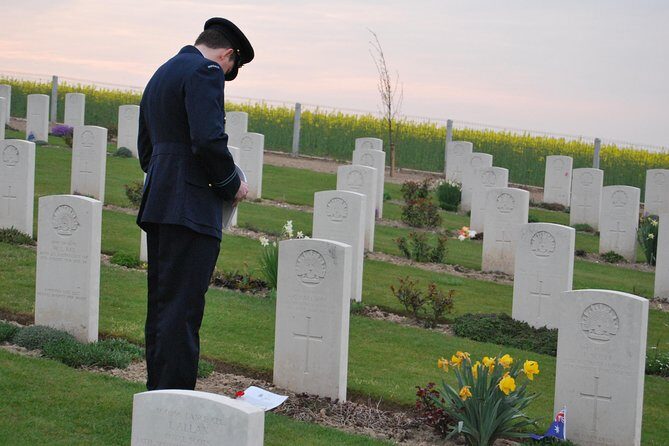
Next comes a more specific battlefield remembrance: the 1st Australian Division memorial near the ruin of the Gibraltar blockhouse. This is tied to the Australian attack that took and held Pozières village between 23 and 26 July 1916.
Even in a short stop (about 15 minutes), you can get something useful here: you can connect the dates to a place, rather than treating the Somme as a vague “big battle.” That small shift makes everything else clearer—especially when you later see other memorials that cover different national contributions.
This stop is also a reminder that battles weren’t only front-line drama. They were fought through villages, buildings, and defensive structures. The Gibraltar blockhouse reference is a good example: ruins and landmarks become time markers you can mentally “bookmark” as the day continues.
Longueval and Delville Wood cemetery: where respect takes over
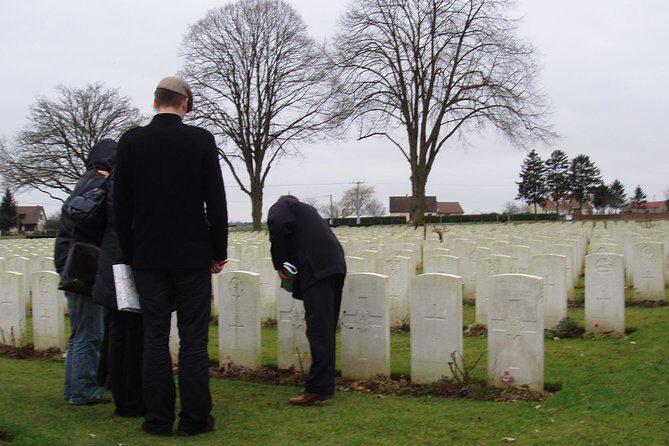
At Longueval, you visit Delville Wood cemetery, the final resting place of more than 5,500 soldiers from World War I. This isn’t a place where you’ll want to rush. The scale alone does something to your sense of numbers. Five thousand-plus is too large to hold in your head as individuals.
What makes this stop special is how it changes your pace. You’ll hear the guide’s explanation and then you’ll want silence. The cemetery setting pushes you toward reflection, because you’re not looking at abstract history—you’re looking at names and dates.
I recommend treating this as a moment for you, not a photo sprint. A lot of people forget how draining emotional history can be until they’re already standing in it. Give yourself time, and don’t plan to cram extra shopping or big meals right after.
If you want a respectful tone, aim for calm body language: slow steps, quiet voices, and a little space for the group.




Lochnagar crater: one explosion, preserved forever
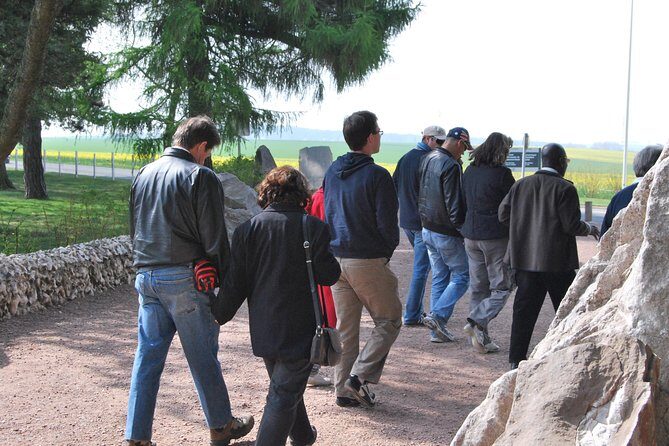
One of the most visually striking stops is Lochnagar crater. This preserved mine crater measures about 330 feet (100 meters) across, and it’s presented as a memorial. Admission here is included.
It’s hard to describe what this site does to your thinking until you’re there. The scale is so large you start picturing the surrounding terrain and the blast impact, which leads to a more grounded understanding of how engineering and artillery shaped infantry survival—and death.
This is also where you’ll likely notice how the guide’s explanations can change your perspective. Without a guide, a crater is just a crater. With context, it becomes evidence: a physical remnant of a strategy, turned into remembrance.
Plan to spend real time looking around the edges of the site, not only staring into it. The crater sits in a larger battlefield area, and the view tells a story about the ground soldiers had to cross.
Thiepval, Ulster Tower, and Newfoundland memorials: a shared map of loss
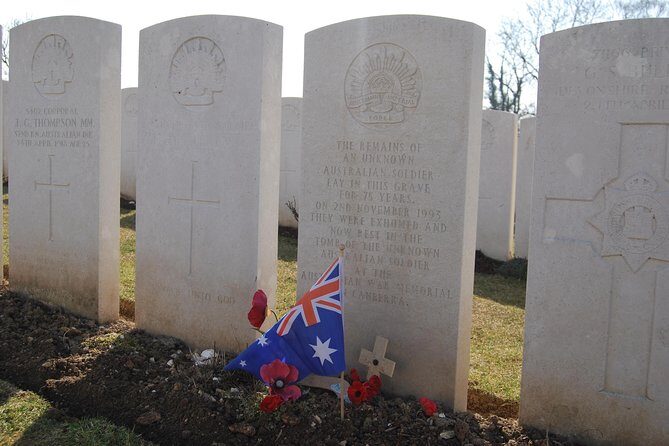
Later in the day, you’ll hit several major British and Commonwealth remembrance sites. These include the Memorial de Thiepval (where missing British soldiers are commemorated), the Ulster Tower, and the Beaumont-Hamel Newfoundland Memorial area.
What I like about this stretch is the “comparative clarity.” You’ll see how different nations remembered the Somme in different ways, even though the pain comes from the same ground. Thiepval’s focus on missing soldiers changes the way you read the names. Ulster Tower and its surrounding memorial context helps you connect Irish contributions and commemoration practices to the same 1916 geography.
Then Beaumont-Hamel adds another layer: well-preserved trenches and battlefield remains, tied to Newfoundland remembrance. Being able to connect memorial design with surviving terrain helps the day feel coherent, instead of a scattered set of stops.
One practical note: these sites can be emotionally heavy, so don’t treat this portion like a checklist. Take short pauses. The guide is there to explain, but your brain needs moments to absorb.
The Historial in Peronne: turning fragments into understanding
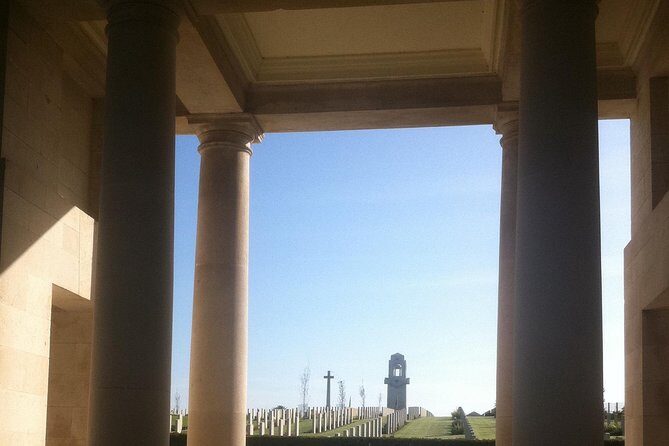
By the end of the trip, you’ll visit the Historial Great War museum in Peronne. This is the part of the day that helps you make sense of everything you’ve been walking past.
The museum is described as well-curated and it focuses on the origins and aftermath of World War I. You’ll also see more than 50,000 historic objects related to military and civilian life in wartime France.
This is where the tour earns its full-day structure. Early on, you’re learning at ground level. Later, you get context: how the war reshaped daily life, how events unfolded beyond the battlefield, and what the long aftermath looked like.
If you tend to remember places better than facts, this museum stop helps balance your brain. If you love facts, it gives you a place to anchor them. Either way, it makes the Somme day feel less like a photo album and more like understanding.
What you’ll need for an 11-hour day in the Somme weather
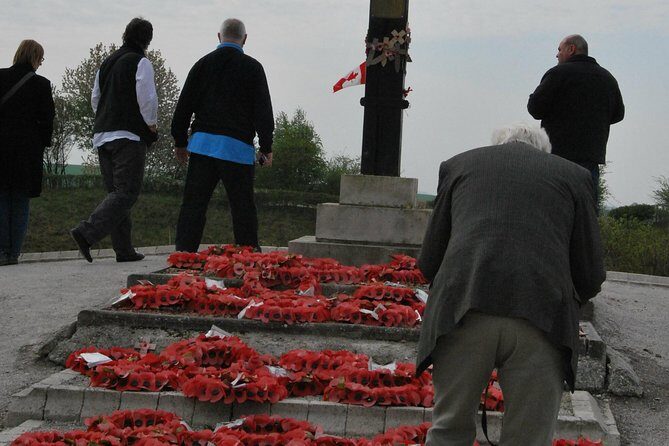
This tour operates in all weather conditions, so dress like a local who expects damp, wind, and cold at any time of year. That doesn’t mean you need special gear, but you do need layers, comfortable shoes, and a jacket you can handle outdoors for long periods.
Your physical fitness level should be moderate. The sites involve walking and time standing around outdoors. You don’t need to be an athlete, but you should be comfortable with uneven ground at memorials and battlefield areas.
Also, it’s a long day starting at 6:50 am. If you’re prone to feeling worn out early, bring a simple strategy: water, snacks for your own schedule (food isn’t included), and a small plan for when you’ll slow down emotionally (like at Delville Wood).
Price and value: what you’re really paying for
At $294.36 per person, this isn’t a bargain. But it also isn’t a basic ride-and-drop. You’re paying for a structured, guided full-day that hits multiple national memorial anchors, includes key admission stops, and keeps group size small.
Here’s the value angle that matters most: the tour is designed to connect. The Sir John Monash Centre provides interactive background, then you walk through cemetery grounds, then you see preserved battlefield remnants like the Lochnagar crater, then you finish with a museum that helps you understand the bigger arc.
You’re also getting English-speaking guidance throughout the day, not just at one or two stops. For history like this, that makes a noticeable difference. Without context, it can feel like a collection of solemn locations. With context, it turns into a map of meaning.
Two other value points:
- Air-conditioned minivan transport on a long day
- Included admissions for specific major sites like Thiepval memorial and Lochnagar crater (and entry for the Monash Centre and Australian National Memorial is listed as free in the itinerary)
Who should book this Somme trip, and who should skip it
This is a strong fit if you want an organized Somme day from Paris with a guide, but you don’t want a huge crowd. It’s also ideal if you care about Australian remembrance—because the Villers-Bretonneux area, the Monash Centre, and the Australian National Memorial are central to the route.
It can also work well for mixed interests. The itinerary includes British memorials (Thiepval and Ulster Tower), and Newfoundland remembrance is part of the regional story at Beaumont-Hamel. That balance helps people learn more than one national thread.
I’d think twice if you:
- hate long early mornings and an 11-hour schedule
- prefer very quiet, self-guided visits with no group explanation
- can’t manage moderate walking and outdoor standing for long stretches
If you’re looking for a light, carefree day from Paris, this one won’t fit. If you want a meaningful day that actually teaches you something while you walk the ground, it’s a solid choice.
Final call: should you book the Somme day trip with John Monash Centre?
I’d book it if your goal is a guided, high-impact Somme experience that links Australian remembrance to the wider Western Front story. The Monash Centre start gives you context that makes the outdoor sites hit harder. The cemetery and memorial stops do the rest, and the Peronne museum helps everything land in your head.
If you’re going, go prepared for a moving day. Bring layers, snacks for your own plan, and a little extra patience for your emotions. This tour rewards that kind of mindset.
FAQ
How long is the Somme Battlefields day trip?
It runs for about 11 hours (approx.).
What time does the tour start, and where do I meet?
The start time is 6:50 am. The meeting point is Le Duplex2 bis Av. Foch, 75116 Paris.
What is the end point of the tour?
You’ll be dropped back at the Arc de Triomphe, Place Charles de Gaulle area.
Is food included?
No. Food and drinks are not included.
What’s included in the tour price?
The price includes a small-group tour, an English-speaking driver/guide, transport by air-conditioned minibus, and all taxes, fees, and handling charges. Some site admissions are also included as part of the itinerary.
Are there any entrance fees for major sites?
In the itinerary details provided, admission is listed as free for the Sir John Monash Centre and the Australian National Memorial, and tickets are included for the Memorial de Thiepval and the Lochnagar Crater.
How many people are in the group?
The experience is presented as a small-group day trip with a maximum group size listed as 16 participants, and the description also emphasizes an intimate group size.
Does the tour run in bad weather?
Yes, it operates in all weather conditions. You should dress appropriately.
What cancellation window do I get for a full refund?
Free cancellation is available up to 24 hours in advance for a full refund. If you cancel less than 24 hours before the start time, the amount paid is not refunded.