REVIEW · PARIS
Paris: Opera Singer Guide in Montmartre
Book on GetYourGuide →Operated by La Touche Enchanté productions · Bookable on GetYourGuide
Opera meets Montmartre, no costume needed. This is a 90-minute guided & sung walk where Veronica Antonelli uses her a capella voice to turn familiar streets into living scenes from Montmartre’s legend. I love the up-close singing that sounds like it belongs to the stone and steps, and I love how the stories connect personalities, emotions, and place names into one flowing experience.
The main thing to consider is simple: you’re outdoors in rain or shine, and Montmartre is all hills and cobbles. If you hate uneven ground or long uphill stretches, plan your footwear and pacing carefully.
In This Review
- Key reasons this tour feels special
- Opera, a capella, and why Montmartre suddenly feels personal
- Meet Veronica Antonelli, and the Montmartre “soul” angle
- Starting at Abbesses: the neighborhood mood-setter
- Walking between stops: how the singing shapes the history
- Sacré-Cœur as the natural finale (not the boring ending)
- UNESCO-labeled storytelling, and what Enchanted Monuments means for you
- VIP Montmartre Enchanté and the Clos-Montmartre wine finale
- Price and value: how $41 can actually work out
- Real-world comfort: shoes, bags, weather, and walking on hills
- Who should book Montmartre Enchanté, and who might skip it
- Should you book Montmartre Enchanté?
- FAQ
- How long is the Paris Opera Singer Guide in Montmartre tour?
- Where does the tour start?
- What kind of singing do you hear during the tour?
- Where does the tour end?
- What languages are available?
- Is the tour wheelchair accessible?
- Is wine tasting included?
Key reasons this tour feels special
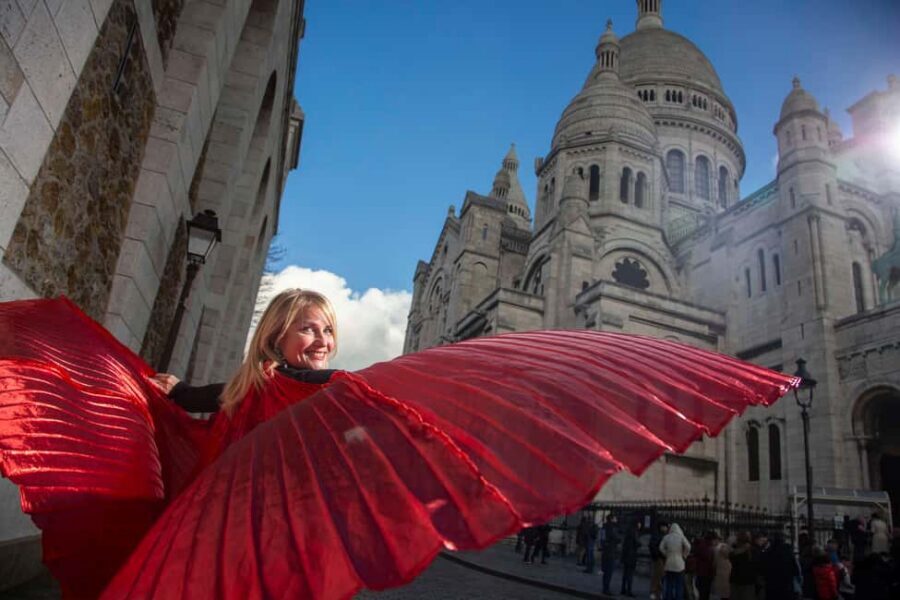
- A capella opera in real Montmartre spaces that makes the sights feel closer and more emotional
- Veronica Antonelli’s community-led storytelling tied to the Republic of Montmartre mythos
- UNESCO-labeled format adapted from Enchanted Monuments, created in Arizona in 2005
- A VIP option that ends with Clos-Montmartre wine tasting (since 2017)
- Short, focused duration (90 minutes) that fits naturally into a Paris day
- Multiple languages including English and French, plus Greek, Italian, and Spanish
Opera, a capella, and why Montmartre suddenly feels personal
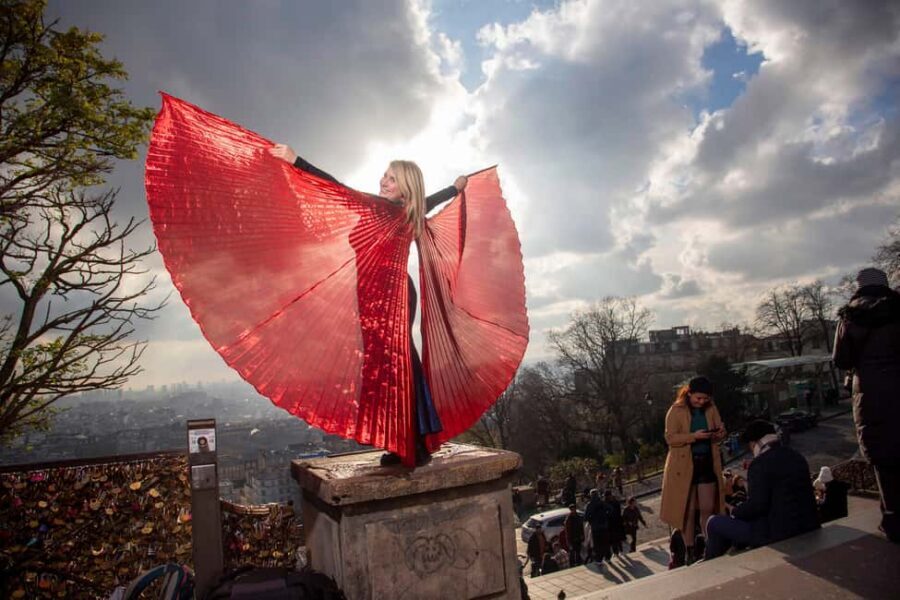
Montmartre can feel like a museum from a distance. This tour flips that idea by putting the voice first—then letting the history catch up. You’re not just looking at landmarks. You’re hearing how people once felt when they lived here, worked here, argued here, and turned their dreams into legend.
What makes it work is the way the singing and the guidance share the same breath. Songs shift the mood, then the guide lands the story behind the spot you’re standing in. So instead of a standard checklist, you get a route that feels like a small performance with an ending built toward Sacré-Cœur.
If you enjoy music, poetry, or just the emotional side of travel, this format has real power. And because it’s designed as a walking tour (not a seated show), you get to keep moving with the atmosphere instead of fighting to stay awake in a theater.
You can also read our reviews of more guided tours in Paris



Meet Veronica Antonelli, and the Montmartre “soul” angle
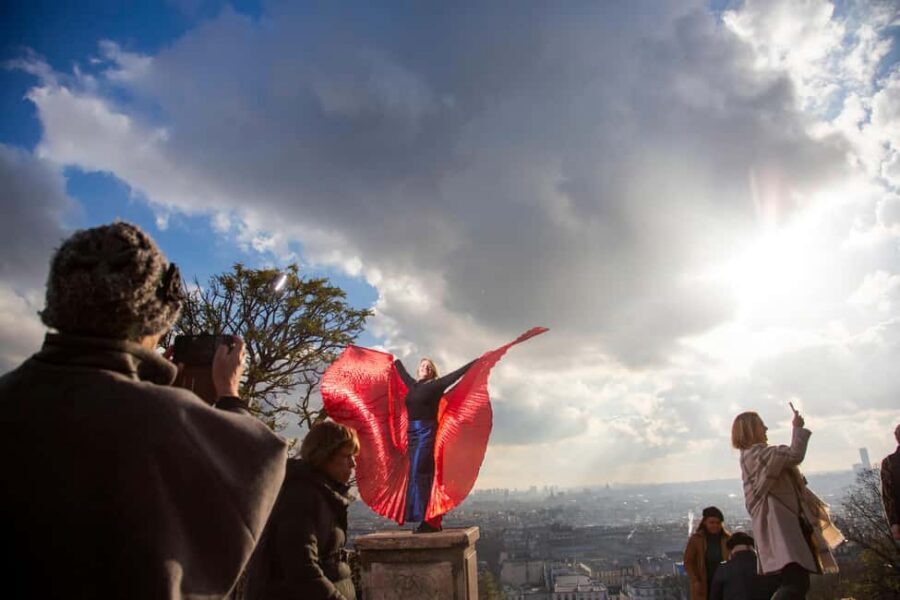
This experience is built around soprano Veronica Antonelli—described as the voice of heritage and the soul of Montmartre. The tour frames her not as an outside performer, but as someone woven into the community story. She’s presented as an ambassador of the Republic of Montmartre, a citizen of the Free Commune of Montmartre, and a mother of a P’tit Poulbot.
That matters because it changes the tone. Instead of a script that sounds like it came from a book, you get the feeling of a local using song to explain why the legends stuck. It’s a guided tour with an artist’s instincts: she carries emotion the way an opera singer does, then hands you the historical and artistic context like it’s part of the same sentence.
I also like that the tour is designed to travel well for different audiences. It’s accessible to all public and to people with disabilities, and it’s adapted for Montmartre specifically—so the concept doesn’t feel like a generic “Paris tour with music sprinkled on top.”
Starting at Abbesses: the neighborhood mood-setter
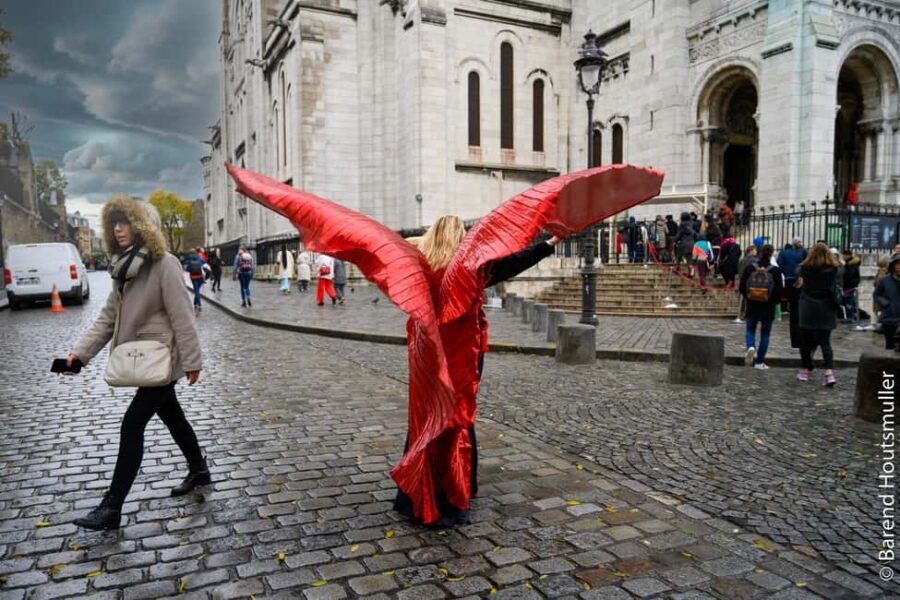
Most of the time, the experience begins around Place des Abbesses (or Abbesses as a meeting option). Starting here is smart. It places you in a part of Montmartre that feels like an actual neighborhood, not just a postcard corridor. You get into the rhythm of the hill-town early, before the crowds and viewpoints take over the mood.
From the start, you’re guided from site to site with singing used as a wayfinding tool as much as entertainment. The guide uses her a capella voice to “aim” you toward what to notice: the angle of a street, the character of a square, the feeling of a viewpoint. It’s not about standing still for long. It’s about learning how to look while you walk.
One small drawback: Abbesses and the surrounding streets can involve steps and uneven surfaces. If you’re going with a non-electric wheelchair, you’ll want to know the tour notes that you should provide an attendant to push the wheelchair. If you’re using any mobility aid and you’re unsure about what the route will require, the tour encourages you to let Veronica Antonelli know so she can adapt the experience to your needs.
Walking between stops: how the singing shapes the history
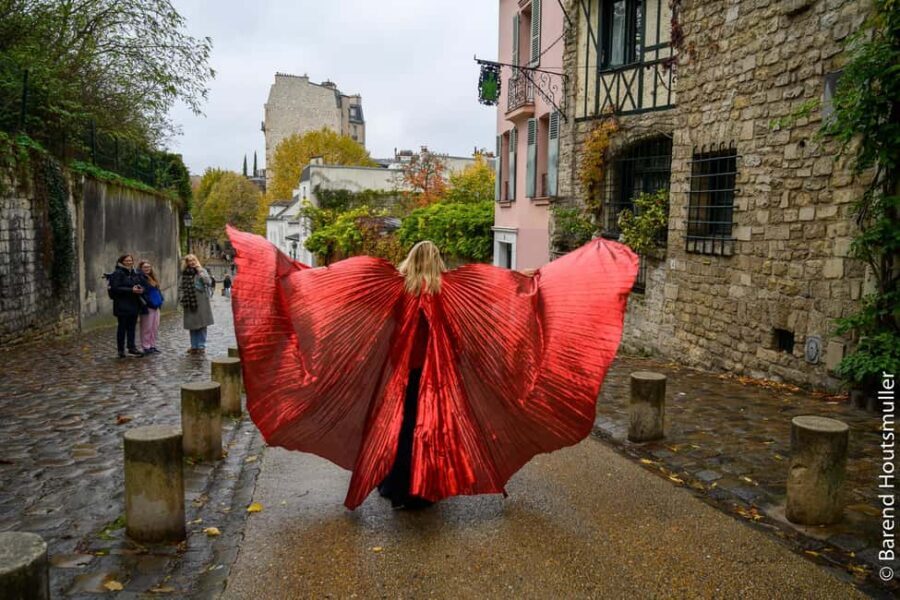
This is a “guided & sung tour,” and that phrase is the real key. In practice, it means you hear a capella opera arias along with sacred songs, French songs, and international songs. Then you get the story that turns that music into something place-specific.
The tour’s through-line is emotional. You’re guided not just by “what happened here,” but by how it feels when you stand there. Montmartre Enchanté is described as Montmartre through the emotions of the a capella voice of the opera singer. That translates into a steady sense of unfolding—like the neighborhood is telling you why it became a legend.
You also get anecdotes tied to the personalities who made Montmartre’s reputation. The tour doesn’t try to cram everything into 90 minutes. It chooses what fits the setting and the musical choices—so the result feels coherent rather than rushed.
And because it’s only 90 minutes, you can treat it as a kind of orientation for your later Montmartre wandering. Afterward, when you pass the same streets on your own, you’ll recognize the emotional “hooks” the tour gave you: the way a landmark connects to a character, the way a song theme matches the story you just heard.
Sacré-Cœur as the natural finale (not the boring ending)
The drop-off point is Sacré-Cœur de Montmartre, which makes sense. Sacré-Cœur is the big emotional landmark in the area, and it works as a landing place for a voice-led tour. By the time you reach it, the route has already trained you to listen for meaning: why people came here, what they valued, and how their dreams became part of Montmartre’s identity.
The tour is described as starting at Abbesses and moving toward Sacré-Cœur, with the climax shaped by her singing and the surrounding atmosphere. If you’re thinking you’ll just end at a viewpoint and take a few photos, that’s not the vibe. The ending is meant to feel like a proper conclusion to the musical storytelling.
Practical note: Sacré-Cœur and nearby areas can be busy, especially when the weather is good. Still, the benefit of ending here is you’ll finish at a place where it’s easy to keep exploring afterward—cafés, viewpoints, and the rest of Montmartre’s grid are right there.




UNESCO-labeled storytelling, and what Enchanted Monuments means for you
This tour comes with a UNESCO-labeled framing. That’s not a magic stamp that guarantees a good experience, but it does suggest a careful approach to preserving the feel and significance of the area.
The format is described as an adaptation of Veronica Antonelli’s Enchanted Monuments concept, created in Arizona in 2005. It’s said to be four times awarded and supported by UNESCO. In plain terms, that means the idea isn’t just “sing at tourists.” It’s a structured concept designed around authentic place-based discovery—using performance as a tool to help you (re)discover Montmartre as it was.
The best value for you is how this UNESCO-labeled concept stays practical. Instead of turning the neighborhood into a lecture hall, it turns it into a living narrative. You don’t need to be a Montmartre scholar to get it. You just need to be open to hearing the place through song, then learning why those legends matter.
Also, the tour is described as having been filmed by AFP and NBC, which hints at its visual and storytelling strength. Translation: if you like experiences that have a strong personality and clear structure, this one likely won’t feel generic.
VIP Montmartre Enchanté and the Clos-Montmartre wine finale
If you opt for the VIP version, the finale gets crowned with a tasting of the famous wine in the privatized vineyards of Clos-Montmartre. This VIP element has been offered since 2017, and it’s specifically described as a tasting rather than a full meal.
What I like about this add-on is that it expands Montmartre beyond the typical hill-and-basilica loop. The vineyards are part of the local identity, and tasting there gives you a sensory reason to remember the neighborhood. It also adds a bit of variety after 90 minutes of singing and walking.
The main consideration is that the VIP option is a different experience than the base tour. If you’re mainly in it for music and history, base Montmartre Enchanté can already be the perfect hit. If you love food and local drinks, VIP is the move.
One more practical point: the tour notes that alcohol and drugs are not allowed. That doesn’t necessarily mean you won’t taste wine on the VIP version, but it does mean you shouldn’t bring alcohol with you expecting to do your own tasting.
Price and value: how $41 can actually work out
At about $41 per person for a 90-minute private guided & sung tour, the math is pretty good—especially in Paris, where “special access” often costs a lot more. But the real value isn’t only the price tag. It’s what’s included in the package: the opera singer and guide, the a capella song set, and the UNESCO-labeled storytelling built into the route.
This is also not a long day commitment. Ninety minutes is short enough to fit into a busy itinerary, yet long enough to feel like you did something meaningful rather than just passing by sights.
It’s private and guided, so you’re not lost in a group that can’t hear the music. That matters when the core product is a voice and a performance style, not just photos and facts.
If you like flexibility, you’ll also appreciate that you can reserve now and pay later, and there’s free cancellation up to 24 hours in advance. That makes it easier to plan around weather, energy, and how your Paris day is going.
Real-world comfort: shoes, bags, weather, and walking on hills
This tour runs in rain or shine, all year round. That’s both a good thing (you’re not chasing schedules) and a practical reality (you should dress for the outdoors). The tour asks you to bring a hat and an umbrella. For Montmartre, that’s not optional advice—it’s the difference between an okay walk and a miserable one.
You should also keep footwear in mind. High-heeled shoes are not allowed, which is a nice way to prevent accidents and keep the tour comfortable. Luggage or large bags aren’t allowed either, so travel light.
Because Montmartre is made of steep streets and uneven surfaces, you’ll want to move with the pace of the singer-guide. If you know you need extra time or help with steps, let Veronica Antonelli know so she can adapt Montmartre Enchanté to your needs.
Finally, the tour is wheelchair accessible. If you’re traveling with a non-electric wheelchair, the guidance notes that you’ll provide an attendant to push the wheelchair. Getting this right ahead of time makes everything smoother.
Who should book Montmartre Enchanté, and who might skip it
Book this if you love music, storytelling, or experiences that feel like they belong to a specific place. The a capella opera approach is ideal when you want your sightseeing to have an emotional soundtrack, not just facts. It’s also a good fit if you want a focused Montmartre introduction that ends at Sacré-Cœur.
You’ll especially enjoy it if you prefer guided walking over bus tours. The route is designed for 90 minutes, moving from Abbesses toward Sacré-Cœur with a performance rhythm that keeps attention steady.
You might consider a different option if your main goal is ticking off every landmark in the area. This is not trying to be a full Montmartre encyclopedia. It’s a story-and-song tour, and it spends its time wisely on the moments that connect music to place.
Should you book Montmartre Enchanté?
I think you should book it if you want Montmartre to feel alive. The combination of Veronica Antonelli’s a capella singing, the UNESCO-labeled approach, and the personal, community-inspired tone makes this more than a standard walking tour.
It’s also a good value at $41 for a private guided experience with music built in. If you’re willing to wear comfortable shoes, bring an umbrella, and enjoy a performance style of history, you’ll get a Montmartre memory that lasts longer than photos.
If you want one “special” Paris Montmartre activity rather than ten ordinary ones, this is that choice. And if you’re the type who likes to end on a local taste, the VIP version with the Clos-Montmartre wine tasting is a strong reason to step up.
FAQ
How long is the Paris Opera Singer Guide in Montmartre tour?
It lasts 90 minutes.
Where does the tour start?
The meeting point may vary by option, with two starting options listed around Place des Abbesses (or Abbesses).
What kind of singing do you hear during the tour?
You’ll hear opera arias, sacred songs, French songs, and international songs performed a capella.
Where does the tour end?
The listed drop-off locations include the Basilica of Sacré-Cœur de Montmartre (Basilique du Sacré-Cœur de Montmartre).
What languages are available?
The live guide is available in English, Greek, Italian, Spanish, and French.
Is the tour wheelchair accessible?
Yes, it is wheelchair accessible. For a non-electric wheelchair, you’ll need to provide an attendant to push the wheelchair, and you can let Veronica Antonelli know if you have difficulty getting around so the tour can be adapted.
Is wine tasting included?
Wine tasting is included only in the VIP version, where the finale crowns with a tasting of famous wine in the privatized vineyards of Clos-Montmartre.