REVIEW · PARIS
Paris: Paradox Museum Entrance Tickets
Book on GetYourGuide →Operated by Paradox Museum Paris · Bookable on GetYourGuide
Paradox Museum in Paris is a fun test of what your eyes think they see. The ticket gets you into a one-way flow of illusion stations designed for hands-on, photo-ready moments, plus the science notes that explain why your brain gets tricked. It’s billed as the world’s largest collection of exhibits built around paradoxes, and the format makes it easy to keep moving at your own pace.
What I like most is the sheer number of stops: 90 optical illusions that turn the visit into a steady series of “wait, how did that happen?” moments. I also love that it’s not just photo ops—you get what’s going on explanations at each station, plus QR codes for extra info while you walk the maze.
One thing to consider: if you’re hoping for constant staff help at every single photo spot, it may not feel that way. The museum is interactive and friendly, but you might occasionally need to work it out on your own and then ask staff when you want help with group shots.
In This Review
- Key highlights to know before you go
- Tickets, timing, and how the museum experience actually works
- The first moments: check-in and getting oriented fast
- Inside the maze: 90 illusion stops that work as photo ops
- The science layer: descriptions and QR codes that explain the tricks
- Staff support: questions, group photos, and what to expect
- How long it takes in real life (and how to pace yourself)
- Paradox Boutique and café: how the ticket keeps paying off
- Who this museum ticket is best for
- Accessibility and comfort: planning for your body and senses
- Price and value: is $33 worth it?
- Should you book the Paradox Museum Paris ticket?
- FAQ
- How long does the Paradox Museum Paris visit take?
- How many optical illusions are there?
- What’s the latest time I can enter?
- What languages are available?
- Is the museum wheelchair accessible?
- Is it suitable for people with epilepsy?
- Is this ticket for a small group?
- What’s included with the ticket?
- Is free cancellation available?
Key highlights to know before you go
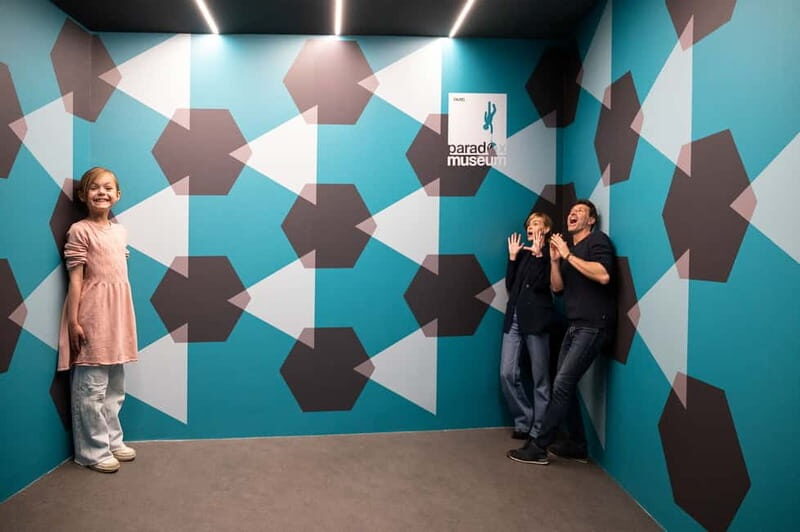
- 90 optical illusions in a one-way exhibit flow, built for repeated photo angles
- Marked photo points help you line up the shot without guessing
- On-site explanations + QR codes connect the visual trick to the science behind it
- Staff can help with questions and group photos when you need an extra hand
- Paradox Boutique and café access make it easy to extend the fun after the maze
Tickets, timing, and how the museum experience actually works

Let’s start with the practical stuff, because this museum is all about flow. Your entry is set for an average visit length of 84 minutes, and the museum runs a one-way system through the exhibits. That matters because you’re not wandering freely looking for your next “wow” moment—you’re guided along a path, station by station, until you reach the end.
A big win here is that the museum is designed to be experienced in one direction. You’re less likely to get lost, and you don’t waste time deciding what to do next. Instead, you just keep moving, trying the illusion, snapping a photo, then walking on to the next paradox. If you like structured fun, this will feel smooth.
Plan around the fact that last entry is at 6 p.m. (that’s two hours before closing). If you arrive late, you might feel rushed. I’d rather show up earlier and take your time lining up photos than squeeze everything into the final minutes.
Price-wise, you’re looking at about $33 per person for admission. For me, the value comes from two things: (1) you get access to the full exhibit experience plus the store and café, and (2) you’re paying for an interactive walk-through where you’re actively participating, not just watching. If you’re the kind of person who enjoys hands-on exhibits and photo-friendly experiences, it’s a decent buy for what you get.
You can also read our reviews of more tours and experiences in Paris



The first moments: check-in and getting oriented fast

When you arrive, you check in at the museum and then follow the signs into the exhibit maze. This is a place where being “a little early” helps. Even if you’re not early, try to get yourself settled quickly—once you’re moving, the best part is keeping the momentum.
The layout is intentionally set up for a one-way route. That means you can focus on what’s in front of you instead of constantly scanning for the next room. It also encourages you to try each station in sequence, which is exactly how the museum’s illusion design is meant to land.
If you’re with kids (or anyone who learns by doing), you’ll probably like this format. It doesn’t require reading long explanations before you try an effect. You can try the trick first, then read what’s happening after, or read as you go.
Inside the maze: 90 illusion stops that work as photo ops

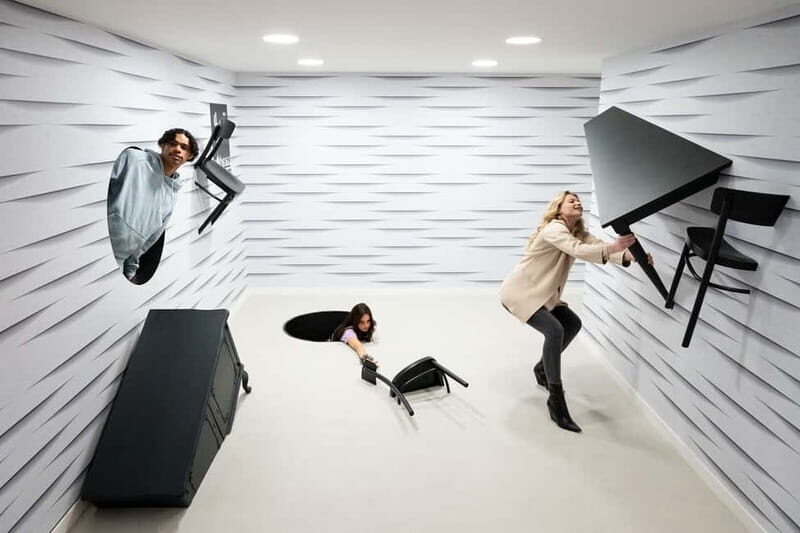
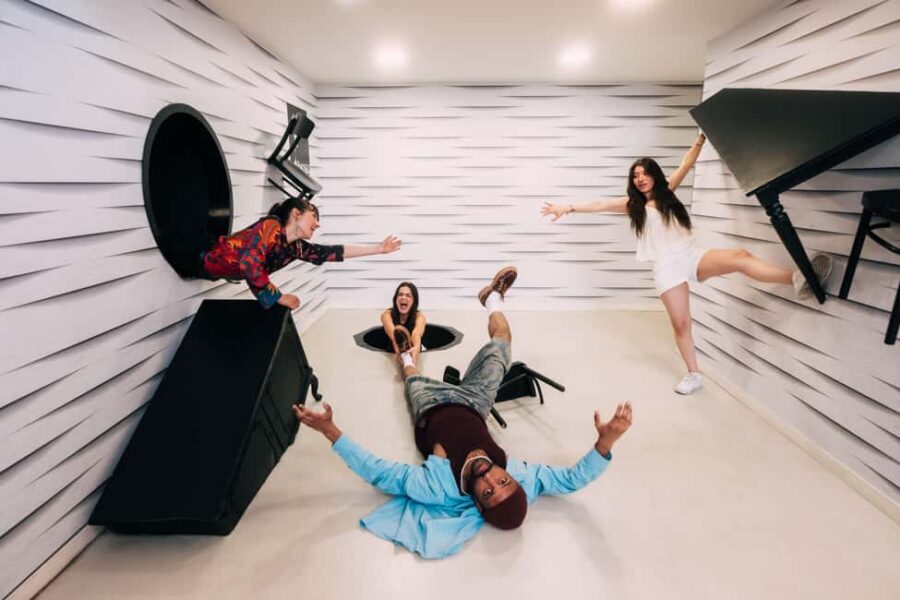
The main attraction is the run of 90 different optical illusions. Some are quick eye-trick moments; others are more involved physical setups where your position and actions change the result. The museum is set up so you can keep your brain engaged the whole time instead of waiting for one big highlight near the end.
I like that the exhibits are built around paradoxes and visual contradictions—things that seem impossible at first glance. That style is great for visitors because it doesn’t feel like one long “science lecture.” It feels like a string of playful challenges.
As you walk through, you’ll notice marked photo points. These are one of the most helpful details in the whole experience. Instead of guessing where to stand, the museum gives you a clear cue for the angle that makes the illusion work at its best. If you care about getting decent pictures without turning the experience into a frustrating photo shoot, these marks save you time.
One more practical note: if there’s a crowd, the photo points can naturally cause small bottlenecks. You might have to wait a turn for the best angle on popular stations. When that happens, I’d use the time to try another illusion nearby, or rotate through stations until the photo spot clears.
The science layer: descriptions and QR codes that explain the tricks
Here’s where the museum earns its keep beyond being just fun. At each exhibit, you’ll find descriptions that spell out what to do and what’s going on. That guidance is key because some illusions depend on exact positioning or on doing the action the right way. The notes help you avoid the common frustration of thinking you missed the trick when you might just be standing slightly off.
On top of that, there are QR codes you can scan to get more inspiring context. This is especially useful if you want to understand the science behind the paradox without slowing the whole group down with heavy reading. You can scan when you’re interested and skip when you’re just there for the visuals and photos.
Also, because it’s interactive, it gives you that rare combo: fun while you’re doing it, then understanding after. If you enjoy learning in short bursts—without turning a museum into school homework—you’ll likely appreciate this design.
Staff support: questions, group photos, and what to expect

The museum does offer staff help, and that’s a major part of the experience. You can ask questions, and you can also get help taking group photos from the staff. That’s especially useful if you’re visiting as a family and you want a photo that includes everyone.
The only caution I’d add is based on what I’ve seen in similar interactive setups: staff might not be standing right next to every single illusion at all times. So if your goal is perfect photos at every stop, be ready to self-manage a few spots. Then when you find a station where you truly want assistance, you can ask.
In practice, this creates a good balance. You aren’t constantly being guided, but you still have real human help when it counts.
You can also read our reviews of more museum experiences in Paris






How long it takes in real life (and how to pace yourself)

Your ticket is listed as 84 minutes on average. In a place like this, the biggest variable isn’t the distance—it’s how much time you spend at each illusion station, especially those tied to photo points.
If you move steadily and don’t overthink each photo, you can likely finish in the planned timeframe. If you stop often for pictures, read explanations closely, or want to redo an illusion to capture it from multiple angles, plan closer to the top end of the “about 90 minutes” feeling.
My best pacing tip: treat the visit like a playlist. Don’t get stuck on any one station for too long. If an illusion isn’t clicking, move on, then come back later if time allows. The one-way flow means you may not be able to circle forever, so keep the overall route in mind.
Also, if you’re traveling with younger kids, don’t underestimate how much joy they get from repeating the same visual trick. Kids often want one more try, and that’s not a bad thing—it just changes the timing.
Paradox Boutique and café: how the ticket keeps paying off
After the exhibit maze, you’ll end up at the Paradox Boutique, where you can pick up a souvenir or gift. This is a smart place to stop because you’ll actually have something to remember: a set of illusions you’ve just experienced, not just a generic store for tourists.
I also like that the museum includes access to a café. It gives you an easy option to recharge without hunting for food right after you finish the last illusion. Even if you don’t plan a full meal, grabbing a drink or snack can keep the visit from turning into a rushed end.
If you’re the kind of traveler who compares gift shop prices across attractions, you’ll be glad to know the boutique is not positioned as an outrageous upsell. For many people, it feels like a normal add-on rather than a forced splurge.
Who this museum ticket is best for

This is a strong choice for families. The interactive nature makes it easy for kids to participate, and it doesn’t require advanced reading or complex background knowledge. If you’re bringing a 7-year-old or a younger school kid, it can be a genuinely fun way to spend a chunk of time indoors that still feels like an adventure.
It’s also a great option for adults who like visual puzzles and science in plain language. The exhibit explanations and QR codes give you enough context that it can satisfy curiosity, not just entertain your eyes.
If you’re visiting with friends, it works for groups too. You can take pictures together at the marked spots, and staff support for group photos is a real help when everyone wants to be in the frame.
One health note: it’s not suitable for people with epilepsy. If that applies to you or someone in your group, you should plan something else.
Accessibility and comfort: planning for your body and senses
The ticket includes wheelchair accessibility, which is a big plus. Still, because this is an active museum maze with many stops, I’d think about your comfort level with walking and standing at photo points. Some illusions may require you to stand in a specific spot or move a little to see the effect properly.
Comfort tip that’s practical for any indoor exhibit: wear shoes that handle standing and short movement. It’ll make the whole 84-minute experience feel easier.
Also consider sensory comfort. You don’t have to know what you’ll see in advance, but if you’re sensitive to visual stimulation, take breaks where you need them. The museum encourages interaction, but you control your pace.
Price and value: is $33 worth it?
For $33, you’re paying for a set amount of time in a designed exhibit flow with a lot of interactive stations—plus extra time for the boutique and café. That’s the part that makes the ticket feel like more than a quick stop.
If you love taking photos, the museum’s structure helps you get good shots without turning the visit into a photo scavenger hunt. The marked photo points reduce guesswork, which means you spend time enjoying the illusion rather than fighting with angles.
If you’re coming mainly for a museum with deep historical context, this might not scratch that itch. It’s not a traditional museum. It’s closer to a science-meets-visual-art playground where the experience itself is the “story.”
So the real value question is simple: do you enjoy interactive, photo-ready exhibits? If yes, this ticket is likely a good use of your time in Paris.
Should you book the Paradox Museum Paris ticket?
I’d book it if you want a high-energy, low-stress indoor activity that works for families and also entertains adults. The combination of 90 illusion stations, photo points, and explanations with QR codes makes it feel complete rather than one-note.
Skip it (or think twice) if you need lots of constant one-on-one help at every station or you want a classic museum format. And if anyone in your group has epilepsy, it’s not the right fit.
If you’re planning a Paris day that’s a mix of famous sights and one clever indoor stop, this is the kind of attraction that earns a spot. You’ll leave with photos, new ways of seeing, and that slightly confused-but-delighted feeling that your eyes just got outsmarted.
FAQ
How long does the Paradox Museum Paris visit take?
The experience is listed as about 84 minutes on average.
How many optical illusions are there?
You’ll go through 90 optical illusions.
What’s the latest time I can enter?
Last entry is at 6 p.m., which is two hours before closing.
What languages are available?
The host or greeter is available in English and French.
Is the museum wheelchair accessible?
Yes, the experience is wheelchair accessible.
Is it suitable for people with epilepsy?
No. It is listed as not suitable for people with epilepsy.
Is this ticket for a small group?
Yes. It’s limited to 10 participants.
What’s included with the ticket?
Your ticket includes entrance to the exhibits, plus access to the store and café.
Is free cancellation available?
Yes. You can cancel up to 24 hours in advance for a full refund.