REVIEW · PARIS
Paris Private Tour to Louvre Museum & French Crepes
Book on Viator →Operated by Local CoolTour · Bookable on Viator
Paris hits different in a smart order.
This private 5–6 hour route strings together the heart of Île de la Cité, the big-name sights you expect, and a Louvre visit with an audio-guide setup that saves you time. I especially like the mix of walking and metro, because you get city flow instead of nonstop “stand and stare” mode. I also like that you’re given the Louvre entrance ticket and audio-guide as part of what you pay for. The one drawback to flag: the crêpe and cider break is only included with the Full Option, so read that part carefully before you choose.
You start at Pont Neuf and end at the Louvre, so the day has a natural arc. I’ve seen guides named Sammy, Achraf, Susan, and Brenda described as patient in warm weather and focused on keeping a good pace, which matters a lot on a walking-plus-metro afternoon.
In This Review
- Key things you’ll notice on this tour
- Pont Neuf to the Louvre: a route that actually makes sense
- Île de la Cité: bridges, squares, and the city’s power center
- Place du Pont Neuf
- Square du Vert-Galant
- Place Dauphine
- Gothic jewel time: UNESCO chapel energy and a palace-prison story
- Marche aux fleurs and Point Zéro: everyday Paris next to the big myths
- Notre Dame area note
- City Hall area and the contemporary art stop (Full Option)
- Crêperie Beaubourg: the crêpe and sidra break you’ll plan around
- Fontaine Stravinsky and Arts-et-Métiers: optional culture plus metro reality
- Fontaine Stravinsky (Full Option)
- Arts-et-Metiers and the underground feel (Full Option)
- How optional stops help
- Concorde, Tuileries, and the walk-in to the Louvre
- Louvre Museum: timed entry with audio-guide, then explore at your own pace
- Metro tickets, mobile tickets, and why the logistics matter
- Price and value: what $170.43 buys you (and when Full Option is worth it)
- Who should book this Louvre-and-crêpes tour
- Should you book this Paris private tour?
- FAQ
- How long is the Paris Private Tour to the Louvre and crêpes?
- Where does the tour start and where does it end?
- Is the crêpe and cider included in the price?
- What Louvre access do I get?
- Is the Louvre open every day?
- Are there free-entry rules for children or young adults?
Key things you’ll notice on this tour
- Pont Neuf to Île de la Cité first: you begin on the oldest Seine bridge crossing in that area, and the day builds from there.
- Sights with real Paris context: squares, markets, and monuments tied to specific dates and stories, not vague photo stops.
- Point Zéro des Routes de France: you stand at the zero marker for France’s roads, with the fun local idea that it brings you back.
- Louvre entry support without hovering: you get a ticket and audio-guide, then you explore at your own pace.
- Crêpe and sidra option at Crêperie Beaubourg: a scheduled break that only comes with the Full Option.
- Optional underground and fountain time: including an Arts-et-Métiers metro station feel and Fontaine Stravinsky sculptures.
Pont Neuf to the Louvre: a route that actually makes sense
Starting at Pont Neuf is a quiet kind of genius. You’re at a central meeting point on the Seine, and you can connect the day’s walking to what you’re seeing right away. Pont Neuf sits at the western end of Île de la Cité, and the bridge’s big claim is that it’s the oldest crossing in that area, built at the end of the 16th century. That “oldest first” approach helps you understand why the Île de la Cité area feels like the origin story of Paris.
The ending at the Louvre is also practical. After your morning/early-afternoon-style city loop, you finish where you’ll want to slow down. The tour is designed as a focused intro, not a full-day marathon that burns you out before the museum.
There’s also a smart balance to the timing. The tour runs about 5 to 6 hours, long enough to cover major highlights, but short enough that you won’t feel like Paris is trying to outrun you. Add metro tickets to the mix, and you’re not stuck “only walking” across a huge city.
One more note that can shape your expectations: it’s a private tour, meaning it’s only your group, in your language (English is listed). That matters if you want less waiting around and more control over pace.
You can also read our reviews of more tours and experiences in Paris.

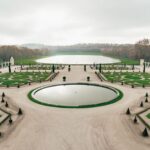
Île de la Cité: bridges, squares, and the city’s power center
The day’s first chunk is all about Île de la Cité, the island in the Seine that anchors a lot of Parisian history. You begin at Pont Neuf, then you move toward three outdoor stops that feel like they belong together.
Place du Pont Neuf
At the bridge, you get the origin context first: it’s the oldest bridge crossing the Seine on its way through Paris, and it was built at the end of the 16th century. Even if you’ve seen Pont Neuf in photos, hearing a concrete date and purpose helps you look at it differently. It stops being a “pretty postcard bridge” and becomes a piece of the city’s growth.
Square du Vert-Galant
Next is a small green pause at the end of Île de la Cité. Square du Vert-Galant is described as quiet and wonderful, and it’s tied to the romantic origin of its name. This is the kind of stop that resets you. After a walk along the water, a small park gives you space to breathe and absorb the layout of the island.
Place Dauphine
Then you hit Place Dauphine, a charming square in the center of Île de la Cité built in the 17th century. The takeaway here is that you’re not just seeing “big monuments.” You’re learning how Paris places its power and its people—squares are how the city organizes daily life around major areas.
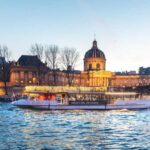
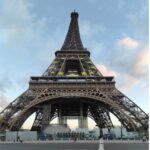

Gothic jewel time: UNESCO chapel energy and a palace-prison story
After the squares and river edges, the tour turns into “inside Paris’s dramatic chapters.” You’ll see a UNESCO heritage Gothic building that houses precious relics of Christianity. The point isn’t just the visuals. It’s the way Paris can compress faith, art, and political intent into one architectural moment.
Right after that, you’ll admire an imposing royal-residence building on the Seine banks. It later became one of the toughest prisons of the time in 1392. This is a different emotional register than the chapel stop, and that contrast is the value. It shows how quickly Paris shifts from sacred to severe, and how the same geographic zone can carry multiple roles across centuries.
A practical consideration: these are shorter stops (around 10–15 minutes each). That works best if you treat them like “set-up chapters.” You’ll leave knowing what to look for when you return on your own.
Marche aux fleurs and Point Zéro: everyday Paris next to the big myths
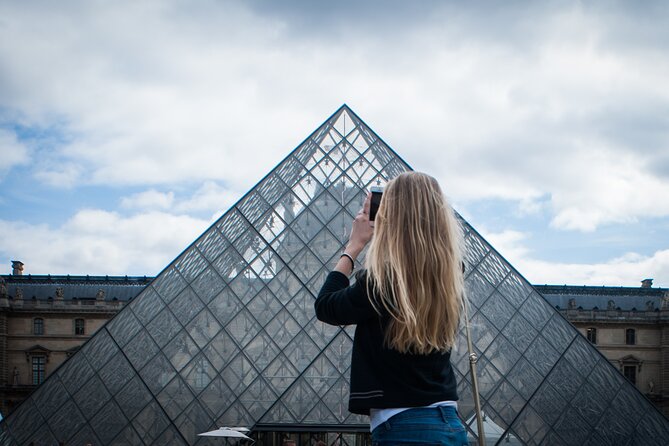
You’ll then move to Marche aux fleurs on the Île de la Cité. It’s a market by the Seine, founded in 1830. Even if you don’t buy anything, this stop helps you remember that history doesn’t only live in museums and cathedrals. It lives in markets, routines, and the kind of place where people come for flowers and daily errands.
From there, you stop at Point Zéro des Routes de France, in front of Notre Dame Cathedral. This is one of those “only in Paris” facts that actually helps with your mental map. It’s the central point used to calculate the distance of all roads in France, and there’s a local saying that if you pass over Point Zéro, you’ll surely return to Paris. Whether you believe it or not, it’s a good marker for a first-timer day.
Notre Dame area note
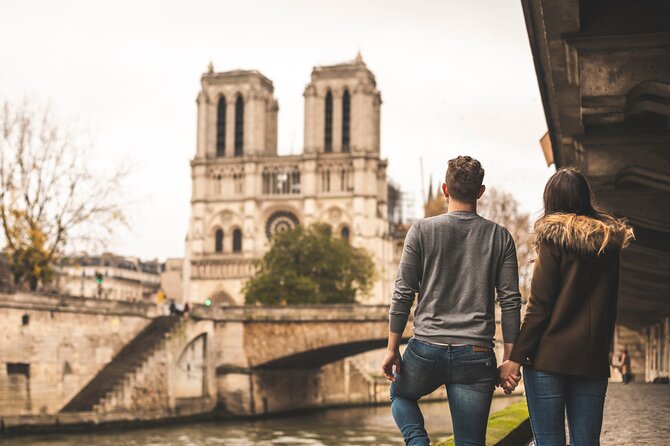
The next stop centers on a Gothic treasure dedicated to the Virgin Mary, currently being restored after the tragic fire it suffered. The tour doesn’t ask you to pretend everything is fully back to normal. Instead, it builds context so your photos feel like more than just a snapshot of scaffolding and headlines.
City Hall area and the contemporary art stop (Full Option)
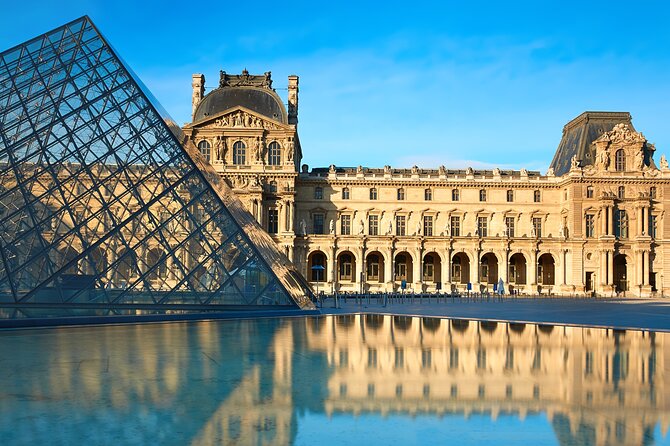
At this point, the tour heads toward a neo-renaissance palace built in the 14th century and home to Paris City Hall. Even from the outside, it’s a reminder that Paris isn’t frozen in the medieval past. It keeps layers of authority in its architecture.
Then comes an optional stop (Full Option only) tied to an architectural and cultural landmark described as the first museum of contemporary art in Europe. This is where many people get a fun “wait, we’re in Paris, not in a time machine” shift. If you choose the Full Option, you’ll have time to see why that modern turn still fits the city’s identity.
If you skip the Full Option, don’t feel like you’re missing the “real” tour. The core day still carries the classic Paris storyline through Île de la Cité and into the Louvre. This optional piece is more about adding variety, not completing a requirement.
Crêperie Beaubourg: the crêpe and sidra break you’ll plan around
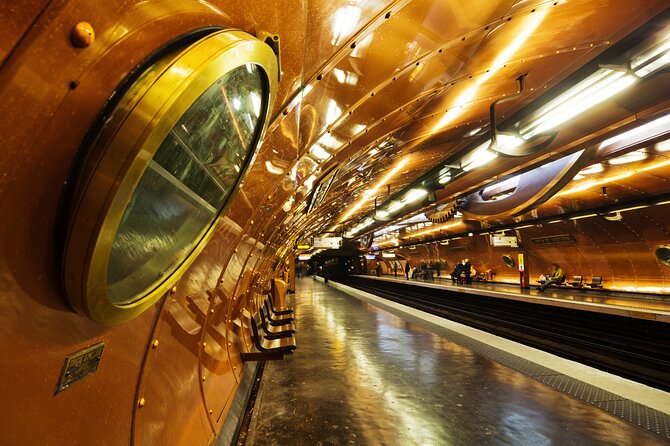
Here’s the part you can really taste: the stop at Crêperie Beaubourg for crêpe and sidra.
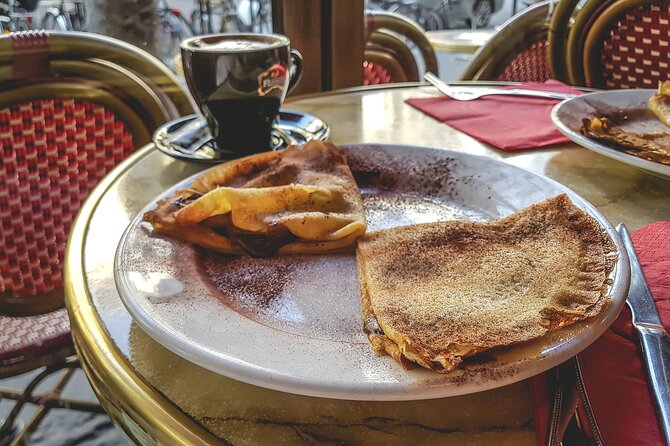
This break is Full Option only, and it’s scheduled for about 40 minutes. You sit down with your local guide and get a traditional crêpe paired with a glass of cider. The crêpe-and-cider combo is one of the cleanest ways to experience “French street flavor” without eating standing up while walking.
One review detail I found especially useful: the crêpe included both sweet and savory options. That’s a smart setup if you can’t decide. If you’re hungry after all the walking, this is also a solid buffer before the Louvre, so you’re not trying to power through the museum while your energy drops.
My practical advice: if you choose the Full Option, come hungry enough to enjoy it, not just “grab calories.” This is also a good moment to ask your guide for quick Louvre strategy, since you’ll be heading into a museum that can swallow half a day if you’re not careful.
Fontaine Stravinsky and Arts-et-Métiers: optional culture plus metro reality
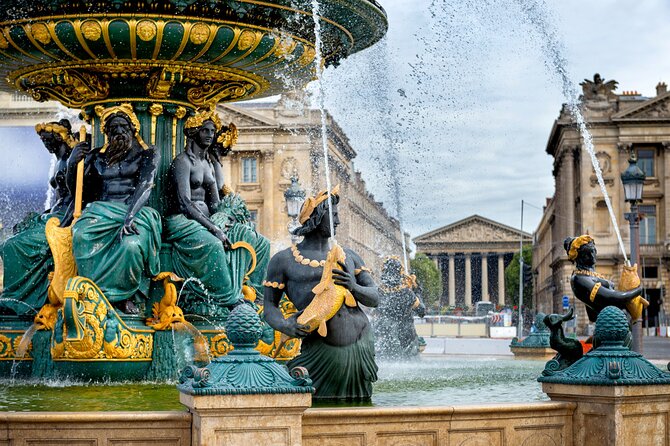
The day includes optional stops that change the rhythm and add personality.
Fontaine Stravinsky (Full Option)
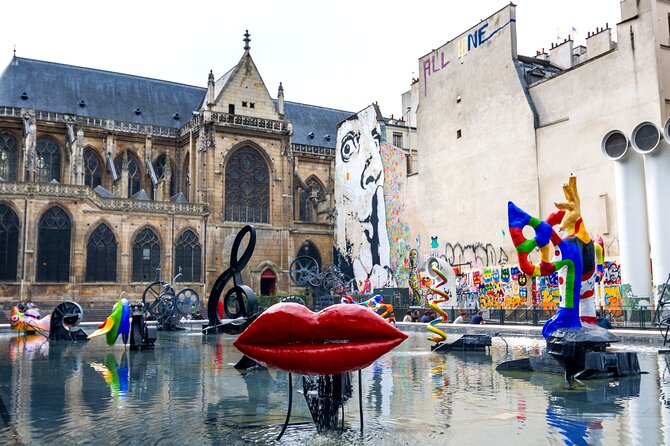
If you pick the Full Option, you’ll stop at Fontaine Stravinsky, a fountain dedicated to composer Igor Stravinsky. It has sixteen abstract sculptures, and the key value here is contrast. After all the medieval weight of Île de la Cité and Notre Dame surroundings, these abstract forms feel like a palate cleanser.
Arts-et-Metiers and the underground feel (Full Option)
Also Full Option only: Arts-et-Métiers. The description focuses on the metro station inspired by the interior of a submarine. That’s a fun detail because it turns the “we’re taking metro” part into a mini-experience. It’s also a reminder that Paris travel isn’t only above ground. Your guide helps you see that the underground can be part of the story, not just the commute.
How optional stops help
This tour gives you a baseline route even if you don’t choose every upgrade. The Full Option pieces are extra slices of Paris character. If you want a tighter “classic landmarks + Louvre” day, skip them. If you like variety, take them.
Concorde, Tuileries, and the walk-in to the Louvre
As you move toward Place de la Concorde, you’ll learn the history of Paris’s most important square tied to the French Revolution. Executions including Louis XVI and Marie-Antoinette are part of the story. That kind of context can make a square feel heavier than it looks in photos.
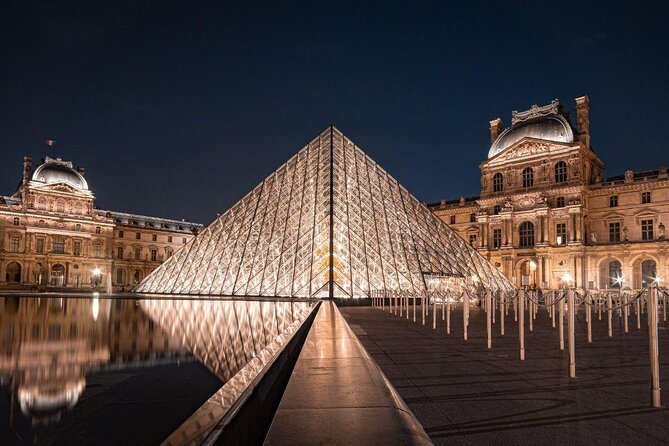
Then you connect to the Louvre through the Jardin des Tuileries, a public park linking Place de la Concorde and the museum. I like this transition because it gives your brain a “reset” walkway. You’re not instantly dropped into a museum with no breathing room. You’re closing the distance in a way that feels like walking into your next chapter.
The timing works too. The park stretch is about 15 minutes, which is enough to feel like you stepped away from the streets without turning this into a long stroll.
Louvre Museum: timed entry with audio-guide, then explore at your own pace
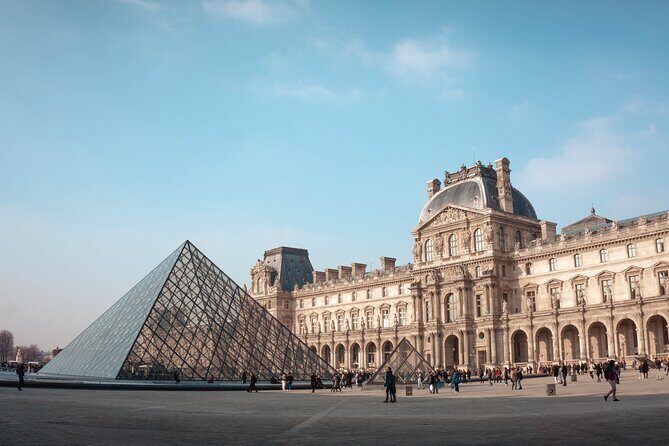
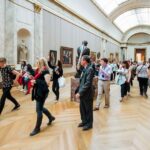
The Louvre Museum portion is built for self-paced exploring. You’ll have your private guide introduce you to the famous museum, then you’re given your Louvre entrance ticket plus an audio-guide in your language. You can stay inside as long as you like.
One key detail: a private guide inside the Louvre Museum is not included. That’s not a deal-breaker, but it does change what you should expect. You’ll be set up to navigate and understand what you’re seeing, but you won’t have someone steering you aisle-by-aisle inside the galleries.
So how do you make that work well? Use the audio-guide like your backbone, and pick a short list before you go in. The Louvre is too big to “see it all,” and trying often leads to stress instead of art time. With the guide setup, you’ll start with direction, but you’ll still control the pace once inside.
Also, check the weekly schedule. The Louvre is closed on Tuesdays. If your dates include Tuesday, this tour won’t work as planned.
Metro tickets, mobile tickets, and why the logistics matter
Paris logistics can be a headache. This tour helps by bundling a few practical pieces: metro tickets and a mobile ticket for your Louvre entry.
Why that matters: when you’re moving from the Île de la Cité area toward other neighborhoods, waiting around for transport adds up quickly. Metro tickets baked in let you keep moving with less friction, and the meeting point at Pont Neuf helps you anchor the day.
And because it’s private, you’re not managing a group’s pace in awkward ways. That’s especially important because parts of the day are walking and some people prefer more frequent breaks than others. In reviews, guides like Sammy were described as patient during warm weather and willing to slow down for cooldown breaks, which is exactly the kind of flexibility you hope for.
Price and value: what $170.43 buys you (and when Full Option is worth it)
The listed price is $170.43 per person, for about 5 to 6 hours. That sounds like a premium, so here’s the value math you can actually use.
What you’re getting:
- A private guide outside the Louvre
- Metro tickets
- A Louvre entrance ticket for adults plus an audio-guide in your language (the entrance ticket cost is listed as €22 for adults)
- A scheduled crêpe & a glass of cider only if you choose the Full Option
- A route built to keep you moving between major points, starting at Pont Neuf and ending at the Louvre
If you choose the Full Option, you’re also buying in to the meal time at Crêperie Beaubourg and additional optional culture stops (Fontaine Stravinsky and Arts-et-Métiers, plus other described Full Option moments).
When it’s worth it:
- You want an organized first day in Paris.
- You like getting context so your photos mean something.
- You prefer a plan that handles entry logistics and gives you an audio-guide rather than hiring someone to stay locked inside the Louvre for hours.
When it might not be:
- If you only want one museum and nothing else, you might do a simpler Louvre ticket + self-guided plan.
- If you want a guide constantly inside the Louvre galleries, this format may feel lighter than what you expect, since a private guide inside Louvre Museum is not included.
Who should book this Louvre-and-crêpes tour
This tour is a good fit if you:
- Are visiting for the first time and want a clear storyline from the Île de la Cité core to the Louvre.
- Want a private experience rather than joining a big walking group.
- Appreciate a lunch-break style stop with crêpe and cider, not just “snacks while standing.”
- Plan to use the Louvre audio-guide and explore independently once inside.
It’s less ideal if you:
- Want full guided expertise inside every Louvre room.
- Can’t do a lot of walking and short timed stops. This day is structured, and it moves.
Should you book this Paris private tour?
I’d book it if you want Paris to feel organized on day one: older bridge to medieval island to revolution square to Tuileries, then the Louvre with audio-guide support. The plan is designed to help you get bearings fast, and the crêpe break gives you a clear reset.
Skip the Full Option only if you’re trying to keep costs down or you don’t care about the meal and the extra cultural extras. If crêpe and sidra are part of your Paris “yes,” then the upgrade is the kind of detail that turns a museum day into a real day.
If your dates include a Tuesday, don’t book blindly. The Louvre closure means you’ll need another plan.
FAQ
How long is the Paris Private Tour to the Louvre and crêpes?
The tour runs about 5 to 6 hours.
Where does the tour start and where does it end?
It starts at Pont Neuf, 75001 Paris, France, and ends at the Louvre Museum, 75001 Paris, France.
Is the crêpe and cider included in the price?
The crêpe and a glass of cider are only included if you choose the Full Option. Without the Full Option, it is not included.
What Louvre access do I get?
You receive a €22 adult entrance ticket to the Louvre Museum plus an audio-guide in your language. A private guide inside the Louvre Museum is not included, but you can stay inside as long as you like.
Is the Louvre open every day?
No. The Louvre is closed on Tuesdays.
Are there free-entry rules for children or young adults?
Yes. Free admission applies to visitors under 18 and EEA residents under 26, with valid ID and proof of residency.