REVIEW · PARIS
Skip-the-line Les Invalides World War Museum Guided Tour – Exclusive Guided Tour
Book on Viator →Operated by Babylon Tours Paris · Bookable on Viator
World War history feels close here.
What makes this skip-the-line Les Invalides experience work is the way your English guide links the big timeline to objects you can actually see. I like how the tour keeps a tight pace for about two hours, then points you straight to the most important rooms—so you are not wandering in guesswork mode. I also love that it can be private (or small-group), which usually means more chances to ask questions and get clear answers as you go.
One thing to plan for: even with skip-the-line access, security can still create lines at points, and some rooms may have quiet or restricted speech rules. Also, the Invalides dome and museum can occasionally close, and if openings slip by more than an hour, you’ll get an alternative plan with no refunds or discounts.
In This Review
- Key things I’d bet on before you book
- Les Invalides: a museum setting that makes the wars make sense
- Skip-the-line access: what it does (and what it can’t control)
- A guided route that hits the World War I turning points in order
- Franco-Prussian roots and the road toward 1914
- The Battle of the Marne and the taxis you can see
- Original footage and the Treaty of Versailles wrap-up
- World War II: why this museum keeps the timeline in the same rooms
- Pétain, De Gaulle, and the human scale of the WWII chapters
- Normandy, Liberation of Paris, and how the tour ends with something you can still see
- Price and timing: is $159.39 per person good value?
- Practical stuff that affects how good your tour feels
- Security rules and bag limits
- Dress for entry
- Quiet or restricted speech rooms
- Physical comfort and getting there
- Mobile number needed
- What could disrupt the schedule? (And how to protect your day)
- Who this tour suits best
- Should you book this Les Invalides World War Museum guided tour?
- FAQ
- How long is the Les Invalides guided tour?
- What’s included in the ticket price?
- Is this tour private or small-group?
- Is the tour offered in English?
- Where do I meet the guide, and where does the tour end?
- Does skip-the-line guarantee zero waiting?
- Are large bags allowed inside the museum?
- Is the tour wheelchair friendly?
- What if the Invalides dome or museum is closed?
- Do I need to provide a mobile phone number?
Key things I’d bet on before you book

- Skip-the-line admission to Musée de l’Armée included, so you spend time inside, not queued outside
- Your guide leads the route to the collection highlights, not a self-guided scavenger hunt
- WWI-to-WWII storyline built around recognizable turning points and real artifacts
- Security and room rules (quiet zones, bag limits) are real, so show up prepared
- Private or small-group options help tailor how fast and how interactive you want it
Les Invalides: a museum setting that makes the wars make sense
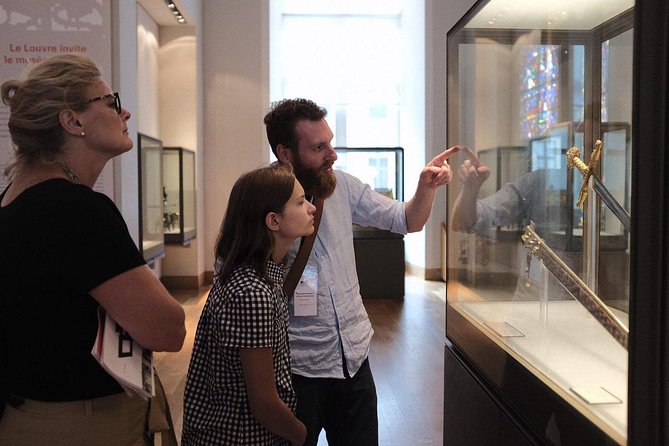
Les Invalides is one of those Paris places where the building itself pulls you into the subject. You start at the Hôtel des Invalides area, and within minutes your guide frames what you are about to see: World War I and World War II as chapters that follow one another, not separate history units.
The best part is how the tour turns familiar names into a cause-and-effect story. Your guide connects the early 19th-century roots (including the Franco-Prussian War and figures like Bismarck) to the chain of events leading into World War I. Then the narrative keeps moving—assassination of Franz Ferdinand, major battle artifacts, and the endgame at the armistice—before shifting to World War II.
If you want a museum visit that reads like a story but still feels hands-on, this is a strong format. You are not just staring at labels. You’re getting the “why this matters” in the same rooms where the evidence is displayed.
You can also read our reviews of more tours and experiences in Paris.



Skip-the-line access: what it does (and what it can’t control)
On paper, skip-the-line is simple: you get admission faster. In reality, I like to treat “skip-the-line” as a time saver, not a force field. The tour includes skip-the-line guided museum entry fees, but the museum and nearby attractions can still trigger security lines because of increased security measures.
So the way to get value is to show up ready. If you come with a phone fully charged, no large bags, and realistic expectations about security, you will feel the benefit immediately. The tour is short—about two hours—so every minute you save at the start can go toward the objects you actually care about.
Also, note the tour ends back at the meeting point at the Hôtel des Invalides, which makes it easier to keep your day structured. You’re not getting dropped across town after the last gallery.
A guided route that hits the World War I turning points in order
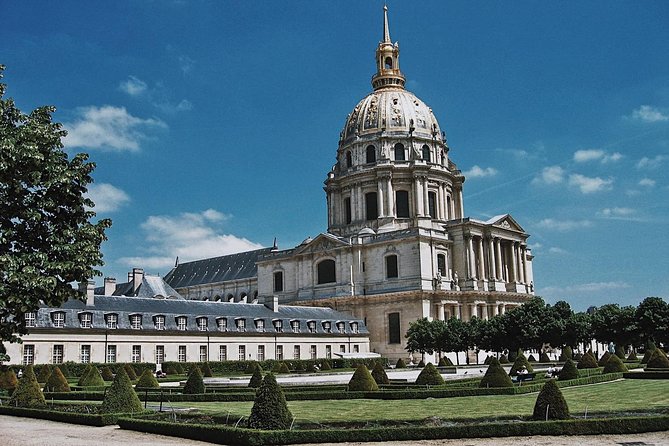
The core experience is one main museum visit at Musée de l’Armée at Les Invalides. Your guide takes you through the highlights in sequence, which is huge if you’ve ever visited a military museum and felt stuck jumping around.
Franco-Prussian roots and the road toward 1914
You begin with the 19th-century thread that sets up the chaos to come. Your guide brings in characters like Bismarck during the Franco-Prussian War, then uses that foundation to explain how Europe’s balance of power hardened over time.
From there, the tour moves into World War I triggers: the assassination of Franz Ferdinand. This is where the guided element pays off. Instead of treating 1914 as a sudden event, you’ll see it as the end result of earlier decisions, rivalries, and tensions.
The Battle of the Marne and the taxis you can see
One of the most memorable moments is being shown the equipment and artifacts tied to major battles. The tour specifically points you to the famous Battle of the Marne, including one of the iconic taxis associated with the effort. That taxi detail is more than a quirky footnote—it gives you a concrete image of how movement and urgency played out during the fighting.
If you love when history includes real-world logistics, this section usually hits the sweet spot. You get to connect tactics and timing to objects, not just dates.



Original footage and the Treaty of Versailles wrap-up
Another highlight is the inclusion of original footage that addresses the atrocities of the war. It is serious material, but it also helps you understand how the conflict’s reality shaped the terms that followed.
Then the story moves to the Treaty of Versailles and how the war ended. You’ll even see the train car where the armistice was signed. Standing in front of that kind of object helps the ending feel less like a textbook summary and more like a pivot point that changed everything afterward.
World War II: why this museum keeps the timeline in the same rooms
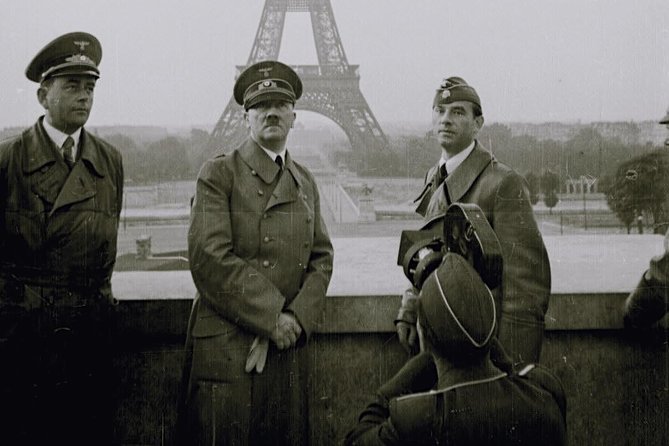
A lot of WWI-focused museum visits stop at 1918. This one keeps going, and that’s a big reason it feels efficient.
Your guide shifts to the threat of Adolf Hitler coming into reality and connects the interwar tensions to the next catastrophe. Along the way, you’ll encounter key WWII topics that give structure to what you might otherwise find overwhelming: the Ligne Maginot, Dunkerque, and the Occupation of Paris.
This is where your guide’s job matters. Without guidance, you can end up reading labels that feel random. With guidance, the artifacts become evidence supporting the storyline. You learn the why behind the what—why certain defenses were built, why particular events broke plans, and how France’s experience changed under occupation.
Pétain, De Gaulle, and the human scale of the WWII chapters
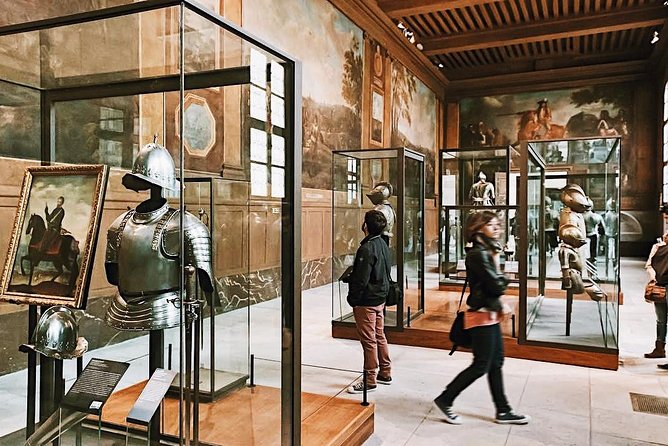
The tour also brings famous French figures into the narrative—Pétain and De Gaulle—so you are not only looking at military hardware. Your guide uses these names to explain France’s leadership and decision-making during the war, including how the country navigated those hard choices.
You also move among artifacts collected from battlefields, with your guide connecting what you’re looking at to the people and events behind it. That’s what makes it feel like more than an inventory of uniforms and weapons.
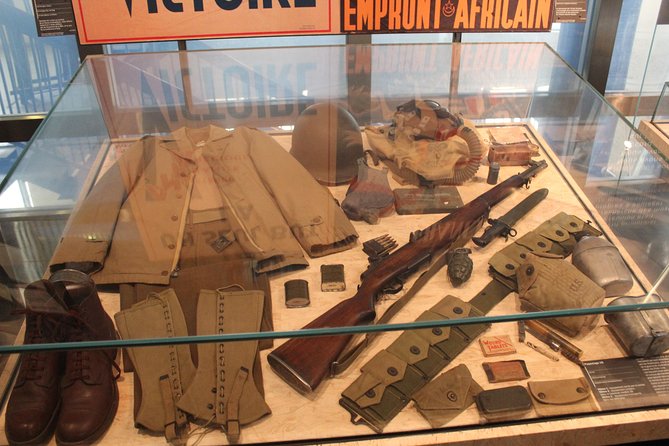
And yes, you’ll see the kinds of items you probably came for: equipment, uniforms, weapons, and battle-related artifacts. The difference is that your guide points out what to notice and how it fits into the timeline.
Normandy, Liberation of Paris, and how the tour ends with something you can still see
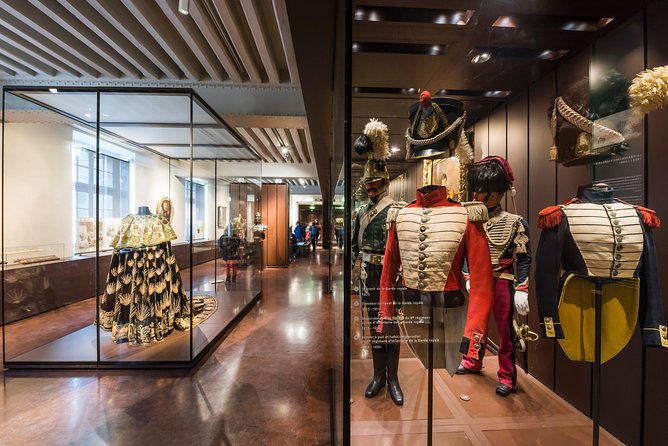
Late in the tour, the focus shifts to Normandy and the Liberation of Paris. This ending matters because it connects wartime experience to the survival of a city you can still walk through today.
Your guide wraps the WWII story around the liberation chapters and the preservation of Paris. It’s a good “so what” moment at the end of two hours, when you want your brain to feel closure instead of overload.
If you leave thinking, I understand the arc now—that’s usually why. You’re not just collecting facts. You’re leaving with a coherent storyline.
Price and timing: is $159.39 per person good value?
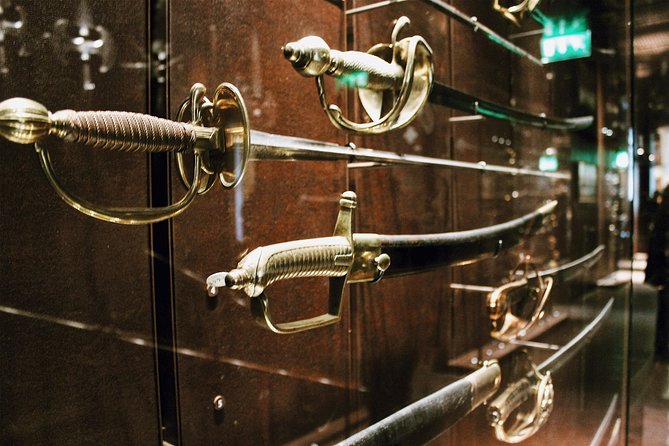
At $159.39 per person for about two hours, this tour is not cheap in the way a quick audio ticket is cheap. But it can be good value because so much is included:
- skip-the-line guided museum admission fees
- a guide who is focused on your group (private or small-group options)
- all entrance fees
- a guided route through the collection highlights
That adds up fast in a museum where you could easily spend the same two hours wandering without direction. Here, the time is “bought” in a practical way: you get a planned path through big historical events and the specific objects tied to them.
It also helps that the tour is typically booked well ahead of time—around 84 days on average—so if you have fixed dates, locking in early often makes your planning less stressful.
Practical stuff that affects how good your tour feels
A few on-the-ground details can change your experience. Here’s what I’d treat as non-negotiable.
Security rules and bag limits
No large bags or suitcases are allowed inside the museum. You’ll want to travel light—handbags or small thin bag packs are the accepted approach for security screening. If you show up with bulky luggage, you’ll lose time and feel rushed.
Dress for entry
Appropriate dress is required for entry into some sites on the tour. If you’re visiting in a way that exposes shoulders or legs in a way that might be borderline, adjust before you go. It’s easier than getting stuck mid-check.
Quiet or restricted speech rooms
Some rooms inside the museum are very quiet or have restricted right to speak. Your guide will tell you about those rules before entering, so you can follow along without feeling awkward.
Physical comfort and getting there
The tour calls for moderate physical fitness. It’s also near public transportation, and it does not include hotel pickup or drop-off. A simple Uber or taxi gets you to the Hôtel des Invalides meeting area without extra stress.
Mobile number needed
You need to provide a mobile phone number (with country code). That matters because last-minute coordination can happen, especially with museum timing.
What could disrupt the schedule? (And how to protect your day)
The Invalides dome and museum may be subject to occasional closures without prior warning. If the museum opening time is delayed by more than an hour from the tour start, you’ll be given an appropriate alternative, but refunds or discounts are not provided in those cases.
My advice: don’t stack this tour too tightly with other timed plans. Keep a buffer so that if opening delays happen, you can still enjoy the day without turning it into a scramble.
Who this tour suits best
This works especially well if you:
- want a clear WWI-to-WWII timeline in one place
- like seeing uniforms, weapons, and recognizable war-linked objects with context
- prefer a guide-led route over self-guided browsing
- are traveling with limited time and want the Musée de l’Armée highlights covered in about two hours
It’s also a good fit if you care about pacing. The tour focuses on major collection moments like the armistice train car and the Treaty of Versailles wrap-up, and it keeps the WWII chapters moving through key events like Dunkerque and the Occupation of Paris.
Should you book this Les Invalides World War Museum guided tour?
If you want the Musée de l’Armée to feel organized and meaningful, I’d book it. The guide-led storyline plus skip-the-line admission is a practical combo for a short visit, and the tour spends its time on recognizable turning points—Franco-Prussian roots, the Marne taxi connection, Versailles, the armistice car, then WWII chapters like the Ligne Maginot and Occupation—without dragging you through random rooms.
If you hate security procedures, travel with large luggage, or you’re extremely sensitive to quiet-rule rooms, plan around it (light bags, careful dress, and a calm mindset). And if your schedule is razor-tight, give yourself a buffer in case the museum’s opening timing changes.
Overall: for the money, you’re paying for direction, time saved, and a coherent World War arc in the exact rooms where the artifacts live.
FAQ
How long is the Les Invalides guided tour?
It runs about 2 hours.
What’s included in the ticket price?
The tour includes skip-the-line guided museum admission, a guide (for the private option), entrance fees, and the tour duration of 2 hours.
Is this tour private or small-group?
You can pick between small-group or private tour options to fit your preferences. Only your group participates on this private tour/activity. The guide being exclusively for you does not apply if you choose the SAVE! BOOK SEMI-PRIVATE option.
Is the tour offered in English?
Yes, it’s offered in English.
Where do I meet the guide, and where does the tour end?
You meet at Hôtel des Invalides, 75007 Paris, France. The tour ends back at the same meeting point.
Does skip-the-line guarantee zero waiting?
Not necessarily. Due to increased security measures, some lines may still form on tours with skip-the-line access.
Are large bags allowed inside the museum?
No large bags or suitcases are allowed inside the museum. Only handbags or small thin bag packs are allowed through security.
Is the tour wheelchair friendly?
It is wheelchair friendly, but this does not apply if you choose the SAVE! BOOK SEMI-PRIVATE option.
What if the Invalides dome or museum is closed?
If the museum opening time is delayed by more than 1 hour from the tour starting time, you’ll be provided an appropriate alternative. The data notes that refunds or discounts are not provided in these cases.
Do I need to provide a mobile phone number?
Yes. It’s imperative that you provide a guest MOBILE PHONE NUMBER (including country code).