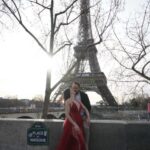
REVIEW · PARIS
Paris TV Show Tour in a Open Top Vintage French Car Citroen DS
Book on Viator →Operated by Classic 60's Paris Tours · Bookable on Viator
A vintage DS turns sightseeing into storytime. This private Paris tour blends Emily in Paris locations with real landmarks, all from a heated, open-top Citroën DS that draws instant attention on the street. You’ll get English commentary, a mobile ticket, and centrally planned stops that work well for a first day in town.
I especially love the comfort: plenty of legroom, climate-controlled warmth, and professional driving with passenger insurance. I also like that Benjamin (your driver-guide) mixes show trivia with the kind of local perspective that makes the city feel readable instead of random.
One consideration: the route packs in many stops, so you’ll usually get quick photo and look-around moments rather than long stays at each place. If you want slow-paced museum time, you’ll still enjoy the tour, but you’ll probably plan extra time separately.
In This Review
- Key things to know before you ride
- Why a Citroën DS makes the Paris TV tour feel like storytime
- Private guidance with Benjamin: show spots plus real local context
- How the 3–4 hour route actually works for your day
- Latin Quarter to Île de la Cité: where the city feels most like a novel
- Palais Royal, Opera area, and the elegant Paris centerline
- Montmartre by car: stairs, studios, and Sacré-Cœur views
- From Arc de Triomphe to the Eiffel Tower: the monuments without the planning headache
- Seine views, Louvre pyramid area, Tuileries, and Orsay
- Price, comfort, and who this tour really suits
- Weather, timing, and getting the best photos on a car tour
- Should you book the Paris Citroën DS TV show tour?
- FAQ
- What is the group size and price?
- How long is the tour?
- Is pickup included?
- Where is the meeting point if my hotel isn’t centrally located?
- What language is the tour offered in?
- Is a mobile ticket used?
- What’s included in the experience?
- What’s not included?
- Are children allowed?
- What if it rains?
- Do you get a private tour?
Key things to know before you ride
- Heated, comfy open-top Citroën DS: the car is part of the fun, not just the transportation.
- Private, end-to-end attention: you’re not stuck watching over other people’s shoulders.
- Benjamin’s style: history and Emily filming spots, with enough flexibility for your photo stops.
- A route built for short visits: you cover major districts across several iconic viewpoints.
- Central pickup/drop-off (with limits): it’s easiest when your hotel is in the core areas.
Why a Citroën DS makes the Paris TV tour feel like storytime
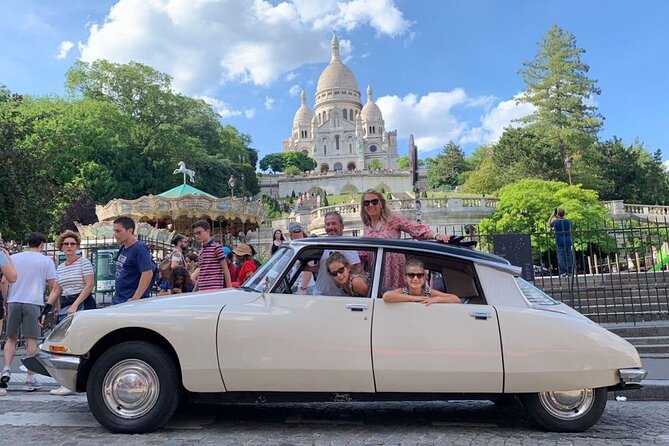
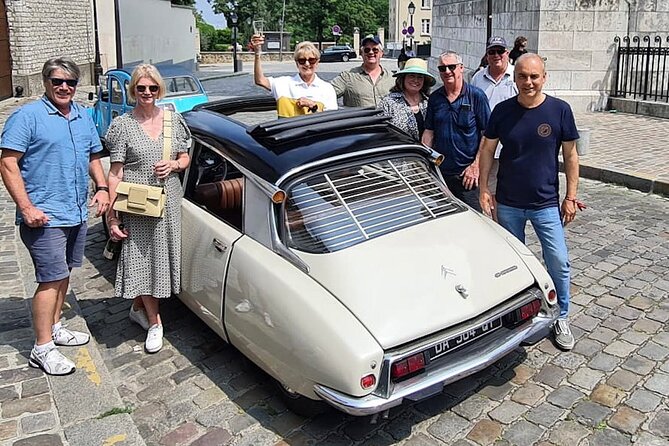
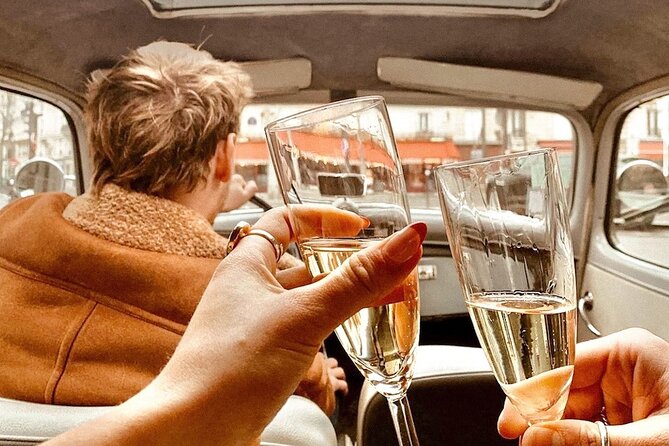
This is not a “stand on the sidewalk and wait” kind of tour. You’re riding in a vintage Citroën DS, open-top for the classic Paris photo vibe, but still practical thanks to heating and comfortable seating with lots of legroom. That combo matters because Paris weather can swing, and a chauffeured car lets you stay in the experience instead of constantly ducking in and out.
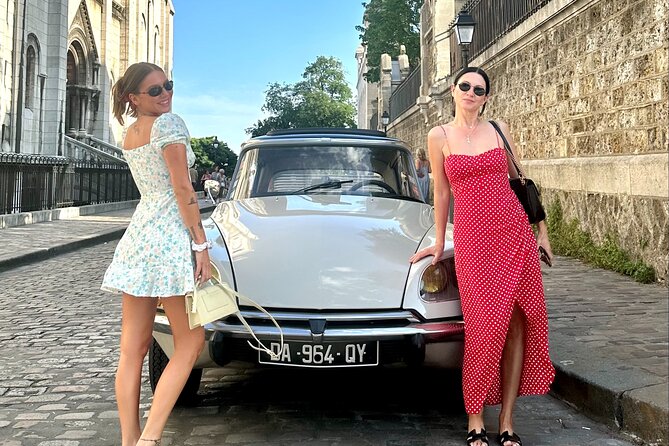
Also, the car turns every stop into a mini-event. People pause, point phones, and you’ll likely end up with more street photos than you planned. That’s not just vanity; it keeps the tour light and fun while you glide past places that are usually crowded or hard to reach efficiently.
Finally, this format helps you see the city in motion. You don’t just “visit Paris,” you get a sense of how the neighborhoods link together—Latin Quarter to the Seine, then toward Montmartre, and onward to the grand boulevards and viewpoints.
You can also read our reviews of more tours and experiences in Paris.


Private guidance with Benjamin: show spots plus real local context
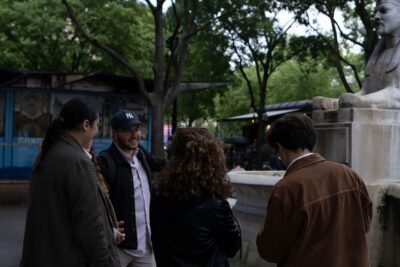
The heart of this tour is your private guide, Benjamin. Reviews repeatedly bring up his city knowledge and the way he connects storylines from Emily in Paris to what you can actually see around you. Even if you’re not a superfan, the show link helps you notice details you might otherwise miss—signs, streets, and specific viewpoints that give the city a clearer picture.
What I’d plan for: Benjamin isn’t just reciting facts. He’s the kind of guide who adjusts in the moment—stopping for photos, tailoring the pace to your group, and keeping you moving without making it feel rushed. In a private car, you can ask questions that would be swallowed in a group bus.
Safety is also part of the package. You’ll ride with a professional licensed driver with passenger insurance, and that peace of mind matters when you’re doing several short stops across busy central streets.
How the 3–4 hour route actually works for your day
This tour is designed to cover a lot in about 3 to 4 hours. That’s a sweet spot if you’re doing a quick Paris visit, want to orient yourself on day one, or simply don’t want to plan public-transport transfers across multiple districts.
You’ll also want to think about timing. The best schedules are between 10AM and 4PM to reduce traffic stress and keep the ride smooth. If you’re sensitive to schedule drift, pick one of those windows.
Pickup and drop-off are a big deal here because they keep you from wasting time. You can get picked up and dropped off at centrally located hotels of your choice inside Paris, with specific arrondissement limits. If your hotel isn’t in the included zones or isn’t centrally located, you’ll use a meeting point—either front of Hôtel Crillon (10 place de la Concorde) or front of the Panthéon (Place du Panthéon).
You should also know the tour is in English, and bottled water is included. Alcohol is not included, so if you want a celebratory drink, you’ll need to plan that separately.
Latin Quarter to Île de la Cité: where the city feels most like a novel
The first stretch puts you in the Latin Quarter—student energy, lively café streets, and major monuments close together. This area is perfect for early in the day because it gives you a sense of Paris as a place where ideas and everyday life mix.
You’ll stop near the Panthéon, a grand neoclassical mausoleum that signals the scale of French civic pride. The tour also includes a quieter square, Place de l’Estrapade, where you get an easier pace and a more “local” feeling—worth it because the Latin Quarter can feel busy if you wander aimlessly.
Next come the café legends. You’ll pass Café de Flore and Les Deux Magots, two names that instantly connect you to the idea of Paris as a meeting place for writers and artists. Even if you don’t go inside, seeing them helps you understand why they’re part of the city’s cultural mythology.
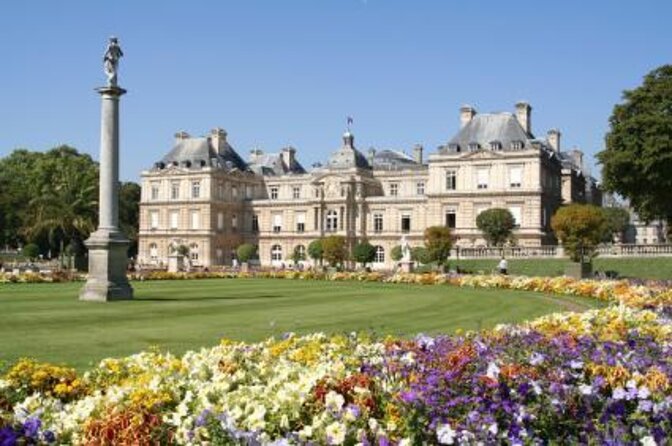
Then there’s a lovers-focused stop in the center of Paris—exactly the kind of moment where your photos matter as much as the sightseeing. From there, you get to slow down in Jardin du Luxembourg, with fountains, manicured paths, and a laid-back atmosphere that works for a short reset between monuments.
Film fans also get a specific moment at Le Champo cinema, the kind of Paris institution that feels like it belongs to the city’s daily rhythm, not just a postcard list. You’ll also make time by the Banque de Paris area, where street musicians and singers often show up—small but memorable, because it reminds you this is a living city.
The tour then moves to Île-Saint-Louis, where you can enjoy the classic Berthillon ice cream stop (the tour’s famous for it). Even if you skip the ice cream, the island setting gives you a quieter Paris pocket—narrow streets and the Seine nearby.
Finally, you reach Île de la Cité, the historic core where major landmarks cluster: Notre-Dame and the surrounding medieval street grid. The stop near Notre-Dame Cathedral is about the exterior presence—Gothic stonework that’s hard to fully appreciate unless you’re standing close. From there, you head to Pont Neuf, one of Paris’s oldest bridges, a key link back across the Seine.
If you’re the type who likes to orient fast, this whole segment is ideal: it’s history, viewpoints, and streets you’ll recognize later while walking on your own.
Palais Royal, Opera area, and the elegant Paris centerline
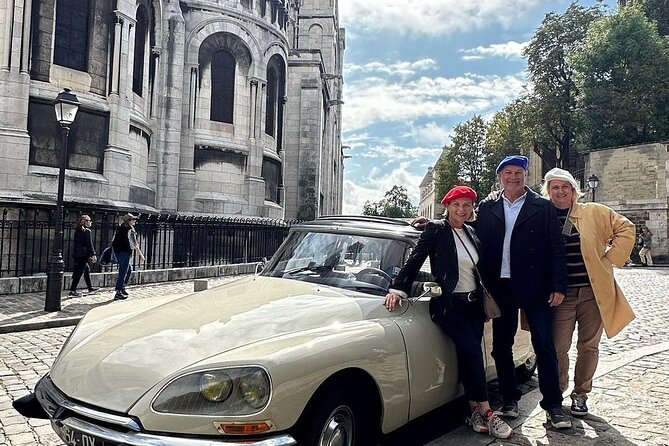
After the Seine-core, the route shifts toward the graceful, curated center: Jardin du Palais Royal first. You’ll see the palace gardens and arcades, plus the Colonnes de Buren striped columns, which are famous because they look like art and function like a meeting point. This stop gives you a breather between “big monument” moments.
You also pass Place de Valois, a calmer square with elegant architecture and proximity to cultural landmarks. Then the tour heads through the glass-roofed shopping passage vibe at Galerie Vivienne—a great contrast to open boulevards. It’s the kind of place where you’ll naturally slow down and look up at the ceiling.
From there you’ll get the luxury-culture feel at Place Vendôme, capped by the Vendôme Column. You can sense why this area became a symbol of wealth and power: it’s formal, symmetrical, and built for prestige.
Next is Opéra Garnier, ornate inside the city’s skyline—an architecture stop that feels like stepping into a grand stage set. Even with only a short stop, the building’s details and size communicate the “Paris equals art and performance” theme better than a quick scroll of pictures ever will.


Montmartre by car: stairs, studios, and Sacré-Cœur views
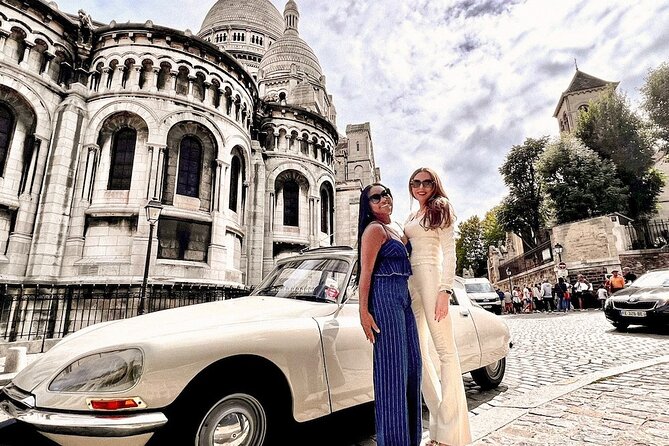
Montmartre is where the tour gets playful. You’ll start with the Montmartre stairs, climbing through narrow lanes with that old village-on-a-hill feeling. These stair-and-street sections matter because they help you experience the neighborhood’s steep geography rather than treating it like just another city district.
Then you arrive at Place du Tertre, known for its artist atmosphere and painterly scene. This is a good spot to pause and take photos, because you get a layered view: artwork in the foreground, Paris roofs beyond, and people activity around.
The route continues along Rue de l’Abreuvoir, one of those quieter lanes that still looks like Montmartre’s past. It’s a strong choice in a short tour, because you see a less obvious street texture while you still get to the big moments.
From there, it’s up to the Basilique du Sacre-Coeur de Montmartre. The “why” is simple: the white-domed silhouette is iconic, and the views over Paris are the payoff. You also get a scenic feeling around Rue Lepic, where you’ll connect local streets to famous cinema culture—there’s even a nod to Café des 2 Moulins featured in Amélie.
Montmartre’s nightlife icons show up too: Moulin Rouge is bright, recognizable, and very photogenic even from a short stop. You’ll also see La Maison Rose, a pink-painted café bistro with a strong artist-gathering reputation. It’s a great final “hang in the neighborhood” stop before moving toward the romantic photo marker at Le Mur des Je t’aime, where “I love you” appears in multiple languages.
From Arc de Triomphe to the Eiffel Tower: the monuments without the planning headache
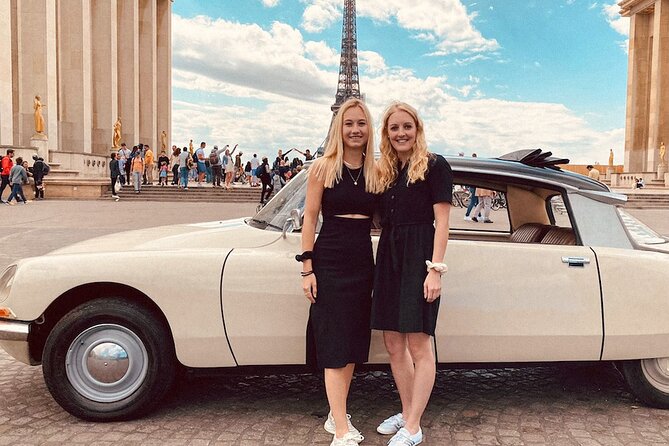
Once you leave Montmartre, the route opens up into larger Paris landmarks and wide avenues. You’ll start with Parc Monceau and the Courcelles neighborhood area, a calmer change of pace with elegant streets and park paths.
Then you’re at Arc de Triomphe, another moment where short stop time still pays off because the monument is huge and visually dominant. From there, you head toward the Eiffel Tower region with Rue de l’Université and the École Militaire, a classic 18th-century stop that gives context to the military heritage of this part of the city.
Next is the Eiffel Tower itself. Again, think “brief but meaningful.” This is where your photos and skyline memories get locked in—especially if you’re doing this early or mid-trip before you decide which areas you want to walk later.
As the route continues, you’ll pass major power and history markers like Élysée Palace and Les Invalides. You’ll also hit Pont Alexandre III, one of the most ornate bridges in Paris, with sculpted gold-toned details and sweeping views that make the Seine feel grand.
Then comes the boulevard stretch: Champs-Élysées, plus La Madeleine with its neoclassical façade and decorated interior. If you’re expecting a parade of shops, you’ll see that—but you’ll also understand why the avenue symbolizes modern France and old prestige at the same time.
The route doesn’t stop at the boulevard look; you’ll also pass Grand Palais, with its glass-domed presence that blends art, architecture, and a major exhibition-history vibe. Even when you don’t go inside, seeing the building’s scale from the street helps you understand its importance.
Seine views, Louvre pyramid area, Tuileries, and Orsay
The final chunk of the tour leans into Paris’s “soft” side: riverside scenery and museum-quarter landmarks. You’ll cross or stop around Pont de la Concorde, and you’ll see the Luxor Obelisk in Place de la Concorde—two reminders that Paris layers civilizations, not just centuries.
A highlight here is Petit Palais, described as a quieter museum stop area with peaceful garden surroundings. In a time-limited tour, these are the stops that feel like a reward: you get ornate architecture without the mass lines.
The tour then includes a “drift along the Seine” or a stroll across iconic bridges, depending on your timing and the day’s flow. That’s a smart way to experience Paris from multiple angles, because you’re not just staring at buildings—you’re seeing how the river organizes the city.
Next you reach the Pyramide du Louvre area. Even if you don’t enter the Louvre, the pyramid setting is part of modern Paris imagery. You also spend time around Place de la Concorde again in the flow, and then it’s into Tuileries Gardens, where you get a classic central green space between big landmarks.
If you like art, the route ends near Musée d’Orsay, known for Impressionist and Post-Impressionist collections and set in a restored former railway station. In this tour format, you’re likely not doing museum hours, but you’ll leave with a clear “this is worth another visit” cue.
Price, comfort, and who this tour really suits
At $540.95 per group up to 4, the price can feel high until you translate it into what you’re actually buying. You’re paying for a private guide (Benjamin), a professional driver, and a vintage Citroën DS experience with heating and comfort. You’re also getting pickup and drop-off in central areas, which can save real time and effort versus meeting at the metro and then coordinating taxis between districts.
For the money, this is best for:
- First-timers who want a fast orientation and photos that actually show off Paris landmarks
- Short-trip visitors who don’t want to spend a day traveling across multiple neighborhoods
- Emily in Paris fans who want filming locations connected to real street-level context
- Couples and small groups who want private pacing and quick photo stops without group-bus friction
One caution: children under 10 aren’t allowed because the back seats don’t have seat belts. So it’s not the most flexible option for families with younger kids.
Also, it’s a private tour in English only, and alcohol isn’t included. Bottled water is provided, which is a small detail that matters once you’re doing several outdoor stops.
Weather, timing, and getting the best photos on a car tour
This experience requires good weather. With an open-top car, rain and wind change the vibe fast, and the operator may reschedule or refund if weather conditions are poor. If you’re booking close to forecasted rain, I’d treat this tour as something you’ll be flexible about.
Time your expectations too. The route includes a lot of 15-minute style windows for key spots, so you’ll get enough time to step out, take photos, and get the feel of each area—then back into the car. If you love long walking hours, you’ll use this tour as a map and then return on your own to linger later.
Finally, bring a practical mindset for photos: ask Benjamin to stop when you want skyline views or street textures, and use the car’s visibility to your advantage. In multiple reviews, the car and the photo opportunities are a major part of the fun, not just a bonus.
Should you book the Paris Citroën DS TV show tour?
If you want Paris in one smooth afternoon—big landmarks, Montmartre views, and Emily in Paris filming locations linked to actual streets—this is a strong choice. The comfort of a heated Citroën DS, the private pace with Benjamin, and the photo-friendly route are the main reasons to book.
Skip it only if your priority is long museum time or extended stays at a few sites. For a first pass at Paris that feels fun and efficient, this tour hits a good balance.
FAQ
What is the group size and price?
It’s $540.95 per group for up to 4 people.
How long is the tour?
The tour runs about 3 to 4 hours.
Is pickup included?
Yes. Pickup and drop-off are included for centrally located hotels inside Paris, with specific arrondissement and area limits. If your hotel isn’t eligible, you’ll use a nearby meeting point.
Where is the meeting point if my hotel isn’t centrally located?
The meeting point options are front of Hôtel Crillon (10 place de la Concorde, 75008 Paris) or front of the Panthéon (Place du Pantheon, 75005 Paris).
What language is the tour offered in?
The tour is offered in English.
Is a mobile ticket used?
Yes, you’ll receive a mobile ticket.
What’s included in the experience?
Included features are a private guide, professional licensed driver, private transportation, heating and comfortable seating, bottled water, and pickup/drop-off where eligible.
What’s not included?
Alcoholic beverages are not included.
Are children allowed?
Children under 10 years old are not allowed because the back seats don’t have seat belts.
What if it rains?
The experience requires good weather. If it’s canceled due to poor weather, you’ll be offered a different date or a full refund.
Do you get a private tour?
Yes, it’s private—only your group participates.