REVIEW · PARIS
Paris: VR Experience “L’Horizon de Khéops”
Book on GetYourGuide →Operated by Eclipso Paris · Bookable on GetYourGuide
Your brain does a time jump.
This VR show is set up so you can move around for 45 minutes in a 1,000m2 space, while the story carries you to the Giza Necropolis at sunrise, then guides you toward the Sphinx and the Pyramid of Giza at nightfall. It’s part entertainment, part cultural lesson, and it’s built around scenes you don’t normally get to experience up close.
I especially like two things. First, the pacing and scripting give context as you go—mastabas, royal tombs of inner-circle families, and the whole setting of the plateau—so you’re not just watching pictures. Second, the visuals feel realistic, with solid 3D quality and a story that keeps you oriented (one reason people call it moving and educational).
One thing to plan around: it’s still a headset experience. If you have epilepsy or heart problems, or you’re traveling with kids under 8, this isn’t for you. Also, the time inside the VR world is fixed, so if you’re the type who wants longer at each scene, you may wish for more time per moment.
In This Review
- Key things to know before you go
- Inside Eclipso Paris: what the 1-hour ticket really feels like
- The Giza sunrise opening: time travel, guided
- Walking to the Sphinx: why the movement matters
- Mastabas and the “closed to the public” promise
- VIP nightfall at the Pyramid of Giza: the light shift payoff
- Script, realism, and 3D quality: what to listen for
- Comfort, safety, and who should skip it
- Price and value: is $37 worth it?
- Who this is perfect for (and who it won’t satisfy)
- Should you book L’Horizon de Khéops?
- FAQ
- How long is the experience?
- What is the price?
- Where does it take place?
- What is included with the ticket?
- What languages are available?
- Is it wheelchair accessible?
- Is it suitable for children?
- What health conditions mean you should not book?
- Can I cancel for a refund?
- Is there a reserve now, pay later option?
Key things to know before you go
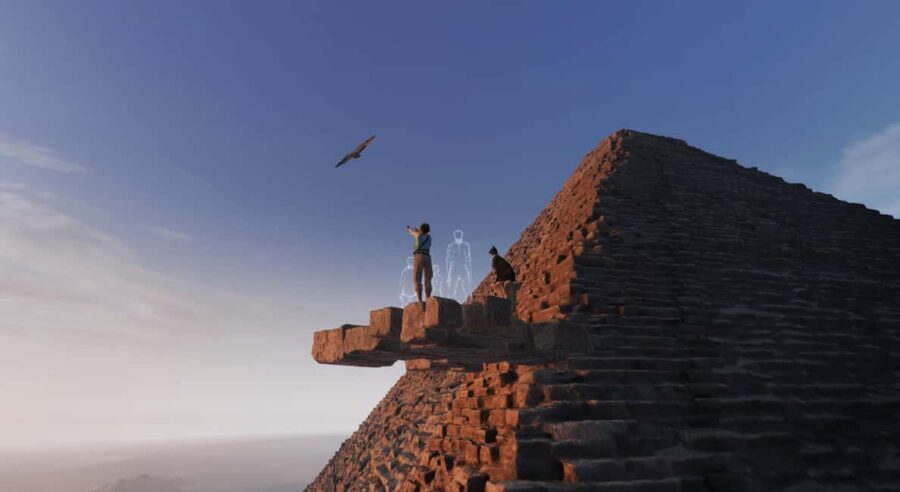
- Move freely in a 1,000m2 VR arena for a full 45 minutes.
- Start at sunrise over the Giza Necropolis, with the Great Pyramids in view.
- See mastabas and tomb silhouettes around the plateau, explained through the story.
- Walk toward the Sphinx as a giant avatar, with a virtual guide and other visitors.
- End with a VIP nightfall visit at the Pyramid of Giza, when details change with the light.
- The whole ticket is a 1-hour block that includes setup plus the VR session.
Inside Eclipso Paris: what the 1-hour ticket really feels like
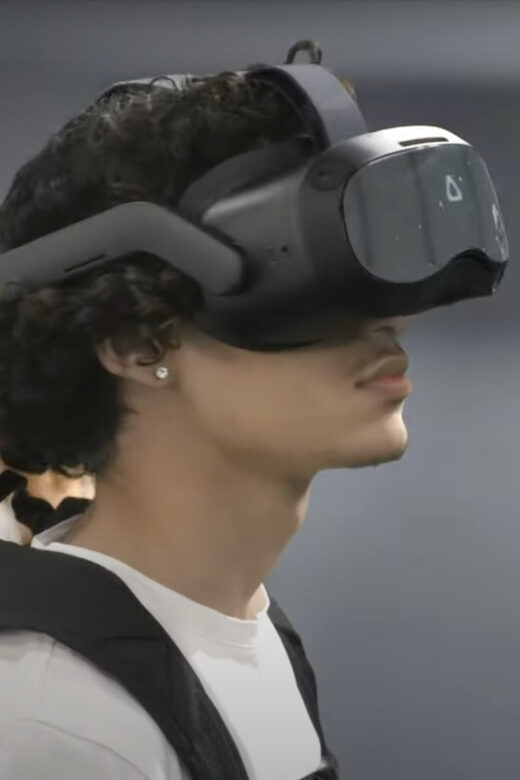
This experience is sold as a 1-hour visit, but the important number is 45 minutes inside the VR world. That’s long enough to feel like you’re traveling through locations, not just trying a quick demo, especially because the setup lets you move for the whole session. The room size matters here: you’re not stuck standing still. You can shift position and walk through the virtual space while a virtual guide keeps things on track.
I like that the hosting team supports French and English, with a French/English host or greeter. If you want context while you’re wearing the headset, that language option is a big deal. And if you’re someone who gets stuck in museum lectures, the format helps: the lesson comes attached to movement and story cues.
Also worth noting: wheelchair access is available. VR is often tricky for accessibility, so it’s good to see it explicitly offered. If you’re unsure about comfort in a headset, it’s still smart to ask questions ahead of time so the staff can guide you on what to expect.
You can also read our reviews of more tours and experiences in Paris.



The Giza sunrise opening: time travel, guided
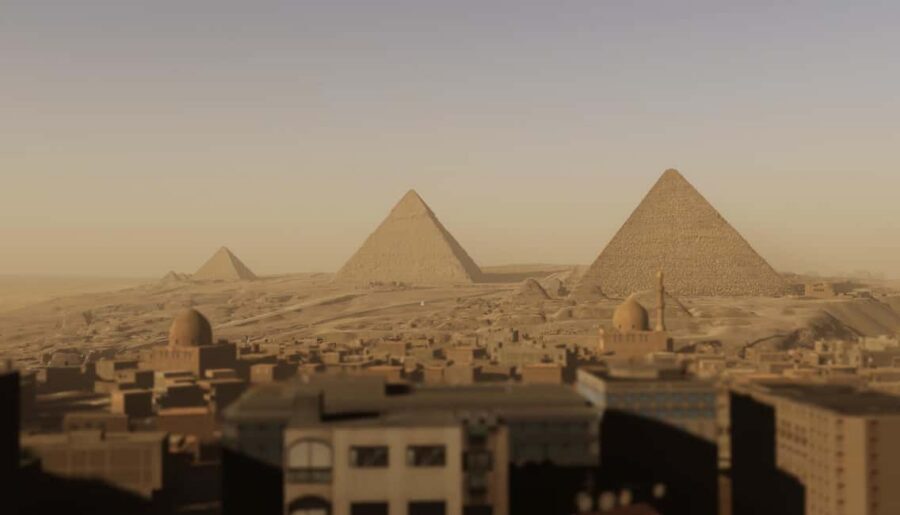
The adventure kicks off as the sun rises over the Giza Necropolis. You’re not starting in some random Egyptian room—you’re starting at the site with the Great Pyramids, in their shadows, with tomb structures visible in the distance.
This is where the experience earns its “educational” label in a way that feels practical. The story doesn’t just name-drop famous monuments. It also points your attention at mastabas, the tombs connected to deceased monarchs’ inner circles and family members. In other words, you’re not only seeing the headline pyramids; you’re getting a fuller picture of who was buried near them and what the plateau looked like around that larger royal center.
I also like the “big avatar” framing. You start as a giant avatar treading the eternal sand of the plateau. That choice helps you read the space fast: you can understand the scale of what you’re seeing without needing extra explanation.
Walking to the Sphinx: why the movement matters
After the sunrise introduction, you make your way toward the Sphinx. In VR, it’s easy for “walking” to become fake. Here, the setup is designed for movement in a real physical space (that 1,000m2 arena). That means your body is involved—turning, stepping, repositioning—so the scene feels more anchored.
You’ll also be doing this with a virtual guide and other visitors in the same VR slot. That matters because it keeps you from feeling like you’re alone in a game. The story guides you, and the group energy keeps the experience from turning into a silent headset trance.
One thing to watch for: if you’re the type who gets motion-sick in VR, you’ll want to pay attention during the orientation and follow instructions carefully. The data I have doesn’t spell out comfort tech or settings, so your best move is to listen to staff guidance and ask what you can do if you feel dizzy or disoriented.
Mastabas and the “closed to the public” promise
A big highlight is that the experience helps you discover spaces previously closed to the public. That’s a powerful promise in any format, and VR is one of the few ways to show you the kind of details that normally require special access, permits, or years of research.
In this case, the experience uses those “closed” spaces to reinforce what you’re learning. The mastabas you see at the start connect the plateau to people’s lives and status—inner circles and families tied to the deceased monarchs—so you’re not only looking at monuments as objects. You’re seeing them as part of a larger system of burial and power.
I like this approach because it makes the famous Egypt icons feel more grounded. You don’t just remember the pyramid shape. You start thinking about the plateau as a whole, with smaller structures shaping what you would have noticed if you were standing there in real life.
VIP nightfall at the Pyramid of Giza: the light shift payoff
The tour doesn’t end when you reach a famous landmark. It builds toward a VIP visit at nightfall at the foot of the Pyramid of Giza.
That nightfall section is smart because light changes what your brain focuses on. In daylight, you might read shapes. At night, you start noticing edges, shadows, and the way the environment shifts the mood of a place. VR can sell that change quickly, and the story is designed to deliver you there as a payoff.
The practical value for you: if you know the pyramids already (or if you’ve seen photos a thousand times), this portion gives a new angle. Instead of repeating the same daytime postcard view, it reframes the site with a different feeling and a different visual emphasis.
This is also where the “deeply moving” side can land. One reason people praise this experience is that it doesn’t stay at sightseeing level. It keeps the atmosphere and the story moving so the site feels like a moment in time—not a static object.


Script, realism, and 3D quality: what to listen for
The production focus shows in two ways. People consistently highlight realistic visuals, and they also praise the script for being cultural and enriching. Translation: you’re not just getting flashy effects. The VR experience is built so the images and the explanations work together.
One of the most useful takeaways for your expectations is this: the 3D quality is already good, and there’s an implied upward trajectory as the technology improves. That doesn’t matter much if you’re only going once—but it does tell you the format is not half-finished. It’s a real product with attention paid to the visuals, not just a basic “look around” program.
I’d suggest you go in with an open mind about “virtual” details. If you expect perfect museum-grade archaeology, you might be tempted to nitpick. But if you’re looking for a well-told, highly visual way to connect monuments with context, this is exactly the kind of setup that works.
Comfort, safety, and who should skip it
VR is fun, but it’s not for everyone. The experience clearly says it isn’t suitable for:
- Children under 8
- People with heart problems
- People with epilepsy
Those limits aren’t there to be dramatic; they’re there because VR and headsets can affect people in ways that standard attractions don’t. If any of those apply, it’s better to choose another Egypt-themed option.
Now for comfort considerations that you can control: make sure you can stand and move comfortably during the headset session. Because you’re moving freely in the space, you don’t want to feel restricted by clothes, footwear, or anything that might snag. And if you wear glasses or contact lenses, plan how you’ll handle the headset fit. The information I have doesn’t list eyewear options, so asking the staff on arrival is the safest move.
Price and value: is $37 worth it?
At $37 per person, this is priced in the “special experience” category, not in the “cheap activity” range. But you’re also not buying a short, single-scene video. You’re getting a guided VR adventure with:
- a headset experience
- 45 minutes in a large 1,000m2 movement space
- a story that connects the plateau’s tomb structures and famous monuments
- an end section focused on the Pyramid of Giza at nightfall
For me, the best value argument is the access factor. You’re being shown parts of the broader Giza area in a way that suggests you’re seeing more than the typical public viewing angles. Even when you’re skeptical of VR hype, that “previously closed spaces” angle is a real reason to consider the ticket.
Is it worth it if you already plan a real trip to Egypt? Maybe. If your goal is to get a feel for the layout of Giza and the meaning of structures like mastabas, it can make your future travel more satisfying because you’ll already understand the “who’s where” story.
Is it worth it if you only have a day or two in Paris? Also yes, because it’s one hour from start to finish and you’re not spending that time on transit. You’ll leave with images in your head that are much more vivid than a slideshow.
Who this is perfect for (and who it won’t satisfy)
This VR experience is a great match if you:
- want history context without reading a wall of text
- enjoy tech that combines visuals with a guided narrative
- want a memorable activity that fits into a short Paris schedule
It might be less satisfying if you:
- strongly prefer traditional museums and live guides with real-world objects
- want longer time in each scene
- need VR alternatives due to safety or comfort constraints
One more practical note: some people felt certain passages could be longer to enjoy the environment even more. That tells me the experience aims for tight storytelling rather than slow wandering. If you love lingering, you may feel the pacing is faster than you’d like.
Should you book L’Horizon de Khéops?
If you’re looking for a smart, well-produced way to experience Giza’s layout and mood in one shot, I think this is a strong yes. The biggest reason is simple: you get both movement and story, and that combination makes the cultural details stick. The visuals also have enough realism to keep you watching for the “how did they make that” moments, not just listening to explanations.
I’d book it if you’re comfortable with VR and you’re traveling at least with an age-eligible group (8+). I’d skip it if you fall into the health categories listed for unsuitability. And if you hate being timed—because the VR session is fixed—plan your expectations around the 45-minute runtime.
FAQ
How long is the experience?
The total activity slot is 1 hour, with 45 minutes of virtual reality time inside the 1,000m2 space.
What is the price?
The price is $37 per person.
Where does it take place?
It takes place in Ile-de-France, France.
What is included with the ticket?
Your ticket includes a virtual reality experience with a headset for the 45 minutes session.
What languages are available?
The host or greeter supports French and English.
Is it wheelchair accessible?
Yes, the experience is wheelchair accessible.
Is it suitable for children?
It is not suitable for children under 8.
What health conditions mean you should not book?
It is not suitable for people with heart problems or epilepsy.
Can I cancel for a refund?
Yes. You can cancel up to 24 hours in advance for a full refund.
Is there a reserve now, pay later option?
Yes. It offers reserve now & pay later, so you can book your spot and pay nothing today.