REVIEW · PARIS
Paris WW2 The German Occupation Small group or Private tour
Book on Viator →Operated by Chris Pollard · Bookable on Viator
Paris during the Occupation has teeth.
This small-group tour uses streets, façades, and real places to explain how the German occupation changed daily life—and how resistance and collaboration could exist side by side. You start in the Palais-Royal area and follow the thread west toward Place de la Concorde, with a guide who keeps the story human, not just architectural. I especially liked the way Chris Pollard ties politics, propaganda, and survival into what you see on the sidewalk, plus the focus on small-group interaction so questions don’t get pushed aside.
Two more things I value: the route is packed with names and sites that are easy to miss on your own, and the tour’s pace lets you understand why people did what they did. The main drawback is that this is an outdoor walking experience with time outdoors built in, so you’ll want to dress for wind and cold and keep expectations flexible about how long any one stop takes.
In This Review
- Key Points You’ll Care About
- WWII Paris on Foot: What This Tour Does Better Than a Checklist
- Meeting at Place Colette: Start Smart, Start Close
- The Louvre-to-Concorde Sweep: A Citywide Occupation, Not a Single Landmark
- Rue de Rivoli and Hotel Paris: Gestapo, Collaboration, and the Machinery of Control
- Jeu de Paume: Looted Jewish Art and the Occupation’s Cultural Theft
- Rue Rouget de Lisle and the Resistance That Began on the Ground
- Place de la Concorde: The “Only Destroyed” Grand Palais and Visible Scars
- How the Shoah Topic Is Handled (General Tour vs Private)
- Price and Timing: Is It Worth $108.84?
- Small-Group Style: Time to Talk, Not Just to Walk
- Who Should Book This Paris Occupation Tour
- Should You Book This Tour?
- FAQ
- Where do I meet for the tour?
- How long is the tour?
- What’s the group size?
- Is the tour in English?
- Do I need entry tickets?
- Does the tour include the Holocaust memorial?
- Which WWII topics does the guide cover?
- Can the itinerary change during the tour?
- What should I wear or prepare for?
- What happens if the minimum number of travelers isn’t met?
Key Points You’ll Care About
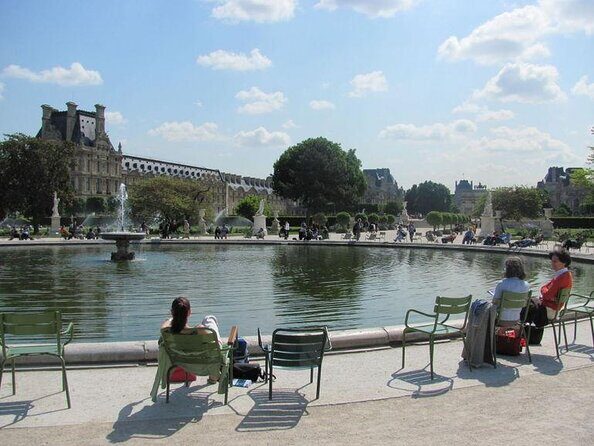
- Meet at Palais-Royal (Place Colette, Exit 5) and get oriented fast before the walk begins
- A max group size of 10 (semi-private, high-touch format) with time to ask questions
- Focus on people and decisions, not a museum-style timeline
- Jeu de Paume and looted art are central to the Occupation story here
- The tour ends near Place de la Concorde, not with a mandatory Holocaust-memorial stop
- No rigid script: sites and emphasis can shift based on your interests
WWII Paris on Foot: What This Tour Does Better Than a Checklist
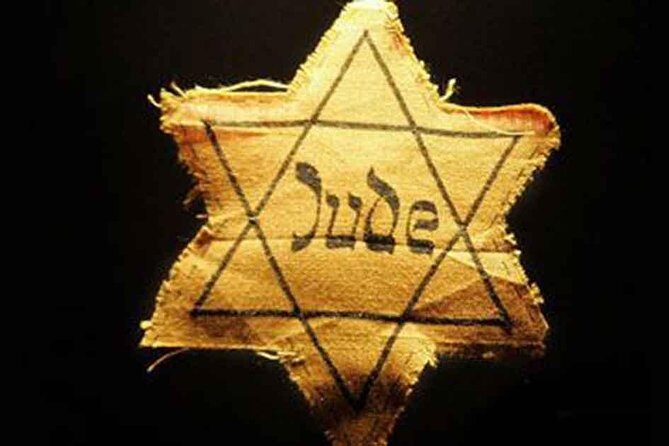
This tour works because it treats history like cause and effect. Instead of reciting dates, you connect motives and pressures to choices people had to make under occupation. You’ll still hear the big timeline, but you’ll also see how the war showed up in hotel corridors, café life, and the paperwork behind persecution.
Chris Pollard’s style also helps. He’s prepared, but he’s not stuck to a robotic route. He uses what’s in front of you as the stage—an ordinary door, a grand façade, a hotel entrance—and explains why that place mattered in 1940s Paris.
You can also read our reviews of more private tours in Paris



Meeting at Place Colette: Start Smart, Start Close
You meet at Palais-Royal Metro Exit 5, on Place Colette, opposite the Comédie-Française theatre (Rue Saint-Honoré area). It’s a convenient starting zone, and it also sets the tone: you’re right in the center of Paris, where the Occupation didn’t happen in some far-away “special” district. It happened in the everyday parts of town.
From the start, the tour promises context. You begin with an overview of the German occupation of Paris and the events leading to WWII, then keep building the story as you walk. That early framework makes later details—Gestapo sites, requisitioned hotels, collaboration networks—click instead of feeling like random stops.
The Louvre-to-Concorde Sweep: A Citywide Occupation, Not a Single Landmark
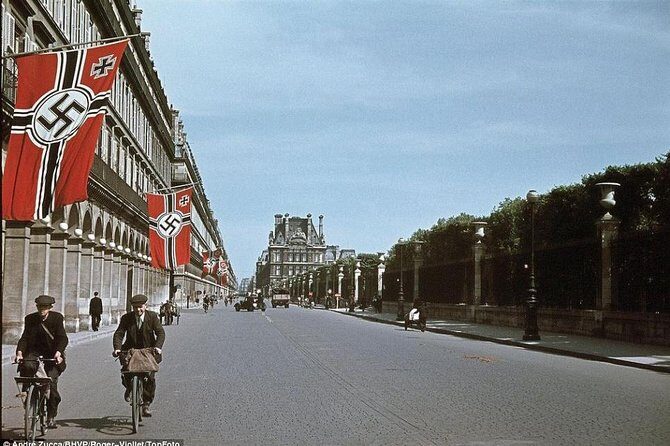
A big strength here is the way the tour spreads across central Paris. You’re not just looking at one monument. You’re tracing an Occupation system that stretched through institutions, businesses, and neighborhoods.
The route generally moves between the Louvre area to the west toward Place de la Concorde, with significant stops along the way. Depending on the group and questions, the mix of sites can vary a bit. The common thread stays the same: why those buildings and streets mattered during the Occupation years.
You’ll learn that the Occupation wasn’t only about the military. It was also about control of culture, information, and economics. As you move through the central streets, your guide connects the dots between German strategy, French political fractures, and the everyday fear and opportunism that followed.
Rue de Rivoli and Hotel Paris: Gestapo, Collaboration, and the Machinery of Control
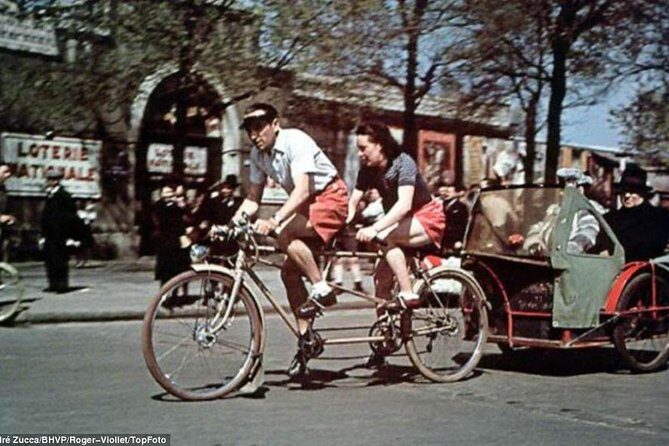
Rue de Rivoli is where the tour’s energy really ramps up. This area and nearby streets are packed with links to occupation power structures, resistance beginnings, and the institutions that shaped what happened next.
Here are the kinds of sites your guide builds into the walk around this zone:
- A first secret Gestapo HQ in Paris
- The headquarters of PPF (France’s largest collaborationist group) and its leader
- The Hotel Meurice, described here as the German Army HQ for Paris
- The Place Vendôme / Ritz connection, tied to Chanel, anti-Nazi meetings within German forces, and the mention here of how the Final Solution was introduced to France
- The Societe Maurice Duclos, linked to a very early Allied spy radio network
- The Continental Hotel, noted as a German-controlled hotel in this story
What I like about this approach is the balance. You’re not only hearing about Nazi power. You’re also learning how resistance and espionage networks functioned inside the same city that housed that power.
The practical side matters too. These are mostly exterior views and street-level moments. You can absorb a lot without being stuck in long queues, and you don’t need to treat the walk like a museum visit.
Jeu de Paume: Looted Jewish Art and the Occupation’s Cultural Theft
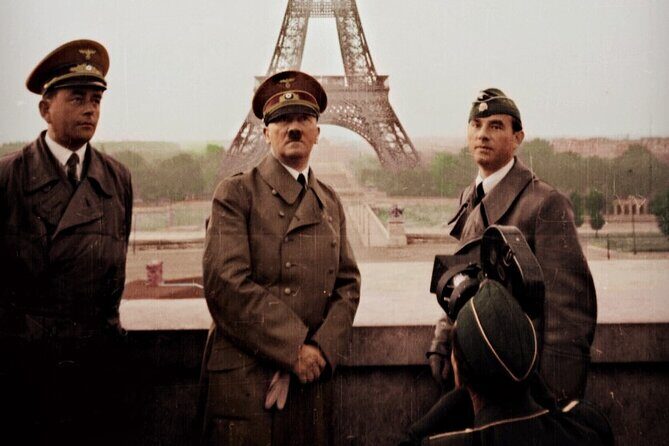
One of the tour’s standout themes is Jeu de Paume—the museum where Nazis hid, processed, and looted artworks during the Occupation before sending them onward. It’s the kind of subject that sounds abstract until you get the specifics of how the process worked.
Your guide connects this to the broader occupation policy: control wasn’t only about arrests and trials. It also involved cultural plunder, the exploitation of networks, and the use of respected institutions to normalize theft. For many people, this is where the tour stops feeling like WWII trivia and starts feeling like a real system of power.



Rue Rouget de Lisle and the Resistance That Began on the Ground
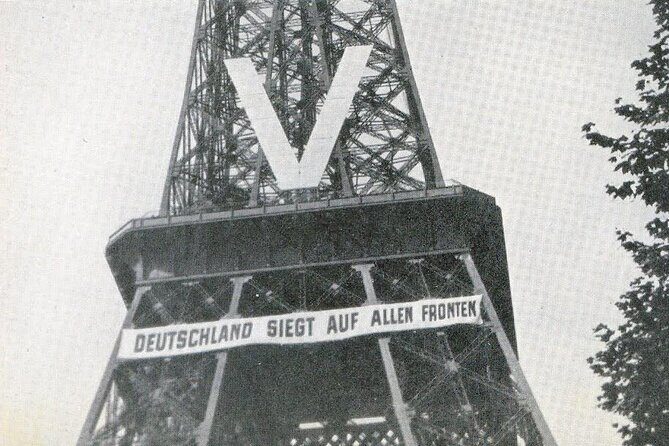
Another key stop in the Rue de Rivoli corridor is Rue Rouget de Lisle, described on this tour as a place where the organic French resistance really began in October 1940.
That date matters because it reframes the resistance story. Instead of imagining resistance as something that appeared fully formed later, you hear how it started early—formed by people making choices in a collapsing political landscape.
In other words: you learn resistance as action, not as legend.
Place de la Concorde: The “Only Destroyed” Grand Palais and Visible Scars
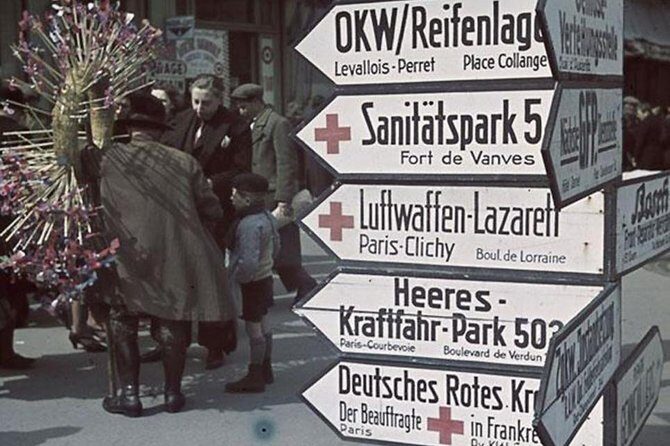
Your tour typically ends around Place de la Concorde (the time on the square can be about 20 minutes, with the overall tour often running 3 to 3.5 hours). Place de la Concorde is described as the second largest monumental square in France, and the guide uses that scale for a point: power and violence happened in grand public spaces, not only behind closed doors.
You’ll talk about:
- The square’s earlier identity as Place Louis XV, completed in the 18th century, just before the French Revolution
- The fate of Louis XVI and Marie Antoinette here
- German wartime use of monumental buildings around the square, including the Naval Ministry and Hotel Crillon described as German HQs
- The Grand Palais, noted as the largest freestanding building in Paris and identified here as the only one destroyed during the war
- Visible bullet holes and hidden scars from the Liberation period
- The famous Luxor obelisk as a reminder that even “timeless” landmarks sit inside newer layers of history
Even if you don’t love WWIIs or history in general, this ending works because you end in a place you can picture as you leave. You’re not just walking into a concept—you’re walking into a square with physical evidence.
How the Shoah Topic Is Handled (General Tour vs Private)
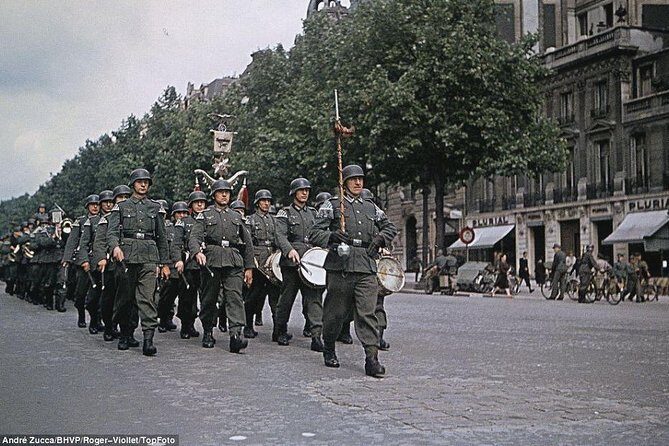
The tour covers the Occupation’s impact on Jewish people and the currents that led toward the Final Solution. But it does not treat Holocaust content like a short add-on.
On a general tour, you can expect context about:
- the conditions for Jewish people in Paris and occupied France
- the rise of anti-semitism
- the role of the Vichy government in this story
- Jewish people’s role in resistance
If you want a Holocaust-specific experience, the operator notes that a dedicated Shoah/holocaust tour is the better option, because the subject deserves a whole tour devoted to it. On general dates, you should not plan on a mandatory Holocaust-memorial endpoint.
This matters for your planning. If that’s the part you most care about, consider requesting a private Shoah-focused tour so the itinerary matches your priorities.
Price and Timing: Is It Worth $108.84?
At $108.84 per person for roughly 3 to 4 hours, the value depends on what you want from a Paris WWII experience.
You’re paying for:
- a tight route through central Paris sites tied to the Occupation
- a guide who asks questions and adjusts emphasis for the group
- a small format (generally up to 10 people)
- free entry tickets listed for the stops you’ll encounter
If you’re hoping for a fast “see the big monuments” kind of tour, you might find it heavy on context and focused on specific wartime systems. But if you want the Occupation explained like a chain reaction—German strategy, French responses, resistance pressures—this price starts to make sense fast.
Also, the guide mentions that sites can shift depending on the group’s questions. That’s not just flexibility; it’s how you avoid the annoying experience of being herded along without understanding.
Small-Group Style: Time to Talk, Not Just to Walk
The group format is the quiet superpower here. This is built to stay small—8 to 10 people max, and the operator describes semi-private bookings with a limited number of separate groups per tour.
In practical terms, that means you’re more likely to:
- ask follow-up questions
- get explanations that match your background
- spend a little longer where you actually care
There’s also a real sign of preparation in how the guide works. Multiple reviews mention that Chris reaches out in advance to tailor the content to what you’re interested in, and that he shares resources afterward—book lists and suggestions for further reading. If you like history you can keep digging into after, that’s a nice extra.
Who Should Book This Paris Occupation Tour
Book this if you want WWII Paris with a strong “why” behind it. It fits history lovers who like political context and human decision-making under pressure. If you’re mixing Paris with other WWII stops later (like Normandy or Omaha), this kind of guided understanding can help the bigger story connect.
It may not be the best match if you want:
- short, casual photo stops
- a museum-style chronological tour
- lots of seated indoor time (this is primarily an outdoor walk)
Also, dress for time outside. A review specifically suggests layers and bringing water, and you should plan on walking—one reviewer estimated about 2 miles over roughly 4 hours.
Should You Book This Tour?
Yes—if your goal is to understand how the German occupation functioned in real Paris streets, and you like a guide who will answer your questions instead of rushing the story. The value is strongest when you care about the details: Gestapo influence, collaboration networks, early resistance energy, and how looted art tied into the Occupation’s bigger system.
I’d think twice only if Holocaust-focused content is your top priority and you want it in full depth on this same day. In that case, ask for a dedicated Shoah/holocaust private tour so the itinerary matches your needs.
FAQ
Where do I meet for the tour?
You meet at Palais-Royal Metro Exit 5, on Place Colette opposite the Comédie-Française theatre.
How long is the tour?
The tour runs about 3 to 4 hours, with the route often ending around Place de la Concorde and time on the square depending on the group.
What’s the group size?
This is a small-group experience with a maximum of 10 travelers. Semi-private bookings are limited to keep it small.
Is the tour in English?
Yes, it’s offered in English.
Do I need entry tickets?
Admission tickets are listed as free for the stops on the tour, and much of the experience is walking and street-level viewing.
Does the tour include the Holocaust memorial?
The operator notes that Holocaust memorial and a Marais Jewish Quarter visit are not part of the general group tour unless specifically requested as part of a private Shoah-focused tour.
Which WWII topics does the guide cover?
You’ll cover the German occupation’s lead-up to WWII, how occupation worked in Paris, the rise of anti-semitism and the Vichy government in the broader story, and the resistance/collaboration landscape.
Can the itinerary change during the tour?
Yes. The guide explains there is no totally fixed itinerary and that the number and selection of sites may vary based on the group and questions.
What should I wear or prepare for?
Plan for extended time outdoors and bring what you need for walking in changing weather. A reviewer recommends dressing in layers and bringing water.
What happens if the minimum number of travelers isn’t met?
The tour requires a minimum of 4 people to run. If that minimum isn’t met, the operator may offer a different date/experience or a full refund.