REVIEW · PARIS
Private Walking Tour of Montmartre and Sacré-Cœur Visit
Book on Viator →Operated by Astra Via Tours · Bookable on Viator
Montmartre rewards your legs and your camera. This private walk is a tight loop through famous art corners and everyday streets, ending at Sacré-Cœur for major skyline views. I especially like the way the guide turns alleyways into stories of artists, cafés, and nightlife, and I love the Je t’aime wall photo moment with love written in 250 languages. One heads-up: it’s mostly uphill, and reaching the Sacré-Cœur dome costs extra even though the basilica itself is free.
In our experience with tours like this, the biggest payoff is the pacing. You’ll stop often, get photo time, and hear what to look for before you drift off on your own. This one is designed for a private group with an English-speaking guide, but the “private” part also means you’ll want clear shoes and a bit of grit for the climb.
In This Review
- Key things that make this Montmartre-Sacré-Cœur walk worth it
- Why Montmartre hits different with a guide
- Meeting at Place Blanche and setting the pace for the climb
- Moulin Rouge area: Belle Époque glamour, not just a photo stop
- Van Gogh street moments: cozy streets with a famous past
- The artful side streets: Art Nouveau metro entrance and classic bistro energy
- Je t’aime wall: the 250-languages photo you’ll actually want to make
- Le Bateau-Lavoir: where modern art pressure-cooked
- Le Moulin de la Galette: windmill legacy and Impressionist inspiration
- Le Passe-Muraille: the sculpture that plays with logic
- Place Dalida: a quieter square with a touch of luck mythology
- La Petite Maison Rose (since 1920): the pink building with artist pull
- Place du Tertre: easels, cafés, and the Montmartre tradition in real time
- Sacré-Cœur finale at the summit: white basilica and the view tax
- Price: is $118.63 per person good value?
- Guides and group energy: what the best moments feel like
- Optional wine tasting upgrade: when it fits
- Quick tips so you enjoy it more
- Should you book this Montmartre and Sacré-Cœur walking tour?
- FAQ
- How long is the Montmartre and Sacré-Cœur walking tour?
- What does the tour price include?
- Is entry to Sacré-Cœur Basilica included for free?
- Do I need to pay admission fees for the artist sites?
- Where do I meet the guide?
- Where does the tour end?
- Is this tour private?
- Does the tour operate in English?
- Are service animals allowed?
Key things that make this Montmartre-Sacré-Cœur walk worth it
- A true art-to-view route: artist stops around Le Bateau-Lavoir and Le Moulin de la Galette, then the panoramic finish at Sacré-Cœur
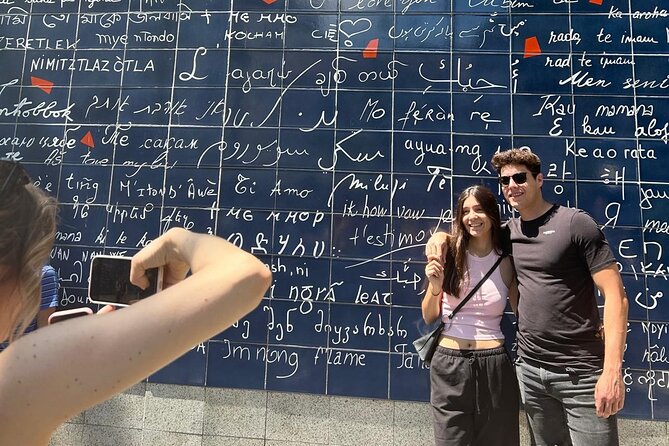
- Je t’aime wall photos: the I love you message in 250 languages is built for pictures
- Street-level Paris entertainment: portrait artists and street performers show up right in the flow
- Sensible photo stops: portraits, squares, and facades timed so you’re not just rushing through
- Optional wine tasting upgrade: great if you want the evening vibe without guessing where to go
- Free basilica entry, paid dome: plan for the dome fee if you want the top view
Why Montmartre hits different with a guide
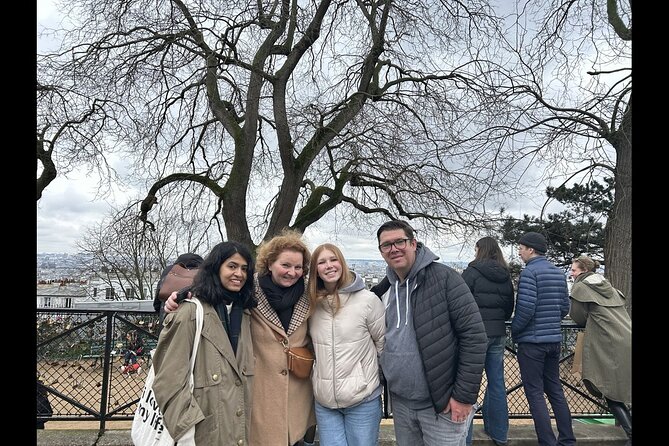
Montmartre looks like postcard Paris, but the real fun is in the details you’d miss without context. In two hours, you’re walking through places tied to modern art, Belle Époque nightlife, and the kind of street culture that still shows up in daily life.
The guide’s job here isn’t to read facts like a textbook. It’s to help you see why these corners matter. You’ll learn what each stop represents, then you get enough time to look, photograph, and breathe before moving on.
You can also read our reviews of more tours and experiences in Paris.


Meeting at Place Blanche and setting the pace for the climb
You start at 5 Pl. Blanche (75009), which puts you right in the Moulin Rouge area. That’s smart because it gets the “Montmartre begins here” energy going from the first minute.
The walk is about 2 hours, and you should assume you’ll be climbing at least some of the time. The fitness level listed is moderate. If you’re visiting with sore knees or a low tolerance for steep streets, plan breaks and take it slow. The good news: you’ll have frequent stops, not a single long grind.
Moulin Rouge area: Belle Époque glamour, not just a photo stop
One of the first stops carries the legendary Belle Époque cabaret story. You’ll hear how this world-famous show world became a magnet for artists, dancers, and late-night legend—more than just a landmark you pass by.
What I like about starting here is the contrast. Montmartre is often sold as bohemian street wandering, but the history is tied to a specific era of Paris nightlife. Once you know that, the neighborhood feels less random as you move uphill.
Van Gogh street moments: cozy streets with a famous past
Next you’ll walk a charming, winding street lined with cafés, bakeries, and shops. The big hook here is that Vincent Van Gogh once lived nearby, and the street still carries that lived-in Montmartre character.
This is a good part of the tour for people-watching. You’ll spot everyday life—orders at the counter, storefront rhythms, and the small scenes that make Montmartre feel real, not staged. If you’re hunting for a “Paris in motion” photo, this is where you’ll get it.
The artful side streets: Art Nouveau metro entrance and classic bistro energy
After that, you’ll head through one of Montmartre’s more authentic lanes—bistros, boutiques, and that striking Art Nouveau metro entrance. The metro design matters because it’s a reminder that Montmartre’s aesthetics aren’t limited to churches and paintings. Paris did style everywhere.
This stop also helps you understand Montmartre’s layout. The neighborhood’s beauty is in how streets twist and connect, not only in the big landmarks. Once you’ve walked it with purpose, you’ll feel oriented for the rest of your visit.


Je t’aime wall: the 250-languages photo you’ll actually want to make
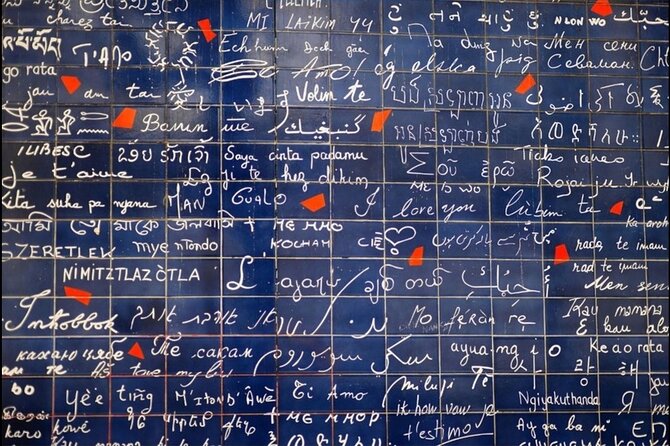
Then comes the romantic signature stop: the installation with I love you in over 250 languages. This is one of those locations that’s easier to enjoy when you know what you’re looking at, because you’ll likely spend longer here than you think.
Practical tip: bring your phone charged and ready. This is a “check angles, then shoot” spot—wide shots help for context, and close-ups work for the text. If you’re traveling as a couple, you’ll probably do the photo, then stay a minute longer reading the words.
Le Bateau-Lavoir: where modern art pressure-cooked
At Le Bateau-Lavoir, you’re at the legendary artists’ residence where names like Picasso and Modigliani are tied to the story of modern art. The building itself is humble, but the influence is anything but. You’ll hear how this is connected to Picasso’s revolutionary work, Les Demoiselles d’Avignon.
This is a stop that benefits from patience. Don’t rush the exterior. Take in the scale, then let the guide connect the dots to why artists would choose a place like this. It makes the artistic “why” click.
Note: the admission ticket is listed as not included. That means you should expect this to be mostly a guided visit of the location and its story, unless you plan to purchase anything separately on your own.
Le Moulin de la Galette: windmill legacy and Impressionist inspiration
Next is Le Moulin de la Galette, another artist-linked landmark. You’ll learn it was a favorite gathering place, and even inspired the famous Impressionist painting Bal du moulin de la Galette by Pierre-Auguste Renoir.
This stop has two layers. First, it’s a historical art reference. Second, it’s a real-feeling neighborhood spot where the area’s “artist hangs out here” vibe still lingers. If you like photography with a sense of place, this is a strong one.
Again, admission ticket isn’t included. You’ll get the guided context and time to look around, and if anything requires a separate entry ticket, you’ll handle it on your own.
Le Passe-Muraille: the sculpture that plays with logic
At Le Passe-Muraille you’ll see the optical-illusion sculpture called The Man Passing Through the Wall, inspired by a story by Marcel Aymé. It’s the kind of stop that’s fun because it mixes art and humor. You’ll look, then you’ll do that little double-take that makes a good photo.
This is also a nice pace-break. By now you’ve walked enough streets that your feet need a moment. A whimsical stop helps keep the energy up before Sacré-Cœur.
Admission ticket is listed as not included, so treat it as a view-and-photo stop.
Place Dalida: a quieter square with a touch of luck mythology
Then you’ll reach Place Dalida, a tucked-away square dedicated to Dalida. Her statue is here, and there’s a legend attached: touching her bronze bust brings good luck.
This is one of those Montmartre details that you’d miss if you only followed the biggest tourist routes. It’s quieter and more local-feeling, and it gives the tour rhythm: glamour, then art, then playful myth, then the big finale.
This stop is listed as free.
La Petite Maison Rose (since 1920): the pink building with artist pull
Next is La Petite Maison Rose de Montmartre, a charming pink building dating back to 1920. You’ll hear it was a popular haunt for artists like Picasso and Modigliani, which makes the color feel like more than decoration—it’s part of the creative mythology.
It’s a photo magnet, but it’s also a useful reminder of how Montmartre became a magnet for artists. The neighborhood isn’t just famous because of one masterpiece. It’s famous because creators clustered here and kept telling each other stories.
Admission isn’t included here either, so plan for a guided stop focused on exterior look and context.
Place du Tertre: easels, cafés, and the Montmartre tradition in real time
Then you’ll arrive at Place du Tertre, Montmartre’s famous square where painters set up easels daily. The atmosphere here is why Montmartre survives as more than a theme. You’ll see the neighborhood’s artistic tradition played out in front of you, not explained to you.
This is a good time to slow down and browse. You’ll find cafés all around, plus the kind of on-the-street portrait artistry that shows up on this route. The guide’s earlier context helps you recognize what’s going on and what to appreciate.
Sacré-Cœur finale at the summit: white basilica and the view tax
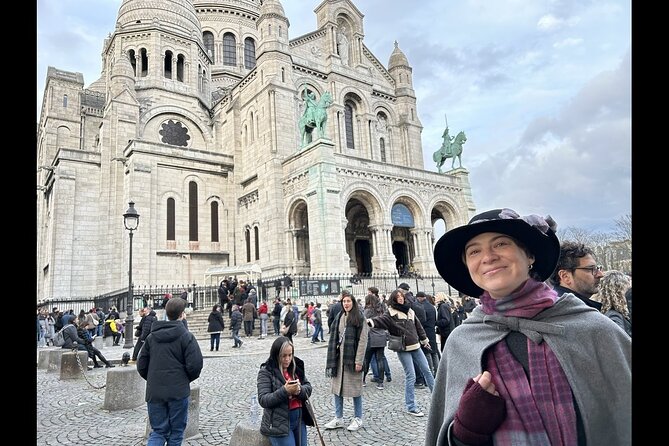
Finally, you end at Sacré-Cœur Basilica. Perched above the neighborhood, it’s one of the best payoffs in Paris for a reason: the white basilica and the skyline views make you feel like you’re looking at the city from above the story.
The basilica entry is listed as free, which is great. But there’s an important cost note: you’ll need to pay an additional fee—€7.00 per person—if you want to access the dome. If the dome view is the priority for you, budget that ahead of time so it’s not a surprise at the end.
Practical takeaway: plan for a bit of standing and slow walking at the basilica area. If you’ve timed the day right, Sacré-Cœur is a perfect “wrap the story” moment because you can see how Montmartre connects back to the rest of the city.
Price: is $118.63 per person good value?
At $118.63 per person for about 2 hours, the value depends on what you care about most:
- You’re paying for an expert guide who connects art, street corners, and city life into a single walk, not a list of landmarks.
- You get Sacré-Cœur included (with free basilica entry), plus multiple major photo stops like the Je t’aime wall and the artist-area landmarks.
- It’s private for your group, which usually makes the tour smoother and less rushed than a typical shared group hop-on/hop-off plan.
Where value can slip: if you’re expecting museum-style interiors everywhere. Some stops list admission as not included, so you might not be going into everything. Also, Sacré-Cœur dome access adds €7 if you choose the top.
Guides and group energy: what the best moments feel like
The strongest feedback points from the guide experience are practical: guides who make Montmartre feel alive, answer questions, and move at a pace that works for photos.
Specific guide names that came up include Ifi and Benedict. The theme with both: clear storytelling and patience with picture-taking. That matters here because Montmartre isn’t just about seeing. It’s about framing—streets, sculptures, and basilica angles.
One caution worth mentioning: in an isolated case, a guide did not show for a booking because the tour assignment was canceled and removed from the system. That’s rare, but it’s a reminder to keep an eye on your confirmation and message trail the day before you go.
Optional wine tasting upgrade: when it fits
If you choose the upgrade, you can add exclusive French wine tasting. This is a good match if you want to turn the art-and-streets walk into something more like a complete Montmartre evening plan.
Keep it realistic: the tour is still about walking and viewpoints. If you’re sensitive to alcohol or you’re planning a long night after, choose a tasting that fits your pace and transport situation.
Quick tips so you enjoy it more
- Wear shoes with grip. This area is steep in places.
- If Sacré-Cœur dome matters, bring the €7 in mind so you’re not stuck deciding at the top.
- Use the Je t’aime wall stop for your best photos. That’s where you’ll likely spend extra time.
- Bring water. Two hours in hilly Montmartre adds up faster than you expect.
Should you book this Montmartre and Sacré-Cœur walking tour?
I’d book it if you want a focused, two-hour route that links Montmartre’s art landmarks to the way the neighborhood actually feels day to day. The mix of artist sites, the Je t’aime wall photo stop, and the Sacré-Cœur finish is a strong combo for the time.
Skip it or adjust expectations if you’re hoping for lots of included museum admissions. Some stops list admission tickets as not included, and Sacré-Cœur dome access costs extra.
If you’re fit enough for a steep walk and you want a guide to help you see meaning in the streets—not just pass by monuments—this is a solid use of your time in Paris.
FAQ
How long is the Montmartre and Sacré-Cœur walking tour?
The tour lasts about 2 hours.
What does the tour price include?
It includes a walking tour of Montmartre, an expert guide, visit to Sacré-Cœur Basilica, and plenty of photo opportunities. An optional wine tasting can be added as an upgrade.
Is entry to Sacré-Cœur Basilica included for free?
Yes, entry to the Sacré-Cœur Basilica is free. There is an additional fee to access the dome.
Do I need to pay admission fees for the artist sites?
For several stops, admission tickets are not included. If you decide to enter any locations that require tickets, you should expect to pay separately.
Where do I meet the guide?
The meeting point is 5 Pl. Blanche, 75009 Paris, France.
Where does the tour end?
The tour ends in front of Sacré-Cœur Basilica at 35 Rue du Chevalier de la Barre, 75018 Paris, France.
Is this tour private?
Yes. It’s listed as a private activity, meaning only your group participates.
Does the tour operate in English?
Yes, it’s offered in English.
Are service animals allowed?
Yes, service animals are allowed on the tour.