REVIEW · PARIS
Paris: Montmartre Food Tour with Full Meal
Book on GetYourGuide →Operated by _Do Eat Better Experience · Bookable on GetYourGuide
Montmartre tastes better with a guide. This 3.5-hour walk turns famous neighborhood sights into a progressive meal with local secrets and recipe context as you move uphill and down. I like that you get multiple food stops (at least 4), not just one “snack-and-sprint” break, and I like how the guide connects each bite to the area. One real drawback: Montmartre is a hill, so bring comfortable shoes and be ready for plenty of stairs and slopes.
The tour is capped at a small group size (max 12) with a local English- or French-speaking guide, and it includes water plus one alcoholic drink. If you want a first-night Paris activity that feels like you’re eating like a local without planning five reservations yourself, this hits the spot.
In This Review
- Key things I’d circle before you book
- Montmartre on foot: why this route works
- Moulin Rouge meeting point: start where the energy is
- Rue Lepic tastings: the route that gets you moving
- Place des Abbesses: sightseeing with a food brain
- Place du Tertre and rue du Chevalier-de-La-Barre: where the flavors get specific
- Sacré-Cœur finish: the sweet landing
- What you actually eat: the “full meal” logic
- Chou pastry (sweet chou with sugar pearls)
- Boeuf bourguignon (slow-cooked beef in red wine)
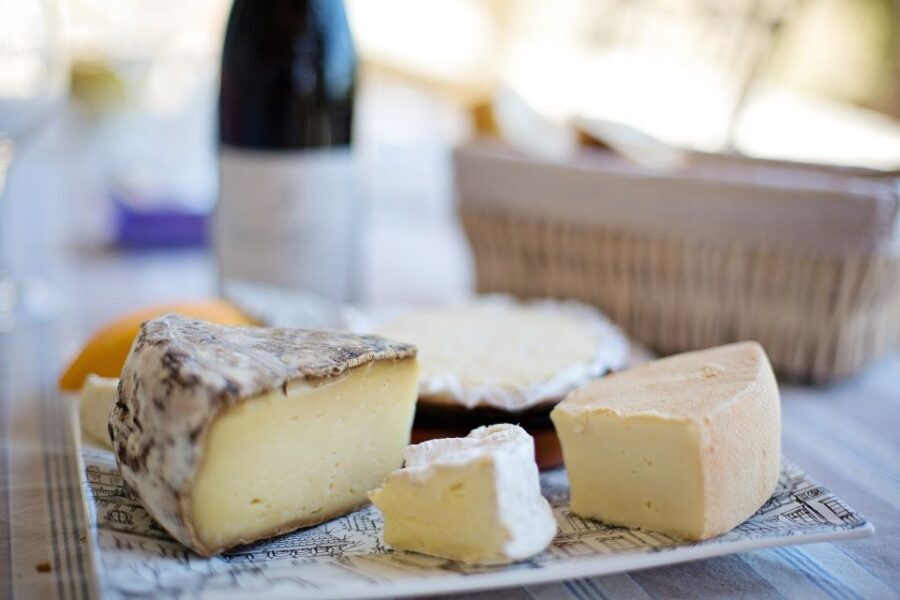
- Mix of fromage
- Crêpe (choose your variant)
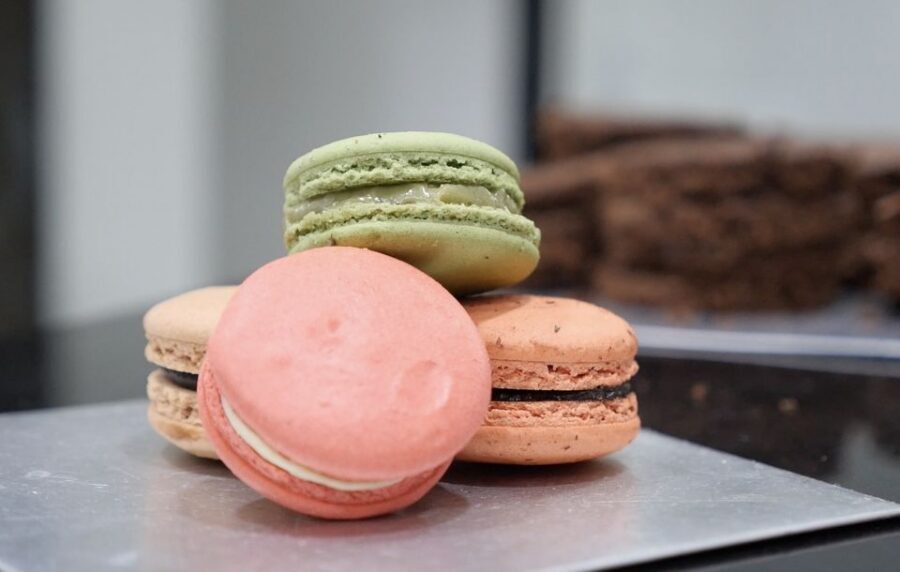
- Macarons
- Drink and water
- How much food you get (and how to avoid the uncomfortable “too full” moment)
- Value check: is $117 worth it?
- The hill factor: what can slow you down
- Guide experience: personalities that change the tone
- Who should book this Montmartre food tour?
- Should you book this tour
- FAQ
- How long is the Montmartre food tour?
- Where do I meet the guide?
- How much food is included?
- What drinks are included?
- Is this tour suitable for people with mobility impairments?
- How big is the group, and what languages are spoken?
Key things I’d circle before you book
- At least 4 food stops with at least one serving at each stop, so it feels like a full outing, not a sample run
- A true Montmartre walking route from Moulin Rouge area viewpoints to Sacré-Cœur
- Classic Paris flavors in a set sequence: boeuf bourguignon, fromage, crêpes, macarons, and sweet chou pastry (season and availability can shift)
- Small group vibe (maximum 12) that keeps the pace comfortable and the guide’s attention focused
- Guides with personality like Peter, Kevan, Thomas, Lolla, Rocco, Zack, Hugo, Marie, Yannick, and Zac who tend to add stories and pacing that work for different interests
Montmartre on foot: why this route works
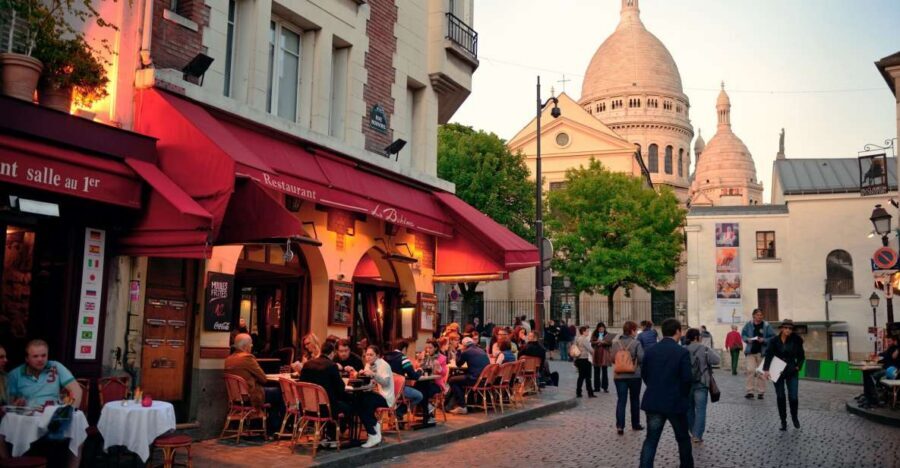
Montmartre is one of those Paris areas where you see the city in layers: old-school streets, artist hangouts, and modern cafés all pressed into the same hilly block. On your own, it’s easy to wander past great places without knowing what to order or why one spot became famous.
This tour’s format solves that problem. You walk, you stop, you taste, and your guide gives you the context behind what’s on the plate. Over roughly 210 minutes, you get enough time to enjoy each stop without feeling rushed.
The finish at Sacré-Cœur also matters. It’s a natural “cap” to the walk—both visually and mentally—so the food doesn’t feel like a random add-on. It feels like part of the neighborhood experience.
You can also read our reviews of more food & drink experiences in Paris


Moulin Rouge meeting point: start where the energy is
You meet your guide in front of the Moulin Rouge Ticket Office at 82 Bd de Clichy. That location is easy to find and it also sets expectations: this is not a quiet village-in-a-book kind of walk. Montmartre has motion, and you’ll feel it from the first minutes.
Because the group is small (max 12), you’re not trying to keep up with a swarm. A tighter group usually means easier conversation stops—questions land better, and the guide can manage timing when the route gets steeper.
Practical tip: arrive with a little buffer. The meeting point is near a busy hub, and you’ll want to start the tour focused, not stressed.
Rue Lepic tastings: the route that gets you moving
One of the route stops is Rue Lepic, and this is where you’ll start blending sights with snacks. The neighborhood streets here have that classic Montmartre feel—pretty corners, photogenic facades, and lots of small storefronts.
What makes Rue Lepic a smart early segment is energy management. The tour is designed to keep you tasting along the way rather than saving all the food for later. That’s helpful because Montmartre’s hills can slow you down if you start without a plan.
Expect a rhythm: short walk, short explanation, then a bite. That structure is one reason people end up saying they got plenty of food. You’re not just walking for views; you’re walking for meals.
Place des Abbesses: sightseeing with a food brain
Next comes Place des Abbesses. This is a good “reset” moment in a hill town. You get time to look around while the guide keeps the pace tied to food—what you’re eating, how it’s made, and why it belongs here.
This stop matters because Montmartre isn’t only about the big-name landmarks. It’s about the neighborhood culture that built recipes over generations and still supports them today. When the guide talks through the dish logic—textures, ingredients, and regional influences—it makes the food feel less like a tourist order and more like a local tradition.
This is also where you’ll start noticing how guides differ. Some focus more on playful storytelling, while others slow down to explain the culinary details. Either way, the point stays the same: you’re getting context, not just calories.
Place du Tertre and rue du Chevalier-de-La-Barre: where the flavors get specific
Place du Tertre is strongly associated with the artist side of Montmartre, and it’s a natural place for the guide to connect food with the neighborhood’s character. Even if you’re not thinking about art at the start, this is where you’ll feel the “why this place exists” side of Montmartre.
Then you continue toward rue du Chevalier-de-La-Barre, another spot that keeps things rolling visually while the tastings continue. This segment is often where the tour feels most like a progressive dinner party: you get a variety, you’re constantly switching flavors, and you’re not stuck eating the same thing twice.
As for what you’ll eat during this stretch, the exact order can vary by season and partner availability, but the menu set commonly includes:
- Sweet chou pastry (a smaller, less-famous French treat that’s made from choux pastry with sugar pearls)
- Boeuf bourguignon (slow-cooked beef braised in red wine, typically Burgundy wine, with vegetables and herbs)
- A traditional mix of fromage (selected by a cheese specialist from the neighborhood)
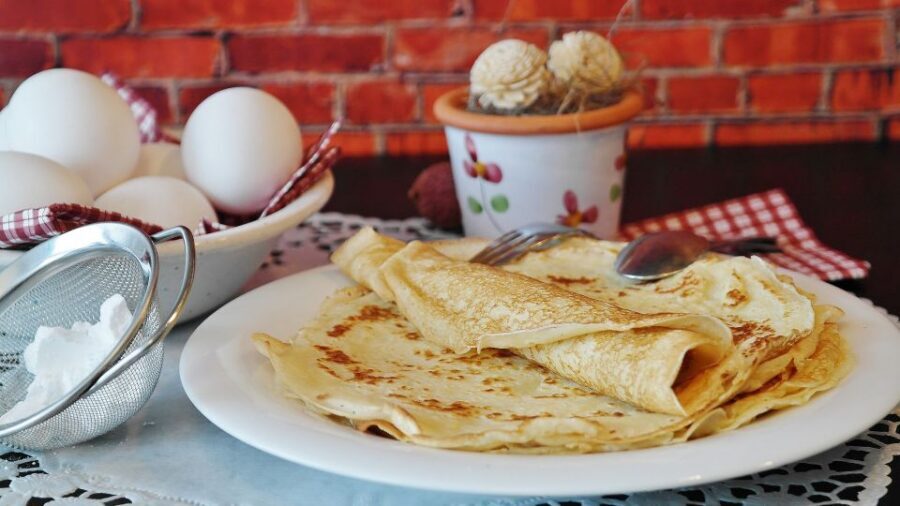
- Crêpe (thin, soft, sweet but not overdone; you choose a popular variant)
- Macarons (almond powder, sugar, and eggs, baked until golden)
That variety is the point. You get the sweet-and-savory swings that make a tour like this feel satisfying instead of repetitive.
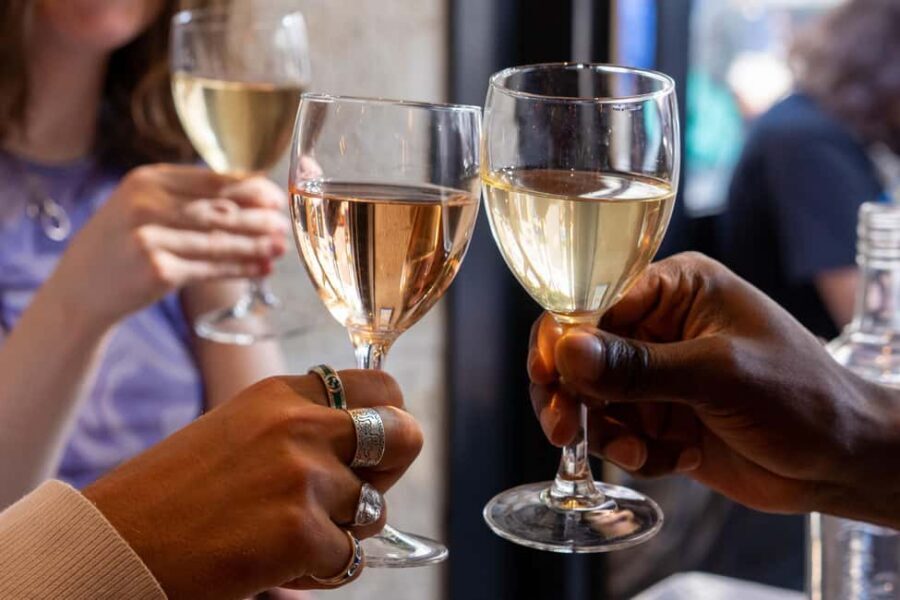
One practical caution: if you’re sensitive to strong wine flavors, keep an eye on how your included alcoholic drink pairs with what you’re tasting. The tour includes 1 alcoholic drink, but it doesn’t say it’s the same type each time, and it’s paired within the flow of tastings.
You can also read our reviews of more tours and experiences in Paris



Sacré-Cœur finish: the sweet landing
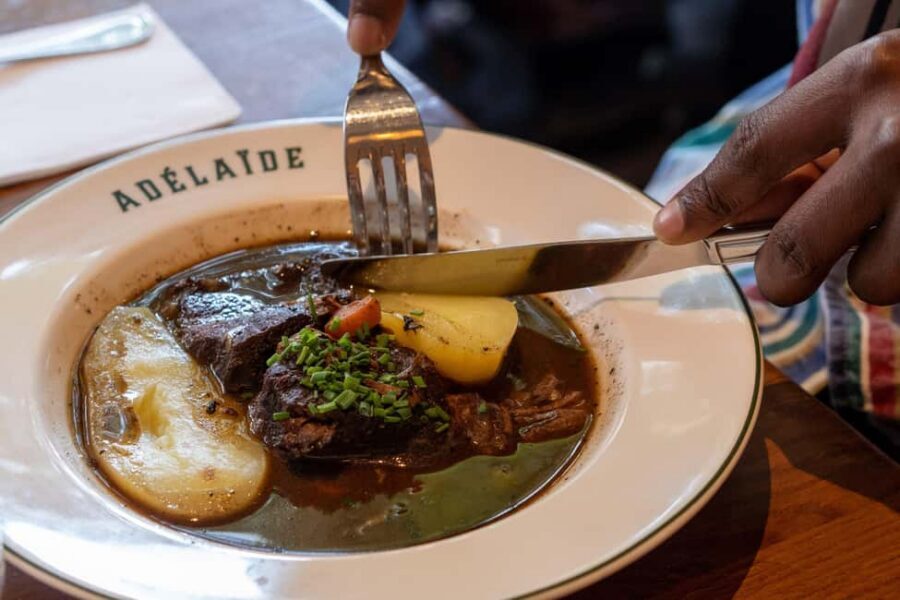
The tour ends at Basilique du Sacré-Cœur de Montmartre. Reaching the finish matters for two reasons: you’ve already earned the climb with the tastings, and Sacré-Cœur gives you a clear visual payoff to anchor the whole evening.
This ending also makes it easier to plan the rest of your night. After you step out of the organized tastings, you’re already in a great spot for lingering photos, grabbing a final espresso, or simply winding down with a view.
If you’re the type who likes to walk it off, you can keep exploring the area after the tour ends. If you’re more “sit, digest, repeat,” you’ll still have enough energy because you’ll have had water and multiple servings throughout the tour.
What you actually eat: the “full meal” logic
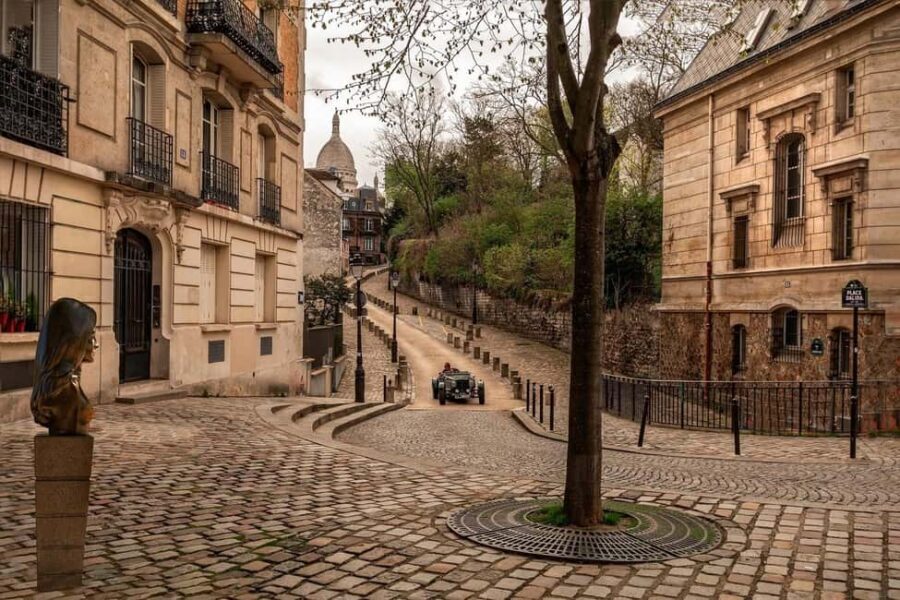
This is the big selling point: you’re not just tasting sweets. You’ll get a spread that hits several classic categories of French food.
Here’s how each item works in real life:
Chou pastry (sweet chou with sugar pearls)
This is a smaller, lighter way to taste the choux world without immediately jumping to the big sugar showpieces. The sugar pearls add crunch, and the base stays delicate. It’s the kind of bite that makes you notice texture, not just sweetness.
Boeuf bourguignon (slow-cooked beef in red wine)
This is pure comfort food, the kind that makes you understand why French cuisine gets praised for technique. The dish comes from Burgundy, and the slow braise in red wine builds deep flavor with tender beef and vegetable complexity.
One heads-up from real-world experience: it can be hard for stews to stay hot as you move between stops. If you get it on the cooler side, just eat it right away and let the flavors do their work.
Mix of fromage
This tasting is designed around a specialist selection from the neighborhood. That means you’re likely to taste more than one style of cheese and not just one safe choice. Expect a salty, savory contrast to the sweets that come later.
Crêpe (choose your variant)
Crêpes are famous for a reason: they’re flexible, fast to serve, and easy to customize. You’ll pick among popular sweet versions, and the texture is all about that thin, soft fold—sweet, but not cloying.
Macarons
These are the signature Paris bite many people want to try, but the best part is what the tour tries to do: put macarons in context. Macarons are inspired by meringues, with almond powder, sugar, and eggs, baked to a golden finish. You taste the almond and the crisp shell feel even more when you’ve already had other stops.
Drink and water
You’ll get water plus 1 alcoholic drink included. For many people, that’s the right pairing level for an evening walk: enough to feel like a Paris treat without turning the food into a sleepy blur.
How much food you get (and how to avoid the uncomfortable “too full” moment)
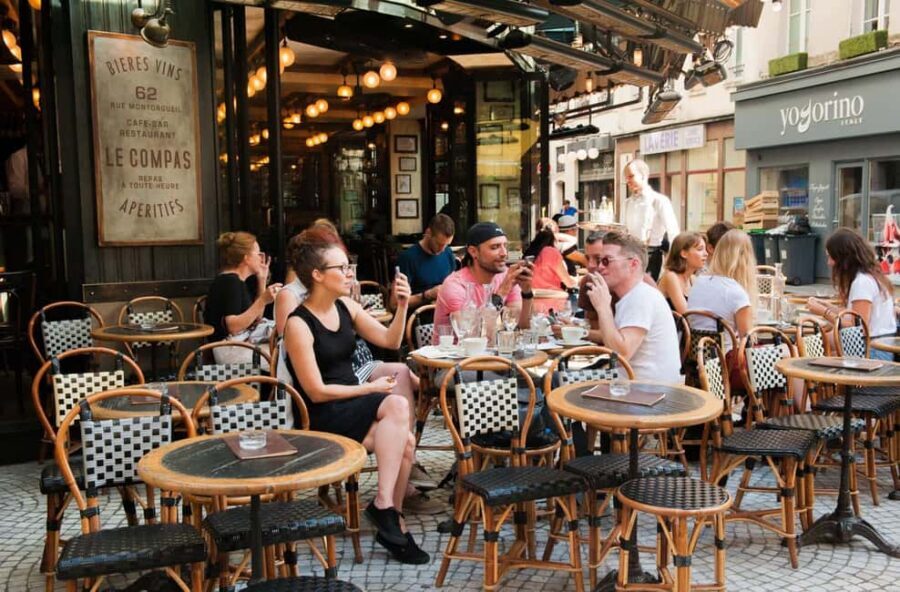
The tour includes at least 4 food stops, and at least one serving at each stop. In practice, that tends to mean you leave feeling full. I’d plan to arrive hungry and to skip a big meal beforehand.
A common mistake with food tours in Paris is thinking each stop is tiny. Here, you get enough variety that your body will catch up with you by mid-evening—especially with a stew stop and then dessert.
If you want to keep it comfortable:
- Eat normally earlier in the day, but don’t cram a heavy lunch right before the tour.
- Sip water during walks so you don’t confuse fullness with thirst.
- Save room for the last sweet finish, since crêpe and macarons are both part of the expected experience.
Value check: is $117 worth it?
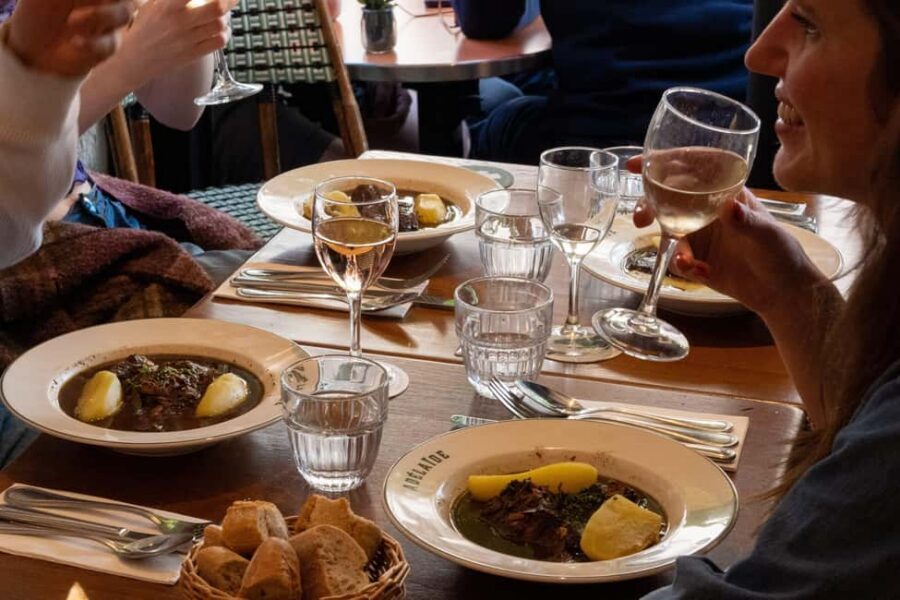
At $117 per person, this isn’t a bargain snack tour. It is, however, priced like what it is: a guided 3.5-hour walking meal with multiple tastings and an included alcoholic drink.
For value, you’re paying for a few things at once:
- Time: 210 minutes walking plus stops
- Guide: local expert narration and route context
- Food volume: at least one serving per stop across 4+ stops
- Variety: sweets plus savory items like boeuf bourguignon and fromage
- Convenience: you don’t have to research and reserve multiple places just to get a well-rounded Montmartre menu
If your goal is to try a cross-section of Montmartre’s classic flavors in one go—without spending your evening in lines—this pricing can make sense. If your goal is only one or two items and you don’t care about the stories or the route, you could find cheaper ways to eat.
But if you want a full-feeling meal with a guided flow, you’re getting the ingredients of a worthwhile night out.
The hill factor: what can slow you down
This tour is not suitable for people with mobility impairments because Montmartre is a hill. Even for healthy walkers, expect uphill and downhill sections as part of normal Montmartre street life.
Comfortable shoes aren’t optional. Choose something you can wear for uneven pavement and long steps. If you’re worried about pacing, this is another reason to choose this format: the guide keeps timing and breaks the walk into manageable chunks with stops.
Guide experience: personalities that change the tone
One thing I like reading about this tour is how often guides bring personality without losing control of the schedule. Names that appear again and again in the guide roster include Peter, Kevan, Thomas, Lolla, Este, Rocco, Zack, Hugo, Marie, Yannick, and Zac.
You’ll also see a theme: guides don’t only recite facts. Several are described as using humor, checking that everyone can hear clearly, and adjusting their commentary to the group’s interests. One guide is even praised for tailoring the tour so kids could enjoy it too, which tells me the pacing can work for mixed ages when everyone is comfortable walking.
Who should book this Montmartre food tour?
This tour fits best if you:
- Want a first-night Montmartre plan that’s more than sightseeing
- Prefer guided ordering help over wandering into random cafés
- Like both sweet and savory classics, from boeuf bourguignon to crêpes and macarons
- Enjoy stories as part of your meal (not just the food list)
It’s less ideal if you:
- Need flat walking routes
- Want a quick, light snack experience rather than a full-feeling meal
Should you book this tour
Book it if you want Montmartre to feel like a night out with structure: a small group, a local guide, multiple tastings, and a finish at Sacré-Cœur that ties the neighborhood together.
Skip it if you’re planning to eat leisurely at your own pace without meals planned for you, or if walking hills is a deal-breaker. For everyone else, the mix of classic Paris tastes plus the guided context is exactly the kind of value that turns a “maybe we’ll eat here” night into a real memory.
FAQ
How long is the Montmartre food tour?
The tour lasts 210 minutes (about 3.5 hours).
Where do I meet the guide?
Meet your guide in front of the Moulin Rouge Ticket Office at 82 Bd de Clichy.
How much food is included?
You’ll have at least 4 food stops, and at least one serving of food is included at each stop.
What drinks are included?
Water is included, and the tour includes 1 alcoholic drink.
Is this tour suitable for people with mobility impairments?
No. The tour is not suitable for people with mobility impairments.
How big is the group, and what languages are spoken?
The tour has a maximum of 12 people and is guided in English and French.