REVIEW · PARIS
Rigoletto at the Jacquemart-André Museum
Book on Viator →Operated by Opera a Palazzo · Bookable on Viator
Opera in a Paris museum salons? That’s the magic trick. This version of Rigoletto turns the Jacquemart-André Museum into a stage for an up-close telling of passion, betrayal, family love, and revenge.
I especially like the small, character-driven cast and the live chamber setup. You’re not dealing with a massive stage show; you get the story with room-level closeness and a trio backing the singing.
The main thing to watch is crowd comfort and sightlines. One part of the evening can feel tight on seating, so if you hate standing or need a clear view, plan your spot early.
In This Review
- Key highlights to know before you go
- Rigoletto in a Museum Salon: Why This Setting Works
- Opera a Palazzo at Jacquemart-André: Small Cast, Live Instruments, Close-Up Staging
- Your 8:30–ish Evening: How the 3 Hours Typically Flow
- Champagne Intermission: Nice Detail, Real Practical Value
- Private Collection Time on the First Floor: The Value-Boost You Can Feel
- Price and Value: Is $348 for Paris Opera a Smart Buy?
- Seating, Crowd Levels, and Comfort: What to Expect in Those Rooms
- Who This Is Best For (and Who Might Want Another Option)
- Should You Book Rigoletto at Jacquemart-André Museum?
- FAQ
- What is the name of the experience?
- Where does it take place?
- How long is the experience?
- What time does it start?
- Is the experience in English?
- What’s included besides the performance?
- Do you get Champagne?
- Who performs in the opera?
- Do I get a mobile ticket?
- What’s the cancellation policy?
Key highlights to know before you go
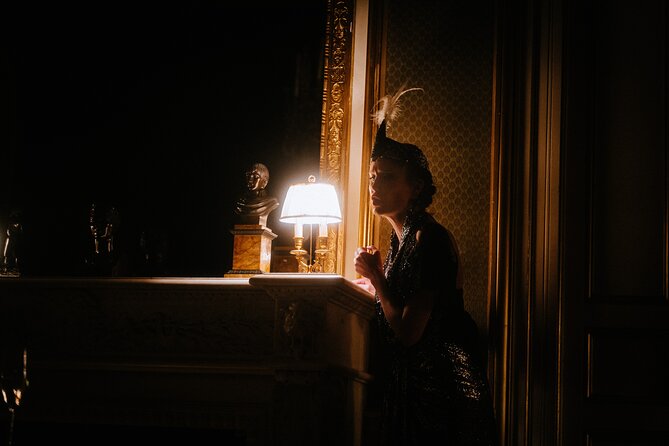
- A chamber-sized Rigoletto with featured roles only: Rigoletto, Gilda, Duca di Mantova, Sparafucile, and Maddalena
- Champagne intermission included during the show
- Live musicians on piano, violin, and cello instead of a full orchestra pit
- Private museum access: a first-floor tour of the permanent collection before or alongside the performance
- English-language experience with a mobile ticket for easier entry
Rigoletto in a Museum Salon: Why This Setting Works
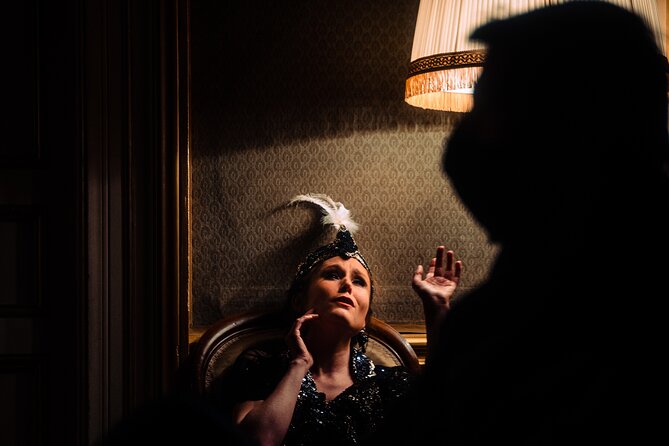
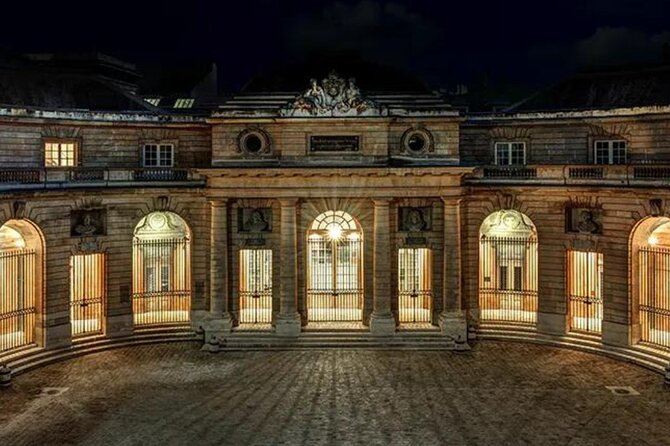
Some operas need big walls, big voices, and big spectacle. This one works for the opposite reason: the Jacquemart-André Museum’s salons are already designed for art, conversation, and atmosphere. Put singers in that world, and the story feels closer to you—less like you’re watching from far away, more like you’ve been invited into the scene.
This show is built as an opera in the museum itself. You follow Rigoletto as the drama unfolds through the museum rooms, instead of being stuck in one auditorium until the final curtain. That change in location matters. It breaks the “always facing the stage” rhythm, so the tension of betrayal and revenge stays fresh rather than blending into background noise.
And because it’s centered on a handful of major roles, the production leans into facial expression and character chemistry. That’s a good match for a museum where you’re close enough to catch small details.
You can also read our reviews of more tours and experiences in Paris.



Opera a Palazzo at Jacquemart-André: Small Cast, Live Instruments, Close-Up Staging
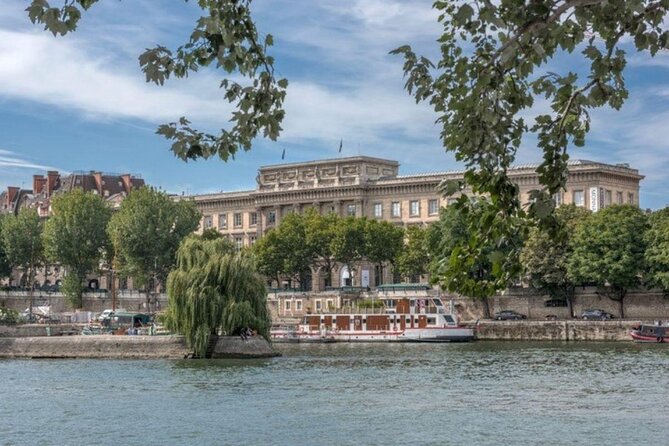
Opera a Palazzo presents this adaptation of Rigoletto through Musica at Palazzo Venice. The featured roles and voice types are clear and focused: Rigoletto (baritone), Gilda (soprano), Duca di Mantova (tenor), Sparafucile (bass), and Maddalena (mezzo-soprano). You won’t be lost in a sea of dozens of characters. You’ll follow the emotional arc because the production funnels attention where it matters.
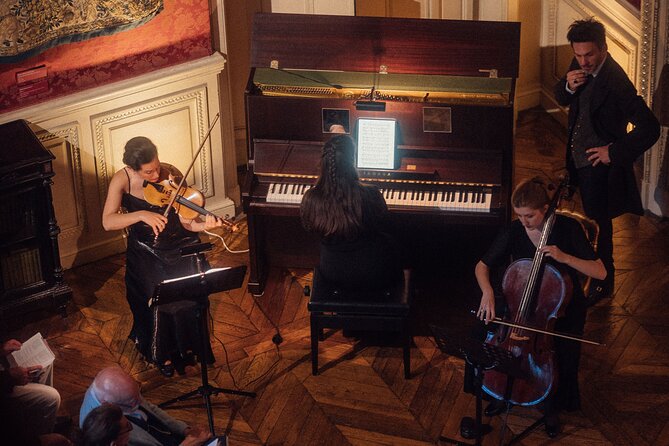
The musical accompaniment is also intentionally compact: piano, violin, and cello. That combination gives the score an intimate texture. It won’t sound exactly like a full orchestra, but it often makes the drama feel more direct and conversational—especially in quiet rooms where sound carries.
Staging is credited to Patrizia di Paolo, with costumes by Venice’s Atelier Nicolao. The point isn’t overstatement. The point is bringing the characters into the same space you’re in, so the plot beats land faster. One of the most praised elements is how the singers feel physically near to the audience, which is exactly what you want for a story built on secrecy and sudden turns.
Your 8:30–ish Evening: How the 3 Hours Typically Flow

The experience runs for about 3 hours, starting at 8:30 pm. Because it takes place in museum rooms, the pacing is less about a strict “sit, watch, sit again” format and more about moving through spaces and moments.
A typical flow looks like this:
First, you’re in the museum: you get an exclusive, private-style tour of the permanent collection, with the performance placed alongside the environment. The museum’s salons and first-floor spaces set the scene, and you experience the art as part of the evening rather than a separate add-on.
Then the opera begins as the story unfolds in those rooms. Instead of a single stage viewpoint, you’ll experience the scenes as the characters are staged close to you. At intermission, you’ll pause for a glass of Champagne.
After the break, the final acts play out with the same close relationship between singers and audience. The staging is designed to keep you from feeling disconnected. Even if you’re not a hardcore opera person, you’re likely to understand what’s happening because the focus stays on a few key relationships.
One note from real-world experience: an exchange time with the artists is sometimes part of the idea, but it may not always happen as advertised in every session. If you’re hoping for a long chat afterward, treat it as a bonus rather than a guarantee.
Champagne Intermission: Nice Detail, Real Practical Value
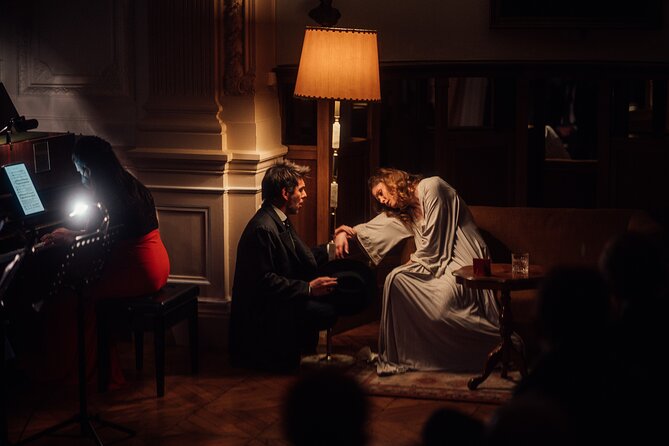
It’s not just a perk. The Champagne pause is a practical reset during a 3-hour evening. Opera can be emotionally intense, and a break helps you come back ready to follow the story rather than fading out halfway through.
Also, since this show is in rooms rather than one big hall, breaks help you avoid the “stuck in one position too long” feeling. You can refocus, adjust your view for the next room, and take a moment before the story turns darker.
If you’re sensitive to alcohol or you just don’t drink, you can still treat it like a scheduling breath. But the event does include that Champagne at intermission, so plan on it being part of the rhythm.
Private Collection Time on the First Floor: The Value-Boost You Can Feel
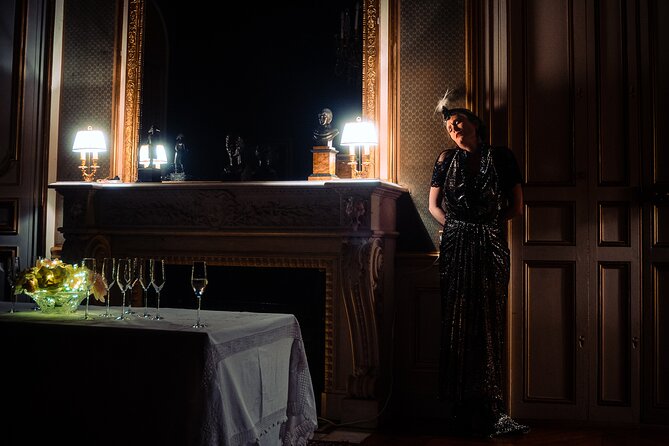
What makes this more than opera tickets is that you don’t just show up for the performance. You also get an admission ticket included and a private opportunity to tour the museum’s prestigious permanent collection in the first-floor salons.
That matters for two reasons.
First, it gives you context for the evening. Instead of treating the show like a generic performance venue, you’re surrounded by the museum’s art and atmosphere while the story plays. The result is a tighter connection between place and performance.
Second, it changes the kind of experience you have. You’re not only listening. You’re also looking, learning, and walking through refined rooms. If you like cultural “double duty”—art plus music—this format gives you both in the same block of time.
And yes, the museum itself is famous for its interiors and collections. So even if you’re not chasing a museum visit, you’re getting one built into the evening.



Price and Value: Is $348 for Paris Opera a Smart Buy?
At $348.07 per person, this is not a budget outing. But the price starts to make sense when you count what’s included and how the format works.
You’re paying for:
- A featured opera adaptation centered on main roles
- A live music trio (piano, violin, cello)
- Champagne during intermission
- Admission included, plus a private collection tour access experience
- An English-language experience
- A smaller, salon-based staging approach rather than a massive production model
Now for the practical part: value is highest if you care about closeness and a relaxed pace. Many people like this version because it feels more manageable than a grand theater production. There are breaks, and the cast size keeps things easier to follow, which is great for first-time opera goers who don’t want the full intimidating scale.
Also, it’s booked far ahead on average—about 66 days. That’s a hint that you shouldn’t wait for a last-minute decision if you’re aiming for a specific date.
If you’re the type who likes big, fully staged opera with giant forces, you might find this format too stripped down. But if you want emotional storytelling with less distance between you and the singers, the price can feel more justified.
Seating, Crowd Levels, and Comfort: What to Expect in Those Rooms
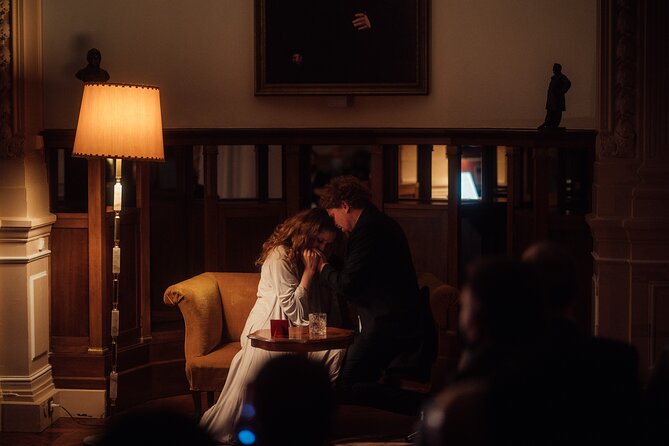
Here’s the honest part: museum rooms aren’t designed like theaters. They’re beautiful, but they’re also tight and flexible for different events. One issue that shows up is that at least one room can have very limited seating at times, with lots of people crowding in.
One review described the first room as having practically no seats and the number of attendees making visibility tricky unless you’re in the front. Another described a second room with chairs but still notes that you likely need a front-row-ish position to see clearly. A separate comment said the experience involved a crowd around 80 people, which can be a lot for a room built for elegance rather than rows and aisles.
So how do you handle that?
- Arrive ready to stake out your position early in the first room.
- If you need a chair, choose your spot with the expectation that one room may be harder than another.
- If you have trouble standing for long stretches, plan ahead and consider whether this format fits your comfort level.
Also, light levels can vary by room. One comment mentioned possible low lighting during the last act. That’s not a deal-breaker, but it’s worth remembering if you rely on visuals to follow the action.
Who This Is Best For (and Who Might Want Another Option)
This works especially well for you if:
- You want opera without the intimidation of a huge production
- You like chamber-style closeness and live musicians
- You want a date-night plan that includes both music and museum atmosphere
- You enjoy stories where the emotional beats are the main event
It might be less ideal if:
- You strongly prefer lots of guaranteed seating
- You need excellent sightlines from every position
- You want a full orchestra, large staging, and “big theater” scale
It’s also a smart pick if you’re already a museum fan. You’ll enjoy the way the performance and collection share the same spaces instead of competing with each other.
One more practical note: dress matters here. There’s an expectation of evening wear in a prestigious venue setting, so come prepared to dress appropriately rather than treating it like a casual museum night.
Should You Book Rigoletto at Jacquemart-André Museum?
If you’re curious about opera and you want a version that feels personal—close to the singers, tied to art-filled rooms, and paced with breaks—this is a very strong yes.
The price is steep, but you’re not paying for opera alone. You’re paying for a museum night with a private collection experience, Champagne intermission, and a focused cast with live chamber instruments.
I’d say book it if you value intimacy and clarity over grand spectacle. I’d think twice if comfort and guaranteed seating are your top priorities.
FAQ
What is the name of the experience?
It’s Rigoletto at the Jacquemart-André Museum, offered by Opera a Palazzo.
Where does it take place?
The performance and museum experience are at the Musee Jacquemart-Andre in Paris.
How long is the experience?
It lasts about 3 hours (approx.).
What time does it start?
The start time is 8:30 pm.
Is the experience in English?
Yes. It’s offered in English.
What’s included besides the performance?
Admission to the museum is included, and you also get an exclusive opportunity for a private tour of the museum’s permanent collection in the first-floor salons.
Do you get Champagne?
Yes. You’ll receive a glass of Champagne at intermission.
Who performs in the opera?
The featured roles include Rigoletto (baritone), Gilda (soprano), Duca di Mantova (tenor), Sparafucile (bass), and Maddalena (mezzo-soprano), with live accompaniment by piano, violin, and cello.
Do I get a mobile ticket?
Yes. The experience includes a mobile ticket.
What’s the cancellation policy?
Free cancellation is available up to 24 hours before the experience’s start time for a full refund.