REVIEW · PARIS
Seine River Guided Cruise by Vedettes de Paris
Book on Viator →Operated by Vedettes de Paris · Bookable on Viator
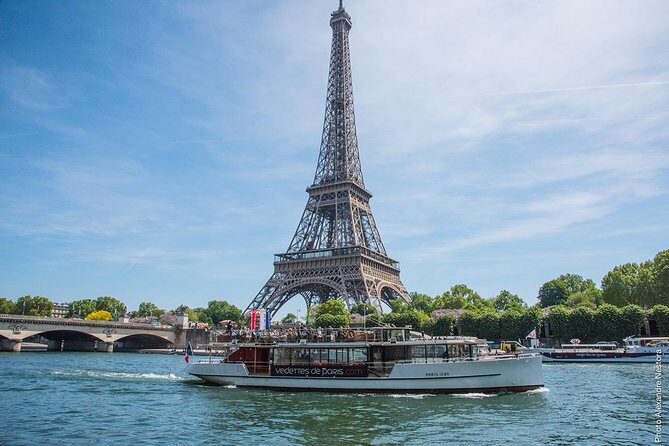
If you want Paris to click fast, start here. This Seine River guided cruise by Vedettes de Paris gives you a smart, scenic tour of the city’s headline sights from the water—on a 100% electric boat—with a guide and onboard narration timed to what you’re seeing.
I really like two things about it: the live guide in English and French (you’re not stuck with a phone-only experience), and the way the route is paced for photos—Eiffel Tower views, big bridges, and cathedral silhouettes all show up in a short, manageable hour. A possible downside: the narration can be harder to catch if you’re outside on the open decks in cold or wind, so choose your seat based on comfort.
In This Review
- Key details that help you plan
- Seine River Guided Cruise by Vedettes de Paris: What you’re really buying
- Start at Port de Suffren: the part you don’t want to rush
- The Eiffel Tower and the right side of Paris: from start to Pont Alexandre III
- Pont de la Concorde, Hôtel de Salm, and the architecture stops that feel like history class
- Orsay, Institut de France, and the rhythm of the older bridges
- Île de la Cité, Notre-Dame, and why the cathedral looks different from water
- Arab World Institute, Île Saint-Louis, and the residential Paris vibe
- City Hall, the Conciergerie, and the river’s darker chapters
- Louvre frontage, Place de la Concorde, and the 1900 World’s Fair energy
- The Flame of Liberty and your ending at Trocadéro territory
- Comfort, sound, and the small decisions that make the hour better
- Where you sit on the boat
- Blame-proof planning for the best Eiffel moments
- Snacks and champagne upgrades
- The guide factor: why real people beat recordings
- Is this Seine cruise worth booking for your Paris trip?
- FAQ
- Is the cruise narration available in English?
- What’s included in the standard ticket price?
- How long is the cruise, and where does it end?
- Can I bring luggage onboard?
- If I want champagne or snacks, do I need to choose an option?
- Can I cancel for a full refund?
Key details that help you plan
- 100% electric boat keeps the ride smooth and modern without the diesel fumes.
- Live bilingual guidance (English and French) plus multi-language app commentary (Spanish, Italian, German, Dutch).
- A classic 1-hour loop that’s long enough for highlights but short enough to fit a busy day.
- Optional drink/snack upgrades like champagne for adults and a Gourmand snack add-on.
- Comfort upgrades for cold weather have been offered (blankets show up in colder seasons).
- No luggage onboard, so pack light if you want an easy boarding experience.
Seine River Guided Cruise by Vedettes de Paris: What you’re really buying
At about $25.23 per person for roughly one hour, you’re paying for time-saving sightseeing plus the convenience of a guided “greatest hits” route. You’re not walking for miles. You’re not trying to figure out which bridge faces which tower. You’re simply getting the Seine as your viewing platform, with commentary that points out what you’d otherwise miss from street level.
It also works well as a reset button. After a day of museums or neighborhoods, a short cruise lets you sit, cool down, and still feel like you covered serious Paris.
One more practical win: departures are frequent, so you can pick daytime for clearer views or an evening cruise for illuminated sights. If your goal is Eiffel Tower lights, a visit around 4:45 has been a popular way to line up with the 6pm glow you’ll want to catch.
You can also read our reviews of more boat tours in Paris

Start at Port de Suffren: the part you don’t want to rush
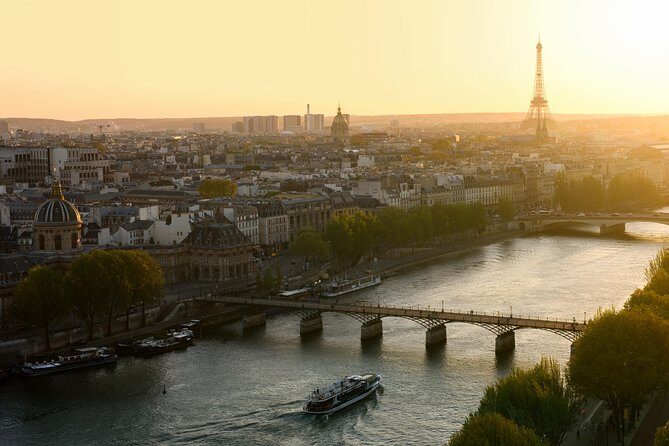
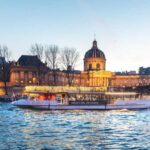
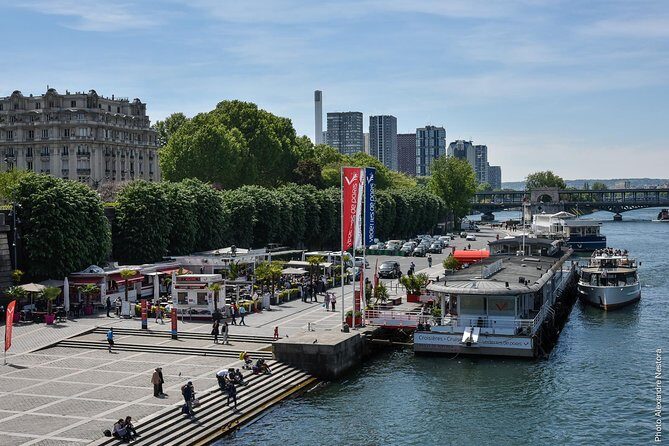
Your cruise starts at 2 Port de Suffren, 75007 Paris (Vedettes de Paris). The pier is near public transport, which matters because getting to the water should be friction-free on a first or second day in town.
Plan to arrive before your departure. Boarding moves, and you’ll enjoy the ride more if you’re settled and ready when the boat pulls out.
Two rules to keep in mind:
- No baggage is accepted onboard, so avoid bringing a large bag you can’t keep with you.
- You’ll end back at the same meeting point, so you’re not stuck navigating across the city after.
The Eiffel Tower and the right side of Paris: from start to Pont Alexandre III
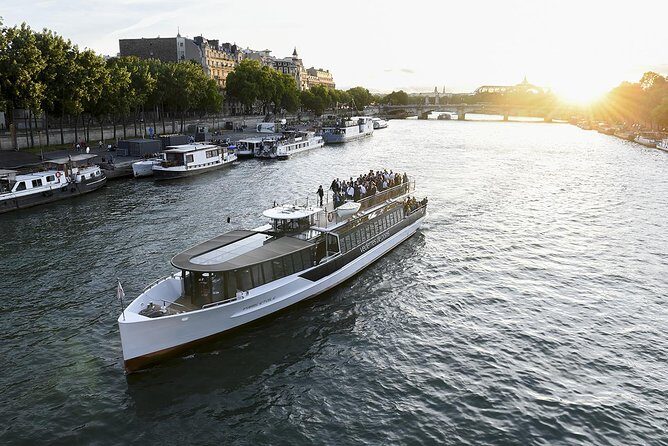
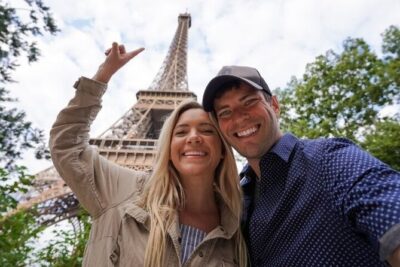
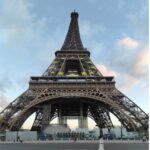
Your route kicks off with the Eiffel Tower, and the narration uses the kind of specific facts that make landmarks feel real instead of generic. You’ll hear how Gustave Eiffel’s tower was built for the 1889 Universal Exhibition, completed in just over two years, and how it later survived because a radio antenna added in 1903 helped prevent demolition. It’s the sort of detail that makes “Eiffel Tower again” feel fresh the second time you see it.
From there, you’ll glide past key religious and civic sights that add variety beyond the usual postcard lineup:
- The Holy Trinity Cathedral (a Russian Orthodox church) is hard to miss, with its cultural presence and bilingual school center.
- The American Church in Paris, known for its green clock-tower, and its stained-glass windows attributed to Louis Comfort Tiffany.
Next comes Hôtel des Invalides. This is one of those places where it’s easier to understand the scale from the river. You’ll hear it was ordered by Louis XIV as a military hospital, and that the royal chapel is where Napoleon I is buried.
Then you roll toward one of the most photogenic bridge moments of the cruise: Pont Alexandre III. This bridge was built for the 1900 Universal Exhibition and to celebrate the Franco-Russian alliance. Look for the gold-leaf Paris coat of arms and the nymphs symbolizing the Seine. The opposite side mirrors the theme with the arms of Saint Petersburg and nymphs for the Neva.
Practical tip: if you’re serious about photos, pick a spot early where you can move quickly without blocking others. The ride is short, and some bridges only give you a brief window to frame them.
Pont de la Concorde, Hôtel de Salm, and the architecture stops that feel like history class
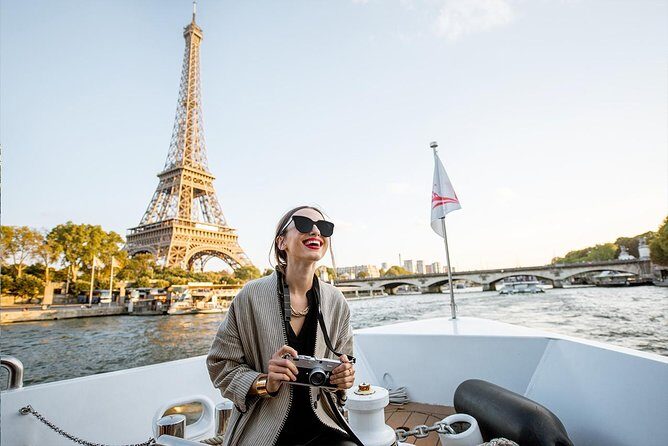
After Pont Alexandre III, you head to Pont de la Concorde. The story is tied directly to the French Revolution: the bridge uses stones from the former Bastille prison. That’s the kind of fact that makes a bridge feel less like “just a crossing” and more like a living artifact.
On the way, you’ll also pass major government and landmark zones:
- On one side, you’ll see the direction toward the Palais Bourbon, seat of the French National Assembly.
- On the other, it leads to the Place de la Concorde.
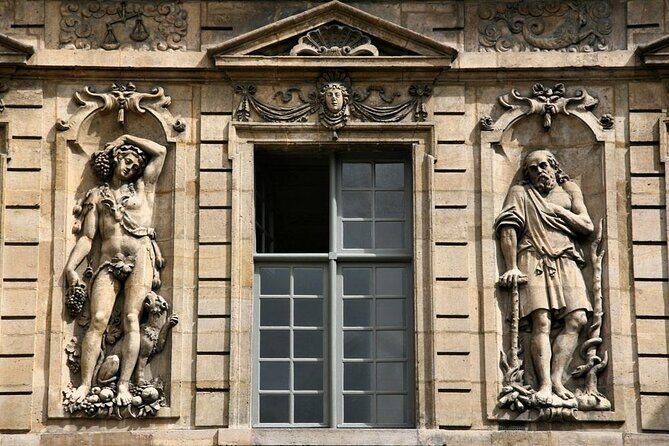
Next up: the Hotel de Salm, associated with the Légion d’honneur Palace under Napoleon I. The narration connects the building to the Légion d’honneur, France’s highest order of honor, and it adds a different flavor than the more dramatic monuments.
This is a good segment for people who want variety. You’ll see grand architecture, but it’s still tied to what’s outside your window in real time—so it doesn’t feel like a museum lecture.
Orsay, Institut de France, and the rhythm of the older bridges
When the cruise reaches the old Orsay railway station, you’re moving into an art-and-era transition. You’ll hear the building was created for the 1900 Universal Exhibition and later converted into a museum in the 1980s for 19th-century art. The narration name-checks major Impressionists and Post-Impressionists like Monet, Renoir, and Van Gogh.
From there, you’ll pass the Institut de France, formerly the Collège des Quatre Nations, built with funds left by cardinal Mazarin. The highlight here is the link between architecture and language: the Académie Française helps maintain and update the official French dictionary.
Then come the older bridges—small enough to feel intimate, but full of character:
- Pont Neuf, despite the name, is the oldest bridge in Paris and notable for pavements without houses along the edges. The ride points out its 381 stone masks, each individually decorated.
- Pont Saint-Michel, requested by Napoleon III, with the two imperial “N” letters on its pillars. You’ll also hear why it connects visually toward the Latin Quarter—students there spoke Latin until the 19th century.
This part of the cruise is where Paris starts to feel like a layered timeline. Everything you see looks close together, but the dates keep shifting under your feet.
You can also read our reviews of more guided tours in Paris

Île de la Cité, Notre-Dame, and why the cathedral looks different from water
The boat then heads to Île de la Cité, often described as the presumed birthplace of Paris. The narration touches the earlier settlement by the Parisii tribe and the name Lutetia, reminding you that this area is ancient, not just iconic.
One of the biggest moments: Notre-Dame Cathedral. You’ll get the construction timeline—started in 1163, finished almost two centuries later in 1345—plus details about gargoyles and sculptures. The south rose window, Rose du Midi, is connected to the New Testament and was a gift from King Saint Louis.
You’ll also pass the statue of Saint Genevieve, patron saint of Paris. The narration even links the sculptor Paul Landowski to his later work on the Christ the Redeemer statue in Rio de Janeiro.
From a viewer’s perspective, this is one reason I like a cruise for Notre-Dame. Street views can be crowded and distorted by buildings. On the Seine, the cathedral reads more clearly as a single shape in space—even if you can’t get close enough to see every carving.
Arab World Institute, Île Saint-Louis, and the residential Paris vibe
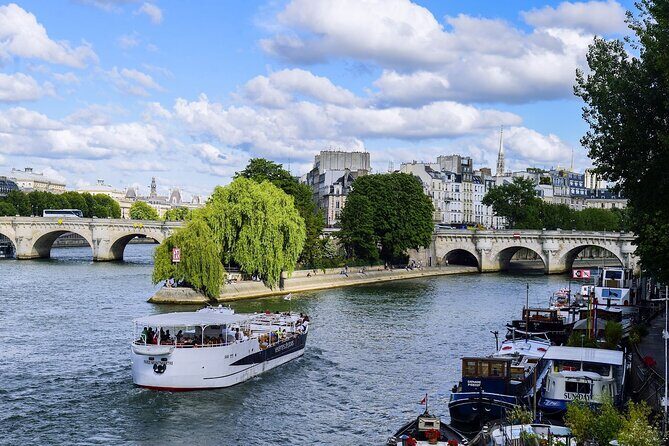
Not every stop is a mega-monument. The cruise also passes the Arab World Institute, inaugurated in 1987. The narration frames it around history, art, society, religions, and science—so you get cultural balance, not just stone-and-spires.
Then you’ll glide alongside Île Saint-Louis, known for prestigious 17th-century town houses such as the Hotel Lambert and Hotel Lauzun. The narration adds that celebrities lived there, including Charles Baudelaire and Georges Moustaki. Even if you’re not stepping inside, it helps you understand why this island feels different from the busier riverbanks.
This segment is great for pacing. It’s quieter visually, and it gives your eyes a break before the grand museum stretch.
City Hall, the Conciergerie, and the river’s darker chapters
One of the more emotional stops on the route is the Hôtel de Ville de Paris—seat of the Paris City Council since 1357. The narration connects the building to Neo-Renaissance style and notes the banquet hall designed as a template of the Hall of Mirrors at Versailles.
Next is the Conciergerie, built under Philip IV and later turned into a prison. You’ll hear the story of Marie-Antoinette, who spent her final two months there before being guillotined at Place de la Concorde in 1793.
If you’re the type who likes context, these are the moments where the cruise feels more than scenic. The boat makes the river a timeline, not just a route.
Louvre frontage, Place de la Concorde, and the 1900 World’s Fair energy
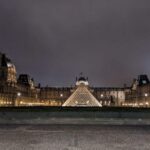
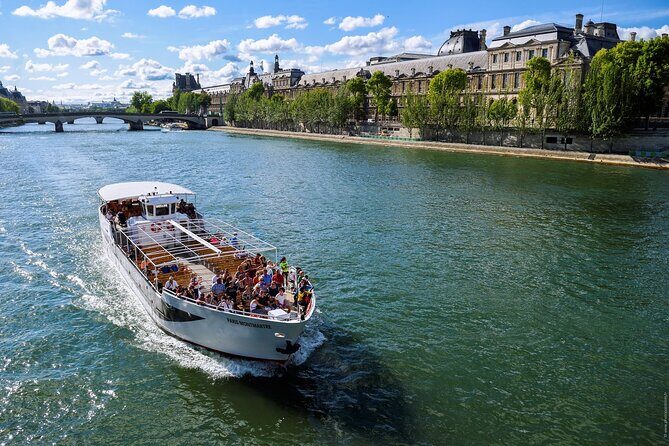
The Louvre appears as royal palace turned museum in 1793, and the narration emphasizes scale: it has over four kilometers of façades and nearly 14 kilometers of galleries, plus a huge collection count. You’ll hear highlights like the Winged Victory of Samothrace, Venus de Milo, and the Mona Lisa.
Then it’s on to Place de la Concorde. The central feature is the Luxor obelisk brought to France in 1836, which ties Egypt history to French revolutionary history—yet another example of Paris borrowing stories from elsewhere.
At this point, the cruise brings in the energy of the 1900 Universal Exhibition again, now with the Grand Palais. The glass roof is called out as the largest in Europe, and it’s now used for exhibitions and events. The narration notes it’s also tied to fairs and even skating, which helps you picture the building as a living place, not a frozen relic.
The Flame of Liberty and your ending at Trocadéro territory
Near the end, you’ll pass the Flame of Liberty, described as a U.S. gift to France and to the newspaper International Herald Tribune, thanks for restoring the Statue of Liberty. The flame is an exact reproduction of the one in New York.
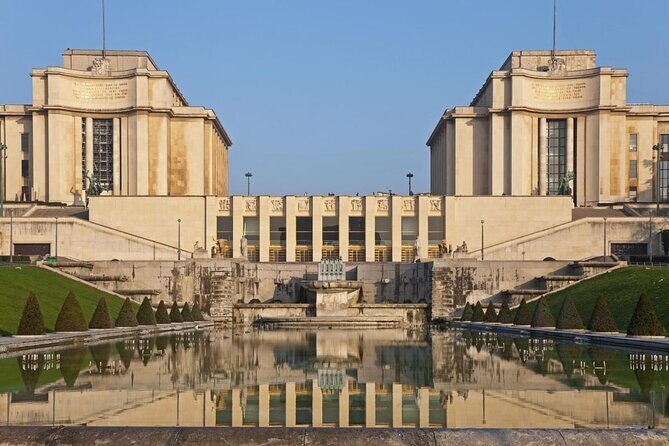
Then comes Palais de Chaillot, built for the 1937 Universal Exhibition. It includes two Neoclassical pavilions and an esplanade overlooking gardens. The narration mentions the City of Architecture and Heritage, the National Navy Museum, the Museum of Humankind, and the National Theatre of Chaillot.
This ending stretch is where you’ll feel the cruise “click” together: Eiffel Tower to grand museums, then back to modern cultural institutions. It’s a neat way to finish because the Trocadéro area naturally sets you up for what you’ll likely do next on foot.
Comfort, sound, and the small decisions that make the hour better
A one-hour cruise sounds simple. But the details matter.
Where you sit on the boat
You’ll likely have both indoor seating and outdoor deck space. If it’s cold or windy, you’ll be happier inside. If it’s warm, outside helps with the wow-factor views.
A key caution: a few people have had trouble hearing the narration on the outdoor deck. So if you’re sensitive to audio, choose your seat with sound in mind and keep an eye on your guide’s speaking rhythm.
Blame-proof planning for the best Eiffel moments
If Eiffel Tower lights are your goal, timing is everything. One practical approach shared by visitors is choosing a slot around 4:45 so you can end near 6pm lighting. Even if you don’t nail the exact minute, you’ll still get a stronger “evening Paris” feel than a random midday departure.
Snacks and champagne upgrades
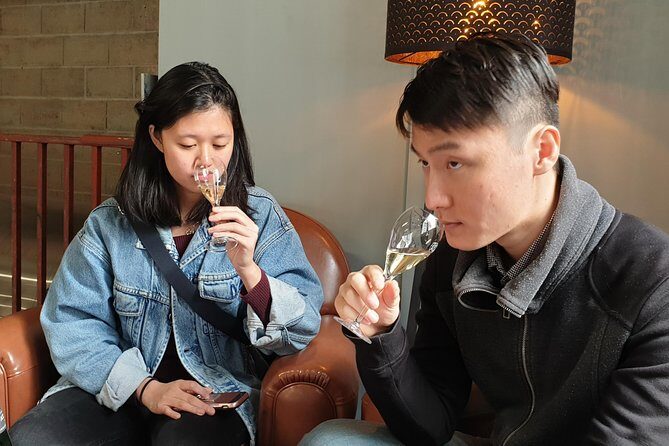
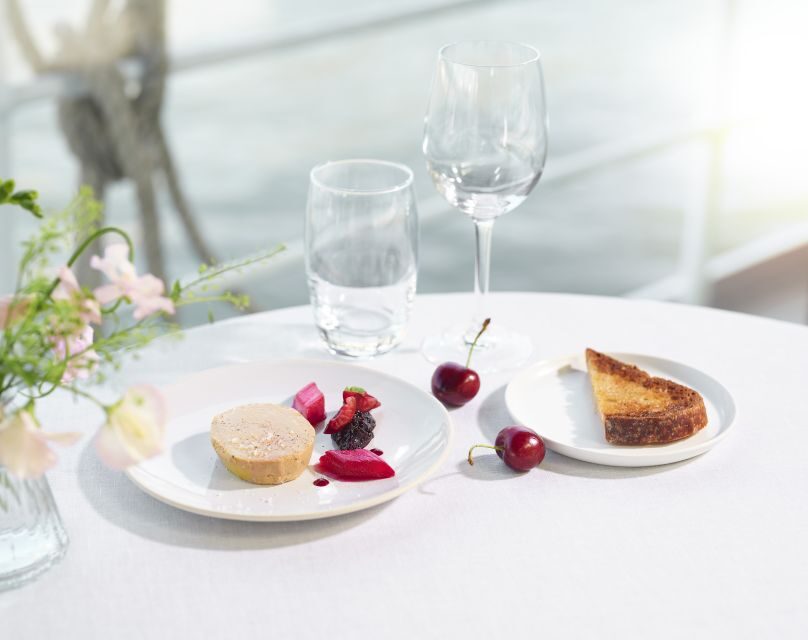
Base tickets get you the cruise plus the guide and commentary. Food and drinks are not included unless you select an option. If you choose champagne, it’s tied to a champagne option that’s only bookable for adults. The Gourmand option includes a pancake or cookie with a soft drink.
This is worth thinking about before you buy. If you just want the views and don’t care about drinks, stick to the core ticket and save the money for dinner. If you like a treat while you float, the upgrades can make the ride feel like a special moment.
The guide factor: why real people beat recordings
You’ll hear live English and French narration, and people have praised guides for being lively and helpful. Names that came up include Bernadette and Caterina—both described as engaging and clear, with the right pace for an hour.
That real-human element matters because the guide can shift for the crowd and make the information feel connected to what’s right in front of you.
Is this Seine cruise worth booking for your Paris trip?
I’d book this if:
- You want a fast orientation to major Paris sights without paying for multiple attractions.
- You’re doing lots of walking and want a seated break that still feels “worth it.”
- You care about commentary that mixes big history with practical landmarks—bridges, cathedrals, and major institutions.
I’d think twice if:
- Sound quality is critical for you and you know you struggle outdoors in wind/cold. In that case, plan for indoor seating.
- You expect food to be automatically included. Only select the snack/drink option if you want it.
FAQ
Is the cruise narration available in English?
Yes. The cruise includes a live guide in English and French, and there’s also a free app for commentary in Spanish, Italian, German, and Dutch.
What’s included in the standard ticket price?
You get the 1-hour Seine River cruise on a 100% electric boat, live guide commentary (English and French), and access to the mobile commentary app. Food and drinks are not included unless you select an option.
How long is the cruise, and where does it end?
It’s about one hour and it ends back at the same meeting point (the pier area).
Can I bring luggage onboard?
No baggage is accepted on the boat.
If I want champagne or snacks, do I need to choose an option?
Yes. The champagne option includes a glass of champagne for adults, and the Gourmand option includes a pancake or cookie with a soft drink.
Can I cancel for a full refund?
Yes. You can cancel for a full refund up to 24 hours before the experience start time.