REVIEW · PARIS
Somme Battlefields from Paris with Australian memorial & Amiens Cathedral
Book on Viator →Operated by Blue Fox Travel - Blue Bike Tours - Paris · Bookable on Viator
Names follow you all day. This small-group (max 8) trip runs from Paris to the Somme battlefields and finishes at Amiens Cathedral, with air-conditioned minivan the whole way. It’s a tight, emotional route with no wasted time, helped by guaranteed line-skipping at key sites.
I love that the day mixes big-name memorials with places you can physically understand. You’ll get time at the Newfoundland Memorial where you can still walk in the trenches, and you’ll also visit the Sir John Monash Centre with video testimonials and interactive displays.
One drawback to plan for: it’s a long, serious day. Cold, wet weather happens, lunch isn’t included (and it’s a single lunch option), and the memorials are not the kind of sites where you rush through.
In This Review
- Key highlights
- A Somme day trip that keeps the focus on names and sacrifice
- Getting out of Paris fast: the 7:00 am start and comfortable transport
- Thiepval Memorial: seeing what “no known grave” really means
- Lochnagar Crater: the Somme’s first-day blast, measured in meters
- Beaumont-Hamel Newfoundland Memorial: where trench walking changes everything
- Pozieres Memorial: a short stop that still deserves respect
- Villers-Bretonneux Military Cemetery: the Australian memorial with Anzac Day significance
- Sir John Monash Centre: video testimonials and interactive displays for context
- Lunch at Le Tommy: good, classic food plus an artifact collection
- Amiens Cathedral at day’s end: 13th-century stone in a 20-minute window
- Who should book this Somme route from Paris
- Value check: what you’re really paying for at $278.26
- Should you book this Somme battlefields day trip?
- FAQ
- How long is the tour?
- What time does the tour start in Paris?
- What meeting point does the tour use?
- What’s the group size limit?
- What language is the tour in?
- Are entrance tickets included for the stops?
- Is lunch included?
- Does the tour operate in bad weather?
- Is there free cancellation?
Key highlights
- Small-group size (max 8) keeps the explanations personal and the bus time more comfortable
- Skip-the-line entry at the main stops saves time on arrival
- Trench walking at Beaumont-Hamel helps the Somme feel real, not abstract
- Australian focus at Villers-Bretonneux with a memorial for 10,738 servicemen with no known grave
- Sir John Monash Centre (1 hour) uses video and interactive displays to connect names to stories
- Amiens Cathedral at the end gives you a powerful change of pace—still historical, just different
A Somme day trip that keeps the focus on names and sacrifice
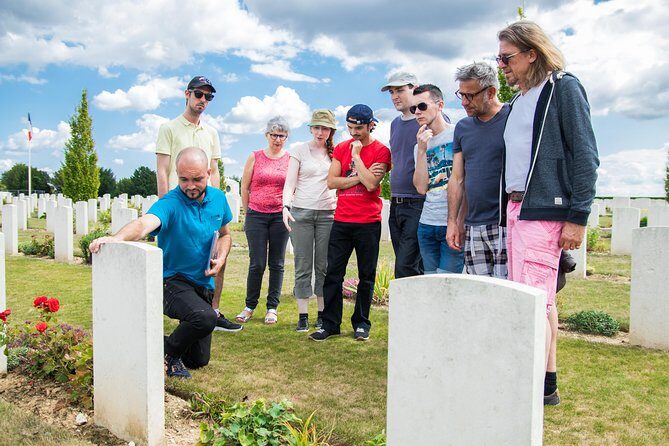
If you’re headed to Paris and want one day that truly connects WWI history to living places, this is a strong choice. The route is built around major memorial sites from the Somme, with a clear thread through the Australian contribution—especially at Villers-Bretonneux and the Sir John Monash Centre.
What I like best is the rhythm: you see the physical remains (craters and trenches), then you move to remembrance places that record what happened—often when soldiers have no known grave. That combination helps you understand why these sites matter so much to families and countries.
This is also one of those trips where your guide can make a big difference. In past groups, I’ve seen names like Etienne, Philip, Aaron, Oliver, Nessa, Sarah, Clement, Pierre, Victor, Matthew, and Marie mentioned—each praised for making stops clear, paced, and respectful.
You can also read our reviews of more tours and experiences in Paris.



Getting out of Paris fast: the 7:00 am start and comfortable transport
The tour starts early, at 7:00 am, and it begins at Dada12, Av. des Ternes (75017 Paris). It ends back at the same meeting point, so you’re not left figuring out trains or taxis after a long day.
You’ll travel by air-conditioned minivan, and the group cap is 8 people. That matters more than you might think on an 11-hour day. Past feedback shows that people feel less cramped compared with bigger buses, and small-group pace tends to make brief stops feel smoother.
You’ll also get a mobile ticket, and the operator includes guaranteed skipping of long lines. Translation: you spend more time at the Somme sites and less time standing around.
Thiepval Memorial: seeing what “no known grave” really means
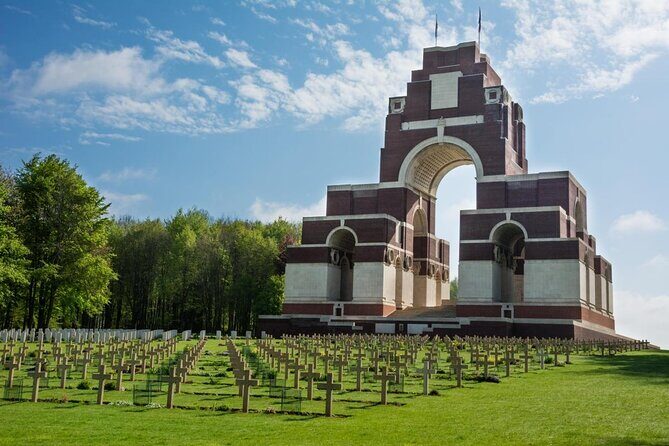
Stop one is the Memorial de Thiepval (Thiepval Memorial of the Missing). Here you’re looking at the names of more than 72,000 UK and South African men who died and have no known grave. Admission is free, and you’ll have about 30 minutes.
This is the kind of site where the scale lands before the facts do. Even if you only spend a half hour, you’ll likely find yourself slowing down—because you’re not just looking at history. You’re looking at absence made visible.
Practical advice: use your time to read a few sections closely rather than scanning everything. It’s also worth taking a moment just to orient yourself—where you stand, how the memorial faces the memorial grounds, and how the names are organized.
Lochnagar Crater: the Somme’s first-day blast, measured in meters
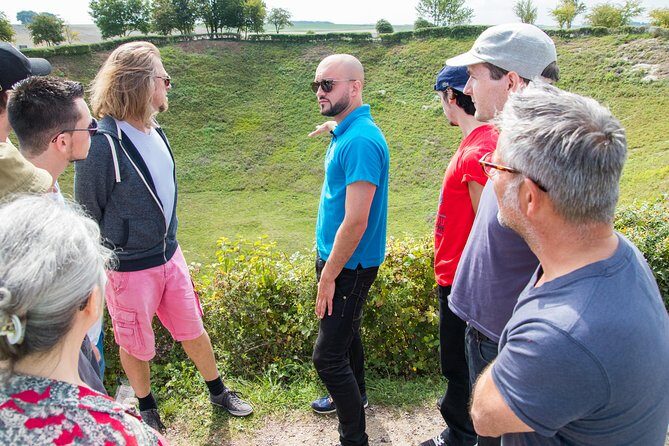
Next up is Lochnagar Crater, created on July 1, 1916, the first day of the Battle of the Somme. It’s described as 30 meters deep and 100 meters wide, with free admission and about 30 minutes on site.
This stop is powerful because it’s not a “museum object.” It’s a wound in the landscape—still there after more than a century. You can stand near it and understand that the Somme wasn’t just strategy and speeches. It was physical destruction on a massive scale.
Practical advice: wear shoes with good tread and bring waterproof layers if weather looks iffy. People often underestimate how cold and damp open-air memorial sites feel, especially when the wind picks up.
Beaumont-Hamel Newfoundland Memorial: where trench walking changes everything
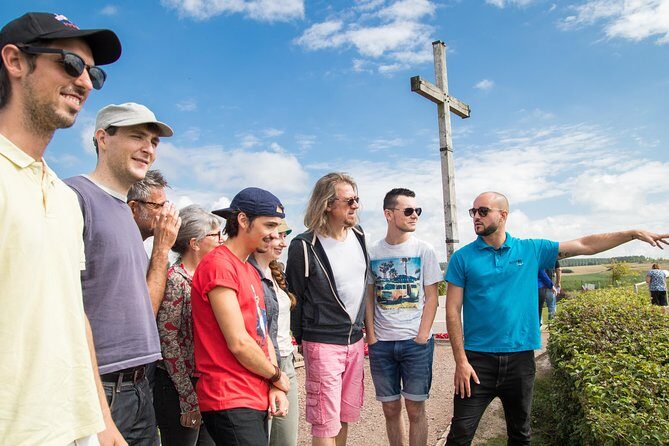
At Memorial Terre-neuvien de Beaumont-Hamel, you’ll find the Newfoundland Memorial—described as the largest Somme battlefield site that’s been preserved. You’ll have about 30 minutes, and this is one of the few stops where you can still see and walk in the trenches.
The biggest value here is perspective. Seeing trenches in photos is one thing. Walking through the kind of preserved routes that soldiers once moved along is another. It turns “conditions” into something you can almost imagine: the tight space, the ground reality, and how close everything was.
If you’re visiting with kids or teens, this is the stop where many families feel the history becomes real in a calm, direct way. It’s still sobering, but the physical layout helps younger travelers grasp what the words mean without needing to picture everything from scratch.



Pozieres Memorial: a short stop that still deserves respect
You’ll then make a 10-minute stop at Pozieres Memorial. With such limited time, this isn’t the place to expect a long, guided narrative.
Instead, use those minutes to do the small-but-important things: read what’s there, take a photo if you want, and give yourself a pause. Ten minutes sounds short, but on a day like this the pace helps you keep your energy steady for the stops that take more time.
If you’re the type who likes to memorize details, don’t try to “learn it all” here. Think of Pozieres as a reminder that the Somme front wasn’t one single place—it was a chain of targeted moments and communities.
Villers-Bretonneux Military Cemetery: the Australian memorial with Anzac Day significance
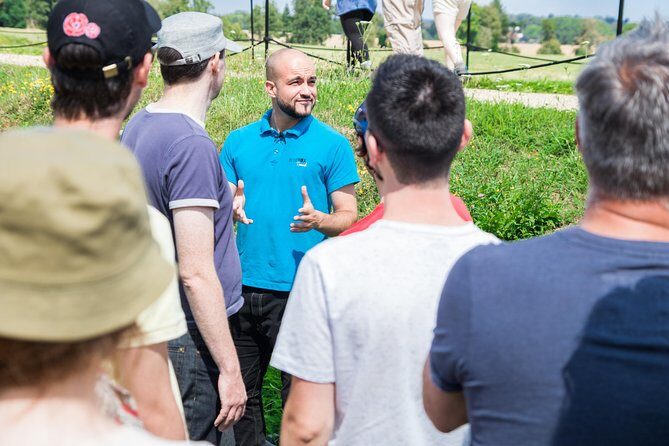
The next key stop is Villers-Bretonneux Military Cemetery, which commemorates 10,738 Australian servicemen who have no known grave. Admission is free, and you’ll have about 30 minutes.
This is one of the most meaningful places on the route if you have any Australian connection. The site is also tied to living tradition: Anzac Day celebrations take place here every April 25.
What I find moving is how the memorial doesn’t require you to be “an expert.” It’s straightforward remembrance made specific—names and absence. You can also pair it with what you learn later at the Sir John Monash Centre, where the focus shifts from lists to stories.
Sir John Monash Centre: video testimonials and interactive displays for context
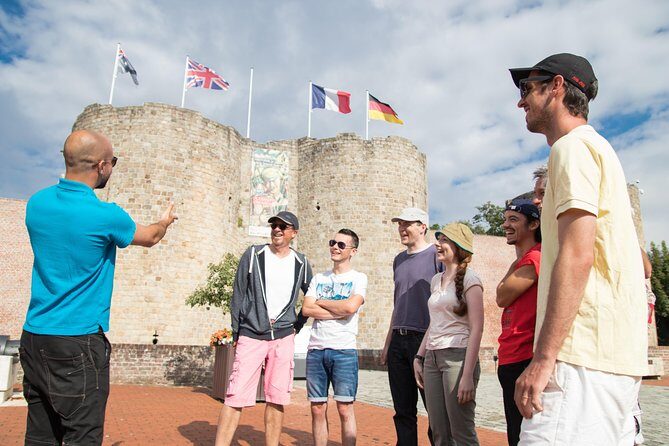
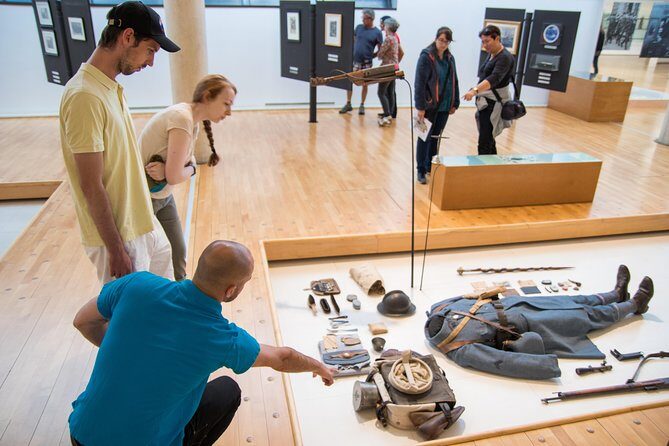
After Villers-Bretonneux, you’ll spend about 1 hour at the Sir John Monash Centre. This stop is all about bringing the war’s personal side into focus.
The centre uses video testimonials and interactive displays to help you connect events to real lives. Even if you arrive with only a basic sense of WWI, this hour tends to add structure: what happened, why it mattered, and how Australian forces fit into the wider Allied effort.
I like that the museum approach here supports different learning styles. If you like reading, you can take your time with the displays. If you prefer hearing voices, the video testimonies help you feel the human scale behind the history.
Lunch at Le Tommy: good, classic food plus an artifact collection
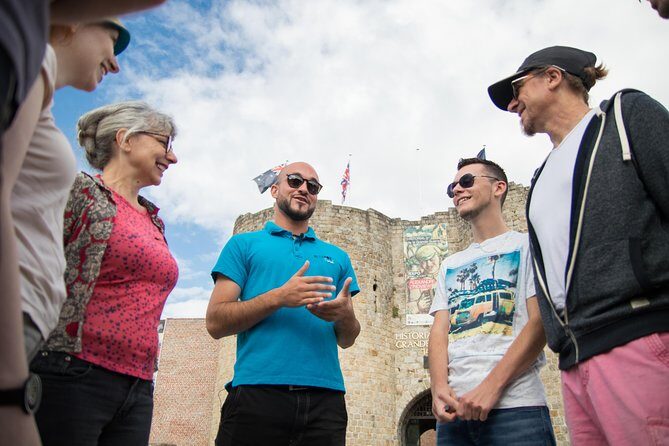
You’ll then have about one hour of free time for lunch at Le Tommy (lunch not included). This restaurant is described as owned and run by Dominique, a local legend with a passion for Somme history.
The practical value: you get a real sit-down lunch rather than a rushed sandwich stop. The bonus: you can explore Dominique’s private collection of artifacts related to the Battle of the Somme.
One caution: options may be limited depending on your diet. In past feedback, some people noted there weren’t vegan options at the lunch stop. If that matters to you, eat a light breakfast and plan ahead, or bring snack options you can tolerate easily.
Amiens Cathedral at day’s end: 13th-century stone in a 20-minute window
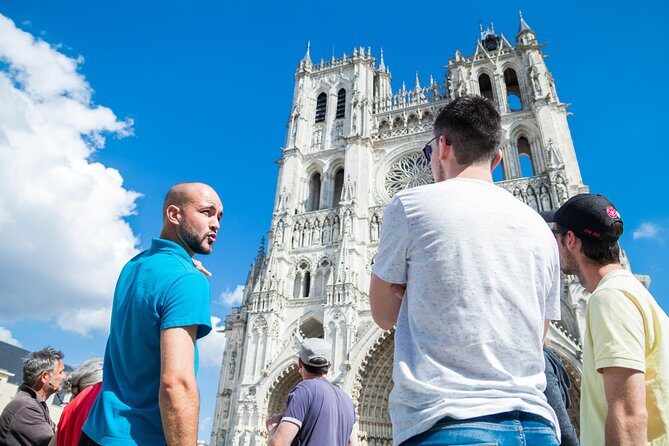
To close the day, you’ll visit Cathedrale Notre-Dame d’Amiens, a 13th-century cathedral and described as the largest cathedral in France. You’ll have about 20 minutes, with free admission.
Amiens gives you a change in emotional temperature. You’re still in WWI country, but the cathedral’s scale and craftsmanship shift the day away from battlefield details and back toward a sense of place, culture, and continuity.
Because time is short, keep your expectations realistic. This isn’t a deep architectural tour. It’s a meaningful final stop—enough time to take in the interior space, get photos, and mark the day in your memory.
Who should book this Somme route from Paris
This tour is a great fit if you want one full day that meaningfully connects WWI sites to the Australian story. The Australian memorial focus—especially at Villers-Bretonneux and at the Sir John Monash Centre—makes it feel purposeful, not random.
It’s also a good choice for families and mixed-age groups, as long as everyone is ready for a serious subject. The preserved trenches and major memorials can be challenging emotionally, but they’re presented in a respectful way.
You might want a different plan if you hate long days or get overwhelmed by memorial spaces. Also, if you’re very sensitive to cold weather, consider traveling with serious rain protection. Multiple past groups mention how much colder (and wetter) it can feel than expected.
Value check: what you’re really paying for at $278.26
At $278.26 per person for an 11-hour day, the value isn’t in “cheap tickets.” It’s in what’s bundled and what it prevents you from doing yourself.
You’re paying for:
- Round-trip transport from Paris by air-conditioned minivan
- Small-group comfort (max 8)
- Guaranteed skipping of long lines
- A driver/guide who handles the flow between major sites
- Free admission at the listed stops (so your major costs are mostly covered)
The one predictable extra is food, since lunch at Le Tommy isn’t included. If you’re budgeting, plan to spend at the restaurant on the day—plus water/snacks if you like having backups.
Should you book this Somme battlefields day trip?
If you want a single, well-structured day that brings the Somme into focus—and you especially care about the Australian role—I’d book it. The combination of memorials plus trench walking plus the Sir John Monash Centre gives you both the emotional weight and the historical framing.
Just go in ready for what it is: a long, cold, respectful day. Bring waterproof shoes and layers, and plan your lunch expectations. If you do that, this becomes the kind of trip you remember for years, not days.
FAQ
How long is the tour?
The tour runs for about 11 hours.
What time does the tour start in Paris?
It starts at 7:00 am.
What meeting point does the tour use?
The meeting point is Dada12, Av. des Ternes, 75017 Paris, France.
What’s the group size limit?
The tour has a maximum of 8 travelers.
What language is the tour in?
The tour is offered in English.
Are entrance tickets included for the stops?
Admission tickets are listed as free for all the included stops.
Is lunch included?
No. Lunch at Le Tommy is not included, and you’ll have about one hour of free time.
Does the tour operate in bad weather?
Yes. It operates in all weather conditions, so dress appropriately.
Is there free cancellation?
Yes. Free cancellation is available up to 24 hours in advance for a full refund.