REVIEW · PARIS
Paris: Street Art Walking Tour with a Street Artist Guide
Book on GetYourGuide →Operated by Memories France · Bookable on GetYourGuide
Street art in Paris is everywhere. This tour is about finding it with a former street artist guide and seeing how it connects past to present. You choose between Montmartre (hills and famous names) or La Butte aux Cailles (a calmer village feel), then you follow the paper trails, stencils, and walls that make these neighborhoods feel alive.
I especially like the mix of styles you get on the walk: Twotma’s glued paper works, Gregos’ 3D faces, Swed Oner’s frescoes, and the kind of street pieces that often look like accidents until you learn the story. The main consideration is simple: it’s significant walking, and Montmartre includes real up-and-down hills.
In This Review
- Key things I’d prioritize before you go
- Street art you can actually find in Paris, not just spot
- Choosing Montmartre or La Butte aux Cailles: hills vs village calm
- The art stops that make the tour memorable
- Following artist footsteps in Montmartre, including old workshop addresses
- Le pochoir and the French Touch: why technique matters here
- Cobblestones, gardens, and how the neighborhood shapes the art
- Pace, timing, and what to wear for a 90-minute wall-to-wall walk
- Price and value: what $47 buys you in Paris street art
- Who should book this tour
- Should you book it?
- FAQ
- Is this tour in English?
- How long is the street art walking tour?
- Where does the tour take place?
- What will I see on the tour?
- Does the tour involve hills?
- What should I bring?
- Is hotel pickup included?
- Is there free cancellation?
- Can I reserve now and pay later?
- Where do we meet?
Key things I’d prioritize before you go
- Former street artist guide energy: the guide is a street artist himself, so explanations land fast and make real-world sense.
- Two neighborhood choices: pick Montmartre for the artist-address trail or La Butte aux Cailles for a quieter cobblestone maze.
- Specific must-see artists: Twotma, Gregos, Swed Oner, The End, Space Invader, plus works by both famous and emerging artists.
- From classics to today: you’ll connect earlier Paris street scenes through the 1980s to newer artists showing up now.
- Technique fans will love this: you get context on the French Touch and le pochoir (stenciling) as part of what you’re seeing.
Street art you can actually find in Paris, not just spot
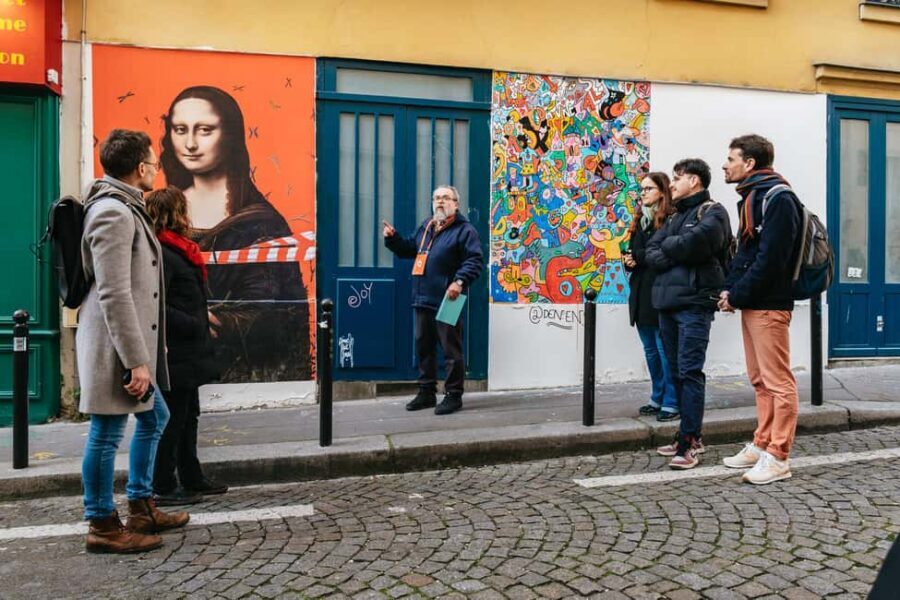
Paris street art can feel random at first. You see a piece, you walk on, you forget it. What this tour does differently is slow you down in the right places, so you understand what you’re looking at and why it’s there.
The big advantage is the former street artist guide. This isn’t a generic mural tour with a few facts and a photo stop. The guide’s background shapes the storytelling: you’ll notice materials and techniques more, and you’ll start reading the city like an artist’s sketchbook. That matters because Paris street art isn’t only about pictures. It’s about methods—wheat-pasted paper, glued-paper installations, stencils, and fresco-style work—and about where those methods fit into real streets.
The other reason I like this format is the “present and past” angle. You’re not only hunting what’s fresh on walls. You’ll also connect it to where major artists worked and lived in the past, especially in Montmartre.
You can also read our reviews of more walking tours in Paris



Choosing Montmartre or La Butte aux Cailles: hills vs village calm
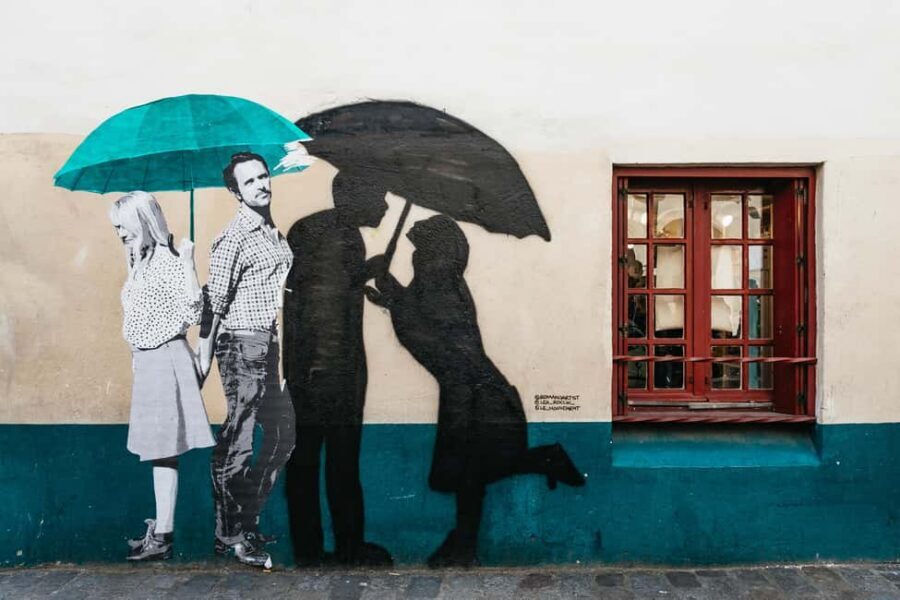
You’ll make one main decision: Montmartre or La Butte aux Cailles. Both have street art, but the feeling is different, and your time goes farther when you pick the neighborhood that matches your stamina and mood.
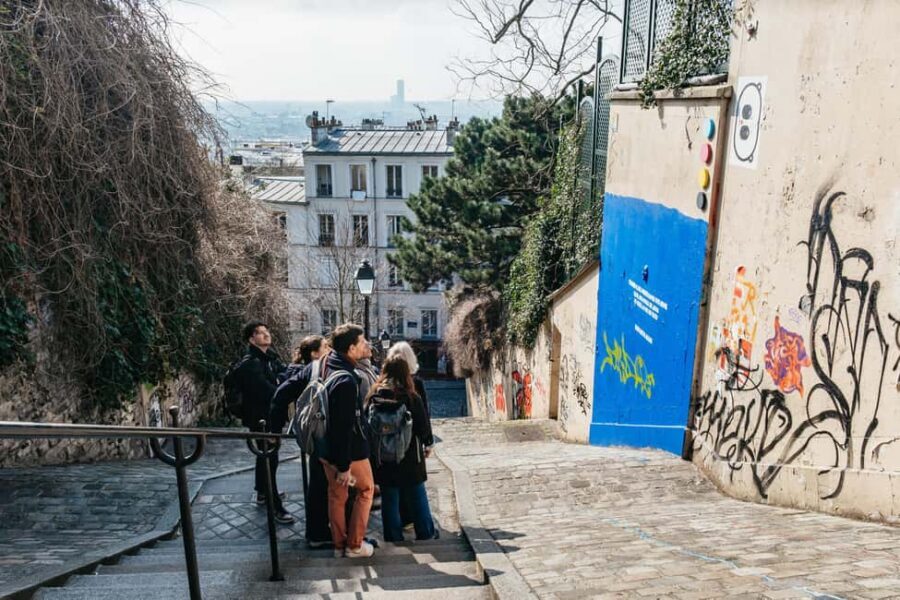
Montmartre is the more famous option. Expect a walk through a hilly area with cobbled streets, picture-perfect houses, and green gardens tucked into the slope. It’s also the best choice if you want the famous-artist connection—Picasso, Van Gogh, Renoir, and others who lived and worked there. The tour focuses on you following in their footsteps and finding addresses tied to workshops and modern-day spots.
La Butte aux Cailles is the quieter choice. Think tiny houses, small gardens, and cobblestone streets that make the area feel like a village away from the city’s rush. Instead of climbing the big views, you’re hunting for hidden pieces: murals, wheat-pasted papers, and stencil graffiti, with a strong emphasis on what’s under the radar.
One practical note: if you choose Montmartre, plan for hills. This is not a “flat and easy” walk.
The art stops that make the tour memorable
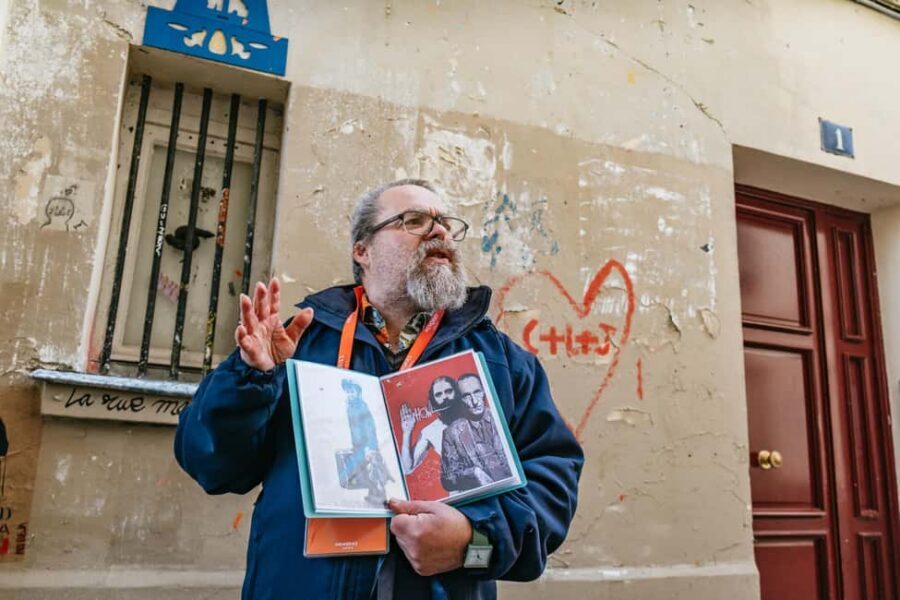
This tour has a real set of recognizable artists and styles, which means you can track what you’re seeing and not just rely on luck. Here are the highlights that give you that wow-you-can-see-it feeling.
First up: Twotma’s glued paper works. Glued paper in street art often changes how the wall reads. It looks layered, textured, and physical—less like paint and more like something assembled. On this walk, that’s part of the point: you’re learning to spot the technique, not only the image.
Then there are Gregos’ 3D faces. 3D street art has a special trick: it pulls your attention away from the flatness of the wall. You’ll likely find yourself stopping more often than you expect, because the illusion needs your eyes from the right angle. A guided walk helps here, because you’re less likely to miss how the artwork is meant to be viewed.
You also get Swed Oner’s frescoes. Fresco-style work feels classic and historical, which is why it pairs so well with a tour that also talks about earlier Paris art life. It’s the kind of piece that can look like it belongs in a museum—until you notice the neighborhood context around it.
Add in The End, Space Invader, and other famous and emerging names, and you start building a mental map of how street artists in Paris work across media. Space Invader is a great example of street art that feels playful and public, because it’s instantly recognizable once you know what you’re looking for. The tour also includes the thrill of spotting artwork by a secretive artist—less about celebrity, more about discovery.
Following artist footsteps in Montmartre, including old workshop addresses
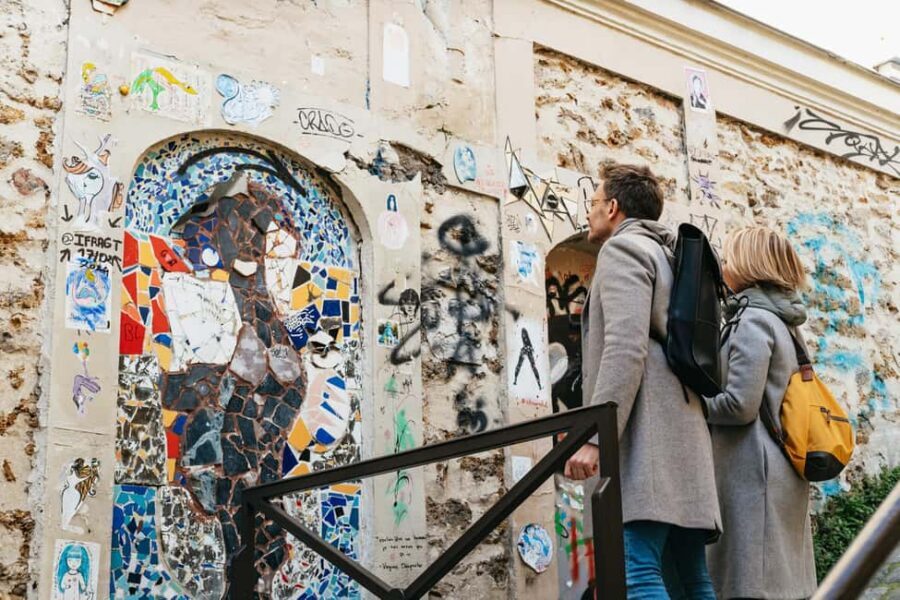
If you pick Montmartre, you’re not only seeing street pieces. You’re also connecting the neighborhood to artists who shaped Paris art culture long before street art became mainstream.
The tour’s approach is practical: you follow the footsteps of iconic artists and hear how Montmartre became a hub for creative life. You’ll even find addresses of workshops tied to the artists who lived and worked there. That kind of detail changes the walk. Instead of saying street art is random decoration, you start noticing how artists have always used these streets—sometimes formally, sometimes on the edge.
A few names are directly part of the story: Picasso, Van Gogh, Renoir, and others. The point isn’t to turn this into an art lecture. It’s to show the continuity. In Montmartre, the past isn’t on a plaque. It’s in the neighborhood’s geography and the way artists keep returning to certain blocks.
You’ll also see how modern-day Montmartre connects back to that legacy, so the walk feels like a line you can trace, not separate eras competing for attention.
Le pochoir and the French Touch: why technique matters here
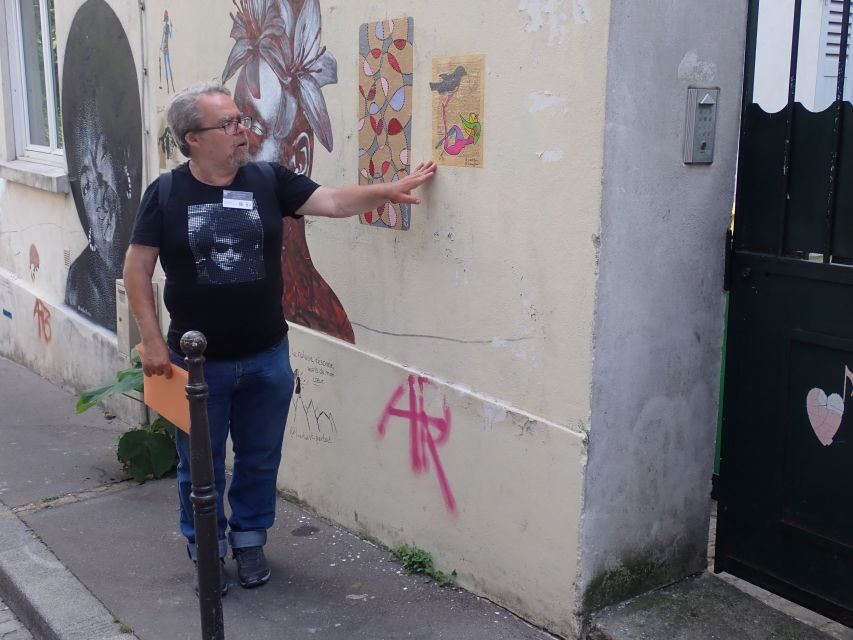
One of my favorite parts of this tour is the attention to technique. You’re not just collecting images; you’re learning how French street art developed its signature look.
The tour explicitly calls out the French Touch and the technique le pochoir. Stenciling with pochoir is a big deal in Paris street art. It creates crisp shapes, layered tones, and a graphic style that can look both street-made and design-polished. When your guide talks technique while you’re standing next to the wall, you start recognizing how the city’s art has a visual language.
You’ll also meet artists that represent different waves of the scene, including Jeff Aérosol and Miss Tic, plus newer names like Le Long and Princess Ecchymose. The tour spans works from the 1980s through today’s emerging artists, which helps you understand that street art in Paris didn’t just suddenly appear in the Instagram era. It evolved, and the evolution is visible if you know what to look for.
If you enjoy street art history, this format is a strong way to learn without getting stuck reading a book. You’re walking through the evidence.
You can also read our reviews of more guided tours in Paris





Cobblestones, gardens, and how the neighborhood shapes the art
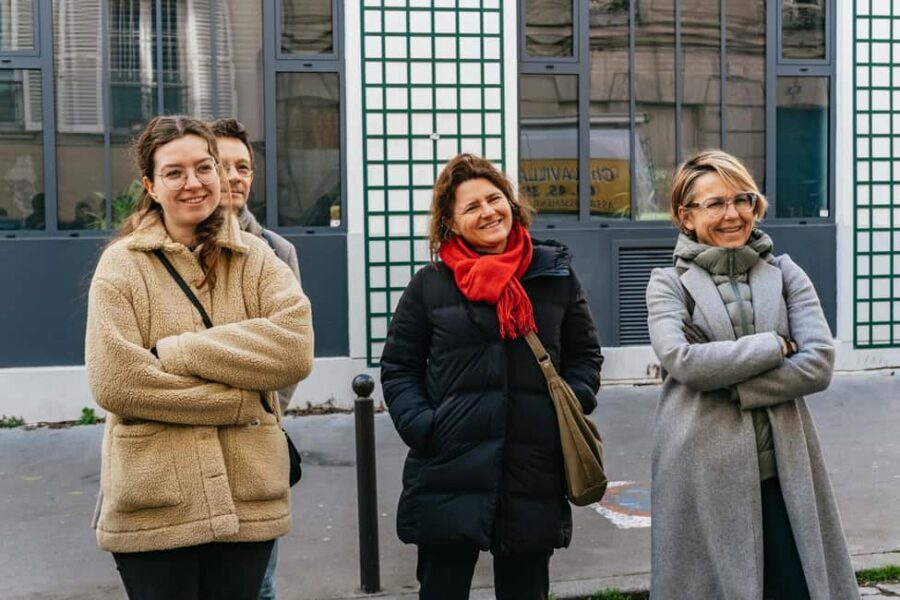
Street art in Paris isn’t on a blank canvas. The streets themselves affect what gets noticed, where art is placed, and how it feels.
Both neighborhood options include cobbled streets, charming houses, and small green gardens that make the walk more than just a line between points. It’s easier to understand the art’s mood when you’re actually seeing the area’s scale. A wheat-pasted paper piece on a tiny wall can feel intimate. A frescos-style wall can feel public and historical.
In La Butte aux Cailles, those visual cues matter even more. The area’s tiny-house layout makes it easier for artwork to hide in plain sight. That’s why the guide’s job is so important: they’ll show you how to spot murals, wheat-pastes, and stencil graffiti without turning the whole walk into a scavenger hunt.
In Montmartre, the steepness adds drama. Hills mean you see different angles, and that changes how 3D work and layered paper pieces read. Even if you’re not thinking about it, your path forces you to view the city the way street art expects you to.
Pace, timing, and what to wear for a 90-minute wall-to-wall walk
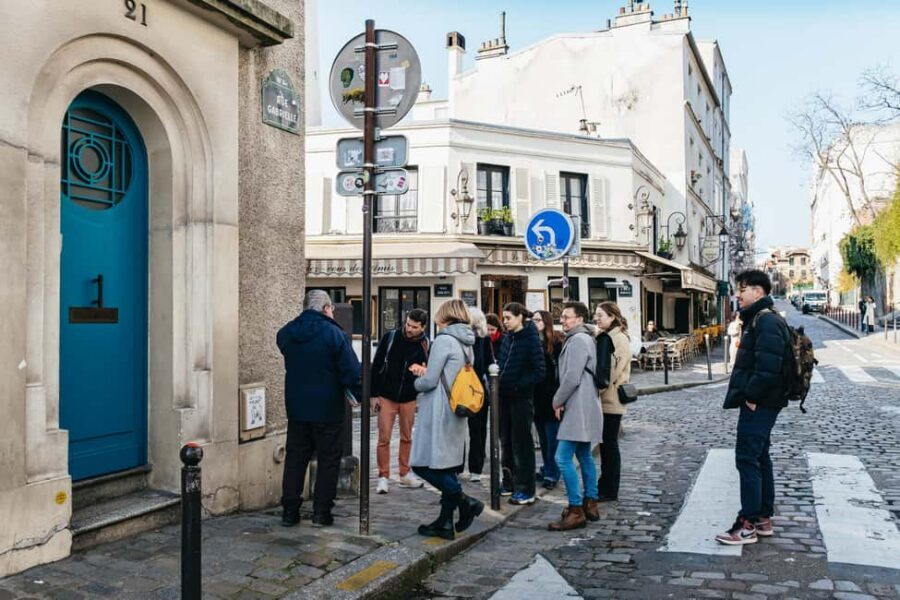
This is a 90-minute walking tour, and the walking is substantial. That may sound obvious, but here it matters because the tour is about seeing details. You’ll want to stay comfortable enough to stop when something catches your eye.
Wear comfortable shoes. If you choose Montmartre, plan for hills to walk up and down. This isn’t a quick stroll; it’s a focused route where the guide keeps you moving while still giving time to look closely.
Also, don’t count on hotel pickup or drop-off. You’ll meet at a meeting point that can vary by option, so you’ll want to arrive ready to walk from the start.
Price and value: what $47 buys you in Paris street art
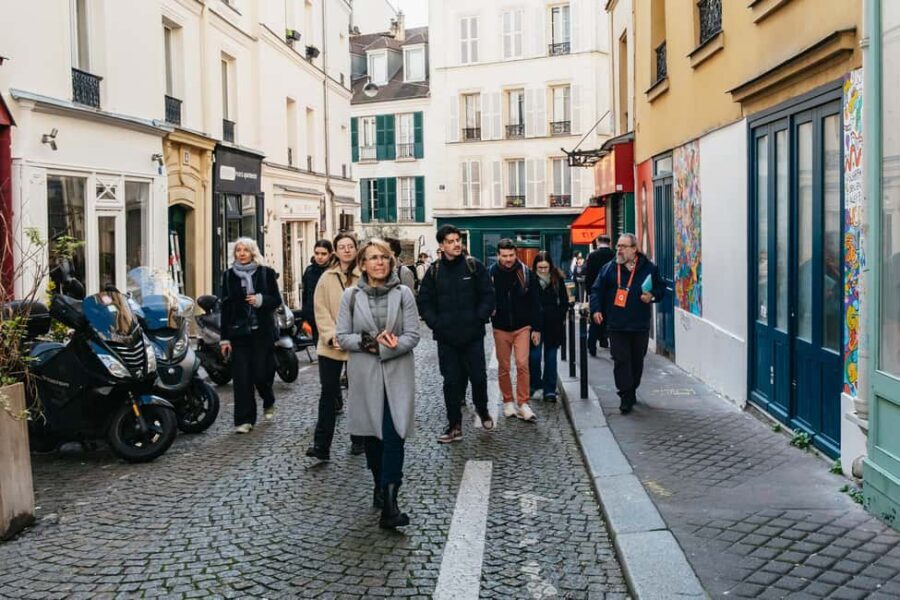
At around $47 per person for 90 minutes, this tour isn’t trying to be a cheap taste of street art. It’s positioned as a guided experience with a niche expert: a former street artist.
Here’s what you’re really paying for, and why it’s good value:
- A live guide who can interpret technique and materials while you’re looking at them, not after.
- A route that intentionally mixes recognized artists with discoveries, including Space Invader and works by a secretive artist.
- Two strong neighborhood options—so you’re not stuck doing a single area if the other one fits you better.
- Time that’s designed for looking. Many short street art tours rush past the interesting parts. This one leans into pace, and the feedback you’re given emphasizes how much time the guide spent explaining and guiding.
If you’re the type who likes street art but hates vague tours, this format makes sense. If you want a sit-down museum experience, you’ll probably prefer something else.
Who should book this tour
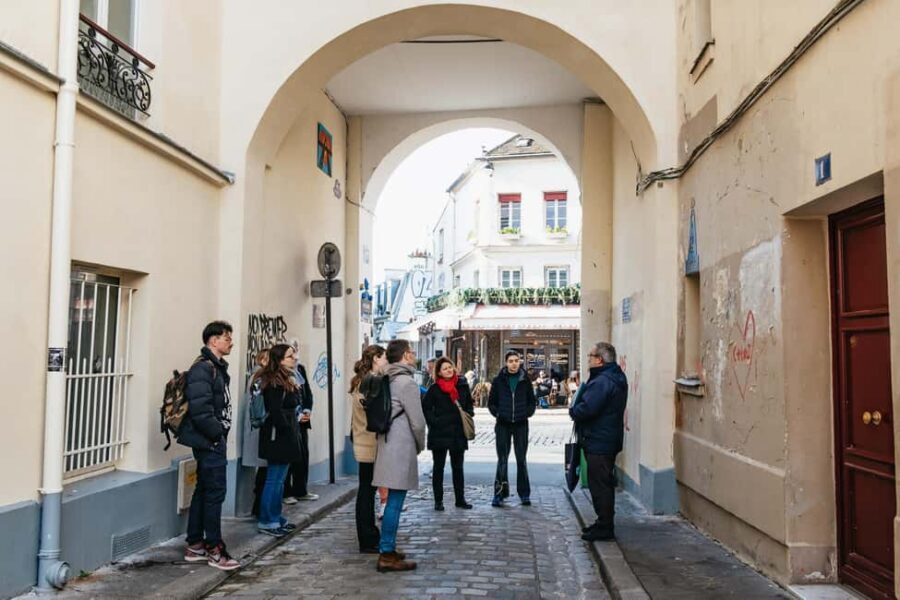
This tour is a great match if:
- You want to see specific street art artists and techniques (glued paper, 3D faces, fresco-style work, wheat-paste, stencil).
- You like learning how street art connects to the broader Paris art story, especially in Montmartre.
- You enjoy walking through neighborhoods and noticing details like cobblestones, houses, and gardens.
It’s also a solid pick if you’ve done other tours and felt they were too generic. Here, the guide’s own street artist background is a key difference. The tour pacing and guidance get high marks, especially for taking the time to explain and keeping the route well managed.
It’s not ideal if you:
- Dislike hills and are choosing Montmartre.
- Want minimal walking for a short time.
Should you book it?
I’d book it if you’re choosing between street art tours in Paris and you care about more than photos. The combination of a former street artist guide plus a route built around named artists and recognizable techniques makes it easier to feel like you learned something real in 90 minutes.
Choose Montmartre if you want the artist-address story and you’re comfortable with hills. Choose La Butte aux Cailles if you want a quieter, village-like route with wheat-pastes, stencils, and murals tucked into small streets.
If you’re on the fence, check your walking tolerance first. Once you’re comfortable with that, this tour is a smart way to see Paris street art with context, not just sightings.
FAQ
Is this tour in English?
Yes. The tour guide provides the experience in English.
How long is the street art walking tour?
It lasts 90 minutes.
Where does the tour take place?
It takes place in the Paris region (Ile-de-France) and you’ll choose between Montmartre or La Butte aux Cailles depending on the option you book.
What will I see on the tour?
You can expect to see examples including Twotma’s glued paper works, Gregos’ 3D faces, Swed Oner’s frescoes, The End, and Space Invader, plus other works by famous and emerging artists.
Does the tour involve hills?
If you choose the Montmartre option, yes. The area is hilly and you’ll walk up and down.
What should I bring?
Bring comfortable shoes since the tour involves significant walking.
Is hotel pickup included?
No. The tour does not include hotel pickup and drop-off.
Is there free cancellation?
Yes. You can cancel up to 24 hours in advance for a full refund.
Can I reserve now and pay later?
Yes. There is a reserve now & pay later option, letting you book your spot and pay nothing today.
Where do we meet?
The meeting point may vary depending on which option you book.