Paris at workout pace is a treat. This sunrise run turns major landmarks into a moving story, so you get your exercise and your Paris education in one go. I like the small-group feel (max 10) and the guide-style explanations at each stop. One heads-up: you’ll be running, so it’s not the right fit if you want a sit-down sightseeing day.
The best part is how the early timing helps you feel like Paris is yours for a bit. You’ll cover key spots across the Left Bank and toward the Seine, with short stop-and-go moments that keep the energy up. I also like that the tour asks you to show up ready to move, with limited bag options, so you don’t waste time.
If you’re picky about museum interiors, plan for the opposite. The route focuses on views and stories around big sights, and monument and museum entries aren’t included (and are expected to be closed during the run).
In This Review
- Key things I’d plan around
- Why a sunrise run is better than a regular Paris tour
- Meet at Fontaine Saint-Michel: what to bring and how the route works
- Your itinerary, stop by stop (and what each place is really for)
- Notre-Dame de Paris: the big starting story
- Palais de Justice and Sainte-Chapelle: the “power” corridor
- Conciergerie: medieval history in walking-distance form
- Pont Neuf: Henry IV, the statue, and a classic viewpoint
- Pont des Arts: the bridge-of-love angle and the Cité Island view
- Louvre Museum: you see the area even without museum time
- Place de la Concorde: a short hit that resets your sense of scale
- Musée de l’Armée des Invalides: a name with weight
- Pont de l’Alma: the Flame of Liberty and Diana’s memorial
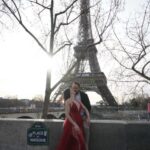
- Trocadéro esplanade: the sunrise finish feel
- Odeon / Saint-Michel: start and finish for the 10 km option
- The running part: distance options and who it suits
- The guide energy: why history lands better on foot
- Included perks: water, snack, and photo help (plus the waterproof jacket)
- Price and value: is $56.62 worth it?
- Weather matters, and so does the “outside only” plan
- Should you book Sunrise Run & Sightseeing in Paris?
- FAQ
- How long is the Sunrise Run & Sightseeing in Paris?
- Where does the tour start?
- Where does the tour end?
- Is this tour private or small-group?
- What’s included in the price?
- Do I need to bring my own ticket for transportation?
- Are monument and museum tickets included?
- What happens if it’s canceled due to weather or if I cancel?
Key things I’d plan around
- Sunrise route that avoids crowds by keeping the start early and the stops short
- Max 10 people so the guide can actually work the pacing with you
- A run plus history stops that keep you oriented in Paris fast
- No museum tickets included even when you pass major names like the Louvre
- 6 km or 10 km choices with different turnaround/finish points
- Water, a cereal bar, and possible waterproof jacket so you’re not starting totally empty
Why a sunrise run is better than a regular Paris tour
Paris can feel like a checklist if you do it the usual way. This format flips the order. You see the city while you’re moving, and you get little history hits exactly where they matter—Notre-Dame area, the medieval core around Sainte-Chapelle and the Conciergerie, then bridges and the view corridors toward Trocadéro.
The early start also changes your photos. At sunrise, the light hits differently on stone and water, and you’re more likely to get clear sightlines at the big viewpoints. Even one review called out an early, unusually quiet moment near the Louvre area that made a photo moment possible—one of those Paris “wait, really?” scenes that happens more with morning timing than daytime crowds.
And because it’s a workout first and a sightseeing walk second, you don’t spend half the time waiting. You’re guided, but you’re still “in motion,” which keeps the day from dragging.
You can also read our reviews of more tours and experiences in Paris



Meet at Fontaine Saint-Michel: what to bring and how the route works
The start is at Fontaine Saint-Michel, Pl. Saint-Michel, 75005 Paris. It’s a practical meeting point because it’s in the heart of the Left Bank and close to public transport. The tour uses a mobile ticket, and you get confirmation at booking.
You should show up in running gear and shoes. This is not a “walk with occasional jogging” day; they explicitly want you ready to run. They also warn you about luggage: no storage for voluminous clothes and bags, so come with what you can carry while running.
Two more small logistics points that matter on a morning like this:
- Bring your own transportation tickets to get to the start and to go home after.
- Bring only what you need—your guide can’t turn it into a coat-check situation.
Group size is kept small—up to 10 people—and the tour is offered in English. Duration is listed as about 1 to 2 hours, depending on which route option you choose and how the group runs.
Your itinerary, stop by stop (and what each place is really for)
The route is built like a greatest-hits loop with story stops. Each stop is short—think about 2 to 10 minutes for the “look and learn” moments—so you’re not stuck lingering.
Notre-Dame de Paris: the big starting story
Stop one is Cathédrale Notre-Dame de Paris. You get a quick orientation and storytelling at about 5 minutes, and the listing notes admission is free for this stop. In practice, you should expect to see it as a dramatic exterior anchor for the rest of your morning, not as a deep interior visit.
Why it matters: it sets the tone. You’re not just seeing a landmark; you’re learning what to look for as you move into nearby legal and royal-history zones.
Palais de Justice and Sainte-Chapelle: the “power” corridor
Next are Palais de Justice de Paris, then Sainte-Chapelle. Both have storytelling stops, and the admission detail says not included. Also, entries to monuments and museums aren’t provided along the route, and major interiors are expected to be closed during the run window.
What you’ll gain: you’ll connect the feel of the area—courts and chapel, government and faith—so the buildings don’t stay as names. You’ll also get a faster sense of where you are relative to the Île de la Cité.


Conciergerie: medieval history in walking-distance form
Then comes Conciergerie, again with storytelling and admission marked not included. This is the type of stop that works well on a run: brief, focused, and positioned so you can keep your bearings without detouring for tickets.
Pont Neuf: Henry IV, the statue, and a classic viewpoint
You’ll hit Pont Neuf with stories about the bridge, the Henry IV statue, and the garden of the Vert Galant. Admission is listed as free here.
This is a key “flow” stop. Bridges are where your brain stitches together the map, and Pont Neuf is one of the best early anchors because you get the sense of how the Seine bends through the city.
Pont des Arts: the bridge-of-love angle and the Cité Island view
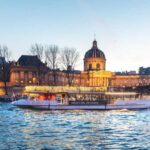
After Pont Neuf, you’ll go to Pont des Arts, with stories around the Institute of France, the bridge of love, and the view toward Cité Island. Admission is free.
If you’re the kind of person who loves a good “where am I standing” view, this is the stop that helps you lock in the geography. You’ll understand how the islands fit into the bigger city layout.
Louvre Museum: you see the area even without museum time
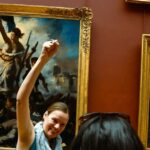
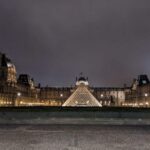
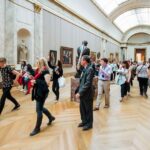
Next is Louvre Museum, with storytelling and admission marked not included. A big theme of this tour is that you don’t rely on museum access. Reviews back up that the early timing can make the Louvre area feel quieter, and at least one run included a memorable photo moment around the empty Louvre courtyard.
So what should you expect?
- You’ll get context about what the Louvre represents.
- You won’t get a formal museum ticket experience.
- You’ll keep moving.
Place de la Concorde: a short hit that resets your sense of scale
Then Place de la Concorde, with about 2 minutes of storytelling and free admission noted.
This is the “big open space” break. Even though you’re not stopping long, it’s a quick correction to your sense of scale—from tight historic streets to a major public square.
Musée de l’Armée des Invalides: a name with weight
You’ll also pass Musée de l’Armée des Invalides, with storytelling and admission marked not included. Again: don’t plan on entry. Plan on learning what the site is and why it sits where it does.
Pont de l’Alma: the Flame of Liberty and Diana’s memorial
At Pont de l’Alma, you’ll hear stories about the Flame of Liberty and an informal memorial linked to Lady Diana. Admission is free.
This stop is emotionally different from the court-and-chapel vibe earlier. It’s the kind of place where a short story makes the setting feel real, not just photogenic.
Trocadéro esplanade: the sunrise finish feel
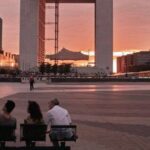
Then it’s Le Trocadero et son esplanade for about 10 minutes of storytelling. Admission is free. This is where the run options matter:
- For the 10 km route, you’ll likely do the half-way point here.
- For the 6 km route, it acts as the finishing line.
Many people pick this tour for sunrise views, and Trocadéro is a prime spot for them.
Odeon / Saint-Michel: start and finish for the 10 km option
Finally, Odeon / Saint-Michel is described as the starting and finishing point for the 10 km route, with free admission noted. Even if you’re not doing the full distance, it’s a useful mental marker because it frames the “loop” shape of the morning.
The running part: distance options and who it suits
This tour is for people with moderate physical fitness. That wording is important. They’re not trying to break you, but you should be able to run comfortably enough to cover several kilometers with stop-and-go pacing.
The route is offered in distance options tied to landmarks:
- 6 km / 4 m route: you reach Trocadéro and finish there.
- 10 km / 6.2 m route: you continue past the half-way point.
One thing I like about how it’s set up: the sightseeing isn’t the reward for suffering. The stops are built to match the energy of running—short explanations at each major “you should know this” point.
If you’re new to running in a new city, this is still doable as long as you keep your expectations honest. If you’re already training, you’ll probably appreciate how the guide can support pacing. Reviews mention guides adjusting pace for very different runner ages, which is a good sign that the group isn’t just one-size-fits-all.
The guide energy: why history lands better on foot
The storytelling is a core part of the experience, not an optional extra. Guides bring the places to life with short explanations at each stop, and the pace stays active.
Names that show up in the reviews include Andrea and Hamidou (also seen as Hamadou). Andrea was described as an ultramarathoner and the guide’s depth of knowledge came through as she shared patient, thoughtful history. Hamidou was also praised for planning the tour around what runners wanted to get out of it.
One review also mentioned the guide capturing video while they ran through the empty Louvre courtyard—basically taking the “moment you want” and turning it into a simple memory you can share later. That’s not required for the tour to work, but it shows the guide approach is practical and photo-minded.
Included perks: water, snack, and photo help (plus the waterproof jacket)
What’s included is small but smart.
You get:
- Bottled water: one bottle per participant
- Snacks: a cereal bar
- Camera (smartphone) and waterproof jacket, subject to availability
The waterproof jacket detail is useful because Paris mornings can turn damp fast. Even if the weather forecast looks fine, having a backup helps. The smartphone camera piece also matters: your stop-and-run day can mean you’re always juggling your phone. If the guide helps with photos/video, you spend more time looking and less time setting up shots.
Price and value: is $56.62 worth it?
At $56.62 per person, you’re paying for more than “a run in Paris.” You’re paying for:
- a guided loop through major landmarks,
- short storytelling stops that help you understand what you’re seeing,
- a small group cap (max 10),
- basic fuel (water plus a cereal bar),
- and some photo/video help plus a possible waterproof jacket.
You also get the value of timing. Early-morning sightseeing can feel like you’re getting two days in one: you cover big sites before the city fully wakes, and you still have plenty of morning left for other plans afterward.
The main cost consideration is what’s not included: monument or museum entries. If you want inside time at Sainte-Chapelle or the Louvre, you’ll need to plan that separately. But if your goal is orientation, viewpoint memories, and a morning workout with storytelling, the price looks fair for what you’re getting.
Weather matters, and so does the “outside only” plan
This experience requires good weather. If it gets canceled due to poor weather, you’ll be offered a different date or a full refund.
As for entries: they don’t provide tickets for monuments and museums along the route, and the expectation is that sites will be closed during the run. So treat this as an outside sightseeing tour with history narration that happens while you run.
That’s actually a strength for many people. It prevents the schedule from collapsing into ticket lines, and it keeps the experience moving. Just don’t come with a ticket-shopping mindset for the big names.
Should you book Sunrise Run & Sightseeing in Paris?
Book it if you want Paris to feel active and human. You’ll get a fast map of the city, memorable bridge-and-sunrise moments, and short stories that stick because they’re tied to what you’re physically seeing.
Skip it if your perfect day includes museum entry time, long indoor stops, or you don’t want the pressure (and exercise) of actually running. Also skip if you’re carrying bulky bags—this one is built for what you can carry.
If you’re planning ahead, note that the experience is often booked about 31 days in advance, so it’s wise to lock in your slot earlier rather than waiting for last-minute optimism.
FAQ
How long is the Sunrise Run & Sightseeing in Paris?
The duration is listed as about 1 to 2 hours, depending on which route you choose and the group’s run pacing.
Where does the tour start?
The meeting point is at Fontaine Saint-Michel, Pl. Saint-Michel, 75005 Paris, France.
Where does the tour end?
The tour ends in a different location. The exact finish point depends on the route option you choose.
Is this tour private or small-group?
It’s offered as private or small-group options, with a maximum group size of 10 travelers.
What’s included in the price?
It includes a smartphone camera, a waterproof jacket subject to availability, bottled water (one per participant), and a cereal bar snack.
Do I need to bring my own ticket for transportation?
Yes. You should bring your own transportation tickets to reach the meeting point and to get home afterward.
Are monument and museum tickets included?
No. Entry tickets are not included for monuments and museums along the route, and you should plan for these sites to be closed during the run.
What happens if it’s canceled due to weather or if I cancel?
It requires good weather. If it’s canceled due to poor weather, you’ll be offered another date or a full refund. You can cancel for a full refund up to 24 hours in advance.