REVIEW · PARIS
Versailles Timed Entrance Ticket and Giverny Small Group Day Trip from Paris
Book on Viator →Operated by Blue Fox Travel - Blue Bike Tours - Paris · Bookable on Viator
A long day, but the right kind. Giverny + Versailles in one go means you see two of France’s biggest name sites without playing ticket roulette. The mix of guided moments and built-in freedom helps you keep moving, yet still linger where it counts.
I especially like the small group size (8 max). That tighter headcount makes it easier to ask questions and stay on track when there’s a lot to see. I also love that you get guaranteed Versailles timed entry plus Monet’s garden ticket, so you spend less time standing in lines and more time actually looking.
One thing to consider: this is a walking-heavy day. The tour requires you to walk well even in summer heat, and there’s limited flexibility if you tire easily.
In This Review
- Key Points You’ll Feel on This Day Trip
- A Smooth Schedule That Gets You Two Iconic Days Worth of Sights
- Meeting Point and Getting Ready: Start in Central Paris, Not the Middle of Nowhere
- Giverny First: Monet’s Clos Normand and Why the Gardens Look Like Paintings
- The Green Footbridge and Water Lilies: The Moment Everyone Comes For
- Monet’s House Interior: The 40+ Years of Personal Design
- Saying Goodbye at the Grave: A Quiet Stop That Lands
- Giverny Cemetery and Church Stop: Eglise Sainte-Radegonde de Giverny
- Versailles Arrival: Timed Entry and the Value of Not Waiting
- Hall of Mirrors and the French Gardens: Famous Sights, Tight Time Windows
- The Palace Time You Actually Get: 1 Hour Inside With a Timed Slot
- Marie-Antoinette’s Hamlet at Versailles: Le Hameau de la Reine
- How the Small Group Works: Why 8 People Changes Everything
- Walking and Weather Reality Check: Dress for Heat, Shoes for Miles
- Food Plan: Lunch Is Not Included, So Build Your Own Rhythm
- Price and Value: What You’re Paying For at $302.46
- Best Fit and Who Should Skip This One
- Should You Book This Versailles and Giverny Day Trip
- FAQ
- What time does the tour start?
- Where do we meet in Paris?
- How long is the day trip?
- Is food included?
- Is there a timed entry ticket for Versailles?
- How big is the group?
- What age is the minimum for this tour?
Key Points You’ll Feel on This Day Trip
- 8 people max means more guide attention and less herding through crowds
- Guaranteed Versailles timed entry helps you control the day instead of reacting to lines
- Monet at Giverny first gives you a calm start before Versailles gets loud
- Hall of Mirrors plus gardens get you the famous sights without needing a second visit
- Marie-Antoinette’s private village adds a surprising storybook contrast to Versailles’ power
A Smooth Schedule That Gets You Two Iconic Days Worth of Sights
This is the kind of day trip you book when you want the highlights and you do not want to waste time. You start in central Paris at 8:00 am and return back to the same meeting area. Expect about 9 hours total, with multiple guided stops and a couple of moments where you can slow down on your own.
The practical win here is the pairing. Giverny is intimate and nature-based, and then Versailles flips the switch to palace scale and political theater. The order also helps: starting with Monet’s world means you get the gentler pace first, and then you’re ready for the big show later.
Just keep expectations realistic. Even with timed entry, Versailles is Versailles. One-hour palace time and guided garden highlights are enough to get the message, but not enough to fully master the entire estate like a multi-day trip would.
You can also read our reviews of more tours and experiences in Paris



Meeting Point and Getting Ready: Start in Central Paris, Not the Middle of Nowhere
You meet at Dada12 Av. des Ternes, 75017 Paris. It’s a central location that’s near public transportation, so you’re not stuck on complicated transfers. The tour uses an air-conditioned minivan, which is a real comfort when you’re traveling through Paris in warmer months.
This tour runs in all weather conditions, so plan like a local: bring layers, and be ready for rain. One review noted that umbrellas were provided on a rainy day, which is exactly what you want when your day depends on staying on schedule.
Most importantly, come with comfortable footwear. The day includes lots of walking between sites, plus stairs and uneven paths around gardens. If your legs are fragile or you tend to faint in hot sun, this is not the right fit.
Giverny First: Monet’s Clos Normand and Why the Gardens Look Like Paintings
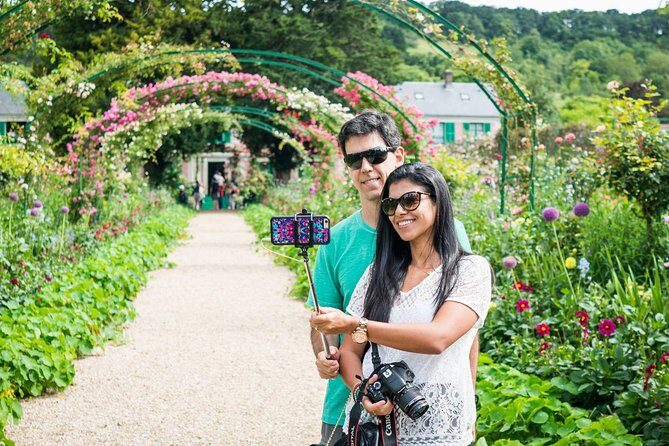
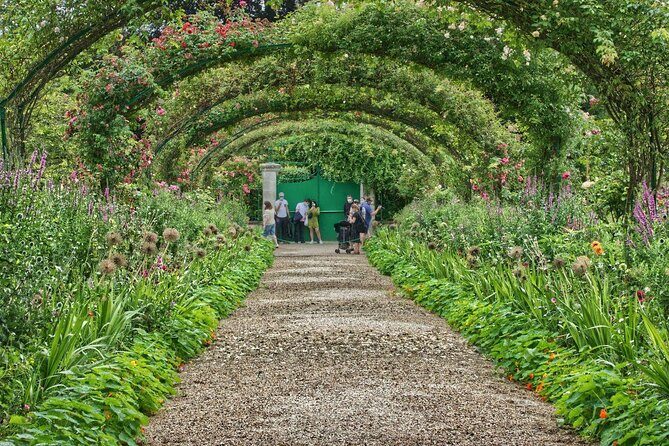
Giverny is where Monet’s paintings stop being images and start being geography. Your first time investment is about 30 minutes at Clos Normand, walking through the flower garden that fueled his most famous work. This is not just pretty scenery. It’s a way to understand how an artist sees: Monet didn’t only paint light, he painted structure, color, and repetition.
What I like about starting here is the emotional tempo. In a palace, power is everywhere. In Giverny, it’s smaller and more personal. The focus stays on sight lines, the way plants frame ponds and paths, and the calm that comes from being in a place designed for viewing.
If your guide gives visual aids, you’ll likely notice it during this stop. One guide, Marie, used prepared visuals to help explain what to look for, and it made the garden feel less like a random stroll and more like a guided lesson you can experience with your eyes.
The Green Footbridge and Water Lilies: The Moment Everyone Comes For
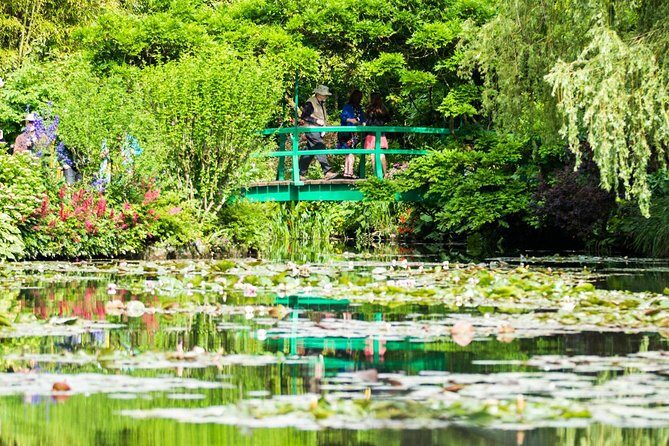
Next you get another 30 minutes centered on the pond area, including the famous green footbridge. This is the stop that turns background noise into a specific memory. When you see the bridge framed the same way it is in the paintings, it clicks. You start noticing how Monet used perspective and reflections to make the water feel like part of the composition.
Then it’s time to focus on the details around the pond. You’ll spend time admiring the water lilies and the surrounding scenes your brain already associates with Monet. It’s still walk-and-look, but it’s structured enough that you don’t miss the best angles.
One tip if you’re the type who likes photos: keep an eye on crowd flow. It can get busy at the bridge. A good guide will help you time a photo before it turns into a traffic jam.
Monet’s House Interior: The 40+ Years of Personal Design
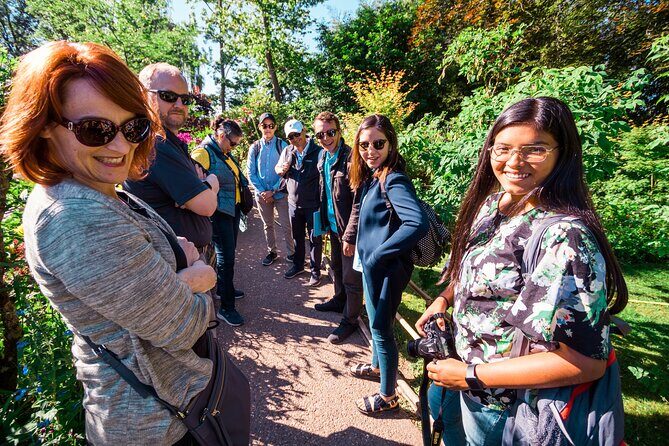
After the pond, you move into Monet’s world on a deeper level. You’ll have about 30 minutes in and around Monet’s home, with time to learn how Claude Monet lived there for more than 40 years and personally shaped the decoration.
This stop changes the garden story. Outside, you’re watching nature and light. Inside, you’re watching personality and routine. Even if you’re not an art-history specialist, you can sense how long-term obsession becomes a lived-in aesthetic.
Guides often set this up with quick context so you can understand what you’re looking at without drowning in dates. One review praised a guide, Matthieu, for giving clear insight and even pointing out areas beyond the standard rush, which helped the day feel less like a checklist.
You can also read our reviews of more tours and experiences in Paris





Saying Goodbye at the Grave: A Quiet Stop That Lands
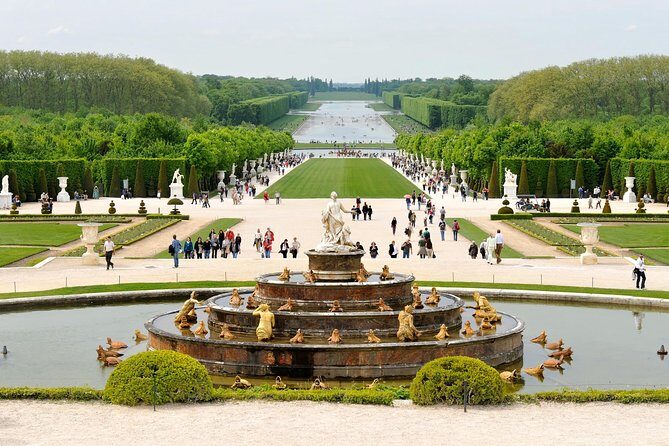
There’s a short visit (about 15 minutes) that’s almost oddly moving for a day trip: you visit Monet’s humble grave with your guide taking you there. It’s not long, but it gives the story an ending note you don’t always get on typical sightseeing days.
Even if you’re not a sentimental person, this stop can change how you view the earlier garden scenes. The garden becomes more than a picturesque backdrop, and Monet becomes more than the author of famous images.
Giverny Cemetery and Church Stop: Eglise Sainte-Radegonde de Giverny
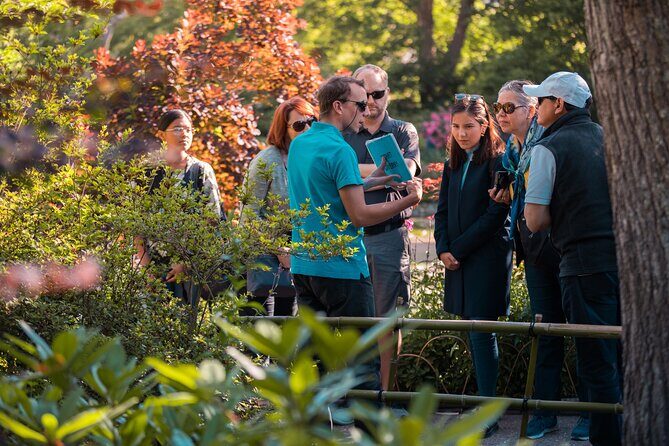
You also visit Eglise Sainte-Radegonde de Giverny and the cemetery area. Your guide takes you to the burial site connected to Claude Monet and some close family members, with time set aside for about 15 minutes.
This is a brief pause, but it rounds out the day nicely. Giverny isn’t just a set location for art; it’s a real place where people lived, stayed close, and remained tied to that land.
Versailles Arrival: Timed Entry and the Value of Not Waiting
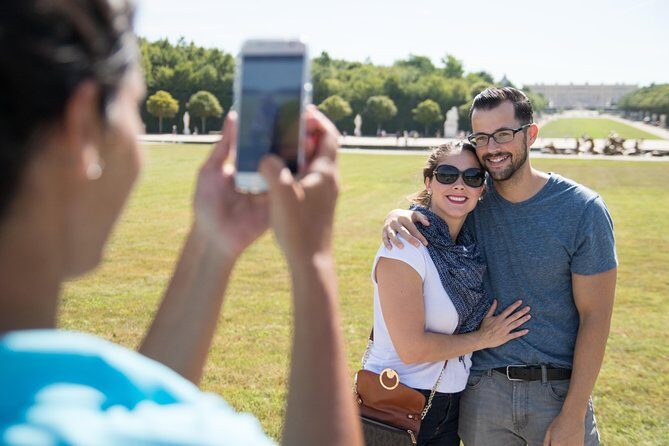
Then you transition to Versailles. One guide portion includes an intro stop at the palace, roughly 15 minutes, framed around France’s last queen and the buildup to the French Revolution. That short preface helps you make sense of why Versailles mattered so much, beyond gold and crowds.
The key benefit you should care about is the timed entrance you’re given for the Palace itself. Even though you’ll still face crowds outside, this setup reduces your most painful risk: losing your place while waiting in the wrong line.
Also, the experience is designed for a smooth flow. Several reviews highlighted guides handling logistics well, getting groups positioned faster, and then sending people to free time at the right moment.
Hall of Mirrors and the French Gardens: Famous Sights, Tight Time Windows
You’ll get about 30 minutes in the French Gardens. This is one of those stops where your guide helps you look in the right direction. The gardens aren’t just pretty; they’re geometric statements. You’ll be better able to see why the place was built to impress once you understand the garden layout and planning logic.
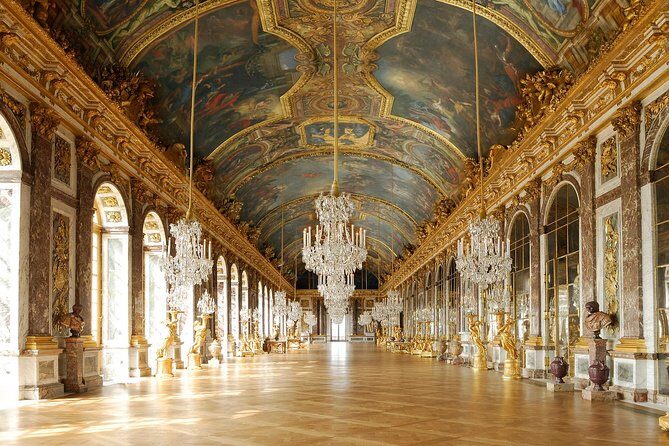
Then comes the Hall of Mirrors (about 15 minutes). You’ll walk through this iconic room to see the extravagance tied to King Louis XIV. Fifteen minutes is short, but it’s long enough to absorb the scale and the reflection effect. If you’ve only seen photos, this is where your brain realizes how staged the space is.
A practical note: this part can feel intense because so many people funnel through. Keep your pace steady, and let your guide orient you quickly so you’re not spending your time hunting for where to go next.
The Palace Time You Actually Get: 1 Hour Inside With a Timed Slot
The best payoff is the timed Palace entry plus about 1 hour of free time inside. This hour is where you can build your own priorities. If there’s one area you want to see slowly, this is when you do it.
Your guided moments earlier help, but don’t force you to stick to your guide’s exact route. Think of the palace hour as your chance to:
- revisit the rooms that grabbed you most
- step away from the group for a few minutes
- take in details you might miss during a faster guided walk
One review even suggested that one hour is sometimes not enough for palace depth, but that the combination of guided orientation plus your own time makes it workable for a day trip.
Marie-Antoinette’s Hamlet at Versailles: Le Hameau de la Reine
After the palace and gardens, you finish with Le Hameau de la Reine, the private village of Marie-Antoinette. You get about 40 minutes, which is great because it gives this section breathing room.
This is the surprise contrast to the palace. Instead of ruling from an immense ceremonial stage, the hamlet reads like a fantasy retreat: nature, simple village shapes, and a different mood entirely. You walk through the idea of Marie-Antoinette’s world, then you circle back to the palace’s power with a fuller sense of the contradictions inside the royal story.
If you’re choosing what to prioritize during the day, you might want to treat this stop like your reward. It’s usually the section that feels least like a museum corridor and most like walking into a different life.
How the Small Group Works: Why 8 People Changes Everything
This tour caps at 8 travelers, which makes a real difference when you’re moving between major sites. You don’t get lost in a crowd of strangers, and your guide can keep track of everyone without rushing you past your questions.
Many guide styles show up in the feedback. Some guides used visual guides, like Marie, while others kept it light with humor and stories, like Tim and Phillip. Another guide, Lucy, was praised for interacting with the group and paying attention to physical limitations in the pace.
You’ll also notice the day doesn’t feel like a nonstop lecture. A few reviews mention time built in for free wandering, and guides helping you get positioned at the right spots. That’s what you want: enough structure to see the essentials, enough space to breathe.
Walking and Weather Reality Check: Dress for Heat, Shoes for Miles
The tour requires good walking ability, even in hot summer days. If you have trouble with heat, or if you get faint easily, this is a tough sell. There’s no gentle pacing promised here.
Plan for:
- long standing and short bursts of walking
- sun exposure depending on the day
- some uneven ground around gardens and outdoors
If it rains, you’ll still go. And yes, umbrellas may be provided, but you should still dress for wet conditions. Bring a light layer you can handle changing weather.
Food Plan: Lunch Is Not Included, So Build Your Own Rhythm
Food is not included. That means your lunch will be on your own. The good news is the day has multiple segments, so you’ll get a moment to grab something rather than being forced into one fixed restaurant.
Some guides may suggest options during your free time. One review mentioned a lunch stop and another mentioned a creperie recommendation, but don’t count on any specific restaurant. Instead, think of this as: you’ll have chances to eat, and it’s smart to decide what you want before hunger hits.
Quick strategy: carry a snack and water when you can. Even a short delay can feel long when you’re counting steps.
Price and Value: What You’re Paying For at $302.46
At $302.46 per person, this isn’t a budget day. But it can feel like strong value if you treat it as a time-and-stress purchase.
Here’s what’s included that usually costs money or effort when you do it yourself:
- Monet’s garden admission
- Versailles timed entry (and the hard-to-fake part is having that time secured)
- transport by air-conditioned minivan
- admission fees at Versailles including the palace and the trianons/hamlet component
- a small group experience with a driver/guide
The biggest value is the guaranteed Versailles entry combined with a guided plan. If you’re short on days in Paris, saving hours of line-waiting is the difference between a great memory and a stressful one.
If you’re traveling super light and like total freedom, doing it solo might be cheaper. But if you want both places in one day with minimal logistics headache, the math often works.
Best Fit and Who Should Skip This One
This trip is best for you if:
- you want Giverny and Versailles in one day
- you like guided context but still want some free time
- you prefer the calmer feel of a small group (8 max)
- you’re okay with lots of walking and outdoor time
It’s not a great choice if:
- you struggle with heat or stamina
- you don’t walk well on uneven garden ground
- you want hours and hours inside Versailles with no timed pressure
Also, it may not satisfy you if your main goal is ultra-deep museum study. Versailles is huge, and even with a palace hour, you’re going for highlights plus a structured path, not total mastery.
Should You Book This Versailles and Giverny Day Trip
If your itinerary has limited wiggle room, I think this is a smart booking. The combination of Monet’s garden ticket, guaranteed Versailles timed entry, and a tight 8-person group gives you the feel of two top-tier experiences without turning the day into logistics homework.
Book it if you want a well-paced day where the guide helps you see what matters fast, then you can slow down where it hits you. Skip it if walking in heat is a real challenge for you.
If you do book, bring comfy shoes, plan your lunch on your own, and go in ready to prioritize. You’ll come out with Monet’s water lilies in your head and Versailles’ Hall of Mirrors in your camera roll, with a guide to help connect the dots.
FAQ
What time does the tour start?
The tour starts at 8:00 am.
Where do we meet in Paris?
The meeting point is Dada12 Av. des Ternes, 75017 Paris, France.
How long is the day trip?
It’s listed as about 9 hours.
Is food included?
No. Food is not included.
Is there a timed entry ticket for Versailles?
Yes. The tour includes a guaranteed Versailles timed entrance ticket, plus the Monet garden ticket.
How big is the group?
The tour is a small group, with a maximum of 8 people.
What age is the minimum for this tour?
The minimum age is 7 years.