REVIEW · PARIS
Wine Tasting In Paris
Book on Viator →Operated by Wine Tasting in Paris · Bookable on Viator
Wine labels can look like a code. This 2-hour wine tasting in Paris turns that code into something you can actually use. You’ll sample six wines tied to France’s big regions (including Champagne), and your sommelier host uses maps, photos, and simple tasting practice so you learn fast.
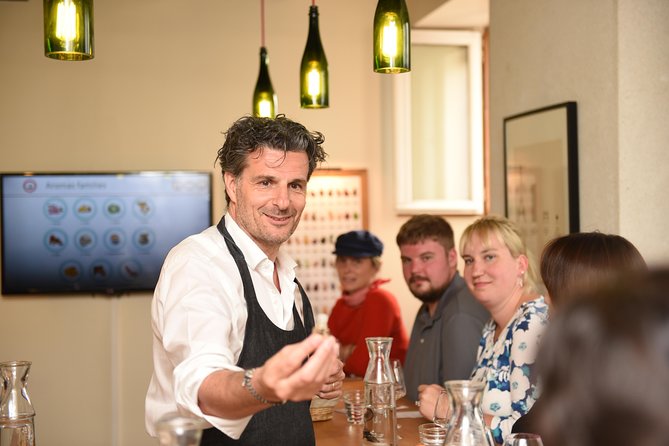
What I like most is the small group size (max 12), which keeps the vibe relaxed and makes it easy to ask questions. The second big win is the way Thierry (the host name that shows up in many reviews) teaches you how to taste, not just what to drink, so even if you’re a beginner you leave with confidence—and a small French wine guide you can take home.
One thing to consider: this is a classroom-style tasting, not a sit-and-stare tour with big scenery. If you’re hoping for nonstop entertainment or lots of walking, you may find it more like a focused evening lesson in a tasting room.
In This Review
- Key highlights I’d plan my evening around
- A 2-hour French wine lesson in the Latin Quarter
- What you’ll actually taste: Champagne, Burgundy, Bordeaux
- Stop 1 in the Latin Quarter: the tasting room flow
- How label reading clicks in real time
- Aroma and tasting practice you can reuse in Paris
- Why the group size makes a difference
- The host factor: Thierry’s teaching style
- Price and value: what $90.74 buys you
- Timing and logistics that matter (so you don’t waste time)
- Should you book this wine tasting in Paris?
- FAQ
- How long is the Paris wine tasting experience?
- Where does the tasting start?
- Is transportation to and from the tasting included?
- Are alcohol tastings included in the price?
- How many wines do you taste?
- Is the tour offered in English?
- What’s the group size?
- What’s the minimum age?
- What is the cancellation policy?
Key highlights I’d plan my evening around
- Six wines included, with Champagne part of the lineup
- Max 12 people, so you get real interaction instead of being a nameless seat in a crowd
- English-led tasting with a sommelier host (Thierry is the most frequently cited name)
- You learn to decode French wine labels and recognize aromas
- Visual teaching tools: maps, pictures, and key facts for each region
- You finish with a small French wine guide to keep
A 2-hour French wine lesson in the Latin Quarter
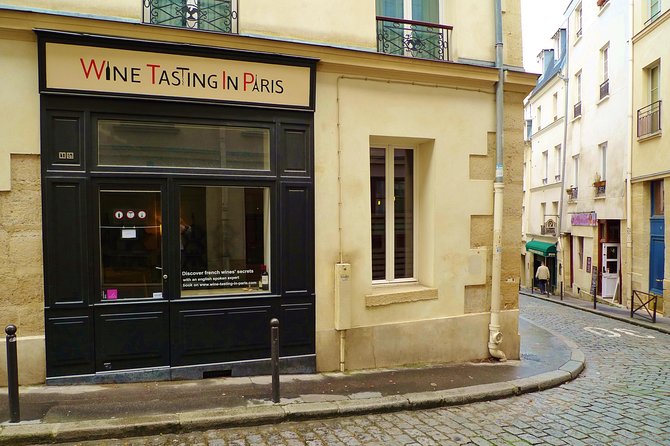
This experience is designed for people who want to understand French wine without pretending they already speak the language. The setting is a small tasting room in the Latin Quarter area, and the pace is steady: you’ll learn the basics, taste, and then connect what you’re tasting to what you just learned.
The start time is 5:00 pm, and the tasting runs for about 2 hours. It ends back at the same meeting point, which is helpful if you’re planning dinner later. The meeting address is 14 Rue des Boulangers, 75005 Paris, and it’s near public transportation, so you’re not stuck with a long walk or complicated transfers.
Most people can participate, and the minimum age is 18 since alcoholic beverages are included. The session is offered in English, which matters because wine terms in French can be intimidating fast. Here, you’re not just handed a glossary; you’re guided through tasting so the words become meaningful.
You can also read our reviews of more tours and experiences in Paris.

What you’ll actually taste: Champagne, Burgundy, Bordeaux
The core idea is region-based understanding. You’ll discover wines from the big French wine territories most people talk about in Paris wine shops: Champagne, Burgundy, and Bordeaux. While those regions are famous, the tasting format helps you move beyond simple labels like red or white.
You’ll sample all six wines included in the price, and Champagne is part of that lineup. That’s a smart choice for a Paris wine tasting, because many first-timers only know Champagne as a celebratory drink. Here, you’ll practice tasting it the way sommeliers do—so you learn what makes it different beyond the bubbles.
In a tasting like this, you’re usually comparing multiple wines close together so your senses stay fresh and your brain can make better connections. That’s exactly what you want, because if you taste one wine once and never repeat the practice, it’s easy to forget what you learned.
A few reviews also mention that the selection can include smaller-vineyard choices and even some organic-leaning selections. You shouldn’t count on any specific farming style every time, but it’s a good sign that the tasting isn’t only built around mass-market expectations.
Stop 1 in the Latin Quarter: the tasting room flow
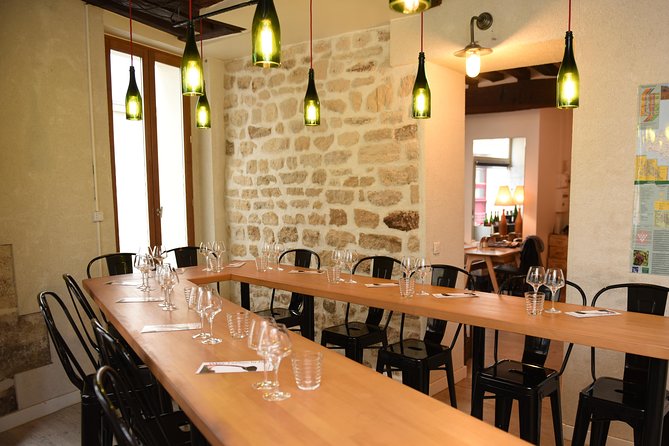
There’s one main stop for the whole experience, anchored in the Latin Quarter. Once you’re there, the evening usually works like a mini lesson with tastings woven in.
First, you’ll get oriented to how French wine labels work. That sounds abstract until you realize labels are how French producers communicate things like origin, style, and quality cues—often without the grape variety being written the way you’re used to seeing it. Your host uses maps, pictures, and key facts, so you can place what you’re tasting in the correct region instead of guessing.
Then you shift into hands-on tasting. You’ll learn how to taste wines and recognize aromas. The host’s approach matters here. Reviews describe Thierry as interactive and good at explaining without talking over people. The goal is that you can describe what you smell and taste in real terms, not just say it’s nice.
Finally, you wrap up with a takeaway: a small French wine guide you can keep. That’s one of the most practical parts, because Paris wine shopping can be overwhelming. If you can’t translate what you see on the shelf, you’ll either buy blindly or stick with the same safe styles.
How label reading clicks in real time
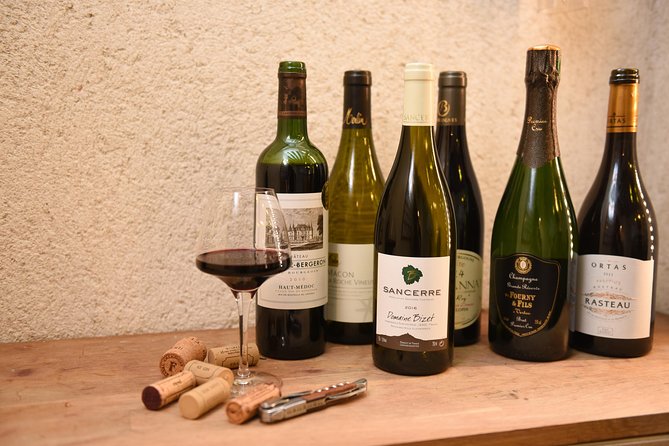
If you’ve ever stood in front of a French wine shelf and thought, I have no idea what any of this means, you’ll understand the value of this part.
French labels often feel like a puzzle. Even when you recognize a few names, you might not know what to look for next: what terms point to the region, what tells you about style, and how to think about tasting notes. This tasting focuses on teaching you how to read those labels in a way that matches the wines you’re about to taste.
You’ll learn to connect three things:
- Region cues (where the wine comes from and what that region often implies)
- Style cues (how the producer tends to make the wine)
- Tasting cues (what you notice on your own when you smell and sip)
The best part is that the teaching isn’t separate from the tasting. You learn the label logic, then you taste a wine, then you test whether your new understanding actually matches what’s in the glass.
Aroma and tasting practice you can reuse in Paris
This is not just wine drinking. It’s practice. The host teaches you how to taste wines and recognize aromas, and you’ll use that process as you sample the lineup.
That’s valuable because wine tasting isn’t only about being right. It’s about getting more accurate with your own senses. Once you learn a simple method for smelling and evaluating what you taste, you can apply it later at a bottle shop, a bar, or even a friend’s dinner table.
One recurring theme in reviews is that the host explains in a way that suits different levels. If you’re a total beginner, you don’t get buried under jargon. If you already know a bit, the explanations still add structure. That balance is hard to find in group tastings, so it’s worth appreciating.


Why the group size makes a difference
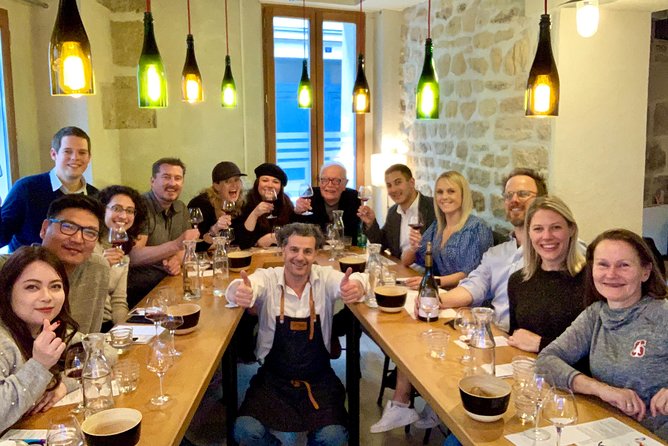
This is capped at 12 people. In wine terms, that matters because it affects how much attention you get.
In smaller groups:
- You’re more likely to get your question answered clearly.
- The host can adjust the pace based on what people already know.
- You’re less likely to feel like you’re just trying to keep up.
Reviews repeatedly describe a relaxed, friendly atmosphere—more like a small evening class than a stiff presentation. Some even mention a warm, homely feel, and that matters because wine is partly about comfort. If you feel rushed or self-conscious, it’s harder to smell subtle aromas and make comparisons.
Also, if you’re traveling solo or as a couple, small groups make it easier to connect without forcing it.
The host factor: Thierry’s teaching style
Thierry is the name most often associated with hosting in the reviews, and the pattern is consistent: he’s described as a strong explainer, interactive, and attentive without being overbearing.
One review mentions the host helps you appreciate the wine without lecturing. Another says the information can feel like a lot at times (there are slides and visual material), but it’s still approachable and fun. That combo is ideal: you get depth, but you don’t feel like you’re taking an exam.
You may also see another host name (Kenny) mentioned in reviews. Since multiple hosts are possible, the safest way to think about it is this: you’re booking a structured English tasting with a sommelier-style guide, and the key benefit is the teaching method, not only the personality.
Either way, the lesson you’re paying for is transferable: tasting technique and label reading. That’s what turns a nice evening into a useful skill.
Price and value: what $90.74 buys you
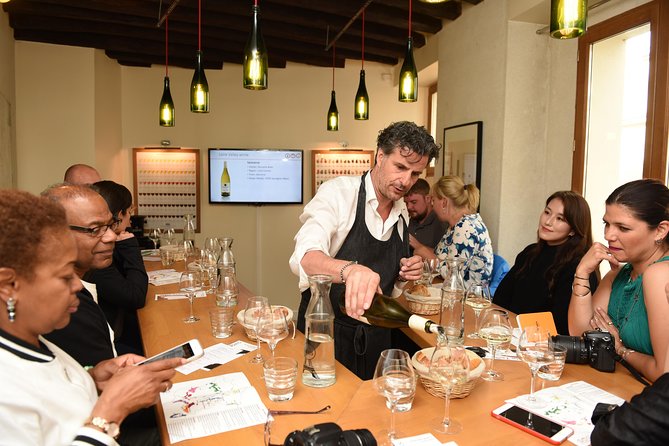
At $90.74 per person for about 2 hours, you’re not paying for a casual drink. You’re paying for guided instruction plus six wines (alcohol included) and visual teaching tools, plus a take-home guide.
Here’s why I think it can be good value if you’re serious about learning:
- You get multiple tastings in a structured format, so you don’t just “try stuff,” you connect it to the why.
- The cost includes alcohol, which is a big deal in Paris where wine at bars adds up fast.
- The small-group cap means you’re more likely to get real feedback and explanations tailored to your level.
- You leave with a guide, which helps you shop smarter later.
A potential mismatch: if your only goal is to drink wine and you’re not interested in learning to read labels or recognize aromas, you might find the teaching heavier than you expected. But if you want to go from confused to confident, the price starts to look reasonable.
Timing and logistics that matter (so you don’t waste time)
This runs starting at 5:00 pm, so it fits nicely between late-afternoon plans and a dinner reservation. Because it ends back at the meeting point, you’re not forced into a long commute after the tasting.
The meeting address is 14 Rue des Boulangers in the 75005 area. That location choice is practical: it keeps you in a central part of Paris where you can also grab food afterward without changing neighborhoods.
You’ll get a mobile ticket, which simplifies entry. If you like to travel light and avoid printed vouchers, this is a win.
Transportation to and from the activity is not included, so plan your own way there. The good news is that the tour is near public transportation, so you won’t need a private driver.
Should you book this wine tasting in Paris?
Book it if:
- You want a confident understanding of French wine regions without hours of research.
- You like guided tastings where you learn how to taste, not just what to taste.
- You want an English-led experience with a small group and a take-home guide.
Consider skipping if:
- You prefer outdoor walking tours or big sightseeing blocks.
- You’re only interested in casual sipping and not in learning label basics or aroma recognition.
- You’re hoping for a multi-stop itinerary with changing locations.
If you’re the kind of traveler who wants to buy a bottle later and pick it with less guesswork, this is exactly the sort of evening that pays off.
FAQ
How long is the Paris wine tasting experience?
It lasts about 2 hours.
Where does the tasting start?
It starts at 14 Rue des Boulangers, 75005 Paris, France.
Is transportation to and from the tasting included?
No, transportation to and from attractions is not included.
Are alcohol tastings included in the price?
Yes. Alcoholic beverages are included.
How many wines do you taste?
You taste six wines, and the lineup includes Champagne.
Is the tour offered in English?
Yes, it’s offered in English.
What’s the group size?
It’s capped at a maximum of 12 people per booking.
What’s the minimum age?
The minimum age is 18.
What is the cancellation policy?
You can cancel for a full refund up to 24 hours before the experience’s start time. If you cancel less than 24 hours before, the amount paid is not refunded. If the experience is canceled because the minimum number of travelers isn’t met, you’ll be offered a different date or a full refund.